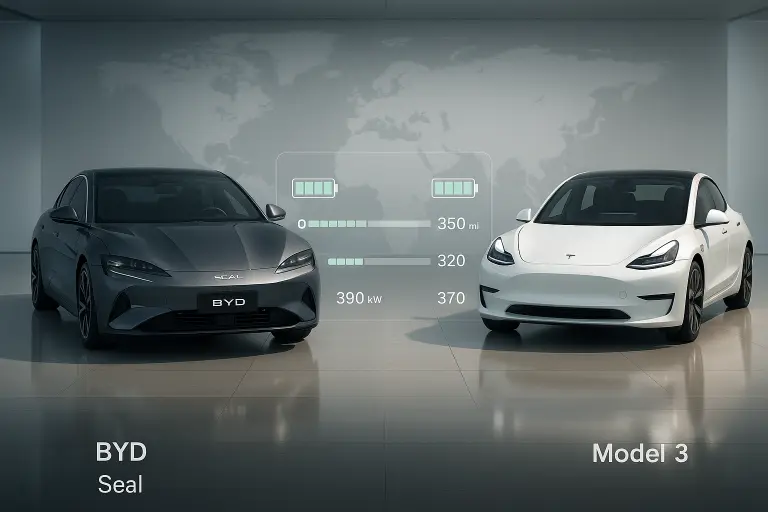
In 2024, BYD sold more electric vehicles than Tesla for the first time in history—a seismic shift that reveals just how dramatically Chinese EVs compare to US EVs in today’s global market. While American consumers have long associated electric vehicles with Tesla’s sleek designs and Silicon Valley innovation, a powerful wave of Chinese manufacturers has quietly been reshaping the EV landscape with vehicles that often cost half the price while offering comparable—or even superior—technology. The question of how Chinese EVs compare to US EVs has moved from automotive industry speculation to a pressing reality that’s reshaping the entire transportation sector.
Understanding this comparison is no longer just an academic exercise. It’s essential knowledge for anyone considering an electric vehicle purchase, investors watching the automotive sector, or policymakers navigating the future of clean transportation. The competition between these two manufacturing powerhouses is driving innovation, pushing prices down, and ultimately determining which technologies will dominate the roads for decades to come.
In this comprehensive analysis, you’ll discover how Chinese EVs compare to US EVs across every dimension that matters: pricing and value, cutting-edge technology, real-world performance and range, build quality and reliability, design philosophy, and market accessibility. Whether you’re shopping for your next vehicle or simply curious about the future of transportation, this comparison will give you the clarity you need to understand one of the most consequential industrial competitions of our time.
1. Market Overview: How Chinese EVs Compare to US EVs on the Global Stage
To truly grasp how Chinese EVs compare to US EVs, we need to first understand the dramatically different landscapes these manufacturers operate within.
The US EV Ecosystem: Tesla and the American Challengers
Tesla remains the undisputed leader in the American electric vehicle market, commanding approximately 55% of US EV sales in 2024. The company’s Model Y became the best-selling vehicle of any kind globally, cementing Elon Musk’s vision of electric transportation into mainstream reality. However, Tesla’s dominance is gradually being challenged by legacy automakers who’ve finally committed serious resources to electrification.
Ford has emerged as the strongest traditional competitor with its F-150 Lightning and Mustang Mach-E, capturing roughly 7% of the US EV market. General Motors, after a slower start, is ramping up production with its Ultium platform powering vehicles like the Cadillac Lyriq and Chevrolet Blazer EV. Meanwhile, startup Rivian has carved out a premium adventure-vehicle niche with its R1T truck and R1S SUV, appealing to outdoor enthusiasts willing to pay top dollar for capability and style.
China’s EV Powerhouses: BYD, NIO, and Rising Giants
The Chinese EV landscape tells a completely different story—one of explosive growth and fierce competition. BYD, which stands for “Build Your Dreams,” has become the world’s largest EV manufacturer, selling over 3 million new energy vehicles in 2024 alone. Unlike Tesla, BYD manufactures its own batteries, giving it unprecedented control over costs and supply chains.
NIO positions itself as China’s premium answer to Tesla, offering innovative battery-swapping technology that replaces a depleted battery in under five minutes. XPeng focuses on advanced autonomous driving capabilities and smart features that resonate with tech-savvy younger buyers. Li Auto has found success with extended-range electric vehicles that include a small gasoline generator to eliminate range anxiety.
Sales Data: How Chinese EVs Compare to US EVs in Volume
When examining how Chinese EVs compare to US EVs in pure sales volume, the gap is staggering. China sold approximately 9.5 million electric vehicles in 2024, while the US market reached only 1.4 million units. Moreover, China’s EV penetration rate—the percentage of new car sales that are electric—hit 37% compared to America’s 9%.
This disparity stems largely from government policy. Beijing has invested over $60 billion in EV subsidies, charging infrastructure, and manufacturing support since 2009. Chinese cities offer license plate advantages for EV buyers and restrict combustion engine vehicles in urban centers. The US, by contrast, has taken a more market-driven approach with smaller tax credits and less coordinated infrastructure planning, though the Inflation Reduction Act of 2022 marked a significant policy shift toward domestic EV production incentives.
2. Price Comparison: How Chinese EVs Compare to US EVs on Affordability
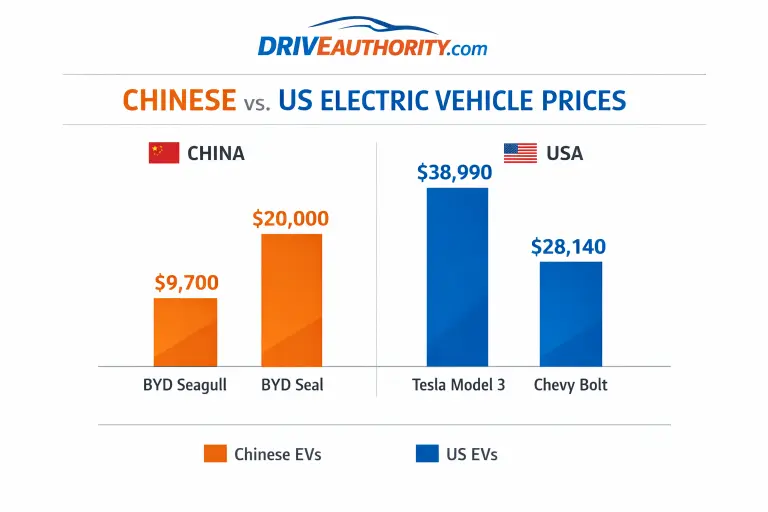
Perhaps nowhere is the contrast more striking than in pricing. When you examine how Chinese EVs compare to US EVs on cost, the difference can be jaw-dropping—and it’s reshaping global consumer expectations about what an electric vehicle should cost.
Direct Price Comparisons Across Vehicle Classes
In China’s domestic market, the BYD Seagull—a compact urban EV—starts at approximately $9,700. Meanwhile, the cheapest new EV available in the United States, the Nissan Leaf, begins around $28,140. That’s nearly triple the price for roughly similar functionality.
The gap persists across every segment. BYD’s Seal, a midsize sedan that directly competes with the Tesla Model 3, retails for about $20,000 in China compared to the Model 3’s $38,990 starting price in the US. The NIO ET5, a premium sports sedan with luxury appointments, costs around $30,000 in its home market—less than a base Model 3 and significantly less than comparable luxury EVs from BMW or Mercedes.
Even accounting for different market conditions, the pattern is clear: Chinese EVs typically cost 30-50% less than their American counterparts when comparing similar size, range, and feature sets.
Why Chinese EVs Cost Less
This dramatic price advantage stems from several converging factors. First, China dominates the global battery supply chain. CATL and BYD together control over 50% of worldwide battery production, and batteries represent roughly 40% of an EV’s total cost. Vertical integration means Chinese manufacturers avoid the markup that US automakers pay to battery suppliers.
Second, labor costs in China remain significantly lower than in the United States, though this gap has been narrowing. More importantly, Chinese EV manufacturers benefit from economies of scale—producing millions of vehicles annually allows them to spread development costs across a much larger base.
Third, the Chinese government provides substantial subsidies for domestic EV production, including preferential loans, land grants for factories, and research funding. While the US has increased support through the Inflation Reduction Act, it doesn’t match the coordinated, decade-long investment Beijing has made.
Value Proposition: What You Get for Your Money
Here’s where comparing Chinese EVs to US EVs becomes fascinating. Chinese manufacturers aren’t just competing on price—they’re often matching or exceeding American vehicles on features.
The BYD Seal, at roughly half the price of a Model 3, includes a rotating 15.6-inch touchscreen, premium synthetic leather interior, advanced driver assistance systems, and BYD’s Blade Battery technology that offers exceptional safety and longevity. The XPeng P7, priced around $26,000 in China, features highway-capable autonomous driving, a panoramic glass roof, premium sound system, and over-the-air updates—features you’d expect in vehicles costing twice as much.
However, it’s essential to note that these prices apply in China’s domestic market. Therefore, import tariffs dramatically change the equation elsewhere.
The Tariff Reality
The United States currently imposes a 27.5% tariff on Chinese vehicles—a 2.5% general auto tariff plus a 25% tariff specific to Chinese imports. In 2024, President Biden announced an additional 100% tariff on Chinese EVs, effectively blocking them from the American market at competitive prices. A $20,000 BYD Seal would cost around $40,000 after tariffs, eliminating its price advantage entirely.
European markets tell a different story. The EU has imposed more modest tariffs ranging from 17% to 38% depending on the manufacturer, making Chinese EVs more accessible. Consequently, BYD, NIO, and others are expanding rapidly across Europe, offering consumers genuine alternatives to established brands at compelling prices.
This tariff landscape means that while Chinese EVs dominate on value in their home market and increasingly in Europe, American consumers remain largely unable to access these options—at least for now.
3. Technology and Innovation: Where Chinese EVs Compare to US EVs on Cutting-Edge Features
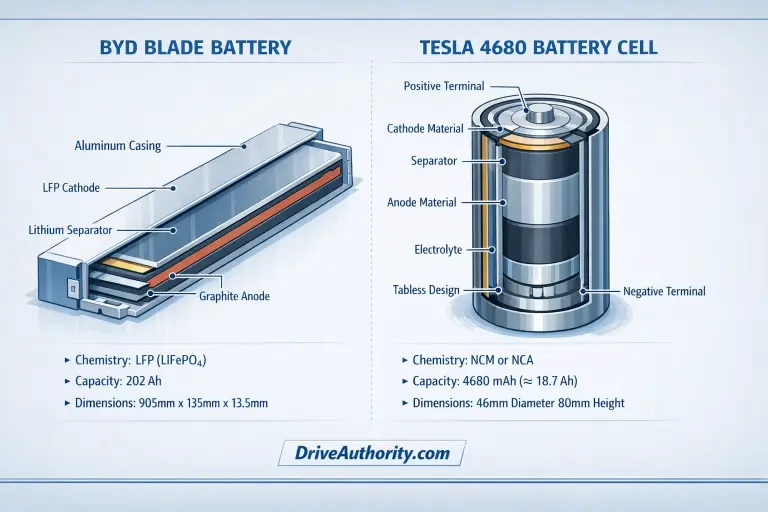
The technological battle reveals surprising strengths on both sides. Understanding how Chinese EVs compare to US EVs in innovation requires looking beyond marketing hype to actual capabilities deployed in real vehicles today.
Battery Technology: China’s Commanding Lead
Chinese manufacturers have established near-total dominance in battery technology. CATL (Contemporary Amperex Technology Co. Limited) supplies batteries to Tesla, BMW, and virtually every major automaker worldwide, controlling approximately 37% of the global market. Their latest Qilin battery achieves 255 Wh/kg energy density—13% higher than Tesla’s 4680 cells.
BYD’s Blade Battery represents perhaps the most significant safety innovation in recent years. This lithium iron phosphate (LFP) design passed the notorious nail penetration test without catching fire—something traditional lithium-ion batteries consistently fail. Moreover, the Blade Battery costs roughly 30% less to produce while offering longer cycle life, making it ideal for affordable EVs.
US battery innovation hasn’t stood still. Tesla’s 4680 cell design promises improved energy density and simplified manufacturing, though production has faced delays. QuantumScape, a Silicon Valley startup backed by Volkswagen, is developing solid-state batteries that could revolutionize range and charging speeds. However, these remain years from mass production, while Chinese batteries power millions of vehicles on roads today.
Autonomous Driving: Competing Visions
Tesla’s Full Self-Driving (FSD) system represents the most advanced autonomous driving widely available in the United States, using a camera-only approach and neural networks trained on billions of miles of real-world data. The system handles highway driving, navigation, and increasingly complex urban scenarios, though it still requires driver supervision.
Chinese competitors have taken different approaches. XPeng’s XNGP (X-Navigation Guided Pilot) combines cameras with lidar sensors, providing redundancy that many engineers consider essential for safety. In Chinese cities, XNGP operates without high-definition maps—adapting to road conditions in real-time, a capability Tesla is still refining.
NIO’s autonomous system similarly employs lidar alongside cameras and has demonstrated impressive capabilities on Chinese highways. Li Auto’s AD Max system uses dual Orin-X chips from NVIDIA, matching Tesla’s computing power while adding sensor diversity.
The crucial difference? Chinese systems often incorporate more hardware redundancy, while Tesla bets on vision and software. Neither approach has proven definitively superior, and both continue evolving rapidly.
Software and Infotainment: The User Experience Battle
When evaluating how Chinese EVs compare to US EVs on software, user preferences diverge significantly between markets. Tesla’s minimalist interface, centered on a single large touchscreen, pioneered the “iPad on wheels” approach that many Western consumers appreciate for its simplicity.
Chinese EVs typically offer feature-rich infotainment systems that integrate deeply with local ecosystems. NIO’s NOMI assistant provides personality and emotional interaction—it’s a physical device that turns to face speakers and displays expressions. XPeng vehicles integrate seamlessly with WeChat, Alipay, and Chinese smart home systems. These aren’t just different—they reflect fundamentally different philosophies about in-car technology.
Both Chinese and US manufacturers now offer over-the-air (OTA) updates that continuously improve vehicle capabilities. Tesla pioneered this approach, but Chinese manufacturers have matched and sometimes exceeded it, with some brands pushing monthly updates that add features, improve range, and enhance performance.
Charging Technology: The Race to 800V
Chinese manufacturers have aggressively adopted 800V electrical architecture, enabling dramatically faster charging. XPeng’s G9 can add 200 kilometers of range in just five minutes using 480kW chargers. BYD and Li Auto have deployed similar systems across their lineups.
The Hyundai Ioniq 5 and Kia EV6 brought 800V technology to Western markets first, but most US manufacturers remain on 400V systems. Tesla’s Supercharger network—still the gold standard for reliability and coverage in America—operates at lower voltages, though the company is developing next-generation chargers.
NIO has pioneered battery swapping as an alternative to fast charging, with over 2,000 swap stations across China that exchange a depleted battery for a fully charged one in under five minutes. This infrastructure-intensive approach hasn’t gained traction in the US, where the preference remains distributed DC fast charging.
Manufacturing Innovation and Vertical Integration
The manufacturing strategies reveal how Chinese EVs compare to US EVs on production efficiency. BYD’s vertical integration extends from lithium mining through semiconductor production to final assembly—a level of control that no US manufacturer approaches. This integration enables faster innovation cycles and greater cost control.
Tesla’s Gigafactories represent American manufacturing innovation, with impressive automation and the ability to iterate designs rapidly. However, Chinese manufacturers have studied and adapted these techniques while adding their own innovations in modular platforms and flexible production lines that can build multiple models simultaneously.
4. Performance and Range: How Chinese EVs Compare to US EVs on the Road
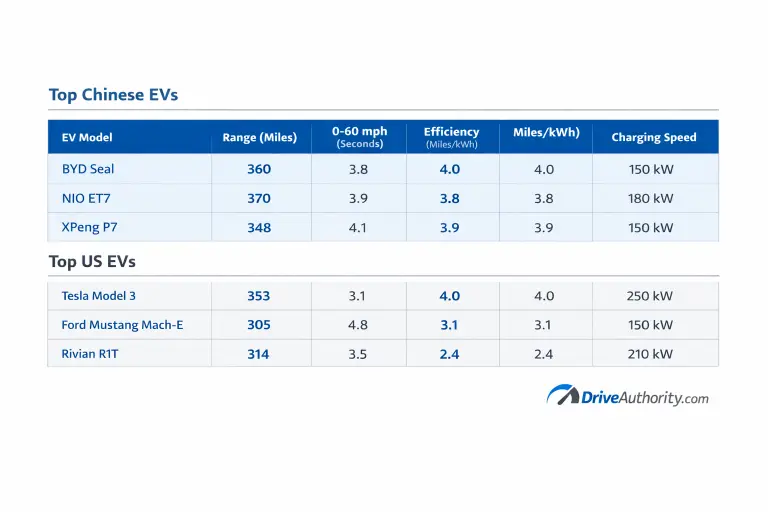
Beyond specifications and marketing claims, what matters most is how these vehicles actually perform in daily driving. Examining how Chinese EVs compare to US EVs on real-world performance reveals both surprising parity and notable differences.
Real-World Range: How Chinese EVs Compare to US EVs in Daily Driving
The Tesla Model 3 Long Range achieves approximately 320-340 miles in real-world conditions—reasonably close to its EPA rating of 358 miles. The BYD Seal, equipped with an 82.5 kWh battery, delivers around 310-330 miles of actual range, performing admirably against its CLTC rating (though China’s testing cycle is notably more optimistic than EPA standards).
NIO’s ET7, with its largest 150 kWh battery option, claims over 620 miles of range—the longest of any production EV globally. However, real-world testing under mixed conditions yields approximately 450-480 miles, which remains impressive but demonstrates the gap between laboratory and actual performance.
Across vehicle segments, the range gap between Chinese and US EVs has essentially disappeared. Mid-size sedans from both countries deliver 280-340 miles of real-world range, while luxury models push toward 400 miles. Compact vehicles like the BYD Dolphin and Chevy Bolt EUV both achieve around 220-250 miles—adequate for daily commuting but requiring planning for longer trips.
Acceleration and Driving Dynamics: US vs Chinese EV Performance
Tesla’s performance variants remain the acceleration benchmark. The Model S Plaid reaches 60 mph in under 2 seconds—supercar territory. However, Chinese manufacturers have closed the gap significantly. The NIO ET7 Sport+ hits 60 mph in 3.8 seconds, while the XPeng P7 Performance achieves it in 3.9 seconds.
More importantly, everyday driving dynamics reveal different priorities. US EVs, particularly Teslas and Rivians, emphasize sharp handling and engaging driving experiences. Chinese EVs typically prioritize comfort and refinement, with softer suspension tuning and quieter cabins. Neither approach is objectively better—they simply serve different consumer preferences.
Climate Performance: How Chinese EVs Compare to US EVs in Extreme Conditions
Cold weather remains challenging for all EVs, but testing shows how Chinese EVs compare to US EVs in harsh conditions. Tesla’s heat pump system and battery preconditioning help maintain 70-80% of rated range in freezing temperatures. BYD’s Blade Battery, with its thermal stability advantages, shows similar cold-weather resilience, maintaining approximately 75% of summer range in winter conditions.
Hot weather performance reveals fewer differences. Both Chinese and US EVs employ sophisticated thermal management systems that maintain battery temperatures within optimal ranges. Desert testing in Arizona and similar conditions in western China show comparable performance degradation of 5-10% in extreme heat.
Efficiency Metrics: Chinese vs US Electric Vehicle Efficiency
Efficiency metrics tell an important story about engineering refinement. The Tesla Model 3 achieves approximately 4.0-4.3 miles per kWh in mixed driving—among the best in the industry. The BYD Seal delivers 3.8-4.1 miles per kWh, remarkably close considering its lower price point.
The Hyundai Ioniq 6, though not American, sets the efficiency benchmark at 4.5+ miles per kWh, demonstrating that maximum efficiency requires specific aerodynamic and engineering choices. Most Chinese EVs fall in the 3.5-4.0 range—respectable but indicating room for improvement in aerodynamics and weight reduction.
Charging Speed: Comparing Chinese and US EV Charging Capabilities
Tesla’s Supercharger network delivers consistent 250 kW charging speeds, adding 200 miles in approximately 15 minutes under optimal conditions. Chinese EVs with 800V architecture can match or exceed these speeds when connected to compatible ultra-fast chargers—the XPeng G9 can add similar range in just 10 minutes.
However, infrastructure availability creates practical differences. In the US, Tesla’s extensive Supercharger network provides reliable fast charging, while other EVs depend on more fragmented third-party networks. In China, aggressive infrastructure buildout means high-speed charging is widely available regardless of brand, giving Chinese EVs a usability advantage in their home market.
5. Build Quality and Reliability: How Chinese EVs Compare to US EVs in Durability
Quality and reliability represent critical factors for any vehicle purchase, yet they’re among the most difficult to assess for relatively new manufacturers. Understanding how Chinese EVs compare to US EVs on long-term durability requires examining both hard data and emerging patterns.
Manufacturing Quality Standards and Consumer Feedback
Tesla’s build quality has been a persistent concern, with Consumer Reports and J.D. Power studies consistently ranking the brand below average for fit and finish. Panel gaps, paint defects, and interior trim issues have plagued even recent models, though the company has made gradual improvements. The Model 3 and Model Y score average or slightly below average in initial quality surveys.
Chinese manufacturers present a mixed picture. BYD, with decades of manufacturing experience, demonstrates solid build quality that matches or exceeds many established automakers. Independent European reviews of the BYD Seal and Atto 3 note tight panel gaps, quality paint application, and well-assembled interiors. However, NIO and XPeng, as newer companies, have experienced growing pains similar to Tesla’s early years—reports of minor quality inconsistencies and occasional software glitches appear in owner forums.
The rapid improvement trajectory matters here. Chinese EV manufacturers are learning and iterating quickly, with quality metrics improving significantly year-over-year as production processes mature.
Long-Term Reliability: The Data We Have
Comprehensive long-term reliability data remains limited for both Chinese and newer US EVs simply because these vehicles haven’t been on roads long enough. Tesla vehicles from 2018-2020 show average reliability, with electric drivetrains proving durable but some owners reporting issues with door handles, touchscreens, and suspension components.
Early data from European markets, where Chinese EVs have been sold since 2020, suggests reliability comparable to established brands. BYD vehicles in Norway and the Netherlands report breakdown rates similar to Volkswagen and Hyundai EVs. Battery degradation data—the most critical long-term concern—shows both Chinese and US EVs maintaining 85-90% capacity after 100,000 miles, which aligns with manufacturer warranties.
Warranty Coverage: How Chinese and US EVs Compare on Protection
When examining how Chinese EVs compare to US EVs on warranty protection, Chinese manufacturers often provide more generous coverage. BYD offers an 8-year/150,000-mile battery warranty and a 6-year/150,000-mile vehicle warranty in most markets. NIO provides similar coverage plus unique benefits like free battery swaps and lifetime roadside assistance for first owners.
Tesla’s warranty includes 8 years/120,000 miles for the battery and drive unit, with 4 years/50,000 miles for the vehicle itself—industry standard but less comprehensive than some Chinese brands. Ford and GM offer comparable coverage on their EVs, typically 8 years/100,000 miles on battery components.
Material Quality and Interior Craftsmanship
Tesla interiors embrace minimalism, using synthetic leather, limited physical controls, and a design philosophy that some find elegant and others find sparse. Material quality has improved in recent years, though it generally doesn’t match luxury segment expectations at similar price points.
Chinese EVs often feature more elaborate interiors with attention to traditional luxury cues. NIO’s ET7 includes Nappa leather, real wood trim, and ambient lighting systems that rival German luxury brands. XPeng and Li Auto similarly emphasize interior refinement, using soft-touch materials and thoughtful details throughout the cabin. At comparable price points, Chinese EVs frequently offer richer material quality than their American counterparts.
Safety Ratings: Testing Chinese vs US Electric Vehicles
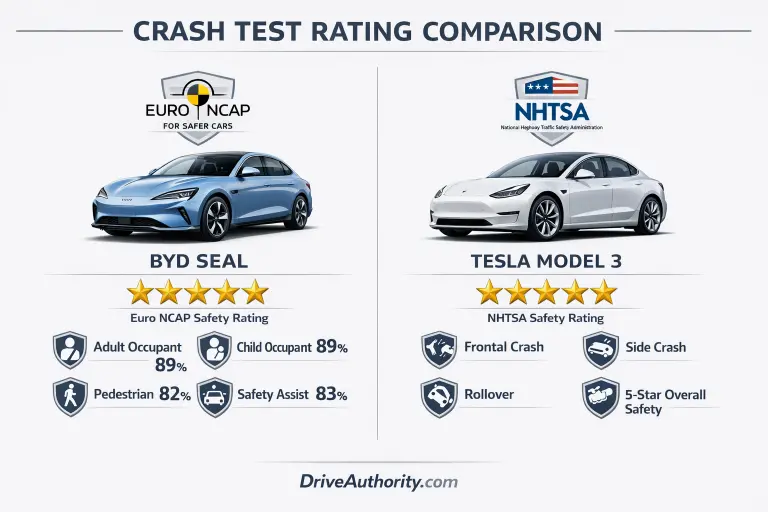
Safety testing reveals how Chinese EVs compare to US EVs on crashworthiness. The Tesla Model 3 and Model Y both earned 5-star ratings from NHTSA and Top Safety Pick+ awards from IIHS—among the highest safety ratings possible. Their rigid battery-in-floor design and lack of engine compartment intrusion contribute to excellent crash performance.
Chinese EVs tested in Euro NCAP have performed admirably. The BYD Seal earned a 5-star rating with 85% adult occupant protection and 87% for child occupants—scores matching or exceeding many European and American vehicles. The NIO ET7 achieved similar results. However, China’s C-NCAP testing protocol is less stringent than US or European standards, making direct comparisons of domestic Chinese ratings challenging.
The consistent pattern across independent testing suggests that both Chinese and US EVs achieve high safety standards, with modern electric architectures providing inherent advantages in crash protection regardless of country of origin.
6. Design and Features: How Chinese EVs Compare to US EVs in Style and Innovation
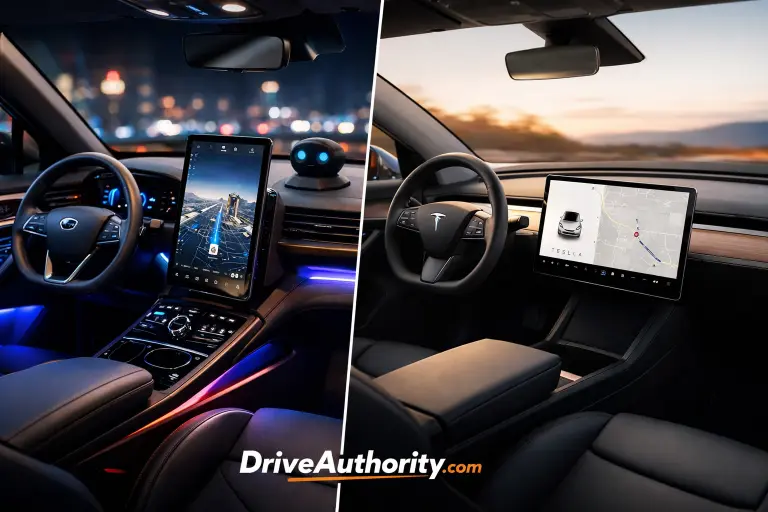
Design represents where cultural preferences and brand identity most clearly diverge. Exploring how Chinese EVs compare to US EVs in aesthetics and features reveals fundamentally different philosophies about what makes a vehicle desirable.
Exterior Design: American Boldness vs Chinese Elegance
US EVs tend toward aggressive, futuristic styling. Tesla’s design language emphasizes clean, aerodynamic forms with minimal ornamentation—the Model 3’s front fascia eliminates the traditional grille entirely. Rivian’s vehicles feature distinctive oval headlights and utilitarian yet modern proportions that signal adventure capability. The Cybertruck’s polarizing angular design pushes boundaries deliberately, dividing opinion but commanding attention.
Chinese EVs generally embrace more fluid, elegant design philosophies. The BYD Seal features flowing character lines and a sophisticated silhouette that wouldn’t look out of place in a European luxury showroom. NIO’s ET7 presents graceful proportions with thoughtful details like split headlights and a swooping roofline. XPeng vehicles incorporate sleek, tech-forward styling without the aggressive posturing common in American designs.
Neither approach is superior—they simply reflect different market tastes and brand positioning strategies. However, Chinese designs often appear more internationally palatable, which may explain their success in European markets where subtlety is valued over boldness.
Interior Space and Luxury: Where Chinese EVs Often Excel
Interior design reveals how Chinese EVs compare to US EVs on luxury and comfort. Tesla’s cabins remain famously minimalist—functional but sparse, with nearly all controls consolidated into the central touchscreen. This appeals to tech enthusiasts but leaves some buyers missing physical buttons and conventional luxury cues.
Chinese manufacturers take the opposite approach. NIO interiors feature the NOMI AI companion—a spherical device mounted on the dashboard that turns to face speakers and displays emotional expressions. Li Auto’s L9 includes a massive 3D HUD, four screens throughout the cabin, and even a built-in refrigerator. XPeng offers rotating touchscreens that switch between portrait and landscape orientations.
Space utilization often favors Chinese vehicles. The BYD Han offers significantly more rear legroom than a similarly-sized Model 3, prioritizing rear passenger comfort—a reflection of chauffeur-driven culture in China’s luxury segment.
Unique Features: Innovation Beyond the Basics
NIO’s battery-swapping stations represent the most distinctive innovation in the EV space. Owners can exchange depleted batteries for fully charged ones in under five minutes at over 2,000 locations across China—eliminating charging anxiety entirely. This infrastructure-intensive approach hasn’t been replicated by US manufacturers, who’ve invested instead in fast-charging networks.
Chinese EVs frequently include features uncommon in American vehicles: massage seats in mid-price models, elaborate ambient lighting systems, built-in karaoke systems, and extensive smart home integration. These features reflect different consumer priorities but demonstrate that Chinese manufacturers aren’t simply copying Western competitors—they’re innovating based on their market’s preferences.
Practicality and Everyday Usability
When assessing how Chinese EVs compare to US EVs on daily practicality, infrastructure integration matters enormously. Tesla’s Supercharger network and seamless navigation integration create superior usability in North America. Chinese EVs excel in their home market with deep integration into local payment systems, navigation services, and smart city infrastructure.
Storage solutions, charging port locations, and user interface logic generally work well in both Chinese and US EVs, though American vehicles often feature more cupholders and practical storage—reflecting long-distance driving culture.
Brand Perception: Prestige and Status
Tesla has successfully positioned itself as premium and desirable, with brand recognition rivaling luxury marques. Rivian appeals to affluent outdoor enthusiasts seeking adventure-ready luxury. These brands carry social cachet in American markets.
Chinese EV brands face perception challenges internationally despite impressive products. NIO has cultivated prestige in China comparable to Tesla’s in the US, but remains largely unknown in Western markets. BYD, despite being the world’s largest EV maker, lacks the aspirational appeal that drives luxury purchases. Nevertheless, this perception gap is narrowing as quality becomes undeniable and European acceptance grows.
7. Market Access: How Chinese EVs Compare to US EVs in Global Availability
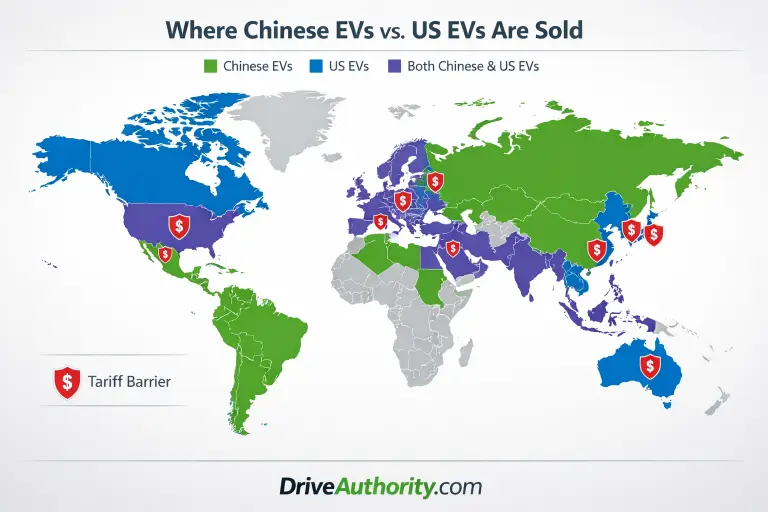
Understanding how Chinese EVs compare to US EVs requires recognizing that most consumers can’t actually choose between them—tariffs and trade policies have created vastly different market realities across regions.
Current Global Distribution: Where You Can Buy Chinese EVs
Chinese EVs dominate their home market with over 60% of domestic sales, but their international presence varies dramatically by region. BYD, NIO, XPeng, and other Chinese brands have established strong footholds across Southeast Asia, with Thailand becoming a major manufacturing and export hub. Australia and New Zealand also offer Chinese EVs with growing selection and competitive pricing.
Europe represents the most significant Western market for Chinese EVs. BYD sells the Atto 3, Seal, and Dolphin across the continent. NIO operates showrooms in Norway, Germany, Netherlands, Denmark, and Sweden. MG (owned by China’s SAIC Motor) has become a top-ten brand in several European countries. European consumers can walk into dealerships and test-drive Chinese EVs today—an option completely unavailable to American buyers.
The US Tariff Wall: A 100% Barrier
The United States has effectively closed its market to Chinese EVs through prohibitive tariffs. The existing 27.5% tariff (combining a 2.5% general auto tariff with a 25% China-specific tariff) already made competitive pricing challenging. However, in 2024, the Biden administration announced an additional 100% tariff specifically targeting Chinese electric vehicles.
This policy means a $25,000 BYD Seal would face approximately $50,000 in tariffs alone, bringing the total price to $75,000—more than double the cost of a Tesla Model 3. These tariffs effectively function as a complete ban, making it economically impossible for Chinese manufacturers to compete in the American market regardless of product quality.
Europe: The Proving Ground for Chinese EVs
European markets have become the battleground where Chinese EVs prove their competitiveness against established brands. The EU initially imposed more modest tariffs ranging from 17% to 38% depending on manufacturer and cooperation with investigations, allowing Chinese EVs to maintain some price advantage while protecting European automakers.
Sales data tells the story: BYD sold over 95,000 vehicles in Europe in 2024, while NIO and XPeng have established loyal customer bases in Norway and other early-adopter markets. However, European automakers have pressured regulators to increase protection, and the tariff situation remains fluid as the EU balances consumer access to affordable EVs against protecting domestic jobs.
Future Outlook: Will Chinese EVs Reach America?
The question of whether Chinese EVs will enter the US market depends more on politics than products. Several scenarios could change the current situation. Chinese manufacturers might establish production facilities in Mexico, leveraging USMCA trade agreements—though US policymakers have already signaled resistance to this strategy.
Strategic partnerships represent another path. Chinese battery manufacturers already supply US automakers, and deeper collaborations could emerge. Ford’s licensing of CATL battery technology for its Michigan plant demonstrates how Chinese innovations might enter the US market even if Chinese-branded vehicles cannot.
However, the most realistic near-term outlook suggests Chinese EVs will remain absent from American showrooms for the foreseeable future, making any discussion of how Chinese EVs compare to US EVs largely theoretical for American consumers—even as the rest of the world gains access to these increasingly competitive vehicles.
8. Environmental Impact: How Chinese EVs Compare to US EVs on Sustainability
While all electric vehicles reduce tailpipe emissions, their broader environmental impact depends on manufacturing practices, supply chain ethics, and end-of-life management. Examining how Chinese EVs compare to US EVs on sustainability reveals complex trade-offs.
Supply Chain Transparency and Ethical Sourcing
US manufacturers face greater scrutiny regarding supply chain ethics. Tesla publishes detailed supplier lists and has committed to conflict-free mineral sourcing, though achieving complete transparency remains challenging. The Inflation Reduction Act requires automakers to document battery material origins, creating accountability for cobalt, lithium, and nickel sourcing practices.
Chinese manufacturers have historically provided less supply chain transparency, though this is changing as they expand into European markets with stricter disclosure requirements. BYD has begun publishing sustainability reports detailing supplier audits and ethical sourcing commitments. However, concerns persist about labor practices in Chinese lithium processing facilities and rare earth mining operations, where environmental and human rights standards may not match Western expectations.
CATL and other Chinese battery makers have faced criticism for lack of transparency regarding cobalt sourcing from the Democratic Republic of Congo, where child labor and dangerous working conditions have been documented. Nevertheless, these same supply chains often provide materials to US automakers, making the issue industry-wide rather than China-specific.
Manufacturing Carbon Footprint: Comparing Production Emissions
Electric vehicle manufacturing generates significant emissions, particularly during battery production. Chinese manufacturing’s carbon intensity depends heavily on the energy grid, which still relies substantially on coal power despite rapid renewable energy expansion. A study by the International Council on Clean Transportation found that EVs produced in China’s grid generate approximately 60% more manufacturing emissions than those built using European renewable energy.
US manufacturing presents a mixed picture. Tesla’s Gigafactory in Nevada uses significant solar power, reducing production emissions. However, many US auto plants still draw from fossil fuel-heavy regional grids. Ford and GM have committed to renewable energy transitions at manufacturing facilities, though full implementation remains years away.
Importantly, lifecycle analyses show that even EVs manufactured on coal-heavy grids become cleaner than gasoline vehicles after 15,000-20,000 miles of driving, as operational emissions remain far lower. Therefore, the manufacturing carbon footprint, while significant, represents only one portion of total environmental impact.
Battery Recycling and End-of-Life Management
Battery recycling represents a critical sustainability challenge where neither Chinese nor US manufacturers have fully solved the problem. Tesla partners with Redwood Materials, a Nevada-based company recovering 95% of battery materials for reuse. This closed-loop approach reduces mining demand and represents best practice in the industry.
Chinese companies are developing recycling capabilities rapidly. CATL operates pilot recycling facilities claiming 99% material recovery rates, though independent verification remains limited. BYD has announced plans to recycle all batteries from its vehicles, using degraded EV batteries for stationary energy storage before final material recovery. However, China’s less stringent environmental regulations raise questions about whether recycling processes meet the same pollution control standards as Western facilities.
Sustainable Materials and Corporate Commitments
When evaluating how Chinese EVs compare to US EVs on sustainable materials, both show progress and gaps. Rivian incorporates recycled plastics and sustainable textiles throughout its interiors, while Tesla has eliminated leather options in favor of synthetic alternatives with lower environmental impact.
Chinese manufacturers increasingly tout sustainable material usage. NIO claims 35% of interior materials come from renewable or recycled sources in newer models. XPeng has committed to carbon neutrality across operations by 2040. However, these commitments often lack the detailed roadmaps and third-party verification common among US and European manufacturers, making it difficult to assess genuine progress versus greenwashing.
The fundamental reality: both Chinese and US EVs represent substantial environmental improvements over internal combustion vehicles, but neither has achieved truly sustainable production. The competition between them may ultimately drive better practices across the industry as manufacturers compete not just on performance and price, but on verified environmental credentials.
Conclusion: The Bigger Picture of How Chinese EVs Compare to US EVs
After examining every dimension—from pricing and technology to performance, quality, and sustainability—the question of how Chinese EVs compare to US EVs reveals a nuanced and rapidly evolving landscape rather than a simple winner-takes-all scenario.
Current Competitive Landscape: Strengths and Advantages
Chinese EVs currently dominate on value proposition and manufacturing scale. They deliver comparable or superior technology at prices 30-50% lower in markets where tariffs don’t eliminate this advantage. Battery technology leadership, aggressive feature inclusion, and rapid innovation cycles demonstrate that Chinese manufacturers aren’t merely catching up—they’re often leading. Moreover, their vertical integration and production volumes create competitive moats that will be difficult for American manufacturers to overcome on cost alone.
US EVs maintain advantages in brand prestige, software ecosystems, and charging infrastructure—at least within North America. Tesla’s supercharger network and cultural cachet remain powerful differentiators, while emerging American brands like Rivian appeal to specific lifestyle segments that Chinese manufacturers haven’t targeted. Furthermore, strong government support through the Inflation Reduction Act is accelerating domestic battery production and EV adoption.
What This Means for Consumers in Different Markets
For consumers, geography determines reality. Americans face limited EV choices at relatively high prices due to protectionist tariffs, while European and Asian consumers enjoy expanding options and competitive pricing as Chinese and Western brands battle for market share. This disparity means that evaluating how Chinese EVs compare to US EVs remains largely theoretical for American buyers, even as it becomes a practical purchasing decision elsewhere.
The Future: Convergence, Divergence, or Something New?
The future trajectory points toward convergence on core capabilities—range, charging speed, and autonomous features—but continued divergence on market access. Chinese manufacturers will likely establish production facilities in Mexico, Europe, and Southeast Asia to circumvent tariffs, while US brands will struggle to match Chinese cost structures without similar vertical integration.
Ultimately, consumers worldwide benefit from this competition. The pressure Chinese EVs place on pricing and features forces American manufacturers to innovate faster and deliver better value. Similarly, US brand strength and technological achievements push Chinese companies to improve quality and design. This rivalry, despite the trade barriers attempting to contain it, is accelerating the global transition to electric transportation—making cleaner, more advanced vehicles accessible to more people than seemed possible just a few years ago.
Ready to Explore Your EV Options?
The electric vehicle landscape is changing rapidly. Whether you’re considering your first EV purchase or comparing options for your next vehicle, understanding how Chinese EVs compare to US EVs empowers you to make informed decisions based on your specific needs, budget, and available models in your market.
Research the specific models available in your region, test-drive multiple options if possible, and consider factors beyond specifications—charging infrastructure access, dealer support, and long-term ownership costs all matter significantly. While market access varies dramatically by location, the fundamental shift toward electric transportation is global and irreversible.
What’s been your experience with electric vehicles from either market? Share your thoughts and questions in the comments below—the conversation about the future of transportation is just beginning, and your perspective matters.
Frequently Asked Questions: How Chinese EVs Compare to US EVs
Are Chinese EVs as safe as American EVs?
Yes, Chinese EVs that have undergone independent safety testing perform comparably to American EVs. The BYD Seal and NIO ET7 both earned 5-star Euro NCAP ratings with scores matching or exceeding many Western vehicles. Tesla’s Model 3 and Model Y also achieve top safety ratings from NHTSA and IIHS. Modern electric vehicle architecture—with batteries mounted low in the floor and no engine compartment intrusion—provides inherent safety advantages regardless of manufacturing origin. However, it’s important to verify that specific models have been tested by recognized independent agencies rather than relying solely on manufacturer claims.
Why are Chinese EVs so much cheaper than US EVs?
Chinese EVs typically cost 30-50% less due to several converging factors. First, China dominates global battery production, with companies like CATL and BYD controlling over 50% of the market—batteries represent roughly 40% of an EV’s cost. Second, vertical integration allows Chinese manufacturers to avoid supplier markups that US automakers pay. Third, lower labor costs and massive economies of scale from producing millions of vehicles annually spread development costs across larger production runs. Finally, substantial government subsidies for EV manufacturing, preferential loans, and infrastructure support reduce costs further. When Chinese EVs enter markets with tariffs, however, much of this price advantage disappears.
Can I buy a Chinese EV in the United States?
Currently, no. The United States imposes a 100% tariff on Chinese-made electric vehicles (on top of existing 27.5% tariffs), making it economically impossible for Chinese manufacturers to sell competitively priced vehicles in America. A $25,000 Chinese EV would cost approximately $75,000 after tariffs—more expensive than premium American alternatives. These protectionist policies effectively function as a complete ban. The only Chinese-branded EVs available in North America are limited models sold in Mexico. However, Chinese battery technology does power some US-made EVs through supplier relationships, so Chinese innovation reaches American consumers indirectly.
How do Chinese EV batteries compare to Tesla batteries?
Chinese battery technology currently leads the global industry in both innovation and production scale. CATL supplies batteries to Tesla and most major automakers, controlling 37% of the global market. BYD’s Blade Battery uses lithium iron phosphate (LFP) chemistry that offers exceptional safety—passing nail penetration tests that traditional batteries fail—while costing 30% less to produce. Tesla’s 4680 cells promise improved energy density, but production has faced delays and they’re not yet widely deployed. In practical terms, Chinese batteries in vehicles like the BYD Seal deliver real-world range and longevity comparable to Tesla’s best offerings, with some advantages in thermal stability and safety.
Do Chinese EVs work in cold weather?
Yes, Chinese EVs handle cold weather comparably to American EVs. BYD’s Blade Battery maintains approximately 75% of its summer range in freezing temperatures—similar to Tesla’s performance with heat pump and battery preconditioning systems. All modern EVs experience range reduction in extreme cold because batteries operate less efficiently at low temperatures and cabin heating draws significant power. Chinese EVs sold in northern European markets like Norway have demonstrated reliable winter performance over multiple years. However, as with any EV, cold weather driving requires planning for reduced range and utilizing preconditioning features while the vehicle is still plugged in.
Which Chinese EV brands are most reliable?
BYD has the longest track record and demonstrates reliability comparable to established automakers based on European market data from 2020-2024. Their decades of manufacturing experience show in consistent build quality and low breakdown rates. NIO and XPeng, as newer premium brands, have experienced some early growing pains similar to Tesla’s early years, but quality metrics improve significantly year-over-year. Comprehensive long-term reliability data remains limited simply because these companies haven’t been producing vehicles at scale for decades like Toyota or Honda. Battery degradation data—the most critical metric—shows Chinese EV batteries maintaining 85-90% capacity after 100,000 miles, matching industry standards.
How does Tesla compare to BYD?
Tesla and BYD represent different approaches to electric vehicles. Tesla leads in brand prestige, software integration, autonomous driving capability, and charging infrastructure (in North America). The company pioneered many EV technologies and maintains advantages in over-the-air updates and user experience refinement. BYD leads in manufacturing scale, battery technology, vertical integration, and affordability. BYD produces its own batteries, semiconductors, and most components, enabling lower costs and faster innovation cycles. In 2024, BYD outsold Tesla globally for the first time. For consumers, Tesla offers a more premium experience with stronger brand appeal, while BYD delivers exceptional value with proven technology at significantly lower prices—where available.
Will Chinese EVs eventually be sold in America?
The political and economic barriers are substantial, making near-term entry unlikely. However, several scenarios could change this. Chinese manufacturers might establish production facilities in Mexico, leveraging USMCA trade agreements, though US policymakers have already signaled resistance. Strategic partnerships with American companies represent another possibility—Chinese battery technology already powers US-made EVs through supplier relationships. The most realistic path involves Chinese manufacturers building factories on US soil, which would create American jobs and potentially satisfy political concerns, though this requires massive investment. For the foreseeable future, American consumers will likely experience Chinese EV innovation indirectly through technology licensing and component supply rather than through Chinese-branded vehicles in showrooms.
Are Chinese EVs better for the environment than US EVs?
Both Chinese and US EVs represent substantial environmental improvements over gasoline vehicles, but manufacturing impacts differ. Chinese EV production often occurs on a coal-heavy electrical grid, generating approximately 60% more manufacturing emissions than European renewable-powered facilities. However, US manufacturing also varies significantly by location and grid composition. Lifecycle analyses show that even EVs manufactured with coal power become environmentally superior to gasoline vehicles after 15,000-20,000 miles of driving. Battery recycling represents an evolving challenge for both—Tesla partners with advanced US recycling operations, while CATL claims 99% material recovery rates, though independent verification remains limited. Neither Chinese nor US EVs have achieved truly sustainable production, but competition between them is driving improvements in recycling, sustainable materials, and manufacturing efficiency across the industry.