Why Reliability Matters More in Luxury SUVs
Best reliable luxury SUVs matter because high purchase prices often mask even higher ownership risks. Shopping in this segment means confronting an uncomfortable truth: the more complex the vehicle, the more expensive it becomes when things go wrong. Air suspension failures can cost $3,000 per corner. Turbochargers may need replacement before 100,000 miles. Infotainment systems can brick themselves after a single failed software update. These aren’t edge cases—they’re common outcomes when engineering ambition outpaces long-term durability planning.
The best reliable luxury SUVs don’t just deliver premium comfort and upscale features. They reward owners with predictable costs, straightforward maintenance, and confidence that a $50,000+ investment won’t turn into a financial liability once the warranty expires. When evaluating reliable luxury SUVs, longevity should come before headline specs that look impressive on paper but create service headaches in the real world. The most dependable luxury SUVs prioritize proven engineering, conservative component choices, and durability-tested systems over cutting-edge complexity.
Who This Buying Guide Is For
This guide is written for buyers who understand that true luxury means low ownership stress, not just leather quality. You’re shopping with a 7-10 year ownership horizon in mind. Refined comfort and premium features matter to you, but you’re skeptical of unnecessary technology that adds failure points without meaningful benefit. You might be cross-shopping between keeping your current reliable vehicle longer or upgrading to something more comfortable without sacrificing dependability. Brand prestige takes a back seat to engineering substance, and you’re willing to choose a Lexus RX over a Range Rover because you understand what happens after year five of ownership.
What “Reliable” Really Means in a Luxury SUV
Understanding True Reliability Beyond the Warranty
Reliability in luxury SUVs isn’t just about whether the engine starts every morning. It’s a comprehensive picture of ownership reality that includes predictable maintenance costs, parts availability, dealer service network strength, and the likelihood that complex systems will function properly beyond the warranty period.
Engineering Choices That Determine Longevity
A reliable luxury SUV uses proven powertrains over cutting-edge technology. It favors naturally aspirated engines or well-established hybrid systems rather than complex turbocharged setups with multiple failure points. Conventional suspension designs that cost $800 to repair are preferred over air suspension systems that can exceed $5,000 for a full replacement. The electronics are sophisticated enough to deliver modern convenience without creating scenarios where a failed sensor leaves you stranded or requires specialized diagnostic equipment only available at the dealer.
Resale Value as a Reliability Indicator
True reliability also means strong resale value, which reflects buyer confidence in long-term durability. Parts availability through both dealer and independent channels prevents you from being held hostage to dealer pricing. Most importantly, engineering choices prioritize longevity over impressive brochure specs that don’t translate to real-world ownership satisfaction. According to Consumer Reports’ reliability data, brands like Lexus and Toyota consistently rank highest for dependability.
Common Failure Points This Guide Actively Avoids
Air Suspension Systems: The Expensive Trap
Understanding what to avoid is as important as knowing what to buy. The luxury SUV market is filled with engineering decisions that create expensive ownership realities. Air suspension systems are the most obvious trap. While they deliver excellent ride quality when new, they’re expensive to maintain and prone to failure. A single air strut replacement can cost $1,500 to $2,500, and most vehicles need all four replaced within 100,000 miles. Conventional coil spring suspension costs a fraction to maintain and rarely fails.
Complex Turbocharged Powertrains
Intricate turbocharged engines with multiple turbochargers, complex cooling systems, and high-pressure fuel systems create cascading repair costs. When a turbocharger fails on a twin-turbo V6, you’re often looking at $3,000+ in parts and labor, plus the diagnostic time to identify related damage.
Overly Complex AWD and Electronic Systems
Sophisticated all-wheel-drive systems with electronic torque vectoring and active differentials sound impressive but add maintenance complexity. Simple mechanical AWD systems or part-time four-wheel drive are more durable and easier to service. Integrated technology systems where entertainment, climate control, and vehicle settings all flow through a single touchscreen create single points of failure. When the screen fails, you lose access to basic functions. Vehicles with physical controls for critical functions are more reliable long-term.
Best Reliable Luxury SUVs (Main Buying Section)
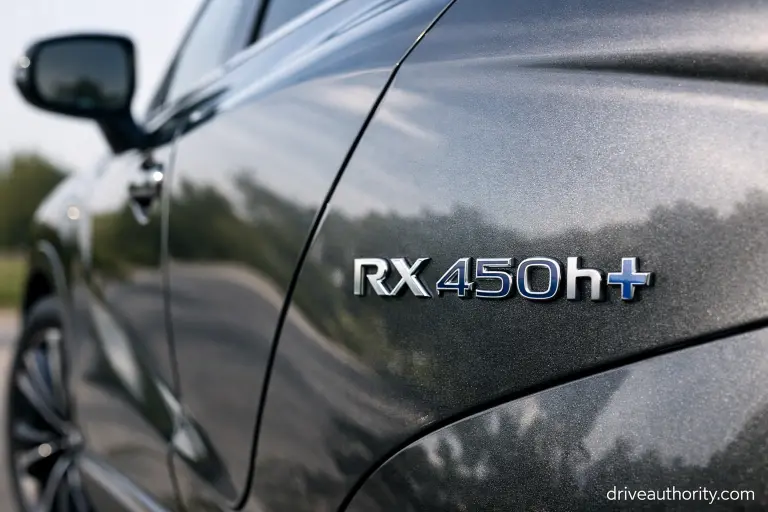
Lexus RX 350 / RX 450h — Best Overall Reliable Luxury SUV
Price Range (New / CPO):
- New: ~$46,000–$58,000
- CPO: ~$32,000–$45,000
Why the RX Wins for Overall Reliability
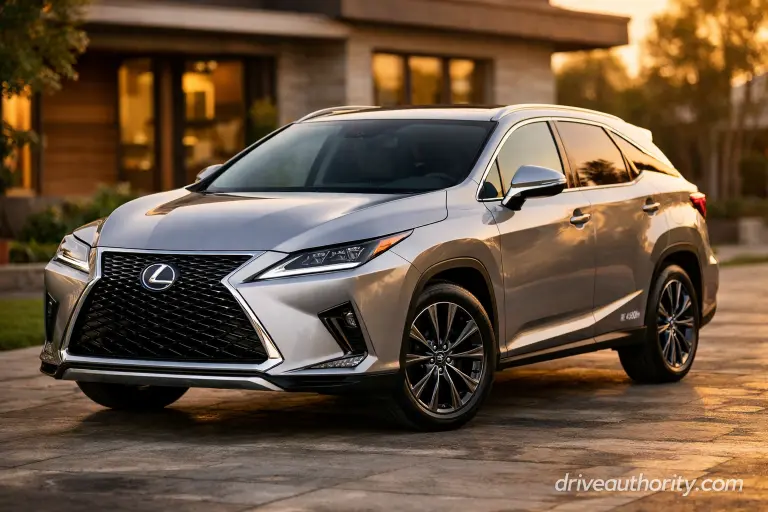
The Lexus RX represents the gold standard for reliable luxury SUV ownership. Built on Toyota’s legendary reliability foundation, the RX delivers premium comfort without the engineering complexity that plagues European rivals. The naturally aspirated 3.5L V6 has proven itself across millions of vehicles and multiple decades. It’s a known quantity with predictable service intervals and exceptional longevity. Hybrid variants add Toyota’s time-tested hybrid system, which actually reduces maintenance by decreasing brake wear and engine stress during stop-and-go driving.
What Separates This Reliable Luxury SUV From Competitors
What separates the RX from its competitors is what it deliberately avoids. Most trims rely on conventional coil springs instead of air suspension, delivering ride comfort without components that fail prematurely. The absence of complex turbocharging reduces thermal stress and long-term repair risk. Electronics are kept comparatively straightforward as well, allowing diagnosis and repairs at competent independent shops—not just Lexus dealerships.
Specs at a Glance:
- Powertrain: 3.5L V6 or 3.5L V6 + hybrid system
- Drivetrain: FWD standard; AWD optional
- Fuel Economy: 22–30+ MPG (hybrid models significantly better)
- Interior: Exceptionally quiet cabin, thoughtful ergonomics, durable materials
Long-Term Ownership Strengths
The RX’s genius lies in its engineering restraint. Lexus didn’t chase the latest technology trends or try to match German rivals on horsepower numbers. Instead, they focused on what matters for ownership: components that last, systems that don’t fail, and build quality that maintains its integrity over time.
Dealer and independent service support exists everywhere, which keeps maintenance costs competitive. Parts availability is excellent, and most components are shared with high-volume Toyota platforms, which drives down replacement costs. Hybrid versions are particularly smart long-term choices because regenerative braking dramatically extends brake life, often to 100,000+ miles before replacement, and the engine runs less frequently, reducing wear.
Insurance costs are moderate for the luxury segment, and resale values remain strong because buyers understand the RX’s reputation. A five-year-old RX with 60,000 miles isn’t a risk—it’s a vehicle just entering its prime.
Best For: Buyers seeking balanced luxury comfort, reliability, and everyday usability without compromise
Consider If: You value predictable ownership costs and long-term peace of mind over headline performance numbers or brand prestige
Lexus GX 460 — Best Rugged and Reliable Luxury SUV
Price Range:
- New: ~$60,000+
- CPO: ~$38,000–$55,000
Why the GX Excels in Durability
The Lexus GX 460 is an anomaly in today’s luxury SUV market: a body-on-frame truck wearing a luxury badge, and that’s precisely why it’s exceptional for long-term reliability. Built on the same platform as the Toyota Land Cruiser Prado, the GX uses proven truck architecture instead of the car-based unibody construction that dominates the segment.
Proven Powertrain Engineering
The naturally aspirated 4.6L V8 is one of the most durable engines Toyota has ever produced. No turbocharging complexity, no direct injection carbon buildup issues, just straightforward port injection and proven mechanical design. It’s not the most powerful or fuel-efficient engine available, but it’s one you can reasonably expect to run for 300,000 miles with proper maintenance.
The four-wheel-drive system is refreshingly simple: a two-speed transfer case with actual mechanical engagement, not an electronic system that tries to think for you. This isn’t just about off-road capability—it’s about durability. Mechanical systems are easier to service and more reliable long-term than complex electronic torque management systems.
Specs:
- Powertrain: 4.6L V8
- Drivetrain: 4WD with two-speed transfer case
- Fuel Economy: ~15–18 MPG
- Interior: Premium materials with straightforward design focus
Long-Term Ownership Strengths
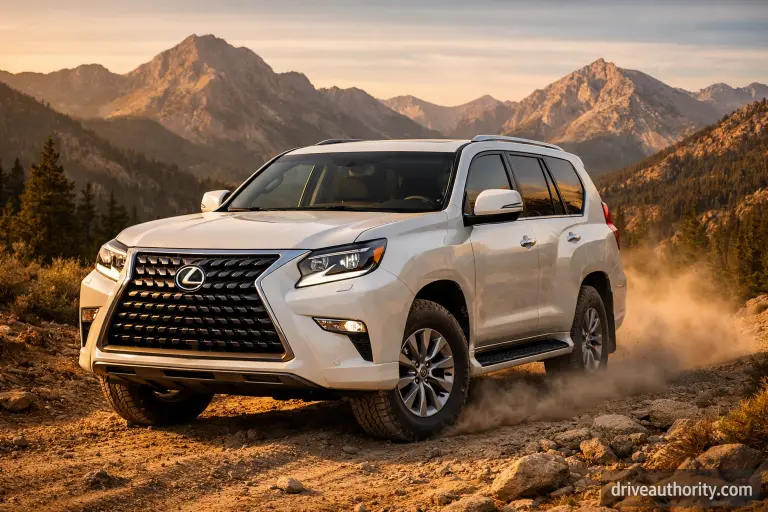
The GX’s body-on-frame construction means the chassis and body are separate, which dramatically improves durability on rough roads and reduces the likelihood of structural issues over time. There’s no air suspension to fail—just conventional coil springs and robust shock absorbers that cost reasonable amounts to replace.
Parts availability is excellent because of shared components with global Toyota truck platforms. The GX maintains exceptional resale value, often depreciating less than competing luxury SUVs because informed buyers understand its durability advantages. Service intervals are straightforward, and the mechanical simplicity means any competent technician can work on it, not just Lexus specialists.
This dependable luxury SUV particularly excels in extreme climates. Simple mechanical systems function reliably in severe cold or heat without the electronic gremlins that plague more complex vehicles. This is a vehicle engineered to work in environments where failure isn’t just inconvenient—it’s dangerous.
Best For: Buyers who need genuine off-road capability, prioritize ultimate reliability, or live in areas with challenging road conditions
Consider If: Fuel economy is a secondary concern compared to long-term durability and capability
Acura MDX (Non-Turbo / 3.5L V6 models) — Most Balanced Reliable Luxury SUV
Price Range:
- New: ~$47,000–$58,000
- CPO: ~$29,000–$42,000
Honda’s Approach to Dependable Luxury
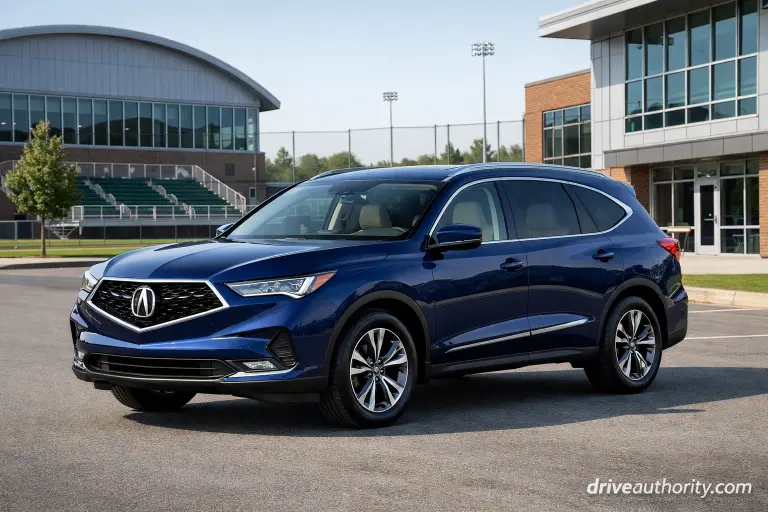
The Acura MDX represents Honda’s approach to luxury: sophisticated engineering without unnecessary complexity. The 3.5L V6 engine is derived from Honda’s proven J-series engine family, which has powered millions of vehicles with exceptional reliability. By avoiding turbocharging, Acura eliminates one of the most common failure points in modern luxury vehicles.
Balanced Engineering Philosophy
The MDX’s unibody construction delivers car-like handling and ride quality while maintaining structural durability. Acura’s Super Handling All-Wheel Drive (SH-AWD) system is more sophisticated than simple AWD but less complex than torque-vectoring systems from European manufacturers. It uses mechanical clutch packs rather than electronic wizardry, which means better long-term reliability and more affordable service.
Specs:
- Powertrain: 3.5L V6 (no turbo complexity)
- Drivetrain: SH-AWD (Honda’s mechanical torque-vectoring AWD)
- Fuel Economy: ~19–26 MPG
- Interior: Tech-forward without excessive integration or single points of failure
Long-Term Ownership Strengths
The MDX strikes an intelligent balance between modern features and mechanical simplicity. The infotainment system is sophisticated but uses physical controls for climate and volume, preventing the single-point-of-failure problem common in touchscreen-only designs. Electronics are less complex than European rivals, which translates to fewer expensive failures and easier diagnosis when issues occur.
Maintenance costs are moderate for the luxury segment. Acura dealers are typically less expensive than Lexus dealers, and the Honda connection means excellent parts availability through multiple channels. Independent shops are comfortable working on MDX vehicles because they share components and architecture with mainstream Honda products.
The SH-AWD system, while more complex than simple AWD, has proven durable in real-world use. When service is needed, costs are reasonable compared to systems requiring specialized dealer equipment. Mechanical design means failures are straightforward to diagnose and repair.
Depreciation is moderate—not quite as strong as Lexus but significantly better than German luxury brands. Insurance costs are reasonable, reflecting the MDX’s strong safety record and moderate repair costs.
Best For: Families seeking a reliable luxury SUV for daily use with modern features and confidence over complexity
Consider If: You prefer engineering that feels purposeful and measured rather than chasing technology trends
Toyota Land Cruiser Prado / 4Runner Limited — Enduring Mechanical Simplicity
Price Range:
- New: $55,000–$70,000 (market dependent)
- CPO: ~$35,000–$55,000
Engineering for Global Durability
The Toyota Land Cruiser Prado and its North American sibling, the 4Runner Limited, represent peak mechanical durability in the reliable luxury SUV segment. These are vehicles engineered for global markets where reliability isn’t a luxury feature—it’s a survival requirement. That engineering philosophy translates to exceptional long-term ownership in any market.
Proven Naturally Aspirated Powertrains
The naturally aspirated engines (4.0L V6 or 4.6L V8 depending on market and trim) are proven across millions of miles in some of the world’s harshest conditions. No turbochargers, no complex hybrid systems, just straightforward port-injected engines with robust internal components designed for longevity over peak performance.
Body-on-frame construction and traditional four-wheel-drive systems mean these vehicles can handle severe abuse while maintaining structural integrity. This isn’t just about off-road capability—it’s about durability under any conditions. A 4Runner can handle pothole-destroyed city streets, rutted dirt roads, or highway miles with equal reliability.
Specs:
- Powertrain: 4.0L V6 or 4.6L V8 (naturally aspirated)
- Drivetrain: 4WD with two-speed transfer case
- Fuel Economy: ~16–20 MPG
- Interior: Functional and exceptionally durable rather than cutting-edge
Long-Term Ownership Strengths
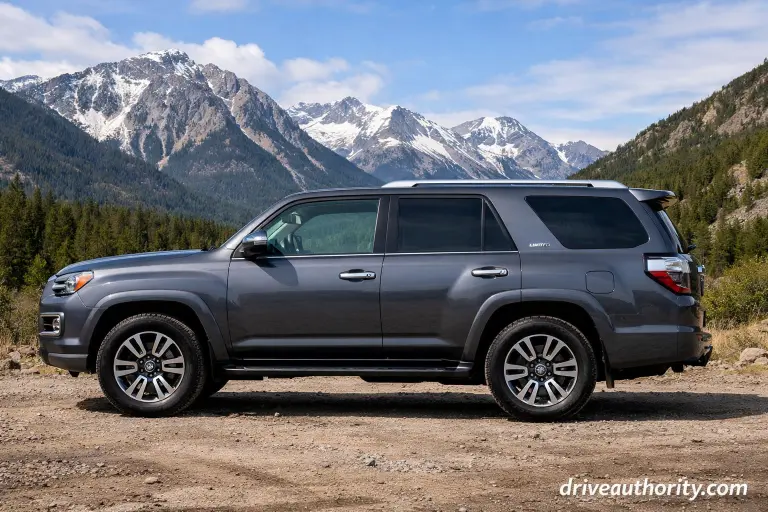
The Prado and 4Runner’s mechanical simplicity is their greatest strength. Four-wheel-drive systems use proven transfer case technology that’s been refined over decades. There are no complex electronic systems trying to manage torque distribution—just robust mechanical engagement that works predictably and lasts indefinitely with basic maintenance.
Parts availability is exceptional worldwide. Whether you’re in a major city or remote area, Toyota parts are accessible, and pricing is reasonable because of global volume. The service network is unmatched—any Toyota dealer can work on these vehicles, and their mechanical simplicity means independent shops are comfortable handling maintenance.
Resale values are extraordinary. A well-maintained 4Runner with 100,000 miles often sells for 60-70% of its original price, which is unheard of in the luxury segment. This reflects buyer confidence in the platform’s durability and the reality that these vehicles are just getting broken in at that mileage.
The lack of cutting-edge technology is a feature, not a bug. Physical buttons control climate and audio systems. There’s no complex infotainment integration that becomes outdated or fails expensively. Engineering focus is on systems that work reliably for 20+ years, not features that impress during a 20-minute test drive.
Best For: Buyers who prize ultimate reliability and longevity over interior technology depth or refined ride quality
Consider If: You value mechanical durability and functional design over contemporary luxury refinement
Volvo XC60 (B5 / B6 Mild Hybrid) — Reliable Scandinavian Luxury With Caution
Price Range:
- New: ~$45,000–$62,000
- CPO: ~$30,000–$48,000
Scandinavian Engineering Approach
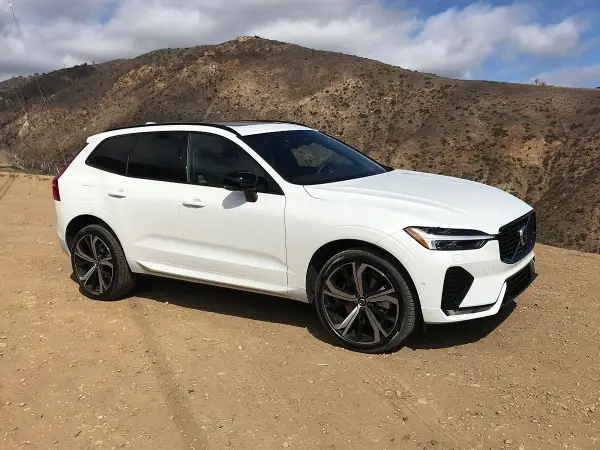
The Volvo XC60 represents a different approach to reliability: sophisticated Scandinavian engineering with a focus on safety and durable construction, but requiring careful trim selection to avoid complexity traps. The B5 and B6 mild-hybrid powertrains are significantly more reliable than Volvo’s previous turbocharged-and-supercharged engines or complex plug-in hybrid systems.
Simplified Hybrid Technology
Volvo’s mild-hybrid system uses a 48-volt electrical architecture and integrated starter-generator, which provides some efficiency benefits without the complexity and cost of a full hybrid system. The 2.0L turbocharged engine is simpler than previous forced-induction designs, and the mild-hybrid assist reduces turbo lag and strain on the engine during acceleration.
Build quality is excellent, with durable interior materials and solid construction that holds up well over time. Volvo’s safety systems are among the best in the industry, and unlike some competitors, they’re designed to function reliably long-term rather than as marketing features that fail after warranty expiration.
Specs:
- Powertrain: 2.0L turbocharged B5/B6 mild hybrid
- Drivetrain: AWD available on most trims
- Fuel Economy: ~22–27 MPG
Long-Term Ownership Strengths
The XC60’s reliability advantage comes from choosing the right configuration. B5 and B6 mild-hybrid models avoid the complexity of full plug-in systems while delivering better fuel economy and reduced engine stress compared to conventional turbo engines. The mild-hybrid system’s regenerative braking extends brake life significantly, reducing a major maintenance cost.
Volvo has improved parts availability and service network strength significantly in recent years. While still not matching Lexus or Acura for widespread service options, major metropolitan areas have strong dealer networks and growing independent shop familiarity.
Electronics in mild-hybrid trims are sophisticated but less prone to failure than in complex plug-in variants. Volvo’s infotainment system uses a large touchscreen but maintains some physical controls for critical functions, reducing single-point-of-failure risks.
Critical Caution: Avoid early plug-in hybrid XC60 models and complex turbocharged-and-supercharged engines from previous generations. These configurations have proven problematic for long-term ownership. Focus on 2020+ mild-hybrid models for the best reliability balance.
Best For: Buyers who prioritize Scandinavian safety, refined design, and are willing to accept slightly higher ownership costs than Japanese brands for European luxury
Consider If: You value safety technology and understated design—but verify you’re choosing mild-hybrid configurations, not complex plug-in models
Audi Q5 (2.0T / 45 TFSI) — Solid German Reliable Luxury SUV Option
Price Range:
- New: ~$47,000–$59,000
- CPO: ~$30,000–$44,000
Most Proven German Engineering
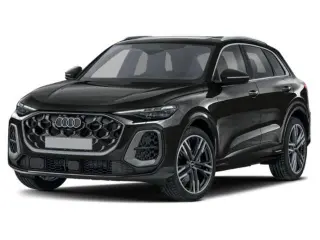
The Audi Q5 with the 2.0T (45 TFSI) engine represents the most reliable entry point into German luxury SUVs, though it requires understanding what you’re getting into. Audi’s 2.0T turbocharged four-cylinder is the company’s most proven modern engine family, with millions of units produced and refinement through multiple generations.
Mechanical Quattro System
The Quattro all-wheel-drive system is sophisticated but fundamentally mechanical, using a center differential and clutch packs rather than purely electronic torque management. This provides responsive handling while maintaining reasonable long-term durability. The Q5’s platform is shared with other Volkswagen Group products, which drives down parts costs compared to more specialized German luxury vehicles.
Specs:
- Powertrain: 2.0L turbocharged four-cylinder
- Drivetrain: Quattro AWD
- Fuel Economy: ~23–28 MPG
Long-Term Ownership Strengths
The Q5’s reliability advantage comes from sticking with the 2.0T engine and avoiding more complex 3.0T configurations or plug-in hybrid variants. The 2.0T has proven reasonably durable when properly maintained, though it requires more frequent service than naturally aspirated Japanese engines.
Parts availability is good through Audi dealers and increasingly through independent specialists familiar with Volkswagen Group vehicles. Service costs are higher than Japanese luxury brands but more manageable than specialized European marques. Finding a qualified independent shop that specializes in Audi/VW products for routine maintenance can reduce costs significantly compared to dealer service.
The Q5 uses conventional suspension rather than air ride on most trims, which dramatically improves long-term reliability. When suspension components do need replacement, costs are reasonable for the segment.
Critical Considerations: The Q5 is reliable for a German luxury SUV, but that’s a qualified statement. Maintenance costs will be higher than Lexus or Acura. You’ll need to be more diligent about service intervals, particularly for the turbocharged engine and DSG transmission. Electronics are sophisticated and generally reliable in recent models, but repairs can be expensive when issues occur.
Best For: Buyers who want refined German engineering and handling dynamics while accepting higher maintenance costs than Japanese alternatives
Consider If: You want German luxury but understand the ownership cost tradeoff—and you stick with the 2.0T engine configuration
Prices & Ownership Costs: Long-Term Reality
Understanding Total Cost of Ownership
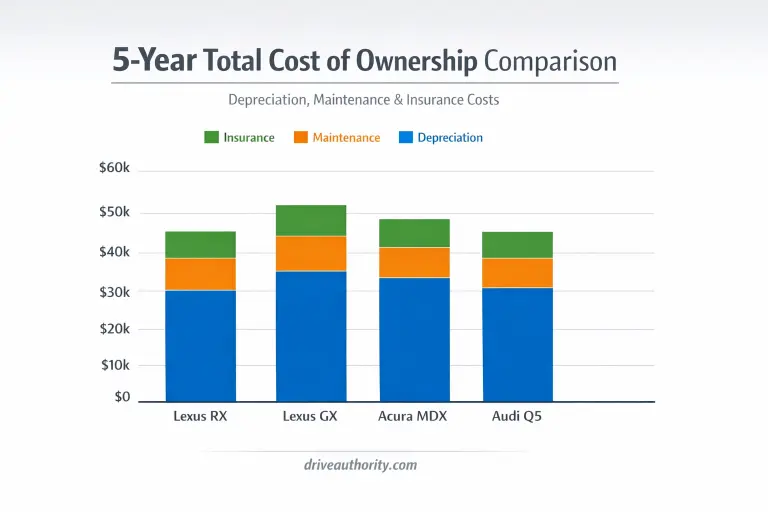
Understanding total ownership cost means looking beyond purchase price to maintenance, depreciation, insurance, and the likelihood of major repairs.
5-10 Year Ownership Cost Comparison
| Vehicle | Est. 5-Yr Maintenance | Typical Depreciation (5yr) | Major Repair Risk | Insurance Cost |
|---|---|---|---|---|
| Lexus RX 350/450h | $4,500–$6,500 | 40–45% | Very Low | Moderate |
| Lexus GX 460 | $5,000–$7,000 | 35–40% | Very Low | Moderate-High |
| Acura MDX | $5,500–$7,500 | 45–50% | Low | Moderate |
| Toyota 4Runner | $4,500–$6,500 | 30–35% | Very Low | Moderate |
| Volvo XC60 (B5/B6) | $6,500–$9,000 | 50–55% | Moderate | Moderate-High |
| Audi Q5 (2.0T) | $7,500–$10,500 | 50–55% | Moderate | High |
Real Numbers Tell the Story
The numbers reveal important ownership realities. Lexus and Toyota products cost more upfront but deliver lower total ownership costs through exceptional resale value and minimal repair needs. A Lexus GX that retains 60% of its value after five years effectively costs you $24,000 in depreciation on a $60,000 purchase. An Audi Q5 that retains 45% of its value costs you $27,500 in depreciation on a $50,000 purchase, plus higher maintenance costs.
Insurance Trends for Reliable Luxury SUVs
Insurance costs reflect repair costs and claim frequency. Japanese luxury brands typically cost 15-25% less to insure than German equivalents because parts are cheaper and repairs are less frequent. The Lexus GX and Toyota 4Runner carry higher insurance costs due to high theft rates and their retained value, but this is offset by exceptional resale value. According to Kelley Blue Book’s cost of ownership data, total insurance and maintenance costs vary significantly across luxury SUV brands.
CPO Warranty vs New Ownership Cost Curve
Certified Pre-Owned (CPO) programs offer compelling value, particularly for Lexus and Acura models. A CPO Lexus RX with 30,000 miles and two years remaining on the original warranty plus extended CPO coverage can cost $15,000 less than new while offering nearly identical ownership risk.
Understanding the ownership cost curve is crucial. New luxury SUVs depreciate most steeply in years 1-3, losing 35-45% of their value. Buying a 2-3 year old CPO vehicle lets someone else absorb that depreciation while you get a vehicle that’s barely broken in with warranty protection. For brands with strong reliability like Lexus and Acura, this is often the smartest financial decision.
German luxury vehicles follow different logic. Because maintenance costs increase significantly after warranty expiration and resale values drop steeply, buying new with a comprehensive warranty often makes more sense than buying used and inheriting someone else’s deferred maintenance.
New vs Used vs CPO: Smart Ownership Strategies for Reliable Luxury SUVs
Best Mileage Ranges to Buy Used
Sweet spot: 25,000–50,000 miles (2-4 years old)
This range offers the best balance of depreciation savings and remaining vehicle life. The original owner absorbed the steepest depreciation, but the vehicle is young enough that major systems haven’t experienced significant wear. Most factory warranties cover 50,000–60,000 miles, so you may still have some coverage remaining.
Acceptable range: 50,000–75,000 miles (4-6 years old)
This range requires more careful inspection but can offer excellent value, particularly for proven reliable luxury SUVs like the Lexus RX or Toyota 4Runner. Most major service items (brakes, tires, fluids) will have been addressed, and you can evaluate the vehicle’s actual condition rather than hoping it was built well.
Advanced buyer range: 75,000–100,000 miles (6-8 years old)
Only consider this range for vehicles with exceptional reliability reputations and documented maintenance history. A Lexus GX or Toyota 4Runner with 80,000 well-maintained miles is just getting broken in. An Audi Q5 with the same mileage is approaching expensive maintenance intervals and potential major repairs.
CPO Warranty Extensions
CPO programs vary significantly by manufacturer, but the best offerings provide genuine value:
Lexus CPO: Typically adds 2 years/unlimited miles to the original 4-year/50,000-mile warranty. Comprehensive coverage including hybrid components. This is one of the industry’s best CPO programs because Lexus reliability means the warranty rarely gets used, yet it provides complete peace of mind.
Acura CPO: 7-year/100,000-mile powertrain coverage plus 1 year/12,000 miles comprehensive coverage from certification date. Good balance of coverage and cost.
Audi CPO: 1 additional year/unlimited miles from the end of the original 4-year/50,000-mile warranty. Less generous than Japanese brands but valuable given Audi’s higher repair costs.
The key question: Does the CPO warranty premium justify the coverage? For reliable brands, you’re essentially buying peace of mind. For brands with higher repair risks, you’re buying insurance against expensive failures.
How to Inspect Longevity Signals

Suspension and chassis integrity: Test drive over rough roads and listen for clunks, rattles, or squeaks. These indicate worn bushings, ball joints, or mounting points. Check for uneven tire wear, which suggests alignment issues or suspension problems. Look under the vehicle for rust, damage, or leaking fluids.
Electronics health: Test every electronic feature: windows, seats, climate control, infotainment, cameras, sensors. Electronics that fail during a test drive will be expensive to fix and indicate broader reliability concerns. Verify that all dashboard warning lights function during startup, then extinguish properly.
Drivetrain condition: Transmission should shift smoothly without hesitation, hard shifts, or slipping. All-wheel-drive systems should engage without noise or vibration. Engine should idle smoothly and respond crisply to throttle inputs without hesitation.
Service history verification: Demand complete service records, not just verbal assurances. Look for regular oil changes, scheduled maintenance, and any major repairs. Missing records are a warning sign. For German vehicles, verify dealer service history as independent shops may have cut corners on expensive scheduled maintenance.
What to Test Drive to Spot Reliability Clues in Luxury SUVs
Noise, Vibration, and Harshness (NVH) Over Rough Roads
A proper test drive reveals more about long-term reliability than any specification sheet. You’re not just evaluating how the vehicle drives—you’re assessing the engineering choices that determine ownership costs.

Find the worst road surface available: broken pavement, potholes, expansion joints. Drive over it at various speeds. Listen and feel for:
Solid, tight structure: Reliable luxury SUVs maintain composure over rough surfaces without rattles, squeaks, or flexing. A vehicle that feels loose or generates random noises over bumps indicates wear or poor build quality.
Suspension control: Suspension should absorb impacts without excessive bouncing or secondary vibrations. Harsh impacts are acceptable; continuing oscillation afterward is not.
Interior integrity: All interior panels, trim pieces, and components should remain silent. Rattles indicate poor assembly or wear, and they only get worse over time.
Dependable luxury SUVs feel solid and composed. Problematic vehicles announce themselves through excessive noise and looseness, even when relatively new.
Part-Time vs Full-Time AWD Feel
Engage the four-wheel-drive or all-wheel-drive system and drive through a variety of conditions:
Smooth engagement: Systems should engage without clunking, grinding, or hesitation. Rough engagement indicates wear or design issues.
Predictable behavior: Full-time AWD should feel transparent in normal driving. Part-time 4WD should feel slightly different when engaged but not compromised. Electronic systems should respond smoothly without abrupt interventions.
No warning lights: Dashboard warnings during AWD operation indicate sensor issues or system faults—both expensive to diagnose and repair.
Simple mechanical systems feel more predictable and direct. Complex electronic systems can feel intrusive or artificial, and that complexity translates to higher failure rates and repair costs.
Electronics Boot Times and Screen Responsiveness
Start the vehicle from cold and time how long it takes for all systems to become fully responsive:
Infotainment startup: Should complete within 10-15 seconds maximum. Longer times indicate sluggish processors or software issues.
Camera and sensor activation: Backup cameras and parking sensors should activate immediately when needed. Delays indicate system strain or failing components.
Climate control response: Should respond instantly to inputs. Delayed response suggests electronic issues or failing actuators.
Touch screen responsiveness: Should feel immediate and precise, like a modern smartphone. Laggy, unresponsive touch screens indicate inadequate processing power or aging hardware.
These symptoms worsen over time. A sluggish infotainment system in a 2-year-old vehicle will be nearly unusable in 5 years, and replacement costs can exceed $2,000-$3,000.
Mistakes Buyers Make When Shopping Reliable Luxury SUVs
Valuing Brand Badge Over Engineering Simplicity
The most expensive mistake in luxury SUV shopping is choosing a prestigious badge over proven engineering. A Range Rover commands attention and delivers impressive capability, but it’s notorious for expensive failures after warranty expiration. A Lexus GX lacks the same cachet but delivers worry-free ownership for a decade or more.
This mistake stems from emotional purchasing—wanting to project status or image rather than making a rational ownership decision. Most people who see you driving don’t care what you drive, and those who do care are often terrible at financial decision-making themselves.
Ask yourself: Am I buying this vehicle to impress others or to serve my actual needs? If the answer includes impressing others, you’re making a decision that will cost you tens of thousands of dollars over the ownership period.
Ignoring Historical Reliability Trends
Past performance is the best predictor of future reliability. Manufacturers don’t suddenly become reliable or unreliable—they establish patterns over decades. Toyota and Lexus have delivered exceptional reliability across multiple generations of vehicles. Audi has improved but still trails significantly. Land Rover has promised improvement for years while continuing to rank near the bottom of reliability surveys.
Buyers ignore these trends because they want to believe that “they’ve fixed those issues” or “the new generation is much better.” Sometimes that’s true—but counting on it is gambling with your money. The smart approach is believing historical patterns until overwhelming evidence proves otherwise.
Research manufacturer reliability trends across multiple model years and vehicle lines. If a brand consistently ranks poorly, they’ve demonstrated their engineering priorities don’t include long-term durability.
Overlooking Parts and Service Network Strength
You can’t assess ownership costs without considering where and how the vehicle will be serviced. A luxury SUV that requires dealer-only service with proprietary tools creates a captive ownership situation where you have no pricing power.
The best reliable luxury SUVs can be serviced at independent shops for routine maintenance while maintaining warranty coverage. Parts are available from multiple sources, creating pricing competition. Diagnostic procedures are straightforward enough that competent technicians can troubleshoot issues without dealer-specific equipment.
Before purchasing, research:
- How many dealers are within reasonable distance
- Whether independent shops in your area service that brand
- Parts pricing for common maintenance items
- Availability of aftermarket parts and tools
A vehicle that seems affordable to purchase can become expensive to own if you’re trapped in a dealer-only service monopoly. For more insights on vehicle maintenance costs, check out our comprehensive guide to luxury SUV ownership costs.
Best Reliable Luxury SUVs by Buyer Type
Best for 10+ Year Ownership: Lexus RX / GX
If your goal is keeping one vehicle for a decade or more, Lexus is the clear choice. Both the RX and GX are engineered for longevity with proven powertrains, simple mechanical systems, and build quality that maintains integrity over time. Resale value remains strong even at high mileage, and maintenance costs stay reasonable throughout ownership. The hybrid RX is particularly compelling for long-term ownership because the powertrain reduces wear on multiple systems while delivering excellent fuel economy. Learn more about Lexus long-term reliability.
Best Family SUV: Acura MDX
For families prioritizing daily reliability with modern features, the Acura MDX delivers the best balance. Three-row seating accommodates growing families, Honda’s engineering provides confidence for high-mileage daily use, and the technology level satisfies modern expectations without excessive complexity. The MDX feels more contemporary than the Lexus GX while maintaining better reliability than German alternatives. Insurance costs are reasonable, and repair costs won’t shock you when maintenance is needed.
Best Simplicity-First SUV: Toyota Prado / 4Runner
If you value mechanical simplicity and ultimate durability over refinement, the Toyota 4Runner or Land Cruiser Prado represents peak reliable engineering. These vehicles use time-tested body-on-frame construction, naturally aspirated engines, and straightforward four-wheel-drive systems that will outlast more sophisticated alternatives. The tradeoff is fuel economy and refinement, but the payoff is exceptional resale value and genuine 300,000+ mile capability with proper maintenance.
Best Scandinavian Alternative: Volvo XC60 (B5/B6)
For buyers who prioritize Scandinavian safety and design while accepting slightly higher ownership costs than Japanese brands, the XC60 mild-hybrid represents the best compromise. Safety technology is exceptional, interior design is thoughtfully understated, and the mild-hybrid powertrain balances efficiency with reasonable long-term reliability. This is the right choice for buyers who want European refinement without the extreme ownership costs of German luxury brands—but only if you stick with B5/B6 mild-hybrid configurations.
Best German Reliable Choice: Audi Q5 (2.0T)
If you’re committed to German luxury and willing to accept higher maintenance costs for refined driving dynamics, the Audi Q5 with the 2.0T engine is your best option. It delivers the handling precision and interior quality German brands are known for while using the most proven powertrain in Audi’s lineup. Understanding the tradeoff is crucial: you’re trading lower Japanese reliability for European driving character, and budgeting accordingly for maintenance. Find a qualified independent Audi specialist for routine service, and avoid complex engine or hybrid configurations.
FAQ — Buyer-Centric Answers
Are reliable luxury SUVs worth the price?
The question isn’t whether reliable luxury SUVs are worth their purchase price—it’s whether they’re worth their total ownership cost. A $50,000 Lexus RX that costs $6,000 to maintain over five years and retains 55% of its value costs you $28,500 in total. A $45,000 luxury SUV that costs $12,000 to maintain and retains 40% of its value costs you $39,000 in total.
Dependable luxury SUVs justify their price through predictable costs, low stress ownership, and strong resale value. You’re paying for engineering that prioritizes longevity, not just initial impressions. The real question is whether you value ownership confidence enough to choose substance over status, because that’s the tradeoff. A Lexus GX won’t turn as many heads as a Range Rover, but it also won’t leave you stranded or drain your bank account with repair bills.
The buyers who question whether reliable luxury SUVs are worth the price are often comparing them to unreliable luxury SUVs on purchase price alone, ignoring the five-year cost reality that makes the reliable option dramatically cheaper to own.
Which luxury SUV lasts the longest?
The Toyota Land Cruiser platform—which includes the Land Cruiser Prado, Lexus GX, and to some extent the Toyota 4Runner—represents the longest-lasting luxury SUV engineering available. These vehicles routinely exceed 300,000 miles with proper maintenance, and examples with 400,000+ miles aren’t uncommon in markets where they’re used as workhorses.
The Lexus RX follows closely behind, particularly hybrid models. The combination of proven Toyota engineering, simple mechanical systems, and reduced engine stress in hybrid variants creates exceptional longevity. Well-maintained RX models routinely exceed 200,000 miles while maintaining impressive reliability.
What separates these vehicles from competitors is engineering philosophy. They’re designed for longevity from the ground up, using proven components and conservative engineering approaches. German luxury SUVs can last a long time with meticulous maintenance, but they require significantly more frequent and expensive service to achieve it. The Toyota and Lexus products maintain their reliability even with moderate maintenance and occasional owner neglect.
Do luxury hybrids cost more to maintain?
This depends entirely on the hybrid system design. Toyota and Lexus hybrids actually cost less to maintain than their conventional counterparts over the vehicle’s lifetime. The hybrid system extends brake life dramatically through regenerative braking—often to 100,000+ miles before replacement. The engine runs less frequently and under less stress, which extends its life and reduces oil consumption. The transmission is a simple planetary gearset rather than a complex conventional automatic, which means fewer failure points.
Battery pack warranty is typically 8-10 years or 100,000+ miles, and real-world failure rates are very low. Even after warranty expiration, Toyota hybrid battery replacements cost $2,000-$3,000, which is less than many single repair bills on complex European luxury vehicles. According to Edmunds hybrid ownership analysis, long-term hybrid ownership often costs less than conventional powertrains.
Complex plug-in hybrids from European manufacturers are a different story. They combine the complexity of a full hybrid system with large battery packs, additional cooling systems, and complicated electronic management. These systems cost significantly more to maintain and repair when issues occur. The rule is simple: Toyota and Lexus hybrids reduce maintenance costs; European plug-in hybrids increase them.
Is CPO better than new for reliability?
For vehicles with exceptional reliability like Lexus and Toyota products, CPO represents better value than new. You’re buying a vehicle that’s barely broken in—these platforms improve with use during the first 50,000 miles as components settle and seal—while avoiding the steepest depreciation period.
A CPO Lexus RX with 30,000 miles costs perhaps $15,000 less than new while offering extended warranty coverage and a vehicle that’s demonstrated its build quality rather than being an untested example. The previous owner absorbed the depreciation while you get a vehicle entering its reliability prime with warranty protection.
For vehicles with moderate reliability, CPO makes sense if the warranty coverage is comprehensive and you’re confident in the specific vehicle’s maintenance history. A CPO Acura MDX or Audi Q5 from a reputable dealer with documented service history offers good value.
For vehicles with poor reliability reputations, new with a comprehensive warranty is often smarter than CPO. You want maximum warranty coverage when purchasing vehicles prone to expensive failures.
The key consideration is matching the purchase strategy to the vehicle’s reliability reputation and your risk tolerance.
Conclusion: Ownership Confidence Over Flash
The best reliable luxury SUVs prioritize engineering substance over marketing flash. Instead of chasing headline horsepower figures, they rely on proven powertrains with long service lives. Suspension design favors durable, conventional systems over complex air ride setups that feel impressive on a test drive but often fail after the warranty ends. Build quality takes precedence over fragile, cutting-edge tech—ensuring the vehicle ages gracefully rather than becoming an expensive liability.
This approach requires rethinking what luxury means. True luxury isn’t the newest technology or the most prestigious badge—it’s the confidence that your vehicle will start every morning, serve reliably for years, and maintain its value when you’re ready to sell. It’s the peace of mind that comes from predictable maintenance costs and a service network that treats you fairly because you’re not trapped in a dealer monopoly.
The vehicles highlighted in this guide—the Lexus RX and GX, Acura MDX, Toyota Land Cruiser Prado and 4Runner, and carefully selected Volvo and Audi models—represent different approaches to achieving reliable luxury. What unites them is engineering that rewards ownership rather than demanding excuses for failures.
Your choice among these best reliable luxury SUVs should reflect your specific priorities: ultimate longevity, family functionality, Scandinavian safety, or refined German handling. Regardless of which direction you choose, you’re selecting a vehicle engineered for the reality of long-term ownership, not just the impression of a showroom test drive.
The luxury SUV market is filled with vehicles that look impressive on paper but create ownership stress through expensive repairs, rapid depreciation, and service nightmares. The vehicles in this guide represent the alternative: refined engineering that proves its worth through years of dependable service. That’s the real definition of reliable luxury SUVs, and it’s worth prioritizing over any brand badge or specification sheet. For more guidance on making smart automotive decisions, explore our complete luxury vehicle buying guides.