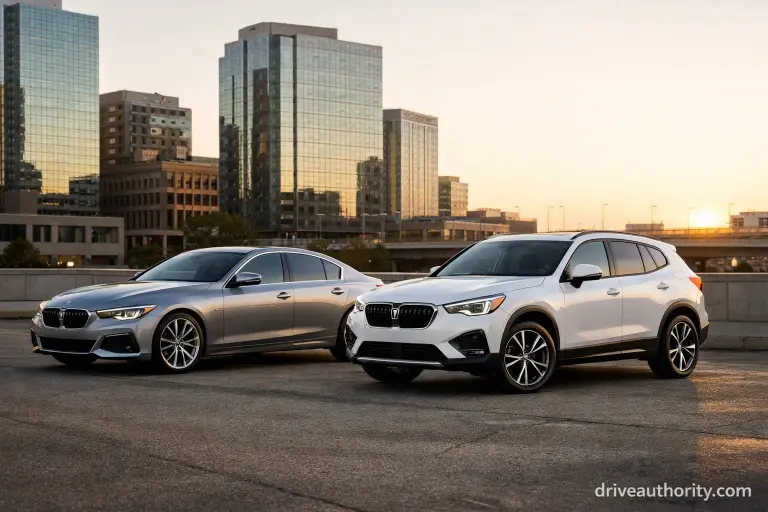
The biggest first time EV buyer mistake is choosing a car based on advertised range instead of your actual charging situation. I’ve watched dozens of new EV owners realize—too late—that a 300-mile EPA rating means nothing if you’re relying on public chargers or don’t understand winter range loss. This costs them thousands in depreciation when they panic-sell within a year, plus hundreds in unnecessary fast-charging fees.
This guide is for first-time buyers about to pull the trigger on their first EV. If you already own one, you’ve likely learned these lessons the expensive way.
First Time EV Buyer Mistake #1: Buying Too Much Range (Or Too Little)
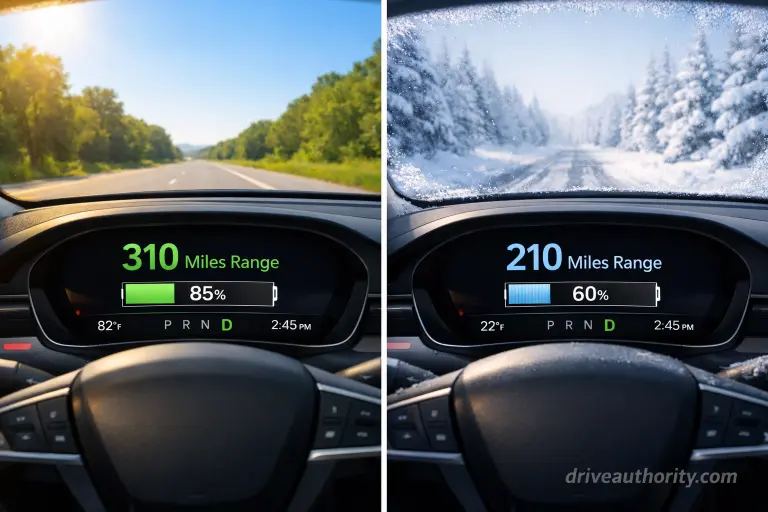
Here’s the trap: you see a Tesla Model 3 Long Range with 341 miles of EPA range and think, “I’ll never worry about charging.” So you spend $47,490 instead of $38,990 for the Standard Range with 272 miles.
But if you charge at home and drive 40 miles daily, you’re paying $8,500 for range you’ll use maybe twice a year on road trips. That’s real money that could’ve gone toward installing a Level 2 charger ($600–$1,200) or simply stayed in your pocket.
Conversely, buying too little range backfires fast. A Nissan Leaf with 149 miles sounds fine for city driving until winter hits and you’re getting 110 real-world miles. Suddenly, your “cheap EV” forces you into expensive public charging three times a week instead of convenient overnight home charging.
The fix: Calculate your actual daily driving. Add 30% buffer for cold weather and detours. If that number is under 200 miles and you have home charging, you don’t need a 300+ mile battery. If you’re over 150 miles daily or lack home charging, you absolutely need more range than you think.
Common New EV Owner Mistake: Ignoring Your Actual Charging Reality
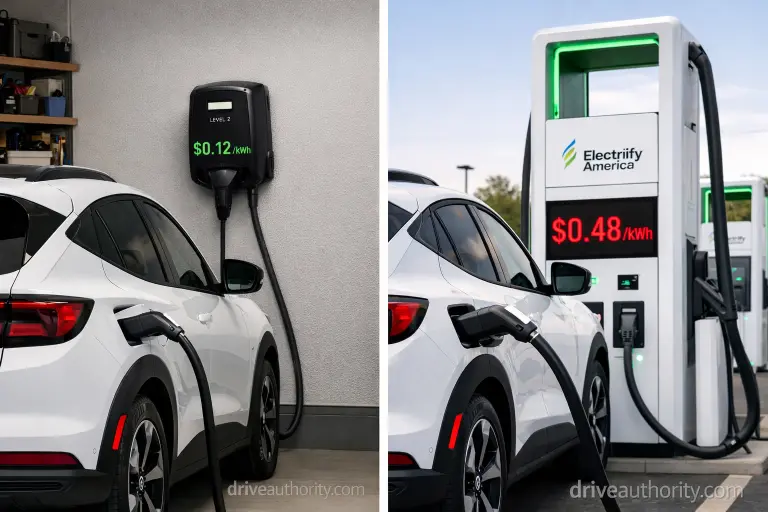
This is where people bleed money without realizing it. A Hyundai Ioniq 6 SE costs $37,500 and charges beautifully on its 800V architecture—10% to 80% in 18 minutes at a 350 kW station. Sounds perfect, right?
Except there are only about 1,000 350 kW chargers in the U.S., mostly on major highways. If you live in a suburb and rely on the Electrify America station at Walmart that maxes out at 150 kW, your “18-minute charge” becomes 45 minutes. You’re paying $0.43–$0.56 per kWh instead of $0.12 at home.
Over a year, charging twice weekly at public stations costs roughly $1,800–$2,400 versus $600 for home charging. That’s $1,200–$1,800 wasted annually because you didn’t verify your charging options before buying.
The reality check: If you can’t install a 240V outlet in your garage or parking spot, you need either a plug-in hybrid or access to extremely convenient workplace/public charging. Don’t convince yourself you’ll “make it work”—you won’t, and it’ll cost you.
Tesla owners get a slight edge here with Supercharger access. GM vehicles now access Tesla’s network via adapters. Everyone else is navigating a fragmented mess of apps, broken chargers, and inconsistent pricing.
First Time EV Buyer Mistake: Skipping the Total Cost Math
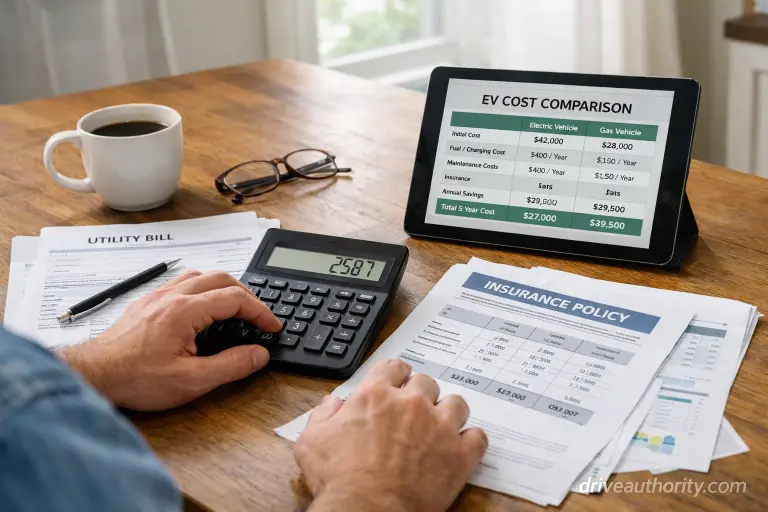
First-time buyers fixate on sticker price and miss the complete financial picture. Here’s an example that just played out with a neighbor:
She bought a used 2020 Chevy Bolt for $18,000 (seemed like a steal). But she didn’t research that GM had a battery recall, limiting charging to 80% until replacement. Her “238-mile range” became 190 miles, then 150 in winter. The dealership “forgot” to mention the battery replacement would take 8–12 months.
She also didn’t factor in:
- No federal tax credit on used EVs over three years old (rules changed in 2023)
- Higher insurance ($150/month vs. $110 for her old Civic)
- A $1,200 Level 2 charger installation
Her “bargain” EV cost an extra $3,800 in year one compared to keeping her paid-off Civic.
What New Electric Vehicle Buyers Should Actually Calculate
- Purchase price minus tax credits (federal + state)
- Insurance difference (EVs often cost 15–25% more to insure)
- Home charging installation
- Maintenance savings (about $500/year vs. gas cars)
- Fuel savings based on YOUR actual electricity rates
According to the Department of Energy’s vehicle cost calculator, even expensive EVs break even faster than you’d think—but only if you run the real numbers for your situation.
Avoiding First Time EV Buyer Mistakes: The Money-Saving Game Plan
Before you buy, take these three steps:
First, verify your charging setup. If you rent or can’t install home charging, seriously reconsider. The math rarely works without it.
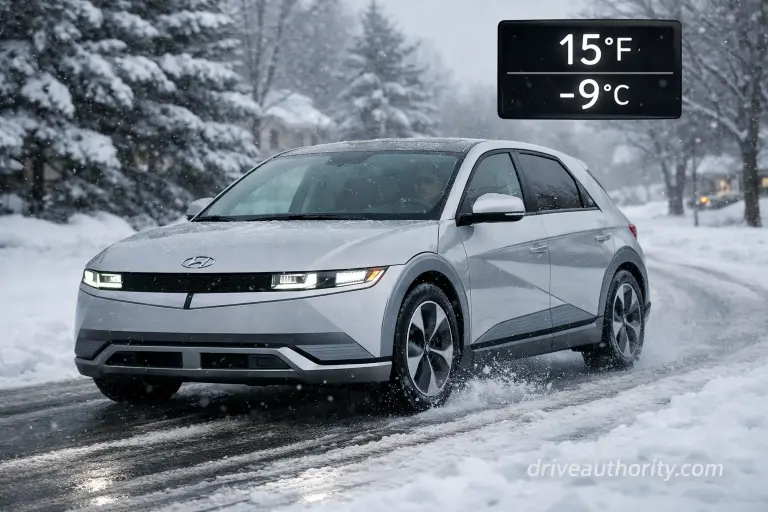
Second, test drive in winter if possible. Cold-weather range loss is real—expect 20–40% drops below freezing. If the dealer pressures you to buy in summer, walk away and come back in January.
Third, compare total five-year ownership costs, not just monthly payments. A $42,000 EV with a $7,500 tax credit and $0.10/kWh home charging will cost less than a $32,000 EV charged publicly at $0.48/kWh.
For detailed EV cost breakdowns and regional charging maps, check out our complete EV buying guide.
The Bottom Line on First Time EV Buyer Mistakes
The most expensive first time EV buyer mistake is treating an EV purchase like a gas car decision. It’s not. Your charging access matters more than the badge on the hood. Your actual range needs matter more than EPA numbers. And your total cost of ownership matters more than the sticker price.
Skip the impulse buy. Spend two weeks tracking your real driving patterns, research charging within five miles of your home and work, and run the complete math. The right EV at the right price will still be there next month—and you’ll save thousands by buying smart instead of buying fast.