Introduction: Why This Question Is Everywhere
You’ve probably seen the headlines. Maybe a friend mentioned it. Or you stumbled across a forum debate where Tesla owners were arguing about whether their cars contain Chinese-made batteries.
Are Tesla batteries made by BYD? It’s a question that’s been circulating across social media, EV forums, and even mainstream news outlets. The short answer is more nuanced than a simple yes or no. Some Tesla models do use BYD batteries, but not all of them—and understanding when, where, and why makes all the difference.
The Rise of Chinese Battery Dominance
The confusion didn’t appear out of nowhere. Over the past few years, China has quietly become the undisputed powerhouse of global battery manufacturing. Companies like CATL and BYD now control over 50% of the world’s EV battery market, according to recent data from SNE Research.
Meanwhile, Tesla—the brand synonymous with American electric innovation—has been expanding its manufacturing footprint in China. The company has also been diversifying its battery suppliers in ways that surprise even longtime fans.
Why the Rumors Started
When you combine Tesla’s strategic pivot toward cost-effective battery chemistries with BYD’s reputation as a leading innovator, rumors naturally start flying. Social media posts claim Tesla is “secretly” using BYD batteries. YouTube videos dissect whether this partnership strengthens or weakens Tesla’s position.
Prospective buyers wonder if the battery supplier affects their car’s performance. They question whether it impacts safety or resale value.
What This Article Will Clarify
Here’s what makes this question so important: It’s not just about brand loyalty or national pride. Understanding who makes Tesla batteries reveals how the entire EV industry is evolving. It shows you the real trade-offs between cost, performance, and supply chain security.
In this article, we’ll cut through the speculation and give you the facts. You’ll learn exactly which Tesla models use BYD batteries. We’ll explain why Tesla made this choice. You’ll discover how BYD batteries compare to other options.
Moreover, we’ll separate the myths from reality. By the end, you’ll be able to make informed decisions based on evidence, not internet rumors.
Let’s start with the foundation: who actually makes Tesla batteries today?
Who Makes Tesla Batteries Today? (Quick Overview)
Here’s something that surprises many people: Tesla doesn’t rely on a single battery supplier. Instead, the company works with multiple partners across different regions and vehicle models. This strategic approach gives Tesla flexibility, cost advantages, and protection against supply chain disruptions.
Tesla’s Key Battery Partners
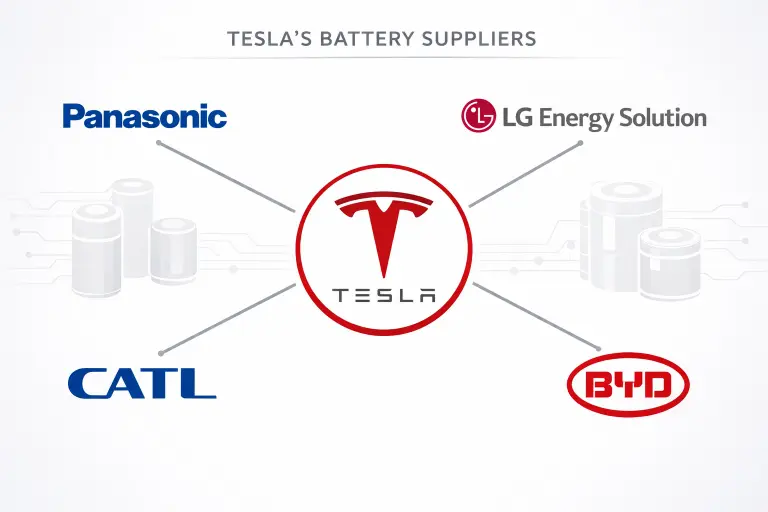
Currently, Tesla sources batteries from three major manufacturers, each bringing distinct strengths to the table.
Panasonic has been Tesla’s longest-standing battery partner. The two companies have collaborated since Tesla’s early days, jointly operating the massive Gigafactory Nevada. Panasonic primarily supplies high-energy-density NCA (Nickel Cobalt Aluminum) batteries. These power the performance-oriented versions of Tesla’s Model S, Model X, and some Model 3 variants built in the United States.
LG Energy Solution entered Tesla’s supply chain more recently. This South Korean giant provides batteries for certain Model 3 and Model Y vehicles. LG supplies both NCA and NCM (Nickel Cobalt Manganese) chemistry cells. Their batteries are particularly prevalent in vehicles manufactured at Tesla’s facilities outside of China.
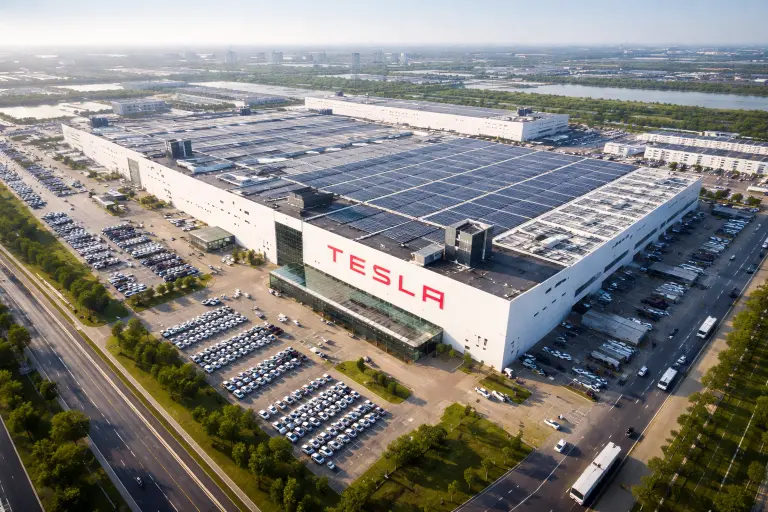
CATL (Contemporary Amperex Technology Co. Limited) is the world’s largest battery manufacturer by volume. Based in China, CATL supplies LFP (Lithium Iron Phosphate) batteries to Tesla. These batteries go into standard-range Model 3 and Model Y vehicles produced at Tesla’s Shanghai Gigafactory. CATL’s LFP technology offers excellent safety characteristics and lower costs, though with slightly reduced energy density.
Who Is BYD and Why Are They Important in EV Batteries?
Before we can fully answer “are Tesla batteries made by BYD,” you need to understand who BYD actually is. This Chinese company has become impossible to ignore in the global EV landscape.
BYD’s Background and Rise to Prominence
BYD stands for “Build Your Dreams.” Founded in 1995 as a rechargeable battery manufacturer, the company has transformed into one of the world’s most formidable players in electric mobility. Today, BYD operates in over 70 countries and employs more than 300,000 people.
What started as a battery company supplying mobile phone manufacturers evolved into something much bigger. In 2003, BYD acquired a struggling Chinese automaker and entered the automotive business. This vertical integration strategy—controlling both vehicle production and battery manufacturing—gave BYD unique advantages that few competitors could match.
BYD as Both Automaker and Battery Manufacturer
Here’s what makes BYD different from Tesla’s other battery suppliers: BYD is also Tesla’s direct competitor in the EV market. While Panasonic and LG Energy Solution only make batteries, BYD designs, manufactures, and sells its own electric vehicles globally.
In fact, BYD recently surpassed Tesla in quarterly EV sales for the first time. The company sold over 3 million electric and plug-in hybrid vehicles in 2023. This dual identity as both supplier and competitor creates a fascinating dynamic in the industry.
BYD’s battery division, FinDreams Battery, supplies cells not only to BYD vehicles but also to other automakers. The company has mastered the entire supply chain—from lithium mining to final battery assembly. This vertical integration allows BYD to control costs and innovate rapidly.
The Revolutionary BYD Blade Battery Technology
In 2020, BYD unveiled its Blade Battery—a breakthrough that changed industry perceptions of LFP technology. The Blade Battery uses a unique cell-to-pack design that eliminates traditional battery modules. Instead, long, thin battery cells are arranged like blades and inserted directly into the pack.
This design offers several compelling advantages. The Blade Battery provides 50% more energy density than conventional LFP batteries. It also passes the notorious nail penetration test—a safety benchmark where most batteries catch fire or explode. BYD’s Blade Battery simply releases a small amount of smoke without thermal runaway.
The technology addresses LFP’s traditional weakness: lower energy density compared to nickel-based chemistries. With the Blade Battery, BYD narrowed this gap significantly while maintaining LFP’s inherent safety and longevity benefits.
Why BYD Is Often Compared to Tesla
The comparisons between BYD and Tesla are inevitable and understandable. Both companies envision an all-electric future. Both vertically integrate key technologies rather than outsourcing everything. Both have charismatic leadership—Elon Musk for Tesla and Wang Chuanfu for BYD.
However, their approaches differ meaningfully. Tesla focuses on premium vehicles with cutting-edge technology and aspirational branding. BYD emphasizes affordability, volume production, and practical transportation solutions. Tesla targets the high end of the market; BYD competes across all price segments.
Warren Buffett recognized BYD’s potential early, investing in the company back in 2008. His endorsement brought international credibility to a brand that was then virtually unknown outside China.
Now that you understand BYD’s capabilities and position in the industry, the question of whether Tesla uses their batteries takes on new significance. Let’s get to the direct answer.
Are Tesla Batteries Made by BYD? (Direct Answer)
Let’s cut straight to the answer you came here for: Yes, some Tesla batteries are made by BYD—but only in specific models and markets. It’s not a universal partnership, and that’s exactly why so much confusion exists online.
The Nuanced Reality of Tesla and BYD Batteries
The truth requires context. Tesla does use BYD batteries, but not in the way many people assume. BYD supplies LFP (Lithium Iron Phosphate) battery cells for certain Tesla vehicles manufactured in China. Specifically, some Model 3 and Model Y standard-range variants built at Tesla’s Shanghai Gigafactory contain BYD Blade Battery cells.
However, this doesn’t mean all Teslas use BYD batteries. In fact, the majority don’t. Performance models, long-range variants, and most vehicles built outside China use batteries from Panasonic, LG Energy Solution, or CATL instead.
Think of it this way: asking “are Tesla batteries made by BYD?” is like asking “does Apple use Samsung components?” The answer is yes for certain parts in certain models, but it doesn’t define the entire product lineup.
Why Location, Model, and Battery Chemistry Matter
Location determines everything. If you buy a Tesla Model 3 Standard Range in Europe that was manufactured in Shanghai, there’s a strong possibility it contains BYD battery cells. If you purchase a Model S Plaid in California, it definitely doesn’t—that vehicle uses Panasonic’s high-energy-density cells.
The model also matters significantly. Tesla’s premium vehicles (Model S and Model X) have never used BYD batteries. These performance-focused cars require the higher energy density that nickel-based chemistries provide. BYD’s LFP batteries, while excellent for cost and safety, can’t match the range expectations of Tesla’s flagship models.
Battery chemistry is the third critical factor. BYD specializes in LFP technology, which Tesla uses specifically for standard-range, cost-optimized vehicles. When Tesla wants maximum performance and range, the company turns to NCA or NCM chemistries from other suppliers.
The relationship is selective and strategic, not comprehensive.
Why Confusion Exists Online
Several factors fuel the ongoing debate about Tesla and BYD batteries. First, Tesla doesn’t widely advertise which supplier provides batteries for specific VINs. The company considers this operational detail rather than customer-facing information. Consequently, owners often discover their battery supplier only through third-party apps or forums.
Second, the partnership evolved gradually. Reports of Tesla testing BYD batteries emerged in 2022, but official confirmation came slowly and quietly. There was no big press release announcing “Tesla Now Uses BYD Batteries”—just industry reports and supply chain analysts piecing together the story.
Third, national pride and brand loyalty complicate discussions. Some Tesla enthusiasts resist the idea of Chinese-made batteries in American-branded cars. Others tout BYD’s battery technology as superior. These emotional reactions create more heat than light in online debates.
Finally, the situation keeps changing. Battery supply agreements shift based on production capacity, pricing negotiations, and strategic priorities. What’s true today might change six months from now as Tesla continues optimizing its global supply chain.
The bottom line: Are Tesla batteries made by BYD? Sometimes yes, usually no—and the specific answer depends entirely on which Tesla you’re discussing and where it was built.
Now let’s get more specific about exactly which Tesla models use BYD batteries.
Tesla Models That Use BYD Batteries
Understanding which specific Tesla models contain BYD batteries eliminates guesswork and helps you make informed purchasing decisions. The answer is more targeted than you might expect.
Tesla Model 3 Standard Range with BYD Batteries
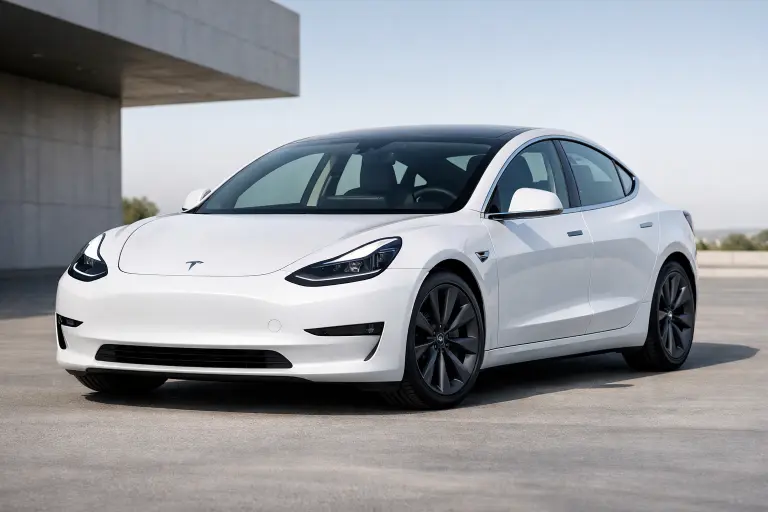
The Tesla Model 3 Standard Range is the primary vehicle using BYD battery cells. Specifically, Model 3 variants built at Tesla’s Shanghai Gigafactory and equipped with LFP battery packs may contain BYD Blade Battery technology.
This isn’t every Model 3—only the standard-range versions designed for cost efficiency. These vehicles typically offer around 272 miles of EPA-estimated range. They prioritize affordability and practicality over maximum performance.
Reports from industry analysts suggest Tesla began incorporating BYD batteries into Model 3 production around late 2022. The transition happened quietly, with no official announcement to customers. Many owners only discovered their battery supplier through diagnostic software or battery management system readings.
Tesla Model Y with BYD Battery Cells
Similar to the Model 3, certain Tesla Model Y standard-range variants also use BYD batteries. Again, these are primarily China-manufactured vehicles destined for markets where LFP chemistry makes strategic sense.
The Model Y Standard Range offers approximately 260-280 miles of range depending on the specific configuration and market. These versions sit at the entry level of Tesla’s SUV lineup, appealing to buyers who want Tesla’s technology and brand without the premium price tag.
It’s worth noting that Model Y Long Range and Performance variants do not use BYD batteries. Those higher-tier models require the energy density advantages of nickel-based battery chemistries.
Markets Where BYD-Supplied Batteries Appear
China remains the primary market for Tesla vehicles with BYD batteries. Vehicles manufactured in Shanghai for domestic Chinese consumption frequently contain BYD cells. This makes perfect sense given proximity to BYD’s manufacturing facilities and China’s preference for supporting domestic suppliers.
European markets also receive some Tesla vehicles with BYD batteries, particularly Model 3 Standard Range units exported from Shanghai. Tesla’s Berlin Gigafactory primarily uses other suppliers, but vehicles shipped from China may contain BYD cells.
Other Asia-Pacific markets including Australia, New Zealand, Japan, and Southeast Asian countries occasionally receive Tesla models with BYD batteries when those vehicles are sourced from Chinese production.
However, North American Teslas rarely if ever use BYD batteries. Vehicles sold in the United States, Canada, and Mexico typically contain Panasonic or LG Energy Solution cells. This reflects both supply chain logistics and regional manufacturing strategies.
Why Tesla Chose BYD for These Specific Models
Tesla’s decision to use BYD batteries for certain models reflects sound business strategy rather than compromise. Several compelling reasons drove this choice.
Cost optimization tops the list. BYD’s LFP batteries cost significantly less per kilowatt-hour than nickel-based alternatives. For standard-range vehicles where customers prioritize affordability, this cost advantage directly translates to competitive pricing. Tesla can offer lower entry prices while maintaining healthy margins.
Supply chain diversification provides crucial security. By adding BYD as a battery supplier, Tesla reduces dependence on any single manufacturer. If Panasonic faces production issues or CATL experiences delays, BYD can potentially fill gaps. This flexibility became especially valuable during recent global supply chain disruptions.
LFP chemistry advantages match these vehicles perfectly. BYD’s Blade Battery technology offers exceptional safety, longer cycle life, and better performance in moderate climates. For daily-driver vehicles in the standard-range category, these characteristics matter more than absolute maximum range.
Local content requirements influence the decision. Manufacturing in China with Chinese suppliers helps Tesla navigate trade policies and potentially qualify for local incentives. Using BYD batteries in Shanghai-built vehicles makes regulatory and economic sense.
BYD’s manufacturing capacity is enormous. As one of the world’s largest battery producers, BYD can scale production to meet Tesla’s demanding volume requirements. Smaller suppliers might struggle to deliver hundreds of thousands of battery packs consistently.
Tesla didn’t choose BYD batteries because they couldn’t get better options. The company chose them because for certain vehicle categories in specific markets, BYD batteries represent the optimal balance of cost, performance, safety, and supply reliability.
But what exactly are these BYD batteries, and how do they work? Let’s explore the technology in detail.
What Type of BYD Batteries Does Tesla Use?
When Tesla incorporates BYD batteries into its vehicles, the company isn’t using just any battery technology. Tesla specifically uses BYD’s advanced LFP Blade Battery cells—a sophisticated evolution of lithium iron phosphate chemistry that addresses traditional weaknesses while amplifying inherent strengths.
Understanding LFP (Lithium Iron Phosphate) Chemistry
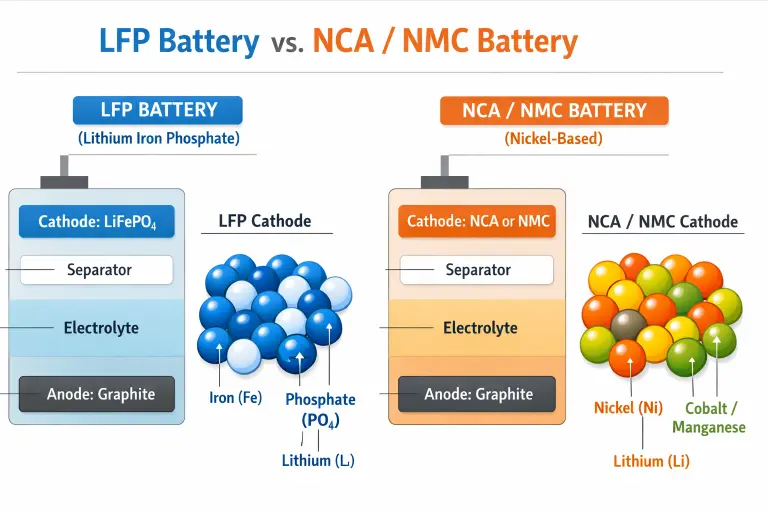
LFP batteries use lithium iron phosphate as the cathode material, distinguishing them from the nickel-cobalt chemistries common in premium EVs. The chemistry has been around for decades, but recent innovations have transformed it from a budget option to a serious contender.
The fundamental advantage of LFP is stability. The iron phosphate cathode forms extremely strong molecular bonds that resist thermal runaway—the chain reaction that causes battery fires. This molecular stability also means LFP batteries degrade more slowly over thousands of charge cycles.
However, LFP traditionally suffered from lower energy density. You needed a physically larger, heavier battery pack to achieve the same range as nickel-based alternatives. This trade-off made LFP less attractive for premium vehicles where every pound affects performance.
BYD’s innovation changed this calculation.
The Safety Advantages of BYD Blade Battery Technology
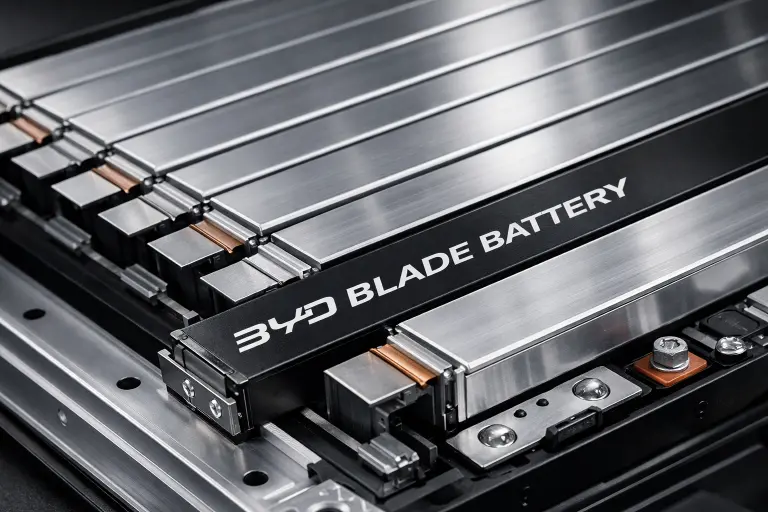
BYD’s Blade Battery represents a fundamental reimagining of how LFP cells are structured and packaged. Instead of cylindrical or prismatic cells grouped into modules, BYD created long, thin cells that look like blades. These cells install directly into the pack structure without intermediate module hardware.
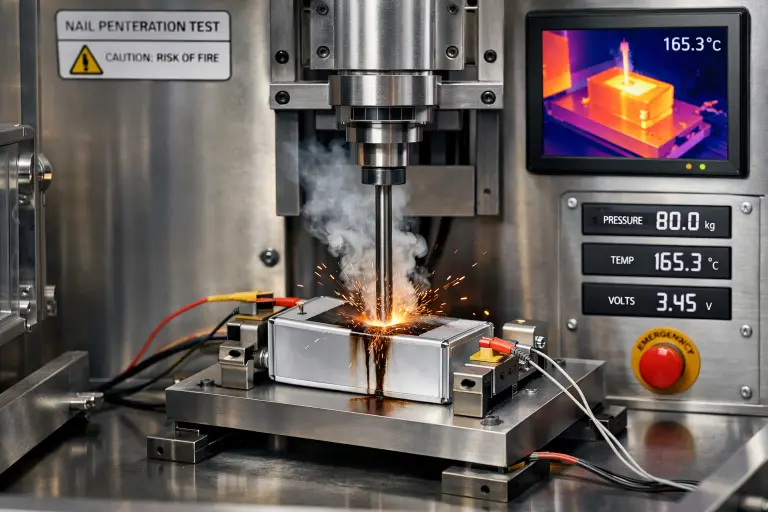
This design delivers extraordinary safety benefits. In the infamous nail penetration test—where a steel nail is driven through a fully charged battery—most lithium-ion batteries explode or catch fire within seconds. BYD’s Blade Battery merely heats up slightly and emits a small amount of smoke. No flames, no explosion, no thermal runaway.
The blade design increases surface area for heat dissipation. If one cell experiences issues, heat distributes across a larger area rather than concentrating dangerously. The structural integration also means fewer connection points where failures could occur.
For Tesla, incorporating this technology into entry-level models provides an additional safety margin. While all Tesla vehicles include sophisticated battery management systems, starting with inherently safer chemistry adds another layer of protection.
Key Differences Between LFP and NMC/NCA Batteries
Understanding how BYD’s LFP batteries differ from the NMC (Nickel Manganese Cobalt) and NCA (Nickel Cobalt Aluminum) batteries in other Teslas helps explain why Tesla uses different chemistries for different models.
Energy density is the most visible difference. NCA batteries in Tesla’s performance models pack about 260-280 Wh/kg (watt-hours per kilogram). BYD’s Blade Battery achieves approximately 180-200 Wh/kg. This means you need roughly 30-40% more weight and volume to store the same energy with LFP.
Cold weather performance varies significantly. NCA and NMC batteries maintain better performance in freezing temperatures. LFP batteries experience more range reduction when the thermometer drops below freezing. Tesla’s battery management system preheats LFP packs, but the effect remains noticeable.
Charging characteristics differ in important ways. LFP batteries can safely charge to 100% regularly without accelerating degradation. Nickel-based batteries perform best when kept between 20-80% for daily use. This actually makes LFP more convenient for some users who want to charge fully overnight.
Cost represents a massive difference. LFP batteries cost 30-40% less per kilowatt-hour than nickel-based alternatives. They avoid expensive cobalt and use abundant iron instead. For standard-range vehicles, this cost advantage directly impacts final pricing.
Lifespan strongly favors LFP. BYD’s Blade Battery can handle over 3,000 charge cycles while retaining 80% capacity—potentially outlasting the vehicle itself. NCA batteries typically reach this degradation point around 1,500-2,000 cycles. For high-mileage drivers, LFP offers better long-term economics.
Impact on Range, Charging, and Longevity
Range implications are real but manageable. A Tesla Model 3 with BYD LFP batteries offers roughly 15-20% less range than an equivalent vehicle with nickel-based batteries, all else being equal. However, BYD’s space-efficient Blade design minimizes this gap compared to traditional LFP packs.
For many drivers, 260-280 miles of range exceeds daily needs. The range difference matters most for road trips and cold-weather driving. Tesla’s Supercharger network density helps compensate for the range disadvantage in practical use.
Charging behavior requires slight adjustment. Tesla actually recommends charging LFP batteries to 100% regularly—contrary to advice for nickel-based batteries. This recalibrates the battery management system and ensures accurate range estimates. Many owners appreciate this simplicity rather than worrying about optimal charge levels.
DC fast charging speeds are comparable between chemistries under most conditions. However, LFP batteries may charge slightly slower in extremely cold weather until the pack reaches optimal temperature.
Longevity is where LFP truly excels. Battery degradation remains the biggest concern for long-term EV ownership. BYD’s LFP chemistry naturally resists degradation better than nickel-based alternatives. Owners report minimal capacity loss even after 100,000+ miles.
This longevity advantage has real economic value. If an LFP battery pack lasts 300,000 miles compared to 200,000 miles for NCA, the total cost of ownership shifts favorably toward LFP—especially when you factor in the lower initial cost.
So how do these BYD batteries actually compare to Tesla’s other battery options? Let’s put them head-to-head.
Tesla Batteries vs BYD Batteries — Key Differences
When people ask “are Tesla batteries made by BYD,” they often really want to know: are BYD batteries as good as Tesla’s traditional options? The answer depends entirely on what you value most in an EV battery. Let’s compare them directly across the metrics that matter.
Energy Density: Where Nickel-Based Batteries Still Lead
Energy density determines how much power you can pack into a given weight and volume. This is where traditional Tesla batteries maintain a clear advantage.
Panasonic’s NCA batteries used in Tesla’s performance models deliver approximately 260-280 Wh/kg. This exceptional energy density enables the Model S Long Range to achieve over 400 miles on a single charge. The battery pack remains relatively compact despite storing massive energy.
BYD’s Blade Battery achieves around 180-200 Wh/kg. While impressive for LFP chemistry, it still trails nickel-based alternatives by 30-40%. This gap directly translates to either reduced range or a larger, heavier battery pack for equivalent range.
However, context matters enormously. For a daily commuter driving 40 miles per day, the energy density difference is irrelevant. Both chemistries provide more than adequate range. The gap only becomes meaningful for road warriors covering 300+ miles regularly or buyers who prioritize maximum range above all else.
BYD has been steadily closing this gap. Each generation of Blade Battery improves energy density through better cell design and thermal management. Industry analysts expect LFP and nickel-based densities to converge further within the next five years.
Safety and Thermal Stability: BYD’s Strongest Advantage
Safety represents BYD’s most compelling advantage—and it’s not even close.
BYD’s LFP Blade Battery demonstrates exceptional thermal stability. The iron phosphate chemistry resists thermal runaway at the molecular level. Even when physically punctured or overheated, BYD batteries typically don’t ignite. The famous nail penetration test videos show this dramatically—the battery smokes slightly but never flames.
Tesla’s nickel-based batteries require sophisticated management systems to maintain safety. The chemistry itself is less stable, with nickel and cobalt creating potential thermal runaway conditions if mismanaged. Tesla’s battery management system is world-class, but it’s compensating for inherent chemical instability.
Real-world fire statistics support this difference. While all EVs are statistically safer than gasoline vehicles, LFP-equipped vehicles show even lower fire rates than nickel-based EVs. For risk-averse buyers, this safety margin provides genuine peace of mind.
The thermal stability also enables simpler cooling systems. BYD batteries tolerate higher operating temperatures without degradation, reducing the complexity and cost of thermal management hardware.
Cost Efficiency: A Game-Changing Advantage
Cost differences between these battery chemistries reshape EV economics entirely.
BYD’s LFP batteries cost approximately $80-$100 per kilowatt-hour at the pack level. This reflects abundant, inexpensive materials—iron and phosphate—plus BYD’s vertically integrated manufacturing that controls costs from raw material to finished pack.
Nickel-based batteries from Panasonic and LG cost roughly $130-$150 per kilowatt-hour. The premium reflects expensive materials like nickel and cobalt, plus more complex manufacturing processes required for thermal stability.
On a 60 kWh battery pack, this difference amounts to $3,000-$4,200 in manufacturing costs. Tesla can either pocket this savings as profit or pass it to customers through lower prices. The Model 3 Standard Range pricing reflects this cost advantage directly.
Moreover, LFP batteries avoid exposure to volatile cobalt pricing and supply chain concerns. Cobalt mining raises ethical questions and faces geopolitical risks. Iron and phosphate come from stable, diverse sources worldwide.
Longevity and Degradation: LFP’s Long-Term Victory
Battery longevity determines the total cost of ownership over a vehicle’s lifetime. Here, LFP chemistry dominates convincingly.
BYD’s Blade Battery can endure over 3,000 full charge-discharge cycles while retaining 80% of original capacity. In practical terms, this means 600,000-900,000 miles before reaching the degradation threshold where most owners would consider battery replacement. The battery will likely outlast the vehicle itself.
Tesla’s nickel-based batteries typically reach 80% capacity around 1,500-2,000 cycles—roughly 300,000-400,000 miles depending on usage patterns. This is still excellent by industry standards, but only about half the lifespan of LFP chemistry.
Real-world owner data confirms these projections. Model 3 owners with LFP batteries report minimal degradation even after several years of daily use. The chemistry simply resists the gradual capacity loss that affects all lithium-ion batteries.
Furthermore, LFP batteries tolerate being charged to 100% regularly without accelerating degradation. Nickel-based batteries perform best when kept between 20-80% for daily use. This operational freedom makes LFP batteries more convenient for many drivers.
Why Tesla Still Uses Multiple Battery Chemistries
Given LFP’s advantages in safety, cost, and longevity, why doesn’t Tesla use BYD batteries in every vehicle? The answer reveals sophisticated strategic thinking.
Performance vehicles demand maximum energy density. A Model S Plaid delivering 1,020 horsepower and 200 mph top speed cannot compromise on power-to-weight ratio. The energy density advantage of nickel-based batteries remains essential for Tesla’s flagship performance models.
Cold-weather markets require better low-temperature performance. LFP batteries lose more range in freezing conditions than nickel-based alternatives. For vehicles sold in Canada, northern Europe, or northern U.S. states, nickel-based batteries provide better customer satisfaction.
Customer perception matters. Many buyers associate premium vehicles with premium battery technology. Whether justified or not, some customers view LFP as inferior to nickel-based chemistry. Tesla carefully manages this perception by reserving nickel batteries for higher-tier models.
Supply chain diversification reduces risk. By sourcing multiple battery chemistries from multiple suppliers across multiple regions, Tesla insulates itself from disruption. If one supplier encounters problems, others can potentially compensate.
Different chemistries optimize for different priorities. There’s no universally “best” battery—only the best battery for specific use cases. Tesla matches chemistry to application: LFP for cost-effective daily drivers, nickel-based for performance and long-range variants.
This multi-chemistry strategy also provides flexibility as technology evolves. Tesla can shift production between chemistries based on material costs, supply availability, and market demands without redesigning entire vehicle platforms.
But if BYD batteries work well in some Teslas, why doesn’t the company use them everywhere? Let’s explore the strategic reasons behind Tesla’s selective approach.
Why Tesla Does NOT Use BYD Batteries Everywhere
If BYD batteries offer such compelling advantages in safety, cost, and longevity, a logical question emerges: why doesn’t Tesla use them across the entire lineup? The answer reveals careful strategic thinking about performance requirements, supply chain resilience, and long-term competitive positioning.
Performance Models Demand Maximum Energy Density
Tesla’s premium vehicles cannot compromise on power and range. These models define the brand’s identity and justify premium pricing.
The Model S Plaid exemplifies this requirement perfectly. With three motors producing 1,020 horsepower and acceleration from 0-60 mph in under 2 seconds, this vehicle pushes battery technology to its limits. The energy density of nickel-based batteries enables this performance in a package that remains practical for daily use.
BYD’s LFP batteries, despite their impressive improvements, simply cannot match this energy density. Using LFP chemistry in a Model S would require a significantly larger, heavier battery pack. This additional weight would compromise acceleration, handling, and efficiency—the very characteristics that define Tesla’s performance models.
The Model X faces similar constraints. As a large SUV, it already carries substantial weight. Adding the extra mass required for an LFP battery pack to achieve 300+ miles of range would negatively impact the driving experience and efficiency that customers expect from a premium electric SUV.
Range matters enormously for these vehicles. Buyers spending $80,000-$130,000 expect maximum capability. Offering a Model S with 320 miles of range when competitors deliver 400+ miles would damage Tesla’s market position regardless of other benefits.
Supply Chain Diversification Protects Production
Tesla learned painful lessons about single-source dependencies during its early years. Relying exclusively on BYD—or any single supplier—would create unacceptable vulnerability.
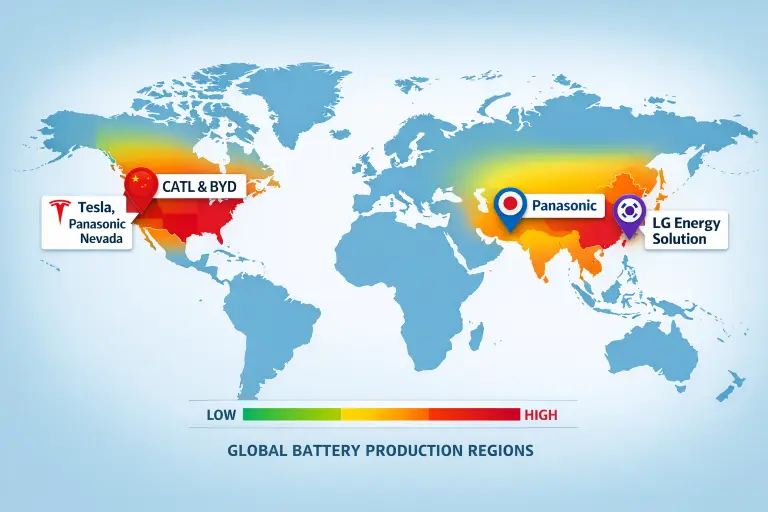
Geographic concentration poses real risks. BYD’s manufacturing facilities concentrate primarily in China. Political tensions, natural disasters, trade disputes, or pandemic-style disruptions could suddenly restrict access to BYD batteries. Tesla’s global production network requires geographically diverse supply sources.
By maintaining relationships with Panasonic (Japan/USA), LG Energy Solution (South Korea/USA), CATL (China), and BYD (China), Tesla can pivot production if one supplier encounters problems. During the 2021-2022 supply chain crisis, this flexibility proved invaluable.
Supplier competition drives better pricing. When multiple suppliers know they’re competing for Tesla’s massive volume, they sharpen their pencils on pricing and delivery terms. A single supplier would have pricing power that could erode Tesla’s margins.
Technology diversification accelerates innovation. Different suppliers pursue different technical approaches. Panasonic pushes nickel-rich chemistry, CATL innovates with cell-to-pack designs, BYD advances LFP technology. Tesla benefits from multiple parallel innovation tracks rather than betting everything on one approach.
This strategy also provides negotiating leverage. If BYD raises prices or can’t meet delivery schedules, Tesla can shift volume to CATL’s LFP batteries. If Panasonic encounters production issues, LG Energy Solution can potentially fill gaps.
Tesla’s In-House Battery Ambitions (4680 Cells)
Perhaps the most important reason Tesla doesn’t rely exclusively on BYD is that the company intends to manufacture a significant portion of its own batteries.
The 4680 cell represents Tesla’s battery independence strategy. Named for its dimensions (46mm diameter, 80mm height), this larger cell format promises major advantages. Tesla claims the 4680 design delivers five times more energy, six times more power, and 16% greater range compared to previous cells.
More importantly, Tesla manufactures 4680 cells itself at facilities in Texas and California. This vertical integration eliminates supplier dependencies entirely for vehicles using this technology. The Cybertruck uses 4680 cells exclusively, demonstrating Tesla’s commitment to in-house production.
Tesla’s long-term vision involves manufacturing most of its own batteries. External suppliers like BYD, Panasonic, and CATL serve primarily as bridge solutions until Tesla scales its internal production. Why would Tesla invest billions in battery manufacturing if it planned to rely on BYD long-term?
The company has also invested heavily in lithium mining, refining, and cathode production. This vertical integration strategy aims to control costs, secure supply, and capture more profit margin from the battery value chain.
However, scaling battery production to millions of vehicles annually takes years. In the meantime, Tesla needs reliable external suppliers. BYD fills this role excellently for standard-range vehicles, but it’s not Tesla’s endgame strategy.
Strategic Risk Management Beyond Supply Chain
Tesla’s selective use of BYD batteries also reflects strategic risk management at the corporate level.
Dependency on a direct competitor creates uncomfortable dynamics. BYD isn’t just a battery supplier—it’s now the world’s largest EV manufacturer by volume. Relying heavily on BYD for batteries would mean funding a competitor’s growth and potentially sharing proprietary technical information.
What if BYD decided to prioritize its own vehicles over Tesla during a supply shortage? What if BYD gained insights into Tesla’s future product plans through battery specifications? These risks may seem unlikely, but prudent management demands considering them.
Intellectual property concerns matter significantly. Battery technology represents core competitive advantage in EVs. Working closely with any supplier creates IP exposure risks. Tesla limits these risks by working with multiple suppliers and developing its own technology in parallel.
Regulatory and political considerations play a role. In some markets, sourcing batteries exclusively from Chinese manufacturers could trigger trade restrictions, tariffs, or political backlash. Maintaining supply diversity helps Tesla navigate complex international trade environments.
Customer perception varies by market. In the United States, some buyers prefer American-made vehicles with American or allied-nation components. While this preference may not be rational from a technical standpoint, it affects purchasing decisions. Tesla manages this by matching battery suppliers to regional preferences where possible.
The Optimal Multi-Supplier Strategy
Tesla’s current approach—using BYD batteries for specific standard-range models while maintaining diverse suppliers for other vehicles—represents optimized strategy rather than indecision.
The company gets cost advantages from BYD’s LFP technology where it matters most: price-sensitive standard-range models. Simultaneously, Tesla maintains performance leadership with nickel-based batteries in premium models. Supply chain resilience comes from geographic and technological diversity. Long-term independence develops through 4680 cell production.
This strategy positions Tesla to adapt as circumstances change. If LFP energy density improves dramatically, Tesla can expand BYD battery usage. If geopolitical conditions shift, the company can pivot to other suppliers. If 4680 production scales faster than expected, external supplier dependencies decrease naturally.
Are Tesla batteries made by BYD? Sometimes—when that choice serves Tesla’s strategic objectives. Always? Absolutely not, because Tesla’s competitive position demands flexibility, performance options, and supply security that no single supplier can provide.
But setting aside corporate strategy, what do actual owners and industry experts think about BYD batteries in Tesla vehicles? Let’s examine real-world performance and professional assessments.
Are BYD Batteries Good or Better Than Tesla’s?
When Tesla owners discover their vehicle contains BYD batteries, reactions range from curiosity to concern. Some wonder if they received an inferior product. Others research obsessively to understand what this means for their investment. Let’s examine what the data, experts, and real-world experiences actually reveal.
Reliability and Safety Record
BYD batteries have compiled an impressive safety and reliability track record across millions of vehicles worldwide. The numbers tell a compelling story.
Fire incident rates for BYD-equipped vehicles remain exceptionally low. According to industry data, EVs with LFP batteries experience approximately 0.03 fires per 10,000 vehicles sold—significantly lower than nickel-based EVs at roughly 0.05 per 10,000. Both remain far safer than gasoline vehicles, which average 1.5 fires per 10,000 vehicles.
BYD’s Blade Battery passed China’s most stringent safety certifications. The technology has been deployed in over 1.5 million BYD vehicles since 2020 without a single confirmed thermal runaway incident attributed to battery design. This track record speaks louder than any marketing claims.
Tesla vehicles using BYD batteries show no elevated safety concerns. The National Highway Traffic Safety Administration (NHTSA) and similar agencies worldwide haven’t identified any safety issues specific to Tesla models with BYD batteries. The vehicles maintain Tesla’s excellent overall safety ratings regardless of battery supplier.
Warranty claim rates provide another reliability indicator. Industry sources suggest Tesla models with BYD batteries show warranty claim rates consistent with or slightly lower than models using other battery suppliers. LFP chemistry’s inherent stability translates to fewer field issues.
Real-World Owner Experiences
Owner forums and social media provide unfiltered perspectives on living with BYD batteries in Tesla vehicles. The consensus is more positive than many expect.
Range satisfaction varies by use case. Owners using their vehicles primarily for commuting and local driving consistently report satisfaction. One Model 3 owner in Germany noted: “I charge to 100% every night, wake up to full range, and never think about it. For my 50-mile daily commute, the BYD battery is perfect.”
However, road-trippers notice the range difference. A California owner observed: “On long highway trips, I stop for charging slightly more often than friends with Long Range models. It’s maybe one extra 15-minute stop on an 8-hour drive. Not a dealbreaker, but noticeable.”
Cold weather performance draws mixed reviews. Owners in moderate climates rarely mention issues. Those in colder regions report more significant range loss in winter compared to nickel-based batteries. However, Tesla’s battery preconditioning helps mitigate this gap considerably.
Degradation rates impress almost universally. Multiple owners with 50,000-80,000 miles report minimal capacity loss. One Norwegian taxi driver with a Model 3 LFP battery documented only 4% degradation after 120,000 miles—exceptional by any standard. The ability to charge to 100% regularly without worry appeals strongly to many owners.
Charging convenience receives consistent praise. Tesla’s recommendation to charge LFP batteries to 100% simplifies life. Owners appreciate not managing charge limits or planning around optimal charging windows. Several owners mentioned this simplicity makes EV ownership feel more like traditional car ownership.
Industry Expert Opinions
Battery engineers, automotive analysts, and EV experts generally view BYD’s technology favorably while acknowledging its appropriate application range.
Sandy Munro, respected automotive teardown expert, praised BYD’s Blade Battery after analyzing it in detail. He highlighted the elegant simplicity of the cell-to-pack design and impressive manufacturing quality. Munro noted the technology represents “excellent engineering for its intended purpose.”
Dr. Shirley Meng, professor of molecular engineering at the University of Chicago, has researched BYD’s technology extensively. She explains: “LFP chemistry sacrifices some energy density for dramatically improved safety and cycle life. For many applications, that’s absolutely the right trade-off.”
Battery analysts at Benchmark Mineral Intelligence project LFP will capture 40-50% of the global EV battery market by 2030, up from about 30% today. This growth reflects industry-wide recognition of LFP’s strengths for standard-range vehicles.
However, experts consistently note context matters. Roland Zenn, senior analyst at P3 Automotive, emphasizes: “BYD batteries excel in cost-effective, safety-focused applications. They’re not ideal for maximum performance vehicles or cold-climate markets. Tesla’s strategy of matching chemistry to application is exactly right.”
Where BYD Batteries Outperform Tesla’s Traditional Options
BYD batteries claim clear victories in several important categories that matter to everyday drivers.
Safety and thermal stability lead the list. The inherent chemical stability of LFP, combined with BYD’s Blade design, creates batteries that are nearly impossible to ignite. For families prioritizing safety above all else, this represents a meaningful advantage.
Cycle life and longevity strongly favor BYD’s LFP chemistry. With over 3,000 cycles to 80% capacity, these batteries will outlast most owners’ vehicle ownership periods. Total cost of ownership calculations shift favorably when you eliminate the possibility of battery replacement.
Charging simplicity makes daily life easier. The freedom to charge to 100% nightly without degradation concerns removes mental overhead. You simply plug in every night and wake up to full range—no optimization required.
Cost advantages enable lower vehicle prices. While individual buyers don’t see the battery cost directly, it allows Tesla to offer more affordable entry-level models. This democratizes EV access and expands the potential customer base.
Environmental considerations favor LFP. Using abundant iron instead of problematic cobalt reduces mining impact and eliminates ethical concerns around cobalt extraction. For environmentally conscious buyers, this matters significantly.
Where Tesla/Panasonic Batteries Still Lead
Nickel-based batteries from Panasonic and LG maintain important advantages that justify their continued use in premium Tesla models.
Energy density remains the defining advantage. When you need 400+ miles of range in a performance sedan, nickel-based chemistry remains the only viable option. The 30-40% energy density advantage directly translates to range and performance capabilities BYD cannot yet match.
Cold weather performance strongly favors nickel-based batteries. In sub-freezing temperatures, NCA and NMC batteries retain range better than LFP alternatives. For buyers in Canada, Nordic countries, or northern U.S. states, this difference impacts daily usability throughout winter months.
Power density for extreme performance demands nickel chemistry. The instantaneous power delivery required for a Model S Plaid’s 1,020 horsepower output needs the power density characteristics of nickel-based cells. LFP chemistry cannot currently match this performance level.
Charging speed in extreme cold conditions gives nickel batteries an edge. While both chemistries require preheating for optimal charging in freezing weather, nickel-based batteries accept charge faster once warmed. This matters for road trips in winter conditions.
Premium brand perception aligns with nickel-based technology. Fair or not, many luxury car buyers associate premium vehicles with premium battery technology. Tesla maintains this perception by reserving nickel batteries for higher-tier models.
The Verdict: Different Strengths for Different Needs
Are BYD batteries good or better than Tesla’s traditional options? The question itself assumes a universal answer that doesn’t exist.
For safety-conscious families buying standard-range vehicles primarily for local use, BYD batteries are arguably better. The safety margin, longevity, and charging simplicity align perfectly with these priorities.
For performance enthusiasts, long-distance travelers, or cold-climate drivers, nickel-based batteries remain superior. The energy density and power characteristics justify their higher cost for these use cases.
Both technologies are “good” in the sense that they perform reliably and safely. Neither is universally “better” because they optimize for different priorities. Tesla’s strategy of matching battery chemistry to vehicle application reflects sophisticated understanding of these trade-offs.
The real question isn’t which battery is better, but which battery is better for your specific needs. Understanding that distinction helps you make informed decisions rather than chasing imaginary absolutes.
Of course, online discussions about Tesla and BYD batteries rarely achieve this nuanced understanding. Let’s address the myths and misconceptions that dominate these conversations.
Common Myths About Tesla and BYD Batteries
Online forums, social media, and even some automotive publications perpetuate myths about Tesla and BYD batteries. These misconceptions create confusion and sometimes influence purchasing decisions based on false information. Let’s systematically dismantle the most persistent myths.
Myth #1: “Tesla Builds All Its Own Batteries”
This myth persists despite overwhelming evidence to the contrary. Many people assume Tesla’s vertical integration extends to complete battery self-sufficiency. It doesn’t.
The reality: Tesla manufactures only a small portion of its batteries in-house. The company produces 4680 cells at facilities in Texas and California, but these represent a minority of total battery production. The vast majority of Tesla batteries come from external suppliers including Panasonic, LG Energy Solution, CATL, and yes, BYD.
Tesla has never hidden this fact from investors or regulators. Financial disclosures and supplier relationships are publicly documented. However, the company’s marketing emphasizes innovation and technology leadership, which many interpret as meaning Tesla makes everything internally.
Why this myth matters: It creates unrealistic expectations about battery sourcing. When owners discover their Tesla contains batteries from external suppliers, some feel misled. Understanding that multi-supplier sourcing is standard industry practice—and actually advantageous—prevents this disappointment.
Even companies positioning themselves as vertically integrated rarely manufacture every component. Apple doesn’t make its own chips exclusively. Boeing doesn’t manufacture every aircraft component. Tesla follows the same strategic sourcing principles.
Myth #2: “BYD Batteries Are Low Quality”
This myth often stems from outdated perceptions of Chinese manufacturing or unfamiliarity with BYD’s technological achievements. It’s completely disconnected from current reality.
The truth: BYD batteries meet or exceed international quality standards. The company supplies batteries not only to Tesla but to Toyota, Mercedes-Benz, and numerous other manufacturers with stringent quality requirements. These automakers wouldn’t risk their reputations on substandard components.
BYD operates ISO-certified manufacturing facilities with quality control processes comparable to any global supplier. The Blade Battery passed China’s most rigorous safety certifications and multiple international testing protocols. Quality metrics like defect rates and warranty claims show BYD performing on par with or better than competitors.
Moreover, BYD isn’t some scrappy startup. The company has manufactured batteries for over 25 years, supplying everyone from mobile phone makers to industrial equipment manufacturers before entering the automotive sector. This deep experience translates to mature, refined manufacturing processes.
Why this myth persists: Bias against Chinese manufacturing quality remains common despite China’s evolution into a high-tech manufacturing leader. People remember low-quality Chinese products from decades ago without recognizing how dramatically the landscape has changed. Additionally, competitive nationalism sometimes clouds objective assessment.
Tesla wouldn’t use BYD batteries if they compromised vehicle quality. The company’s reputation depends on reliable, safe vehicles. Using substandard batteries would be corporate suicide.
Myth #3: “LFP Batteries Are Inferior”
Perhaps the most technically inaccurate myth positions LFP chemistry as categorically worse than nickel-based alternatives. This oversimplification ignores the nuanced reality of battery trade-offs.
The facts: LFP batteries are different, not inferior. They optimize for different priorities than nickel-based chemistries. Calling LFP inferior is like calling a Honda Civic inferior to a Porsche 911—they serve different purposes equally well.
LFP batteries surpass nickel-based batteries in several critical metrics. They offer superior safety with virtually no thermal runaway risk. They deliver 2-3 times longer cycle life. They cost 30-40% less per kilowatt-hour. They avoid problematic cobalt mining. These advantages aren’t minor—they’re transformative for many applications.
Yes, LFP batteries have lower energy density. This represents a trade-off, not a failure. For vehicles where 260-280 miles of range suffices, the energy density difference becomes irrelevant while the cost and safety advantages remain highly relevant.
The automotive industry’s embrace of LFP tells the real story. Ford is shifting to LFP for its standard-range vehicles. Volkswagen is incorporating LFP across multiple models. Rivian is evaluating LFP for future products. If LFP were truly inferior, the world’s largest automakers wouldn’t be adopting it enthusiastically.
Why this myth damages understanding: It prevents people from objectively evaluating which battery chemistry suits their needs. Someone buying a standard-range Model 3 for daily commuting might actually be better served by LFP chemistry, but this myth creates unfounded concern about receiving an “inferior” product.
Myth #4: “Using BYD Batteries Weakens Tesla Cars”
This myth suggests Tesla vehicles with BYD batteries are somehow compromised, less capable, or less valuable than those with Panasonic or LG batteries. The premise collapses under scrutiny.
The reality: Tesla engineers specifically choose BYD batteries for vehicles where LFP chemistry provides optimal performance characteristics. This isn’t compromise—it’s engineering optimization.
A Model 3 Standard Range with BYD batteries performs exactly as designed. It delivers the promised range, acceleration, and features. Tesla’s battery management system integrates seamlessly with BYD cells. The vehicle passes all safety tests. Warranty coverage is identical. There’s no functional weakness.
Consider this logically: would Tesla risk its reputation, customer satisfaction, and regulatory compliance by using batteries that weaken its vehicles? The company faces intense scrutiny from regulators, competitors, and media. Using inadequate batteries would be immediately exposed and catastrophic for the brand.
Real-world performance data contradicts this myth entirely. Tesla models with BYD batteries show reliability statistics comparable to or better than models with other batteries. Customer satisfaction scores don’t vary by battery supplier. Resale values reflect vehicle model and condition, not battery supplier.
This myth often masks other concerns: Some people use “BYD batteries weaken Tesla” as proxy for discomfort with Chinese manufacturing, political concerns, or preference for established suppliers. These are legitimate topics for discussion, but they’re different from claims about vehicle capability.
Why These Myths Persist and How to Counter Them
Several psychological and social factors keep these myths circulating despite contradicting evidence.
Confirmation bias plays a major role. People who believe Tesla should manufacture everything in-house interpret any evidence through that lens. Those skeptical of Chinese manufacturing quality selectively remember information supporting their preconception while dismissing contrary data.
Tribalism amplifies myths. Online communities develop collective narratives that members reinforce. Challenging these narratives feels like attacking the community identity. Tesla enthusiast groups sometimes create echo chambers where myths go unchallenged.
Complexity creates confusion. Battery chemistry involves technical nuance that’s easy to oversimplify. “Nickel batteries are better” is simpler than “different chemistries optimize for different priorities.” Myths thrive when complexity gets reduced to bumper-sticker slogans.
Countering these myths requires evidence and patience. Point to verifiable facts: Tesla’s SEC filings documenting supplier relationships, BYD’s quality certifications, LFP adoption by major automakers, and real-world performance data. Acknowledge legitimate concerns while correcting factual errors.
Understanding that are Tesla batteries made by BYD—sometimes yes, strategically and appropriately—helps cut through these myths. The partnership reflects sound engineering and business strategy, not compromise or weakness.
But beyond debunking myths, what do these battery choices actually mean for you as a potential Tesla buyer? Let’s examine the practical implications.
What This Means for Tesla Buyers
If you’re shopping for a Tesla, the question “are Tesla batteries made by BYD?” suddenly becomes very personal. You’re not just curious about industry trends—you want to know how this affects your daily driving experience, your investment, and your satisfaction over years of ownership.
Let’s cut through the speculation and focus on what actually matters in real-world use.
Does Battery Supplier Affect Daily Use?
For most driving scenarios, the battery supplier remains functionally invisible. Your day-to-day experience depends far more on the vehicle model, software, and how you use the car than on who manufactured the battery cells.
If your daily driving involves commuting, errands, and local trips within 100 miles, battery supplier makes virtually no difference. A Model 3 with BYD batteries and a Model 3 with Panasonic batteries both handle these tasks effortlessly. You’ll charge overnight, wake up to full range, and never think about battery chemistry.
Acceleration feels identical for equivalent trim levels. Handling characteristics don’t change. Interior space, features, and software functionality remain the same. Tesla’s sophisticated battery management system ensures consistent performance regardless of which cells sit in the pack.
Where you might notice differences: Long highway road trips reveal the range gap between chemistries. If you regularly drive 250+ miles between charges, you’ll appreciate the extra range from nickel-based batteries. One or two additional charging stops on a cross-country trip might matter to you—or might seem trivial.
Cold weather also exposes differences. BYD’s LFP batteries lose more range in freezing temperatures compared to nickel-based alternatives. If you live in Minnesota, Alberta, or Norway, this seasonal range reduction becomes noticeable and potentially inconvenient.
However, for the majority of buyers in moderate climates with typical usage patterns, the battery supplier simply doesn’t impact daily experience in meaningful ways.
Charging Habits Differences That Actually Matter
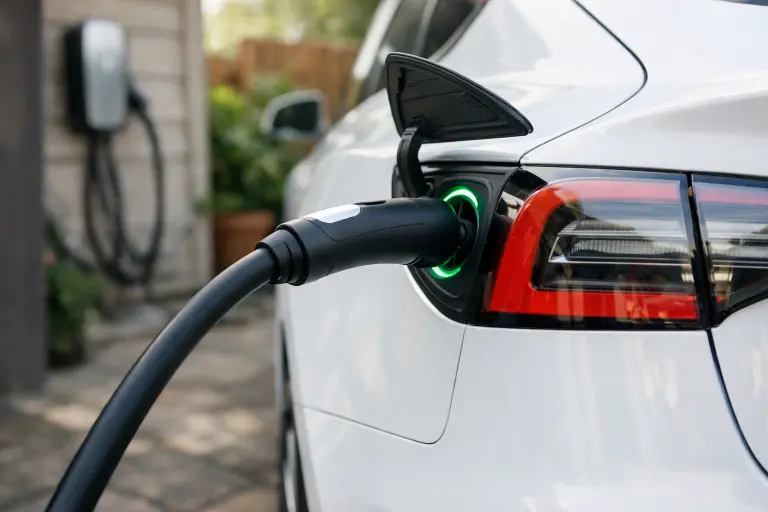
Battery chemistry significantly influences optimal charging strategy. Understanding these differences helps you maximize battery longevity and convenience.
With BYD LFP batteries, Tesla recommends charging to 100% regularly. This isn’t just permission—it’s actual guidance. Charging to full capacity recalibrates the battery management system and ensures accurate range estimates. Many owners charge to 100% every single night without concern.
This simplicity appeals strongly to some buyers. You don’t need to calculate optimal charge levels or plan your charging strategy. Just plug in and let it charge fully. It’s the most similar experience to filling a gas tank.
With nickel-based batteries from Panasonic or LG, Tesla recommends limiting daily charging to 80-90%. Regularly charging to 100% accelerates degradation with these chemistries. You reserve full charges for road trips when you need maximum range.
This requires slightly more management. You set charge limits in the app, occasionally adjust them for trips, and think about battery health more actively. It’s not burdensome, but it does require awareness that LFP batteries don’t demand.
Charging speed differences are minimal under normal conditions. Both chemistries charge at comparable rates on Tesla Superchargers and home charging equipment. In extremely cold weather, nickel-based batteries may accept charge slightly faster after preconditioning, but the difference rarely exceeds 10-15%.
DC fast charging curves vary subtly between chemistries, but Tesla’s software optimizes charging regardless of battery type. You’ll spend roughly similar time at Superchargers whether your car contains BYD batteries or not.
Cold Weather Considerations for Different Climates
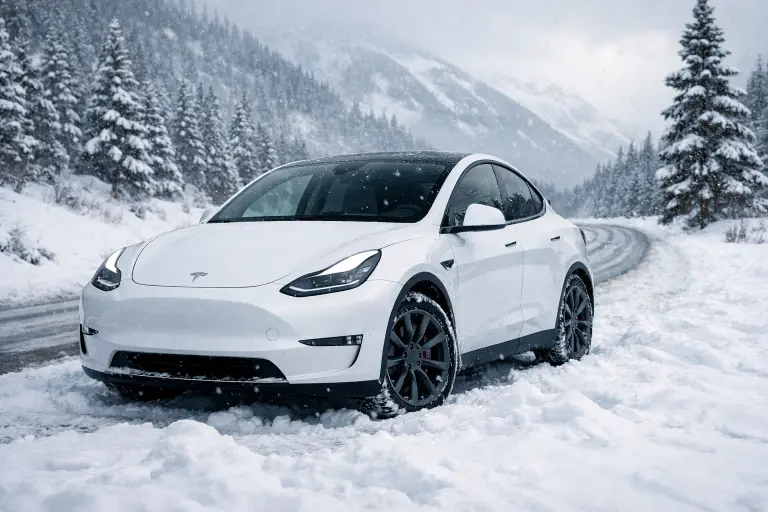
Your local climate should influence how much you care about battery chemistry. Temperature impacts aren’t theoretical—they’re measurable and sometimes significant.
In moderate climates (California, southern Europe, most of Australia), battery chemistry barely matters for temperature performance. Both LFP and nickel-based batteries operate efficiently year-round. If temperatures rarely drop below freezing, the cold-weather disadvantage of LFP becomes irrelevant.
In cold climates (Canada, Scandinavia, northern U.S. states), the differences become more pronounced. LFP batteries can lose 30-40% of rated range when temperatures drop below 20°F (-7°C). Nickel-based batteries typically lose 20-30% under identical conditions.
That difference translates to real-world impact. A Model 3 with BYD batteries rated for 272 miles might deliver only 160-180 miles in harsh winter conditions. The same vehicle with nickel-based batteries might deliver 190-220 miles. For daily commuting, this gap matters more than highway range differences.
Tesla’s battery preconditioning helps mitigate this issue. The system warms the battery before driving and before Supercharging, maintaining reasonable performance even in cold weather. However, preconditioning itself consumes energy, further reducing effective range.
Practical advice for cold-climate buyers: If you live where winter temperatures regularly drop below freezing and you don’t have reliable access to garage parking or preconditioning, consider whether the standard-range model with LFP batteries provides adequate winter range for your needs. You might prefer spending extra for a Long Range model with nickel-based batteries.
Conversely, if you have garage parking and can precondition regularly, the cold-weather disadvantage becomes manageable and might not justify the additional cost of a Long Range model.
Resale Value Implications: What the Data Shows
Many buyers worry that having BYD batteries might hurt resale value. Current market data provides some clarity, though long-term trends remain uncertain.
So far, resale prices don’t show meaningful differences based on battery supplier. Used Tesla values depend primarily on model year, mileage, condition, and feature configuration. Whether the car contains BYD, Panasonic, or CATL batteries doesn’t significantly impact asking prices or sale prices.
This makes intuitive sense. Most used car buyers don’t know which battery supplier their prospective vehicle uses. They focus on range rating, warranty status, and overall condition. A Model 3 Standard Range is valued as a Model 3 Standard Range, regardless of who made the cells.
Battery health matters more than battery brand. Used buyers care about remaining capacity, not manufacturer name. A well-maintained LFP battery with 95% capacity remaining commands better prices than a degraded nickel-based battery at 85% capacity.
Here, LFP’s longevity advantage could actually help resale values long-term. As these vehicles age and accumulate mileage, the superior cycle life of LFP might become an asset that buyers recognize and value.
One caveat: Regional preferences might emerge over time. In cold-climate markets, buyers might develop preferences for nickel-based batteries based on winter performance. In moderate climates, the durability and safety reputation of LFP might become selling points. These trends, if they develop, would take years to materialize clearly.
Warranty transferability remains identical regardless of battery supplier. Tesla’s battery and drive unit warranty covers 8 years/100,000-150,000 miles (depending on model) for all vehicles. This warranty transferability provides reassurance that reduces battery supplier concerns for used buyers.
Should Buyers Actually Care Who Made the Battery?
This is the ultimate question, and the answer depends entirely on your personal priorities and usage patterns.
You should care about battery supplier if:
- You regularly drive long distances and need maximum range
- You live in extremely cold climates without garage parking
- You’re specifically interested in the latest battery technology
- You have strong preferences about supply chain origins for political or ethical reasons
You probably shouldn’t care much if:
- Your daily driving stays within 150 miles
- You live in moderate climates
- You prioritize cost-effectiveness and safety over maximum range
- You value charging simplicity and long-term durability
- You trust engineering decisions over brand preferences
The honest truth: Most buyers obsess about battery supplier far more than warranted by actual impact on their experience. The difference between a well-engineered vehicle with BYD batteries and one with Panasonic batteries is smaller than the difference between good and poor charging infrastructure access, appropriate tire selection, or regular maintenance.
Focus on choosing the right model for your needs—Standard Range versus Long Range, Model 3 versus Model Y—rather than fixating on battery supplier. Tesla engineers match battery chemistry to vehicle application thoughtfully. Trust that process unless you have specific requirements that demand particular battery characteristics.
If you’re buying a Standard Range model specifically, embrace the BYD LFP batteries if that’s what you receive. You’re getting excellent safety, impressive longevity, and charging simplicity in exchange for slightly less range than Long Range models that cost significantly more. That’s not compromise—that’s value optimization.
Beyond individual purchase decisions, the Tesla-BYD relationship reveals something important about the broader electric vehicle industry. Let’s zoom out and examine what this partnership means for the future of transportation.
What This Means for the EV Industry
The question “are Tesla batteries made by BYD?” extends far beyond individual purchase decisions. It reveals fundamental shifts reshaping the entire automotive industry—shifts that will determine which companies thrive, how affordable EVs become, and who controls the technology powering our transportation future.
China’s Growing Influence in Global EV Supply Chains
Tesla’s partnership with BYD exemplifies a larger reality: China now dominates electric vehicle supply chains in ways that would have seemed impossible a decade ago.
Chinese companies control approximately 75% of global battery cell production capacity. CATL alone manufactures more batteries than all Western companies combined. BYD, EVE Energy, CALB, and Gotion extend this dominance across multiple technology approaches and price segments.
This isn’t just about batteries. China produces roughly 70% of the world’s battery-grade lithium hydroxide, 85% of battery anodes, and 70% of cathodes. The entire value chain—from raw material refining through cell manufacturing to pack assembly—concentrates heavily in Chinese facilities.
Western automakers face an uncomfortable dependency. Ford, GM, Volkswagen, Mercedes-Benz, and BMW all rely on Chinese battery suppliers for current or planned electric vehicles. Even Tesla, despite its American identity and aspirations for vertical integration, cannot escape this gravitational pull.
Strategic Vulnerabilities and Policy Responses
This concentration creates strategic vulnerabilities. Trade tensions, geopolitical conflicts, or supply disruptions could suddenly restrict access to critical components. The pandemic exposed similar dependencies in semiconductor supply chains. Battery supply chains present even greater concentration risk.
However, this dominance didn’t happen by accident. China pursued a deliberate industrial policy over 15+ years, subsidizing battery research, supporting domestic manufacturers, and requiring foreign automakers to partner with local companies to access the Chinese market. These policies worked spectacularly.
The question facing Western governments now: Can they recreate battery manufacturing ecosystems fast enough to reduce dependence? The U.S. Inflation Reduction Act and European Battery Alliance represent attempts to do exactly this. Success remains uncertain.
For consumers, China’s battery dominance has a silver lining: it drives costs down and accelerates innovation. Competition among Chinese suppliers creates rapid technological advancement and aggressive pricing that benefits global EV adoption.
Battery Commoditization vs. Differentiation
Tesla’s willingness to use BYD batteries signals a broader industry question: Are batteries becoming commoditized components, or do they remain sources of competitive differentiation?
The commoditization argument has compelling evidence. Multiple suppliers now deliver batteries meeting minimum performance, safety, and cost thresholds. If BYD, CATL, Panasonic, LG, and Samsung all produce acceptable batteries, then the battery itself becomes like steel or glass—a necessary component but not a differentiator.
This perspective suggests automakers should focus on vehicle design, software, charging networks, and brand experience rather than battery technology. Let specialists handle battery manufacturing while automakers concentrate on areas where they add unique value.
Tesla’s multi-supplier strategy supports this view. By switching between battery suppliers based on cost and availability, Tesla treats batteries as somewhat interchangeable. The company doesn’t market which supplier’s batteries power specific models—a telling omission if battery brand mattered significantly to customers.
Where Differentiation Still Matters
However, the differentiation argument remains strong. Battery technology continues evolving rapidly. Energy density improves 5-7% annually. New chemistries like sodium-ion and solid-state batteries promise breakthrough advantages. Manufacturing innovations like cell-to-pack and structural battery integration change vehicle design fundamentally.
Companies leading these innovations gain competitive advantages that matter. BYD’s Blade Battery, CATL’s Qilin battery, and Tesla’s 4680 cells represent meaningful technical differentiation, not commodity products.
The reality probably lies between extremes. Standard LFP and NMC batteries are commoditizing for mainstream vehicles. These proven chemistries from established suppliers deliver predictable performance at competitive prices. Differentiation happens at the edges—in cutting-edge chemistries, innovative packaging, and vertical integration.
For buyers, commoditization means more choice and better value. For automakers, it means focusing innovation elsewhere while ensuring reliable battery supply at competitive costs.
Future Partnerships Between Tesla and Chinese Suppliers
Tesla’s current relationship with BYD likely represents just one chapter in an evolving story. Several scenarios could unfold over the next 5-10 years.
Scenario 1: Expanded partnership. If BYD’s technology continues improving and costs keep falling, Tesla might expand BYD battery usage to additional models and markets. BYD recently announced next-generation Blade Batteries with significantly improved energy density. If these deliver on promises, the chemistry gap between LFP and nickel-based batteries narrows further.
Tesla could potentially use BYD batteries in Mid-Range or even Long-Range models if energy density reaches 200+ Wh/kg. This would dramatically increase Tesla’s dependence on BYD while reducing costs substantially.
Scenario 2: Strategic reduction. Conversely, as Tesla scales 4680 cell production, the company might gradually reduce reliance on all external suppliers including BYD. Tesla’s stated goal involves manufacturing a majority of its own batteries long-term. BYD and others would supply diminishing percentages as internal production ramps.
This scenario aligns with Tesla’s vertical integration philosophy. However, it requires Tesla to successfully scale 4680 production—a goal that has proven more challenging than initially projected.
Alternative Partnership Models
Scenario 3: Technology licensing. Rather than just buying cells, Tesla might license BYD’s Blade Battery technology for internal production. This would give Tesla manufacturing independence while leveraging BYD’s engineering innovations. Licensing deals happen regularly in the automotive industry when technology transfer benefits both parties.
Scenario 4: Competitive divergence. As BYD solidifies its position as Tesla’s primary competitor in global EV sales, the supplier relationship might become untenable. Tesla could decide that funding a direct competitor’s growth contradicts strategic interests, even if BYD offers the best batteries.
BYD might reach similar conclusions. Why supply your strongest competitor when you’re competing for the same customers worldwide?
The most likely outcome combines elements of multiple scenarios. Tesla will probably maintain relationships with multiple Chinese suppliers including BYD while steadily increasing internal battery production. The exact balance will shift based on technology development, production capacity, and market conditions.
Other automakers will follow similar paths. Chinese suppliers will remain critical partners even as Western battery manufacturing gradually scales.
Implications for Pricing and Innovation
The interplay between Chinese battery dominance, commoditization trends, and supplier competition creates profound implications for EV affordability and technological progress.
Pricing pressure intensifies dramatically. Chinese battery makers operate with lower costs due to scale economies, vertical integration, and supportive government policies. They can underprice Western competitors while maintaining profitability. This forces all suppliers to optimize costs aggressively or exit the market.
For consumers, this competition drives EV prices down. Battery costs have fallen roughly 90% over the past 15 years, from $1,100/kWh to around $100/kWh today. Further reductions to $60-80/kWh within 5 years seem achievable. At those prices, EVs reach purchase price parity with gasoline vehicles even without subsidies.
Balancing Cost Pressure with Innovation
However, pricing pressure could stifle innovation if margins compress too severely. Battery development requires massive R&D investment. If suppliers compete purely on price for commodity products, innovation funding suffers. We might see slower progress on next-generation technologies like solid-state batteries.
The Tesla-BYD relationship specifically accelerates certain innovations while potentially slowing others. BYD’s success with LFP encourages other suppliers to improve this chemistry rather than focusing exclusively on nickel-based alternatives. We’re seeing remarkable LFP innovations as a direct result.
Conversely, extreme cost pressure might delay commercialization of expensive breakthrough technologies. Solid-state batteries promise transformative advantages but cost significantly more than current lithium-ion technology. If markets demand only the cheapest possible batteries, solid-state development could stall.
Government policy will shape how these tensions resolve. Western subsidies and manufacturing incentives could sustain higher-cost local production long enough for scale economies to develop. Alternatively, market forces might overwhelm policy interventions, cementing Chinese supply chain dominance permanently.
Innovation will likely concentrate where it’s most valued. Chinese manufacturers will optimize cost, safety, and longevity for mass-market vehicles. Western and Japanese companies might focus on premium applications requiring maximum performance. Different regions and segments could develop distinct technology trajectories.
The question “are Tesla batteries made by BYD?” ultimately reveals an industry in fundamental transition. Supply chains are globalizing and consolidating. Technology is simultaneously commoditizing for mainstream applications and differentiating at performance extremes. Geopolitical considerations increasingly influence technical decisions.
For the industry overall, Tesla’s willingness to partner with BYD demonstrates pragmatic recognition of current realities. China’s battery leadership is established fact, not future speculation. Companies that adapt to this reality while building long-term alternatives position themselves better than those denying it.
So where does all this leave us? Let’s bring together everything we’ve explored about Tesla, BYD, and the batteries powering our electric future.
Conclusion: So, Are Tesla Batteries Made by BYD?
Let’s answer the question directly one final time: Yes, some Tesla batteries are made by BYD—specifically, certain Model 3 and Model Y standard-range variants manufactured in China. But this represents a strategic choice for specific vehicle applications, not a comprehensive partnership across Tesla’s entire lineup.
The Clear Takeaway on Tesla and BYD Batteries
Tesla sources batteries from multiple suppliers to optimize performance, cost, and supply chain security across different models and markets. BYD supplies LFP Blade Battery cells for standard-range vehicles where safety, longevity, and cost efficiency matter most. Performance models and long-range variants continue using nickel-based batteries from Panasonic and LG Energy Solution that deliver higher energy density.
This isn’t compromise—it’s engineering optimization. Tesla matches battery chemistry to vehicle purpose. A Model 3 Standard Range designed for daily commuting benefits enormously from BYD’s safe, durable, cost-effective LFP technology. A Model S Plaid designed for maximum performance requires the energy density that only nickel-based chemistry currently provides.
When and Where Tesla Uses BYD Batteries
You’ll find BYD batteries primarily in these situations:
Model 3 Standard Range vehicles built at Tesla’s Shanghai Gigafactory, particularly those destined for Chinese and European markets. These vehicles prioritize affordability and practical range over maximum capability.
Model Y Standard Range variants manufactured in China, following the same logic as the Model 3. These entry-level SUVs serve buyers who want Tesla’s technology and brand without premium pricing.
Markets outside North America receive the majority of Tesla vehicles with BYD batteries. China remains the primary market, with Europe receiving substantial exports from Shanghai production. North American Teslas rarely contain BYD batteries, relying instead on Panasonic cells from Gigafactory Nevada.
You won’t find BYD batteries in Model S, Model X, Cybertruck, or any Long Range or Performance variants. These vehicles demand battery characteristics that BYD’s current LFP technology cannot provide.
Why This Partnership Makes Complete Sense
Tesla’s decision to incorporate BYD batteries reflects sophisticated strategic thinking across multiple dimensions.
Economically, BYD offers unbeatable value. LFP batteries cost 30-40% less than nickel-based alternatives while delivering safety and longevity advantages that reduce total ownership costs. This allows Tesla to offer more affordable vehicles without sacrificing quality.
Strategically, supply chain diversification reduces risk. By working with multiple suppliers across different regions and technologies, Tesla insulates itself from disruptions. This flexibility proved invaluable during recent supply chain crises.
Technologically, LFP chemistry serves certain applications better than alternatives. For daily-driver vehicles in moderate climates, BYD’s Blade Battery technology delivers the optimal balance of characteristics. Tesla recognizes that no single battery chemistry excels at everything.
Competitively, Chinese manufacturing partnerships help Tesla succeed in the world’s largest EV market. Using BYD batteries in Shanghai-built vehicles helps Tesla navigate local content requirements and maintain competitive pricing against domestic Chinese rivals.
Reassurance for Tesla Buyers Considering BYD Batteries
If you’re considering a Tesla or already own one with BYD batteries, you can feel confident in several reassuring realities.
BYD batteries meet the same rigorous quality and safety standards as any supplier Tesla uses. The company wouldn’t risk its reputation on substandard components. Your vehicle performs exactly as designed, with no compromises in reliability or capability.
Real-world owner experiences consistently validate BYD battery performance. Owners report excellent reliability, minimal degradation even after high mileage, and satisfaction with daily usability. The charging simplicity of being able to charge to 100% regularly appeals to many drivers.
Warranty coverage remains identical regardless of battery supplier. Tesla’s 8-year battery warranty protects your investment equally whether your vehicle contains BYD, Panasonic, or LG batteries.
Resale values show no meaningful difference based on battery supplier. Used Tesla prices depend on model, year, mileage, and condition—not who manufactured the battery cells.
The question “are Tesla batteries made by BYD?” shouldn’t create anxiety. Instead, it should inspire confidence that Tesla engineers thoughtfully match technology to application, delivering optimal value across different vehicle segments and price points.
What to Watch for in the Future of Tesla and BYD Batteries
The relationship between Tesla and BYD—and the broader dynamics of EV battery supply—will continue evolving. Several developments deserve attention.
Watch for BYD’s next-generation Blade Battery announcements. The company claims substantial energy density improvements in upcoming versions. If BYD narrows the gap with nickel-based batteries to 10-15% rather than 30-40%, Tesla might expand BYD battery usage to additional models.
Monitor Tesla’s 4680 cell production scaling. As internal battery manufacturing ramps up, Tesla’s dependence on all external suppliers including BYD should gradually decrease. The pace of this transition reveals whether Tesla can achieve its vertical integration ambitions.
Track LFP technology adoption across the industry. Ford, Volkswagen, and other major automakers are incorporating LFP batteries into their lineups. Widespread industry adoption validates the technology and could accelerate further improvements.
Pay attention to geopolitical developments affecting battery supply chains. Trade policies, tariffs, and manufacturing incentives will shape where batteries are made and who supplies them. These political decisions could dramatically alter current supplier relationships.
Observe cold-weather LFP performance improvements. If BYD and other LFP suppliers solve the cold-weather range loss issue, it removes one of the remaining advantages of nickel-based batteries for many applications.
Final Thoughts on Tesla Batteries Made by BYD
The story of Tesla and BYD batteries illustrates how the entire automotive industry is transforming. Supply chains are globalizing. Technology is advancing rapidly. Old assumptions about manufacturing, sourcing, and competitive advantages no longer apply.
Are Tesla batteries made by BYD? Sometimes yes, strategically and successfully. This partnership represents the future of automotive manufacturing—pragmatic, flexible, and optimized for specific applications rather than constrained by tradition or nationalism.
For buyers, the takeaway is simple: focus on choosing the right Tesla model for your needs, trust the engineering decisions behind battery selection, and enjoy driving one of the most advanced electric vehicles available today. The battery supplier matters far less than the comprehensive excellence Tesla delivers across its entire vehicle lineup.
Whether your Tesla contains BYD batteries, Panasonic cells, or future 4680 technology, you’re driving the future of transportation. That’s what truly matters.
Frequently Asked Questions About Tesla and BYD Batteries
Does Tesla use BYD batteries in all their cars?
No, Tesla does not use BYD batteries in all their vehicles. BYD batteries appear only in specific Model 3 and Model Y standard-range variants manufactured at Tesla’s Shanghai Gigafactory. Performance models, long-range versions, and vehicles like the Model S, Model X, and Cybertruck use batteries from Panasonic, LG Energy Solution, or Tesla’s own 4680 cells.
How can I tell if my Tesla has BYD batteries?
You can identify your Tesla’s battery supplier through several methods. Third-party diagnostic apps like Scan My Tesla or TeslaFi can read your battery management system data. Alternatively, check your vehicle’s build location and model designation—standard-range Model 3 or Model Y vehicles built in Shanghai after late 2022 likely contain BYD batteries. Your VIN decoder may also provide battery supplier information.
Are BYD batteries less safe than Panasonic batteries in Tesla?
No, BYD batteries are not less safe—they’re actually safer in many respects. BYD’s LFP Blade Battery chemistry demonstrates superior thermal stability and virtually eliminates thermal runaway risk. The batteries pass rigorous safety tests including the nail penetration test without catching fire. Both BYD and Panasonic batteries meet Tesla’s stringent safety standards, though they achieve safety through different approaches.
Do Tesla vehicles with BYD batteries have less range?
Tesla models with BYD batteries typically offer slightly less range than equivalent vehicles with nickel-based batteries due to lower energy density. However, the range difference reflects the vehicle trim level (Standard Range vs. Long Range) rather than battery quality. A Model 3 Standard Range with BYD batteries delivers the advertised 272 miles of range as designed—it’s not a reduced version of a longer-range model.
Will having BYD batteries hurt my Tesla’s resale value?
Current market data shows no significant resale value difference based on battery supplier. Used Tesla prices depend primarily on model year, mileage, overall condition, and feature configuration. Most used car buyers don’t know or prioritize which company manufactured the battery cells. Battery health and remaining capacity matter more than manufacturer brand name for resale value.
Can I charge my Tesla with BYD batteries to 100% every day?
Yes, Tesla actually recommends charging vehicles with BYD LFP batteries to 100% regularly. Unlike nickel-based batteries that perform best when kept between 20-80% for daily use, LFP chemistry tolerates full charging without accelerated degradation. Charging to 100% also helps recalibrate the battery management system for accurate range estimates. This makes LFP batteries more convenient for many owners.
Are Tesla batteries made by BYD better in cold weather?
No, BYD’s LFP batteries perform less well in cold weather compared to nickel-based batteries from Panasonic or LG. LFP batteries can lose 30-40% of rated range when temperatures drop below 20°F (-7°C), while nickel-based batteries typically lose 20-30% under identical conditions. However, Tesla’s battery preconditioning system helps mitigate this disadvantage. For buyers in moderate climates, cold weather performance differences become largely irrelevant.
How long do BYD batteries last in Tesla vehicles?
BYD’s LFP Blade Batteries demonstrate exceptional longevity, capable of over 3,000 charge-discharge cycles while retaining 80% of original capacity. This translates to potentially 600,000-900,000 miles before significant degradation occurs. Real-world owner reports consistently show minimal capacity loss even after 100,000+ miles. The batteries will likely outlast the vehicle itself, making them excellent for long-term ownership.
Why would Tesla use a competitor’s batteries?
Tesla uses BYD batteries because it makes strategic and economic sense for specific vehicle applications. BYD offers cost-effective, safe, and durable LFP technology ideal for standard-range models. Supply chain diversification reduces dependency on any single supplier. While BYD competes with Tesla in vehicle sales, the company’s battery division operates somewhat independently. Many industries feature similar supplier-competitor relationships where mutual benefit outweighs competitive concerns.
Are Tesla batteries made by BYD available in the United States?
Very few Tesla vehicles sold in the United States contain BYD batteries. Most North American Teslas use Panasonic batteries manufactured at Gigafactory Nevada or Tesla’s own 4680 cells. BYD batteries appear primarily in vehicles built at Tesla’s Shanghai Gigafactory for Chinese and European markets. However, if Tesla expands BYD battery usage or shifts production strategies, this could change in the future.