I. Introduction: Luxury Within Reach
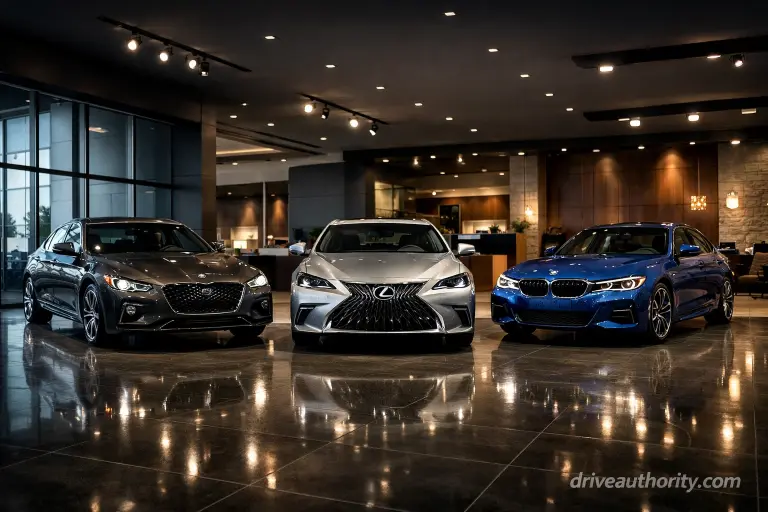
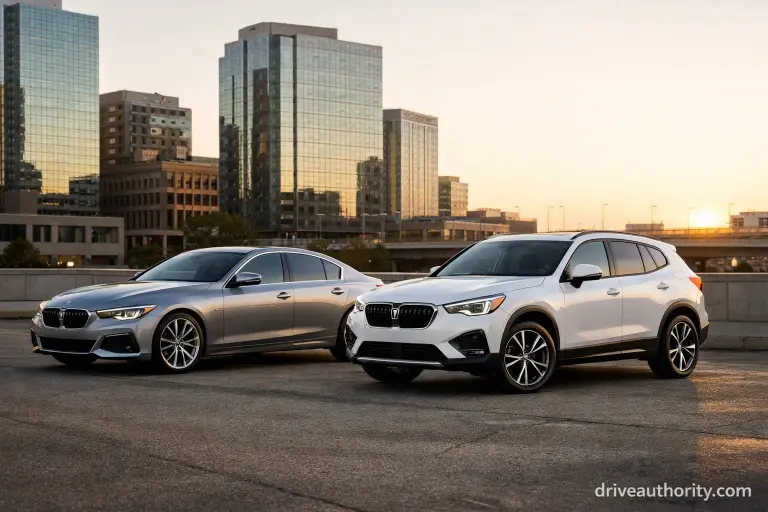
The best affordable luxury cars have quietly revolutionized what’s accessible at mainstream budgets. A decade ago, accessing genuine luxury meant stretching toward $60,000 sedans or settling for mainstream brands with leather seats and a sunroof. However, that calculus has fundamentally changed, with true luxury experiences now available between $35,000 and $50,000.
Affordable luxury now operates in two distinct lanes: new vehicles priced between $35,000 and $50,000, and certified pre-owned (CPO) models from premium brands available at mainstream prices. In fact, both offer something traditional “luxury-inspired” trims cannot replicate—actual luxury DNA, not cosmetic upgrades bolted onto economy platforms.
What separates true affordable luxury from a loaded Honda or Toyota? It’s not just nicer materials or a fancier badge. Rather, it’s the cumulative effect of ride refinement, cabin isolation, build precision, and an ownership experience calibrated around comfort rather than cost-cutting. Ultimately, the difference becomes obvious within the first five minutes of driving.
This guide identifies the best affordable luxury cars and proves a simple thesis: you no longer need six figures to access real luxury. Nevertheless, you do need to know where to look, what to prioritize, and which compromises actually matter.
II. Understanding the Affordable Luxury Car Market
1. How Entry-Level Luxury Evolved
Two forces reshaped this segment: intensifying competition and technology democratization.
German, Japanese, and now Korean luxury brands realized they couldn’t survive on flagship models alone. Consequently, entry-level vehicles became strategic conquest tools, designed to win younger buyers before they develop brand loyalty elsewhere. Moreover, that competitive pressure forced better value—more standard features, longer warranties, and aggressive lease terms.
Simultaneously, advanced safety systems, infotainment platforms, and hybrid powertrains that once justified $80,000 price tags became scalable. For instance, adaptive cruise control, 360-degree cameras, and wireless Apple CarPlay are now baseline, not upgrade territory. According to the Insurance Institute for Highway Safety, advanced safety features that once justified premium pricing have become democratized across all segments.
As a result, quality rose while real prices stabilized. Indeed, a well-equipped 2025 luxury compact delivers more refinement than many mid-tier luxury sedans did in 2015.
2. Affordable Luxury vs Mainstream “Near-Luxury”
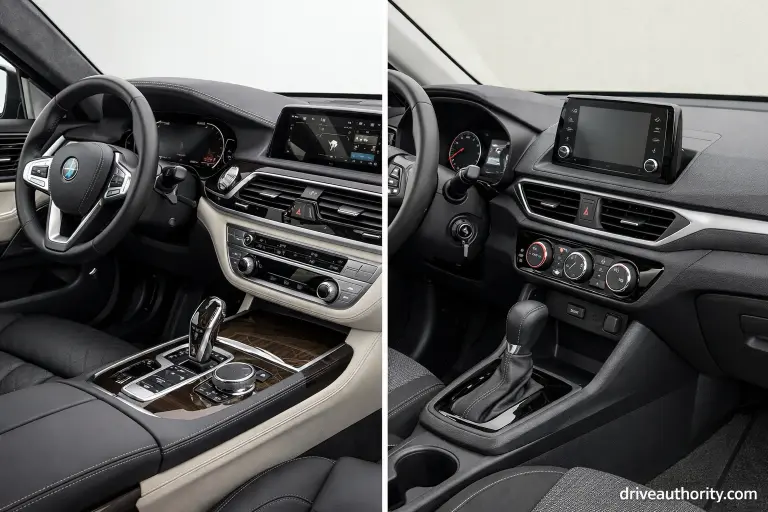
Mainstream automakers have gotten savvy about mimicking luxury cues—ambient lighting, quilted leather, digital dashboards. Nevertheless, the imitation has limits.
Here’s what you actually feel in a true luxury car:
- Interior materials and build quality: Real luxury uses softer plastics, tighter panel gaps, and damped switchgear. In contrast, mainstream brands use harder, shinier materials that feel cheap under repetitive touch.
- Ride refinement and noise isolation: These platforms employ multi-link rear suspensions, acoustic glass, and extensive sound deadening. Conversely, mainstream cars—even loaded ones—ride busier and transmit more road roar.
- Standard tech and safety: Premium brands bundle advanced driver assistance and premium audio as standard. Meanwhile, mainstream brands gate-keep these features behind expensive packages.
- Dealer experience: Premium service lounges, loaner vehicles, and complimentary maintenance windows—these aren’t cosmetic. Furthermore, they reduce ownership friction in ways mainstream service bays don’t.
- Warranty philosophy: Luxury brands increasingly offer longer, more comprehensive coverage because retention matters more than upfront margin.
If you’ve only driven loaded Accords or Camrys, the gap feels smaller than it is. However, drive them back-to-back over rough pavement or on a highway for two hours, and the difference becomes undeniable.
III. What Makes the Best Affordable Luxury Cars Worth Buying
Price Reality
“Affordable” is contextual, but here’s the working framework:
- New: $35,000–$50,000 (entry sedans, compact SUVs, base trims of established luxury nameplates)
- Certified Pre-Owned (CPO): $25,000–$40,000 (2–4 year old models with remaining factory warranty coverage)
Notably, depreciation is the silent subsidy in this segment. Premium brands lose 40–50% of their value in three years, making yesterday’s $55,000 SUV today’s $30,000 opportunity—often with under 30,000 miles and full warranty protection. Kelley Blue Book’s depreciation analysis shows luxury vehicles depreciate faster than mainstream brands, creating opportunities for savvy CPO buyers.
Value Metrics That Actually Matter
Forget 0-60 times and horsepower wars. Instead, real luxury value shows up in daily driving, not drag strips. Here’s what separates smart buys from badge-chasing mistakes:
Feature-to-Price Ratio Does the car bundle essentials as standard, or does it nickel-and-dime via option packages? Clearly, the best values front-load equipment.
Standard vs Optional Equipment Adaptive cruise, heated seats, premium audio, and advanced safety should be included, not upsells.
Interior Craftsmanship and Comfort Specifically, seat bolstering, material texture, and climate control responsiveness—these define hours spent inside the cabin.
Driving Dynamics Not lap times. Rather, steering weight, suspension composure over broken pavement, and throttle refinement in stop-and-go traffic matter most.
Tech Usability Screen size is irrelevant if the interface lags or requires five taps to adjust climate. Therefore, intuitive, responsive systems matter more than pixel count.
Safety Ratings and ADAS Top-tier crash scores and robust driver assistance (lane-keeping, automatic emergency braking, blind-spot monitoring).
Fuel Efficiency / Electrification Real-world MPG, hybrid availability, or EV range that aligns with your commute reality.
Warranty Strength Bumper-to-bumper coverage duration, powertrain protection, and complimentary maintenance windows.
Predicted Reliability Consumer Reports, J.D. Power, and long-term owner forums reveal patterns dealerships won’t mention. J.D. Power’s Vehicle Dependability Study tracks three-year reliability data across all brands.
5-Year Cost of Ownership Insurance premiums, fuel, maintenance, depreciation. Remember, the monthly payment is only the entry fee.
This framework filters hype from substance. Subsequently, every recommendation below aligns with these criteria.
IV. Best Affordable Luxury Cars (By Use Case)
Here are the best affordable luxury cars across different use cases, evaluated against the metrics that actually matter.
A. Best Overall Affordable Luxury Car
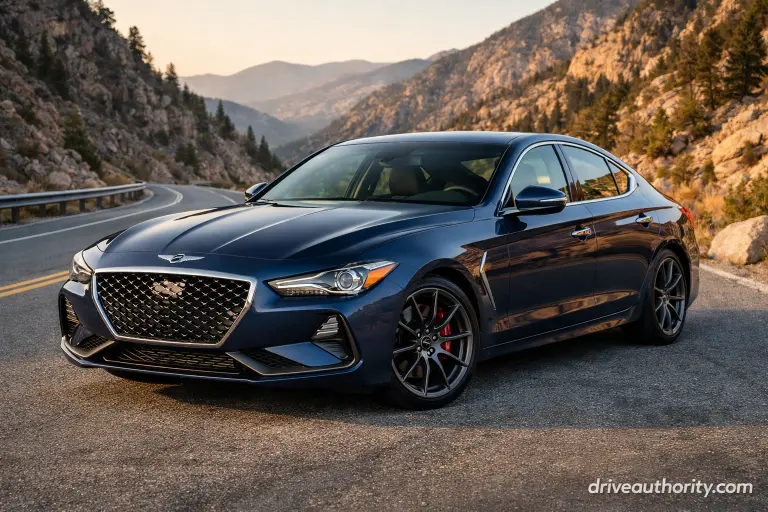
Genesis G70 3.3T
Starting MSRP: ~$43,000 | CPO Range: $28,000–$35,000
Why it wins overall: The G70 delivers German sport sedan dynamics with Japanese reliability and an industry-leading warranty—all while undercutting BMW and Audi by $10,000+.
Key Specs:
- Powertrain: 3.3L twin-turbo V6, 365 hp, RWD/AWD
- 0–60: 4.5 seconds (if that matters to you)
- Fuel Economy: 18/25 MPG (RWD), 17/24 (AWD)
- Interior: Compact sedan, 10.3 cubic feet trunk
Luxury Highlights:
- Comfort & Refinement: Adaptive suspension, quiet cabin, supportive sport seats with ventilation
- Interior Materials: Nappa leather, real aluminum trim, soft-touch surfaces throughout
- Tech & Safety: 10.25″ touchscreen, wireless Apple CarPlay/Android Auto, Highway Driving Assist II, surround-view camera
Ownership Reality:
- Maintenance: Complimentary for 3 years/36,000 miles
- Insurance: Moderate (luxury brand, but strong safety scores offset premiums)
- Depreciation: Steeper than German rivals, which makes CPO units exceptional values
Best For: Driving enthusiasts who want engagement without sacrificing daily comfort. Additionally, those who value substance over badge prestige.
Consider If: You prioritize driving dynamics and warranty coverage over brand cachet. Alternatively, you’re cross-shopping 330i or A4 but want more performance per dollar.
B. Best Affordable Luxury Compact SUV
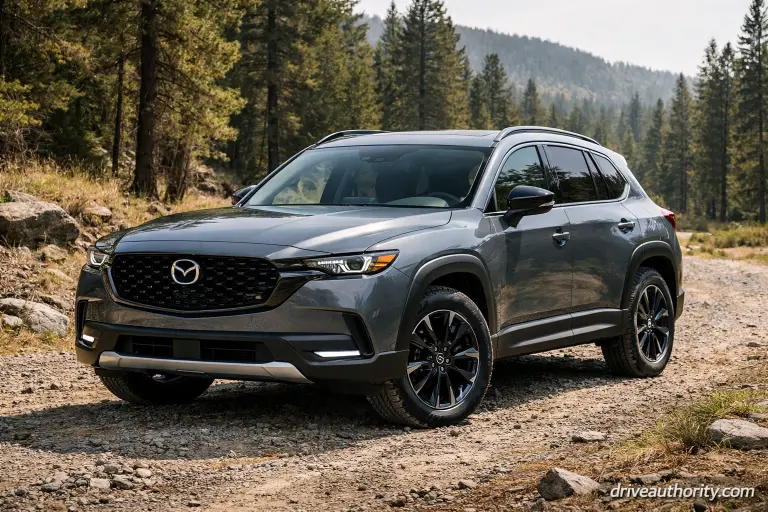
Mazda CX-50 Turbo (Premium Plus trim)
Starting MSRP: ~$42,000 | CPO Range: $32,000–$38,000
Why it wins: Mazda’s luxury-adjacent positioning delivers near-premium refinement at non-premium pricing, with standard AWD and genuine off-road capability most luxury SUVs fake.
Key Specs:
- Powertrain: 2.5L turbo-4, 256 hp, AWD standard
- 0–60: 6.4 seconds
- Fuel Economy: 23/29 MPG
- Cargo: 31.4 cubic feet (rear seats up), 56.3 (seats down)
Luxury Highlights:
- Comfort & Refinement: Composed ride quality, excellent NVH (noise/vibration/harshness) suppression, premium damping
- Interior Materials: Nappa leather, real wood trim, textured soft-touch surfaces, metal speaker grilles
- Tech & Safety: 10.25″ display, 12-speaker Bose audio, full suite of i-Activsense safety (adaptive cruise, lane-keep, traffic jam assist)
Ownership Reality:
- Maintenance: Mazda reliability with affordable parts (non-luxury pricing)
- Insurance: Lower than German luxury SUVs
- Depreciation: Holds value better than most luxury compact SUVs due to strong demand and limited inventory
Best For: Buyers who want luxury comfort without luxury maintenance costs. Additionally, those who actually use AWD and appreciate ground clearance.
Consider If: You’re cross-shopping Audi Q3, BMW X1, or Volvo XC40 but don’t need the badge. Furthermore, you value driving feel over tech gimmicks.
C. Best Affordable Luxury Car for Technology
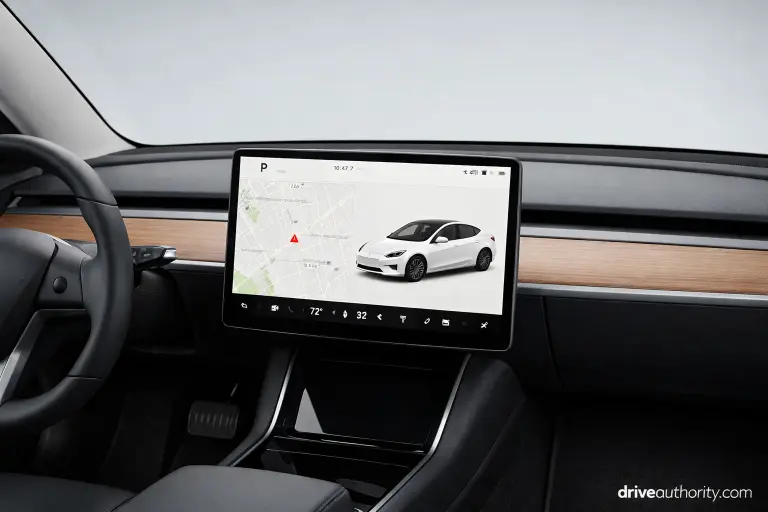
Tesla Model 3 Long Range
Starting MSRP: ~$47,500 (after potential EV incentives) | Used Range: $30,000–$40,000
Why it wins: No luxury car at this price delivers Tesla’s software depth, over-the-air updates, Autopilot capability, and supercharger network access.
Key Specs:
- Powertrain: Dual-motor AWD, 341 hp
- 0–60: 4.2 seconds
- Range: 341 miles (EPA)
- Interior: Minimalist, 15″ center touchscreen controls everything
Luxury Highlights:
- Comfort & Refinement: Instant torque, silent operation, air suspension (Performance trim), premium audio
- Interior Materials: Vegan leather, minimalist aesthetic (polarizing—either love or hate)
- Tech & Safety: Autopilot, full self-driving capability (subscription), mobile app control, Sentry Mode, frequent software updates adding features post-purchase
Ownership Reality:
- Maintenance: Minimal (no oil changes, brake wear reduced by regen braking, fewer moving parts)
- Insurance: Higher due to repair costs and limited body shop network
- Depreciation: Volatile (affected by Tesla price cuts and new model releases)
Best For: Tech-forward buyers who prioritize software over traditional luxury cues. Similarly, those with home charging and predictable driving patterns.
Consider If: You’re comfortable with Tesla’s minimalist interior philosophy and service model. In addition, you value cutting-edge tech over brand heritage.
D. Best Affordable Luxury Sports Sedan
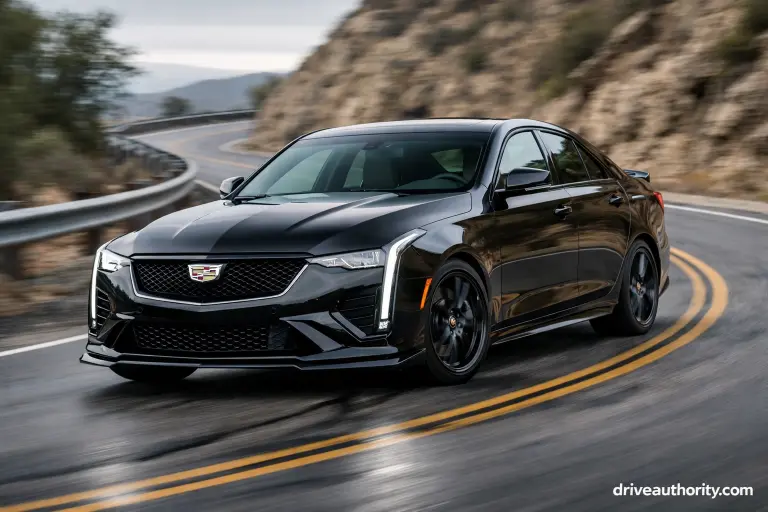
Cadillac CT4-V (not Blackwing)
Starting MSRP: ~$45,000 | CPO Range: $32,000–$38,000
Why it wins: American muscle meets European handling in a package that prioritizes driver engagement over tech overload.
Key Specs:
- Powertrain: 2.7L turbo-4, 325 hp, RWD/AWD
- 0–60: 4.8 seconds
- Fuel Economy: 20/28 MPG (RWD)
- Interior: Compact sport sedan, actual rear seat space
Luxury Highlights:
- Comfort & Refinement: Magnetic Ride Control suspension (adapts in milliseconds), Brembo brakes, limited-slip differential
- Interior Materials: Leather and microsuede, carbon fiber trim, bolstered sport seats
- Tech & Safety: 8″ touchscreen (not over-digitized), Super Cruise available (hands-free highway driving), AKG audio
Ownership Reality:
- Maintenance: GM parts network keeps costs reasonable
- Insurance: Moderate (performance car, but strong safety tech)
- Depreciation: Steep (American luxury always depreciates faster), making CPO incredible value
Best For: Drivers who want visceral engagement—steering feel, throttle response, chassis communication. Therefore, those who prioritize dynamics over luxury amenities.
Consider If: You’re cross-shopping BMW M240i or Audi S3 but want more space and less brand tax. Moreover, you prioritize driving feel over tech features.
E. Best Certified Pre-Owned Luxury Value
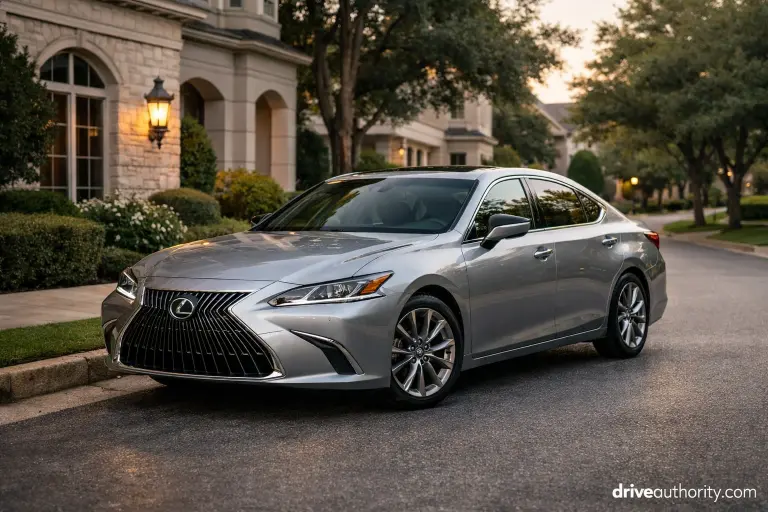
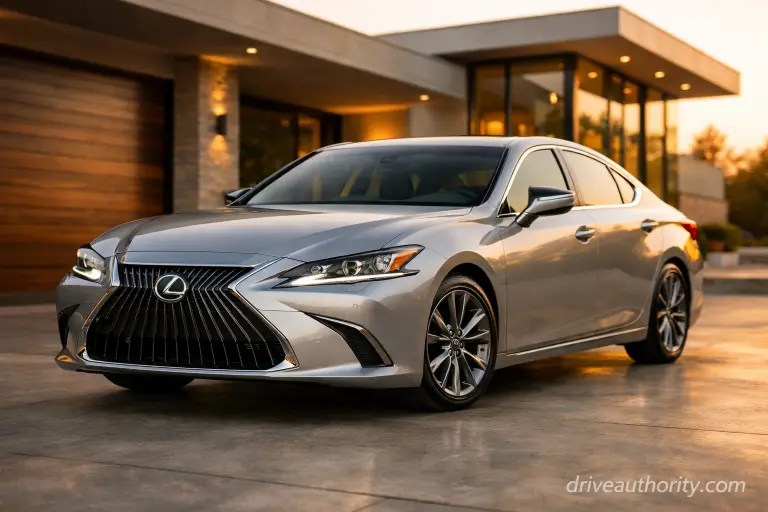
Lexus ES 350 (2021–2023 CPO)
CPO Range: $30,000–$38,000 (originally $42,000–$50,000)
Why it wins: Lexus reliability, hybrid efficiency options, and comprehensive CPO warranty make this the safe bet for first-time luxury buyers.
Key Specs:
- Powertrain: 3.5L V6, 302 hp, FWD
- 0–60: 6.6 seconds
- Fuel Economy: 22/32 MPG (26/34 MPG hybrid)
- Interior: Midsize sedan comfort, quiet cabin
Luxury Highlights:
- Comfort & Refinement: Whisper-quiet ride, plush seats, smooth power delivery
- Interior Materials: Soft leather, real wood accents, excellent fit and finish
- Tech & Safety: Lexus Safety System+ 2.5 (all the safety tech), 12.3″ touchscreen, Mark Levinson audio
Ownership Reality:
- Maintenance: Legendary Lexus reliability, affordable long-term costs
- Insurance: Lower due to safety scores and theft rates
- Depreciation: Slower than German rivals, retains value well
- CPO Warranty: 6 years/70,000 miles from original sale date (comprehensive coverage)
Best For: Risk-averse buyers prioritizing reliability and low cost of ownership. Additionally, those upgrading from mainstream brands and wanting worry-free luxury.
Consider If: You value peace of mind and longevity over driving excitement. Furthermore, you’re trading up from a Camry or Accord and want similar dependability with added refinement.
F. Best Affordable Luxury Hybrid or EV
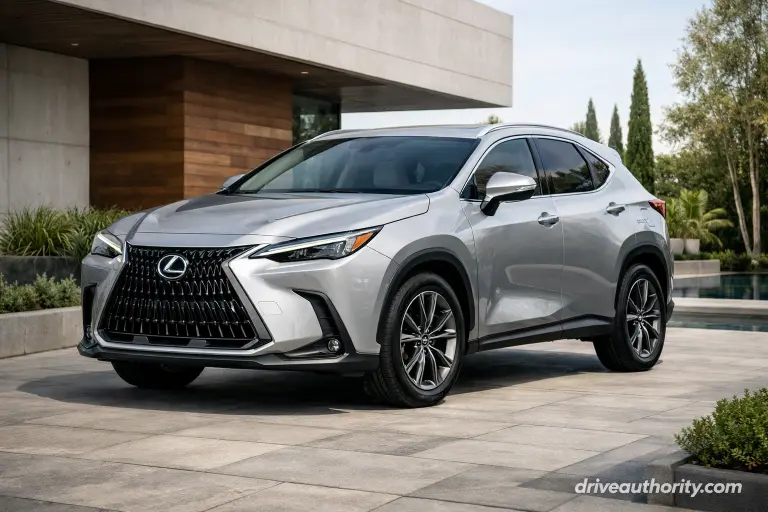
Lexus NX 350h (Hybrid)
Starting MSRP: ~$44,000 | CPO Range: $35,000–$42,000
Why it wins: Combines Lexus reliability with 36+ MPG efficiency, AWD standard, and no range anxiety.
Key Specs:
- Powertrain: 2.5L hybrid, 239 hp combined, AWD
- 0–60: 7.2 seconds
- Fuel Economy: 39/37 MPG
- Cargo: 22.7 cubic feet (expandable to 46.9)
Luxury Highlights:
- Comfort & Refinement: Smooth power transitions, quiet operation, adaptive suspension
- Interior Materials: Premium leather, soft-touch plastics, thoughtful ergonomics
- Tech & Safety: 14″ touchscreen, wireless charging, panoramic camera, full Safety System+ suite
Ownership Reality:
- Maintenance: Hybrid systems proven reliable in Lexus lineup (10+ years of real-world data)
- Insurance: Moderate (hybrid discounts offset luxury premiums)
- Depreciation: Better than German hybrids, strong used market demand
Best For: Eco-conscious buyers who refuse to sacrifice luxury. Similarly, those with no home charging but want efficiency gains.
Consider If: You drive 15,000+ miles annually and want to cut fuel costs without range planning. In addition, you prioritize reliability over cutting-edge EV tech.
G. Most Practical Affordable Luxury Option
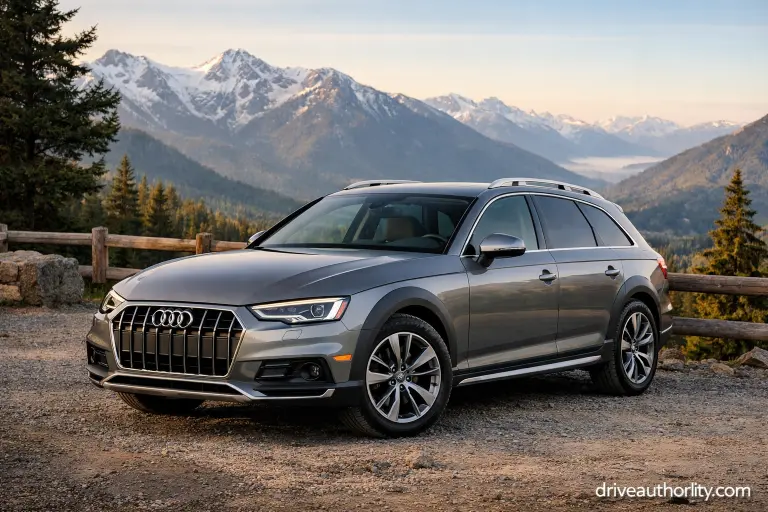
Audi A4 Allroad
Starting MSRP: ~$46,000 | CPO Range: $32,000–$40,000
Why it wins: Wagon versatility with raised ride height, Quattro AWD, and genuinely premium German engineering at accessible pricing.
Key Specs:
- Powertrain: 2.0L turbo-4, 261 hp, Quattro AWD
- 0–60: 5.8 seconds
- Fuel Economy: 23/30 MPG
- Cargo: 24.2 cubic feet (58.5 with rear seats folded)
Luxury Highlights:
- Comfort & Refinement: Air suspension, quiet cabin, raised ground clearance for rough roads
- Interior Materials: Milano leather, brushed aluminum, Audi’s benchmark build quality
- Tech & Safety: Virtual Cockpit Plus, MMI touchscreen, Audi Pre Sense, Bang & Olufsen audio
Ownership Reality:
- Maintenance: Higher than Lexus/Mazda, but CPO warranty mitigates risk
- Insurance: Moderate to high (German luxury + wagon rarity)
- Depreciation: Moderate (wagons depreciate faster than SUVs, making CPO values strong)
Best For: Buyers who need cargo space but refuse SUV compromises. Therefore, those who appreciate European driving dynamics with American-friendly practicality.
Consider If: You’re cross-shopping Volvo V60 or Subaru Outback Wilderness and want more refinement. Moreover, you value versatility without the SUV penalty.
V. Affordable Luxury vs Loaded Mainstream Cars
When comparing affordable luxury cars to loaded mainstream vehicles, let’s settle this debate with real-world comparison.
Example: Honda Accord Touring ($38,000) vs Genesis G70 2.0T ($39,500)
| Category | Accord Touring | Genesis G70 2.0T |
|---|---|---|
| Interior Materials | High-quality plastics, synthetic leather | Nappa leather, real aluminum, soft-touch everywhere |
| Ride Comfort | Composed, slightly firm | Adaptive damping, isolates bumps better |
| Noise Isolation | Good, some wind noise at 70+ MPH | Excellent, vault-like quiet |
| Technology Depth | 12.3″ screen, wireless CarPlay, good audio | 10.25″ screen, same connectivity, superior sound insulation |
| Dealer Experience | Honda service bay (efficient, transactional) | Genesis valet service, loaner vehicles, 3yr maintenance |
| Resale Prestige | Strong Honda reputation | Luxury badge (newer, less established) |
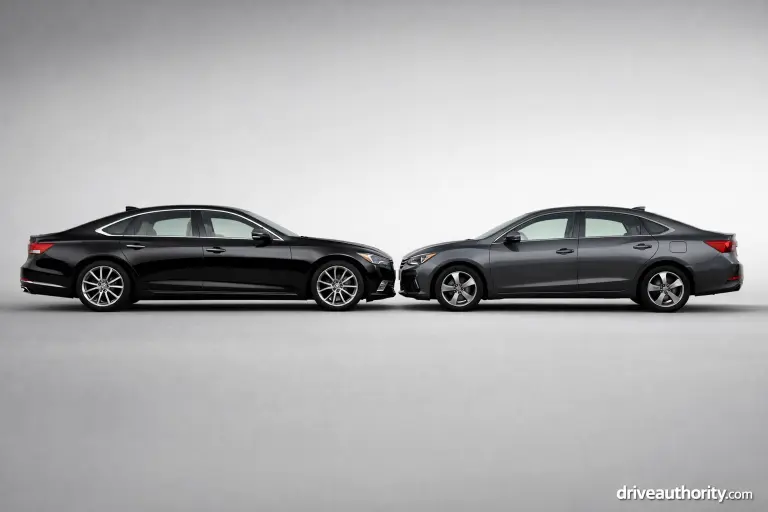
The Intangibles:
The Accord is an exceptional mainstream car—refined, reliable, practical. However, it still feels like a very nice Honda. Hard plastics in secondary touchpoints, road noise intrusion, and dealer service that treats you like customer #47 that day.
In contrast, the G70 feels like a luxury car because it is one. Softer materials everywhere your hand touches. Better damping over rough surfaces. Furthermore, service appointments scheduled around your convenience, not theirs.
Who Should Choose What:
- Accord: Rational buyers prioritizing Honda reliability, resale value, and lower insurance costs
- G70: Buyers willing to trade some brand recognition for tangibly better daily comfort and ownership experience
Nevertheless, neither choice is wrong. But pretending they’re equivalent ignores what you actually feel during 500 hours per year behind the wheel.
VI. Why These Luxury Cars Are So Affordable
This isn’t charity—luxury brands have strategic reasons for delivering value.
1. Manufacturing & Cost Strategy
Platform Sharing: Genesis shares platforms with Hyundai/Kia. Similarly, Mazda leverages Toyota partnerships. Consequently, this spreads development costs across volume models, allowing luxury variants at lower price points.
Global Scale: Lexus builds millions of vehicles worldwide. Therefore, economies of scale mean cheaper components without quality sacrifices.
Shared Powertrains: The same hybrid system in a Lexus ES also appears in the Toyota Camry. Thus, amortizing engine R&D across multiple models reduces per-unit costs.
2. Market Positioning
Gateway Vehicles: Brands use entry-level models as conquest tools. Specifically, hook a 30-year-old with a $40,000 sedan, then retain them for the $65,000 SUV upgrade five years later.
Conquest Pricing: Genesis, Mazda, and Tesla deliberately undercut established German rivals to steal market share. Indeed, they accept lower per-vehicle profit to build brand credibility.
Brand Laddering: Every luxury buyer starts somewhere. Subsequently, entry models build loyalty that pays off across decades of repeat purchases.
3. Technology Economics
Trickle-Down Features: Adaptive cruise control cost $3,000 as an option in 2010. Now it’s standard because component costs collapsed through volume production.
Software and Component Scale: Touchscreens, cameras, sensors—once unusual, now commoditized through smartphone supply chains.
4. Smart Cost Cuts (Without Killing Luxury)
Material Choices: Synthetic leather that mimics real hide at 30% of the cost. Similarly, aluminum-look trim instead of solid metal (you won’t notice the difference).
Simplified Options: Fewer build combinations reduce manufacturing complexity and inventory costs.
Feature Bundling: Packages force buyers into higher trims, thereby offsetting lower base prices through profitable upgrades.
5. Incentives & Financing
Lease Support: Brands subsidize lease residuals to lower monthly payments and move inventory.
APR Specials: 0% financing during model-year transitions clears lots without slashing MSRP.
Model-Year Transitions: Last year’s model with this year’s features at 15% off.
Therefore, the “catch” isn’t hidden—it’s transparency. Essentially, you’re getting luxury at mainstream prices because brands decided that’s better than losing you to competitors entirely.
VII. How to Maximize Value When Buying
New vs Used vs CPO: When Each Makes Sense
Get New If:
- You want the latest tech and safety features
- Manufacturer incentives (0% APR, rebates) make new cheaper than CPO
- You plan to keep the car 10+ years (depreciation is irrelevant)
Buy CPO If:
- You want luxury with warranty protection at 30–40% savings
- The model hasn’t significantly changed in 2–3 years (you’re not missing much)
- Your annual mileage falls between 12,000–15,000 miles (sweet spot for CPO value)
Buy Used (Non-CPO) If:
- You’re mechanically savvy or have a trusted independent shop
- The luxury brand has bulletproof reliability (Lexus, older Acura)
- A pre-purchase inspection from a specialist confirms the vehicle’s condition
Timing Your Purchase
Best Months: September–November (dealers clearing inventory for new model year), December (hitting annual sales targets), March (end of Q1 quotas).
Model Year Cycles: Buy when the redesigned model launches. Subsequently, previous-generation inventory drops 20–30%.
Sales Events: Memorial Day, Labor Day, Black Friday (real discounts, not just marketing).
Options & Packages
Resale-Positive Features:
- AWD (in snow states)
- Adaptive cruise control
- Premium audio (brand name: Bose, B&O, Mark Levinson)
- Heated/ventilated seats
- Sunroof/panoramic roof
Money-Wasting Upgrades:
- Massive wheels (>19″, harsh ride, expensive tire replacements)
- Unusual paint colors (limits resale pool)
- Dealer add-ons (paint protection, nitrogen tires, fabric treatments—pure profit for dealers)
Negotiation & Financing
Invoice Awareness: Edmunds and TrueCar publish dealer invoice pricing. Therefore, start there, not MSRP.
Multi-Dealer Leverage: Get quotes from 3+ dealers via email. Subsequently, play them against each other.
Lease vs Buy Math: If you trade cars every 3–4 years, leasing often costs less (you only pay depreciation + interest, not full vehicle price).
Trade-In Timing: Sell privately if you have time (you’ll net 10–15% more). However, understand that trade-in prioritizes convenience over value maximization.
VIII. Long-Term Ownership: The Reality Check
Maintenance Costs (Years 1–5)
| Brand | Year 1–3 | Year 4–5 | Notes |
|---|---|---|---|
| Lexus | ~$500/year | ~$800/year | Complimentary maintenance through 2yr/25k, minimal issues |
| Genesis | $0 (complimentary) | ~$600/year | 3yr/36k free maintenance included |
| Mazda | ~$400/year | ~$700/year | Non-luxury parts pricing, reliable |
| Audi/BMW | ~$1,200/year | ~$2,000+/year | Premium parts, dealer-only repairs common |
| Tesla | ~$300/year | ~$600/year | No oil changes, but tire wear accelerated |
Reliability Patterns
Most Reliable: Lexus (consistently top-ranked), Genesis (strong early track record), Mazda (near-luxury reliability).
Moderate Risk: Audi (improved lately, but electrical gremlins persist), Cadillac (hit-or-miss depending on model).
Higher Risk: Older German luxury (out-of-warranty BMWs and Mercedes can be financial sinkholes).
Warranty Coverage
Genesis: 10yr/100k powertrain, 5yr/60k bumper-to-bumper (best in class).
Lexus CPO: 6yr/70k total coverage from original sale date. Edmunds’ CPO guide explains warranty coverage differences across luxury brands and how to evaluate CPO certification standards.
Luxury Brands: Typically 4yr/50k bumper-to-bumper, which is why CPO matters—it extends protection into years 5–6.
Extended Warranty Logic
Worth it if:
- You’re buying a German luxury car out of factory warranty
- You drive 15,000+ miles/year
- You’re not mechanically inclined and dread repair bills
Skip it if:
- You’re buying Lexus/Genesis with existing strong coverage
- You have emergency savings covering $3,000–$5,000 repairs
- You plan to trade the car before major repairs hit (year 6+)
Parts and Labor Costs
Dealer vs Independent:
- Professional service centers cost 30–50% more, but are necessary for warranty claims and complex diagnostics. RepairPal provides detailed cost estimates for both dealer and independent shop repairs across all luxury brands.
- Independent shops (specializing in your brand) offer savings once warranty expires.
- However, avoid “European car specialists” that charge near-dealer rates without dealer accountability.
Depreciation Trends
Best Value Retention (5 years):
- Lexus (50–60% retained value)
- Mazda (55–65%, near-luxury advantage)
- Genesis/Tesla (45–55%, volatile)
Worst Value Retention:
- German luxury (40–50%, premium brand tax)
- American luxury (Cadillac, Lincoln: 35–45%)
Value Retention Tips:
- Maintain service records meticulously
- Keep mileage under 15,000/year
- Avoid modifications
- Stick to neutral colors (white, black, gray, silver)
IX. Mistakes Buyers Make with Affordable Luxury
Even when buying the best affordable luxury cars, common mistakes can undermine value.
1. Buying the Badge, Not the Car
The Mistake: Choosing a stripped BMW over a loaded Genesis because of the logo.
The Reality: That base 3-Series has cloth seats, no sunroof, and basic audio. Essentially, you’re paying $8,000 for a badge.
The Fix: Instead, prioritize features and driving experience over brand perception.
2. Ignoring Total Ownership Cost
The Mistake: Focusing only on monthly payment, ignoring insurance, fuel, and maintenance.
The Reality: That $450/month lease becomes $650/month after insurance ($150/month for luxury vs $100 for mainstream) and premium fuel.
The Fix: Therefore, calculate 5-year cost including depreciation, insurance, fuel, and maintenance before signing.
3. Skipping Test-Drive Comparisons
The Mistake: Test-driving one car, falling in love, buying it without comparison.
The Reality: You might hate the infotainment system after a week, or discover the seat bolsters cause back pain.
The Fix: Instead, drive at least three competitors back-to-back. Moreover, pay attention to ergonomics, visibility, and daily usability—not just acceleration.
4. Overvaluing Monthly Payments
The Mistake: Stretching a 60-month loan to 72 or 84 months to hit a target payment.
The Reality: Consequently, you’ll be underwater on the loan for years and pay thousands more in interest.
The Fix: If you can’t afford it on a 60-month term, you can’t afford the car.
5. Forgetting Insurance and Fuel
The Mistake: Buying a 300+ HP sport sedan without checking insurance costs.
The Reality: Full coverage on a performance luxury car can run $200+/month for drivers under 30.
The Fix: Therefore, get insurance quotes before buying. Additionally, factor in premium fuel costs (add $40–$60/month vs regular).
6. Choosing Style Over Substance
The Mistake: Buying the car that photographs well, ignoring whether it fits your life.
The Reality: That sleek coupe has a tiny trunk and awful rear visibility. Gorgeous, but impractical.
The Fix: Instead, list your actual needs (cargo, passengers, commute length) and eliminate cars that don’t meet them, no matter how pretty.
7. Ignoring Dealership Service Quality
The Mistake: Assuming all luxury dealerships offer equal service experiences.
The Reality: Some luxury dealers treat customers like royalty. Conversely, others are indistinguishable from mainstream service bays.
The Fix: Therefore, read Google/Yelp reviews of service departments. Furthermore, ask current owners about their experience. A bad dealer ruins luxury ownership.
X. Frequently Asked Questions
What qualifies as an affordable luxury car?
New vehicles priced $35,000–$50,000 from established luxury brands (Lexus, Genesis, Audi, BMW, etc.) or near-luxury brands (Mazda) delivering genuine refinement. Alternatively, certified pre-owned models from premium brands, typically 2–4 years old, offering luxury experiences at mainstream pricing.
Are affordable luxury cars expensive to maintain?
It depends. Lexus and Genesis offer complimentary maintenance and strong reliability, keeping costs low. In contrast, German brands (Audi, BMW) run significantly higher maintenance costs due to premium parts and complex engineering. Generally, budget $500–$800/year for Japanese luxury, $1,200–$2,000/year for German.
Used luxury vs new mainstream—which is smarter?
Used luxury wins if:
- You buy CPO with warranty coverage
- The luxury brand has strong reliability (Lexus, Genesis)
- You value comfort and refinement over latest tech
New mainstream wins if:
- You prioritize reliability and lower long-term costs
- You keep cars 10+ years
- You want the latest safety features
Neither is universally “smarter”—rather, it depends on your priorities and risk tolerance.
Do affordable luxury cars hold value?
Lexus and Mazda retain value well (50–65% after 5 years). However, German luxury depreciates faster (40–50%). Meanwhile, Genesis and Tesla fall middle-ground (45–55%). Notably, steep depreciation benefits CPO buyers but hurts new-car purchasers planning to trade in 3–4 years.
Which brands are most reliable?
Most Reliable: Lexus (consistently #1), Genesis (strong early track record), Mazda (near-luxury dependability).
Moderate: Audi (improving), Cadillac (model-dependent).
Less Reliable: Older German luxury out of warranty. Nevertheless, always check model-specific reliability ratings—some vehicles within a brand are bulletproof, while others are money pits.
Lease or buy?
Lease if:
- You trade cars every 3–4 years
- You drive under 12,000 miles/year
- You want lower monthly payments and minimal maintenance risk
Buy if:
- You keep cars 6+ years
- You drive 15,000+ miles/year
- You want to build equity and eventual ownership
Are CPO luxury cars worth it?
Absolutely, for the right buyer. CPO offers:
- 30–40% savings vs new
- Extended warranty protection
- Dealer inspection and reconditioning
Best value: 2–3 year old luxury SUVs and sedans with under 30,000 miles. However, avoid CPO if the model is unreliable or the warranty coverage is weak.
What’s the catch with cheap luxury cars?
There’s no “catch”—just strategic trade-offs:
- Platform/powertrain sharing with mainstream models
- Depreciation creates affordability (for buyers, not original owners)
- Some brands (Genesis, Mazda) lack prestige of established names
- Entry-level trims omit features standard on higher trims
Ultimately, understand what you’re compromising, and the value becomes clear.
XI. Final Picks by Buyer Type
When selecting among the best affordable luxury cars, consider these tailored recommendations by buyer type:
First-Time Luxury Buyers: Lexus ES 350 CPO (safe, reliable, worry-free)
Young Professionals: Genesis G70 (style, performance, warranty)
Small Families: Mazda CX-50 Turbo (practical, refined, affordable maintenance)
Performance-Focused Drivers: Cadillac CT4-V (visceral, engaging, undervalued)
Tech-Focused Drivers: Tesla Model 3 (software depth, charging network, updates)
Budget-Conscious Luxury Shoppers: Genesis G70 or Lexus ES CPO (value + warranty)
Eco-Conscious Buyers: Lexus NX 350h (efficiency without range anxiety)
XII. Conclusion: Luxury That Actually Makes Sense
The best affordable luxury cars prove six figures are no longer required for quiet cabins, premium materials, and daily comfort. Moreover, they demonstrate that luxury isn’t just about badges—it’s about the cumulative effect of better damping, softer plastics, and ownership experiences calibrated around reducing friction, not maximizing margin.
Affordable luxury isn’t a marketing illusion—it’s a legitimate segment where smart buyers access real refinement without financial recklessness. Nevertheless, success requires prioritizing substance over logos, calculating total cost instead of monthly payments, and test-driving competitors back-to-back.
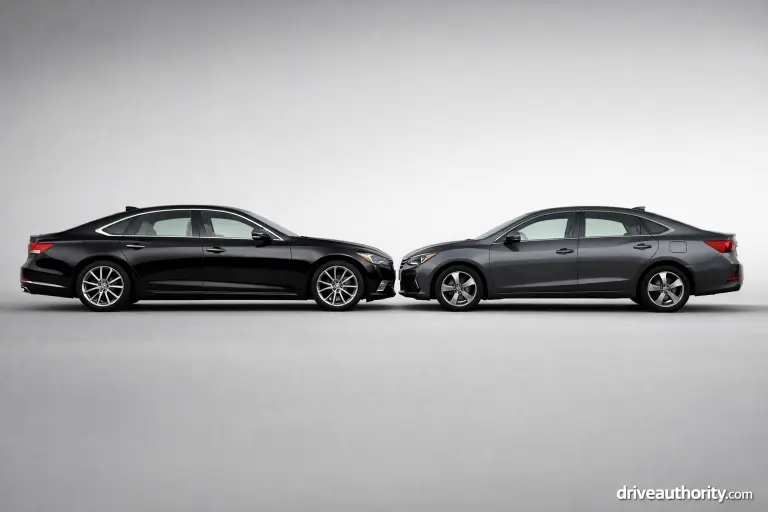
Remember: the right affordable luxury car is the one that fits your life, not your Instagram feed.
Now research, test drive, and negotiate with confidence. How you fund this Best Affordable Luxury Cars (2026): Premium Comfort ?