Is GAC Made by Toyota? The Truth About the GAC–Toyota Relationship
If you’ve been researching GAC vehicles, you’ve probably noticed something confusing. The brand seems to appear everywhere—on car forums, in international markets, in automotive news—often mentioned alongside Toyota. Some articles casually refer to “GAC Toyota” as if they’re the same company. Others show images of GAC factories producing Toyota-branded cars. And if you dig deeper, you’ll find references to partnerships, joint ventures, and shared manufacturing facilities that blur the lines even further.
So naturally, you’re wondering: Is GAC made by Toyota? Does Toyota own this brand? Are GAC cars essentially rebadged Toyotas with different logos?
The short answer might surprise you. The longer answer will completely clarify a relationship that’s far more nuanced than most people realize. In this guide, you’ll discover who actually owns GAC, what Toyota’s real role is in the story, and most importantly, what this relationship means for you as a potential buyer. By the end, you’ll understand the difference between ownership and partnership—and why that distinction matters when you’re making a purchasing decision.
Short Answer First — Is GAC Made by Toyota?
Let’s cut straight to what you came here to find out: No, GAC is not made, owned, or controlled by Toyota.
GAC (Guangzhou Automobile Group) is an independent Chinese automaker with its own ownership structure, management team, and vehicle platforms. However, GAC and Toyota do operate a joint manufacturing venture in China that produces Toyota-branded vehicles—and this is exactly where the confusion begins.
Think of it this way: just because Nike contracts factories to manufacture shoes doesn’t mean those factories “are” Nike. Similarly, GAC collaborating with Toyota to build Toyota cars doesn’t make GAC a Toyota subsidiary. The partnership exists, but ownership and brand identity remain completely separate.
Now let’s break down exactly how this works.
What Is GAC? (Who Actually Owns the Brand)
To understand the GAC–Toyota relationship, you first need to know what GAC actually is—because this company has a much bigger footprint than most Western consumers realize.
GAC stands for Guangzhou Automobile Group, one of China’s largest state-owned automotive manufacturers. Founded in 1997 and headquartered in Guangzhou, Guangdong Province, GAC Group operates as a massive automotive conglomerate with multiple brands under its umbrella.
The company maintains independent research and development centers, its own manufacturing facilities, and full control over strategic decisions. GAC isn’t a subsidiary waiting for instructions from a foreign parent company—it’s a major player in the global automotive industry with its own ambitions and direction.
GAC’s Own Brands Include:
- GAC Motor (Trumpchi) – The flagship passenger vehicle brand offering sedans, SUVs, and MPVs
- Aion – GAC’s dedicated electric vehicle brand focusing on advanced EV technology and smart mobility
These brands are designed, engineered, and marketed entirely by GAC. Toyota has no involvement in their development, pricing, or distribution strategy. Moreover, GAC continues expanding its global presence independently, exporting vehicles to markets across Asia, the Middle East, and beyond.
Understanding this independence is crucial. GAC isn’t borrowing Toyota’s identity—it’s building its own.
What Is GAC Toyota? (The Joint Venture Explained Clearly)
Here’s where things get interesting—and where most of the confusion originates.
GAC Toyota Motor Co., Ltd. is a separate legal entity: a joint venture manufacturing company established in 2004. This venture is co-owned by GAC Group and Toyota Motor Corporation, with both companies holding equity stakes in the partnership.
Why Does This Joint Venture Exist?
For decades, China required foreign automakers to partner with domestic companies to manufacture vehicles within the country. According to analysis from the Center for Strategic and International Studies, this policy encouraged technology transfer, supported local industry development, and gave Chinese companies exposure to international manufacturing standards. Therefore, virtually every major global automaker operating in China—Volkswagen, General Motors, Ford, and yes, Toyota—operates through joint ventures with Chinese partners.
What GAC Toyota Actually Does:
The joint venture operates manufacturing facilities that produce Toyota-branded vehicles for the Chinese market. These are genuine Toyota cars—Camrys, Corollas, Highlanders—built to Toyota’s specifications and sold through Toyota’s dealer network in China.
However, this arrangement doesn’t mean Toyota owns GAC, controls GAC’s strategy, or has any say over GAC’s independent brands like Trumpchi or Aion. The partnership is limited to the specific scope of manufacturing Toyota vehicles in China.
Think of it as two companies collaborating on a specific project while maintaining their separate corporate identities and priorities.
Which Cars Are Made by GAC Toyota?
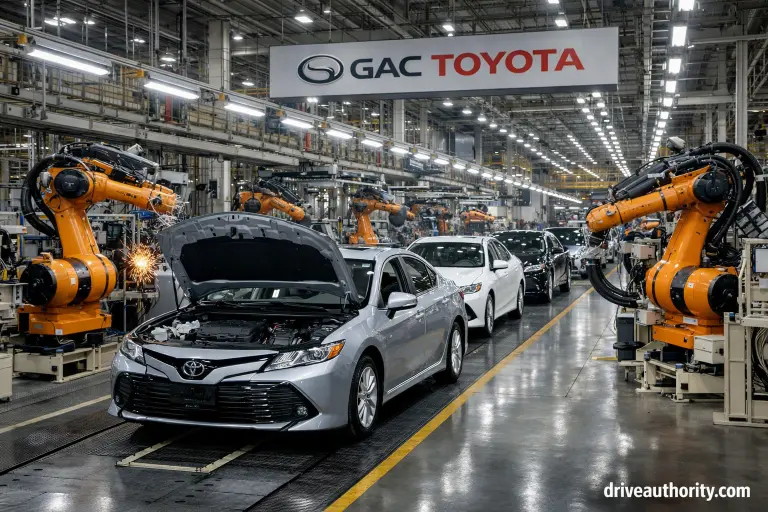
If you’re trying to untangle this relationship, knowing which specific vehicles come from the GAC Toyota joint venture helps clarify the picture.
The GAC Toyota manufacturing facilities in Guangzhou produce several popular Toyota models specifically for the Chinese domestic market:
- Toyota Camry – Mid-size sedan
- Toyota Corolla – Compact sedan
- Toyota Levin – Corolla-based sedan variant
- Toyota Wildlander – RAV4-based SUV
- Toyota Highlander – Three-row SUV
The Critical Distinction:
These are Toyota cars, designed by Toyota, engineered to Toyota specifications, and sold under the Toyota brand. They just happen to be manufactured at facilities operated by the GAC Toyota joint venture.
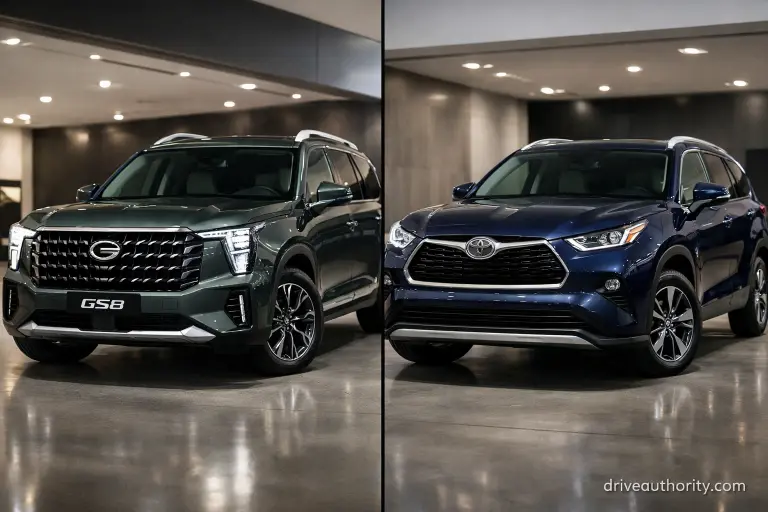
On the other hand, vehicles sold under the GAC brand—like the Trumpchi GS8 SUV or the Aion V electric crossover—are completely separate products. They’re designed by GAC, use GAC powertrains and platforms, and have no direct connection to Toyota’s vehicle lineup.
Understanding this distinction prevents the common mistake of assuming “GAC cars are just Chinese Toyotas.” They’re not. They’re independent vehicles from an independent automaker that happens to also partner with Toyota for separate manufacturing projects.
Are GAC Cars Built Using Toyota Technology?

This question gets to the heart of what many buyers really want to know: If I buy a GAC vehicle, am I getting Toyota engineering and reliability?
The answer requires nuance.
Where Toyota’s Influence Exists:
Through decades of partnership, GAC has gained exposure to Toyota’s renowned manufacturing processes. This includes:
- Quality control methodologies like the Toyota Production System principles
- Manufacturing discipline and process optimization approaches
- Supplier management standards and component quality expectations
These aren’t secrets—they’re operational philosophies that GAC has observed, adapted, and integrated into its own manufacturing culture. In this sense, yes, working closely with Toyota has elevated GAC’s production standards.
Where Toyota’s Influence Does Not Exist:
However, GAC’s core engineering and technology development remain entirely independent:
- Vehicle platforms – GAC designs its own chassis, suspensions, and structural architectures
- Powertrains – GAC develops its own engines, transmissions, and increasingly, electric drivetrains
- Software and connectivity – GAC’s infotainment systems, driver assistance features, and EV technology are proprietary
- Design philosophy – GAC’s styling, interior layouts, and brand positioning are wholly original
Furthermore, GAC has made massive investments in electric vehicle technology through its Aion brand, developing battery chemistry, electric motors, and charging infrastructure completely separate from Toyota’s hybrid and EV strategies.
So while GAC benefits from manufacturing best practices observed through the partnership, the actual vehicles you see on the road under the GAC badge are not built on Toyota technology or platforms.
GAC vs Toyota — Key Differences Buyers Should Understand
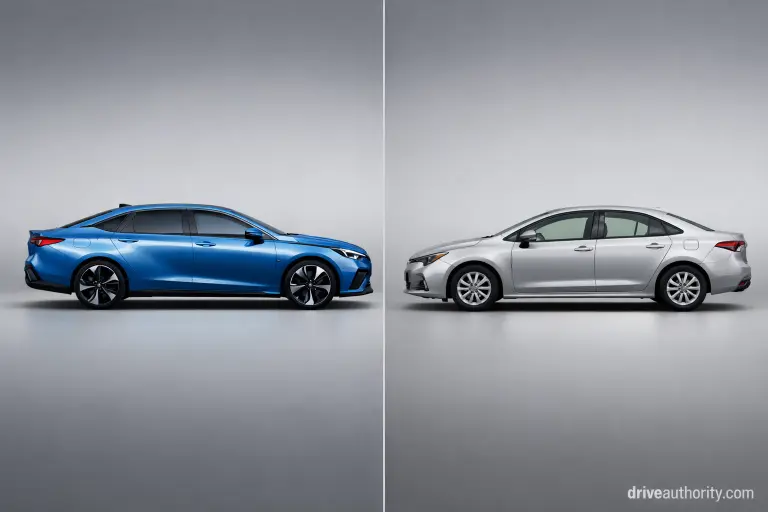
If you’re considering a GAC vehicle, understanding how it differs from Toyota helps set realistic expectations and informs your decision.
Brand Positioning and Pricing
GAC positions itself as a value-oriented brand offering modern features at competitive prices. Toyota, by contrast, commands premium pricing based on decades of reputation for reliability and resale value. A GAC Trumpchi GS8 might offer similar size and features to a Toyota Highlander at 20-30% lower cost—but the brand equity isn’t equivalent.
Powertrain Focus
Toyota built its modern reputation on hybrid technology, particularly with the Prius and hybrid versions of mainstream models. GAC, however, has aggressively pursued pure electric vehicles through Aion, positioning itself as an EV innovator rather than a hybrid specialist. Their approaches to electrification are fundamentally different.
Design Philosophy
Toyota tends toward conservative, widely appealing designs that age gracefully. GAC embraces bolder, more dramatic styling that targets younger, tech-savvy buyers. Walk around a GAC Aion S and a Toyota Corolla, and the design languages couldn’t be more different.
Software and User Experience
GAC vehicles, particularly the Aion lineup, emphasize advanced infotainment systems, over-the-air updates, and integrated connectivity features that appeal to smartphone-native buyers. Toyota has historically moved more cautiously with in-car technology, prioritizing reliability over cutting-edge features.
Warranty and After-Sales
Toyota’s legendary reliability is backed by extensive dealer networks globally and strong resale values. GAC offers competitive warranties—often longer than Toyota’s in some markets—but lacks the decades-long track record and international service infrastructure that Toyota enjoys.
These differences don’t make one brand “better” than the other. They simply serve different buyer priorities and market segments.
Does Toyota Own Any Part of GAC?
Given all the partnership talk, it’s worth stating this clearly one more time: Toyota does not own GAC Group.
Toyota holds an ownership stake only in the specific joint venture entity—GAC Toyota Motor Co., Ltd.—that manufactures Toyota-branded vehicles in China. This partnership gives Toyota no control whatsoever over:
- GAC’s corporate strategy or management decisions
- GAC’s independent brands like Trumpchi and Aion
- GAC’s export markets or international expansion
- GAC’s electric vehicle development or platform decisions
- GAC’s supplier relationships or technology partnerships
GAC remains a state-owned enterprise under Chinese government oversight, with its own board of directors, executive team, and strategic autonomy. The Toyota partnership is one business arrangement among many that GAC maintains—it doesn’t define the company’s identity or constrain its direction.
Think of it like this: if you co-own a coffee shop with a partner, that doesn’t mean your partner owns your house, controls your other investments, or dictates your personal decisions. The partnership exists in one specific domain, and everything else remains independent.
Are GAC Cars as Reliable as Toyota?
This is perhaps the most important practical question for potential buyers, and it deserves a careful, honest answer.
Manufacturing Standards Comparison
GAC’s manufacturing facilities meet modern automotive industry standards, incorporating quality control processes, robotic assembly, and testing protocols comparable to other major automakers. The company has invested heavily in production technology, and vehicles rolling off GAC assembly lines generally exhibit solid build quality.
However, reliability extends beyond assembly quality. It encompasses engineering maturity, component durability over years of use, software stability, and how well vehicles hold up in diverse real-world conditions.
Where the Track Record Differs
Toyota’s reputation for reliability wasn’t built overnight—it’s the result of decades of engineering conservatism, exhaustive testing, continuous improvement, and real-world validation across millions of vehicles. According to Consumer Reports’ reliability data, models like the Camry and Corolla consistently rank among the most dependable vehicles, often proving their durability through 200,000+ mile lifespans in harsh conditions worldwide.
GAC, while producing quality vehicles, simply hasn’t existed long enough to demonstrate that same level of long-term durability data. Early GAC models are only now reaching the 7-10 year age range where reliability patterns become clear.
Warranty Coverage Differences
To compensate for shorter brand history, GAC often offers longer warranty periods than Toyota—sometimes 5-8 years compared to Toyota’s typical 3-5 year coverage. This suggests confidence in product quality while acknowledging that brand reputation still needs building.
Owner Perception vs Long-Term Data
Initial quality surveys in markets where GAC operates show respectable scores, with owners reporting satisfaction with features, comfort, and technology. However, comprehensive long-term reliability data—the kind that tells you how a vehicle performs at year eight or ten—simply doesn’t exist yet in meaningful volume.
The Honest Assessment
If you prioritize proven, documented reliability above all else, Toyota remains the safer bet. If you’re willing to accept some uncertainty in exchange for modern features, bold design, and lower cost, GAC offers compelling value. Just understand you’re not getting “Toyota reliability with a different badge”—you’re getting a newer brand still establishing its long-term reputation.
Why the GAC–Toyota Partnership Exists (And Who Benefits)
Understanding why these two companies chose to partner reveals that this arrangement serves mutual interests—it’s not a one-sided dependency.
What Toyota Gains
Market access – China is the world’s largest automotive market, with vehicle sales consistently surpassing 25 million units annually according to the International Organization of Motor Vehicle Manufacturers. The joint venture gives Toyota manufacturing presence and compliance with local content requirements that facilitate sales in this crucial market.
Production scale – Leveraging GAC’s facilities and workforce allows Toyota to meet Chinese demand efficiently without bearing the full cost of establishing independent operations.
Local expertise – GAC brings knowledge of Chinese consumer preferences, regulatory environment, and supply chain networks that would take Toyota years to develop independently.
What GAC Gains
Manufacturing excellence exposure – Working alongside Toyota provides firsthand insight into world-class production systems, quality control, and operational efficiency that elevate GAC’s capabilities.
Brand association – Being Toyota’s partner lends GAC credibility and legitimacy, both domestically and internationally, that accelerates market acceptance.
Technology observation – While GAC doesn’t gain rights to Toyota’s proprietary technology, proximity to Toyota’s engineering approaches informs GAC’s own development processes.
The Partnership Doesn’t Erase Independence
Importantly, neither company surrenders its strategic autonomy through this partnership. Toyota continues developing its global model lineup independently. GAC pursues its own vehicle platforms, EV strategy, and brand positioning without Toyota approval.
The relationship is transactional and mutually beneficial—not a merger of identities or a subordination of one company to another.
Common Myths About GAC and Toyota (Debunked)
Let’s address the most persistent misconceptions that continue circulating online and in casual automotive conversations.
Myth #1: “GAC is a Chinese Toyota”
Reality: GAC is an independent automaker with its own history, brands, technology, and market strategy. The partnership with Toyota is one business relationship among many, not a defining characteristic of the company’s identity.
Myth #2: “Toyota secretly owns GAC”
Reality: Ownership structures in major corporations are public record. Toyota owns a stake in one specific joint venture, nothing more. GAC remains a state-owned enterprise under Chinese government control, with completely separate governance and shareholders.
Myth #3: “All GAC cars are rebadged Toyotas”
Reality: GAC vehicles are designed and engineered by GAC on proprietary platforms. They share no components, styling, or engineering with Toyota models. The only Toyota-branded vehicles GAC touches are those manufactured through the joint venture—and those are sold as Toyotas, not GAC products.
Myth #4: “Without Toyota, GAC wouldn’t exist”
Reality: GAC was founded in 1997 and had established itself as a significant Chinese automaker before deepening its Toyota partnership. Moreover, GAC maintains partnerships with Honda, Fiat Chrysler, and Mitsubishi as well. Toyota is one partner among several, not GAC’s creator or lifeline.
These myths persist because they’re simpler than the actual nuanced reality. But understanding the truth helps you make better-informed decisions about whether GAC vehicles fit your needs.
What This Means for Buyers Outside China
If you live in a market where GAC is expanding—Southeast Asia, the Middle East, Latin America, or potentially other regions—you might be evaluating whether these vehicles deserve consideration.
Should You Expect Toyota-Level Reliability?
Be realistic: you should expect good quality for the price, not necessarily Toyota-level legendary durability. GAC vehicles represent solid value with modern features, but they haven’t yet proven themselves over decades and millions of miles like Toyota has.
Parts and Service Realities
Toyota’s global network means finding parts, qualified technicians, and service support is rarely difficult. GAC’s international infrastructure is still developing. Before buying, research:
- How many authorized service centers exist in your region
- Parts availability and typical wait times
- Whether local mechanics are trained on GAC vehicles
- What warranty support actually looks like in practice
What Expectations Are Reasonable
Expect GAC vehicles to offer competitive technology, attractive design, and good initial quality at prices below established Japanese and Korean brands. Don’t expect the same resale values, service convenience, or long-term reliability documentation that Toyota provides.
Who GAC Cars Are Best Suited For
GAC vehicles make the most sense for buyers who:
- Value features and technology over brand prestige
- Plan to keep vehicles 5-7 years rather than 10-15
- Have access to adequate service infrastructure locally
- Want modern EVs at lower prices than Tesla or established premium brands
- Are willing to be early adopters of an emerging global brand
If you’re risk-averse, prioritize resale value, or need absolute reliability for remote or demanding use, stick with proven brands like Toyota. If you’re open to something different and the value proposition appeals to you, GAC deserves consideration.
So, Is GAC Made by Toyota?
Let’s bring this back to the original question with complete clarity: No, GAC is not made by Toyota.
GAC is an independent Chinese automotive manufacturer with its own ownership, management, engineering capabilities, and brand portfolio. The company designs, develops, and produces vehicles under the GAC Motor (Trumpchi) and Aion brands that have no connection to Toyota’s vehicle platforms or technology.
Toyota’s role is limited to a joint venture partnership that manufactures Toyota-branded vehicles in China. This partnership doesn’t give Toyota ownership of GAC, control over GAC’s strategy, or involvement in GAC’s independent vehicle development.
The confusion exists because the automotive industry is complex, joint ventures are common, and casual references to “GAC Toyota” blur the lines between partnership and ownership. But now you understand the distinction.
What You Should Actually Take Away
When you see a GAC vehicle, you’re looking at a product from an independent automaker that has learned from partnerships with global brands but creates its own vehicles using its own resources. The relationship with Toyota has influenced GAC’s manufacturing culture, but it hasn’t made GAC a Toyota subsidiary or transformed GAC cars into rebadged Toyotas.
For buyers, this means evaluating GAC on its own merits—its features, pricing, warranty, and emerging track record—rather than assuming it inherits Toyota’s decades-long reputation for reliability simply because a business partnership exists.
The partnership between GAC and Toyota demonstrates how modern automotive manufacturing works in an interconnected global industry. But partnership and ownership remain fundamentally different things. Understanding that difference empowers you to make smarter, more informed vehicle purchasing decisions based on facts rather than assumptions.
Now you know the truth. GAC and Toyota: partners in one specific domain, but entirely separate companies with distinct identities, priorities, and products.