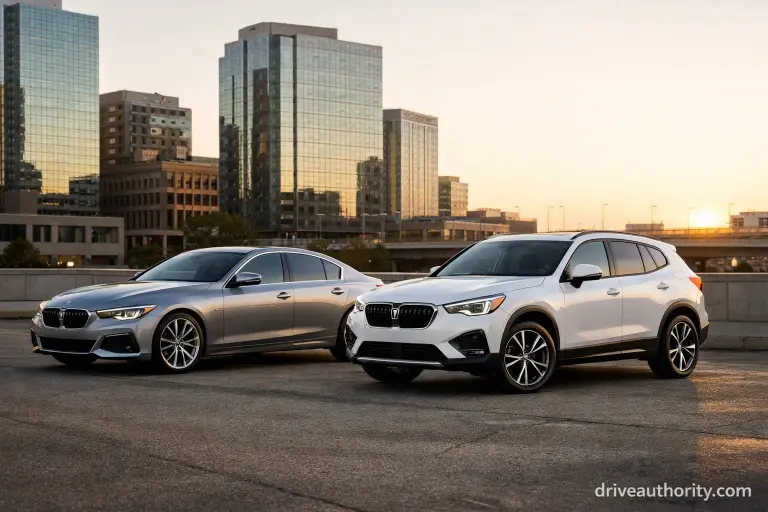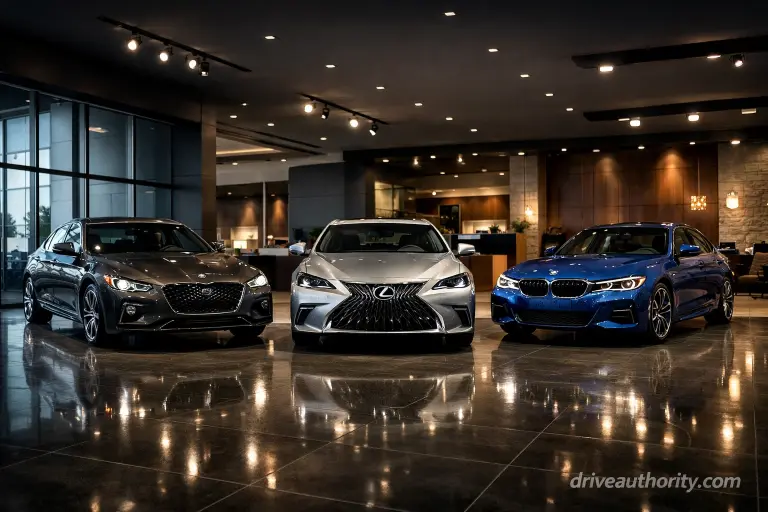
Finding the best luxury cars for the money requires looking beyond sticker prices and prestigious badges. Walk into any luxury dealership and you’ll encounter a familiar pitch: more expensive equals better. However, here’s the uncomfortable truth that auto industry insiders quietly acknowledge—price tags and value often move in opposite directions once you leave the showroom.
I’ve watched buyers drop six figures on prestigious badges only to face brutal depreciation, expensive repairs, and features they never use. Meanwhile, others drive home in carefully selected luxury vehicles that deliver premium experiences without the premium financial pain. Clearly, the difference isn’t luck. Rather, it’s understanding what actually constitutes value in the luxury segment and identifying which models truly represent the best luxury cars for the money.
This guide examines luxury vehicles through a lens most manufacturers would prefer you ignore: total cost of ownership, realistic depreciation curves, and the gap between MSRP and actual value delivered. Specifically, we’ve evaluated purchase price against market averages, standard equipment levels, predicted reliability, maintenance costs, and resale values to identify which luxury cars genuinely reward their owners financially.
These aren’t just affordable entry points into luxury badges. Instead, they’re vehicles that deliver premium experiences while respecting your bank account both now and years down the road. When searching for the best luxury cars for the money, these models stand out as genuinely smart investments.
What Makes a Luxury Car a “Good Value”? Understanding the Best Luxury Cars for the Money
Defining Value in the Premium Segment
Value in the luxury segment isn’t about finding the cheapest option. Rather, it’s about maximizing the return on a substantial investment. When you’re spending $40,000 to $80,000 on a vehicle, the definition of “good deal” shifts dramatically.
True luxury value emerges from several interconnected factors. First, purchase price matters, certainly, but only as a starting point. For example, the 2025 Lexus ES starts at $42,140, positioning it as an accessible entry point, but that base price tells only part of the story.
Key Value Factors: Equipment and Quality
Standard equipment separates genuine value from marketing illusion. Specifically, premium materials, advanced driver assistance systems, quality infotainment, and safety technology should come included, not locked behind expensive packages. When competitors charge $3,000 for features another brand includes standard, that’s not just better value—it’s a fundamentally different ownership proposition.
Moreover, build quality and materials determine whether your luxury experience lasts five years or fifteen. According to Consumer Reports’ latest reliability rankings, Lexus, Subaru, and Toyota lead the industry, with Genesis earning praise for cabin materials that remain impressive long after purchase. In contrast, BMW and Mercedes deliver excellent initial impressions but can show wear earlier than expected.
Warranty Coverage and Long-Term Reliability
Warranty coverage reveals manufacturer confidence. For instance, Genesis offers a six-year/75,000-mile limited warranty and a 10-year/100,000-mile powertrain warranty, while most German luxury brands provide just four years and 50,000 miles. Importantly, that six-year difference translates to thousands in potential repair costs.
Furthermore, reliability predictions matter enormously at this price point. The average BMW 3 Series maintenance cost over ten years is $14,345, while Lexus models typically require half that figure. Consequently, when maintenance costs match a year’s worth of car payments, reliability transforms from abstract concern to financial imperative.
Understanding Depreciation and Operating Costs
Depreciation represents your single largest ownership expense. For example, a new Lexus ES 350 depreciates 42.1 percent after five years, while some luxury EVs lose more than 60 percent in the same period. Notably, that difference can represent $20,000 or more—enough to fund your next vehicle purchase.
Additionally, insurance and fuel costs vary dramatically within the luxury segment. Performance models command premium insurance rates, while hybrid variants deliver efficiency that can save thousands annually in fuel costs.
Overall, our selections balance these factors to identify vehicles that deliver luxury experiences without imposing luxury penalties. These are the best luxury cars for the money—vehicles you’ll enjoy driving while appreciating how much you’re not spending on repairs, fuel, and depreciation.
Top Best Luxury Cars for the Money in 2025-2026
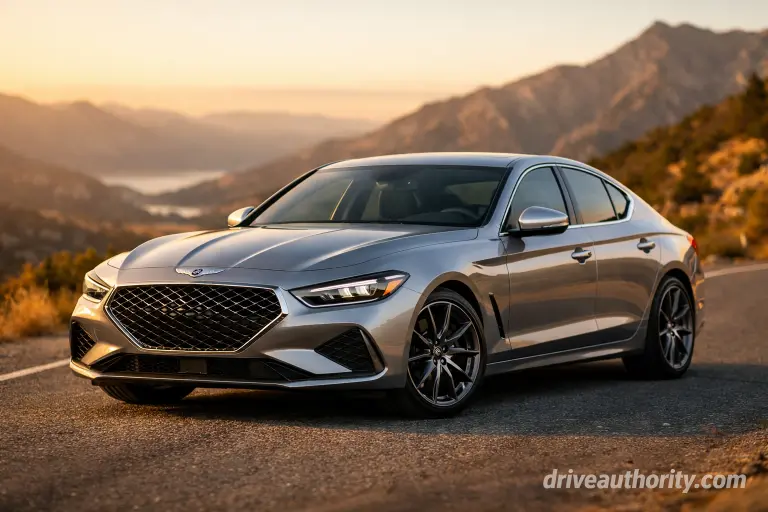
Best Entry-Level Luxury Sedan: 2026 Genesis G70 2.5T
Starting Price: $44,900
Key Specs:
- Engine: 2.5L turbocharged inline-four
- Horsepower: 300 hp / 311 lb-ft torque
- Transmission: 8-speed automatic
- Fuel Economy: 22 city / 30 highway MPG
- Interior Space: 94.0 cubic feet passenger volume
- Cargo Capacity: 10.5 cubic feet
Premium Standard Equipment
The 2026 Genesis G70 comes standard with a 10.3-inch center touch screen, a partially digital instrument cluster, heated front seats and a nicely crafted interior with excellent materials. Additionally, the base model includes wireless smartphone charging, dual-zone automatic climate control, proximity key with push-button start, and Genesis’s impressive suite of driver assistance technologies.
Moreover, safety features include forward collision avoidance, blind-spot monitoring, rear cross-traffic alert, lane-keeping assist, and driver attention warning—all standard. Clearly, the level of equipment at this price point genuinely embarrasses established German rivals that charge thousands more for comparable features.
Why This Represents Outstanding Value
The Genesis G70 delivers a complete luxury sport sedan experience for roughly $5,000 less than comparable BMW 330i or Audi A4 models, while including equipment those competitors lock behind option packages. Furthermore, that 300-horsepower turbocharged four-cylinder matches or exceeds base engines in pricier competitors.
Moreover, Genesis’s warranty coverage fundamentally changes the ownership equation. The 10-year/100,000-mile powertrain warranty means you’re covered through the period when competitors’ warranties have long expired and expensive repairs typically emerge. In addition, three years of complimentary scheduled maintenance further reduces ownership costs.
Importantly, the brand’s direct-to-customer sales model eliminates traditional dealer markup and haggling. The price you see is the price you pay, with home test drives and pickup/delivery for service visits included.
Honest Limitations
The dealership network remains limited compared to established luxury brands, though Genesis’s concierge service mitigates this concern. Brand prestige carries less weight than traditional German or Japanese luxury marques. The infotainment system, while functional, feels less intuitive than the best implementations from BMW or Mercedes. Rear-seat space is adequate but not generous.
Best Luxury SUV for Families: 2026 Genesis GV70 2.5T AWD (Top Value Pick)
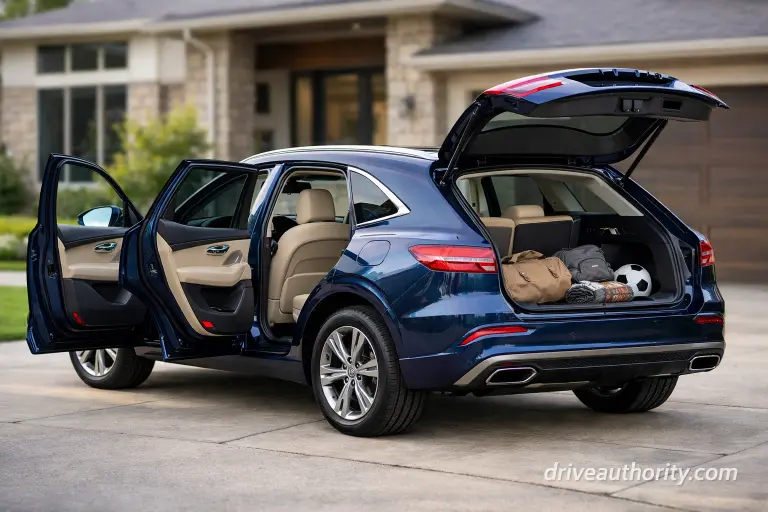
Starting Price: $47,985
Key Specs:
- Engine: 2.5L turbocharged inline-four
- Horsepower: 300 hp / 311 lb-ft torque
- Transmission: 8-speed automatic with AWD
- Fuel Economy: 22 city / 28 highway MPG
- Interior Space: 97.8 cubic feet passenger volume
- Cargo Capacity: 28.9 cubic feet (60.3 with rear seats folded)
Technology and Features That Matter
The 2026 GV70 features a single 27.0-inch OLED display that serves as both the digital gauge cluster and the central infotainment display. Additionally, standard equipment includes wireless Apple CarPlay and Android Auto, Wi-Fi hotspot, heated front seats, power liftgate, dual-zone climate control, and panoramic sunroof.
Moreover, all-wheel drive comes standard across the lineup, delivering confidence in varied conditions. Similarly, the comprehensive suite of driver assistance features includes forward collision warning with pedestrian detection, blind-spot monitoring, rear cross-traffic alert, lane-keeping assist, adaptive cruise control, and parking sensors.
The Value Proposition for Families
The GV70 is packed with luxury and tech features that make it a great value. Specifically, comparable equipment in a BMW X3 or Mercedes-Benz GLC would push pricing north of $60,000, yet the Genesis delivers similar luxury at a $12,000 savings—making it one of the best luxury cars for the money in the SUV segment.
Furthermore, the 300-horsepower base engine matches or exceeds competitors’ optional powertrains. The well-tuned suspension strikes an excellent balance between comfort and control, handling daily commutes and weekend adventures equally well. In addition, cargo space exceeds many compact luxury SUVs, making this genuinely practical for families.
What to Consider
Third-row seating isn’t available, limiting the GV70 to five passengers. Fuel economy from the base four-cylinder trails hybrid competitors like the Lexus NX Hybrid. Genesis’s limited service network may inconvenience buyers in rural areas, though mobile service helps.
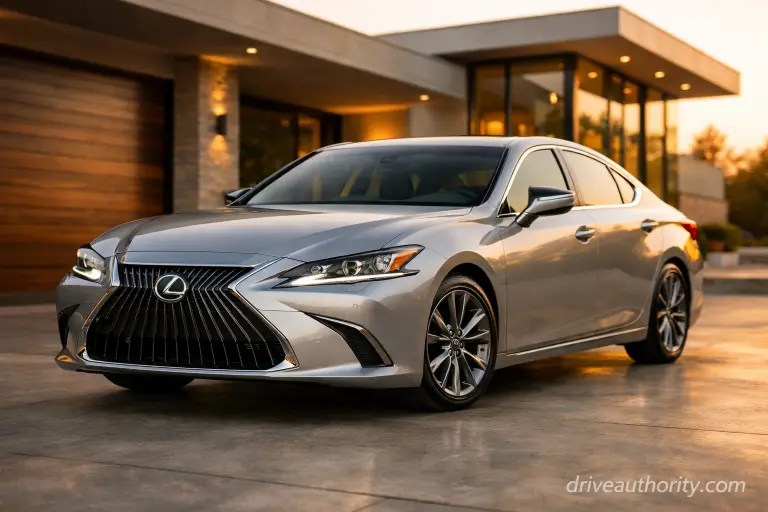
Best Certified Pre-Owned Luxury Car for the Money: 2023-2024 Lexus ES 350 CPO
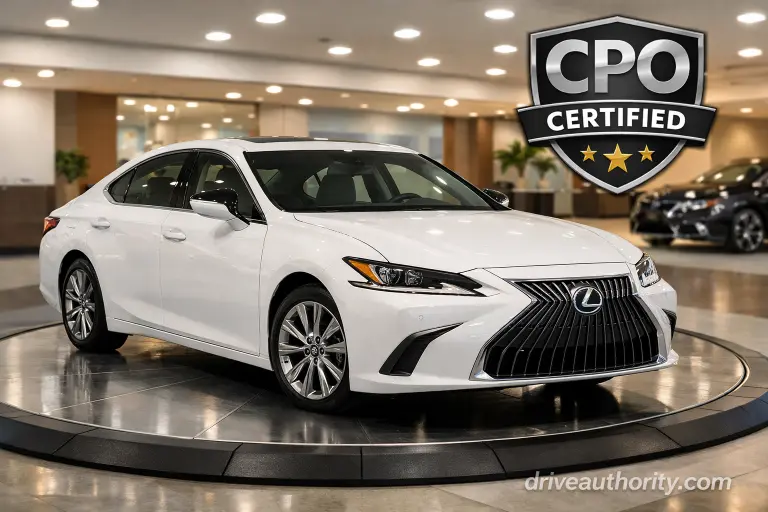
Starting Price Range: $28,000-$35,000 (used market)
Key Specs:
- Engine: 3.5L V6
- Horsepower: 302 hp / 267 lb-ft torque
- Transmission: 8-speed automatic
- Fuel Economy: 22 city / 32 highway MPG
- Interior Space: 100.1 cubic feet passenger volume
- Cargo Capacity: 13.9 cubic feet
Comprehensive Standard Features
Even 2023-2024 Lexus ES models come impressively equipped: touchscreen infotainment, wireless smartphone connectivity, 10-speaker audio system, tri-zone automatic climate control, and comprehensive safety systems. Moreover, the upholstery holds up remarkably well, while power-adjustable front seats with lumbar support and moonroof enhance comfort.
Additionally, Lexus Safety System+ 2.5 includes pre-collision warning with pedestrian detection, dynamic radar cruise control, lane departure alert with steering assist, automatic high beams, and road sign recognition.
The CPO Advantage for Smart Buyers
Lexus ranks highest overall in J.D. Power’s vehicle dependability rankings for the third consecutive year, making certified pre-owned Lexus vehicles exceptionally safe bets. Specifically, the Lexus L/Certified program provides six years of unlimited-mileage warranty coverage from the original in-service date, meaning a 2023 model purchased in 2026 retains three years of comprehensive protection.
Furthermore, this includes complimentary roadside assistance, trip interruption coverage up to $1,000, and one year of complimentary maintenance. Importantly, a three-year-old ES 350 costs roughly $15,000-$20,000 less than new, yet delivers nearly identical ownership experience with most of its useful life remaining.
Moreover, the ES 350’s legendary reliability means CPO concerns about buying someone else’s problems largely disappear. These vehicles routinely exceed 200,000 miles with proper maintenance. In addition, the roomy cabin, whisper-quiet ride, and plush seats deliver comfort that embarrasses many pricier sedans.
Trade-offs Worth Noting
The ES’s front-wheel-drive platform lacks the rear-drive engagement that BMW or Genesis sedan buyers expect. Consequently, handling prioritizes comfort over sportiness. Additionally, the infotainment system in pre-2025 models uses Lexus’s frustrating touchpad controller, though 2024 and newer models feature more intuitive touchscreen interfaces.
Best Performance Luxury Car for the Money Under $50K: 2026 BMW 330i
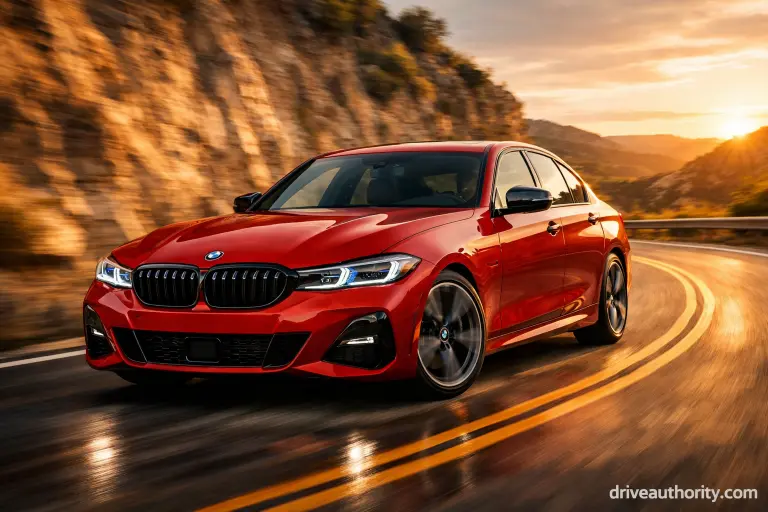
Starting Price: $45,800
Key Specs:
- Engine: 2.0L turbocharged inline-four
- Horsepower: 255 hp / 295 lb-ft torque
- Transmission: 8-speed automatic
- Fuel Economy: 26 city / 36 highway MPG
- Interior Space: 96.0 cubic feet passenger volume
- Cargo Capacity: 17.0 cubic feet
Modern Technology Integration
The 2026 BMW 330i includes the latest iDrive 9 infotainment system with curved dual-display setup, wireless Apple CarPlay and Android Auto, navigation, Wi-Fi hotspot, and 10-speaker audio system. Additionally, standard driver assistance includes forward collision warning, automatic emergency braking, blind-spot monitoring, and lane departure warning.
Performance Value Analysis
The 330i represents BMW’s sweet spot—sufficient performance to justify the Ultimate Driving Machine tagline without the maintenance nightmares of six-cylinder or high-performance variants. Specifically, the turbocharged four-cylinder delivers surprising capability, with immediate throttle response and strong mid-range punch.
Moreover, the rear-wheel-drive configuration and precisely tuned chassis deliver driving engagement that genuinely justifies BMW’s performance reputation. Furthermore, fuel economy stands out among performance-oriented luxury sedans—achieving 36 mpg highway from a car this engaging represents impressive engineering.
The Cost Reality
However, BMW’s maintenance costs remain higher than Asian luxury brands. Budget roughly $900 annually for maintenance during the first five years, double what Lexus or Genesis owners spend. Additionally, the four-year/50,000-mile warranty expires well before expensive repairs typically emerge. Furthermore, the iDrive 9 system, while powerful, overwhelms some users with complexity. Finally, brand prestige comes with expectations—this badge demands premium fuel and dealer service costs.
Best Luxury Electric Vehicle Value: 2024-2025 Porsche Taycan (CPO)
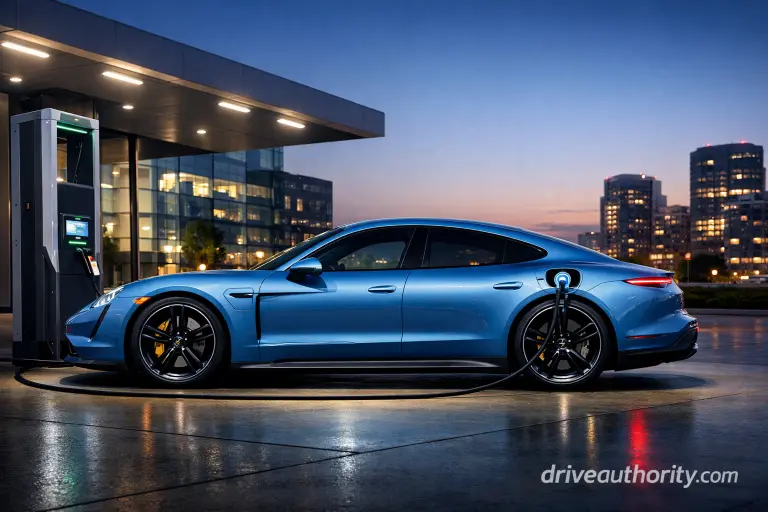
Original MSRP: $90,000+ new Current CPO Market: $50,000-$65,000
Key Specs:
- Powertrain: Dual-motor all-wheel drive (base)
- Horsepower: 402 hp (base) / up to 1,019 hp (Turbo GT)
- Battery: 105 kWh Performance Battery Plus (standard)
- EPA Range: 318 miles (base RWD with 19-inch wheels)
- 0-60 mph: 4.5 seconds (base)
- Charging: 270 kW DC fast charging capability
Luxury EV Features That Impress
The 2025 Taycan refresh brought significant improvements. The responsive infotainment system includes wireless Apple CarPlay and Android Auto. The driver display integrates cleanly into the curved dashboard. Standard equipment includes adaptive suspension, LED matrix headlights, 19-inch wheels, and a 14-speaker sound system.
Why CPO Taycans Represent Exceptional Value
The Taycan’s value proposition depends entirely on buying strategy. Never purchase new—the depreciation curve is brutal. But for savvy buyers willing to consider nearly-new or certified pre-owned examples, the Taycan represents extraordinary value among the best luxury cars for the money in the EV segment.
Used Taycans have dropped to roughly half their original price after just two years. You’re accessing Porsche’s exceptional build quality, engaging driving dynamics, and impressive technology at mainstream EV pricing. The driving experience justifies Porsche’s reputation, with instant torque delivery, precise steering, and confidence-inspiring chassis.
During the first three years, maintenance costs under $1,000 annually, significantly lower than internal combustion Porsches. The simpler electric powertrain eliminates oil changes, transmission services, and many wear items. The updated 2025 models address earlier range concerns, with the base model delivering 421 miles of range.
Important Limitations
The catastrophic new-car depreciation means first owners lose staggering amounts—only consider this as a used or CPO purchase. The low seating position and tight rear headroom limit practicality for taller passengers. The small cargo area means this works better as second car than family hauler. Battery replacement costs remain high, though this shouldn’t concern most owners within reasonable ownership periods.
Best Value Luxury Compact SUV: 2026 Audi Q5 Premium
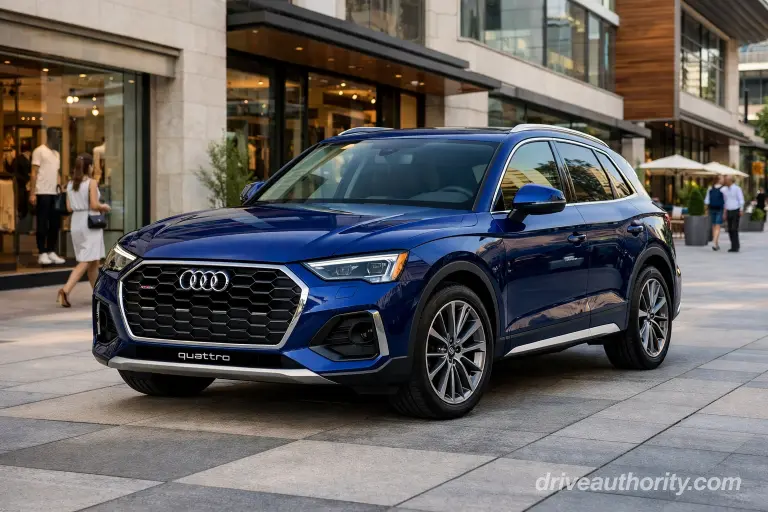
Starting Price: $45,400
Key Specs:
- Engine: 2.0L turbocharged inline-four
- Horsepower: 261 hp / 273 lb-ft torque
- Transmission: 7-speed dual-clutch automatic with Quattro AWD
- Fuel Economy: 23 city / 29 highway MPG
- Interior Space: 101.5 cubic feet passenger volume
- Cargo Capacity: 25.8 cubic feet (53.1 with rear seats folded)
Standard Equipment and Build Quality
The base Premium trim includes Audi’s latest MMI infotainment system with 10.1-inch touchscreen, wireless connectivity, 10-speaker audio, tri-zone automatic climate control, power liftgate, panoramic sunroof, and synthetic leather upholstery. The 12.3-inch Virtual Cockpit digital instrument cluster displays critical information with customizable layouts.
Quattro all-wheel drive comes standard across all Q5 models. Driver assistance features include forward collision warning, automatic emergency braking, blind-spot monitoring, and rear cross-traffic alert.
The Established German SUV That Still Makes Sense
The Q5 occupies a unique position—the established German luxury SUV that hasn’t inflated to absurd pricing. At $45,400, it undercuts the BMW X3 and Mercedes-Benz GLC while matching their standard equipment levels. The Quattro system comes standard where competitors charge extra, immediately saving $2,000-$2,500.
The 2.0T engine delivers smooth, refined power. The ride quality impresses—Audi has mastered the balance between comfort and control. Interior materials and build quality live up to Audi’s reputation for craftsmanship. The Virtual Cockpit remains one of the industry’s best digital instrument implementations.
Cargo space exceeds many competitors, making this genuinely practical for families. Audi’s reliability has improved significantly in recent years, though it doesn’t match Lexus or Genesis.
Considerations for Buyers
The base Premium trim lacks some expected features—leather upholstery, navigation, and advanced driver assistance require stepping up to Premium Plus ($49,300) or Prestige ($54,500) trims. Maintenance costs exceed Asian luxury brands. The dual-clutch transmission occasionally exhibits low-speed hesitation. Audi’s four-year/50,000-mile warranty expires earlier than Genesis or Lexus coverage.
Smart Buying Strategies: Getting the Best Luxury Cars for the Money
Timing Your Purchase for Maximum Savings
Timing transforms luxury car purchasing from expensive gamble to calculated investment. Indeed, the difference between buying intelligently and impulsively can represent $10,000 or more.
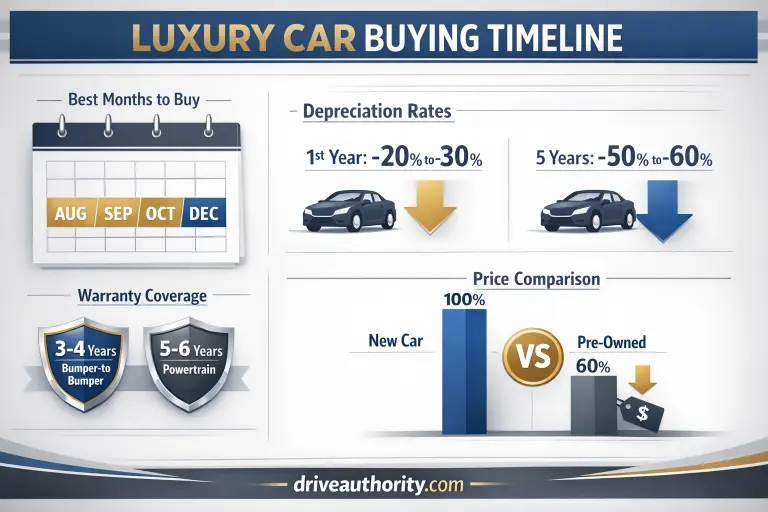
For instance, model year-end sales (August through October) create urgency as dealers clear inventory for incoming models. During this period, manufacturers often subsidize financing or offer cash incentives to move outgoing stock. Notably, luxury brands regularly provide $3,000-$7,000 in combined incentives during clearance periods.
Similarly, holiday sales events (Memorial Day, Fourth of July, Labor Day, and year-end) bring manufacturer marketing budgets into play. Particularly, the December push to meet annual sales targets creates strong negotiating leverage.
Understanding True Pricing and Negotiation
Consider invoice pricing your starting point, not MSRP. Fortunately, services like Edmunds, Kelley Blue Book, and TrueCar provide invoice data showing what dealers actually pay. Typically, luxury vehicles carry $3,000-$5,000 markup between invoice and MSRP.
Therefore, contact multiple dealers to establish competitive pricing. Express genuine interest but willingness to walk away. In most cases, luxury dealerships often accommodate serious buyers who’ve done their homework.
The Certified Pre-Owned Advantage
Certified pre-owned vehicles fundamentally change luxury affordability. Specifically, CPO programs offer factory-backed warranties, rigorous inspections, and benefits approaching new-car ownership at 20-40% savings.
Moreover, the sweet spot for CPO luxury purchases occurs at 2-3 years old with 25,000-40,000 miles. At this point, depreciation has inflicted maximum damage, warranty coverage remains substantial, and the vehicle retains most of its useful life. Notably, Lexus’s unlimited mileage CPO warranty provides industry-leading coverage with complimentary maintenance and loaner vehicles.
Leasing Versus Buying Decisions
Leasing versus buying depends on your ownership pattern. If you prefer new vehicles every 3-4 years, leasing often costs less monthly than buying and selling. Generally, luxury vehicles with strong residual values (Porsche 911, Lexus sedans, Genesis models) lease favorably.
In contrast, buying makes sense for longer ownership periods (5+ years) or higher annual mileage. Once your loan is paid, ownership costs drop dramatically.
Total Cost of Ownership Calculations
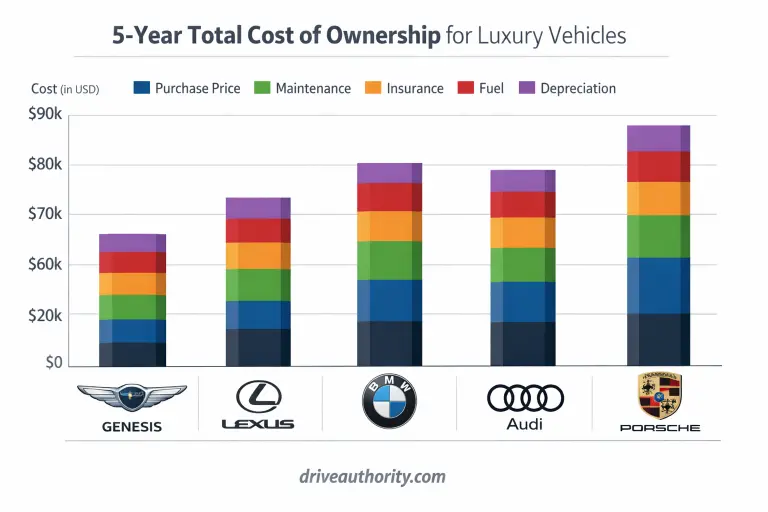
Understand true cost calculations. First, the purchase price represents only one expense component. Additionally, add insurance quotes (luxury vehicles cost 15-30% more to insure), fuel costs based on actual driving, maintenance schedules (German brands cost more to service), and realistic depreciation projections.
Furthermore, manufacturer incentive programs exist but aren’t always advertised. Graduate and military programs, loyalty bonuses, competitive owner incentives for switching brands, and conquest programs can combine for substantial savings.
The One-Year-Old Sweet Spot
The one-year-old used car sweet spot deserves special attention. Specifically, vehicles with 10,000-15,000 miles have absorbed 15-20% depreciation but remain essentially new. Typically, former lease returns, corporate fleet vehicles, or demonstrators fall into this category.
Common Mistakes That Prevent You From Getting the Best Luxury Cars for the Money
Ignoring Long-Term Maintenance Realities
Ignoring maintenance costs and schedules destroys luxury car budgets faster than any other single factor. For example, that beautiful BMW seems affordable at $500 monthly, until you discover that routine maintenance costs $1,200 annually while unexpected repairs easily exceed $3,000 yearly.
Moreover, German luxury brands require premium fuel, expensive synthetic oil, and dealer-specific diagnostic equipment. Therefore, research maintenance schedules before buying. Some luxury brands require service every 5,000 miles, others every 10,000.
Overlooking Insurance Cost Differences
Overlooking insurance premium differences leaves buyers shocked at first renewal. Specifically, luxury vehicles, particularly performance models, carry significantly higher insurance costs. For instance, a BMW M3 might cost 50% more to insure than a 330i. Therefore, contact your insurance agent with specific VIN numbers before committing to purchase.
Choosing Options That Don’t Add Resale Value
Choosing option packages that don’t add resale value burns money. For example, that $5,000 premium sound system upgrade contributes maybe $1,500 to resale value three years later. Consequently, luxury buyers in the used market prioritize core features—all-wheel drive, advanced safety systems, navigation.
Payment-Only Thinking
Buying purely on monthly payment represents the most expensive mistake possible. Indeed, dealers structure deals to hit your target payment regardless of actual vehicle cost. They’ll extend loan terms to 72 or even 84 months, bury negative equity, or increase interest rates. Instead, focus on total amount financed and interest rate.
Ignoring Reliability Data
Consumer Reports and J.D. Power ratings reflect real-world owner experiences, identifying which models deliver years of trouble-free service and which strand owners with expensive repairs. Importantly, the resale value gap between reliable and unreliable luxury models can reach 20-30% after five years.
The Luxury Badge Trap
Falling for “luxury” badges on non-luxury trim levels wastes money on marketing rather than substance. Base luxury trims with minimal equipment deliver the badge but miss the experience. You’re better served by a well-equipped mainstream brand than a stripped luxury model.
Frequently Asked Questions About Luxury Car Value
What’s the Most Reliable Luxury Car Brand?
Lexus consistently tops reliability rankings across multiple organizations, leading Consumer Reports’ latest brand reliability ratings. Genesis follows closely, with excellent reliability scores and comprehensive warranty coverage. Porsche’s non-electric models perform well, though maintenance costs remain high despite reliability.
The key distinction: reliability measures how often things break, but doesn’t address repair costs. A reliable German car that needs expensive repairs twice in five years may cost more over time than a less reliable Korean car with affordable parts and labor.
Are Luxury Cars Expensive to Maintain?
Yes, but the degree varies dramatically by brand and model. German luxury brands (BMW, Mercedes-Benz, Audi) typically cost 50-100% more to maintain than mainstream brands, with annual costs often exceeding $1,200 after warranty expiration.
Japanese luxury brands (Lexus, Infiniti, Acura) cost moderately more than mainstream equivalents but significantly less than German competitors. Many Lexus models can be serviced at Toyota dealerships using shared components. Genesis offers complimentary scheduled maintenance for three years, eliminating initial costs entirely.
Electric luxury vehicles show interesting patterns. The Porsche Taycan costs under $1,000 annually in maintenance during the first three years, as electric powertrains eliminate oil changes, transmission services, and many combustion engine wear items.
Is It Better to Buy or Lease a Luxury Car?
The answer depends on your driving patterns and preferences. Leasing makes sense if you prefer new vehicles every three years, drive under 12,000 miles annually, and want lower monthly payments. Vehicles with strong residual values (Porsche, Lexus, Genesis) lease favorably.
Buying makes financial sense for ownership periods exceeding five years or high annual mileage. Once the loan is paid off, your transportation costs drop dramatically. The final years of ownership—when the car has minimal resale value but remains reliable—represent your lowest-cost period.
For value-focused buyers seeking the best luxury cars for the money, buying certified pre-owned vehicles often provides the optimal balance. You avoid new-car depreciation while retaining substantial warranty coverage. This strategy represents one of the smartest approaches to luxury car ownership.
What’s the Best Time of Year to Buy a Luxury Car?
Three periods offer maximum savings: Model year-end (August-October) when dealers clear inventory for incoming models, year-end (November-December) when manufacturers and dealers push to meet annual sales targets, and holiday weekends (Memorial Day, Fourth of July, Labor Day) when promotional incentives combine.
December often represents the single best buying opportunity, as dealers face dual pressure from year-end quotas and incoming model year inventory.
How Much Should I Expect a Luxury Car to Depreciate?
Depreciation varies dramatically by brand and model. Lexus vehicles retain exceptional value, with models like the ES 350 depreciating roughly 42% after five years. Many luxury electric vehicles lose 50-60% in the same period.
German luxury sedans typically depreciate 45-55% after five years. Performance models and specialized vehicles often depreciate faster. Genesis models have shown strengthening resale values as the brand establishes its reputation.
For the savviest buyers seeking the best luxury cars for the money, this depreciation creates opportunity. A two-year-old luxury vehicle has absorbed the steepest depreciation but retains most of its useful life—particularly for reliable brands like Lexus or Genesis. Understanding depreciation patterns is essential when identifying the best luxury cars for the money.
Are Certified Pre-Owned Luxury Cars Worth It?
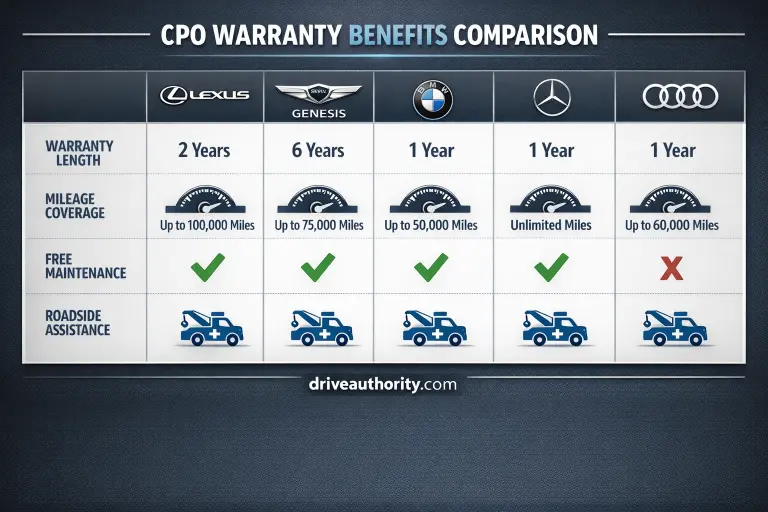
Absolutely, particularly from brands with comprehensive CPO programs. Lexus’s CPO program offers six years of unlimited-mileage coverage from the original in-service date, including complimentary maintenance and roadside assistance. This transforms CPO buying from gamble to calculated investment.
Genesis reinstates its full 10-year/100,000-mile powertrain warranty on CPO vehicles. BMW, Mercedes-Benz, and Audi offer less generous coverage but still provide factory-backed protection.
The CPO value proposition is strongest for traditionally reliable brands. A Lexus CPO vehicle combines strong reliability with exceptional warranty protection. For less reliable brands, CPO warranty coverage provides necessary protection against expensive repairs.
Conclusion: Making Smart Luxury Car Decisions
The best luxury cars for the money don’t simply offer low purchase prices. They deliver comprehensive value through thoughtful combinations of equipment, reliability, warranty coverage, maintenance costs, and resale value.
Our selections—the Genesis G70 and GV70, Lexus ES 350 CPO, BMW 330i, Porsche Taycan CPO, and Audi Q5—represent fundamentally different approaches to luxury value. Genesis delivers extraordinary warranty coverage and direct-pricing transparency. Lexus provides legendary reliability and industry-leading CPO programs. BMW offers engaging driving dynamics with manageable four-cylinder maintenance costs. The Taycan demonstrates how electric vehicle depreciation creates opportunities for patient buyers. The Audi Q5 proves established German luxury can still make financial sense.
Luxury doesn’t require overspending. The vehicles highlighted here deliver premium experiences while respecting your financial reality. They prove that the best luxury cars for the money exist—you simply need to know where to look and what truly matters.
Your next step depends on your priorities. Compare these models based on your specific needs. Schedule test drives to experience the differences firsthand. Calculate total ownership costs including insurance, fuel, and maintenance. Consider certified pre-owned options to maximize value. Most importantly, negotiate confidently armed with knowledge of what these vehicles actually cost and what they’re worth.
The luxury car market rewards informed buyers. Those who research thoroughly, time purchases strategically, and prioritize total value over badge prestige will drive home in vehicles that deliver satisfaction without regret—the ultimate definition of getting the best luxury cars for the money.