BMW Most Expensive Car: Prices, Specs, and Why It’s So Cheap (Compared to Expectations)

Last Updated: May 2026 — BMW USA MSRP pricing, Bentley Motors, Rolls-Royce Motor Cars, and Ferrari USA base prices verified
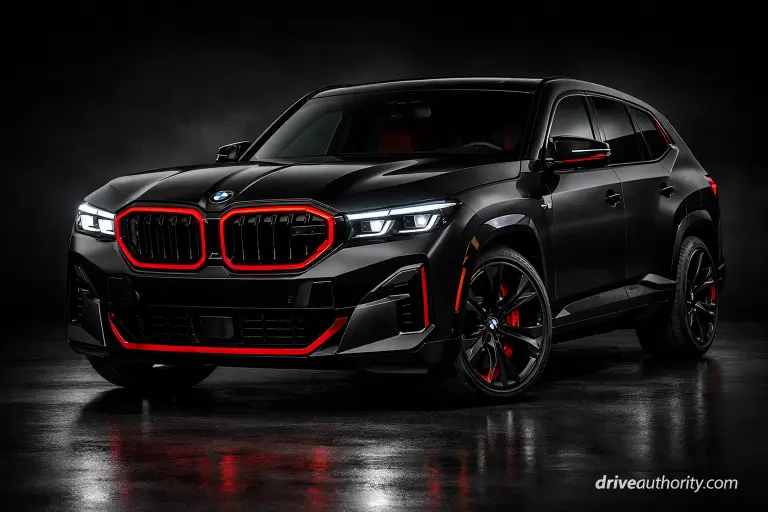
The most expensive BMW you can buy new in 2026 is the BMW XM Label Red at $194,500 MSRP. It produces 748 horsepower from a plug-in hybrid V8 system and covers 0–60 mph in 3.4 seconds. If that number surprises you — either because it sounds high for a BMW or because it sounds low for a flagship — you are in exactly the right place. The BMW i7 M70 xDrive electric sedan sits at approximately $175,000. The M8 Competition Gran Coupé, the performance flagship of the 8 Series, starts at approximately $143,000. All three are cheaper than a Bentley Bentayga, less than half the price of a Rolls-Royce Ghost, and roughly a third of what Ferrari charges for the Purosangue. This article covers the full pricing, the specs, and the specific reason BMW’s most expensive car costs what it does rather than what people expect.
The “cheap compared to expectations” framing in the title is deliberate. Buyers searching for BMW’s most expensive car often expect Lamborghini numbers. Instead, they find a $194,500 performance SUV that shares a production facility with other models and does not offer bespoke commission options. That gap between expectation and reality has a specific explanation — and understanding it changes how you evaluate the purchase decision.

BMW’s Most Expensive Car in 2026 — Summary:
Most expensive BMW overall: BMW XM Label Red at $194,500 MSRP — 748hp plug-in hybrid V8, 0–60 mph in 3.4 seconds. Most expensive BMW electric: BMW i7 M70 xDrive at approximately $175,000 — 659hp, 0–60 in 3.7 seconds. Performance flagship: BMW M8 Competition Gran Coupé at approximately $143,000 — 617hp, 0–60 in 3.0 seconds. Why it’s “cheap”: BMW builds approximately 2.5 million vehicles per year. Rolls-Royce builds about 6,000. The $148,000 gap between a BMW XM Label Red and a Rolls-Royce Ghost is not primarily marketing — it reflects production scale, material specification, and handcraft investment that BMW’s volume model cannot justify at its price point.
BMW’s Most Expensive Models in 2026: The Full Ranked Lineup
Before examining each model in detail, it is useful to see BMW’s top-price vehicles ranked by MSRP. The lineup reveals a pattern: BMW’s most expensive models cluster in two categories — high-performance M derivatives and electrified flagships — with no single model commanding Ferrari or Rolls-Royce prices.
| Model | Base MSRP | Powertrain | Output | 0–60 mph |
|---|---|---|---|---|
| BMW XM Label Red | $194,500 | PHEV V8 + Electric | 748hp / 738 lb-ft | 3.4 sec |
| BMW i7 M70 xDrive | ~$175,000 | Dual-motor BEV | 659hp / 811 lb-ft | 3.7 sec |
| BMW M8 Competition Gran Coupé | ~$143,000 | 4.4L V8 Twin-Turbo | 617hp / 553 lb-ft | 3.0 sec |
| BMW XM (standard) | ~$159,000 | PHEV V8 + Electric | 644hp / 590 lb-ft | 4.1 sec |
| BMW M8 Competition Coupé | ~$133,000 | 4.4L V8 Twin-Turbo | 617hp / 553 lb-ft | 3.0 sec |
| BMW 7 Series M760e xDrive | ~$120,000 | PHEV V8 + Electric | 571hp / 590 lb-ft | 3.5 sec |
The table makes one thing immediately clear: BMW’s most expensive cars top out at $194,500. That is a significant sum. However, it is also the price at which BMW’s competitors begin — not where they peak. Understanding what sits at and above this price tier is essential context for evaluating whether any BMW flagship is the right purchase.
BMW XM Label Red: 748hp, $194,500
The BMW XM Label Red is the most powerful and most expensive production BMW in the brand’s current lineup. It is built on a dedicated platform, separate from any other BMW model, and represents the brand’s most extreme interpretation of the performance SUV concept. The powertrain combines a 4.4-litre twin-turbocharged V8 with an integrated electric motor to produce 748 horsepower and 738 lb-ft of torque — figures that comfortably exceed every current Bentayga variant and the Lamborghini Urus in outright power output.
What You Get for $194,500
The Label Red specification adds specific visual and mechanical differentiation over the standard XM. Exterior distinguishing elements include the distinctive red accent colour on grilles, door sills, and mirror caps, plus carbon fibre body trim not available on the standard model. Interior specification includes merino leather throughout, a 12-speaker Bowers & Wilkins audio system, and a theatre screen for rear passengers. The carbon ceramic braking system — a $8,150 option on standard XM — is standard on Label Red.
Performance numbers are competitive at any price: 0–60 mph in 3.4 seconds, a top speed electronically limited to 155 mph (174 mph with M Driver’s Package), and a claimed electric-only range of approximately 30 miles. The PHEV architecture means daily short-distance driving can run on electricity alone, while longer journeys use the V8. However, the combined fuel economy is approximately 19 mpg combined on petrol, which is where the “performance SUV” compromise becomes apparent for buyers expecting the efficiency of a conventional PHEV.
What You Don’t Get
BMW XM Label Red does not offer bespoke commission options in the way Bentley’s Mulliner division or Rolls-Royce Bespoke does. Paint colours, interior material combinations, and trim specifications are drawn from a defined configurator — extensive, but not open-ended. The interior, while well-executed, uses materials and finishes that are recognisably BMW in character. Buyers accustomed to Bentley’s hand-stitched leather fascias or Rolls-Royce’s starlight headliner will notice the difference immediately. This is not a criticism of BMW’s execution at its price point — it is an accurate description of what $194,500 buys relative to $229,000.
BMW i7 M70 xDrive: The Most Expensive Electric BMW
The BMW i7 M70 xDrive is the performance variant of BMW’s electric flagship saloon and the most expensive electric vehicle BMW offers. At approximately $175,000, it sits above every Tesla model including the Model S Plaid ($89,990) and competes more directly with the Mercedes-Maybach EQS 680 and the Rolls-Royce Spectre in terms of price positioning — though the Spectre at approximately $420,000 represents a substantially different ownership proposition.

i7 M70 Specs: Where the Money Goes
The i7 M70 xDrive uses a dual-motor electric drivetrain producing 659 horsepower and 811 lb-ft of torque — more torque than the XM Label Red’s petrol-electric hybrid. The 0–60 mph time of 3.7 seconds is competitive for an electric luxury saloon at this weight and price. Range is approximately 300 miles on a full charge under EPA conditions, though real-world highway range at sustained speeds will be lower — typically 240–270 miles at 70–75 mph based on the platform’s efficiency profile.
The interior of the i7 M70 is among BMW’s most luxurious production specifications. The rear Executive Lounge configuration includes a 31.3-inch cinema screen, reclining rear seats with footrests, and rear-seat entertainment controls. These features address a genuine competitive need — at $175,000, buyers are considering Mercedes S-Class and Maybach derivatives, and the i7’s rear cabin specification must be competitive on absolute terms, not just relative to BMW’s own range.
For buyers considering the i7 M70 as an electric vehicle investment specifically, our EV battery replacement cost analysis covers what happens at high mileage — relevant for a $175,000 vehicle where battery longevity assumptions directly affect the depreciation calculation. For the broader electric flagship comparison, our best electric cars 2026 ranking places the i7 M70 in the context of all current electric options.
BMW M8 Competition Gran Coupé: The Performance Flagship
The BMW M8 Competition Gran Coupé sits at approximately $143,000 and represents the traditional performance flagship — a four-door grand tourer with BMW’s most developed V8 and the widest body the 8 Series architecture allows. It is the closest BMW gets to a Bentley Continental GT in product positioning, though at a $104,000 lower starting price than the Continental GT’s approximately $247,500 base.
617hp V8 in Context
The S63 4.4-litre twin-turbocharged V8 in M8 Competition produces 617 horsepower and 553 lb-ft of torque. The 0–60 mph time is 3.0 seconds — faster than the XM Label Red and the i7 M70. At sustained highway speeds, the M8 Competition Gran Coupé’s aerodynamic efficiency means real-world fuel consumption of approximately 18–21 mpg combined, which is expected for a 617hp grand tourer but worth noting for buyers accustomed to BMW’s lower-specification models.
Build quality on the M8 Competition Gran Coupé is BMW’s best in the traditional ICE range. Carbon fibre roof standard. Merino leather optional. M Carbon exterior package available. The Gran Coupé body adds two smaller rear doors versus the two-door Coupé, making it meaningfully more usable for rear passengers — a practical consideration that the Bentley Continental GT (two doors only) does not offer at twice the price.
How BMW’s Prices Compare to Bentley, Rolls-Royce, and Ferrari
Placing BMW’s most expensive models in the context of the true ultra-luxury segment reveals the gap that drives the “cheap compared to expectations” framing. The comparison is direct and the numbers are unambiguous.
| Brand / Model | Base MSRP | Output | Segment | vs BMW XM Label Red |
|---|---|---|---|---|
| BMW XM Label Red | $194,500 | 748hp PHEV | Performance SUV | Reference |
| Bentley Bentayga | $229,100 | 542hp V8 | Ultra-luxury SUV | +$34,600 |
| Bentley Continental GT | $247,500 | 542hp V8 | Grand Tourer | +$53,000 |
| Lamborghini Urus Performante | $247,698 | 657hp V8 | Super SUV | +$53,198 |
| Ferrari Purosangue | $390,900 | 715hp V12 | Ultra-performance SUV | +$196,400 |
| Rolls-Royce Ghost | $342,900 | 563hp V12 | Ultra-luxury saloon | +$148,400 |
| Rolls-Royce Spectre | $420,000 | 577hp BEV | Ultra-luxury BEV coupé | +$225,500 |
The most striking comparison in the table is not BMW versus Rolls-Royce — that gap is expected. It is BMW XM Label Red (748hp, $194,500) versus Bentley Bentayga V8 (542hp, $229,100). BMW’s most expensive model produces 206 more horsepower than Bentley’s cheapest model and costs $34,600 less. On pure performance metrics, the BMW wins comprehensively at a lower price. The reason buyers still choose the Bentley has nothing to do with power output — and everything to do with what the next section covers.
Why BMW’s Flagship Costs Half What Bentley Charges
The price gap between BMW’s most expensive and Bentley’s entry model is not primarily a marketing premium. It reflects three specific production economics that determine what any manufacturer can charge without pricing themselves out of their customer base.

Production Volume: The Primary Driver
BMW Group produced approximately 2.55 million vehicles globally in 2024. Rolls-Royce produced approximately 5,712. Bentley produced approximately 13,560. That volume difference is the most honest explanation for the price gap. At 2.55 million units per year, BMW cannot hand-stitch every interior, commission artisan craftspeople to hand-fit body panels, or offer a paint colour matching programme with 44,000 paint combinations. The economics do not work at that scale. Conversely, at 5,712 units per year, Rolls-Royce can justify investing 700+ labour hours in each car’s interior alone.
The BMW XM Label Red is assembled in Spartanburg, South Carolina — a facility that also produces the X5, X6, X7, and other high-volume models. Consequently, the production environment, tooling, and labour practices are those of a high-volume manufacturer with processes optimised for repeatability and throughput. That is not a criticism. It is the production model that makes a 748-horsepower SUV available at $194,500 rather than $400,000.
Material Specification and Handcraft Investment
A Rolls-Royce Ghost receives approximately 700 hand-stitching hours in its interior alone. The starlight headliner — 1,340 fibre-optic strands threaded by hand — takes approximately 17 hours per car. Bentley’s Mulliner division offers painted dashboard veneers matched to body colour, hand-embroidered headliners, and exterior paint processes that require six layers of hand-polished lacquer. These processes are genuinely different from anything BMW offers — not because BMW’s engineers are less capable, but because BMW’s business model does not accommodate a 700-labour-hour interior at $194,500.
For the buyer, this means: if handcraft, material provenance, and bespoke commission matter to the ownership experience, BMW’s most expensive model is genuinely not in the same category as Bentley or Rolls-Royce. The power output comparison favours BMW. The tactile and commissioning experience favours the traditional ultra-luxury brands significantly.
Exclusivity and Production Scarcity
BMW XM Label Red is a limited-specification model, but it is not limited in volume in the way ultra-luxury brands are. Rolls-Royce and Bentley buyers pay partly for the certainty that very few people on the road own the same vehicle. That exclusivity has financial value — it contributes to residual value stability and to social signalling that is material to some buyers in some contexts. BMW’s flagship models do not offer this. The XM Label Red is uncommon on the road, but it is not rare in the way a Phantom or Mulsanne is rare.
Is the Most Expensive BMW Worth the Money?
This is the question that requires the most specific answer — because “worth it” depends entirely on what you are comparing it to and what you are optimising for.
Buy the BMW XM Label Red or i7 M70 If…
- Performance is the primary priority — 748hp (XM Label Red) and 0–60 in 3.4 seconds is objectively faster than every Bentley at any price
- You want daily usability with a performance envelope most buyers will never approach — the XM Label Red is still a practical large SUV despite the headline numbers
- Technology and electrification matter — the PHEV and full-BEV drivetrains represent genuinely advanced engineering, where Bentley and Rolls-Royce have been slower to invest
- Residual value stability relative to price matters less — BMW M-spec vehicles hold value reasonably but not as well as Bentley at equivalent mileage
- You are comparing BMW’s top tier against a Mercedes-AMG or Porsche Turbo S — BMW’s pricing is competitive against those alternatives
Do Not Buy the Most Expensive BMW If…
- The interior experience and material quality matter as much as the performance — a Bentley Bentayga at $34,600 more offers a materially different interior proposition
- You want bespoke commission options — BMW’s configurator is extensive but fixed; Bentley Mulliner and Rolls-Royce Bespoke are genuinely open-ended
- Exclusivity is part of the purchase rationale — the XM Label Red is uncommon but not scarce in the way true ultra-luxury brands are
- You are comparing to Rolls-Royce specifically — the gap in rear-cabin material specification, noise isolation, and ride quality is genuine and not primarily explained by the $148,000 price difference being “just branding”
- Long-term residual value is a significant financial consideration — Bentley and Rolls-Royce models have historically held value better than BMW flagships at equivalent age and mileage
Verdict
BMW’s most expensive car in 2026 — the XM Label Red at $194,500 — is cheaper than buyers expect for two interconnected reasons. First, BMW’s volume model prevents the handcraft investment and material specification that justify ultra-luxury pricing. Second, BMW positions deliberately as “premium performance” rather than “ultra-luxury,” and its pricing reflects that positioning accurately. The performance case for the XM Label Red is genuinely strong — 748 horsepower at a lower price than Bentley’s least powerful model is a real value proposition on specification alone.
The mistake is applying BMW’s performance metric advantage to the wrong purchase decision. The buyer who is genuinely choosing between a BMW XM Label Red and a Lamborghini Urus Performante should look at this article’s comparison table carefully. BMW wins on price by $53,000 and loses on drama. Furthermore, the buyer choosing between a BMW XM Label Red and a Bentley Bentayga is making a legitimate choice where both answers are defensible depending on what they prioritise. The buyer comparing a BMW to a Rolls-Royce is in two different product categories, regardless of how the performance numbers compare.
FAQ: BMW’s Most Expensive Car
What is the most expensive BMW you can buy in 2026?
The most expensive BMW available new in 2026 is the BMW XM Label Red at $194,500 MSRP. It produces 748 horsepower from a plug-in hybrid V8 system and covers 0–60 mph in 3.4 seconds. The most expensive electric BMW is the i7 M70 xDrive at approximately $175,000, producing 659 horsepower from a dual-motor electric drivetrain. Both figures exclude options, destination charges, and any dealer markup, which can add substantially to the final transaction price on limited-specification models.
Is the BMW XM Label Red more powerful than a Bentley Bentayga?
Yes, significantly. The BMW XM Label Red produces 748 horsepower. The Bentley Bentayga V8 produces 542 horsepower, and the Bentayga Speed (the most powerful variant) produces 626 horsepower. On outright power output, the BMW XM Label Red exceeds every current Bentayga variant while costing approximately $34,600–$60,000 less. However, the Bentayga’s cabin material quality, commissioning options through Mulliner, and interior refinement are categorically different from BMW’s. Buyers who compare these two cars solely on power-per-dollar are making the comparison on the one dimension where BMW wins most clearly — and ignoring the dimensions where Bentley justifies its premium.
Why is BMW’s most expensive car cheaper than Rolls-Royce?
Primarily because of production volume. BMW Group produces approximately 2.5 million vehicles per year; Rolls-Royce produces approximately 6,000. At BMW’s scale, the economics of hand-crafting interiors to Rolls-Royce’s standard — 700+ hours of labour per car, 1,340 hand-threaded fibre-optic strands in a single headliner — are not viable. The price gap between a BMW XM Label Red ($194,500) and a Rolls-Royce Ghost ($342,900) reflects genuine production cost differences, not primarily marketing premium. The two vehicles are also solving different problems: the BMW is a high-performance flagship; the Rolls-Royce is an ultra-luxury rear-cabin experience with performance as a secondary consideration.
What is the most expensive BMW electric car?
The most expensive electric BMW is the BMW i7 M70 xDrive at approximately $175,000 MSRP. It produces 659 horsepower and 811 lb-ft of torque from a dual-motor electric drivetrain, with a 0–60 mph time of 3.7 seconds. Range is approximately 300 miles under EPA conditions. The i7 M70’s closest electric competitor in the ultra-luxury segment is the Rolls-Royce Spectre at approximately $420,000 — a $245,000 gap that reflects the same production economics difference as the combustion car comparison. Tesla’s most expensive Model S Plaid at $89,990 is significantly cheaper but does not match the i7 M70’s rear cabin specification.
Does BMW make a car that competes with Rolls-Royce?
Not in the traditional sense. BMW Group owns Rolls-Royce Motor Cars, so the two brands share corporate ownership but operate as entirely separate product and customer experiences. BMW’s 7 Series and i7 are positioned as premium large saloons and compete primarily with Mercedes S-Class and Audi A8. They do not compete with Rolls-Royce Ghost or Phantom on material specification, commissioning options, or the rear-cabin experience that defines ultra-luxury positioning. BMW’s most expensive i7 M70 at $175,000 and the entry Rolls-Royce Ghost at $342,900 have a $167,900 gap that accurately reflects product category differences, not brand premiums between corporate siblings.
Is the BMW M8 Competition better value than the Bentley Continental GT?
On performance metrics and technology, yes. The BMW M8 Competition Gran Coupé starts at approximately $143,000, produces 617hp, and covers 0–60 mph in 3.0 seconds. The Bentley Continental GT starts at approximately $247,500, produces 542hp in V8 form, and covers 0–60 in approximately 4.0 seconds. BMW wins on power, speed, and price by a significant margin. Bentley wins on interior material quality, the commissioning experience, and the rear-passenger accommodation that the 2+2 GT layout provides. For buyers who prioritise performance and technology over handcraft and prestige, the M8 Competition is a legitimate alternative at $104,500 less. For buyers where the interior experience and ownership prestige are primary, the Continental GT’s premium is justified on its own terms.
What BMW model holds its value best?
Among BMW’s most expensive models, M-specification vehicles generally hold value better than equivalent standard models over 3 years, primarily because M variants have stronger used-market demand and lower supply. However, BMW flagships as a category depreciate faster than equivalent Bentley or Rolls-Royce models at the same age and mileage — the ultra-luxury brands’ lower production volumes and stronger brand exclusivity contribute to better residual value retention. The BMW XM Label Red and M8 Competition are performance vehicles first, and buyers should not expect Bentley-level residual value performance from either. For buyers financing on a 3-year arrangement, the monthly cost calculation should use a conservative residual assumption rather than optimistic projections.
- BMW USA — MSRP pricing for BMW XM Label Red, i7 M70 xDrive, M8 Competition Gran Coupé, XM standard, 7 Series M760e xDrive. Performance figures (0–60, output) from official BMW press materials and US specifications.
- Bentley Motors — Base MSRP for Bentayga V8, Continental GT V8, and Flying Spur. Production volume figures from Bentley annual report 2024.
- Rolls-Royce Motor Cars — Ghost and Spectre base MSRP. Production volume figures (approximately 5,712 vehicles in 2024) from Rolls-Royce press release. Labour hours per vehicle from Rolls-Royce factory tour documentation and press materials.
- Lamborghini USA — Urus Performante base MSRP. Ferrari USA — Purosangue base MSRP.
- BMW Group Annual Report 2024 — Total production volume figures for BMW Group (approximately 2.55 million vehicles). Spartanburg facility production capacity data.