
Spend ten minutes on any EV forum and you will find someone swearing their electric car is the best vehicle they have ever owned. Then spend ten more and you will find someone else stranded at a dealership for the third time in six months, waiting on a part that is backordered nationally. Both of those people are telling the truth. Yet that gap between the best and worst EV ownership experiences is wider than in any other vehicle segment right now, and it ultimately comes down to which car you picked.
This article ranks the most reliable EV cars in 2026 using three data sources: Consumer Reports’ owner survey of approximately 380,000 vehicles, J.D. Power’s 2026 Vehicle Dependability Study, and NHTSA recall records through May 2026. Some of the results confirm what you already suspect. Others probably won’t. For instance, the component most buyers worry about, the battery, turns out to be the most reliable part of the car. Moreover, some of the brands with the best reputations actually produce the least reliable EVs on sale today.
The Tesla Model Y is the most reliable EV car you can buy in 2026, according to Consumer Reports’ owner survey of approximately 380,000 vehicles. Both the BMW i4 (82/100) and BMW i5 (84/100) are close behind. On average, EVs still report 237 problems per 100 vehicles compared to 198 for gas cars (J.D. Power, 2026), although the gap is closing. Surprisingly, the problems are almost never the battery. Instead, infotainment systems cause 56.7 PP100 alone, while fewer than 0.2% of EVs need a battery replacement under warranty. If you’re buying for reliability above all else, the Model Y and BMW i4 are the rational choices. Conversely, if you want to avoid headaches, stay away from Rivian and any Hyundai/Kia EV built on the E-GMP platform until the ICCU recall is fully resolved.
Most EV reliability rankings read like press releases with a numbered list bolted on. Typically, they tell you the Tesla Model Y is good and Rivian has problems. That is not analysis. Instead, that is a headline with padding underneath it.
Where those data sources disagree, I note it below. Similarly, where the data is too thin to draw conclusions, I say that too. One finding, however, runs through every source: the part most buyers worry about, the battery, is statistically the most reliable component of an electric car. So what actually fails? Screens and charging modules. If you’ve been hesitating on an EV because you’re afraid the battery will die at 60,000 miles, then the data says you’re worried about the wrong thing.
2026 Reliable EV Cars Rankings: The Full Table
This table ranks 10 widely available EVs by predicted reliability, sourced from Consumer Reports’ 2026 survey and cross-referenced with J.D. Power dependability data. Specifically, the “verdict” column states whether I’d recommend the car on reliability grounds alone. Nothing else. Not performance, not range.
| Rank | Vehicle | CR Predicted Reliability | 2026 NHTSA Recalls | Major Known Issue | Verdict |
|---|---|---|---|---|---|
| 1 | Tesla Model Y | Above average | 5 | Minor software, body panel gaps improved | Buy |
| 2 | BMW i5 | Average (84/100) | — | Limited data (2024 launch), early reports positive | Buy |
| 3 | BMW i4 | Average (82/100) | — | None significant; 2024+ models rate above average | Buy |
| 4 | Tesla Model 3 | Average | 1 | Interior trim, earlier model years less consistent | Buy |
| 5 | Kia Niro EV | Above average | — | No ICCU issue (different platform than EV6/EV9) | Buy |
| 6 | Ford Mustang Mach-E | Average | 2 | Park module, headlight control (recalls issued, fixes available) | Conditional |
| 7 | Chevrolet Equinox EV | Average | 3 | New Ultium platform — limited long-term data | Conditional |
| 8 | Hyundai Ioniq 5 | Below average | Multiple | ICCU failures causing sudden power loss | Wait |
| 9 | Kia EV6 | Below average | Multiple | ICCU failures, same E-GMP platform issue | Wait |
| 10 | Rivian R1T / R1S | Much below average | 6–8 | Seat belts, suspension, turn signals, body hardware | Wait |
A few things stand out. First, the top four are all from manufacturers with at least three years of production data on the same platform. In contrast, new architectures like Ultium from GM and Gen-2 from Rivian carry more unknowns regardless of the brand’s reputation. Meanwhile, the Kia Niro EV sits at #5 despite Kia’s broader reliability problems, because it runs on a different platform than the EV6 and EV9. In short, platform matters more than brand badge.
What Actually Breaks on Reliable EV Cars (and What Doesn’t)
Before looking at individual models, it helps to understand where EV reliability problems actually come from. Most buyers guess wrong.
J.D. Power’s 2026 Vehicle Dependability Study breaks owner complaints into nine categories. For battery electric vehicles, the ranking looks like this:
| Problem Category | PP100 (Problems per 100 Vehicles) | Trend vs 2025 |
|---|---|---|
| Infotainment | 56.7 | Increasing |
| Exterior (paint, trim, seals) | 27.5 | Increasing |
| Driving experience | ~25 | Stable |
| Features/controls/displays | ~22 | Increasing |
| Interior | ~20 | Stable |
| Climate | ~18 | Stable |
| Powertrain (battery/motor) | ~15 | Decreasing |
| Seats | ~12 | Stable |
Notably, the battery and electric motor, the components unique to an EV, rank near the bottom for problems. Instead, touchscreen freezes, failed over-the-air updates, and connectivity dropouts drive the complaint numbers. When someone says EVs are unreliable, what they usually mean is that the screens are unreliable. After all, the drivetrain itself has fewer moving parts than a gas engine and fewer failures to match.
Still, it is worth separating those two kinds of problems. A frozen infotainment screen is irritating. By comparison, an ICCU failure that cuts power at highway speed is dangerous. Both count as “one problem” in the PP100 metric, yet they are not the same risk.
Top Tier: The Most Reliable EV Cars You Can Buy in 2026
1. Tesla Model Y — The Most Reliable EV Car on Sale
Consumer Reports named the Model Y the most reliable new EV you can purchase in 2026. As a result, Tesla itself jumped eight spots in CR’s brand reliability rankings, from #18 to #10, making it the highest-ranked U.S. automaker for reliability alongside Lincoln.
What changed? Not a radical redesign. Actually, the opposite. Tesla kept the Model Y platform consistent for years, iterating on manufacturing quality without reinventing the architecture every cycle. Consequently, that patience shows up in the data. By keeping the same basic design and fixing production tolerances gradually, Tesla has done what most automakers struggle with: it made an EV boring enough to be dependable.
However, the Cybertruck is a completely different story and a reminder that Tesla’s reliability improvements are model-specific, not company-wide. If you’re looking at a Cybertruck for reliability reasons, then the data does not support that decision.
Furthermore, Model Y ownership costs stay competitive. EV maintenance runs $0.061 per mile compared to $0.101 for gas vehicles (DOE, 2025), and as a result, the Model Y’s five-year total cost of ownership with home charging comes in at $37,222, less than a comparable gas SUV.
2. BMW i5 — The Highest Reliability Score Among EV Sedans
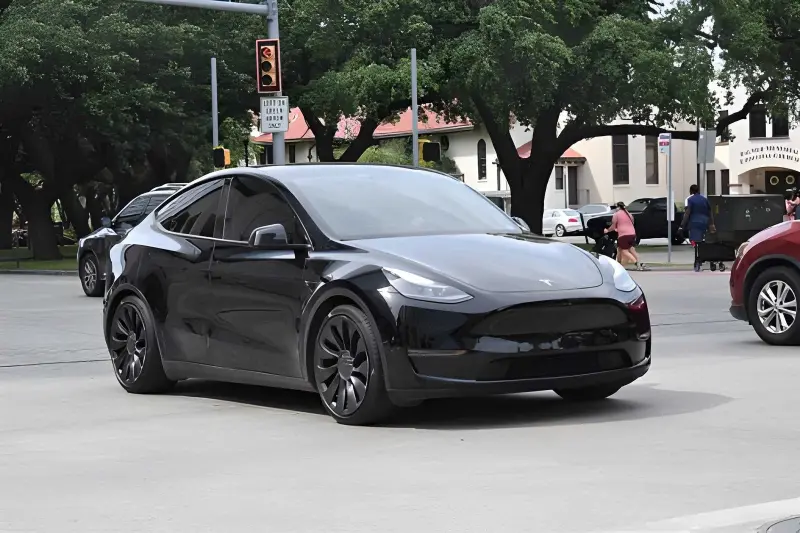
Consumer Reports gives the BMW i5 an 84 out of 100 for predicted reliability, placing it second among all EVs in their survey. Additionally, BMW ranks fifth overall in CR’s brand reliability rankings, above Toyota in some categories, and its EV lineup has been a bright spot in a segment where German brands historically struggle with electronics.
There is a caveat, though. The i5 only launched in 2024, so the long-term data is thin. CR’s score is based on two model years plus BMW’s brand-level reliability history. That is enough to form a prediction, but not enough to confirm it over a full ownership cycle. If the i5 follows the trajectory of the i4, which improved further with each model year, then the score should hold.
At roughly $58,000 to start, the i5 is not a value play. Instead, you’re paying a premium for build quality and a cabin that doesn’t feel like a Silicon Valley tech demo.
3. BMW i4 — A Reliable EV With a Proven Track Record
Consumer Reports scores the BMW i4 at 82 out of 100 for predicted reliability. In addition, independent testers rate the 2024-and-later models as better than average, and owner feedback on the 2025 model year has been positive on day-to-day dependability.
The i4 avoids the most common EV reliability pitfalls. There are no widespread charging-unit failures and no software-bricking incidents. Essentially, the car does what it is supposed to do, which in EV terms qualifies as noteworthy. Because BMW built the i4 on a shared platform with the gas 4 Series, it benefits from proven body engineering from day one.
4. Tesla Model 3 — The Longest Track Record in the Segment
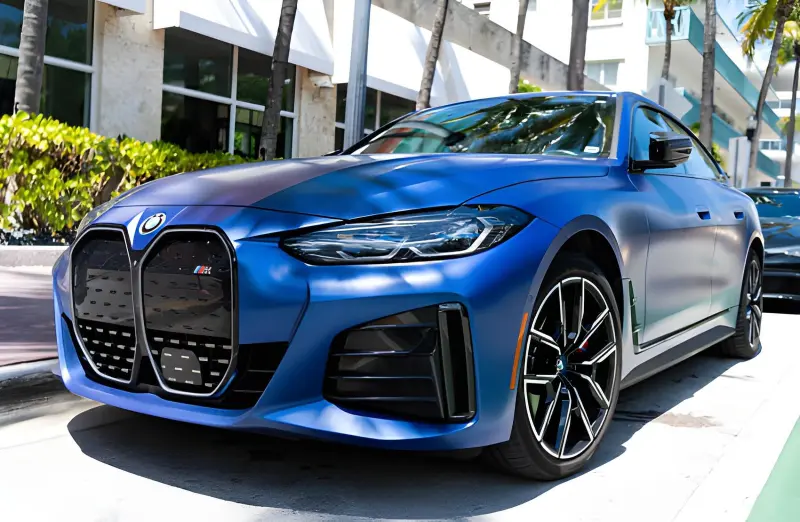
The Model 3 has about average predicted reliability for 2026, based on Consumer Reports data from 2023, 2024, and 2025 models. That sounds middling until you consider the context: it is the most reliable Tesla ever produced, and consequently, nine years of production history give it more long-term data than any other EV on this list.
Battery capacity retention sits at 90–92% after five years of ownership. That figure alone answers the most common question buyers ask. Although interior trim quality on pre-2024 models was inconsistent, with panel gaps, rattles, and the occasional misaligned door seal, the current production run has tightened those tolerances measurably.
Therefore, for buyers who want the lowest-risk EV purchase available, the Model 3 offers the deepest reliability dataset of any electric car sold in the United States.
5. Kia Niro EV — The Most Reliable Budget EV Car
Surprisingly, the Kia Niro EV received the highest reliability score among all vehicles in Consumer Reports’ electric car category from the 2023 through 2025 model years. That result confuses people, given Kia’s well-publicised ICCU problems on the EV6 and EV9.
It comes down to the platform. The Niro EV does not use the E-GMP architecture that caused the ICCU failures. Rather, it runs on a different platform entirely, which means the charging-unit issue that has plagued other Kia and Hyundai EVs does not apply here. In other words, platform selection matters more than brand reputation.
On the other hand, the trade-off is everything else. The Niro EV is not fast and not particularly spacious. Nevertheless, it is a commuter car that works correctly every day, and for buyers who prioritise the most reliable EV cars over driving thrills, that is exactly the point.
Middle Tier: Reliable EV Cars With Conditions Attached
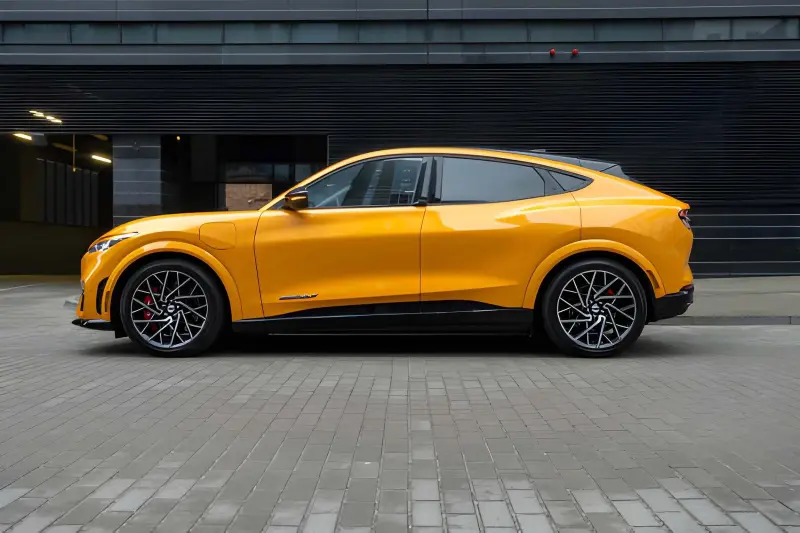
6. Ford Mustang Mach-E — Now a Reliable EV After a Rocky Start
Early Mustang Mach-E models from 2021 and 2022 were genuinely problematic. Specifically, owners reported park-function failures, lighting-module defects, and software glitches that required dealer visits. By 2025, though, the reliability story had shifted. Consumer Reports now rates the 2025 Mach-E as “much more reliable than other cars from the same model year,” and similarly, the 2026 model carries an average predicted reliability rating.
Even so, two active recalls remain for the 2026 model year: a lighting-driver module issue and a park-module failure. Fortunately, both have dealer-available fixes. These are the kind of problems that get resolved in a single service visit, not the kind that leave you stranded on the highway.
Overall, the Mach-E’s progression from unreliable to average is a pattern across the EV industry generally. First-generation models on new platforms tend to be rough, while subsequent years improve. I’m not entirely sure that pattern will hold as EVs get more software-dependent, but so far, buying a model-year-three or later EV from any manufacturer has been lower-risk than buying a model-year-one.
7. Chevrolet Equinox EV — Average Reliability, Thin Data
Consumer Reports rates the Equinox EV as average for predicted reliability, and it also remains a Recommended pick in their 2026 rankings. However, three NHTSA recalls in its first full year of availability is a pace worth monitoring.
The bigger uncertainty is GM’s Ultium platform. Almost every vehicle using this shared battery and motor architecture, including the Chevrolet Blazer EV and Cadillac Lyriq, has scored below average or well below average in Consumer Reports’ reliability surveys. So far, the Equinox EV is the exception. Whether it maintains its average rating or drifts toward its platform siblings will become clearer by late 2026.
On total cost of ownership, the Equinox EV remains competitive. With home charging, five-year energy costs come in at $4,200, roughly $4,000 less than a comparable gas SUV at $3.50 per gallon. That cost advantage only holds with home charging, though. Without it, the Equinox EV finishes last in TCO against both hybrid and gas competitors.
Bottom Tier: EV Cars With Reliability Problems Worth Knowing About
8–9. Hyundai Ioniq 5 and Kia EV6 — The ICCU Problem
Both vehicles use Hyundai’s E-GMP platform, and as a consequence, both share the same reliability-defining flaw: the Integrated Charging Control Unit (ICCU). Between 2% and 10% of owners have experienced ICCU-related failures, depending on model and model year, according to Consumer Reports’ survey data.
A failed ICCU does not just prevent charging. More importantly, it can cause sudden power loss while driving at highway speeds. That crosses the line from inconvenience to safety risk. Although Hyundai and Kia have issued recalls that include software updates and, in some cases, hardware replacements, a class-action lawsuit filed in April 2026 alleges that the replacement ICCUs may be just as defective as the originals. In fact, some owners have reported replacing the unit three or more times within months of purchase.
Accordingly, Consumer Reports rates both the Ioniq 5 and EV6 as below-average for predicted reliability. The Kia EV9, which shares the same platform, also has the same issue.
To be clear, the Ioniq 5 and EV6 are not bad cars. They drive well, charge reasonably fast where infrastructure exists, and offer good range. But reliability is not a subjective preference. It is a measurable outcome, and the measurable outcome here says wait until the ICCU issue is resolved with proven replacement hardware, not just another recall notice.
10. Rivian R1T / R1S — High Satisfaction, Low Reliability
Rivian owners love their vehicles. Yet they also report more problems than almost any other EV buyer. Consumer Reports expects the 2026 R1T to be “much less reliable than the average new car,” based on 2023 and 2024 model data.
Problems are spread across the vehicle. For example, six to eight active recalls cover seat belts, turn signals, high-voltage distribution components, suspension bolts, headlight modules, and driver-assistance software. Furthermore, NHTSA complaint data shows 101 complaints for the R1T and 125 for the R1S since 2022, concentrated in safety systems and electrical components.
Admittedly, Rivian’s Gen-2 refresh has addressed several of these, and the company’s over-the-air update cadence is among the fastest in the industry. Even so, buying a Rivian in 2026 is still closer to early-adopter territory than proven-product territory. While the battery and motors have held up better than the body and software, consistent with the broader EV pattern, the volume of non-drivetrain issues puts Rivian well outside what I’d consider reliable EV cars.
If you’re drawn to Rivian’s design and capability, budget for a comprehensive warranty. Also, do not assume the recalls are finished.
Reliable EV Cars vs Gas Cars: The Gap in Numbers
Here is the headline number from J.D. Power’s 2026 Vehicle Dependability Study: battery electric vehicles average 237 problems per 100 vehicles after three years of ownership. By comparison, gas-powered vehicles average 198 PP100. That is a gap of 39 problems per 100 vehicles, or roughly 20% more issues for EVs.
A year ago, that gap was wider. Consumer Reports’ 2024 survey found EVs had 79% more problems than gas cars. By 2025, that figure had dropped to 42%. So the trajectory is clear: EVs are getting more reliable year over year, although they have not caught up yet.
Interestingly, plug-in hybrids are the worst of all powertrain types. J.D. Power records 281 PP100 for PHEVs, 83 more problems per 100 vehicles than gas cars. Therefore, if reliability is your primary concern, a PHEV is a worse bet than either a pure EV or a conventional hybrid.
| Powertrain | PP100 (2026) | Change vs 2025 |
|---|---|---|
| Gas | 198 | -2 (improved) |
| Hybrid | 213 | +14 |
| Battery EV | 237 | +14 |
| Plug-in hybrid | 281 | +39 |
Context matters here, though. The industry average across all powertrains is 204 PP100, the highest recorded since J.D. Power redesigned the study in 2022. In fact, vehicle dependability is declining across the board, not just for EVs. Software complexity, OTA update failures, and screen-dependent interiors are dragging down reliability for every powertrain type. EVs simply have more software surface area to go wrong.
The Battery Reliability Myth: Why the Part You Worry About Isn’t the Problem
Ask a prospective EV buyer what worries them most about reliability, and the answer is almost always the battery. Will it degrade? Will it need replacing? Will it leave me stranded?
The data says no. Fewer than 0.2% of EVs require a battery pack replacement under warranty. Moreover, long-term testing across popular models in the U.S. and Europe shows most packs retaining approximately 90% capacity after 100,000 miles when properly thermally managed. According to Which? (April 2026), battery degradation for vehicles registered in 2024 and 2025 averages only 3%.
Tesla Model 3 packs, for example, retain 90–92% capacity after five years. Partly because of these strong retention numbers, federal regulations require a minimum 8-year/100,000-mile battery warranty on every EV sold in the United States. Most manufacturers go even further.
The warranty mismatch that matters for EV reliability
Meanwhile, the components with the worst reliability records (infotainment systems, charging electronics, body hardware) carry standard bumper-to-bumper warranty coverage of 3 years/36,000 miles. In other words, the reliable part gets 8 years of coverage, while the unreliable parts only get 3.
If battery anxiety is the reason you have not bought an EV, then the numbers suggest that concern is misplaced. The electric drivetrain is the simplest and most dependable part of the vehicle. Ironically, it is the screen in the dashboard that causes most of the problems.
Which Reliable EV Car Should You Actually Buy?
Reliability data is only useful if it connects to your actual situation. For instance, a car rated “above average” by Consumer Reports can still be the wrong car for you if it doesn’t match how you drive, where you park, or how long you plan to keep it.
- Reliability is your top priority and you want the deepest data backing it
- You have access to the Supercharger network (50,000+ stalls globally)
- You plan to keep the car 5+ years to capture the full cost-of-ownership advantage
- You want proven reliability without the Tesla brand ecosystem
- Interior quality and driving dynamics matter as much as dependability
- Your budget allows $55,000+ and you’re comfortable with BMW maintenance costs
- You want the most reliable EV car at the lowest price point
- You primarily drive a daily commute under 200 miles
- Performance is not a factor in your purchase decision
- You want a 2025 or 2026 model year (avoid 2021–2022)
- You value the Ford dealer network for service access
- You want a crossover that splits the difference between reliability and driving engagement
When you should not buy an EV for reliability
Do not buy an EV for reliability if:- You cannot confirm home charging access. Without it, the cost math inverts and you’re paying more than a hybrid for the same transport
- You trade cars every 2–3 years. EV depreciation is steepest early, and the maintenance savings that make EVs financially rational compound past year five
- You’re looking at a first-model-year EV on a new platform. Wait for year two or three
Methodology
- Consumer Reports 2026 Auto Reliability Survey — based on responses from approximately 380,000 vehicle owners covering 2000–2025 model years, with some early 2026 models. Predicted reliability scores reflect combined owner-reported problems across 17 trouble areas.
- J.D. Power 2026 U.S. Vehicle Dependability Study (VDS) — measures problems per 100 vehicles (PP100) after three years of ownership across nine categories. Industry average: 204 PP100.
- NHTSA recall database — recall counts through May 25, 2026. A recall count alone does not indicate severity; one safety-critical recall outweighs ten minor software patches.
- Vehicles with fewer than two model years of owner data (e.g., Hyundai Ioniq 6 has insufficient reliability-specific data for a confident ranking, though CR recommends it overall)
- Performance, range, and value metrics — this ranking is reliability-only
- Vehicles not widely available in the U.S. market (BYD, MG, Polestar 4)
- Consumer Reports’ predicted reliability scores carry more weight than J.D. Power PP100 in individual model rankings because CR uses a larger, model-specific sample
- NHTSA recall counts are noted for transparency but do not drive the ranking order directly
- A “Buy” verdict means the data supports the purchase on reliability grounds. A “Wait” verdict means the data shows unresolved issues that could affect safety or ownership cost
Date verified: May 25, 2026
Frequently Asked Questions About Reliable EV Cars
What is the most reliable electric car in 2026?
The Tesla Model Y, according to Consumer Reports’ 2026 owner survey. Specifically, Tesla jumped from #18 to #10 in overall brand reliability, and the Model Y earns above-average predicted reliability. The BMW i4 (82/100) and BMW i5 (84/100) are close behind.
Are electric cars less reliable than gas cars?
On average, yes. J.D. Power’s 2026 study found BEVs average 237 PP100 compared to 198 PP100 for gas cars, which is about 20% more problems. However, the gap has narrowed from 79% in 2024 to roughly 20% in 2026. As a result, several individual EV models now match or beat the gas-car average.
Do EV batteries fail often?
No. Fewer than 0.2% of EVs require a battery pack replacement under warranty. Additionally, most packs retain approximately 90% capacity after 100,000 miles. Battery degradation averages only 3% for vehicles registered in 2024–2025, per Which? (April 2026). Overall, the battery is statistically the most reliable component on an electric car.
Which EVs should you avoid for reliability?
The Rivian R1T and R1S are rated much below average by Consumer Reports, with six to eight active recalls. Similarly, Hyundai and Kia EVs on the E-GMP platform — the Ioniq 5, EV6, and EV9 — have ICCU failures that can cause sudden power loss. In addition, a class-action lawsuit filed in April 2026 alleges replacement parts may carry the same defect.
Is the Tesla Model 3 reliable?
About average for 2026, based on Consumer Reports data from three model years. It is the most reliable Tesla and also has the longest production history of any EV, with 90–92% battery capacity retention after five years. Although interior trim on pre-2024 models was inconsistent, current production has improved.
What is the biggest reliability problem with EVs in 2026?
Infotainment systems. J.D. Power’s 2026 study recorded 56.7 PP100 for infotainment alone, which is more than double the next category (exterior at 27.5 PP100). Specifically, touchscreen freezes, failed OTA updates, and connectivity dropouts drive the majority of complaints across brands.
How many problems per 100 vehicles do EVs have compared to gas cars?
BEVs average 237 PP100 after three years, while gas vehicles average 198 PP100. PHEVs are worst at 281 PP100. Notably, the industry average across all powertrains is 204 PP100, the highest since J.D. Power redesigned the study in 2022. In other words, reliability is declining industry-wide, not just for EVs.
Is a BMW i4 or i5 reliable?
Both are among the most reliable EV cars available. Specifically, the i4 scores 82/100 and the i5 scores 84/100 for predicted reliability from Consumer Reports. Furthermore, BMW ranks fifth overall in CR’s brand reliability survey. Owner feedback on 2024-and-later models has been strongly positive, with no major structural or powertrain recalls reported.
The Bottom Line on Reliable EV Cars in 2026
EV reliability is no longer a blanket statement. Some electric cars are now as dependable as the best gas vehicles on sale, while others are still working through first-generation growing pains. Ultimately, the difference between the two comes down to platform maturity, not brand name.
If reliability is what matters most, then the Tesla Model Y and BMW i4 have the data to back up the purchase. Alternatively, if your budget is tighter, the Kia Niro EV quietly outperforms its own brand siblings. And if the Ioniq 5, EV6, or a Rivian caught your eye, the honest advice is to wait. The cars themselves are appealing, but the reliability data is not there yet.
Above all, confirm home charging access before you sign anything. That single variable determines whether an EV saves you money or costs you more than a hybrid over five years. After that, pick the car with the longest track record on a proven platform. The boring choice is usually the right one.
Last updated: May 25, 2026

1 Comment