Last Updated: May 2026 — Q1 2026 sales data, post-credit market figures, and infrastructure milestones verified
The future of electric vehicles in the U.S. is growing — but slower than anyone forecast before October 2025. In Q3 2025, EVs hit a record 10.6% market share as buyers rushed to claim the expiring $7,500 federal tax credit. That credit disappeared on September 30, 2025. By Q1 2026, new EV sales had dropped 28% year-over-year to 216,399 units, and market share fell to 5.8%. The industry didn’t collapse — it corrected. And the correction revealed exactly how much of the EV boom was incentive-driven rather than demand-driven.
This article covers where the U.S. EV market actually stands in 2026, where it’s going through 2030 under post-credit conditions, and the specific variables — used EVs, charging infrastructure, battery costs, and state policy — that will decide whether the market hits 15% or 25% share by decade’s end.
Future of EVs in the U.S. — Quick Answer:
U.S. EV market share dropped to 5.8% in Q1 2026 after the $7,500 federal tax credit expired in September 2025. New EV sales fell 28% year-over-year to 216,399 units. Used EV sales rose 12% to 93,500 units — with average prices within $1,300 of equivalent gas cars. The federal credit is gone; what replaced it is a $10,000 annual auto loan interest deduction for U.S.-assembled vehicles. Industry forecasts now project 15–25% EV market share by 2030 — down from pre-credit projections of 20–28% — contingent on affordable models and charging network expansion.
Where the U.S. EV Market Stands in 2026
The Q1 2026 numbers tell a more honest story than any forecast published before the credit expired. The market dropped — but the reason matters as much as the magnitude.
New EV Sales: The Post-Credit Correction
Americans bought 216,399 new EVs in Q1 2026, down 28% year-over-year, according to Cox Automotive. EV market share held at 5.8% — matching Q4 2025 but well below the 10.6% peak when buyers surged to beat the credit deadline. The decline is almost entirely policy-driven. Shopping traffic for EVs on Kelley Blue Book and Autotrader has actually increased in early 2026, driven by gas prices rising above $4.12 per gallon. The market wants EVs. Without $7,500 in federal support, a $45,000 EV is simply priced like one.
The Used EV Surge Most Coverage Ignores
While new EV sales fell 28%, used EV sales rose 12% to 93,500 units in Q1 2026. The average used EV transaction price dropped to $34,821 — just $1,300 above an equivalent gas vehicle. That near-price-parity is historically unprecedented. Over 44% of used EV transactions in February 2026 came in below $25,000, and used EVs are now averaging just 42 days on dealer lots. The 2023–2025 lease return wave is flooding the market with well-maintained three-year-old EVs at prices where the five-year ownership math is compelling without any credit at all.
Who Led U.S. EV Sales in Q1 2026
Tesla maintained its lead, with the Model Y accounting for 78,591 units — one in every three EVs sold. The standout: Toyota’s bZ series became the #3 best-selling EV brand with 10,029 units, up 80% year-over-year, driven by updated thermal management and aggressive dealer incentives. The Hyundai IONIQ 5 held #4 (9,790 units) and the Chevy Equinox EV landed #5 (9,589 units). Tesla now holds over 50% of U.S. EV market share after discontinuing the Model S and Model X in Q1 2026. The company’s entire volume now runs through three models: Model 3, Model Y, and Cybertruck.
EV Adoption Forecast: 2027–2030
Every pre-2026 forecast assumed the federal tax credit would persist. It didn’t. Recalibrating against Q1 2026 actual data produces a lower but still meaningful growth trajectory — the direction hasn’t changed, but the speed has.
Revised Market Share Projections by Year
Pre-credit forecasts from BloombergNEF and S&P Global projected 20–28% U.S. EV market share by 2030. Post-credit, the realistic base case is 15–25%. Cox Automotive’s analysis estimates the credit was worth approximately 3–5 percentage points of market share. Recovery toward double-digit share by 2027–2028 depends on two variables arriving on schedule: sub-$35,000 long-range models and charging infrastructure reaching underserved regions. If either lags, the lower end of the range is the more likely outcome.
| Year | Pre-Credit Forecast | Post-Credit Revised | Key Variable |
|---|---|---|---|
| Q1 2026 (Actual) | 8–9% | 5.8% | Credit expired; market repricing |
| 2027 | 11–14% | 8–11% | Sub-$35K models; state incentives |
| 2028 | 14–18% | 10–15% | Fleet electrification; used EV volume |
| 2030 | 20–28% | 15–25% REVISED DOWN | Affordable models + infrastructure |
Why the Used Market May Accelerate Total Adoption
Most EV adoption forecasts track new vehicle sales only. That misses a growing share of the market. If used EV sales continue growing at 12%+ annually while prices hold near gas-car parity, the total EV adoption curve — new plus used — may climb faster than new-only models project. The used market is now the most price-competitive access point for EV ownership in U.S. history. A 2023 Model 3 or IONIQ 5 at $28,000–$32,000 offers a total cost case that no new gas car can match over five years with home charging. That’s the adoption driver most forecasts underweight.
EV Charging Infrastructure Through 2030
The infrastructure question has a direct answer: it depends on where you live. For coastal metros and major highway corridors, charging is already good enough for most drivers. For rural America and multi-unit housing, real gaps remain — and closing them is the single largest remaining barrier to mass EV adoption.
Public DC Fast Charging: Where the Network Stands
The NEVI program — $5 billion under the Bipartisan Infrastructure Law — is the largest public charging investment in U.S. history. All 50 states have approved NEVI plans, with physical installations accelerating through 2026–2027 along designated Alternative Fuel Corridors. According to the U.S. Department of Energy’s Alternative Fuels Station Locator, the U.S. public charging network has grown more than 40% since 2023.
The bigger infrastructure story is connector standardization. Tesla’s NACS connector is now the U.S. default. Ford, GM, Rivian, Polestar, Honda, and Nissan all support NACS — giving their owners access to Tesla’s Supercharger network. Supercharger uptime consistently outperforms third-party DC fast charge networks, making this the most practically important infrastructure development of the past two years. For a full network comparison, see our guide to EV charging networks in 2026.
Home and Workplace Charging: The 80% That Matters Most
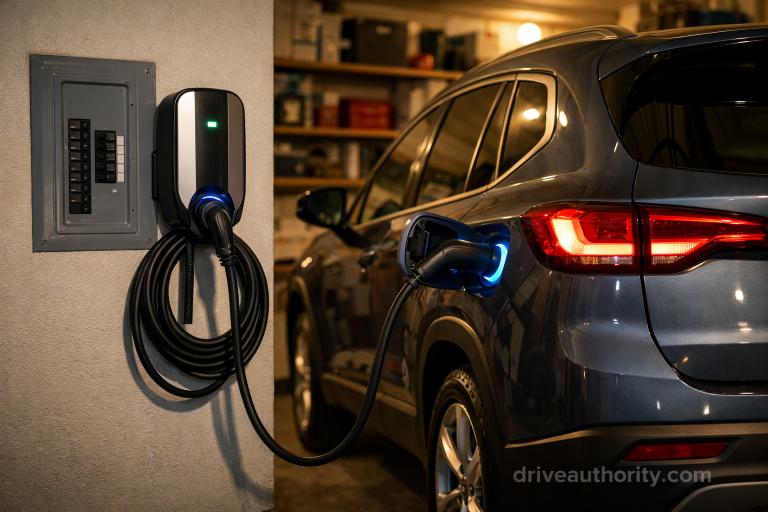
Approximately 80% of all EV charging happens at home or at work — which means public infrastructure, while important, is not the constraint it’s made out to be for most current EV owners. The federal Level 2 charger installation credit (30C) covers 30% of home charger costs, up to $1,000, through June 30, 2026 in eligible census tracts. Employer-provided charging is growing rapidly as a competitive benefit. For buyers deciding whether to make the switch, home charging access is the single most important variable — more than range, more than public network density. See our home EV charging setup guide for costs and installation details.
What Replaced the $7,500 Federal EV Tax Credit
The $7,500 federal Clean Vehicle Credit (Section 30D) and the $4,000 used EV credit (Section 25E) both expired on September 30, 2025 under the One Big Beautiful Bill Act. They are no longer available. Any guide or dealer quoting a post-credit purchase price for new EVs is using outdated information — you pay full MSRP at the dealership.
The New Auto Loan Interest Deduction
The OBBBA introduced a federal auto loan interest deduction of up to $10,000 annually for vehicles with final assembly in the United States, purchased after December 31, 2024. This is a tax deduction, not a point-of-sale credit. It reduces your taxable income each year you carry the loan — real money over time, but slower and smaller for most buyers than the old credit. It phases out above $100,000 single / $200,000 joint income. The vehicle must be U.S.-assembled and actively financed to qualify.
State Incentives Are Now the Primary Buyer Lever
With the federal credit gone, state programs are the most impactful direct savings available for new EV buyers. The strongest state incentives currently in place:
- California — up to $7,500 via Clean Cars 4 All (income-qualified)
- Colorado — $5,000 state tax credit, no income cap
- Oregon — up to $7,500 via Clean Vehicle Rebate Program
- New Jersey — sales tax exemption worth approximately $2,500
- Massachusetts — up to $3,500 via MOR-EV program
Search your state’s current program at the DOE Alternative Fuels Data Center before purchasing. Many utility companies also offer charger installation rebates of $200–$800 that most buyers never claim. For the full state-by-state breakdown, see our EV incentives guide for 2026.
| State | State Incentive | ZEV Mandate | Key Condition |
|---|---|---|---|
| California | Up to $7,500 HIGHEST | Yes — 100% by 2035 | Income-qualified; CVRP program |
| Colorado | $5,000 tax credit | Yes | No income cap; Xcel utility rebates available |
| Oregon | Up to $7,500 | Yes | Clean Vehicle Rebate Program |
| New Jersey | ~$2,500 sales tax waiver | Yes | No income cap on tax exemption |
| Texas | Limited / variable WEAK | No mandate | Utility rebates vary by provider |
Battery Technology and EV Range by 2030
Battery technology headlines consistently outpace commercial reality. Solid-state batteries have been “18–24 months away” in press releases for five years. The more useful lens is battery cost per kWh — a number that’s declining on schedule and directly determines when affordable long-range EVs become possible without subsidies.
Battery Costs: The Number That Actually Drives Adoption
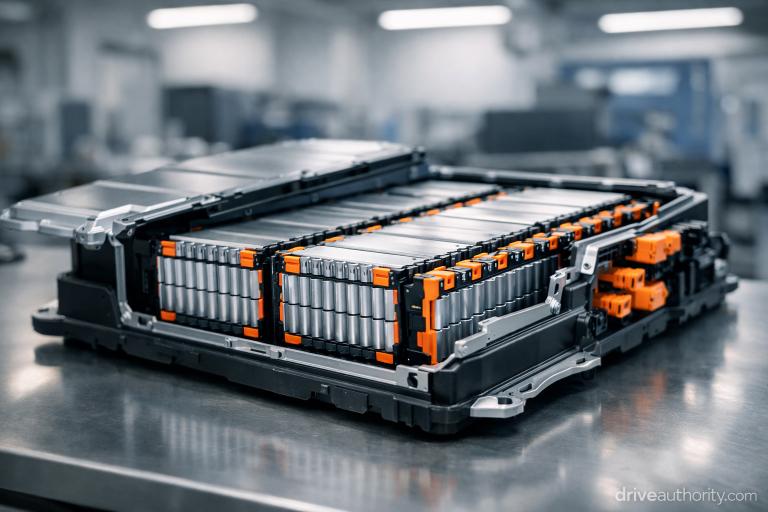
Lithium-ion pack costs have dropped from approximately $150/kWh in 2022 to an estimated $90–$110/kWh in 2026. Projections from BloombergNEF place 2028 costs at $70–$80/kWh — the threshold at which battery EVs approach manufacturing cost parity with combustion vehicles without subsidies. That’s the number that makes sub-$30,000 EVs viable at normal margins. It’s also why 2027–2028 is the most consequential window for affordable EV launches. See our EV battery longevity guide for degradation data by model at 50K, 100K, and 150K miles.
Solid-State Batteries: When, Realistically
Limited production solid-state EVs are possible from Toyota and select OEM-QuantumScape partnerships by 2027–2028. Volume consumer availability — meaning mass-market models in showrooms — is more realistically 2029–2032. Solid-state cells offer higher energy density, faster charging potential, and improved safety over lithium-ion. They are not a 2026 story.
If you’re delaying an EV purchase waiting for solid-state technology, you’re likely waiting until 2030 or later. Current lithium-ion EVs — particularly used models from 2023–2024 — offer compelling real-world performance at prices where the wait carries a real opportunity cost.
The $35,000 / 300-Mile Threshold
This is the mass-market inflection point every automaker and analyst cites. In 2026, the Chevy Equinox EV at $34,995 with 319 miles EPA range comes closest to this target. The Rivian R2, GM’s next-generation entry models, and updated Korean entries are targeting this zone for 2027–2028. The sub-$30,000 segment — effectively empty today — is the next frontier. Without a federal credit to bridge the gap, reaching that price point through manufacturing cost reduction is more urgent than ever.
EV Models Shaping the U.S. Market Through 2030
Projections move markets over time. Products move them now. Here’s what’s actually shaping the U.S. EV market based on Q1 2026 real sales data and confirmed upcoming launches.
Tesla Model Y
78,591 units in Q1 2026 — one in every three EVs sold. The Juniper refresh maintains dominance. Tesla’s share has risen as competitors pull back, and the company’s three remaining models now concentrate all of its volume.
Toyota bZ
10,029 units — up 80% year-over-year and the #3 best-selling EV in America. Updated thermal management, aggressive incentives, and Toyota’s dealer network drove the surge. Three more Toyota EVs are confirmed for 2026.
Chevy Equinox EV
$34,995 MSRP, 319 miles EPA — the most affordable full-size EV SUV in the U.S. Without the federal credit, its price advantage narrows, but GM dealer access and real-world range keep it competitive at 9,589 units in Q1.
Rivian R2
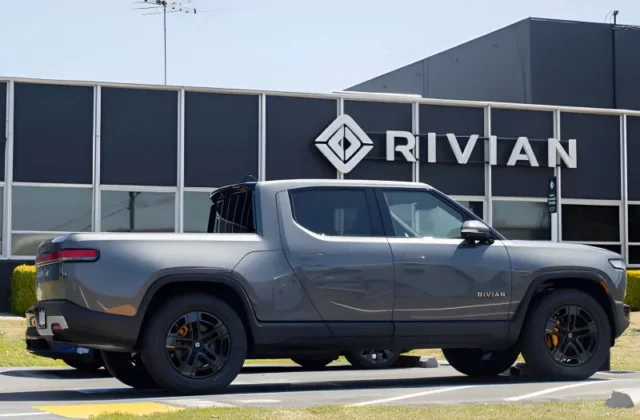
Targeting $40K–$45K with adventure-focused positioning and U.S.-based production in Normal, IL, giving it tariff protection. If delivered as specified, it directly challenges both the Equinox EV and Model Y. The most consequential upcoming launch in the mid-market.
Used 2023–2024 Lease Returns
Three-year-old Model 3s, IONIQ 5s, and Mach-Es from 2022–2023 leases are landing on lots at $25,000–$35,000. At near gas-car pricing, these represent the best EV value proposition in U.S. history. See our used Tesla buying guide for model-by-model advice.
Sub-$30,000 Entry Models
No U.S.-confirmed model has locked this segment yet. Multiple manufacturers are targeting $28K–$32K with 280+ miles. This product category — more than any policy — will determine whether 2030 EV share lands at 15% or 25%.
Buy an EV Now If…
- You have Level 2 home charging access
- Your state offers $3,000+ in incentives
- Used EV pricing fits your budget ($25K–$35K)
- Gas prices in your area are above $4.00/gallon
Wait Until 2027–2028 If…
- You need a sub-$30,000 new EV with 280+ miles
- You’re in a state with no meaningful incentives
- You rely on public charging with no home access
- Your target vehicle is a confirmed 2027–2028 launch
FAQ: Future of Electric Vehicles in the U.S.
What percentage of U.S. car sales are electric in 2026?
EVs account for 5.8% of new vehicle sales in Q1 2026 — down from the 10.6% peak in Q3 2025, when buyers rushed to claim the expiring $7,500 federal tax credit. Full-year 2024 share was 8.1%. The decline is policy-driven, not a fundamental shift in demand. EV shopping traffic remains strong, and used EV sales are growing at 12% year-over-year.
Is the $7,500 EV tax credit still available in 2026?
No. The federal Clean Vehicle Credit expired September 30, 2025. What replaced it: a federal auto loan interest deduction of up to $10,000 annually for U.S.-assembled vehicles — a tax deduction, not a point-of-sale credit. State incentives are now the most impactful direct savings. California, Colorado, and Oregon each offer up to $5,000–$7,500. Search your state at afdc.energy.gov.
Will EVs reach 25% of U.S. sales by 2030?
Possibly — but it’s no longer the base case. Pre-credit forecasts projected 20–28% by 2030. Post-credit reality suggests 15–25%, with the outcome hinging on whether sub-$35,000 long-range models arrive by 2027–2028 and whether public charging reaches rural America and apartment dwellers. The used EV market growing at 12%+ annually adds meaningful upside that new-only forecasts miss.
Is now a good time to buy an EV in 2026?
For used EVs, yes — this is the best entry point in EV history. Three-year-old lease returns are selling at $25,000–$35,000, within $1,300 of equivalent gas cars on average. For new EVs, the case depends on your state incentives and home charging access. With $5,000–$7,500 in state credits (California, Colorado, Oregon) and Level 2 home charging, the five-year ownership cost still favors EVs clearly over gas alternatives.
When will solid-state EV batteries be in consumer vehicles?
Limited production from Toyota and QuantumScape-partnered OEMs is possible in 2027–2028. Volume consumer availability — mass-market models in showrooms — is more realistically 2029–2032. If you’re waiting for solid-state before buying an EV, you’re likely waiting until 2030 or later. Current lithium-ion EVs, especially 2023–2024 used models, offer strong real-world value at today’s prices.
What is the most affordable new electric car in the U.S. in 2026?
The Chevy Equinox EV starts at $34,995 — the most affordable full-size electric SUV in America. The Nissan Leaf is lower at approximately $28,140 but carries a shorter range (~212 miles) and slower DC charging. The returning 2027 Chevrolet Bolt EV, arriving mid-2026 at approximately $29,700, will offer the best balance of price and range in the sub-$30K segment. State incentives in Colorado, Oregon, and California can reduce any of these by $5,000–$7,500.
The future of electric vehicles in the U.S. is slower than the headlines promised — and more honest for it. The $7,500 credit masked real price sensitivity. Without it, the market found its floor at 5.8% share. That floor will rise, driven by falling battery costs, the used EV wave, and affordable new models arriving in 2027–2028. The path to 20%+ EV share still exists. It just runs through $30,000 price points and used car lots now, not through federal credits and showroom incentives. Watch battery cost per kWh and used EV pricing more closely than any new model announcement. That’s where the real adoption story is being written.