Last Updated: May 2026 — Canadian EV pricing, rebate eligibility, NRCan range ratings, and provincial incentive programs verified
The best electric cars in Canada in 2026 are not necessarily the ones with the highest EPA range number. In a country where winter temperatures in major population centres regularly drop below −20°C, the more useful metric is how much range survives a January commute in Ottawa or Edmonton — and which vehicles combine that cold-weather performance with the rebates still available in your province. This ranking weighs winter real-world range, current rebate eligibility, charging network coverage, and total ownership cost. A car that looks affordable at sticker price but sits outside provincial rebate caps is a worse deal than a less glamorous model that qualifies for C$7,000 back in Quebec.
Six vehicles make this list. All are available at Canadian dealerships with established service networks. Pricing is in Canadian dollars before available incentives. The federal iZEV program status is addressed directly — buyers in Ontario and Alberta face a fundamentally different rebate picture than buyers in Quebec and BC, and this ranking reflects that.

Best Electric Cars in Canada 2026 — Quick Summary:
#1 Best overall value: Chevrolet Equinox EV 2LT (C$44,995 · 460 km EPA · rebate eligible) — best combination of price, range, and availability. #2 Best efficiency: Hyundai Ioniq 6 SE Long Range RWD (C$49,999 · 491 km EPA). #3 Best AWD winter option: Hyundai Ioniq 5 Long Range AWD (C$57,999 · 488 km EPA). #4 Best charging network: Tesla Model Y RWD (C$59,990 · 533 km EPA · Supercharger access). #5 Best budget option: Kia EV6 Wind Standard Range (C$49,495 · 394 km EPA). #6 Best dealer network: Volkswagen ID.4 Pro (C$49,995 · 400+ km EPA). The federal iZEV rebate (up to C$5,000) has been subject to program changes — verify current eligibility at tc.gc.ca before purchasing.
How We Ranked: What Matters for Canadian EV Buyers
This ranking uses four criteria weighted for Canadian conditions rather than US or European ones.
Winter real-world range gets the highest weight. NRCan’s cold-weather range testing and owner data from Canadian forums consistently show 35 to 41 percent range reduction at −20°C. A vehicle with a robust heat pump, good battery thermal management, and preconditioning capability retains more range in those conditions than one that relies entirely on resistive heating. Battery chemistry matters too — lithium iron phosphate (LFP) batteries lose range in cold faster than nickel manganese cobalt (NMC) chemistry under sustained low temperatures.
Rebate eligibility is ranked second. A C$5,000 to C$7,000 rebate changes the effective cost of a vehicle significantly and affects the breakeven calculation against a comparable gas car. Vehicles that sit above the rebate threshold lose this advantage entirely and must justify their price on range and features alone.
Charging network coverage reflects Canada’s geography. The Trans-Canada Highway corridor has reasonable coverage from major networks — Tesla Supercharger, Flo, and ChargePoint are all present. However, coverage thins sharply once you leave the BC-to-Quebec main corridor. For buyers outside major urban areas, home charging capability and Level 2 access matter more than DC fast-charging network density.
Service network access is fourth. Canada’s vast geography means that a service centre in Toronto does not help a buyer in Red Deer. Brands with national dealer networks (Hyundai, Kia, Chevrolet, Volkswagen) score better here than brands concentrated in metro markets.
The Rebate Question: Federal iZEV and What Remains in 2026
The federal iZEV (Incentives for Zero-Emission Vehicles) program offered up to C$5,000 for battery electric vehicles with a base MSRP under C$55,000, and C$2,500 for longer-range plug-in hybrids. The program was paused in early 2025 while funding was reviewed. Buyers should check the current status directly at Transport Canada (tc.gc.ca) before making a purchase decision — the program’s availability changes the cost calculation by C$5,000, which is not a rounding error on a C$45,000 vehicle.
The federal pause changed the Canadian EV calculus more than any product update in the same period. Without the federal incentive, the Equinox EV and Ioniq 6 no longer undercut their gas equivalents in Ontario on purchase price — and Ontario buyers have no provincial top-up. Quebec and BC buyers still have access to C$4,000–C$7,000 in provincial support and are looking at a fundamentally different decision than buyers in any other province.
Top 6 Electric Cars in Canada 2026 — Ranked

#1 — Chevrolet Equinox EV 2LT: Best Overall Value
Price: C$44,995 | EPA Range: 460 km (2LT FWD) | Rebate eligible: Yes (under C$55,000)
The Equinox EV is the most compelling mass-market EV for Canadian buyers in 2026 on a value-per-kilometre-of-range basis. At C$44,995 for the 2LT, it delivers 460 km of EPA-rated range — more than any comparable vehicle at that price point. The North American production origin means it avoids the 100% Canadian tariff on Chinese-assembled EVs, keeping it price-competitive through 2026.
The Ultium platform’s thermal management system handles cold weather adequately. Real-world winter range at −20°C comes in at approximately 290 to 320 km — not exceptional, but workable for most Canadian urban commuters. GM’s dealer network is among the broadest in Canada, which is a practical advantage for service and warranty work outside major centres.
The primary limitation is the charging network. Unlike Tesla, Chevy relies on third-party CCS networks (Flo, ChargePoint, Electrify Canada) plus adapter access to Supercharger locations. Coverage is adequate in corridor driving but thinner in rural areas than Tesla’s network.
#2 — Hyundai Ioniq 6 SE Long Range RWD: Best Efficiency
Price: C$49,999 | EPA Range: 491 km | Rebate eligible: Yes (under C$55,000)
The Ioniq 6 is the most range-efficient vehicle in this list measured in kilometres per kilowatt-hour — its aerodynamic drag coefficient of 0.21 Cd is among the lowest of any production car on sale. That efficiency translates directly into better cold-weather range retention compared to less aerodynamically optimised vehicles at the same battery size, because less energy is consumed per kilometre regardless of conditions.
At C$49,999, it sits under the C$55,000 federal rebate cap. The 800-volt architecture supports fast charging: 10 to 80 percent in approximately 18 minutes on a compatible 350 kW charger. Hyundai dealer coverage across Canada is strong, and the service network for the E-GMP platform is established after three years in the Canadian market. The main practical limitation is the sedan body style — buyers who want a crossover or SUV shape need to look at the Ioniq 5 instead.
#3 — Hyundai Ioniq 5 Long Range AWD: Best for Canadian Winters
Price: C$57,999 | EPA Range: 488 km | Rebate eligible: Check current caps (at/above C$55,000 base)
The Ioniq 5 Long Range AWD is the most winter-capable vehicle on this list. The heat pump is standard, AWD improves traction on ice and packed snow, and the E-GMP platform’s battery preconditioning — which activates automatically when routing to a fast charger — is among the most effective in the segment at reducing cold-weather charging slow-down.
At C$57,999 it sits above the standard C$55,000 iZEV threshold, though some trim-level configurations may qualify under higher-tier eligibility rules — verify at tc.gc.ca for your specific model. In Quebec, the Roulez Vert program’s C$65,000 cap includes this vehicle. For buyers in provinces without provincial incentives, the premium over the Equinox EV is harder to justify on pure cost grounds. However, the AWD and heat pump combination is the right specification for buyers in Winnipeg, Edmonton, Saskatoon, or northern Ontario who drive through genuine winter conditions rather than the milder winters experienced on the BC coast.
For the full picture on how different EVs handle Canadian winter temperatures, see our dedicated guide to the best EVs for Canadian winters.
#4 — Tesla Model Y Long Range AWD: Best Charging Network
Price: C$66,490 | EPA Range: 533 km | Rebate eligible: No (above C$65,000)
The Tesla Model Y is Canada’s best-selling EV and the vehicle with the best real-world charging infrastructure advantage. Tesla’s Supercharger network in Canada has over 500 locations concentrated along the Trans-Canada Highway corridor and in major urban centres — more than any competing charging network in the country. That coverage density changes the practical experience of long-distance EV driving significantly. A Model Y buyer in BC can drive to Toronto without range anxiety in a way that is not yet possible on competing networks in the same reliability-of-coverage terms.
At C$66,490, it sits above federal rebate thresholds and most provincial caps. This is a meaningful penalty. Compared to an Ioniq 5 AWD that may qualify for C$7,000 in Quebec, the Tesla buyer is paying C$15,000 to C$20,000 more in effective cost for roughly the same practical capability — with the Supercharger network and Tesla’s OTA software update pace as the primary premium justification. For buyers who drive long distances regularly and value charging confidence on road trips, that premium is defensible. For primarily urban buyers, it is harder to justify over the Equinox EV or Ioniq 6.
For a full model-by-model history of Tesla price changes in Canada, our Tesla price drop history guide covers the pattern — worth reviewing before you buy, given how frequently Tesla has repriced its lineup.
#5 — Kia EV6 Wind Standard Range RWD: Best Budget Fast-Charging Option
Price: C$49,495 | EPA Range: 394 km | Rebate eligible: Yes (under C$55,000)
The EV6 shares the E-GMP platform with the Ioniq 5 and Ioniq 6, which means 800-volt charging architecture at a lower entry price. The Wind Standard Range RWD at C$49,495 is the most affordable path to 800V fast charging in the Canadian market — a practical advantage for buyers who charge on public networks regularly and want 10-to-80 percent top-ups in under 20 minutes on compatible chargers.
Real-world range in winter is a limitation relative to the Ioniq 6. At 394 km EPA, cold-weather range at −20°C comes in at approximately 245 to 280 km — workable for urban and suburban commuters but thin for longer inter-city runs in winter. Kia’s national dealer network is the same practical advantage as Hyundai’s: authorised service is available in cities and mid-sized towns across every province.
#6 — Volkswagen ID.4 Pro: Best Dealer Coverage Across Canada
Price: C$49,995 | EPA Range: ~400–480 km (Pro / AWD variants) | Rebate eligible: Yes
The ID.4 is not the most exciting vehicle on this list and it is not the best value for range per dollar. It earns its position because Volkswagen has one of the widest dealer networks in Canada — VW stores exist in cities and communities where Tesla, Rivian, and newer Chinese-brand dealers do not. For buyers in smaller centres who want warranty service within reasonable distance and a conventional car-buying experience with a physical dealer relationship, the ID.4 is the most broadly accessible option.
The Pro’s range of approximately 400 to 480 km depending on trim is adequate. The CCS charging standard means the same network access issues as the Equinox EV. VW’s software has improved since the troubled early ID.4 releases but still generates more owner complaints than Hyundai or Kia platforms. The ID.4 AWD at C$54,995 adds the winter traction advantage at a price still under most rebate caps.
Full Comparison: Price, Range, Winter, and Rebates
| Vehicle | Base Price (CAD) | EPA Range | Est. Winter Range (−20°C) | Fed. Rebate Eligible | QC Rebate | BC Rebate | Effective Price (QC) |
|---|---|---|---|---|---|---|---|
| Equinox EV 2LT FWD | C$44,995 | 460 km | ~290–320 km | YES | C$7,000 | C$4,000 | ~C$32,995–37,995 |
| Ioniq 6 SE LR RWD | C$49,999 | 491 km | ~310–345 km | YES | C$7,000 | C$4,000 | ~C$37,999–42,999 |
| Ioniq 5 LR AWD | C$57,999 | 488 km | ~315–360 km | CHECK TRIM | C$7,000 | C$4,000 | ~C$45,999–50,999 |
| Tesla Model Y LR AWD | C$66,490 | 533 km | ~340–385 km | NO | NO (over cap) | NO (over cap) | C$66,490 |
| Kia EV6 Wind SR RWD | C$49,495 | 394 km | ~245–280 km | YES | C$7,000 | C$4,000 | ~C$37,495–42,495 |
| VW ID.4 Pro | C$49,995 | ~400–480 km | ~255–300 km | YES | C$7,000 | C$4,000 | ~C$37,995–42,995 |
Provincial Rebate Breakdown: Who Gets What
Canada’s EV incentive landscape is fragmented by province, and the gap between the best-supported provinces and the worst is substantial. A buyer in Quebec accessing the full provincial Roulez Vert rebate plus the federal iZEV (when active) can receive C$12,000 in combined incentives on an eligible vehicle. A buyer in Ontario or Alberta receives nothing unless the federal program is active — and even then, only the federal amount.
| Province | Provincial Program | BEV Amount | MSRP Cap | Notes |
|---|---|---|---|---|
| Quebec | Roulez Vert | C$7,000 | C$65,000 | Most generous provincial program; additional incentives for used EVs and charging equipment |
| British Columbia | CEVforBC | C$4,000 | C$55,000 | Income eligibility applies; additional C$2,000 for low-income households |
| Prince Edward Island | EV Rebate Program | C$5,000 | C$55,000 | Household income cap applies; one rebate per household |
| Nova Scotia | EV Rebate | C$3,000 | C$55,000 | Available through Nova Scotia Power program; verify current status |
| Ontario | None | C$0 | — | Provincial program removed in 2018; federal rebate is the only available incentive |
| Alberta | None | C$0 | — | No provincial incentive program; federal rebate is sole available support |
| Manitoba / Sask. | None | C$0 | — | No provincial incentive; cold-weather range planning is particularly important in these provinces |
Canada EV Charging: What the Network Actually Looks Like

Canada’s EV charging infrastructure in 2026 is adequate for the majority of the population — who live within 100 km of one of a dozen major urban centres — and genuinely limited for everyone else. The honest map of Canada’s charging network shows three distinct zones.
Well-covered corridor (BC to Quebec, Highway 1 and Highway 401): Tesla Supercharger, Flo, ChargePoint, and Electrify Canada all have meaningful station density on this corridor. A buyer who lives in this band and travels primarily within it faces no material charging challenge with any vehicle on this list.
Sparse coverage (Atlantic provinces, northern Ontario, rural Prairie): DC fast chargers are present but spaced at distances that require careful route planning in winter. A vehicle with 300 km of winter range and chargers spaced 180 km apart on a −30°C day leaves less buffer than most buyers anticipate. Level 2 charging at hotels, campgrounds, and municipal parking is often the practical charging option in these areas — which means overnight stops rather than 20-minute highway charges.
No meaningful infrastructure (northern territories, remote communities): EVs are not practical as the primary vehicle in these locations with current infrastructure. Home Level 2 charging works if the vehicle stays local, but long-distance driving is not feasible.
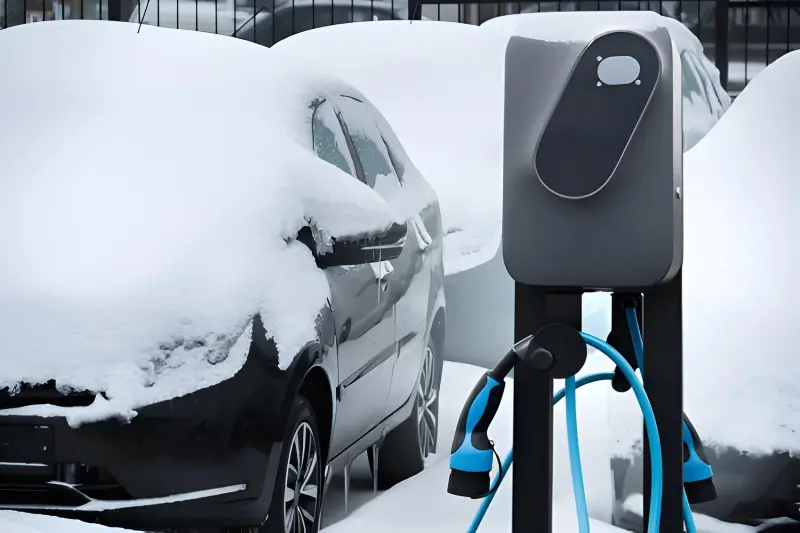
For buyers in the sparse or no-coverage zones, the single most important EV specification is not range — it is the vehicle’s Level 2 charging rate, which determines how quickly the battery recovers overnight at a standard 240V outlet. All vehicles on this list support Level 2 charging. For a detailed look at charging options across Canada, see our guide to EV charging in Canada.
Who Should Wait Before Buying an EV in Canada
Not every Canadian buyer should be buying an EV in 2026. There are specific situations where waiting makes sense, and naming them directly is more useful than a list of qualifications buried in footnotes.
Buy an EV in 2026 If…
- You live in Quebec or BC and can access C$4,000–C$7,000 in provincial rebates — the economics are compelling on rebate-eligible models
- Your daily commute is under 150 km and you can charge at home overnight — Level 2 home charging covers the majority of Canadian driving patterns
- You drive the Trans-Canada corridor regularly — DC fast-charging coverage is dense enough for reliable long-distance use
- You are replacing a second or third household vehicle, not the only vehicle — EVs work best when a gas car handles edge cases
- Your annual mileage is above 20,000 km — the fuel and maintenance savings at Canadian gas prices are material at high mileage
Wait or Think Twice If…
- You are in Ontario or Alberta without the federal iZEV active — the total ownership case is weaker without incentive support in high-purchase-tax provinces
- You regularly drive routes in northern Ontario, rural Manitoba, or Saskatchewan where DCFC gaps exceed 200 km — range anxiety is a legitimate practical concern, not an irrational one
- You live in an apartment without access to Level 2 charging — relying solely on public charging at Canadian electricity rates is workable but expensive and inconvenient
- You are buying the only household vehicle and do frequent rural or inter-provincial trips in winter — a plug-in hybrid handles range and cold better as a sole vehicle
- You are comparing against a diesel truck for farm or worksite towing — no EV in this list meets those requirements at current charging infrastructure density
FAQ: Best Electric Cars in Canada
What is the best electric car in Canada in 2026?
For most Canadian buyers, the Chevrolet Equinox EV 2LT at C$44,995 is the best combination of range, price, and rebate eligibility. It delivers 460 km of EPA-rated range, qualifies for federal and provincial incentives in most markets, and has Chevrolet dealer service access across Canada. Buyers who prioritise cold-weather AWD traction should consider the Hyundai Ioniq 5 Long Range AWD instead. Buyers who drive long distances regularly and value charging network reliability should consider the Tesla Model Y despite its higher cost and position outside most rebate thresholds.
How much is the EV rebate in Canada in 2026?
The federal iZEV program offered up to C$5,000 for battery electric vehicles under C$55,000 MSRP, but the program was paused in early 2025. Verify the current status at tc.gc.ca before purchasing. Provincial programs remain active in some provinces: Quebec offers up to C$7,000 through Roulez Vert, British Columbia offers up to C$4,000 through CEVforBC, PEI offers up to C$5,000, and Nova Scotia offers up to C$3,000. Ontario, Alberta, Manitoba, and Saskatchewan have no provincial EV incentive programs.
How much range do EVs lose in Canadian winters?
At −20°C — a common winter temperature in most Canadian provinces outside BC — most EVs lose 35 to 41 percent of their EPA-rated range. A vehicle rated at 460 km EPA will return approximately 275 to 300 km in those conditions. The main factors are resistive heating (which draws 3 to 5 kW from the battery), reduced battery electrochemical efficiency in extreme cold, and higher rolling resistance from thick tyres on packed snow. Vehicles with heat pumps (Ioniq 5, Ioniq 6, Model Y) retain more range than those using resistive heating only, because heat pumps are 2 to 3 times more efficient at extracting heat energy. For the full explanation, see our guide on what happens to EV batteries in extreme cold.
Is the Chevrolet Equinox EV a good car for Canada?
Yes — it is the most practical value choice for the majority of Canadian buyers in 2026. The 460 km EPA range, North American production (which avoids Chinese EV tariffs), rebate eligibility, and Chevy dealer network coverage make it compelling at the C$44,995 price point. Its cold-weather performance is adequate but not exceptional — winter range is approximately 290 to 320 km at −20°C. Buyers in very cold climates who do extended winter highway driving should consider the Ioniq 5 AWD’s superior heat pump and battery thermal management. For urban and suburban Canadians in most provinces, the Equinox EV’s value case is the strongest in the segment.
Is the Tesla Model Y worth buying in Canada without the rebate?
At C$66,490 for the Long Range AWD — above all provincial and federal rebate thresholds — the Model Y’s premium over rebate-eligible competitors is substantial. The justification is the Supercharger network: no other charging network in Canada approaches Tesla’s coverage density on inter-city routes. For buyers who drive long distances between major Canadian cities multiple times a month, the charging reliability advantage is real and worth paying for. For buyers who primarily drive within a single metro area and charge at home, the C$15,000 to C$20,000 premium over an Ioniq 5 AWD in effective cost is harder to defend on practical grounds.
Are Chinese electric cars available in Canada in 2026?
Chinese-assembled EVs face a 100-percent Canadian tariff announced in October 2024, which doubled their effective import cost and pushed most Chinese EV models out of competitive price ranges relative to North American and Korean-assembled alternatives. MG, BYD, and other Chinese-brand EVs that were emerging in the Canadian market before the tariff became significantly less competitive after it was implemented. For most Canadian buyers in 2026, the practical shortlist is dominated by Hyundai/Kia, GM, Tesla, and Volkswagen models assembled outside China.
- Transport Canada (tc.gc.ca) — iZEV program eligibility, vehicle list, and current program status
- Natural Resources Canada (nrcan.gc.ca) — Canadian fuel consumption ratings, cold-weather EV range data
- Roulez Vert (Quebec) — current Roulez Vert BEV rebate amounts, vehicle eligibility list, and income caps
- CEVforBC (British Columbia CleanBC) — current rebate amounts and MSRP eligibility caps
- Canadian EV owner data aggregated from r/electricvehiclescanada, GreenCarReports Canada coverage, and Canadian Automobile Association cold-weather range testing — 2024–2026