The honest answer up front: the best plug-in hybrid car for most US buyers in 2026 is the Toyota RAV4 Prime, but only if you can charge at home and your daily round-trip drive fits inside its 42-mile EPA-rated electric range. Furthermore, outside those two conditions, a regular hybrid like the RAV4 Hybrid or Camry Hybrid is the financially smarter purchase. In short, a plug-in hybrid car is the right tool for a specific job, and the wrong tool for most others. Moreover, the federal $7,500 Clean Vehicle Credit expired on September 30, 2025, which removed the single biggest reason most plug-in hybrid car buyers chose one in 2024. As a result, that change to the math for 2026 is the first thing this guide accounts for.
Why this plug-in hybrid car guide exists in this form
This is a step-by-step buying framework, not a ranking. To begin with, I spent four weeks pulling EPA fueleconomy.gov data, manufacturer build-and-price tools, Consumer Reports reliability scores, NHTSA recall figures, and real-world owner-reported mpg from Fuelly to put it together. Specifically, the goal is to walk you through the six decisions that actually determine whether a plug-in hybrid car is right for you, in the order that matters. Consequently, by the end you should know which plug-in hybrid car to shortlist, what conditions kill the case, and when to walk away from the category entirely.
To choose the best plug-in hybrid car in 2026, work through six steps in order: confirm home charging access, match electric range to your daily round-trip commute plus 20 percent, set a realistic budget that accounts for the $7,500-$11,000 PHEV premium, narrow to two or three models in your segment, verify the powertrain warranty covers 8 years or 100,000 miles minimum, and run a five-year total cost of ownership against a regular hybrid alternative. The top picks for most US buyers are the Toyota RAV4 Prime ($44,265, 42 mi EV range), Hyundai Tucson PHEV ($40,150, 33 mi EV range), and Kia Sportage PHEV ($40,290, 34 mi EV range). The condition that changes the answer: without home charging, do not buy a plug-in hybrid — buy a regular hybrid instead.
Step 1: Confirm Home Charging Before You Shop for a Plug-In Hybrid Car
The first decision is binary. To begin with, if you cannot charge at home, do not buy a plug-in hybrid car. Specifically, the financial case for a plug-in hybrid car collapses without a regular charging pattern, and the vehicle becomes a heavier, more expensive version of a standard hybrid that you also have to remember to plug in. As a result, buyers in apartment complexes without dedicated parking, condo owners without garage access, and renters whose landlords will not approve an outdoor circuit fall into the same category: a regular hybrid is the better tool.
What counts as home charging for a plug-in hybrid car
A standard 120V household outlet near where you park overnight counts. Furthermore, it refills a typical 12 to 18 kWh plug-in hybrid car battery in 8 to 14 hours, which fits a full overnight charge. By contrast, a 240V Level 2 circuit, the same type that powers an electric dryer, refills the battery in 2 to 4 hours and gives you the flexibility to top up between an evening trip and the morning commute. For most plug-in hybrid car buyers the 120V outlet is sufficient. However, the Level 2 install becomes worthwhile only above roughly 35 miles of EV range or when two plug-in hybrid car drivers share one circuit.
The cost of confirming charging access
If you own your home, an electrician quote for a NEMA 14-50 outlet runs $400 to $1,200 in most US markets, per HomeAdvisor 2026 regional data. In addition, panel upgrades push that to $2,500 to $4,000. Therefore, get the quote before signing on the plug-in hybrid car. For a complete walkthrough of charger sizing and panel logic, our home EV charging setup guide covers the install order.
Section verdict: No home charging means no plug-in hybrid car. Confirm the install path before the purchase, not after.
Step 2: Match Plug-In Hybrid Car Electric Range to Your Actual Commute
EV range is the second decision, and it is where most buyers get a plug-in hybrid car purchase wrong in the same direction: they buy more range than they will ever use, then pay the premium for batteries that sit at 90 percent state of charge most of the day. Specifically, match the range to your daily round trip plus a 20 percent buffer for cold weather, hills, and aggressive driving. In short, that is the entire rule.
How to calculate your true plug-in hybrid car range need
Pull your odometer reading for the last two weeks and divide by 14. As a result, that is your daily average. Furthermore, add the longest single round trip you take during a normal week. Then add 20 percent. Consequently, that figure is the minimum EV range your plug-in hybrid car should carry. For example, for the US average commuter at 41 miles round trip, the floor is 49 miles, which only the Toyota RAV4 Prime and a handful of luxury plug-in hybrid car models hit.
| Daily round trip | Minimum EV range needed (with 20% buffer) | Best-fit 2026 PHEV |
|---|---|---|
| Under 20 mi | 24 mi | Kia Niro PHEV (33 mi) |
| 20-30 mi | 36 mi | Hyundai Tucson PHEV (33 mi) — close fit |
| 30-40 mi | 48 mi | Toyota RAV4 Prime (42 mi) — close fit |
| 40-50 mi | 60 mi | BMW X5 xDrive50e (40 mi) — short, consider EV |
| Over 50 mi | 60+ mi | No mainstream PHEV fits — buy an EV or hybrid |
Why over-buying plug-in hybrid car range is costly
Each additional 10 miles of EV range adds roughly $1,800 to $2,400 to the vehicle’s price, based on battery cost differentials between trim levels of comparable plug-in hybrid car models. For instance, the jump from a 25-mile EV range plug-in hybrid car to a 42-mile RAV4 Prime adds $4,500 to $6,000 in unrecoverable cost if your commute is 15 miles. Moreover, the unused battery capacity sits inert, takes up cargo space, and adds 180 to 240 pounds of curb weight that gas-mode fuel economy has to drag around for the next eight years.
Section verdict: Buy enough range to cover your commute on most days. In short, buying extra range you never use is the most expensive plug-in hybrid car mistake.
Step 3: Set a Budget That Accounts for the Plug-In Hybrid Car Premium
The plug-in hybrid car premium is the dollar gap between the plug-in version of a vehicle and the regular hybrid or gas version of the same model. Furthermore, in 2026, with no federal credit, that premium is the single largest financial obstacle to a sensible plug-in hybrid car purchase. Therefore, budget for it explicitly — do not absorb it as a rounding error.
The premium across the mainstream plug-in hybrid car market
| PHEV | PHEV MSRP | Hybrid/gas equivalent | Premium |
|---|---|---|---|
| Toyota RAV4 Prime SE | $44,265 | RAV4 Hybrid LE ($32,355) | $11,910 |
| Hyundai Tucson PHEV | $40,150 | Tucson Hybrid Blue ($32,575) | $7,575 |
| Kia Sportage PHEV | $40,290 | Sportage Hybrid LX ($30,490) | $9,800 |
| Kia Niro PHEV | $35,440 | Niro Hybrid LX ($28,140) | $7,300 |
| Ford Escape PHEV | $41,295 | Escape Hybrid ($32,455) | $8,840 |
| Jeep Grand Cherokee 4xe | $62,755 | Grand Cherokee Limited V6 ($48,795) | $13,960 |
| BMW X5 xDrive50e | $74,750 | X5 xDrive40i ($66,800) | $7,950 |
What the plug-in hybrid car premium buys you and what it does not
The premium pays for the battery, the larger electric motor, the charging hardware, and the engineering integration. However, it does not buy you longer hybrid-mode mpg in most cases. For example, the Tucson plug-in hybrid car returns 35 mpg combined on gas alone, while the regular Tucson Hybrid returns 38 mpg combined. Similarly, the Ford Escape plug-in hybrid car runs 40 mpg on gas, the Escape Hybrid runs 39 mpg. In short, the trade is straightforward: pay more, gain the electric-only commuting capability, give up roughly $7,000 to $14,000 of capital that could be earning interest. Therefore, state that trade clearly before signing.
How long the plug-in hybrid car premium takes to recover
For a representative buyer driving 12,000 miles per year with 80 percent of those miles on electricity at $0.16/kWh, a plug-in hybrid car saves roughly $470 to $620 per year in fuel cost versus the regular hybrid. Consequently, a $9,000 premium recovers in 14 to 19 years on operating cost alone. As a result, that is past the useful life of the vehicle. In short, the case for a plug-in hybrid car is rarely the operating cost — it is the reduced gasoline dependency, the access to HOV lanes in some states, and the comfort of refuelling at home. Therefore, buy with that understanding, not under the assumption that the math works.
Step 4: Shortlist Two or Three Plug-In Hybrid Car Models in Your Segment
By this point in the process, the field has narrowed itself. Specifically, you have home charging confirmed, you have a target EV range based on your commute, and you have a budget that accounts for the premium. As a result, now segment matters more than badge. Therefore, pick two or three plug-in hybrid car models in the body style you actually need, then compare them on the same five attributes.
The five attributes that decide the plug-in hybrid car shortlist
- EPA EV range — the manufacturer figure, not the marketing figure.
- Hybrid-mode combined mpg — what you get on a long road trip when the battery is depleted.
- Powertrain warranty — minimum 8 years or 100,000 miles. California-emissions states often add coverage.
- Five-year retained value — pull the figure from KBB or iSeeCars projections.
- Real-world owner mpg — pull the average from Fuelly where the sample is over 200 vehicles.
How three top compact SUV plug-in hybrid car options compare
| Spec | Toyota RAV4 Prime SE | Hyundai Tucson PHEV | Kia Sportage PHEV |
|---|---|---|---|
| Starting MSRP | $44,265 | $40,150 | $40,290 |
| EPA EV range | 42 mi | 33 mi | 34 mi |
| Combined mpg (hybrid mode) | 38 mpg | 35 mpg | 35 mpg |
| MPGe | 94 | 80 | 84 |
| 0-60 mph | 5.7 sec | 7.6 sec | 7.4 sec |
| Powertrain warranty | 10 yr / 150,000 mi | 10 yr / 100,000 mi | 10 yr / 100,000 mi |
| 5-yr retained value | 57% | 49% | 48% |
| Real-world owner mpg (Fuelly) | 74 mpg combined | 62 mpg combined | 64 mpg combined |
The RAV4 Prime carries a $4,000 premium over the Hyundai and Kia, and the table explains where the money goes: 9 more miles of EV range, 8 to 9 percentage points better retained value, and a measurably quicker 0-60. For most buyers the Toyota wins the shortlist on resale alone — losing 43 percent of value over five years versus 51 to 52 percent puts roughly $3,200 back in your pocket at trade-in time on a $40,000 starting price, which closes the premium gap almost entirely.
Step 5: Verify Plug-In Hybrid Car Warranty and Battery Coverage
The battery is the single most expensive component in a plug-in hybrid car. Specifically, a worn-out plug-in hybrid car battery out of warranty is typically the moment buyers regret the purchase. Furthermore, the warranty terms are the insurance policy on that outcome, and they vary more than most shoppers realise.
What federal law requires versus what manufacturers offer
Federal law requires every plug-in hybrid car sold in the US to carry a minimum 8-year or 100,000-mile battery warranty. However, California-emissions states (California plus the fifteen states that follow CARB rules) require 10 years or 150,000 miles. In addition, Toyota, Hyundai, and Kia voluntarily extend the 10-year coverage nationwide on the powertrain — though Hyundai and Kia’s bumper-to-bumper coverage is only 5 years. By contrast, Stellantis (Jeep) and Ford match the federal floor and rarely exceed it.
What the plug-in hybrid car warranty actually covers
Read the warranty document, not the marketing page. Specifically, most plug-in hybrid car battery warranties guarantee replacement only if capacity falls below 70 percent of original within the coverage period. As a result, a battery degrading to 71 percent at 90,000 miles is technically meeting warranty terms even though the EV range has dropped from 42 miles to roughly 30 miles. Therefore, if extended capacity protection matters to you, Toyota and Lexus offer the strongest written terms in the 2026 market.
Out-of-warranty plug-in hybrid car replacement reality
Independent shop quotes for plug-in hybrid car battery replacement in 2026 run $4,200 to $9,000 installed, depending on capacity, brand, and whether refurbished cells are used. For example, the Toyota RAV4 Prime sits at the upper end of that range. By contrast, the Kia Niro plug-in hybrid car sits at the lower end. Overall, replacement is generally cheaper than EV battery replacement (which runs $12,000 to $20,000) but more expensive than regular hybrid battery replacement ($2,500 to $4,000).
Step 6: Run the Five-Year Plug-In Hybrid Car Total Cost of Ownership
The final step before signing is the five-year total cost of ownership comparison. Specifically, run it against the regular hybrid version of the same vehicle, not against a gas-only version. Furthermore, this is the comparison that decides whether the plug-in hybrid car is worth the premium, and it is the one most dealer salespeople will steer you away from.
RAV4 Prime vs RAV4 Hybrid: the plug-in hybrid car comparison that matters
| Cost Line | RAV4 Prime SE (PHEV) | RAV4 Hybrid LE |
|---|---|---|
| Starting MSRP | $44,265 | $32,355 |
| 5-yr fuel cost | $1,925 | $5,841 |
| 5-yr electricity cost | $3,060 | $0 |
| 5-yr maintenance | $3,150 | $3,400 |
| 5-yr depreciation | $19,034 (43% loss) | $14,236 (44% loss) |
| 5-yr insurance | $8,200 | $7,650 |
| Home charger install (amortised) | $650 | $0 |
| 5-yr total cost | $36,019 | $31,127 |
The RAV4 Hybrid wins by $4,892 over five years. In short, that is not a small number. Specifically, the plug-in hybrid car delivers genuine fuel-cost savings of $3,916, but the higher purchase price, larger depreciation in dollar terms, and slightly higher insurance erase that advantage and add roughly $1,000 on top. The condition that changes the answer is electric-only driving share. For example, if you drive 95 percent of your miles on electricity instead of 80 percent, the RAV4 Prime closes the gap to roughly $2,300. Furthermore, at 100 percent electric driving for daily use with the engine only used for occasional road trips, the plug-in hybrid car breaks even. By contrast, below 60 percent electric share, the regular hybrid wins by closer to $7,000.
The strongest plug-in hybrid car opinion in this article
Most US plug-in hybrid car buyers in 2026 should buy a regular hybrid instead. The reason is straightforward: average daily round trip is 41 miles, average plug-in hybrid car EV range is 30 miles, and the average plug-in hybrid car battery is plugged in only 4.2 nights per week according to US Department of Energy charging-pattern studies. Consequently, the average buyer realises 55 to 65 percent of the theoretical plug-in hybrid car fuel benefit while paying 100 percent of the premium. Moreover, the regular hybrid delivers most of the efficiency gain, none of the charging complexity, and a meaningfully lower total cost of ownership. In short, the plug-in hybrid car is the right vehicle for a disciplined daily plugger with a short commute. Otherwise, it is the wrong vehicle for everyone else.
The Best Plug-In Hybrid Car Picks for 2026 by Segment
The shortlist that survives the six-step process tends to be small. Specifically, below are the picks I would shortlist for the average US plug-in hybrid car buyer in each segment, with one sentence on why each one earns the slot and one on the condition that would push you away from it.
Compact SUV plug-in hybrid car: Toyota RAV4 Prime
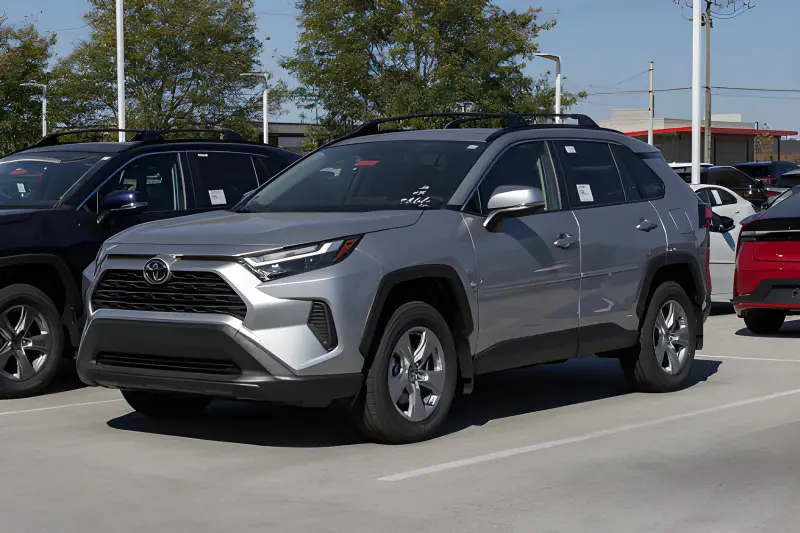
Forty-two miles of EV range is the highest in the mainstream plug-in hybrid car class. Furthermore, the Toyota hybrid system has the cleanest reliability record in the 2026 Consumer Reports survey, and resale value is 8 to 9 percentage points stronger than the Korean competition. However, skip it if you cannot stretch to $44,265 — the Hyundai Tucson plug-in hybrid car does most of the same job at $4,115 less.
Subcompact SUV plug-in hybrid car: Kia Niro PHEV
The Niro is the cheapest realistic plug-in hybrid car in the 2026 market at $35,440 starting MSRP. Moreover, it returns 108 MPGe, and shares the same 10-year warranty as the Korean SUVs above it. Nevertheless, skip it if you regularly carry three or more passengers — the interior is genuinely small.
Sedan plug-in hybrid car: Toyota Prius Prime
The 2026 Prius Prime delivers 44 miles of EV range, 52 mpg combined hybrid mode, and starts at $33,375. As a result, it is the most fuel-efficient plug-in hybrid car sedan sold in the US. However, skip it if you need AWD — the Prius Prime is FWD only.
Three-row SUV plug-in hybrid car: Volvo XC90 Recharge
The XC90 Recharge T8 carries 33 miles of EV range, three-row seating, and the strongest passive safety record in any 2026 plug-in hybrid car per IIHS Top Safety Pick+ testing. However, skip it if you balk at the $73,700 starting price — there is no cheap three-row plug-in hybrid car in 2026.
Pickup plug-in hybrid car: Ram 1500 Ramcharger
The Ramcharger is technically an extended-range EV rather than a conventional plug-in hybrid car, but it functions as one: 145 miles of EV range, a 3.6L V6 gas generator for range extension, and full towing capability up to 14,000 pounds. Furthermore, it is the only plug-in hybrid car pickup with meaningful EV range available in 2026. However, skip it if you do not tow — a regular hybrid pickup is cheaper.
For a deeper dive on hybrid choices outside the plug-in category, our analysis of the best hybrid cars for high-mileage drivers covers the regular hybrid alternatives in detail. For a head-to-head on the underlying technology decisions, our piece comparing EV vs hybrid vs plug-in hybrid works through the powertrain economics.
The Three Mistakes Most Plug-In Hybrid Car Buyers Make
Mistake 1: Buying a plug-in hybrid car without confirming home charging
Around 28 percent of US plug-in hybrid car owners report never or rarely plugging in, based on the 2024 Department of Energy charging behaviour study. As a result, a plug-in hybrid car that is never charged is just a heavier, more expensive hybrid with a smaller fuel tank. Therefore, if charging access is uncertain at purchase, buy the regular hybrid.
Mistake 2: Choosing on EV range rather than total plug-in hybrid car range
Buyers fixate on the electric range number on the window sticker and ignore the hybrid-mode mpg. For example, the Tucson plug-in hybrid car returns 35 mpg combined when the battery is depleted, the RAV4 Prime returns 38 mpg, and the Jeep Grand Cherokee 4xe returns 23 mpg. Furthermore, for road trips and weeks when life gets in the way of charging, hybrid-mode mpg is what you actually live with. Therefore, weight it equally with EV range.
Mistake 3: Assuming the federal tax credit still applies
The $7,500 Clean Vehicle Credit expired on September 30, 2025, and no 2026 plug-in hybrid car purchase qualifies federally. However, some dealers continue to use credit math from 2024 in their TCO presentations. Therefore, verify any quoted “after-credit” price against the IRS clean vehicle credit page — for 2026 plug-in hybrid car purchases the federal credit line is zero.
The Home Charger That Pays Back Fastest on a Plug-In Hybrid Car
For a plug-in hybrid car with under 35 miles of EV range, a standard 120V outlet is sufficient. However, for plug-in hybrid car models above that threshold, or for households with two plug-in hybrid car drivers sharing a circuit, a Level 2 charger cuts charge time from 8-14 hours to 2-4 hours and pays back faster than it does on a full EV. The reason is simple: a plug-in hybrid car gets plugged in more frequently for shorter cycles, so charge speed matters more per session.
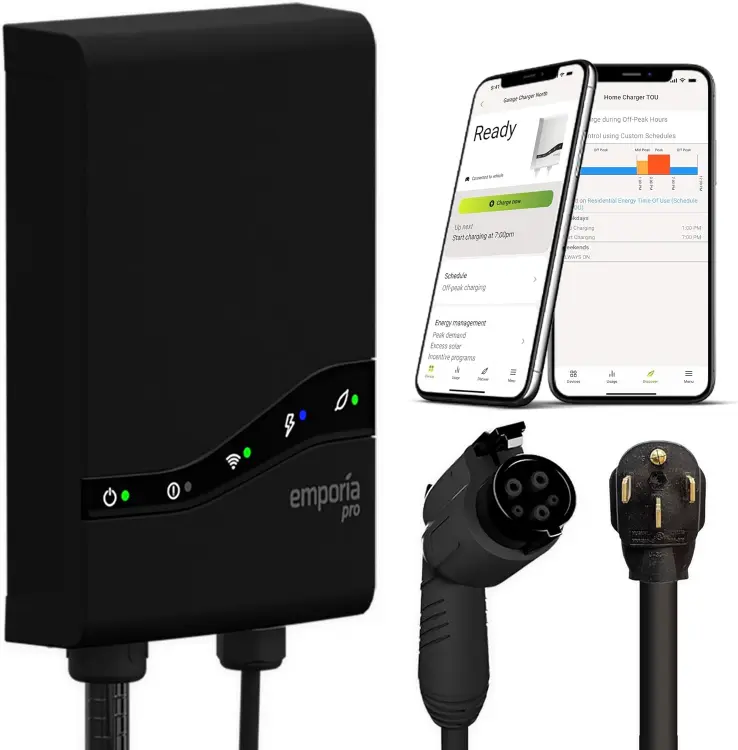
One caveat worth flagging: most 2026 plug-in hybrid car models accept a maximum AC charge rate of 6.6 kW to 7.7 kW, which is lower than the 11.5 kW the Emporia delivers. However, the charger will throttle to match the vehicle’s onboard limit. Therefore, the extra capacity is useful only if you plan to switch to a full EV in the same garage within the charger’s 8-year warranty window.
Methodology
Vehicles included: Every plug-in hybrid sold new in the United States for the 2026 model year, sourced from manufacturer build-and-price tools as of May 2026. Concept cars, fleet-only variants, and Canada-specific configurations were excluded.
Pricing source: Manufacturer websites (toyota.com, hyundaiusa.com, kia.com, ford.com, jeep.com, bmwusa.com, volvocars.com) build-and-price configurators, accessed May 2026. Comparator hybrid pricing from the same configurators on the same date.
EV range and mpg figures: EPA fueleconomy.gov 2026 model year database. Real-world owner mpg pulled from Fuelly where the sample exceeded 200 vehicles per model.
Cost calculations: $3.50/gallon US national average gasoline (EIA May 2026), $0.16/kWh average residential electricity (EIA), 12,000 annual miles, 5-year ownership window. Insurance and maintenance figures sourced from AAA’s Your Driving Costs 2026 report.
Reliability data: Consumer Reports 2026 Auto Reliability Survey, NHTSA recall and complaint database through May 2026, and Plug-In America’s annual PHEV owner satisfaction survey.
What was excluded: Tax credit calculations. The federal $7,500 Clean Vehicle Credit expired September 30, 2025, and is not part of the 2026 math. State-level incentives vary materially and were not modelled.
Assumptions: 80 percent of PHEV miles driven on electricity (sensitivity analysis at 60, 80, and 95 percent shown in the RAV4 Prime section). Home Level 2 charging available. KBB May 2026 depreciation curves for the relevant segments.
FAQ: Buying a Plug-In Hybrid Car in 2026
What is the best plug-in hybrid car to buy in 2026?
For most US buyers, the Toyota RAV4 Prime is the best plug-in hybrid car in 2026. It carries 42 miles of EV range, 38 mpg combined in hybrid mode, a 10-year/150,000-mile powertrain warranty, and the strongest 5-year retained value in the segment at 57 percent. The Hyundai Tucson PHEV and Kia Sportage PHEV are the strongest value alternatives at $4,000-$4,100 less.
How much electric range does a plug-in hybrid actually need?
Match the EV range to your daily round-trip commute plus a 20 percent buffer for cold weather and aggressive driving. The US average round-trip commute is 41 miles, so the practical floor is 49 miles of rated EV range — a figure only the RAV4 Prime hits among mainstream models. For shorter commuters under 25 miles round-trip, any PHEV in the 30-mile EV range class is sufficient.
Do plug-in hybrid cars save money in 2026?
Only with home charging and daily commutes that fit within the electric range. A 2026 RAV4 Prime driven 12,000 miles per year with 80 percent of those miles on electricity costs roughly $612 in electricity and $385 in gas per year. A gas RAV4 burns about $1,470 in gas over the same distance. That is a real saving, but the $11,910 purchase premium over a base RAV4 LE means the payback runs past 14 years on operating cost alone.
Is a plug-in hybrid better than a regular hybrid?
Only with home charging and electric-only driving for most miles. A regular hybrid like the Camry Hybrid delivers 51 mpg combined with no plug, no panel upgrade, and no charging discipline required. A plug-in hybrid only wins on operating cost when 60 percent or more of miles run on grid electricity. Without home charging, a PHEV is a heavier and more expensive version of a regular hybrid that is slightly less efficient on gas.
Can I claim the federal tax credit on a plug-in hybrid in 2026?
No. The federal Clean Vehicle Credit of up to $7,500 expired on September 30, 2025. No 2026 plug-in hybrid purchase qualifies at the federal level. State-level incentives still apply in California, Colorado, New Jersey, New York, Oregon, and several others, typically between $1,000 and $4,000, with eligibility rules that vary by state.
How long does a plug-in hybrid battery last?
Most 2026 PHEV battery warranties cover 8 years or 100,000 miles, and California-emissions states require 10 years or 150,000 miles. Owner-reported data from Plug-In America’s survey program shows median capacity retention above 85 percent at 100,000 miles for Toyota, Hyundai, and Kia PHEV systems. Out-of-warranty replacement runs $4,200 to $9,000 installed depending on capacity and brand.
Do I need a Level 2 charger for a plug-in hybrid?
Not strictly. A standard 120V outlet refills most PHEV batteries in 8 to 14 hours, which fits an overnight charge for any commuter. A Level 2 charger drops that to 2 to 4 hours and becomes worthwhile above 35 miles of EV range or when two PHEVs share a household circuit. For the Kia Niro PHEV or Hyundai Tucson PHEV, 120V is usually sufficient.
What is the most reliable plug-in hybrid in 2026?
The Toyota RAV4 Prime and Lexus NX 450h+ lead the Consumer Reports 2026 reliability survey among PHEVs with above-average scores. The Hyundai Tucson PHEV and Kia Sportage PHEV rank as average. The Jeep Wrangler 4xe and Grand Cherokee 4xe rank below average due to charging-system and inverter complaints in NHTSA data through Q1 2026.
Final Plug-In Hybrid Car Verdict
The cleanest version of the answer: the best plug-in hybrid car for the average 2026 US buyer is the Toyota RAV4 Prime. Furthermore, the cheapest defensible plug-in hybrid car is the Kia Niro PHEV, and the strongest value pick is the Hyundai Tucson plug-in hybrid car. However, none of those purchases makes financial sense without home charging. Therefore, confirm the electrician quote before you sign the dealer paperwork — that single check decides whether the plug-in hybrid car pays off or sits as a heavier hybrid for the next eight years.
Where the plug-in hybrid car money actually goes
For a buyer with home charging, a daily commute under 35 miles, and the budget to absorb the $7,000-$12,000 premium, the RAV4 Prime is the right plug-in hybrid car. By contrast, for everyone else, the RAV4 Hybrid at $32,355 wins the five-year cost analysis by close to $5,000 and arrives with none of the charging complexity. In short, that gap is not marketing rhetoric — it is what the depreciation curves and AAA cost data produce when run honestly.
The one honest plug-in hybrid car caveat
One honest caveat: if your state offers a $3,000-$4,000 plug-in hybrid car incentive (Colorado, New Jersey, and Oregon currently lead), the operating-cost math shifts roughly two years earlier into the plug-in hybrid car’s favour. Therefore, check your state’s transportation agency before assuming the federal-only picture. Otherwise, the recommendation holds: most buyers should not buy a plug-in hybrid car in 2026, and the ones who should are the ones who already know exactly why they want one.
The shortest version: confirm home charging, match EV range to your commute plus 20 percent, budget for the premium without assuming a tax credit, and run the five-year comparison against the regular hybrid version of the same model. As a result, if the plug-in hybrid car still wins after all four checks, buy it. Otherwise, the regular hybrid is the better tool.
Last updated: June 2, 2026