Best Affordable Electric Cars 2027 My Top Picks for You
I compare the best affordable electric cars 2027, highlighting range, value, and features to help you choose your next EV with confidence for US buyers.


I’ll help U.S. buyers narrow the best affordable electric cars 2027 can offer without treating the lowest sticker price as the whole story. An EV must fit the budget, but it also needs to work for everyday driving needs.
I compare starting price, usable range, body style, and day-to-day practicality. A small SUV may suit one household, while a pickup or roomier crossover may serve another better.
I separate models with grounded U.S. details from vehicles whose timing or final details remain incomplete. That distinction matters when a model sounds promising but shoppers cannot yet count on buying it.
My goal is a useful shortlist, not a claim that one car suits every driver. First, it helps to define affordability beyond the advertised base price.
How Should I Define Affordable for an EV?
A low advertised starting price may not match the amount due at the dealership. The base price is only one part of a realistic EV budget.
MSRP means the manufacturer’s suggested retail price. The final amount may include a destination charge, dealer-installed options, taxes, title, and registration. It may also reflect incentives for which a buyer qualifies.
An advertised price and an out-the-door price are not interchangeable. The out-the-door figure includes required charges tied to the sale, so I compare that total when judging two cars.
EPA-estimated range means the standardized estimate of how many miles a vehicle can travel on a full battery under EPA test procedures. Real-world range varies with driving and weather conditions.
Before choosing a vehicle, I check four parts of the purchase budget:
- Starting MSRP for the exact trim.
- Destination and dealer charges.
- Local taxes and registration costs.
- Incentive eligibility for the buyer and vehicle.
Incentive rules and eligibility can change. I would check current terms before buying rather than assume a discount will apply.
These checks turn a low price into a clearer value comparison. From here, I can compare the shortlist by use and like-for-like trims.
Best Affordable Electric Cars 2027: Which Picks Suit Different Buyers?
The strongest pick depends on whether a buyer wants an SUV, longer trip range, cargo utility, or a lower entry price. There is no single fit for every routine.
I see the best affordable electric cars 2027 in the USA as a use-case shortlist, not a proven reliability or sales ranking. These candidates speak to different needs.
For shoppers balancing price and practicality, the best electric cars for 2027 should match daily use before headline performance. My four picks are:
- Kia EV3 for an affordable small SUV with a conventional layout.
- Mitsubishi Eclipse Sportback EV for a Leaf-related crossover.
- Subaru Trailseeker for buyers who value a roomier electric crossover.
- Slate Truck for shoppers open to a deliberately simple pickup.
Ford Fathom belongs on a separate watch list. It is a coming truck, and its timing and final details matter before I can judge it like a vehicle on sale.
These choices span electric SUVs and pickups, so body style shapes the decision as much as price. I start with the EV3, the most conventional small-SUV choice on this shortlist.
Is the Kia EV3 a Good-Value Electric SUV?
The Kia EV3 is compelling for shoppers who want a small electric SUV, but they should compare each trim’s battery and equipment. The entry model keeps the starting price lower.
The 2027 U.S. Kia EV3 lists from $29,890 to $45,890, before its $1,495 destination fee. The Light trim uses a 58.3-kWh battery and has 220 miles of EPA-estimated range.
What the entry-level EV3 offers
The Light suits drivers whose daily miles fit its range and who value a lower purchase price. Its smaller battery is the key trade-off, not a flaw in itself.
The cabin has dual 12.3-inch displays and a separate 5-inch climate display. Available features include wireless phone charging, Digital Key 2.0, a head-up display, and a 360-degree monitor.
Vehicle-to-load lets the car supply power to compatible devices. Buyers should check which features come with their chosen trim, since the equipment list can change across versions.
What changes with the larger battery
Higher trims use an 81.4-kWh battery and offer up to 321 miles of EPA-estimated range. Available powertrains reach 288 horsepower and 345 pound-feet of torque, for stronger acceleration.
DC fast charging from 10% to 80% can take as little as 29 minutes. That figure describes a best-case time, not every stop or charging condition.
The Kia Niro EV is the similarly sized model the EV3 effectively replaces. The Mitsubishi takes a different route, with a connection to the Nissan Leaf.
What Does the Nissan Leaf-Based Eclipse Sportback EV Offer?
The Nissan Leaf name points to a hatchback, but the Mitsubishi Eclipse Sportback EV has coupe-like crossover styling. It is a rebadged third-generation Leaf, not the traditional shape of earlier Leaf models.
The Eclipse Sportback EV has a 75-kWh battery and up to 282 miles of EPA-estimated range. Its listed U.S. price range is $37,745-$40,345, with launch timing set for fall 2026.
The more powerful front-wheel-drive version makes 214 horsepower and 261 pound-feet of torque. It uses NACS and J1772 charging ports, which gives buyers more than one port type to consider.
The cabin is expected to offer useful passenger space and comfort for a crossover. Dual 14.3-inch cockpit displays, Google built-in, and a heat pump are among its stated features.
Regenerative-braking paddles let the driver adjust how much the car slows when lifting off the accelerator. Plug & Charge support can simplify charging at compatible stations.
Its interior and body differ from the Leaf hatchback many drivers know. I would treat the estimated price range as a guide, not a confirmed final transaction price.
The Leaf-related crossover offers a distinct option for buyers who want this body shape. For more cargo utility, I would turn to the larger Subaru.
Is the Subaru Trailseeker Worth Its Higher Price?
A family packing camping gear or bulky sports equipment may benefit from the Subaru Trailseeker’s extra room. Its added utility helps explain its higher price.
The Trailseeker is on sale and lists from $39,995 to $46,555. It pairs standard all-wheel drive with 8.3 inches of ground clearance and a 3,500-pound towing capacity.
It is a longer, taller sibling to the Solterra and Toyota bZ4X, with more cargo space than those models. That extra room can help when the rear seat and cargo area both see regular use.
The 74.7-kWh battery has a 260-mile range. Buyers also get roof rails and a 14-inch horizontal touchscreen, which make the electric crossover feel ready for varied trips.
Those features make the Trailseeker a strong fit for drivers who use all-wheel drive, clearance, or towing. Its performance and space may justify the cost for that group.
Drivers who mostly commute alone and park in tight spaces may not need its size or capability. A simpler, more utility-focused choice is the Slate pickup.
Can the Slate Truck Work as an Affordable EV?
The Slate can be a low-entry-price choice only for shoppers comfortable with its stripped-down design. Its low starting price comes with clear limits.
The Slate Truck starts at $24,950 before a $1,450 destination fee. Its two-seat cabin and bare-bones features keep the focus on utility and owner personalization.
The 63-kWh LFP battery supports an expected 205-mile range. A rear motor makes 181 horsepower and 195 pound-feet of torque, with deliveries expected to begin in December 2026.
Wrap-friendly surfaces and more than 200 accessories let owners shape the vehicle to their needs. An optional kit can convert it into a five-seat SUV and adds safety hardware.
The truck has a NACS port, 120-kW DC fast charging, and an 11-kW onboard charger. A 20% to 80% fast charge is estimated to take about 30 minutes.
Its 1,550-pound payload rating and 2,000-pound towing capacity suit modest hauling jobs. Still, buyers needing standard modern cabin tech, more than two seats, or substantially more range may find it a poor fit.
The Slate is a specialized vehicle, not a low-cost substitute for every car. Ford’s forthcoming electric pickup targets a different cabin and technology brief.
What Should Buyers Know About the Ford Fathom?
Ford’s Fathom is planned as a mainstream electric pickup, while the Slate takes a DIY-focused approach. The Fathom’s details remain expected, not final.
Ford plans the truck for its Universal EV platform. Its expected features include a front trunk, a bed, and a five-seat crew cab.
Ford plans customer vehicle production in 2027, with deliveries expected in spring 2027. That schedule and the listed equipment remain subject to change as the truck approaches production.
The expected base configuration uses a rear-mounted motor and an LFP battery. A top configuration is expected to add a larger battery and all-wheel drive.
Ford also expects to offer BlueCruise capability, a phone-based digital key, and bidirectional power. These features could make the pickup more useful as a family vehicle or mobile power source.
The Fathom’s expected starting price is $28,350 before a $1,595 destination fee. Shoppers should treat the price, battery details, and features as forecasts until Ford confirms final versions.
A pickup makes sense only if its bed and cabin fit the owner’s routine. That leads to a basic question: does the buyer need an SUV, crossover, or truck body?
Which Affordable Electric SUV or Crossover Fits Your Needs?
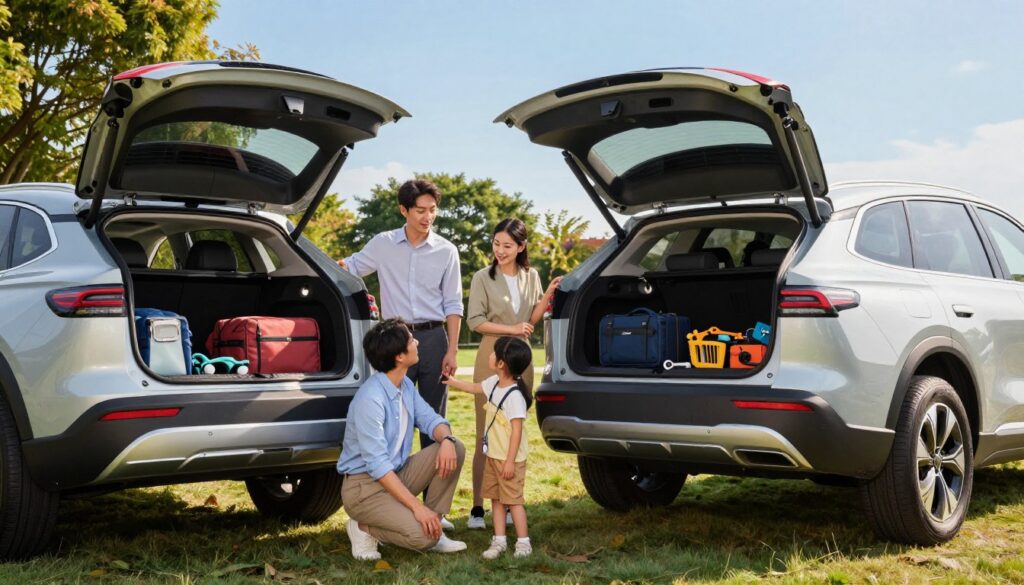
A family with a stroller and groceries may want a covered cargo area, while a homeowner hauling lumber may need an open bed. Start with the load you carry most often.
SUVs among the best affordable electric cars for 2027 can offer passenger flexibility without the size of a truck. A compact SUV or electric crossover is often easier to park and maneuver in town.
Choose a crossover for passenger and cargo flexibility
Check rear-seat access before focusing on a cargo number. A wide door and an easy-to-reach seat can matter more when fitting child seats or helping older passengers.
Look at the cargo area’s shape, not just its stated space. A low floor can help with heavy bags, while a covered area keeps everyday items out of view.
Long boards or bulky gear may not fit a compact cabin. A crossover may still work if those loads are rare and the rear seats fold flat.
Choose a pickup only if you will use its bed
A pickup bed is handy for dirty, wet, or oversized cargo. The trade-off is a larger vehicle with less covered storage and, in some designs, fewer seats.
Before choosing, I would ask:
- How many seats do I use each week?
- Do I need a covered cargo area?
- How often do I carry long or bulky items?
- Will the vehicle fit my usual parking space?
The answers can rule out a body style before a test drive. Once the shape fits, I would judge usable range against real driving.
How Much Range Do Affordable EVs Need?
A 20-mile commute may need less range than a weekly highway trip, especially if the driver can charge at home. Charging access changes the range target.
About 300 miles can be a useful comparison point for some long-distance shoppers. It is not a requirement or a promise of that many real-world miles.
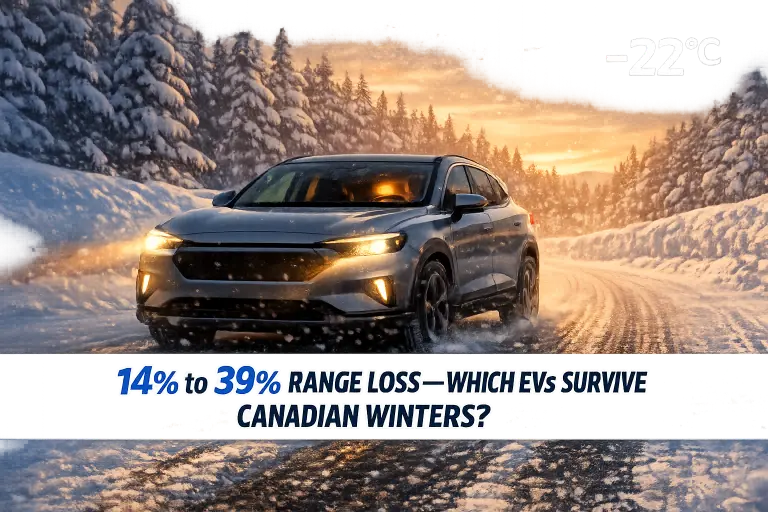
Daily needs depend on more than the EPA estimate. Cold or hot weather, highway speed, passengers, cargo, and access to charging can all affect the practical buffer.
A driver with home charging may start many days with a full battery. Someone relying on public stations may need more range between stops, even for the same commute.
I would use four checks to set a range target:
- How many miles do I drive on a typical day?
- What is my longest routine trip?
- Can I charge at that trip’s destination?
- What reserve do I need for detours or weather?
An EPA estimate helps compare vehicles under a shared test method. It is a comparison tool, not a promise of identical real-world miles.
Once the range fits, the next question is how long it takes to replenish the battery and which connector the car uses.
How Quickly Can These EVs Charge?
Home or workplace charging usually uses slower AC power, while a road-trip stop may use a public DC fast charger. The two jobs differ, so peak speed alone can mislead.
AC charging can add energy while a car sits for hours. DC fast charging is designed to add power during a shorter stop, but its speed changes as the battery fills.
A charger’s peak rating does not guarantee a set stop time. Actual time depends on the car’s charging curve, battery temperature, state of charge, and available charger power.
Port compatibility matters before a purchase. I would check the vehicle’s port and the stations on routes I use, rather than assume every plug will work.
Here are four charging checks I would make:
- Can I charge at home or work?
- Does the vehicle connector match stations I can use?
- Are fast chargers near my common routes?
- How long can I spend at a likely charging stop?
For home charging, the needed equipment and setup depend on the home and vehicle. A renter may need to ask about access before choosing a BEV.
Charging convenience affects how a car fits daily life. The next step is to consider the full cost of owning it.
What Does the Purchase Price Leave Out?
Two EVs can have different advertised starting prices but similar final totals after trim choices and fees. The final build matters more than the headline alone.
The out-the-door price can include destination charges, dealer fees, taxes, title, and registration. A trim upgrade or dealer add-on can raise the amount further.
A fair comparison uses the same type of final quote for each vehicle. Insurance, home-charging equipment, and installation also affect a household’s budget.
Eligible incentives may lower a buyer’s cost, but an advertised offer does not apply to everyone. Eligibility can depend on the buyer, vehicle, and current rules.
When I request a quote, I check four things:
- The exact trim and selected options.
- The destination charge.
- Dealer add-ons and other fees.
- The final out-the-door total.
I would also compare insurance quotes and any home setup costs before deciding. I would not count an incentive until I know that I qualify.
Prices and trim availability can shift by dealer and timing. Before committing to a specific version, check whether it is available to shop in 2027.
Which New EVs Can U.S. Buyers Actually Get in 2027?
A model-year label does not prove a vehicle is at a local dealership. Availability depends on timing, and announced cars may arrive at different points.
The Kia EV3 launched as a 2027 model, with initial U.S. dealership arrivals in Q4 2026. Availability is expected to expand nationwide.
The Trailseeker is listed as on sale, while the Eclipse Sportback EV is expected in the U.S. in fall 2026. Ford Fathom customer vehicles are planned for later in 2027.
That timing matters for anyone searching for new electric cars for 2027. The best electric cars for 2026 may be easier to shop now, but a model-year label alone does not settle the question.
I do not have enough confirmed U.S. pricing and range details to rank the 2027 Chevrolet Bolt, Chevrolet Equinox EV, Hyundai Ioniq 5, or IONIQ 3 here.
The same applies to the Hyundai Kona Electric, Honda Prologue, Kia Niro, and Volvo EX30. I would not assume all these vehicles will be available on the same schedule.
Launch timing tells buyers when to look, not which model will hold up best. Reliability and ownership over time are harder questions.

)
What Should I Check for Reliability and Resale?
At a used-EV inspection, battery condition can matter more than the age label alone. I would check the car, not guess from its model year.
For an EV after eight years, ask for the battery’s state of health, service history, and remaining warranty coverage. Check how the car charges during a real test as well.
No single lifespan applies to every battery or vehicle. Its condition and performance tell a buyer more than age by itself.
Check the battery and warranty details
A qualified inspection can look for warning signs and review charging performance. I would also compare the warranty terms with the vehicle’s records and current mileage.
There are no comparative reliability ratings or battery-life results here to name a reliable winner. I also cannot identify the biggest value loser without consistent depreciation data.
Treat resale value as market-specific
Which EV loses value the most? A defensible model ranking needs consistent resale data, so I would not name one based on scattered examples.
Local demand, vehicle condition, and current prices can affect a resale estimate. Before buying used, get an inspection and a current trade-in or resale estimate for your region.
A careful check can make an older EV easier to judge on its own merits. The decision changes if a buyer prefers a plug-in hybrid or wants to wait.
Should I Consider a Hybrid or Wait for Another Model?
A buyer without dependable charging access should compare a PHEV rather than assume a BEV will suit every routine. A plug-in hybrid offers another way to use electric power.
A PHEV can travel on electric power for a stretch, then use its gasoline engine. That can fit drivers who cannot count on charging for every trip.
My ranked choices here are BEVs, not a hybrid comparison. The best affordable electric cars for 2027 with hybrid options is a useful search, but the best affordable electric cars for 2027 named here are battery-electric vehicles.
When a battery-electric vehicle suits the job
A BEV may fit well when the driver has steady charging access and the car’s range covers routine trips. A test drive can also show whether its space and comfort work for the household.
Buyers comparing hybrid vehicle options can consider models such as the Hyundai Ioniq, Hyundai Kona, or Kia Niro, but should check each version’s current details. Names alone do not show whether a model is a BEV or PHEV.
When a plug-in hybrid may fit better
Rivian R3 is expected around $35,000 and is not expected to be on sale until 2028. Rivian R2 production timing starts earlier, but that does not make R3 a 2027 purchase.
A future model can be worth waiting for only if its timing fits the buyer. I would separate an announced vehicle from a car someone can count on purchasing in 2027.
My next step would be to put my own driving pattern first, then decide how much I value waiting or using gasoline as a backup.
How Do I Choose the Right EV for My Driving?
A short commute with reliable home charging can favor a different car than frequent long highway trips. Your weekly pattern should guide the choice.
I would use this four-step checklist before deciding:
- Set an out-the-door budget.
- Map a normal week of driving.
- Confirm charging access and connector compatibility.
- Test the exact trim with passengers and cargo.
My recommendation depends on your top priority, not a universal winner. I would compare at least two configurations and ask each dealer for a final quote.
Bring the people and gear that will use the car. That can reveal a tight back seat or awkward cargo area before it becomes part of daily life.
Take the checklist to a dealer or test drive. The right EV is the one that fits real use, not just a neat feature list.
Conclusion
I would choose an affordable EV by fit and verified final cost, not the lowest advertised price. A suitable body style and usable range matter more than a tempting base figure.
My next step would be to compare out-the-door quotes and test-drive the two models that best match my routine. Arrange those drives, then confirm current dealer pricing.
)
FAQ
What EV should I buy in 2027?
What is the most affordable and reliable electric car?
Will EV prices go down in 2027?
What is the best reasonably priced electric car?
What EVs should I stay away from?
Which EV car is best value for money?
What is the #1 selling EV?
What happens to EV after 8 years?