Last Verified: May 2026
Here’s the truth no EV buying guide tells you upfront: the sticker price is the least important number on the page. What matters is the charge stop time on your actual road trips, the range you’ll actually get in January, and what this vehicle costs you over five years — not five minutes of test driving. This guide ranks the best electric cars available in the U.S. right now using EPA data, fueleconomy.gov owner reports, J.D. Power study findings, and five-year total cost modeling. No phantom tax credits in the math, no manufacturer-supplied range figures treated as gospel.
One thing to clear up immediately: the $7,500 federal EV tax credit is gone. It expired September 30, 2025 under the One Big Beautiful Bill Act. If you’ve seen guides quoting post-credit prices, they’re outdated. Every price in this article is what you actually pay at the dealership — no deductions applied.
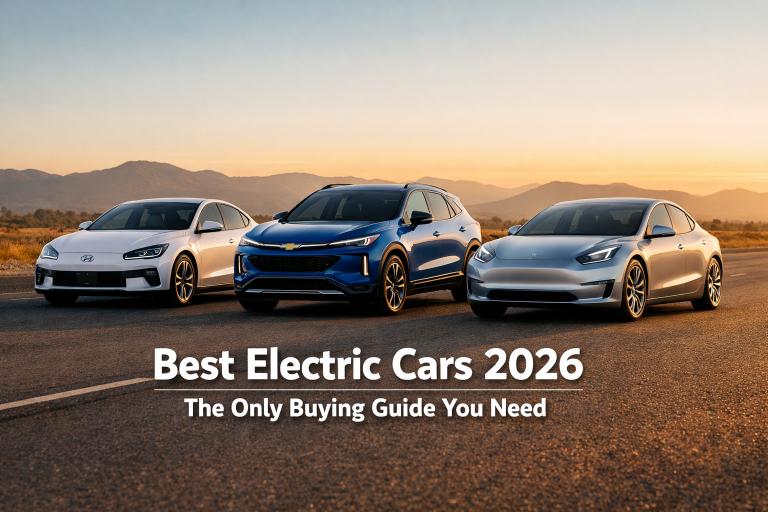
Best Electric Cars 2026 — Quick Answer:
The Hyundai IONIQ 6 Long Range RWD is the top pick for most U.S. buyers: 361 miles EPA range, 18-minute 10–80% DC fast charging, and the strongest warranty in the mainstream segment. Budget buyers should go straight to the Chevrolet Equinox EV at $34,995 — the best full-size electric SUV under $35K. For maximum range regardless of cost, the Lucid Air Pure hits ~385 miles real-world at $69,900. All prices reflect actual 2026 MSRP — the federal $7,500 credit expired September 2025.
How We Ranked the Best Electric Cars 2026
Range on a spec sheet means nothing without context. An EV rated at 350 miles can leave you stranded on a January road trip if you don’t account for cold-weather loss, highway speeds, or slow charging stops. So instead of building this ranking from manufacturer claims, we applied three weighted evaluation layers — the same variables that separate a great EV purchase from an expensive regret.
Layer 1: Real-World Range and Efficiency
EPA figures are generated at 75°F with minimal climate load. In real driving — mixed speeds, active HVAC, real passengers — range runs 8–18% lower. We weight owner-reported data from fueleconomy.gov alongside EPA figures, and we track energy consumption in kWh per 100 miles separately. That number matters more than range alone: a vehicle at 3.1 kWh/100 mi costs roughly $230 less per year in electricity than one at 4.0 kWh/100 mi. Over five years, that gap is real money.
Layer 2: Charging Speed and Network Reliability
A 350-mile range rating is irrelevant on a road trip if charging stops take 50 minutes each. We evaluate peak DC fast charge speed, real 10–80% charge time under load, and network compatibility. In 2026, NACS has expanded to Ford, GM, Honda, and Nissan — giving those vehicles access to Tesla’s Supercharger network. But raw charging speed is only part of the story. A 350 kW charger that’s offline 20% of the time is worse than a 150 kW network that’s always available. Uptime matters.
Layer 3: Five-Year Ownership Economics
Sticker price is where you start — not where you finish. The five-year equation includes insurance premiums, maintenance intervals, warranty terms, projected depreciation, and annual energy costs. According to J.D. Power’s 2025 U.S. Electric Vehicle Experience Ownership Study, owner satisfaction correlates most strongly with charging reliability and service network quality — not range or horsepower. We weight those accordingly.
Full Comparison: Every Top EV Side by Side
All range figures are EPA-rated. Charge times reflect 10–80% DC fast charge at peak power under realistic conditions. Prices are actual 2026 MSRP — no federal credit applied, because there isn’t one. Confirm state incentive eligibility at the DOE Alternative Fuels Data Center before you visit a dealer.
Range, Charging Speed, and Warranty
| Model | MSRP | EPA Range | Battery | 10–80% DC | Warranty |
|---|---|---|---|---|---|
| Hyundai IONIQ 6 SE LR RWD TOP PICK | $38,615 | 361 mi | 77.4 kWh | ~18 min | 5yr/60K · 8yr batt |
| Chevrolet Equinox EV LT BEST VALUE | $34,995 | 319 mi | 85 kWh | ~35 min | 3yr/36K · 8yr batt |
| Tesla Model 3 LR RWD | $42,490 | 358 mi | 75 kWh | ~25 min | 4yr/50K · 8yr batt |
| Hyundai IONIQ 5 LR RWD | $43,850 | 303 mi | 84 kWh | ~18 min | 5yr/60K · 8yr batt |
| Kia EV6 Standard RWD | $43,275 | 310 mi | 77.4 kWh | ~18 min | 5yr/60K · 8yr batt |
| 2026 Nissan Leaf | ~$28,140 | ~212 mi | 60 kWh | ~40 min | 3yr/36K · 8yr batt |
| 2027 Chevrolet Bolt EV LT | ~$29,700 | ~290 mi | ~66 kWh | ~30 min | 3yr/36K · 8yr batt |
| Ford Mustang Mach-E Premium | $42,995 | 290 mi | 91 kWh | ~38 min | 3yr/36K · 8yr batt |
| Lucid Air Pure LONGEST RANGE | $69,900 | 410 mi | 88 kWh | ~22 min | 4yr/50K · 8yr batt |
Five-Year Ownership Cost Estimate
| Model | 5-Yr Maintenance | Avg Annual Insurance | Energy (15K mi/yr) | Est. 5-Yr Total |
|---|---|---|---|---|
| Chevrolet Equinox EV LOWEST 5-YR | $1,500–$2,200 | $1,700–$2,200/yr | ~$4,800/yr | ~$48,000–$52,000 |
| Hyundai IONIQ 6 LR | $1,600–$2,300 | $1,900–$2,400/yr | ~$4,300/yr | ~$52,000–$56,000 |
| Tesla Model 3 LR | $1,800–$2,500 | $2,200–$2,800/yr | ~$4,500/yr | ~$58,000–$62,000 |
| Kia EV6 LR | $1,600–$2,300 | $1,900–$2,300/yr | ~$4,500/yr | ~$56,000–$60,000 |
| Lucid Air Pure | $2,500–$3,500 | $2,800–$3,600/yr | ~$3,900/yr | ~$87,000–$95,000 |
Best EV by Category: Budget, Family, Luxury
Best Budget Electric Car 2026 — Under $35,000
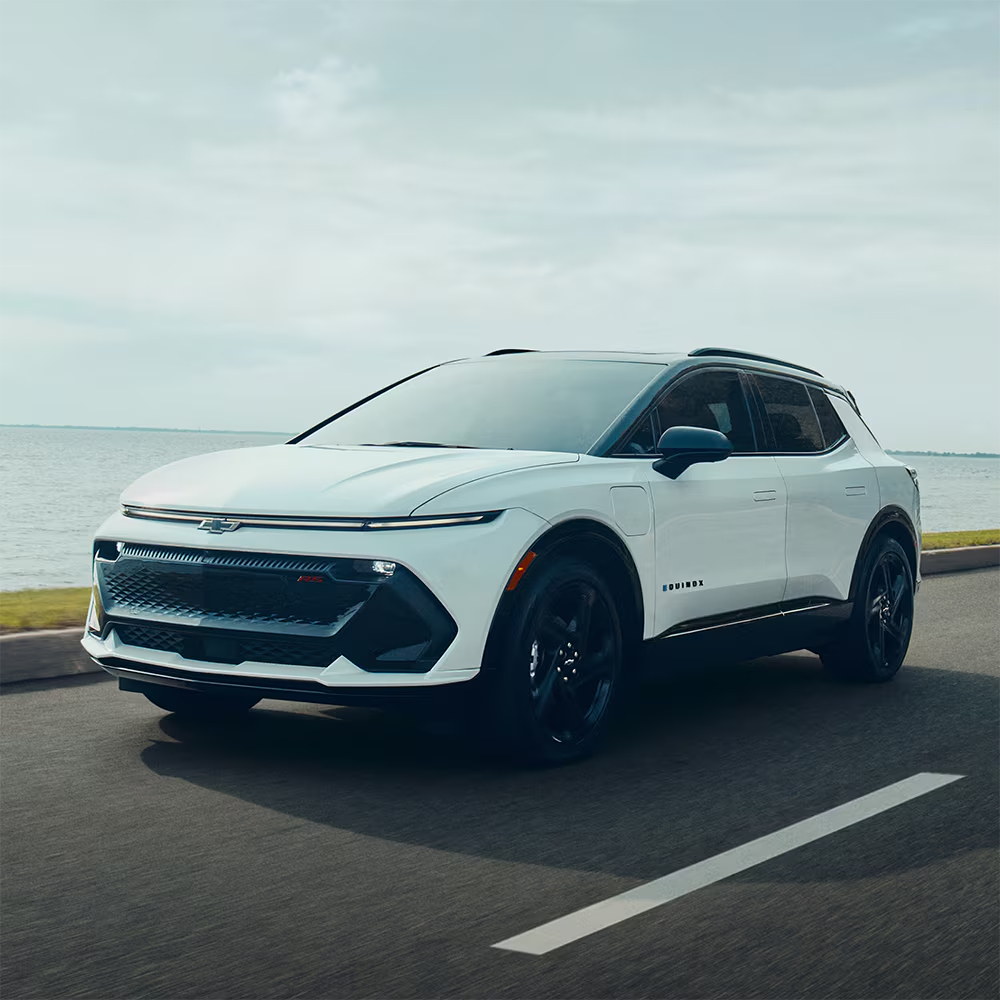
Winner: Chevrolet Equinox EV LT — $34,995
No EV at this price gives you more for your money. At $34,995, the Equinox EV delivers 319 miles of EPA range in a full-size SUV body with NACS charging compatibility. That means access to Tesla’s Supercharger network — a major practical advantage for road trips. State incentives can drop this further: Colorado offers up to $5,000, Oregon up to $7,500 for qualifying buyers. But even at full price, this vehicle stands on its own.
Two other budget options deserve consideration. The 2026 Nissan Leaf at ~$28,140 is the most affordable new EV in America — ideal for city commuters who charge at home and rarely venture past 150 miles. The catch: ~212-mile range and slow DC charging make it a poor choice for road trips. The 2027 Chevrolet Bolt EV at ~$29,700 arrives mid-2026 with updated range around 290 miles and is worth waiting for if budget is the priority.
The Equinox EV’s honest limitations: peak DC charging at ~150 kW is slower than the 800V Korean competition, and the interior leans functional over premium. For commuters who charge at home, neither limitation surfaces in daily life. For regular road-trippers, factor in the longer charging stops.
Best Mid-Range Family EV 2026
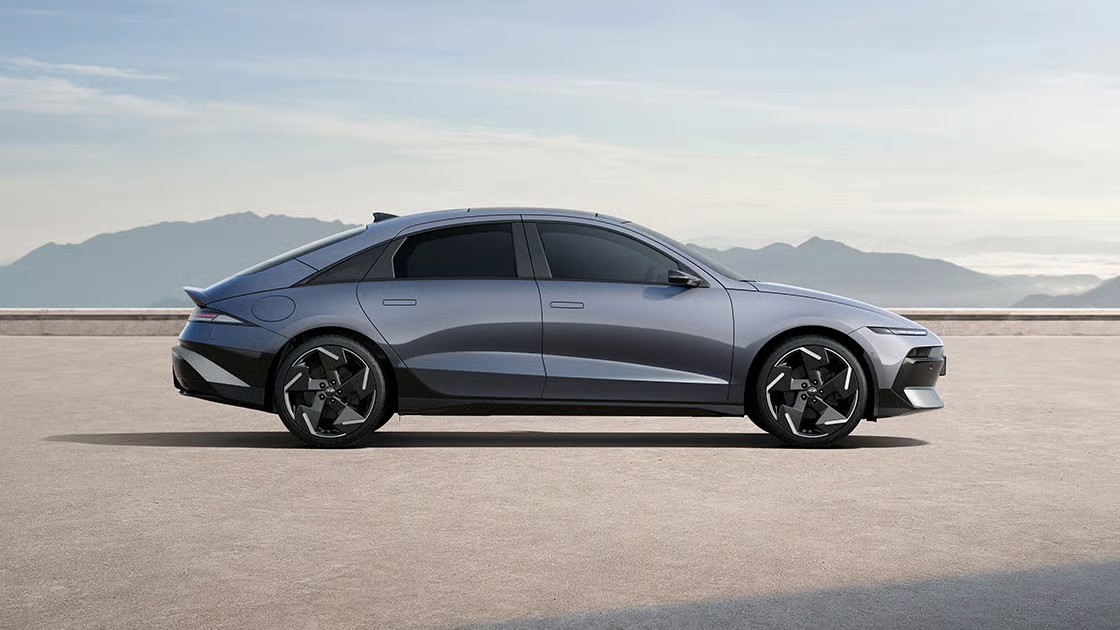
Winner: Hyundai IONIQ 6 SE Long Range RWD — $38,615
The IONIQ 6 earns the top spot because it dominates on the metric that actually ruins road trips: charging time. Its 800V architecture handles a 10–80% charge in roughly 18 minutes at a 350 kW charger. No mainstream EV at this price comes close. EPA-rated at 361 miles, real-world range lands at 330–345 miles in moderate climates based on fueleconomy.gov owner data — one of the smallest EPA-to-real-world gaps in the segment.
If you need an SUV instead of a sedan, the Hyundai IONIQ 5 at $43,850 runs the same 800V E-GMP platform with the same 18-minute charging. It trades 58 miles of EPA range for the crossover body — a reasonable deal for families who need the cargo space. Both carry Hyundai’s 5-year/60,000-mile bumper-to-bumper warranty, the most comprehensive offered by any mainstream EV brand in the U.S.
Know what you’re giving up: the IONIQ 6’s aerodynamic sedan shape limits rear headroom and cargo room compared to crossovers. If your household regularly hauls gear, kids, or dogs, the IONIQ 5 is probably the right call. If it’s just people and bags, the 6’s superior efficiency wins.
Best Performance and Luxury EV 2026
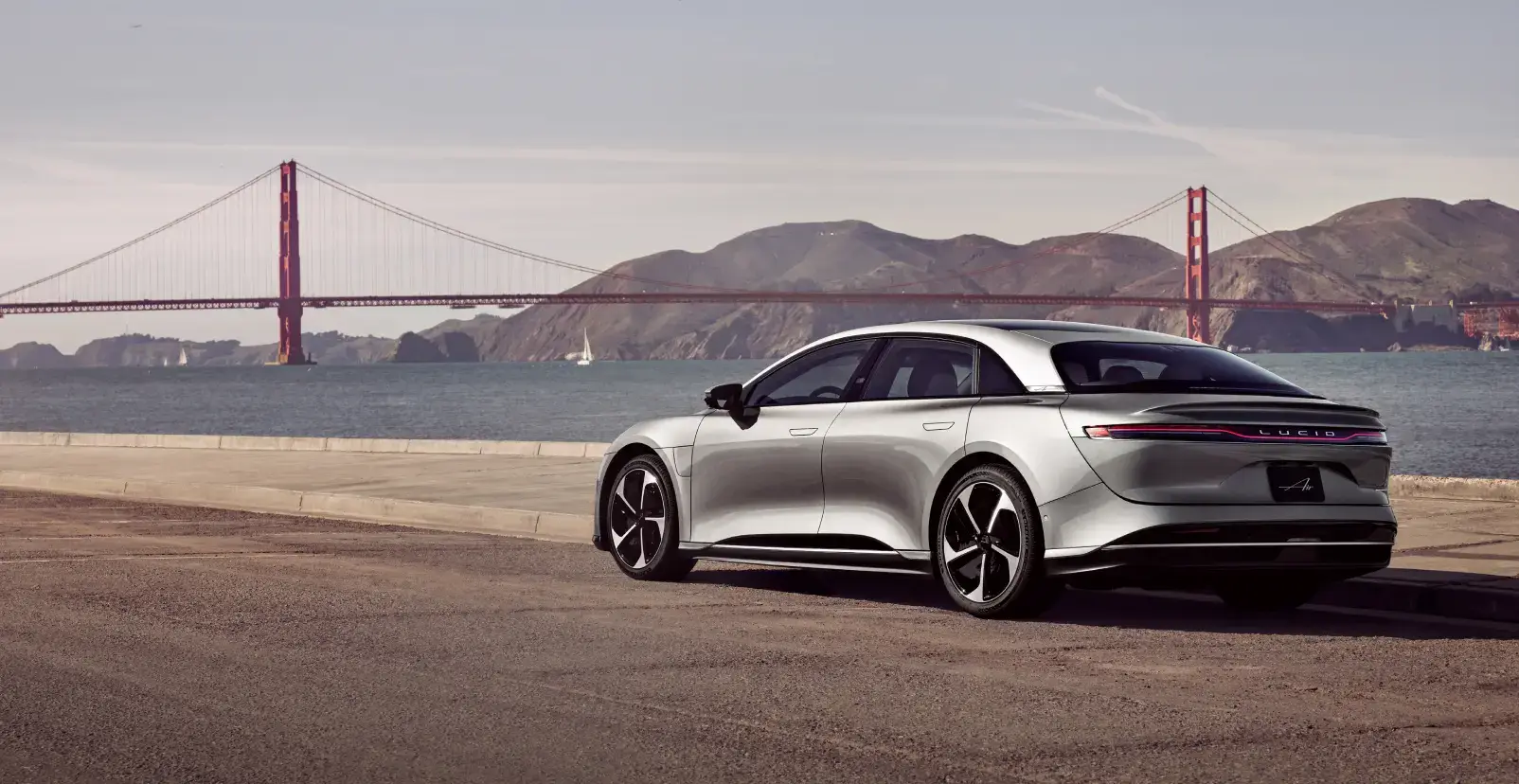
Winner: Lucid Air Pure — $69,900
The Lucid Air isn’t trying to compete with the Model S on features — it’s competing on engineering. At approximately 4.7 miles per kWh, it leads the U.S. luxury EV segment in efficiency per EPA data. The 410-mile EPA rating translates to roughly 385 real-world miles in mixed driving. A 10–80% charge on its 900V architecture takes about 22 minutes — faster than the Tesla Model S at a 350 kW charger.
The trade-offs are real and worth saying clearly: Lucid’s service centers are clustered in major metros, resale value data is still developing, and insurance costs run higher than established brands. This is the right choice for luxury buyers where maximum range is genuinely the priority — not for anyone weighing long-term resale or service network depth. For a full head-to-head, see our Lucid Air vs Tesla Model S comparison.
Real-World Range: What the EPA Number Doesn’t Tell You
The EPA range on the window sticker is generated at 75°F in a controlled lab with minimal climate load. It is a useful comparison tool. It is not your range. Real driving — highway speeds, heat or AC running, full load — consistently delivers 8–18% less. Before you decide whether a vehicle’s rated range covers your life, you need to know what it actually does in conditions that match yours.
Real-World Range: Mixed Driving, Moderate Climate
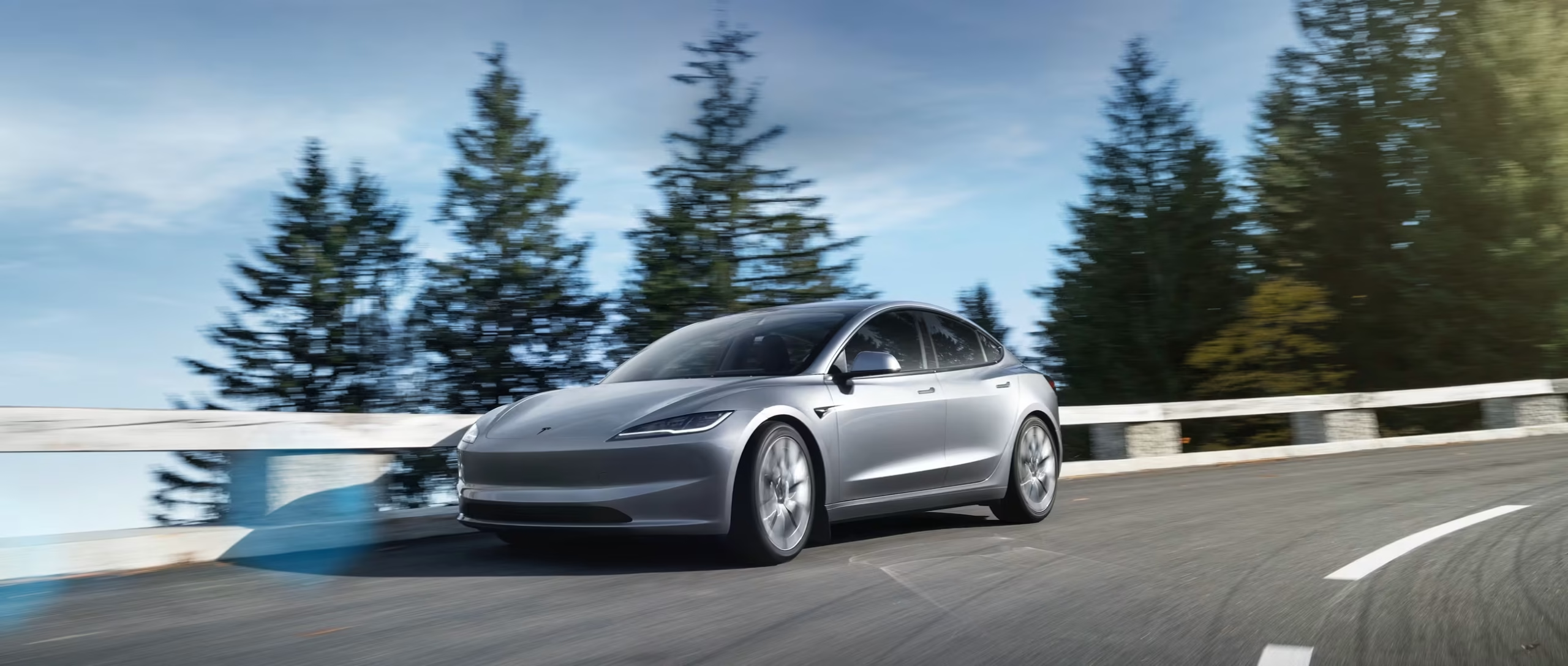
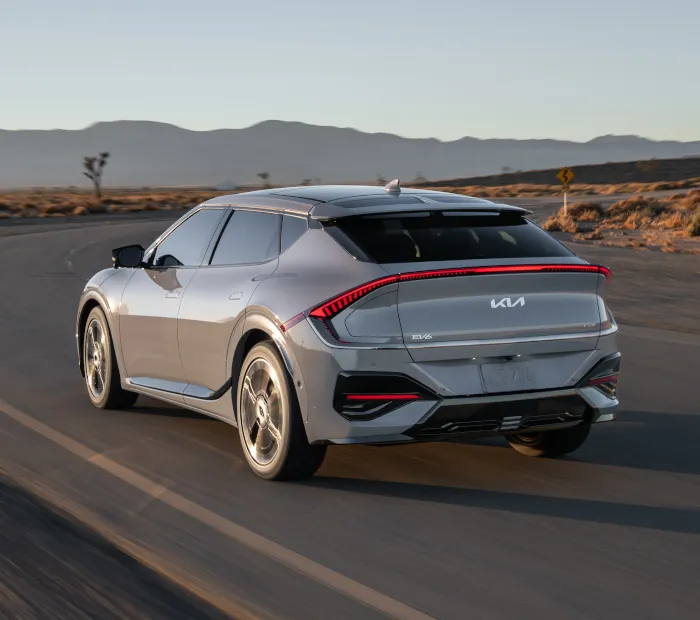
Estimates derived from fueleconomy.gov owner data and independent testing. Individual results vary by speed, temperature, load, and driving style.
Cold Weather: The Range Variable Most Buyers Underestimate
Below 20°F, battery range drops 25–40% without a heat pump, and 15–25% with one, per AAA testing. That turns a 361-mile car into a 250-mile car on a bad winter day. Heat pumps are standard on Long Range trims of the IONIQ 6, IONIQ 5, EV6, and Tesla Model 3 — but they’re not always included on lower trims. Confirm it’s on your specific configuration before signing.
Highway vs City: EVs Work Differently Than Gas Cars
EVs recover energy through regenerative braking in stop-and-go traffic, which is why city driving is more efficient than highway — the opposite of a gas vehicle. At 80 mph, aerodynamic drag spikes and that 330-mile range estimate becomes 255–275 miles. If you’re evaluating range for road trips, the highway figure is the number that matters, not EPA combined. Our EV range vs advertised range guide breaks this down model by model.
Charging Speed, 800V Tech & What Actually Matters in 2026
Why 800V Architecture Changes Road Trip Math
800-volt platforms charge at higher power without generating the thermal stress that forces slower systems to throttle. Hyundai and Kia’s E-GMP platform — shared by the IONIQ 6, IONIQ 5, and EV6 — accepts up to 235–350 kW peak, delivering a 10–80% charge in around 18 minutes. Most 400V competitors need 30–45 minutes for the same top-up. On a 1,200-mile road trip with three charging stops, that’s 30–75 fewer minutes at chargers. That’s a real difference — not a spec sheet number.
The practical implication: if you road trip more than twice a year, 800V architecture should be a hard filter in your search. The 400V alternatives (Equinox EV, Mustang Mach-E, older Model Y) are fine daily drivers. They’re a friction point on long trips.
NACS Expansion: Who’s In the Supercharger Network Now
NACS adoption has spread far beyond Tesla in 2026. Ford, GM, Honda, Nissan, and Rivian all support NACS, meaning those vehicles can access Tesla Superchargers with the correct adapter — now standard or available from dealers. This meaningfully changes the road trip calculus for non-Tesla buyers, since Supercharger uptime consistently outperforms third-party DC fast charge networks.
OTA Updates, ADAS Subscriptions, and What to Watch For
Over-the-air updates are standard across Tesla, Rivian, Hyundai, GM, and Ford. What’s less consistent is which driver assistance features come included versus which require a monthly subscription after delivery. Ask specifically about post-sale ADAS fees — they can add $100–$200 annually on top of your ownership cost, and they’re rarely disclosed upfront during negotiations.
LFP vs NMC: Which Battery Chemistry Is Right for You
LFP batteries (found in Tesla Standard Range models) can be charged to 100% daily without meaningful degradation and hold up better over high mileage. NMC batteries deliver higher energy density, which is why Long Range trims use them — but they benefit from staying in the 20–80% charge window. If you put on 20,000+ miles per year, LFP’s durability advantage is worth factoring in. For everyone else, NMC Long Range range wins. See our EV battery longevity guide for degradation data at 50K, 100K, and 150K miles by model.
True Ownership Cost & 2026 Incentives (No Federal Credit)
The $7,500 Credit Is Gone — Here’s What Actually Replaced It
What replaced it: the OBBBA created a new auto loan interest deduction — up to $10,000 per year for U.S.-assembled vehicles financed after December 31, 2024. This is a tax deduction, not a point-of-sale credit. It reduces your taxable income, not your purchase price. It phases out above $100,000 single / $200,000 joint income, and the vehicle must be U.S.-assembled and actively financed to qualify.
State incentives are now the most impactful direct savings available: California up to $7,500 through Clean Cars 4 All (income-qualified); Colorado $5,000 state tax credit; Oregon up to $7,500; New Jersey up to $4,000; Massachusetts up to $3,500. Check your state at the DOE AFDC and check your utility company separately — many offer charger installation rebates of $200–$800 that most buyers never claim.
Insurance, Maintenance, and What Energy Really Costs
EV insurance runs 10–20% higher than equivalent gas vehicles per Insurance Information Institute data — primarily because parts and repair labor for high-voltage systems cost more. Budget for this before comparing sticker prices.
Maintenance is where EVs win clearly: no oil changes, no transmission service, and regenerative braking extends brake pad life by 40–70%. The DOE estimates $0.061 per mile for EV maintenance versus $0.101 for gas — roughly $600–$900 saved annually at 15,000 miles.
The number most buyers miss: public DC fast charging at $0.28–$0.48 per kWh on the road approaches gas car fuel costs at current prices. Home electricity at $0.13–$0.17 per kWh is where the savings are. If you don’t have reliable home charging — apartment dweller, no garage — run the public charging math before assuming EVs are cheaper to fuel. Our monthly EV cost guide runs the numbers model by model.
Depreciation: What to Expect at Year Five
Per Kelley Blue Book projections, mainstream EVs (Hyundai, Kia, GM) hold roughly 40–50% residual value at year five. Tesla sits at 38–47%. Luxury brands like Lucid and Rivian carry more risk at 30–42%, partly because resale markets are still developing. Plan for 38–50% residual on mainstream, 30–44% on luxury — and treat these as projections, not guarantees. The EV resale market is still maturing.
Which EV Should You Actually Buy?
The right EV is the one that fits your actual driving pattern — not your theoretical worst-case scenario. Most buyers overbuy on range and underthink charging access. Use these scenarios to find your match.
Daily Commuter (Under 80 Miles Round Trip, Home Charging)
Range is not your constraint. Price and insurance are. The Equinox EV at $34,995 gives you the most vehicle per dollar. The Nissan Leaf at ~$28,140 is the lowest possible entry point if you’re genuinely price-constrained. The incoming 2027 Bolt at ~$29,700 is worth waiting a few months for if you want the better balance of price and range.
Frequent Road-Tripper (Long Hauls 2+ Times per Year)
Charging speed beats range on multi-stop trips. The IONIQ 6, IONIQ 5, and EV6 — all 800V — are the right answer. Each completes a 10–80% charge in ~18 minutes. The Tesla Model 3 is a strong second choice for Supercharger network density, even though charging takes ~25 minutes. Avoid 400V vehicles (Equinox EV, Mustang Mach-E) for road-tripping unless the slower stops genuinely don’t bother you. See our road trip EV guide for route-specific analysis.
Long-Term Value Buyer (Hold 5+ Years)
Hyundai’s 5-year/60,000-mile warranty is the most comprehensive in the mainstream segment. Pair it with the IONIQ 6’s low energy consumption and low maintenance costs, and it delivers the best verified five-year ownership economics of any vehicle at its price tier. Nothing on this list beats it on that combined metric.
- Do you have Level 2 home charging? This is the single biggest variable in EV economics. (Setup guide here)
- What is your actual daily distance — not your worst-case day?
- Do you regularly drive below 20°F? Confirm heat pump is included at your specific trim.
- Road trips more than twice a year? Prioritize 800V or NACS-compatible models.
- Have you checked your state incentives at afdc.energy.gov? The federal credit is gone, but state savings are real.
- Have you priced insurance quotes — not just the sticker? EVs run 10–20% higher.
Buy the IONIQ 6 Long Range If…
- You road-trip and want the fastest charge stops under $45K
- You want the longest mainstream warranty (5yr/60K)
- Five-year total cost is your primary metric
- A sedan body works for your household
Buy the Equinox EV If…
- You want the lowest-priced full-size EV SUV in America
- An SUV body is non-negotiable
- Your commute is under 80 miles with home charging
- GM’s dealer network and parts availability matter
FAQ: Best Electric Cars 2026
What is the best electric car overall in 2026?
For most U.S. buyers: the Hyundai IONIQ 6 Long Range RWD at $38,615. It delivers 361 miles EPA range, 18-minute 10–80% charging — the fastest at this price — and Hyundai’s 5-year/60,000-mile bumper-to-bumper warranty, the most comprehensive in the mainstream segment. Need an SUV body? The IONIQ 5 shares the same 800V platform at $43,850. Prioritizing price? Equinox EV at $34,995.
Is the $7,500 federal EV tax credit still available in 2026?
No. The federal Clean Vehicle Credit expired September 30, 2025 under the One Big Beautiful Bill Act. It is gone. What replaced it: a federal auto loan interest deduction of up to $10,000 per year for U.S.-assembled vehicles (reduces taxable income, not purchase price). State incentives — ranging from $1,000 to $7,500 depending on where you live — are the most impactful savings now available. Check your state at afdc.energy.gov.
Which EV has the longest real-world range in 2026?
The Lucid Air Pure at ~385 miles in mixed driving — leading the market by a meaningful margin. Among mainstream EVs under $45K, the IONIQ 6 LR and Tesla Model 3 LR both land at 315–345 miles depending on climate. Below 20°F, expect a 15–25% range reduction even with a heat pump — plan accordingly if you live somewhere cold.
Are electric cars actually cheaper to own than gas cars in 2026?
With home charging, yes — clearly. DOE data puts EV maintenance at $0.061/mi versus $0.101/mi for gas. Over five years at 15,000 miles annually, that’s roughly $3,000–$6,000 in savings before energy costs. The advantage narrows significantly if you rely on public DC fast charging at $0.28–$0.48/kWh instead of home electricity at $0.13–$0.17/kWh. Do the math for your specific situation before assuming the savings exist.
What are the hidden costs of owning an EV?
Four things most buyers don’t price in: insurance (10–20% above equivalent gas vehicles), home charger installation ($800–$1,500 including electrician), out-of-warranty repair costs for high-voltage components, and public fast charging rates on road trips. Run all four numbers before comparing EV ownership cost to a gas alternative — the gap is still usually in the EV’s favor, but it’s smaller than the headline savings suggest.
What is the cheapest electric car in America in 2026?
The Nissan Leaf at ~$28,140 is the most affordable new EV you can buy right now. The 2027 Chevrolet Bolt at ~$29,700 arrives mid-2026 and improves on range significantly. The Equinox EV at $34,995 is the cheapest full-size electric SUV. Colorado, Oregon, and California state incentives can reduce any of these by $2,000–$7,500 for qualifying buyers.
The best electric car in 2026 isn’t the one with the longest spec sheet — it’s the one that matches how you actually drive. For most buyers, that’s the IONIQ 6 Long Range. Budget-first? Equinox EV. Lowest absolute price? Nissan Leaf or the incoming Bolt. The federal tax credit is gone, but the ownership math still works in the EV’s favor — especially with home charging and the right state incentive in your corner.