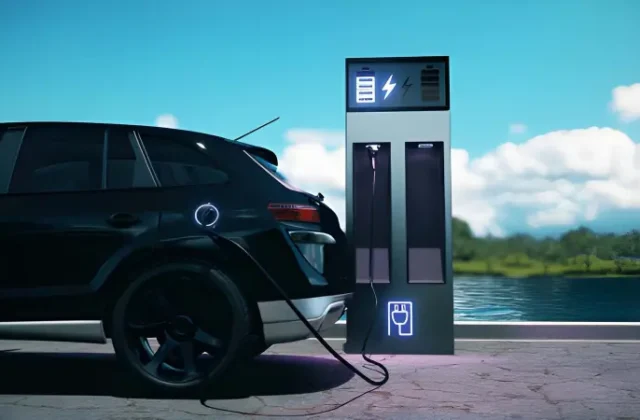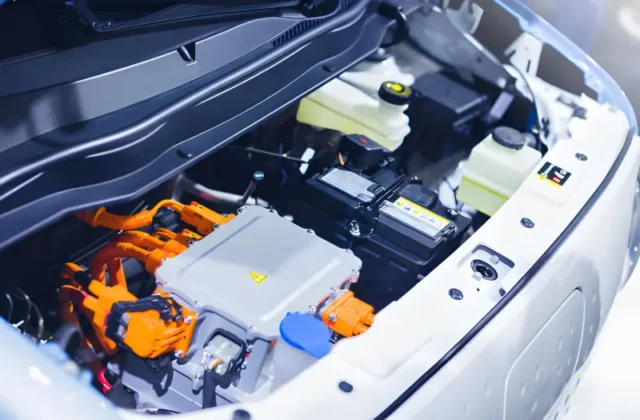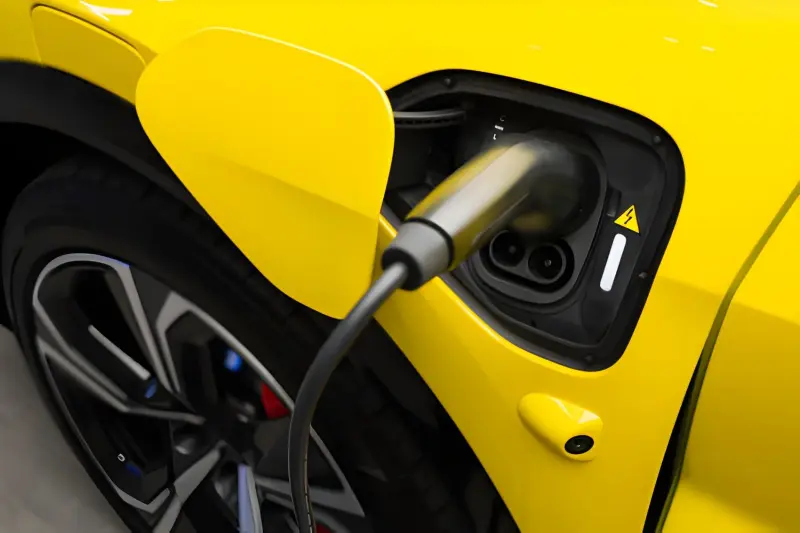
The honest answer up front: the time to charge an electric car ranges from 18 minutes to three days, depending on which plug you use. On a public DC fast charger, a Hyundai Ioniq 5 goes from 10 to 80 percent in 18 minutes. By contrast, on the 120V outlet in your garage, the same battery takes about 56 hours to charge an electric car of that size. Both numbers are accurate. Furthermore, both describe how long it takes to charge an electric car of the same model. The gap between them is the entire story of how to charge an electric car, and it is the reason most published charging times are useless without context.
This complete guide gives you the real numbers for every charger type, every common 2026 EV model, and every condition that changes how fast you can charge an electric car. The math is simple once you know which inputs matter. Specifically, battery size in kilowatt-hours, charger output in kilowatts, the vehicle’s onboard charging limit, and the temperature outside. Therefore, get those four right and you can predict the time to charge an electric car on any plug to within ten minutes.

A full charge takes 30 to 60 hours on a 120V household outlet (Level 1), 4 to 10 hours on a 240V Level 2 home charger, and 20 to 60 minutes for a 10 to 80 percent top-up on a DC fast charger. The Tesla Model Y Long Range fills in about 8 hours on an 11.5 kW Level 2 charger and reaches 80 percent in 27 minutes on a V3 Supercharger. The Hyundai Ioniq 5, on its 800-volt architecture, hits 80 percent in 18 minutes — the fastest in the mainstream segment. Cold weather can slow DC fast charging by 30 to 50 percent. Home charging on Level 2 is the default for 90 percent of owners; public fast charging is for road trips, not daily use.
The Three Levels Used to Charge an Electric Car
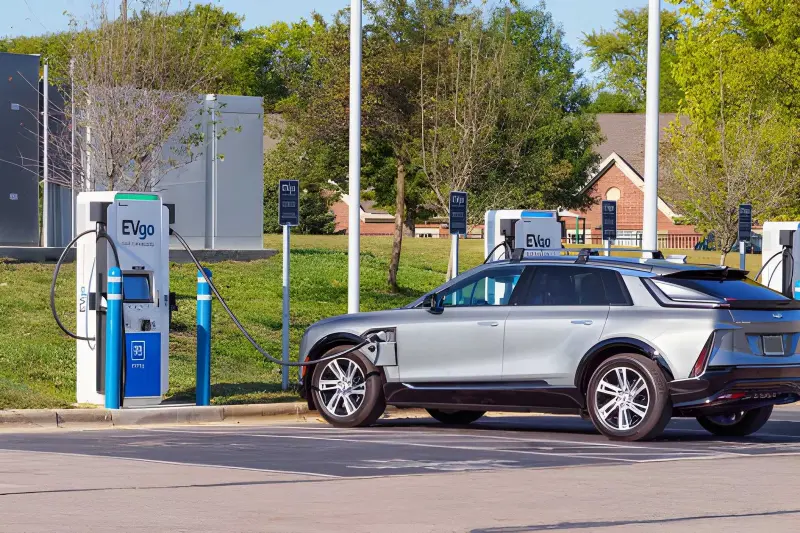
Every electric car in the US plugs into one of three power tiers. Specifically, the name of the tier tells you almost everything you need to know about how long it takes to charge an electric car on that connection.
| Level | Voltage | Typical power | Miles added per hour | Full charge (75 kWh) | Where you find it |
|---|---|---|---|---|---|
| Level 1 | 120V AC | 1.4 kW | 3-5 mi | 50-60 hours | Any household outlet |
| Level 2 | 240V AC | 7.2-19.2 kW | 25-40 mi | 4-10 hours | Home garage, workplace, hotels |
| DC Fast (Level 3) | 400-800V DC | 50-350 kW | 180-900 mi | 20-60 min (10-80%) | Highway corridors, public stations |
Level 1 is what comes with the car. The portable cord plugs into a regular wall outlet and trickles power into the battery at roughly the rate it takes to power a hair dryer. Level 2 is what most owners install in their garage and what employers and shopping centres are starting to offer. Level 3, more commonly called DC fast charging, is the type you stop at on a road trip when you need to get back on the highway in under an hour.
The jump between each level is roughly 5 to 10 times faster than the one below it. That ratio is why “how long does it take to charge an electric car” cannot be answered without knowing which plug the question is about.
The Formula That Predicts Time to Charge an Electric Car
Charge time is a one-line calculation. If you remember it, you never have to look up a manufacturer’s claim again.
The 1.1 multiplier accounts for charging losses — roughly 8 to 12 percent of the electricity drawn from the wall never reaches the battery, lost as heat in the charger and the vehicle’s internal conversion. That figure is consistent across most modern EVs, per US Department of Energy data.
Two limits override the formula
The formula assumes the charger and the car can both run at full power. They often cannot. Two limits cut in before the math does:
- The vehicle’s onboard AC charger limit. Most EVs cap Level 2 AC charging at 11 to 11.5 kW even if the wall charger delivers more. A Tesla Model Y on a 19.2 kW Level 2 charger still draws only 11.5 kW because the car will not accept more.
- The vehicle’s DC fast-charging peak. A 350 kW station only delivers 350 kW to a car that can accept it. A Chevy Equinox EV caps at 150 kW; a Hyundai Ioniq 5 takes the full 350 kW until the battery hits roughly 50 percent state of charge, then steps down.
Use whichever is lower: the charger’s output, or the car’s maximum acceptance rate. That is your real charging power.
Worked example
Tesla Model Y Long Range, 81 kWh usable battery, on an 11.5 kW Level 2 home charger:
81 kWh ÷ 11.5 kW × 1.1 = 7.7 hours
Tesla’s published number is 7.5 to 8 hours. The formula matches reality within ten minutes. The same Model Y on a 1.4 kW Level 1 outlet:
81 kWh ÷ 1.4 kW × 1.1 = 63.6 hours
That is two and a half days. The Level 1 numbers are not a mistake. They are the reason Level 2 exists.
How Long It Takes to Charge an Electric Car: 10 Popular 2026 Models
Below are real-world times to charge an electric car across the ten EVs Americans buy most, calculated from manufacturer-published battery sizes, AC charging limits, and DC fast-charging peak rates. Specifically, Level 1 figures assume a standard 120V/12-amp household outlet. Meanwhile, Level 2 assumes a typical 11.5 kW home charger. In addition, DC fast figures are the manufacturer’s stated 10 to 80 percent time at peak charger output.
| Vehicle | Battery (kWh) | Level 1 (full) | Level 2 (full, 11.5 kW) | DC Peak (kW) | DC 10-80% |
|---|---|---|---|---|---|
| Tesla Model Y LR | 81 | ~64 hr | ~8 hr | 250 | 27 min |
| Tesla Model 3 LR | 75 | ~59 hr | ~7 hr | 250 | 25 min |
| Hyundai Ioniq 5 | 77.4 | ~61 hr | ~7.5 hr | 350 | 18 min |
| Hyundai Ioniq 6 | 77.4 | ~61 hr | ~7.5 hr | 350 | 18 min |
| Kia EV6 | 77.4 | ~61 hr | ~7.5 hr | 350 | 18 min |
| Chevy Equinox EV | 85 | ~67 hr | ~8 hr | 150 | 35 min |
| Ford Mustang Mach-E ER | 91 | ~71 hr | ~10 hr (10.5 kW cap) | 150 | 38 min |
| BMW i4 eDrive40 | 81 | ~64 hr | ~8 hr | 205 | 31 min |
| Rivian R1T LR | 135 | ~106 hr | ~12 hr | 220 | 41 min |
| Kia Niro EV | 64.8 | ~51 hr | ~7 hr (10.5 kW cap) | 85 | 43 min |
What the table reveals about how to charge an electric car quickly
A few patterns stand out. First, the Hyundai-Kia E-GMP platform (Ioniq 5, Ioniq 6, EV6) charges roughly 35 percent faster than every other mainstream EV on DC fast power, because it uses 800-volt architecture instead of the 400-volt standard. In contrast, the Rivian R1T takes the longest of any vehicle here because its 135 kWh battery is the largest in the table — there is no shortcut around the kilowatt-hour count. Meanwhile, the Kia Niro EV’s slow DC charging (43 minutes for the same window the Ioniq 5 does in 18) is the price of buying the most reliable budget EV in the segment, covered in our most reliable EV cars guide.
Why Level 2 times converge when you charge an electric car at home
Level 2 times cluster between 7 and 8 hours for almost every mainstream EV. Consequently, that consistency is the reason “plug in overnight” is the default advice when you charge an electric car at home — eight hours covers everything except the Rivian and the Ford Mach-E with the extended battery.
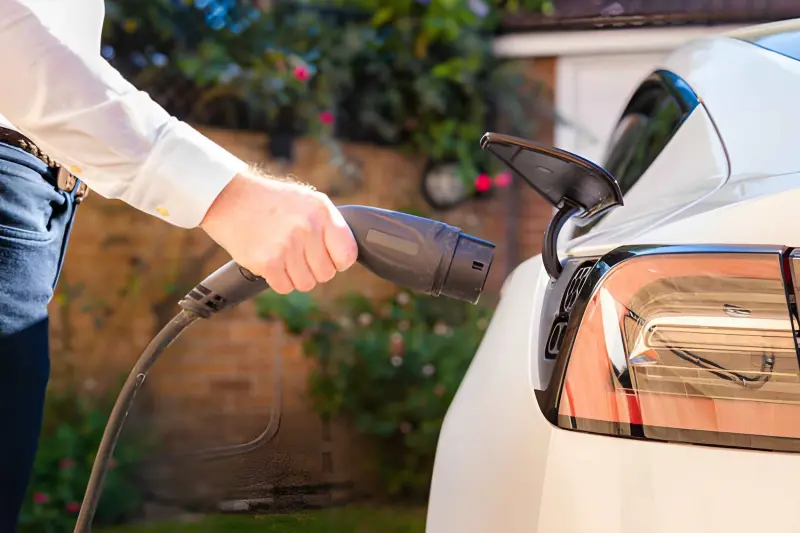
Level 1: How Long It Takes to Charge an Electric Car on 120V
Level 1 charging draws roughly 1.4 kW from a standard household outlet to charge an electric car. Consequently, that works out to 3 to 5 miles of range added per hour of charging — about 36 to 60 miles in a full overnight 12-hour stretch.
For a driver whose round-trip commute is under 40 miles, Level 1 is sufficient. Furthermore, the US average daily round trip is 41 miles, per the 2024 National Household Travel Survey. As a result, if you fall at or below that average, plug the car in when you get home, and you wake up with more range than you used the day before. In short, no 240V install required.
Where Level 1 stops working
Anything that breaks the daily-plug-in pattern breaks Level 1. A 60-mile commute uses about 18 kWh of battery, which Level 1 can only replace in 13 hours. Most owners do not have 13 hours of plug time per day. A weekend road trip that arrives home with the battery at 10 percent leaves you charging for two days before Monday’s commute is covered. And cold weather pushes the gap wider — a 41 percent range loss at 20°F means Level 1’s already-thin output covers even less.
The honest framing: Level 1 is fine if you drive a short commute every day and never road-trip during the week. Below that threshold, you will resent it inside three weeks.
Section verdict: Level 1 works for under-40-mile daily commuters with reliable overnight plug access. Everyone else needs Level 2.
Level 2: The Best Way to Charge an Electric Car at Home
Level 2 runs on the same 240V circuit that powers an electric dryer or oven. Specifically, output ranges from 3.6 kW (the slowest, on a 20-amp circuit) to 19.2 kW (the fastest, on a dedicated 80-amp circuit). Meanwhile, the most common home installations land at 11.5 kW on a 50-amp circuit, which is also the maximum AC rate most EVs accept when you charge an electric car at home.
Charging speed in real terms
An 11.5 kW Level 2 charger adds roughly 35 miles of range per hour. Plug in at 6 PM with the battery at 30 percent, and most EVs are at 100 percent before midnight. The math:
75 kWh battery × 70% to refill ÷ 11.5 kW × 1.1 = 5 hours
That figure is the reason 90 percent of EV owners install Level 2 within a year of buying the car. The convenience is not marginal. It is the difference between thinking about charging and not thinking about it.
What Level 2 costs to install
An electrician quote for a NEMA 14-50 outlet and a hardwired Level 2 charger runs $400 to $1,200 in most US markets, per HomeAdvisor 2026 regional data. Panel upgrades — required on roughly 20 percent of older homes — add $2,500 to $4,000. Get the quote before buying the car. Some buyers discover after delivery that their 1970s panel cannot support a 50-amp circuit without a $3,000 service upgrade, and the math on the EV shifts.
The charger itself is $400 to $700 for a quality 48-amp unit. Total installed cost, on a house with a modern panel, is typically $800 to $1,900 — a one-time expense recovered in the first 18 months of charging at home instead of paying public-station prices.
Section verdict: Level 2 is the default. The math on installing one pays back inside two years for almost any EV owner with home parking.
DC Fast Charging: The Quickest Way to Charge an Electric Car
DC fast charging bypasses the car’s onboard AC charger entirely, pumping direct current straight into the battery. Output ranges from 50 kW on older stations to 350 kW on the latest Electrify America and Tesla V4 Superchargers. This is the only type of charging that matters on a road trip.
Why manufacturers quote 10 to 80 percent
Lithium-ion cells cannot accept full power across the entire state-of-charge range. Below 10 percent, the battery management system limits current to protect cold or deeply discharged cells. Above 80 percent, current drops sharply to prevent overcharging — the final 20 percent can take as long as the first 80.
A Tesla Model Y on a V3 Supercharger illustrates the curve. It hits a peak of 250 kW at roughly 15 percent state of charge, holds it to about 40 percent, then tapers down. By 80 percent it is drawing 70 kW. By 95 percent it is below 30 kW — slower than a decent Level 2 home charger.
The takeaway: on a road trip, leave the station at 80 percent. The 20 minutes you save by skipping the slow tail is more valuable than the extra 60 miles of range, because you will fast-charge again before you need them anyway.
The 800-volt advantage
The Hyundai Ioniq 5, Ioniq 6, Kia EV6, Kia EV9, Porsche Taycan, and Lucid Air all use 800-volt battery architecture. Most other EVs run on 400 volts. The higher voltage halves the current required to deliver the same power, which lets these vehicles charge at 350 kW without the wiring overheating. They are the only mainstream EVs that hit 10 to 80 in under 20 minutes.
Whether that matters depends on how often you road-trip. For a driver who charges at home 95 percent of the time and takes two long highway trips per year, the 800-volt advantage saves roughly 40 minutes a year. For an interstate sales rep covering 40,000 miles annually on public chargers, it is the entire reason to buy the car.
Five Factors That Slow Down How You Charge an Electric Car
Every charging time published by a manufacturer assumes ideal conditions. However, real-world sessions almost never meet them. Specifically, five factors account for most of the gap between the brochure number and what it actually takes to charge an electric car at the station.
1. Cold weather
AAA’s 2024 study found EV range drops 41 percent at 20°F with the cabin heater running. DC fast-charging speeds drop similarly. A Tesla Model Y that hits 80 percent in 27 minutes in 65°F weather can take 45 to 55 minutes in a January parking lot.
The fix is pre-conditioning. Most EVs let you tell the navigation system you are heading to a fast charger, and the car warms the battery to optimal temperature during the drive. Pre-conditioning recovers roughly 70 percent of the cold-weather penalty. If your EV does not support it, plan for longer winter sessions.
2. Starting state of charge above 50 percent
Fast charging is dramatically slower past 50 percent. Pulling into a station at 45 percent and trying to reach 80 takes longer than pulling in at 15 percent and reaching 50. On road trips, run the battery lower between stops — the time penalty is concentrated at the top of the curve.
3. Shared charger output
Many older fast-charging stations split power between adjacent stalls. A 150 kW Electrify America cabinet serving two cars at once delivers 75 kW to each. The station’s advertised speed assumes you are the only one there. Off-peak hours dodge the problem. Holiday weekends do not.
4. Battery state of health
Older batteries charge slower. A Tesla Model 3 at 90,000 miles typically peaks at 200 kW instead of the 250 kW it managed when new. The capacity loss is small — most packs retain approximately 90 percent after 100,000 miles — but the charging speed penalty is more noticeable than the range penalty.
5. Charger derating
Most public DC fast chargers reduce output above 32°C ambient temperature to prevent the cabinet from overheating. Phoenix and Las Vegas stations in July routinely deliver 60 to 80 percent of their rated speed. The screen on the charger does not always tell you this; the math just runs longer.
| Condition | Time penalty vs quoted |
|---|---|
| 20°F without pre-conditioning | +60-80% |
| 20°F with pre-conditioning | +15-25% |
| Starting at 40% instead of 10% | +40-60% |
| Shared 150 kW cabinet (two cars) | +80-100% |
| Battery at 90,000 miles | +10-20% |
| 95°F ambient (charger derate) | +20-40% |
Stack two of these — say, a cold morning at a shared charger — and the published 25-minute session becomes a 50-minute one. That is not a flaw in the data. That is the data being honest about conditions the brochure ignores.
What It Costs to Charge an Electric Car
The cost to charge an electric car is a function of two numbers: the price per kilowatt-hour, and the battery’s usable capacity.
Price per kWh by charging source
| Charging source | $/kWh | 20-80% on 75 kWh (45 kWh added) | Equivalent gas (32 mpg, $3.50/gal) |
|---|---|---|---|
| Home (off-peak) | $0.12 | $5.40 | 49 miles of gas |
| Home (national average) | $0.15 | $6.75 | 62 miles of gas |
| Workplace / Level 2 public | $0.25 | $11.25 | 103 miles of gas |
| DC fast (national average) | $0.38 | $17.10 | 156 miles of gas |
| DC fast (premium / urban) | $0.48 | $21.60 | 198 miles of gas |
Why home is the only place you should regularly charge an electric car
The gap between home and public fast charging is the single most important number in EV ownership economics. Specifically, a driver who relies on home power to charge an electric car covers 12,000 miles a year for roughly $420 in electricity. By contrast, a driver who relies on public DC fast charging pays around $1,140 for the same miles. Furthermore, over five years that gap is $3,945, which is exactly the figure that flips EV total cost of ownership from winner to last place when home charging is not available.
Therefore, if you cannot install a Level 2 charger to charge an electric car at home, the math says buy a hybrid. Similarly, the same logic appears in our home EV charging setup guide: the install cost is recovered in 14 to 24 months, and the savings compound from there.
The Best Home Charger to Charge an Electric Car Fastest
A Level 2 home charger pays back in under two years for any owner driving more than 8,000 miles annually. Specifically, the model below is the one we recommend to charge an electric car overnight in 2026, because it covers both current cars and any future EV upgrade in the same garage.
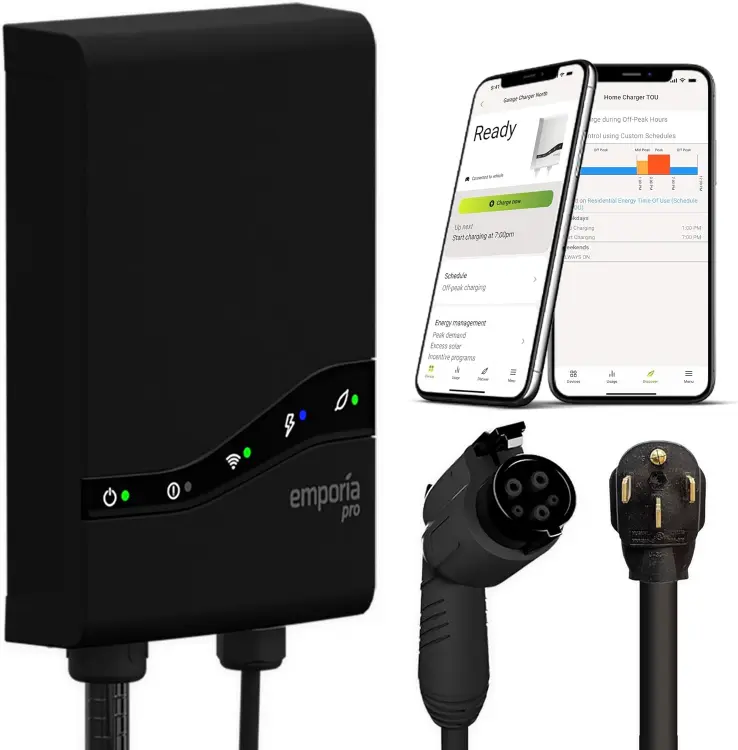
One caveat: the Emporia is rated to 48 amps (11.5 kW). Owners of the Ford Mustang Mach-E or Kia Niro EV will see a 10.5 kW cap because those vehicles do not accept more on AC. The extra capacity is still useful — it future-proofs the install for the next EV in the same garage.
Methodology
Vehicles included: Ten of the highest-volume EVs sold new in the United States for the 2026 model year, sourced from Cox Automotive Q1 2026 registration data.
Battery and charging specs: Manufacturer published technical specifications, accessed May 2026 (tesla.com, hyundaiusa.com, kia.com, ford.com, gm.com, bmwusa.com, rivian.com). Usable battery capacity used rather than gross capacity, because that is what the customer actually charges.
Charging time formula: Battery capacity in kWh divided by effective charging power in kW, multiplied by 1.1 to account for 8 to 12 percent charging losses per US Department of Energy efficiency data.
Cost calculations: $0.15/kWh national average residential electricity (EIA March 2026), $0.38/kWh average for public DC fast charging based on Electrify America, EVgo, and ChargePoint posted rates May 2026. Gas comparisons at $3.50/gal and 32 mpg.
Cold-weather impact: AAA’s 2024 cold-weather range and charging study, conducted with five EVs at 20°F. Pre-conditioning recovery figures from manufacturer-published testing.
What this excludes: Tesla NACS-to-CCS adapter delays, Tesla Supercharger access for non-Tesla EVs (which varies by manufacturer and location), and wireless inductive charging (not yet commercially available on production EVs). Battery degradation effects are noted but not modelled per individual vehicle.
Date verified: June 2, 2026.
Frequently Asked Questions About EV Charging Time
How long does it take to fully charge an electric car?
A full charge takes 30 to 60 hours on a 120V household outlet (Level 1), 4 to 10 hours on a 240V Level 2 home charger, and 20 to 60 minutes for a 10 to 80 percent fast charge on a DC public station. The exact figure depends on battery size, the vehicle’s maximum charging speed, and the charger’s output. A Tesla Model Y on an 11.5 kW Level 2 home charger fills from empty in about 8 hours.
How long does a Tesla take to charge?
A Tesla Model 3 Long Range takes about 6 to 7 hours to fully charge on an 11.5 kW Level 2 home charger and 25 to 30 minutes to go from 10 to 80 percent on a V3 Supercharger (250 kW). A Model Y Long Range takes 7 to 8 hours on Level 2 and roughly 27 minutes on a Supercharger. On a 120V outlet, expect 3 to 5 days for a full charge.
Why do EV manufacturers quote 10 to 80 percent and not 0 to 100?
DC fast charging slows dramatically above 80 percent because lithium-ion cells require lower current at high state of charge to avoid damage. The final 20 percent can take as long as the first 80. Charging from 80 to 100 on a DC fast charger often doubles the session time and is rarely worth the wait. Manufacturers report 10 to 80 because that is the speed window most owners actually use on road trips.
Does cold weather affect EV charging time?
Yes, significantly. At 20°F, DC fast charging speeds can drop 30 to 50 percent until the battery warms up, according to AAA testing. A Tesla Model Y that fast-charges in 27 minutes in mild weather may take 45 minutes or more in winter. Pre-conditioning the battery while driving to the charger recovers most of that loss. Home Level 2 charging is barely affected because the rate is already slow.
Is it cheaper to charge an EV at home or at a public station?
Home charging costs about $0.15 per kWh on the 2026 US national average. Public DC fast charging averages $0.38 per kWh, with premium stations reaching $0.48. Filling a 75 kWh battery from 20 to 80 percent costs $6.75 at home versus $17.10 at a public fast charger. Over five years and 60,000 miles, the gap is roughly $3,945 in favour of home charging.
How long does Level 1 charging take on a regular 120V outlet?
Level 1 adds 3 to 5 miles of range per hour of charging. A full charge on a 75 kWh battery takes 50 to 60 hours, or roughly 2 to 3 days. Level 1 only works for drivers with short daily commutes — under 40 miles round trip — who plug in every night. For everyone else, a Level 2 home charger is required.
What is the fastest charging electric car in 2026?
The Hyundai Ioniq 5, Ioniq 6, Kia EV6, and Kia EV9 charge fastest among mainstream EVs, using an 800-volt architecture that supports 350 kW peak DC charging and a 10 to 80 percent fast-charge time of 18 minutes. The Lucid Air Grand Touring and Porsche Taycan match or beat that on the right charger. Most other EVs sit between 25 and 40 minutes for the same window.
Do you have to charge an EV to 100 percent every time?
No, and you should not. Lithium-ion cells degrade fastest when held at 100 percent state of charge. Most manufacturers recommend a daily charge limit of 80 to 90 percent and charging to 100 only before a long trip. Tesla Model 3 packs retain 90 to 92 percent capacity after five years when charged this way. The 80 percent ceiling is also where DC fast charging slows down, making it the practical stopping point on a road trip.
Final Verdict on How Long It Takes to Charge an Electric Car
Ultimately, the answer to how long it takes to charge an electric car is whichever charger you use most of the time. For 90 percent of owners, that is a Level 2 charger in the garage, which means the answer is overnight. In practice, you plug in at dinner and drive to work in the morning at 100 percent. As a result, the number on the screen never really comes up.
Meanwhile, the Level 3 conversation matters only when you leave town. There, the spread between the Hyundai-Kia 800-volt platform (18 minutes) and a Rivian R1T LR (41 minutes) is the difference between a quick stop and a sit-down lunch. Therefore, if you road-trip frequently, that gap is worth chasing. Otherwise, it is not.
Finally, the Level 1 conversation matters in only one direction: if you do not have access to anything else, you almost certainly should not buy an EV. In short, the numbers in this guide do not work without a 240V circuit to charge an electric car overnight in your garage or on your driveway. Above all, confirm the install path before signing the lease — not after.