One of the first things people say after buying an electric car is that they never have to worry about maintenance again. Dealers say it. YouTube says it. The person at the office who just got a Model Y says it. And it is roughly 60% true, which makes it the kind of claim that costs people money when they take it literally.
An EV does eliminate the most frequent and expensive gas car maintenance items: oil changes, spark plugs, timing belts, exhaust work, transmission services. That is real. What it does not eliminate is tyres, brake fluid, coolant, suspension work, and a handful of components that EV owners tend to forget about until something goes wrong. The DOE puts EV maintenance at $0.061 per mile versus $0.101 for gas, saving roughly $3,000 over five years at 15,000 miles annually. But those savings only materialise if you know what to maintain, when to do it, and which maintenance myths to ignore.
Quick Answer
Electric cars need less maintenance than gas cars, but “less” is not “none.” You still replace tyres, wipers, cabin air filters, brake fluid, and coolant. You still need suspension and alignment work. What you skip entirely: oil changes, spark plugs, timing belts, transmission fluid services, exhaust system repairs, and most brake pad replacements. The DOE puts EV maintenance at $0.061 per mile versus $0.101 for gas — a $3,000 saving over five years at 15,000 miles annually. The catch: EV tyres cost roughly $200 more over five years because of the extra vehicle weight, and the single most overlooked failure point is the $100–$300 twelve-volt battery that can strand you in a parking lot with a full main battery.
$0.061/mi
EV maintenance cost (DOE 2025)
$3,000
Saved vs gas over 5 years
~60%
Fewer moving parts than gas
$200
Extra tyre cost over 5 years
Table of Contents
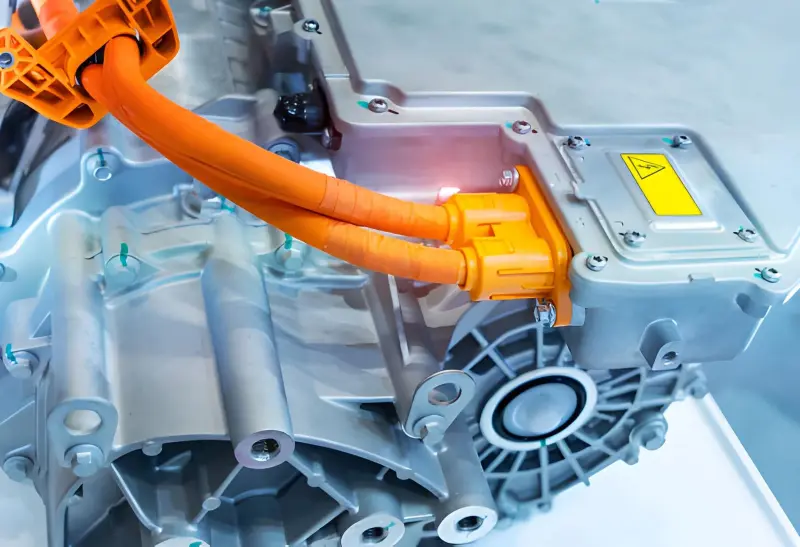
What You Skip Entirely on an EV
The maintenance list you can cross off permanently is longer than most people expect. An electric motor has roughly 20 moving parts. A four-cylinder gas engine has around 200. That difference shows up on every service invoice.
No oil changes. No oil filter. No spark plugs or ignition coils. No timing belt or timing chain. No serpentine belt. No multi-speed transmission service. No exhaust system, which means no catalytic converter, no muffler, and no exhaust manifold gaskets. No fuel injectors, no fuel filter, no fuel pump. No emission system components like EGR valves or oxygen sensors.
For context, oil changes alone cost the average gas car owner $600 to $900 over five years, according to AAA’s annual driving cost study. A timing belt replacement runs $500 to $1,000. Exhaust repairs on older vehicles can hit $1,200. None of those line items exist on an EV service ticket.
If you want a deeper look at why that matters financially, our guide to why EVs don’t need oil changes covers the engineering behind it.
Six Maintenance Items Every EV Still Needs
The “EVs are maintenance-free” line gets repeated so often that people believe it. It is closer to truth than most marketing, but it is still wrong.
1. Tyres
Tyres are where the money goes. EVs weigh more because of the battery pack. A Chevrolet Equinox EV weighs roughly 4,900 lbs compared to about 3,600 lbs for the gas RAV4. That extra 1,300 lbs sits directly on the tyres, compressing the contact patch and wearing through tread faster.
On top of that, electric motors deliver full torque from zero RPM. Every launch loads the front or rear tyres harder than a gas engine does at the same speed. Expect to spend roughly $200 more on tyres over five years compared to a gas equivalent, per DOE data. Tyre retailers report similar numbers across multiple EV models.
Many manufacturers recommend EV-specific tyres with lower rolling resistance and reinforced sidewalls. These cost 10–15% more per set than standard all-season tyres. They are not strictly required, but using standard tyres on a heavy EV typically means shorter tread life and marginally reduced range.
2. Brake Fluid
Brake fluid is hygroscopic. It absorbs moisture from the air over time regardless of how often you use the brakes. Most manufacturers recommend replacing it every 2–3 years. This applies to EVs exactly the same way it applies to gas cars. Cost is typically $100 to $150 per service.
One nuance: because regenerative braking handles most deceleration in an EV, the friction brakes activate less frequently. That is good for pad life, but it means the fluid sits in the callipers longer without reaching high temperatures. High temperatures normally boil off trace moisture. In an EV, that moisture accumulates, which is why the fluid change interval matters more than you might assume for a car whose brakes barely get used.
3. Cabin Air Filter
Same filter, same clogging, same replacement schedule as a gas car: every 15,000 to 20,000 miles, or once a year in dusty conditions. Parts cost $15 to $40 and most take five minutes to swap at home. Tesla charges more for their HEPA filter, but the job is identical.
4. Battery Coolant
Your battery pack has its own thermal management loop, separate from the cabin HVAC system, and it uses coolant. Most manufacturers call for inspection every 4–5 years and replacement around the same interval. Expect $150 to $250 at a dealer.
Do not confuse this with engine coolant from a gas car. EV battery coolant is typically a dielectric fluid or a specially formulated glycol blend designed for the battery pack’s temperature range. Wrong coolant can damage the thermal management system. Stick with what the manufacturer specifies.
5. Windshield Wipers and Washer Fluid
Nothing changes here. Rain is rain. Wipers wear out every 6–12 months regardless of powertrain. Washer fluid still needs refilling. This is the most boring maintenance item on the list, but it is the one people forget about because every other EV article focuses on the dramatic stuff.
6. Suspension and Alignment
Heavier vehicles wear suspension components faster. Struts, shocks, control arm bushings, and wheel bearings all work harder under 4,500 to 6,000 lbs than under 3,200 to 3,800 lbs. Get an alignment check annually, or sooner after hitting a significant pothole. If your daily commute involves rough roads, budget for suspension work earlier than you would on a lighter gas car.
Real Maintenance Costs: EV vs Hybrid vs Gas (DOE 2025 Data)
The Department of Energy’s Alternative Fuels Data Center publishes maintenance cost-per-mile figures for each powertrain type. These are the numbers that should anchor any comparison, because they are based on actual fleet data, not manufacturer estimates.
| Metric | EV | Hybrid | Gas |
|---|---|---|---|
| Cost per mile | $0.061 | $0.088 | $0.101 |
| Annual cost (15k mi) | $915 | $1,320 | $1,515 |
| 5-year total | $4,575 | $6,600 | $7,575 |
| EV saving vs this powertrain | — | $2,025 | $3,000 |
The EV wins clearly on maintenance alone. But $3,000 over five years is $600 per year. That is real money, but it does not single-handedly justify choosing an EV over gas or hybrid if the rest of the ownership math does not work. Our gas vs hybrid vs EV five-year cost comparison breaks down the full picture, including insurance, depreciation, and fuel.
A Practical EV Maintenance Schedule
Most EV owner’s manuals are vague on maintenance schedules compared to gas car manuals, because there is less to schedule. That leaves owners guessing. This is a practical timeline based on manufacturer recommendations across Tesla, Chevrolet, Hyundai, Ford, and BMW EVs.
| Item | Interval | Estimated Cost |
|---|---|---|
| Tyre rotation | Every 5,000–7,500 mi | $30–$50 |
| Tyre replacement | Every 25,000–40,000 mi | $600–$1,200 per set |
| Cabin air filter | Every 15,000–20,000 mi | $15–$40 (DIY) |
| Brake fluid replacement | Every 2–3 years | $100–$150 |
| Windshield wipers | Every 6–12 months | $20–$40 |
| Battery coolant | Every 4–5 years / 50,000 mi | $150–$250 |
| 12V auxiliary battery | Every 3–5 years | $100–$300 |
| Wheel alignment check | Annually | $80–$120 |
| Brake inspection (pads/rotors) | Every 20,000–30,000 mi | $0 (visual) / $300–$500 (replacement) |
The gap in this data that bothers me most: suspension. Nobody knows how suspension costs will track over 100,000+ miles on heavier EVs versus gas equivalents, because most EVs on the road today are under seven years old. Suspension wear tends to show up at year eight or nine. When those cars hit 120,000 miles, the maintenance advantage might shrink. Or it might hold. Right now, anyone claiming to know is guessing.
The Three Items Most EV Owners Overlook
The 12-Volt Battery
Every EV has a small 12-volt battery alongside the main high-voltage pack. It powers the door locks, infotainment screen, headlights, and the contactor relay that connects the high-voltage battery to the motor. When it dies, your car will not move. Full main battery, parked in the driveway, completely inert.
Tesla, Hyundai, Chevy, and Ford EV owners hit this regularly enough that it should be common knowledge. It is not. The 12V lasts 3 to 5 years and costs $100 to $300 to replace depending on the vehicle. Some models use a lithium 12V that lasts longer, but most still run lead-acid. Past your third year of ownership and never thought about it? Now is the time.
Brake Corrosion From Disuse
Regenerative braking is efficient enough that many EV owners barely touch the brake pedal in normal driving. Good for pad life. Bad for the rotors, which develop a layer of rust from sitting unused in humid conditions. In salt-belt states, this accelerates quickly.
Corroded rotors cause pulsation and noise when you do need the friction brakes. Stopping power drops. The fix: use the friction brakes deliberately at least once a week. Apply them firmly from 30 mph to a full stop. That cleans the rotor surface and keeps the calliper pistons from seizing. Some manufacturers recommend switching off regenerative braking periodically to force friction brake engagement. Feels wasteful, but it is cheaper than replacing seized callipers.
Software Updates as Maintenance
Over-the-air software updates on EVs are not just feature additions. They frequently include battery management optimisations and charging speed adjustments that directly affect range and longevity. Skip them, and your car runs an outdated battery strategy while the manufacturer has already moved on. Read the release notes. They are boring, but they tell you whether your car just got meaningfully better or just changed the font on the dashboard.
When the Maintenance Savings Do Not Justify an EV
The $3,000 five-year maintenance advantage is real. It is also not enough on its own to make an EV the right financial decision.
Low-mileage drivers feel it least. Under 8,000 miles per year, the maintenance saving drops to roughly $1,800 over five years, and the reduced mileage also shrinks the fuel saving. At that usage level, the gas SUV is the rational choice. The full EV vs gas cost comparison shows how the math shifts at different mileage levels.
Short ownership cycles work against you too. Trade in every three years and the maintenance advantage is only $1,800, which gets swallowed by faster depreciation. An EV depreciates $3,703 more than a gas RAV4 over five years. On a three-year cycle, that depreciation hit lands before enough maintenance savings accumulate to compensate.
Then there is the charging question. Without home charging, the EV’s five-year energy cost jumps from $4,200 to $8,145, turning the monthly cost picture upside down. The $3,000 maintenance saving does not cover a $3,945 charging penalty.
Used EVs past warranty are the scenario where maintenance math can reverse entirely. A battery pack replacement on a Tesla Model 3 runs $12,000 to $16,000. On a Nissan Leaf, $6,500 to $9,000. One out-of-warranty battery failure wipes out decades of maintenance savings. That does not mean used EVs are bad purchases. It means the battery’s health report matters more than any other line item on a used EV inspection.
Methodology
Maintenance cost-per-mile figures come from the DOE Alternative Fuels Data Center (AFDC), published 2025, based on U.S. fleet maintenance data. Five-year totals assume 15,000 miles per year. Tyre cost differentials are from the DOE’s ownership cost model and represent the average additional tyre expense for EVs due to higher vehicle weight. Specific service interval recommendations are consolidated from 2024–2026 owner’s manuals for Tesla Model 3/Y, Chevrolet Equinox EV, Hyundai Ioniq 5/6, Ford Mustang Mach-E, and BMW iX. Data verified May 2026.
Frequently Asked Questions
Do electric cars need oil changes?
No. Electric cars have no engine oil, no oil filter, and no combustion engine. The electric motor uses a sealed lubrication system that requires no scheduled changes over the vehicle’s life.
How much does EV maintenance cost per year compared to a gas car?
DOE 2025 data puts EV maintenance at $0.061 per mile versus $0.101 for gas. At 15,000 miles per year, that is $915 for an EV versus $1,515 for gas — a saving of $600 annually.
Do electric cars need brake pad replacements?
Rarely. Regenerative braking handles most deceleration, so the friction brakes see minimal wear. Many EV owners go 100,000 miles or more before needing new pads. The bigger concern is brake corrosion from disuse in humid or salt-belt climates.
Do EVs need transmission fluid changes?
Most EVs use a single-speed reduction gear with sealed lubricant that is either lifetime-fill or changed once around 150,000 miles. Check your owner’s manual, but this is not a recurring cost for most EV owners.
Why do EV tyres wear out faster than gas car tyres?
Two reasons: weight and torque. The battery pack makes EVs heavier, which loads the tyres more. Instant torque from the electric motor accelerates tread wear during launches. Budget roughly $200 more over five years compared to a gas equivalent.
Does an EV battery need maintenance?
The battery pack itself requires no user-serviceable maintenance. The thermal management system uses coolant that should be inspected on the manufacturer’s schedule, typically every 4–5 years. Keeping daily charge between 20% and 80% helps preserve long-term capacity. Our guide to maximising EV battery life covers the full set of best practices.
What is the most overlooked maintenance item on an EV?
The 12-volt auxiliary battery. Every EV has one. When it dies, the car will not start, even with a full main battery. Most last 3–5 years and cost $100–$300 to replace.
Is it worth getting an EV just for the maintenance savings?
No. The $3,000 five-year maintenance advantage is real, but it does not offset a higher purchase price, higher insurance, and faster depreciation on its own. Maintenance savings are one piece of a total cost picture that depends on home charging access, annual mileage, and how long you keep the car.

James Carter
Founder & Lead Analyst — DriveAuthority
James has spent over a decade analysing automotive markets, EV total cost of ownership, and the structural economics behind vehicle pricing. DriveAuthority was built to give buyers the same level of financial rigour applied to any major purchase decision — without the manufacturer-friendly framing common in traditional auto media.