How do electric cars work? At the most basic level: a battery stores energy, an inverter converts it, and an electric motor spins the wheels. There are no pistons firing, no fuel injectors, and no exhaust valves opening and closing thousands of times per minute. The simplicity is the point.
However, “simple” does not mean there is nothing to understand. The battery chemistry, the charging speed, the regenerative braking system, and the thermal management all determine whether an EV delivers the range on the window sticker or falls 41% short of it in January at 20 degrees. As a result, knowing how these systems actually function helps you ask the right questions before spending $35,000 on a car that works on entirely different physics than the one you grew up with.
This breakdown covers the five core systems inside every electric car, explains what each one actually does, and connects the engineering to the real-world numbers that affect your ownership experience.
Quick Answer
Electric cars work by drawing stored electrical energy from a lithium-ion battery pack, converting it from DC to AC through an inverter, and feeding it to an electric motor that spins the wheels through a single-speed gear. No multi-gear transmission, no combustion, no exhaust. Regenerative braking recovers 10–25% of kinetic energy back to the battery. Charging options range from a slow 120V household outlet (3–5 miles/hour) to DC fast chargers that add 200+ miles in 30 minutes. Real-world range at highway speed is typically 15–18% below the EPA figure, and cold weather at 20°F drops it by 41% (AAA 2024). The mechanical simplicity means fewer moving parts and roughly $3,000 less in maintenance over five years versus a gas car (DOE 2025).
~20
Moving parts in an EV motor vs ~200 in a gas engine
85–90%
Energy efficiency of an electric motor (vs 25–30% for gas)
10–25%
Energy recovered through regenerative braking
$0.061/mi
EV maintenance cost per mile (DOE 2025)
Table of Contents
- How Electric Cars Work vs Gas Cars: The Core Difference
- The Battery Pack: Where the Energy Lives
- How Electric Car Motors Turn Electricity into Motion
- Regenerative Braking: The System That Gives Energy Back
- How Electric Car Charging Works: Level 1, Level 2, and DC Fast
- Thermal Management: Why Temperature Changes Everything
- Electric Cars vs Hybrids vs Plug-In Hybrids
- Real-World Range: What the EPA Number Actually Means
- When an Electric Car Is the Wrong Choice
- Methodology
- FAQ
How Electric Cars Work vs Gas Cars: The Core Difference
A gas car converts chemical energy into mechanical energy through controlled explosions. Fuel mixes with air inside a cylinder, a spark plug ignites it, and the expanding gas pushes a piston down. That piston connects to a crankshaft, which connects to a transmission, which connects to a driveshaft, which finally turns the wheels. Consequently, each step loses energy to heat and friction.
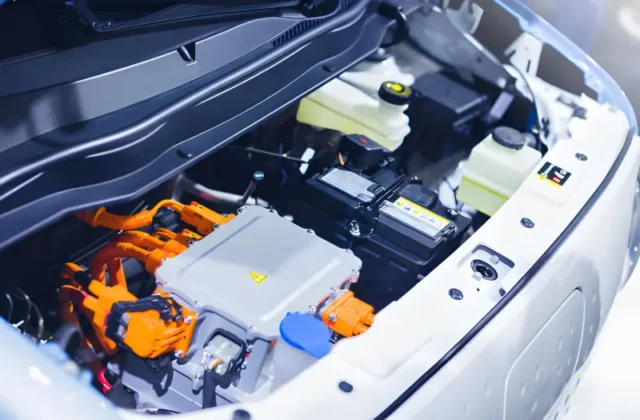
An electric car, on the other hand, skips almost all of that. Stored electrical energy flows from a battery through an inverter to an electric motor. From there, a single-speed reduction gear sends the rotation to the wheels. Just three major components instead of dozens.
That difference in complexity shows up everywhere. A gas engine operates at about 25–30% thermal efficiency, meaning 70–75% of the fuel’s energy is lost as waste heat. By contrast, an electric motor operates at 85–90% efficiency. More energy reaches the wheels, and less escapes through the radiator and exhaust pipe. This is also why EVs produce less waste heat at idle, and why your cabin heater in an EV draws power directly from the battery rather than harvesting it from the engine block for free.
Fewer parts also mean fewer things to break. For example, an EV motor has roughly 20 moving parts, while a four-cylinder gas engine has around 200. Over five years at 15,000 miles annually, DOE 2025 data puts EV maintenance at $0.061 per mile versus $0.101 for gas. That gap therefore translates to about $3,000 in savings over the ownership period.
The Battery Pack: Where the Energy Lives
The battery is the most expensive component in an electric car, yet it is also the least understood. Most people think of it as one giant battery, like a phone battery scaled up. In reality, it is more like thousands of small batteries wired together in a carefully managed structure.
What Is Inside the Pack
A typical EV battery pack contains thousands of individual lithium-ion cells. These cells are grouped into modules, and the modules are then assembled into a pack that sits beneath the floor of the car. Because of that low position, the centre of gravity drops, which improves handling and stability.
Inside each cell, lithium ions move between two electrodes. On one side, the negative electrode (anode) is usually graphite. On the other, the positive electrode (cathode) varies by manufacturer and determines the battery’s characteristics. During discharge, lithium ions travel from the anode through a liquid or gel electrolyte to the cathode, releasing electrons that flow through an external circuit to power the motor. Plug the car in, and the process reverses.
NMC vs LFP: Two Chemistries, Different Trade-Offs
The two most common cathode chemistries in 2026 are nickel-manganese-cobalt (NMC) and lithium iron phosphate (LFP). Tesla’s 4680 cells use NMC. BYD’s Blade battery uses LFP.
| Factor | NMC (Tesla 4680) | LFP (BYD Blade) |
|---|---|---|
| Energy density | Higher | Lower |
| Cycle life | 1,500–2,000 cycles | 3,000+ cycles |
| Daily charge to 100% | Not recommended | Safe, no penalty |
| Thermal safety | Good (active cooling required) | Superior (passes nail test) |
| Cold-weather performance | Stronger | Weaker |
| Cost per kWh | Higher (uses cobalt) | Lower |
Neither chemistry is objectively better. NMC packs more energy into less weight, which means more range per pound of battery. LFP, on the other hand, is cheaper, lasts longer, and tolerates daily full charges without degradation. If you live somewhere cold, NMC handles low temperatures better. But if you want to charge to 100% every night without worrying about battery health, LFP is the more forgiving choice.
The Battery Management System
No battery pack works without a battery management system (BMS). Essentially, this is the circuit board that monitors voltage, temperature, and state of charge across every cell in the pack. In addition, it balances charge between cells to prevent any single cell from overcharging or deep-discharging, both of which cause permanent damage.
The BMS is also why your charging speed drops above 80%. As cells approach full capacity, the system reduces current to avoid overheating and degradation. This is not a flaw — rather, it is a deliberate engineering decision that protects a component costing $8,000–$15,000 to replace.
How Electric Car Motors Turn Electricity into Motion
The electric motor is where stored energy becomes movement. Understanding how electric cars work starts here, because the motor is doing a job that took an engine, transmission, exhaust system, and catalytic converter to accomplish in a gas car.
The Role of the Inverter
The battery stores energy as direct current (DC), but the motor runs on alternating current (AC). So the inverter sits between them and converts one to the other at whatever frequency the motor needs at that moment. When you press the accelerator harder, the inverter increases the frequency and voltage. When you coast, it reduces them. In effect, the inverter is the translator between what the battery can give and what the motor needs.
Permanent Magnet vs Induction Motors
Most EVs in 2026 use one of two motor types. Permanent magnet synchronous motors use magnets embedded in the rotor to create a magnetic field. Because of that design, they are more efficient at low and mid speeds, which is why they dominate in commuter-focused EVs. Induction motors, the type Tesla originally used in the Model S, create their magnetic field electromagnetically instead. They handle high speeds well, although they are slightly less efficient during stop-and-go driving.
Some dual-motor EVs use both types simultaneously. For instance, Tesla’s Model Y pairs a permanent magnet motor on the rear axle for efficiency with an induction motor on the front for extra power when needed. The car’s computer decides which motor works, which one rests, and when both engage. You never feel the handoff.
Why There Is No Multi-Gear Transmission
A gas engine produces usable torque across a narrow RPM range. That is why it needs a transmission with multiple gears: to keep the engine spinning within that productive window at different speeds. An electric motor, however, produces full torque from 0 RPM and maintains usable power across a range wide enough to cover everything from parking-lot crawl to highway speed. As a result, a single reduction gear is sufficient.
Consider the numbers: a Tesla Model 3 Performance does 0–100 km/h in 3.3 seconds with that single gear. There are no shift points, no turbo lag, and no delay between pressing the pedal and feeling the car accelerate. That instant response is not a bonus feature of EVs — it is a fundamental property of how electric motors produce torque.
Regenerative Braking: The System That Gives Energy Back
In a gas car, braking converts kinetic energy into heat through friction pads. That energy is gone. Wasted. In an electric car, however, the motor can run in reverse. When you lift off the accelerator, the wheels start spinning the motor instead of the motor spinning the wheels. As a result, the motor becomes a generator, converting kinetic energy back into electricity and feeding it into the battery.
This is regenerative braking. It recovers roughly 10–25% of the energy that would otherwise be lost, depending on driving conditions and how aggressively the system is tuned. City driving benefits the most, because every stoplight and every slowdown becomes an opportunity to recapture energy. By contrast, highway cruising at constant speed offers almost no regen opportunity.
One-Pedal Driving
Many EVs offer a one-pedal driving mode where regenerative braking is strong enough to bring the car to a complete stop. You accelerate with the pedal and slow down by releasing it. The friction brakes only engage for hard stops or emergencies.
Because of this design, EV brake pads last significantly longer than those on a gas car. Some EV owners go 100,000+ miles before needing a replacement. The trade-off, however, is a driving feel that takes adjustment. Specifically, the deceleration when you lift off can feel abrupt if you are used to gas cars, where coasting feels neutral. Still, most drivers adapt within a week. Some never switch back to the standard braking mode.
How Electric Car Charging Works: Level 1, Level 2, and DC Fast
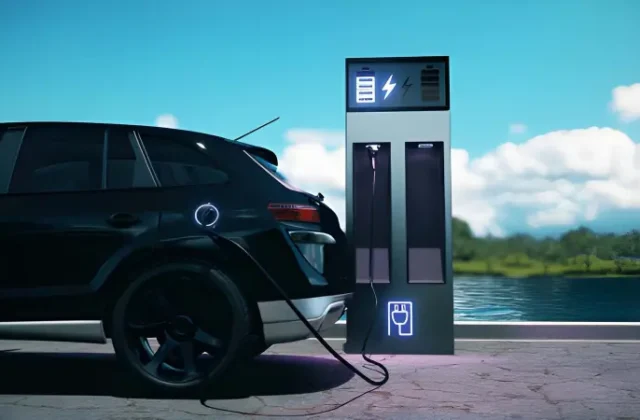
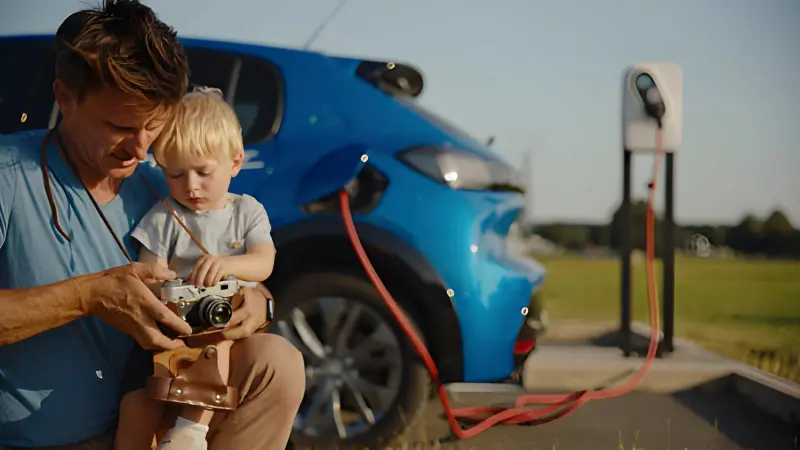
Charging an EV is not like filling a gas tank. There is no single speed. Instead, the rate at which energy enters the battery depends on the charger type, the car’s onboard charger, the battery’s current state of charge, and the ambient temperature. Understanding how electric cars work therefore means understanding why charging is not one experience but three very different ones.
Level 1: The Standard Outlet
A Level 1 charger is the cord that comes with the car. You plug it into any standard 120V household outlet, and it adds 3–5 miles of range per hour. For a car with a 319-mile range starting near empty, that means a full charge takes 50–80 hours. As a result, Level 1 is practical only if you drive fewer than 30 miles daily and have all night to charge. For most buyers, it serves as an emergency backup, not a real charging solution.
Level 2: The Home Charger
Level 2 uses a 240V circuit, the same type that powers a clothes dryer. A dedicated home charger or a hardwired wall unit delivers 25–35 miles of range per hour. Because of that speed, most EVs charge fully overnight in 6–10 hours on Level 2. This is the charging method that makes the EV cost equation work, since home electricity costs $0.15/kWh nationally versus $0.38/kWh at public DC fast chargers.
The cost difference is not small. Over five years at 15,000 miles annually, home charging costs $4,200, while public-only charging costs $8,145. That $3,945 gap is enough to turn the EV from the cheapest option into the most expensive one. So if you are considering an EV and do not have a 240V outlet in your garage or a realistic plan to install one, this is the number that should give you pause. Our electric car maintenance guide breaks down how these charging costs fit into total ownership.
DC Fast Charging: Road Trip Speed
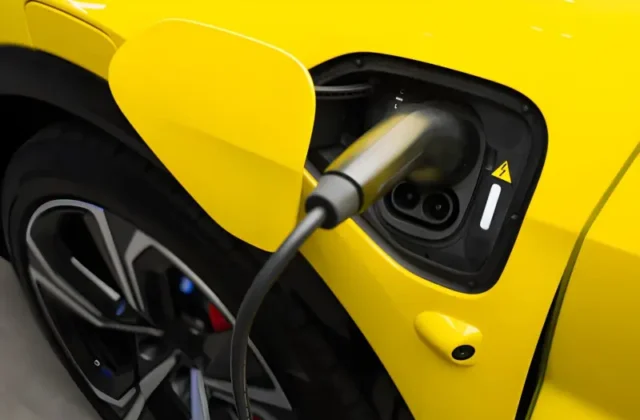
DC fast chargers bypass the car’s onboard charger entirely. Instead, they push high-voltage direct current straight into the battery. Tesla’s V3 Superchargers peak at 250 kW, while the newer V4 units peak at 350 kW. At those speeds, a Model 3 or Model Y can go from 10% to 80% in 20–30 minutes at a V3 station.
Two things slow DC fast charging down, however. First, the battery management system reduces current above 80% to protect cell health, so that last 20% takes disproportionately long. Second, the battery charges faster when warm — a cold-soaked battery in winter therefore accepts less current. To address this, Tesla and other manufacturers now pre-condition the battery when you navigate to a Supercharger, warming it to optimal temperature before you arrive. This works, although only if you use the car’s built-in navigation.
Thermal Management: Why Temperature Changes Everything
The battery pack in an electric car has an operating sweet spot: roughly 60–80°F. Outside that window, performance degrades. To compensate, the thermal management system uses liquid coolant, heating elements, and sometimes a heat pump to keep the pack in range.
In hot weather, the system cools the battery during charging and driving to prevent thermal runaway, a condition where overheating causes a chain reaction in the cells. In cold weather, it warms the battery to maintain chemical reactivity instead. Both processes consume energy from the battery itself, which is why extreme temperatures reduce your range even before you have driven a single mile.
Heat Pumps vs Resistive Heaters
The cabin heater in an EV also matters for range. A resistive heater draws 3–5 kW directly from the battery, which translates to roughly 10–15 miles of range consumed per hour of heating. Heat pumps are more efficient because they move existing heat rather than generating it from scratch. As a result, an EV with a heat pump recovers approximately 8–12 percentage points of cold-weather range loss compared to one with only resistive heating.
If you live in a cold climate and are comparing EVs, check whether the model includes a heat pump. It is not a luxury feature — it is the difference between losing 25% of your range in winter and losing 38%.
Electric Cars vs Hybrids vs Plug-In Hybrids
The term “electric car” gets applied loosely. In practice, three distinct powertrains exist, and they work differently enough to matter for your purchasing decision.
The Three Powertrain Types
A battery electric vehicle (BEV) runs entirely on electricity — no gas engine, no fuel tank, no tailpipe. Every mile comes from the battery. The Chevrolet Equinox EV LT is one example, with an MSRP of $34,995.
A hybrid (HEV), by comparison, pairs a gas engine with a small electric motor and battery. It cannot plug in. Instead, the battery recharges through regenerative braking and the engine. The electric motor assists during acceleration and low-speed driving, then the gas engine takes over on the highway. The Toyota RAV4 Hybrid LE is a typical example at $34,995 MSRP. Its five-year total cost of ownership sits at $38,883, just $1,661 behind the EV with home charging.
A plug-in hybrid (PHEV) adds a larger battery to the hybrid formula. You can charge it from an outlet and drive 20–50 miles on electricity alone before the gas engine activates. After that, it functions as a standard hybrid.
Which Powertrain Makes Financial Sense
For buyers without home charging access, driving under 15,000 miles annually, or trading in within three years, the hybrid is often the most rational financial choice. It recovers its $4,800 purchase premium over gas within the ownership window and asks nothing of your parking situation. As our electric cars pros and cons breakdown covers in detail, the conditions that make an EV win on cost are specific, not universal.
Real-World Range: What the EPA Number Actually Means
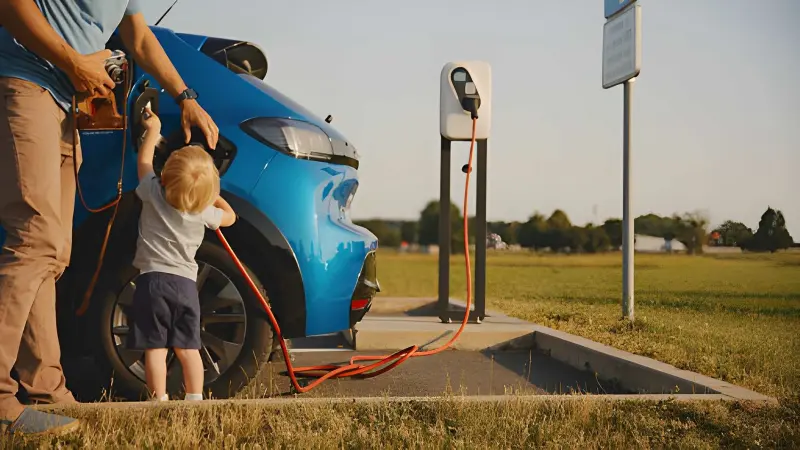
The EPA range figure on the window sticker is measured at 75°F, with climate control off, at an average speed of 19.6 mph, on a dynamometer. Nobody drives like that. While the number is useful for comparing one EV against another, it is not useful for planning your Tuesday commute without adjustment.
At 70 mph on the highway in mild weather, for example, real-world range for most EVs falls 15–18% below EPA. A 2026 Chevrolet Equinox EV rated at 319 miles delivers roughly 265 miles. Similarly, a Tesla Model Y Long Range rated at 330 miles delivers about 275 miles. The Hyundai Ioniq 6, with its 0.21 drag coefficient (lowest of any production EV), closes that gap to around 300 miles against a 361-mile EPA rating.
| Vehicle | EPA Range | Real-World | Gap |
|---|---|---|---|
| Hyundai Ioniq 6 SE RWD | 361 mi | ~300 mi | –17% |
| Tesla Model 3 LR RWD | 341 mi | ~285 mi | –16% |
| Tesla Model Y LR AWD | 330 mi | ~275 mi | –17% |
| Chevy Equinox EV LT | 319 mi | ~265 mi | –17% |
| Ford Mustang Mach-E RWD | 311 mi | ~250 mi | –20% |
Speed Kills Range
Aerodynamic drag increases with the square of speed, which is why driving at 80 mph versus 65 mph costs 20–25% of your range. At 75 mph versus 60 mph, aerodynamic drag increases by approximately 56%. Consequently, an EV that comfortably covers 265 miles at 65 mph might struggle to reach 200 miles at 80 mph. If you regularly drive fast on highways, this is not a minor footnote — it is the primary factor governing how far you can go between charges.
Cold Weather and the 41% Problem
AAA’s 2024 cold-weather EV range study found that at 20°F with the heater running, EV range drops by an average of 41% from the EPA figure. A car rated at 319 miles therefore delivers roughly 188 miles in those conditions. The cabin heater drains 3–5 kW from the battery. At the same time, the battery’s internal chemistry slows down at low temperatures, reducing the energy it can release. On top of that, the thermal management system itself consumes power to keep the pack warm enough to function.
For planning purposes: above 50°F, no adjustment is needed. Between 32°F and 50°F, multiply EPA range by 0.88. Below 32°F with a heat pump, multiply by 0.72. Without a heat pump below 32°F, multiply by 0.62. These are planning numbers, not guarantees — but they are closer to reality than the sticker.
When an Electric Car Is the Wrong Choice
Understanding how electric cars work is valuable even if the conclusion is that one should not be in your driveway. Although the technology is sound, an EV is the wrong financial choice if any of these conditions apply to you:
- No home charging access. Public-only charging raises your five-year energy cost from $4,200 to $8,145 and consequently makes the EV the most expensive powertrain option.
- You drive under 8,000 miles per year. At that mileage, a gas SUV is the rational choice because the hybrid premium is not recovered and the EV’s fuel savings are too small to offset higher insurance and depreciation.
- You trade in every three years. EV depreciation runs steeper than gas — the Equinox EV retains roughly 48% of its value after five years versus 52% for the gas RAV4. Sell at year three, and you have not held the car long enough for the fuel and maintenance savings to offset the depreciation gap.
- You tow heavy loads regularly. A Tesla Model Y’s range drops to 100–120 miles when towing a 3,500 lb trailer. If your work or lifestyle involves frequent towing over distance, the range penalty therefore makes an EV impractical without multiple charging stops per trip.
- You live in a cold climate with unreliable public charging. Losing 41% of your rated range in winter is manageable with home charging and short commutes. However, it is not manageable if your nearest fast charger is 45 minutes away and may have broken units.
These Are Conditions, Not Criticisms
None of these are criticisms of the technology — they are conditions that change the math. The buyer who discovers their parking has no outlet the week after taking delivery is not a hypothetical. It is a pattern. Every EV cost analysis assumes home charging. If your situation does not match that assumption, the analysis does not apply to you.
For a deeper look at the financial picture, including insurance, depreciation, and maintenance over five years, see our electric cars pros and cons comparison. If you are still early in the research process, our home EV charger review covers the installation reality. And if you have already bought an EV, the maintenance guide walks through what service actually looks like year by year.
Methodology
Sources: EPA fueleconomy.gov, DOE Alternative Fuels Data Center (AFDC), AAA 2024 cold-weather EV range study, BloombergNEF battery cost projections, Edmunds highway range tests, ABRP real-world range data (2025–2026), Insurance Information Institute 2025, KBB 5-year residual values, Cox Automotive Q1 2026.
Cost assumptions: 15,000 miles per year, 5-year ownership period, $3.50 per gallon national average, home charging split of 80% at $0.15/kWh and 20% at $0.38/kWh. Reference vehicles: 2026 Chevrolet Equinox EV LT ($34,995), 2026 Toyota RAV4 Hybrid LE ($34,995), 2026 Toyota RAV4 LE ($30,195).
Range data: Real-world range figures based on Edmunds highway tests and A Better Route Planner (ABRP) crowdsourced data at 70 mph in mild weather. Cold-weather reduction percentages from AAA’s 2024 study at 20°F with cabin heat active.
What is excluded: State-level EV incentives (these vary and change frequently; check afdc.energy.gov/laws for current programs). The $7,500 federal Clean Vehicle Credit expired September 30, 2025 and is not included in any cost figures. Home charger installation costs ($500–$2,000 depending on electrical panel distance) are also excluded.
Last verified: May 2026
FAQ
How does an electric car motor work?
An electric car motor converts electrical energy from the battery into rotational force using electromagnetic fields. First, the inverter changes the battery’s DC power into AC, which then spins a permanent magnet or induction motor at up to 18,000 RPM. Because the motor produces full torque from 0 RPM, there is no need for a transmission with multiple gears. Instead, a single-speed reduction gear sends power directly to the wheels.
How far can an electric car go on one charge?
EPA-rated ranges for 2026 models run from 250 to 360 miles, but real-world range at 70 mph in mild weather is typically 15–18% below those figures. For instance, a car rated at 319 miles delivers roughly 265 miles on the highway. In cold weather at 20°F with the heater on, expect 41% below EPA instead. As a general rule, plan around 80% of EPA as your daily range estimate.
What happens inside an electric car battery?
Lithium ions move between a graphite anode and a cathode made from NMC or LFP materials. During discharge, ions flow from anode to cathode through an electrolyte, releasing electrons that power the motor. During charging, the process reverses. Throughout both cycles, a battery management system monitors temperature, voltage, and charge balance across thousands of individual cells to prevent damage.
How long does it take to charge an electric car?
It depends entirely on the charger type. Level 1 (120V household outlet) adds just 3–5 miles per hour, so it is useful only for very short daily commutes. Level 2 (240V home charger) delivers 25–35 miles per hour, which means a full charge overnight in 6–10 hours. DC fast chargers, by contrast, can take a Tesla Model 3/Y from 10% to 80% in 20–30 minutes at a 250 kW Supercharger. Above 80%, however, charging slows to protect battery health.
Do electric cars have transmissions?
Not in the traditional sense. Most use a single-speed reduction gear instead of a multi-gear transmission, because an electric motor delivers usable torque across a wide enough RPM range that multiple gears are unnecessary. A few performance EVs like the Porsche Taycan use a two-speed gearbox on the rear axle, although this is the exception rather than the rule.
What is regenerative braking and how does it work?
Regenerative braking reverses the motor’s role. When you lift off the accelerator, the motor becomes a generator — the wheels’ kinetic energy spins it backwards, producing electricity that flows back into the battery. As a result, this recovers roughly 10–25% of energy that would otherwise be lost as brake heat. In stop-and-go city driving especially, regen braking meaningfully extends range and reduces brake pad wear.
How does an electric car differ from a hybrid?
A fully electric car runs on battery power alone. A hybrid, by contrast, pairs a gas engine with a small electric motor and battery that recharges through regenerative braking and the engine — it cannot plug in. A plug-in hybrid then adds a larger battery with 20–50 miles of electric-only range before the gas engine activates. The fundamental difference: a BEV has one powertrain, while a hybrid has two.
Is it cheaper to charge an electric car than to fill up with gas?
With home charging at $0.15 per kWh, the five-year energy cost for an EV is $4,200 versus $8,205 for a gas SUV at 32 mpg and $3.50 per gallon. However, public DC fast charging at $0.38 per kWh costs $8,145 over five years — nearly identical to gas. Ultimately, home charging access determines whether the EV saves money on energy or breaks even with gas.

James Carter
Founder & Lead Analyst — DriveAuthority
James has spent over a decade analysing automotive markets, EV total cost of ownership, and the structural economics behind vehicle pricing. DriveAuthority was built to give buyers the same level of financial rigour applied to any major purchase decision — without the manufacturer-friendly framing common in traditional auto media.