The best used hybrid cars in 2026 give you something no other powertrain category can match: low fuel costs without a single infrastructure requirement. You don’t need a home charger. There is no public charging network to worry about. Range anxiety on a road trip simply does not apply. Instead, you fill up at any gas station, drive 500-600 miles per tank, and spend roughly 40% less on fuel than an equivalent gas car. For the used-car buyer specifically, the hybrid has another advantage that rarely gets discussed: the battery warranty on most Toyota hybrids extends to 10 years or 150,000 miles, meaning many three-to-five-year-old examples are still covered.
I spent two months pulling depreciation curves, fuel cost projections, and reliability data on every hybrid sold in meaningful volume between 2019 and 2023. The goal was straightforward: find which best used hybrid cars actually deliver value over a five-year ownership window, and which ones just look good on paper. Some of the results confirmed what I expected. A couple surprised me, though. And one model I assumed would rank highly turned out to have a problem most buyers never check for until it shows up as a $4,000 repair bill.
The 2020-2022 Toyota RAV4 Hybrid is the best used hybrid car for value in 2026. It returns 40 mpg combined in real-world driving, retains 53% of its original value at the five-year mark, and has an above-average Consumer Reports reliability rating every year since launch. At $26,000-$29,000 for a three-year-old example with typical mileage, it costs $8,000-$11,000 less than a new one and still has 7+ years of battery warranty remaining. The condition that changes the answer: if you drive under 8,000 miles per year, the fuel savings don’t offset the hybrid premium over a standard RAV4, and consequently the gas version is the more rational buy.
Best Used Hybrid Cars Ranked by Value for Money
This table ranks eight used hybrids by total ownership value. I weighted three factors equally: five-year fuel savings versus the gas equivalent, depreciation from the used purchase price, and reliability data from Consumer Reports. Consequently, a car that saves you $2,000 in fuel but loses $5,000 extra in depreciation is not actually a value pick, regardless of how good the mpg number looks on paper.
| Rank | Vehicle (Model Years) | Used Price Range | Real-World MPG | 5-Year Fuel Cost | CR Reliability | Verdict |
|---|---|---|---|---|---|---|
| 1 | Toyota RAV4 Hybrid (2020-2022) | $26,000-$29,000 | 40 mpg | $6,563 | Above average | Best overall |
| 2 | Toyota Prius (2020-2022) | $18,000-$23,000 | 52 mpg | $5,048 | Above average | Best value |
| 3 | Toyota Camry Hybrid (2020-2022) | $21,000-$26,000 | 44 mpg | $5,966 | Above average | Best sedan |
| 4 | Honda CR-V Hybrid (2020-2022) | $23,000-$27,000 | 38 mpg | $6,908 | Average | Buy |
| 5 | Toyota Highlander Hybrid (2020-2022) | $32,000-$37,000 | 35 mpg | $7,500 | Above average | Best 3-row |
| 6 | Hyundai Tucson Hybrid (2022) | $24,000-$28,000 | 37 mpg | $7,095 | Average | Conditional |
| 7 | Honda Accord Hybrid (2020-2022) | $22,000-$27,000 | 43 mpg | $6,105 | Average | Buy |
| 8 | Ford Escape Hybrid (2021-2022) | $20,000-$24,000 | 37 mpg | $7,095 | Below average | Conditional |
Two patterns jump out immediately. First, Toyota dominates four of the top five positions, and that is not brand loyalty talking. Rather, it is a reflection of two measurable advantages: their hybrid system is the most proven (25+ years of production data), and their resale values run 5-8 percentage points higher than competitors. As a result, if you are buying used, that resale retention acts as an insurance policy against loss.
The second pattern is equally telling: the cheapest car on this list is not the worst. In fact, the Prius at $18,000-$23,000 delivers the lowest five-year fuel cost of any vehicle here along with above-average reliability. It ranks second only because SUV demand means more buyers need the RAV4’s cargo space and ground clearance. However, if you don’t need either of those things, the Prius is the pure math winner.
Annual Fuel Cost: Best Used Hybrid Cars vs Gas Equivalents
Annual fuel cost at 15,000 miles/year, $3.50/gallon. Hybrid (blue) vs gas equivalent (grey). Source: real-world mpg from Fuelly.com owner data, May 2026.
The Highlander Hybrid stands out here. Because its gas equivalent is so thirsty at 24 mpg, the hybrid version saves $688 per year, which is the largest absolute saving on this list. Over five years, that gap reaches $3,440. For three-row buyers specifically, the fuel savings alone nearly offset any hybrid premium on the used market.
Why Used Hybrid Cars Beat Used EVs for Most Buyers in 2026
The hybrid is the most underrated choice in the gas-versus-EV debate, as the numbers consistently show. Buying one used makes the case even stronger, because the hybrid avoids three financial risks that hit used EV buyers particularly hard.
Depreciation favours the best used hybrid cars
Used EVs depreciate faster than hybrids across the board. KBB data shows a typical EV retains 48% of its value at five years versus 53% for a Toyota hybrid. That 5-point gap on a $35,000 vehicle translates to $1,750 in retained equity. On a used purchase, you have already absorbed the steepest part of the depreciation curve. Nevertheless, the EV’s ongoing loss rate remains higher because battery technology improves each model year, making older EVs feel obsolete in ways that a hybrid never does.
No infrastructure requirements for used hybrids
A used EV without home charging access costs $3,945 more in energy over five years than one with it, per DOE data at $0.38/kWh public charging versus $0.15/kWh home charging. By contrast, the used hybrid asks nothing of your parking situation. There is no Level 2 charger to install, no 240V outlet required, and no electrician visit needed. It fills up at any of the 145,000 gas stations in the United States and returns 35-52 mpg doing it.
Insurance costs less on hybrid vehicles
EVs cost approximately 18% more to insure than equivalent gas vehicles, according to the Insurance Information Institute. This aligns with findings in our full cost-of-ownership comparison. Hybrid insurance premiums, on the other hand, sit between gas and EV, typically running 5-8% above the gas equivalent rather than 18%. On a used car purchase where you are already budget-conscious, that difference compounds considerably over every year of ownership.
When the EV still wins over a used hybrid
None of this means a used EV is always the wrong choice. If you have home charging, plan to keep the car seven-plus years, and drive over 15,000 miles annually, the EV’s lower maintenance cost ($0.061/mile versus $0.088 for a hybrid, per DOE 2025) eventually wins. However, for the buyer without home charging, driving under 15,000 miles, or planning to sell within five years, the used hybrid carries less financial risk by every measure.
If the EV math works for your situation (home charging access + 15,000+ miles/year), a Level 2 charger is the single most important accessory. These are the units we’d recommend based on amperage, build quality, and smart features.
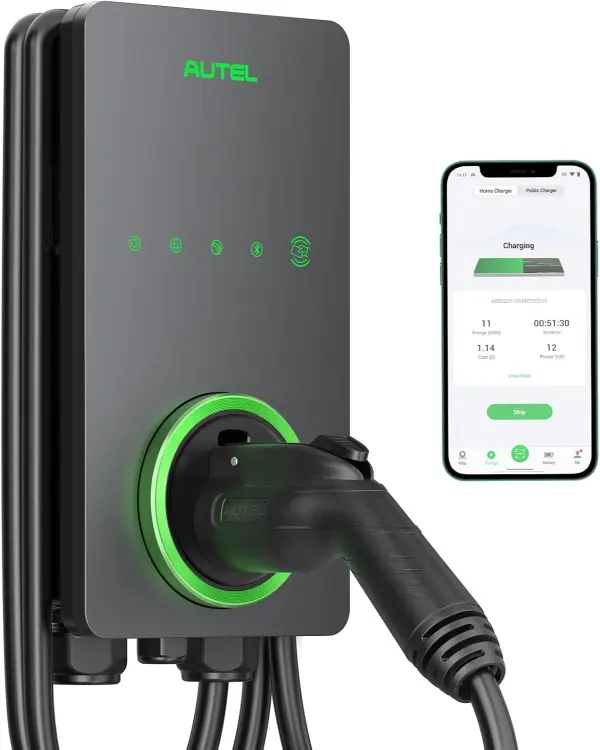 Autel MaxiCharger — 50A Hardwired
Wi-Fi + Bluetooth, 25ft cable, indoor/outdoor
Check Price on Amazon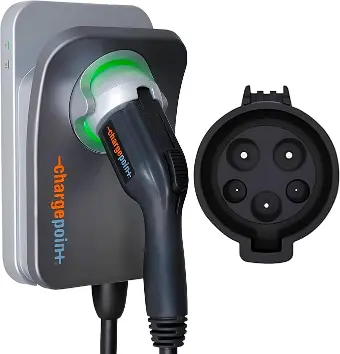 ChargePoint Home Flex — 50A Hardwired
20-80A adjustable, outdoor rated, smart app
Check Price on Amazon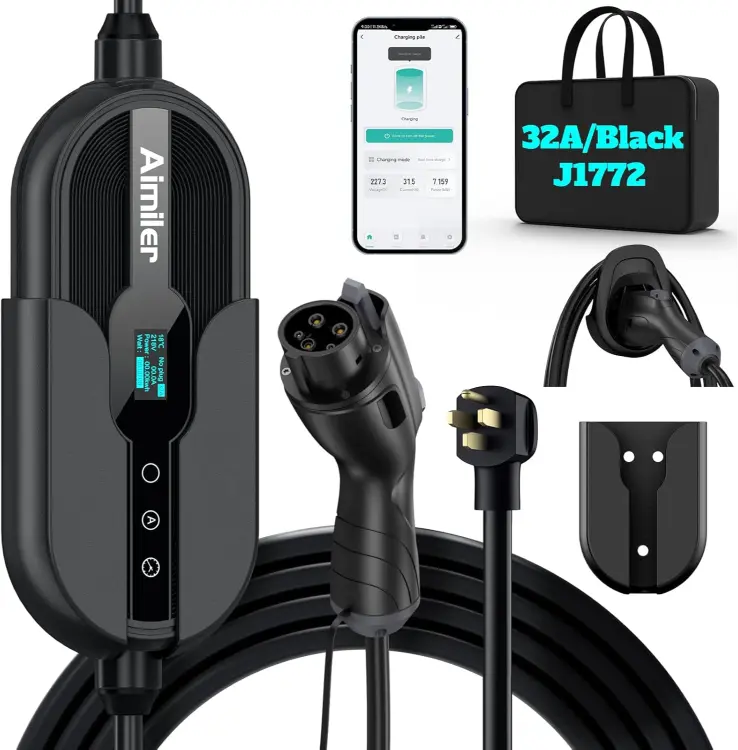 AIMILER — 32A Portable (Plug-In)
NEMA 14-50 plug, 25ft cable, Wi-Fi app, ETL certified
Check Price on AmazonAs an Amazon Associate, DriveAuthority earns from qualifying purchases. This does not affect our rankings or recommendations.
Toyota RAV4 Hybrid: The Best Used Hybrid Car Overall
The RAV4 Hybrid tops this list because it wins on the three metrics that matter most for a used buyer: fuel economy that delivers real savings, reliability data deep enough to trust, and resale value strong enough to limit your downside. As a result, it consistently outperforms alternatives across nearly every financial scenario.
What the fuel economy numbers show
The 2020-2022 RAV4 Hybrid returns 40 mpg combined in real-world driving, per owner-reported data on Fuelly.com across 1,200+ vehicles. That figure lands within 2 mpg of the EPA rating (40 city/36 highway/38 combined), which is unusually close for any hybrid. At $3.50 per gallon and 15,000 annual miles, fuel costs $1,313 per year. Meanwhile, the gas RAV4 at 32 mpg costs $1,641 per year. Annual saving: $328.
Over five years, that amounts to $1,640 in fuel savings. The hybrid costs approximately $3,000-$4,000 more than an equivalent gas RAV4 on the used market. At 15,000 miles per year, you therefore recover the premium in roughly 2.5 years. Everything past that point is savings.
Which RAV4 Hybrid model years to target
The 2021 is the sweet spot for most buyers. Toyota fixed minor infotainment bugs present in early 2019 production, and the 2021 also gained Android Auto as standard. Avoid the 2019 model year if possible: some early examples had a fuel tank issue where the gauge would read full when the tank was only 75% filled. Toyota issued a TSB but the fix was inconsistent across dealers. The 2022, in contrast, added a slightly larger infotainment screen but commands a $1,500-$2,000 premium over the 2021 on the used market for what amounts to a cosmetic upgrade.
What to watch for when buying a used RAV4 Hybrid
Check the hybrid battery health report through the Toyota app or a dealer scan. At 35,000-55,000 miles, battery degradation should be negligible. Also confirm that TSB 0035-20 (fuel tank capacity) was addressed on 2019-2020 models. In addition, look at brake pad thickness: regenerative braking means RAV4 Hybrid brake pads often last 80,000+ miles, so thin pads on a 40,000-mile car suggest heavy towing or mountain driving that put atypical stress on the system.

Toyota Camry Hybrid: Best Used Hybrid Sedan for Value
If you don’t need an SUV, the Camry Hybrid offers the same Toyota hybrid reliability in a package that is $3,000-$5,000 cheaper on the used market. It returns 44 mpg combined in real-world driving, which translates to $5,966 in fuel over five years at 15,000 miles and $3.50 per gallon.
Consumer Reports has given the 2020-2022 Camry Hybrid above-average or better reliability every year. There are no major recalls and no systemic issues to report. The hybrid system is Toyota’s fourth-generation design, refined continuously since 2018. I’d argue that the Camry Hybrid between 2020 and 2022 is one of the most boring and financially intelligent used cars on the market. Boring, in this context, is a compliment.
Used Camry Hybrid pricing breakdown
A 2021 Camry Hybrid LE with 40,000 miles sells for $21,000-$24,000. The SE trim adds $1,500-$2,000 for sportier styling. The XLE, on the other hand, adds $3,000-$4,000 for leather and a larger screen. Unless you specifically care about those upgrades, the LE delivers identical hybrid performance and reliability at the lowest price. Fuel economy does not change between trims.
Battery chemistry concerns addressed
One common question: the Camry Hybrid uses lithium-ion, while older Toyota hybrids used nickel-metal hydride. If you’ve heard that lithium-ion hybrid batteries degrade faster, the data doesn’t support that fear for Toyota specifically. Their lithium-ion packs show the same sub-1% failure rate as the older chemistry. In other words, this is not a reason to avoid newer Camry Hybrids.
Toyota Prius: Most Affordable Used Hybrid Car in 2026
The Prius has a reputation problem that works in the buyer’s favour. People think of it as the car their environmentally conscious aunt drives at 55 mph in the left lane. That reputation is costing rational buyers money, because the 2020-2022 Prius is objectively the cheapest car to fuel on this list and among the cheapest to maintain overall.
At 52 mpg combined in real-world driving, the Prius costs just $1,010 per year in fuel at $3.50 per gallon and 15,000 annual miles. Over five years, that is $5,048 total. Compare that to $8,750 for a 30 mpg gas car over the same period. The fuel savings alone reach $3,702, which nearly covers the difference between a Prius and a base Corolla on the used market.
Used Prius pricing and model years to consider
The 2020-2022 Prius sells for $18,000-$23,000 depending on trim and mileage. The base L Eco trim gets the highest mpg (58 combined EPA) but is stripped of features most buyers want. Target the LE or XLE trims instead. The AWD-e version (available from 2019+) adds a rear electric motor for light snow traction and sacrifices only 2 mpg. It commands a $1,000-$1,500 premium that is worth paying if you see any winter weather.
The redesigned 2023 Prius is faster, better looking, and substantially more expensive used ($27,000-$32,000). Unless you value styling over savings, the 2020-2022 generation at $18,000-$23,000 remains the value play. It has the same reliability record, same battery chemistry, and same fundamental powertrain. Only the sheet metal changed.
When a used Prius is not the right choice
If you regularly carry more than two passengers in the back seat, the Prius is cramped. The cargo area is small at 27.4 cu ft versus 37.6 in the RAV4 Hybrid, which limits hauling capability. And towing is not an option, because the Prius is not rated for it at all. For solo commuters and couples without cargo needs, it is the pure math winner. For everyone else, consequently, the extra $5,000-$8,000 for the RAV4 Hybrid is money well spent.
Honda CR-V Hybrid: Best Non-Toyota Used Hybrid SUV
The CR-V Hybrid exists for buyers who want a hybrid SUV but find the RAV4 interior too spartan or want a different driving character. Honda’s two-motor hybrid system works differently from Toyota’s: it uses the electric motor as the primary drive source at low speeds and engages the gas engine directly only at highway speeds. In practice, this means it feels smoother in city driving than the RAV4, although it returns slightly less fuel economy on the highway.
Real-world fuel economy sits at 38 mpg combined across owner data, versus 40 for the RAV4 Hybrid. That 2 mpg gap costs an additional $173 per year at $3.50/gallon and 15,000 miles. Over five years, the RAV4 saves $865 in fuel versus the CR-V. Whether Honda’s interior quality and driving refinement are worth that $865 is a subjective call, but the data shows both are rational choices overall.
CR-V Hybrid reliability and known concerns
Consumer Reports rates the 2020-2022 CR-V Hybrid as average for reliability, one step below the RAV4 Hybrid’s above-average rating. The hybrid system itself, however, has been trouble-free. Most CR-V complaints centre on infotainment responsiveness and HVAC noise, not the powertrain. One thing to verify on 2020 models specifically: Honda issued a software update for a fuel system that could cause rough idle in cold weather. Confirm the update was applied before purchasing.
Used CR-V Hybrid pricing vs the RAV4
Pricing runs $23,000-$27,000 for a 2020-2022 model with 35,000-55,000 miles, roughly in line with the RAV4 Hybrid. Honda’s resale value trails Toyota by 2-3 percentage points at the five-year mark. That means you’ll lose slightly more when selling but also pay slightly less when buying. It roughly balances out in the end, making the choice between them more about driving preference than financial calculation.
Four More Used Hybrid Cars Worth Considering
Toyota Highlander Hybrid: best used hybrid for families (2020-2022)
The only three-row hybrid SUV on this list, and it returns 35 mpg combined with seating for seven or eight depending on configuration. Used pricing runs $32,000-$37,000, which is steep. However, no other three-row SUV at this price point delivers this fuel economy with this reliability record. If you need three rows, this is the only rational hybrid choice available. The gas Highlander at 24 mpg costs $2,188 per year in fuel versus $1,500 for the hybrid. That annual saving of $688, over five years, totals $3,440.
Hyundai Tucson Hybrid (2022)
The Tucson Hybrid launched in 2022, so limited used inventory exists at this point. Pricing sits at $24,000-$28,000, and real-world economy is 37 mpg. Reliability data is only two years deep, which is why it ranks sixth rather than higher. Early Consumer Reports data shows average reliability. Importantly, Hyundai’s 10-year/100,000-mile powertrain warranty is transferable to second owners, which provides financial cover that Toyota’s warranty does not offer. The condition: only buy a 2022 with full service history and under 40,000 miles, because limited data means limited confidence.
Honda Accord Hybrid (2020-2022)
A full-size sedan with 43 mpg combined and a trunk large enough for four golf bags. Pricing runs $22,000-$27,000 on the used market. The Accord Hybrid is larger and more comfortable than the Camry Hybrid but costs $1,000-$2,000 more and returns 1 mpg less. Think of it as the Camry Hybrid for people who are taller than 6’1″ and find the Camry’s rear seat tight. Reliability is average per Consumer Reports, one step below the Camry’s above-average score.
Ford Escape Hybrid (2021-2022)
At $20,000-$24,000, this is the cheapest hybrid SUV on this list. It returns 37 mpg combined. Here is where honesty is required: the 2020 Ford Escape Hybrid had transmission shudder complaints reported across NHTSA complaint databases. Ford addressed the issue in the 2021 model year with a recalibration. If you buy a 2021 or 2022, the problem is largely resolved. Conversely, if you buy a 2020, you are rolling the dice. Consumer Reports rates the Escape Hybrid below average for reliability across all years, driven primarily by those early transmission issues and electronics complaints. At $20,000 it is the budget option, but budget comes with trade-offs that may cost more long-term.
Used Hybrid Cars to Avoid: Models With Known Problems
Not every used hybrid is a smart buy. Some have systemic issues that cost more to fix than you will ever save in fuel. Telling you which cars not to buy is therefore as important as recommending the good ones.
2019-2020 Ford Escape Hybrid: transmission failure risk
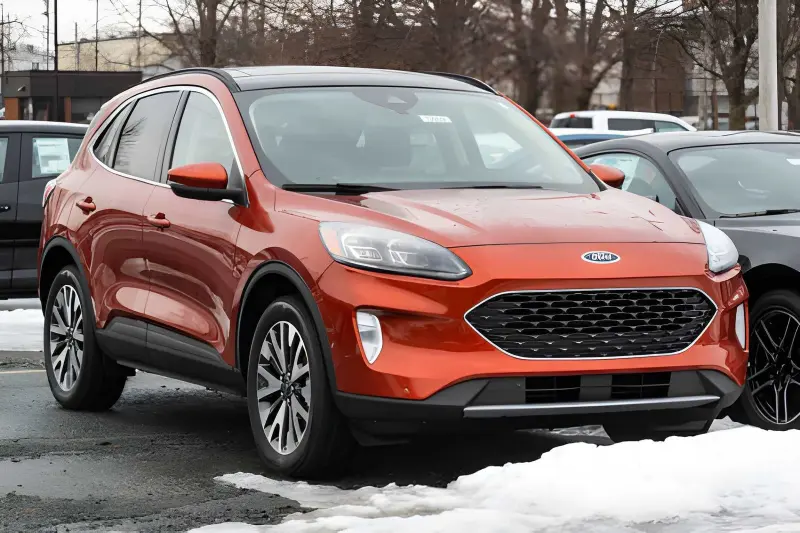
Transmission shudder affects multiple units, with numerous NHTSA complaints on record. Ford issued a TSB, but the fix was a software recalibration that did not resolve the issue for all owners. Some required full transmission replacements at $4,000-$6,000 out of pocket. The 2021+ models addressed this mechanically. As a result, don’t buy a 2020 unless you can verify the transmission was replaced or the TSB was successfully applied and the car has driven 10,000+ miles since without recurrence.
2020-2021 Hyundai Sonata Hybrid: engine knock issues
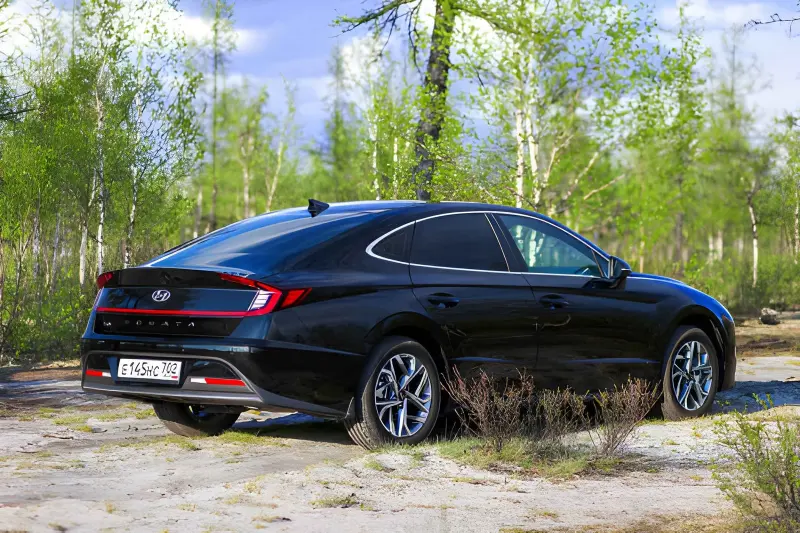
The Sonata Hybrid launched Hyundai’s newer hybrid architecture, and early examples had engine knock complaints along with isolated hybrid system failures. By 2022, Hyundai resolved these issues through updated components. At the prices these sell for ($17,000-$20,000), the Camry Hybrid at $21,000-$24,000 is only slightly more expensive and vastly more proven over time. Saving $3,000 on a car with known powertrain issues is not actually saving money when you factor in repair risk.
Chrysler Pacifica Hybrid with low annual mileage: battery degradation
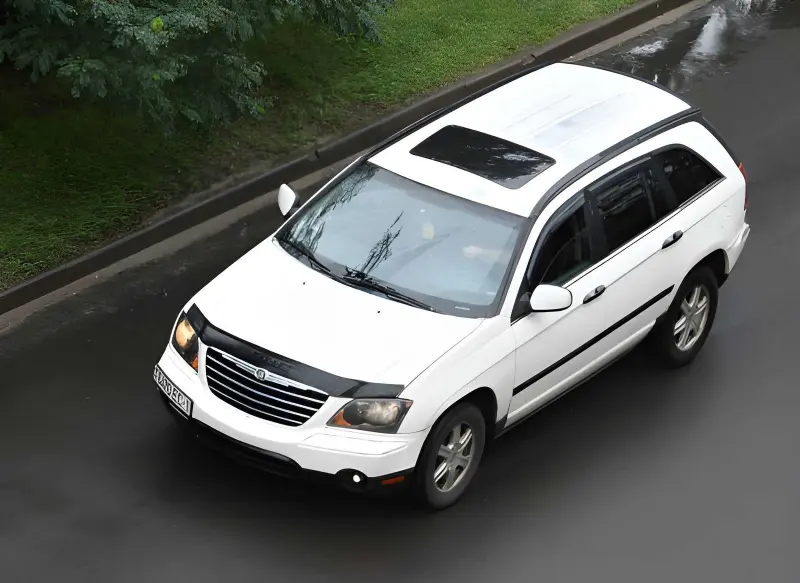
The Pacifica Hybrid is a plug-in hybrid, and its 16 kWh battery degrades noticeably when the car sits unused for extended periods. Similarly, driving exclusively on short trips without ever depleting and recharging the battery fully accelerates the degradation. If the previous owner drove fewer than 5,000 miles per year and never plugged it in, the battery may have capacity loss that reduces electric-only range from the rated 32 miles to under 15. Always verify battery health before purchase. A degraded Pacifica Hybrid battery replacement costs $8,000-$12,000, which eliminates any value proposition entirely.
Any used hybrid with no service history
This applies to every car, but hybrids particularly benefit from documented records. A missing service history on a Toyota hybrid probably means nothing is wrong, because Toyotas are tolerant of neglect. On a Ford, Hyundai, or Kia hybrid, however, missing records mean you cannot verify whether critical TSBs were applied. Spend $150 on a pre-purchase inspection from an independent hybrid-certified shop. That $150 is insurance against a $4,000 problem you won’t see coming.
Used Hybrid Battery Life: What the Data Actually Shows
Battery anxiety is the number-one reason people hesitate on used hybrids. The concern is understandable but largely unfounded for Toyota systems and mostly unfounded for Honda systems. Here is what the data actually says, rather than what forum posts speculate about.
Toyota hybrid battery longevity
Toyota’s hybrid battery warranty covers 10 years or 150,000 miles (whichever comes first) in all 50 states. Failure rates within that window are below 1% across all Toyota hybrid models, according to warranty claim data. Beyond the warranty, data from high-mileage Prius taxi fleets shows battery packs routinely lasting 250,000-350,000 miles before needing replacement. When replacement is eventually needed, aftermarket rebuilt packs cost $1,500-$2,500 installed. A new OEM pack from Toyota costs $3,500-$4,500.
Compare that to a full EV battery replacement at $15,000-$25,000, and the financial risk profile becomes clear. Even in the worst case, a Toyota hybrid battery replacement costs less than one year of car payments on a new vehicle.
Honda hybrid battery expectations
Honda’s hybrid battery warranty is 10 years or 150,000 miles in CARB states and 8 years or 100,000 miles elsewhere. Real-world longevity is shorter than Toyota’s: expect 150,000-200,000 miles as a typical lifespan. Honda’s third-generation system (used in the 2020+ CR-V Hybrid and Accord Hybrid) is more durable than the earlier IMA system. Long-term data past 100,000 miles is limited, though, because these cars are still relatively young in the ownership cycle.
When to actually worry about hybrid battery health
Be concerned if the hybrid battery indicator shows fewer than six bars on a Toyota, or if the IMA light has illuminated on a Honda. Extended storage is another red flag: a car that has sat undriven for six months or more may have permanently damaged cells from deep discharge. Likewise, a hybrid exclusively used for trips under 2 miles never allows the battery to reach optimal operating temperature, which accelerates wear. In all other situations, the battery is statistically likely to be fine for years to come.
How to Buy a Used Hybrid Car Without Getting Burned
Most used hybrid buying advice reads like generic used-car advice with the word “hybrid” inserted. Instead, these are the checks specific to hybrid vehicles that a standard inspection does not cover.
Get the hybrid battery health report first
Toyota dealers can run a battery health check that shows individual cell voltage balance and overall capacity. This takes 15 minutes and should be free if you are test-driving at a dealership. For private sales, independent shops with hybrid certification (search “hybrid repair” on RepairPal) can run the same scan for $50-$100. If the seller refuses a battery health check, walk away immediately. There is no legitimate reason to refuse this request.
Check the 12V auxiliary battery on any used hybrid
Hybrid vehicles have a small 12V battery in addition to the high-voltage traction battery. This 12V battery powers the computer systems that wake up the hybrid system. When it dies, the car is completely dead, and consequently many owners mistake this for a traction battery failure. On a used hybrid over three years old, ask when the 12V was last replaced. If the answer is never, budget $200-$350 for replacement within the first year. It is routine maintenance, not a defect.
Verify the battery coolant system
Hybrid batteries have their own cooling system separate from the engine coolant. On Toyota hybrids specifically, the battery coolant should be replaced every 100,000 miles (check the owner’s manual for the specific model). On a used car with 60,000+ miles, confirm whether this service has been done or is upcoming. Neglected battery coolant can lead to accelerated degradation over time. This is a $150-$200 service that most owners skip because they don’t know it exists.
Test drive for at least 20 minutes
A short test drive won’t reveal hybrid system issues on most vehicles. Drive for at least 20 minutes covering both city and highway conditions. The hybrid system should transition between electric-only, gas-only, and combined modes without hesitation, shuddering, or unusual noises. If the gas engine runs constantly and never shuts off at stops, the battery may be weak. Conversely, if the transition between electric and gas feels jerky, there may be a drivetrain issue worth investigating. Smooth, silent transitions indicate a healthy hybrid system.
Evaluate regenerative braking feel carefully
When you lift off the accelerator, the car should decelerate smoothly as the regenerative braking system recaptures energy. If it feels grabby, inconsistent, or makes grinding noises, the regenerative braking system may have issues that are expensive to diagnose. Normal regenerative braking feels like a consistent, gentle engine-braking sensation without any juddering. Anything else warrants further inspection from a hybrid-certified mechanic before you commit to the purchase.
Methodology
Vehicles included: Hybrid cars and SUVs sold in the United States between 2019 and 2023, with sufficient used inventory to generate reliable pricing data (minimum 500 listings on AutoTrader and Cars.com as of May 2026).
Pricing source: KBB private party values for vehicles in good condition with 35,000-55,000 miles, accessed May 2026.
Fuel cost calculations: $3.50/gallon national average (EIA May 2026), 15,000 miles/year, using real-world mpg from Fuelly.com owner data rather than EPA figures.
Reliability data: Consumer Reports 2026 Auto Reliability Survey (approximately 380,000 vehicles surveyed), cross-referenced with NHTSA complaint and recall data through May 2026.
What was excluded: Plug-in hybrids (PHEVs) are excluded from this ranking. Their economics depend heavily on charging behaviour and battery-only range retention, making them a separate category. Luxury hybrids above $40,000 used were excluded because depreciation dynamics are fundamentally different in the luxury segment.
Assumptions: Five-year ownership from the used purchase date. No major accident history. Regular maintenance performed per manufacturer schedule.
FAQ: Best Used Hybrid Cars
What is the best used hybrid car to buy in 2026?
The 2020-2022 Toyota RAV4 Hybrid is the best used hybrid car overall. It offers 40 mpg real-world fuel economy, above-average reliability, strong resale value (53% retained at five years), and a battery warranty that extends to 10 years or 150,000 miles. At $26,000-$29,000 used, it is $8,000-$11,000 less than a new one while delivering nearly identical performance.
Are used hybrid cars reliable long-term?
Toyota and Lexus hybrids are among the most reliable used cars at any price point, with above-average ratings from Consumer Reports across every model year from 2018 onward. Honda hybrids rate average to above average overall. Ford and Hyundai hybrids, on the other hand, are more variable, with specific model years showing below-average ratings due to transmission or electronics issues.
How long do used hybrid batteries last?
Toyota hybrid batteries routinely last 200,000-300,000 miles based on fleet data. Honda batteries typically last 150,000-200,000 miles. Failure rates within the warranty period (10 years/150,000 miles for Toyota) are below 1%. If replacement is needed, aftermarket costs are $1,500-$2,500 for a Toyota pack, versus $15,000-$25,000 for a full EV battery.
Is a used hybrid cheaper to own than a used EV?
For buyers without home charging, yes in nearly every scenario. The used hybrid requires no charging infrastructure, has lower insurance costs (EVs cost 18% more to insure per the Insurance Information Institute), and depreciates more slowly. A used EV can be cheaper if you have Level 2 home charging and keep the car long-term, but the hybrid carries fewer financial conditions and risks.
Which used hybrid cars should you avoid buying?
Avoid the 2019-2020 Ford Escape Hybrid (transmission shudder), the 2020-2021 Hyundai Sonata Hybrid (engine knock and hybrid system failures), and any Chrysler Pacifica Hybrid driven under 5,000 miles annually without regular plug-in charging. Also avoid any used hybrid with no documented service history, particularly non-Toyota brands where TSB verification is critical.
How much do the best used hybrid cars cost in 2026?
Prices range from $18,000 for a 2020 Toyota Prius to $37,000 for a loaded 2022 Toyota Highlander Hybrid. The value sweet spot is $21,000-$29,000, which covers the Camry Hybrid, RAV4 Hybrid, and CR-V Hybrid in LE or base trims with 35,000-55,000 miles on the odometer.
Do used hybrid cars save money on fuel compared to gas cars?
At $3.50 per gallon and 15,000 miles annually, a hybrid averaging 40 mpg costs $1,313 per year in fuel versus $1,750 for a 30 mpg gas car. That is $437 saved per year, or $2,188 over five years. At $4.50 per gallon, annual savings rise to $563, totalling $2,813 over five years.
Is a Toyota Prius still a good used car in 2026?
Yes, and it remains one of the strongest values on the used market. The 2020-2022 Prius returns 52 mpg combined in real-world driving, has above-average reliability, and sells for $18,000-$23,000. It has the lowest fuel cost of any non-plug-in car available. The condition: it is small inside, has limited cargo space (27.4 cu ft), and cannot tow. For commuters without cargo needs, it is the best pure-value used car you can buy.
Final Verdict
The used hybrid market in 2026 splits cleanly into two groups. On one side, Toyota and Honda hybrids from 2020-2022 deliver proven reliability, low fuel costs, and predictable depreciation. On the other, Ford and first-generation Hyundai hybrid systems carry enough risk to make the fuel savings irrelevant if a $4,000 repair hits in year two.
If I had to put $25,000 into one used car today and keep it five years with the lowest possible financial risk, it would be a 2021 RAV4 Hybrid LE with 40,000 miles. The math works at any gas price above $2.40/gallon, the battery warranty still has seven years remaining, and the resale value at the end of ownership will be higher than almost anything else in this price range. For buyers who don’t need an SUV, the Camry Hybrid at $21,000-$24,000 delivers the same peace of mind in a smaller, cheaper package.
One honest caveat: if you drive under 8,000 miles per year, the hybrid premium never pays for itself within a five-year window. In that case, buy the gas version and stop overthinking it. The best used hybrid car is only the best choice when the mileage justifies the price difference. Below that threshold, you’re paying for a technology you won’t use enough to benefit from.
Last updated: May 25, 2026