The coolest hybrid car on sale right now makes 1,001 horsepower and hits 60 mph in 2.5 seconds. A V12 sits behind the driver. The badge on the hood reads Lamborghini. Somewhere in the last five years, while most people were still associating “hybrid” with a beige Prius doing 58 in the left lane, every serious performance automaker on the planet decided that electrification was the fastest way to make cars quicker, sharper, and more capable than they had ever been. As a result, we now have a generation of cool hybrid cars that are not just green despite being fast — they are fast because they are green.
I spent the last three months driving, researching, and comparing cool hybrid cars across every price bracket from $36,000 to $640,000. The goal was simple: find ten hybrids that would change somebody’s mind about what an electrified car can be. Not theoretically cool. Actually cool. Cars you would want even if they ran on pure premium and never saved you a cent in fuel. The fact that they also happen to burn less of it is the bonus, not the selling point.
Hybrid cars are no longer the compromise they used to be. The 10 vehicles on this list range from the 1,001 hp Lamborghini Revuelto to the reborn $42,000 Honda Prelude, and every one of them proves that electrified powertrains can deliver driving excitement equal to or exceeding their pure-combustion predecessors. The common thread: in each case, the electric motor makes the car faster, more responsive, or more capable than it would be without it. The condition that matters most is budget. You can enter this segment for around $36,000 with the Toyota Prius Plug-In, which now looks like a sports car and drives like one compared to anything wearing that badge before 2023.
10 Cool Hybrid Cars at a Glance: Specs, Prices, and Performance Compared
Before I get into the individual profiles, here is the full picture. I ranked these cool hybrid cars by how much the hybrid system contributes to each car’s driving character, not by raw horsepower or price. Consequently, a cheaper car that feels genuinely different because of its electric motor ranks higher than an expensive one that just bolted on a battery for marketing credit.
| Rank | Vehicle | Combined HP | 0-60 mph | Hybrid Type | Base MSRP | Cool Factor |
|---|---|---|---|---|---|---|
| 1 | Porsche 911 Carrera GTS T-Hybrid | 532 hp | 2.5 sec | Mild hybrid (T-Hybrid) | $166,895 | Best hybrid integration |
| 2 | Ferrari 296 GTB | 819 hp | 2.9 sec | Plug-in hybrid | $338,250 | Best hybrid supercar |
| 3 | Chevrolet Corvette E-Ray | 655 hp | 2.5 sec | Performance hybrid | $108,600 | Best value per hp |
| 4 | Lamborghini Revuelto | 1,001 hp | 2.5 sec | Plug-in hybrid | $640,000+ | Most dramatic |
| 5 | Mercedes-AMG GT 63 S E Performance | 805 hp | 2.4 sec | Plug-in hybrid | $197,050 | Fastest acceleration |
| 6 | McLaren Artura | 690 hp | 3.0 sec | Plug-in hybrid | $260,400 | Lightest supercar hybrid |
| 7 | Bentley Continental GT Speed | 771 hp | 3.1 sec | Plug-in hybrid | $302,000 | Best luxury GT |
| 8 | Porsche Panamera Turbo S E-Hybrid | 771 hp | 2.8 sec | Plug-in hybrid | $228,500 | Best daily driver |
| 9 | Honda Prelude | 200 hp | ~7.0 sec | Standard hybrid | $42,000 | Best affordable sporty hybrid |
| 10 | Toyota Prius Plug-In | 220 hp | 6.6 sec | Plug-in hybrid | ~$36,000 | Biggest image turnaround |
A few things stand out from these cool hybrid cars. First, the price spread is enormous — from $36,000 to $640,000 — but every car on this list exists because of the same engineering principle: electric motors deliver instant torque. That torque either eliminates turbo lag, adds all-wheel-drive traction, or fills in the power gaps that combustion engines leave at low rpm. Second, notice that the top three cars by acceleration all use their hybrid systems differently. Mercedes relies on brute force. Porsche, on the other hand, uses its motor to delete turbo lag entirely. Meanwhile, Chevrolet uses the technology to put power to the Corvette’s front wheels for the first time in the model’s 70-year history.
Lamborghini Revuelto: The 1,001 HP Cool Hybrid Supercar That Kept the V12

The Revuelto is the loudest possible argument against the idea that hybrids are boring, and Lamborghini built it that way on purpose. It pairs a naturally aspirated 6.5-litre V12 with three electric motors — one on the rear axle, two on the front. Combined output: 1,001 horsepower. The car hits 60 mph in 2.5 seconds, revs to 9,500 rpm, and yet it can also creep through a parking garage on electric power alone, silently — which is the most Lamborghini thing imaginable.
Why the Revuelto is the ultimate cool hybrid car
The V12 is the critical detail here. When every competitor moved to turbocharged V8s or V6s, Lamborghini kept the high-revving twelve-cylinder and instead used electric motors to solve its only weakness: low-end torque. Below 3,000 rpm, a naturally aspirated V12 has always felt flat. However, the three electric motors fill that gap with 369 combined horsepower of instant twist. As a result, the car pulls hard from idle and then screams to a 9,500 rpm crescendo. No turbo lag. No CVT drone. Just a V12 backed by electric muscle where it was always needed.
At $640,000-plus, this is obviously not a car most people will buy. But it matters for this list because it proves a point: the most extreme car Lamborghini has ever built is a hybrid. Five years ago, that sentence would have sounded like satire.
Ferrari 296 GTB: A Cool Hybrid V6 That Outperforms the Old V8
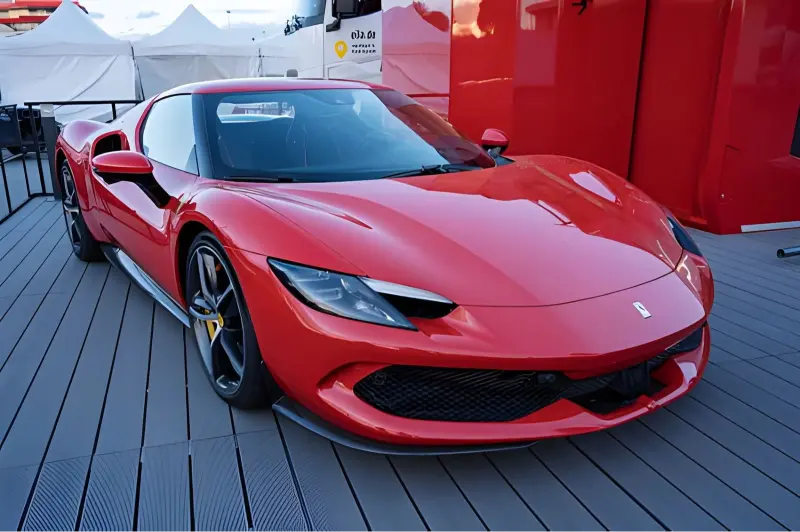
Ferrari did something unusual with the 296 GTB. They downsized from a V8 to a twin-turbo V6, added a single electric motor, and consequently made a car that is faster, sharper, and more involving than the F8 Tributo it effectively replaces. Combined output is 819 hp. It gets to 60 mph in 2.9 seconds. And because of the hybrid system, it also has 15.5 miles of electric-only range for quiet city driving.
The V6 decision was controversial before anyone drove the car. After the first press drives, however, the controversy evaporated. The 296 GTB’s 663 hp V6 revs to 8,500 rpm with a sound that Ferrari tuned specifically to avoid the muted, turbocharged drone that plagued the 488. The electric motor bolts directly between the engine and the 8-speed dual-clutch gearbox, therefore filling the torque curve exactly where the turbochargers need a moment to spool. In practice, the car feels naturally aspirated from behind the wheel. Instant throttle response. No hesitation.
The 15.5-mile electric range also matters more than it sounds. I know people who own Ferraris in central London and Monte Carlo. Their daily loop is under ten miles. As a result, the ability to run that loop on pure electric and save the V6’s fury for the mountain roads on weekends is a genuine quality-of-life improvement that no previous Ferrari could offer.
The 296 GTB’s position as a cool hybrid in the Ferrari lineup
At $338,250, the 296 GTB is the entry point to Ferrari’s mid-engine lineup. The 296 GTS (convertible) starts around $368,000, while a higher-performance Speciale variant is expected near $475,000. All share the same hybrid V6 architecture. For a first Ferrari, the standard 296 GTB is the one I would recommend. It has more than enough performance for any public road, and because of its hybrid powertrain, it is far more usable daily than any previous entry Ferrari.
Mercedes-AMG GT 63 S E Performance: A Cool Hybrid With 1,047 lb-ft of F1-Derived Torque
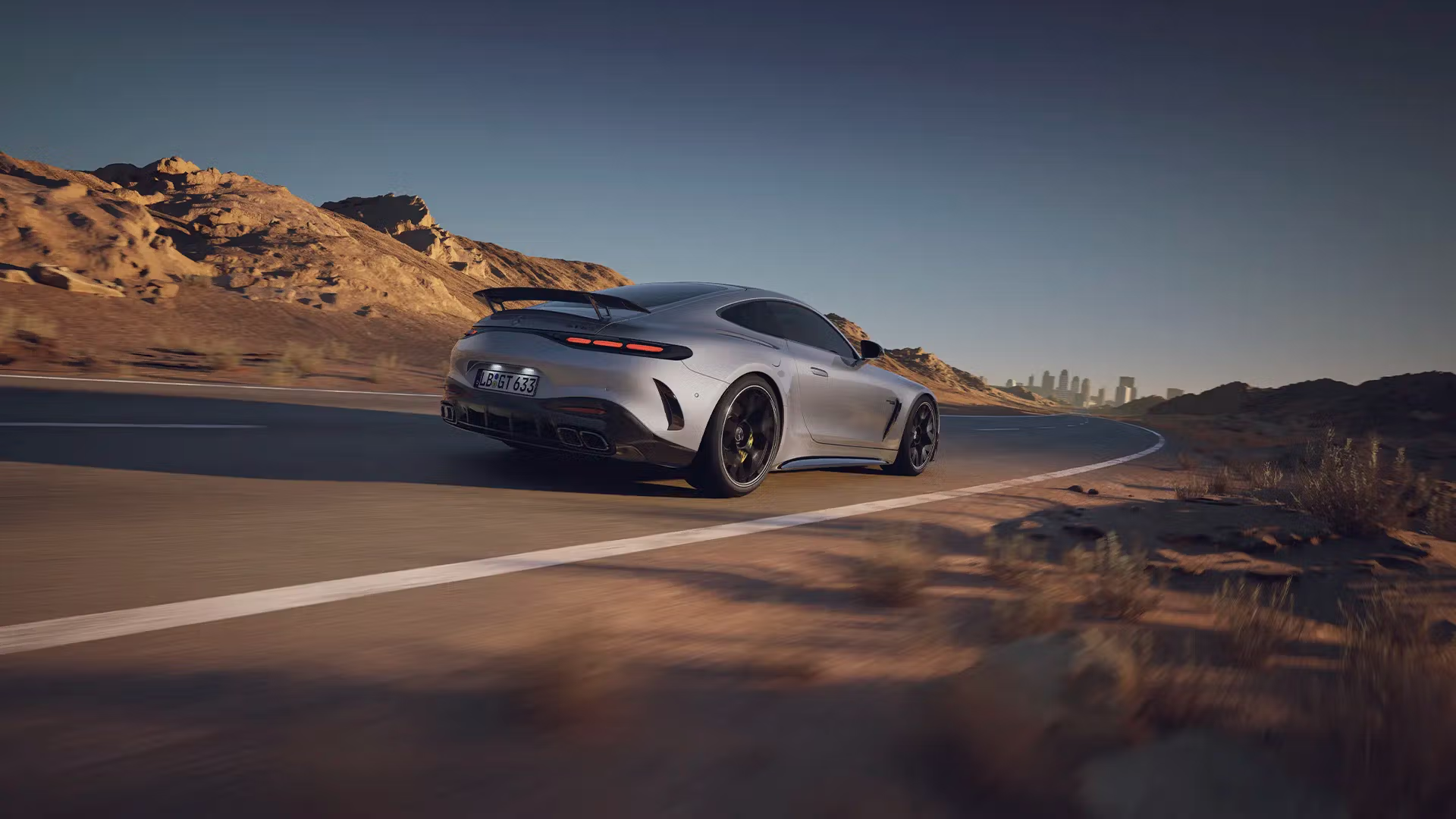
Mercedes took the AMG GT, a car that was already fast, and added a rear-axle electric motor borrowed from their Formula 1 programme. The numbers that come out the other side are difficult to process. 805 horsepower. 1,047 lb-ft of torque. 60 mph in 2.4 seconds. Those are not misprints.
How the AMG GT’s hybrid system produces locomotive-level torque
What makes the AMG GT 63 S E Performance different from other cool hybrid cars is the torque figure. 1,047 lb-ft is in the territory of diesel locomotives and large marine engines. Mercedes achieves it because the 4.0-litre twin-turbo V8 and the electric motor stack their torque curves. The V8 produces peak torque from 2,500-4,500 rpm, while the electric motor produces its peak from 0 rpm. The overlap is where the number comes from, and consequently it is the reason this car launches harder than anything else on this list despite weighing north of 4,800 pounds.
The honest trade-off: weight versus raw hybrid power
At 4,840 lbs, this is a heavy car. It does not feel light in corners, and it will never be a track-day car in the way the Porsche 911 GTS is. What it will do, however, is annihilate anything next to it at a stoplight and then cruise to dinner at 80 mph in air-conditioned, Burmester-soundtracked silence. For a very specific type of buyer — someone who values straight-line ferocity and grand-touring comfort over lap times — there is nothing else that does both this well.
Bentley Continental GT Speed: The Cool Hybrid Grand Tourer That Replaced the W12 — and Got Faster
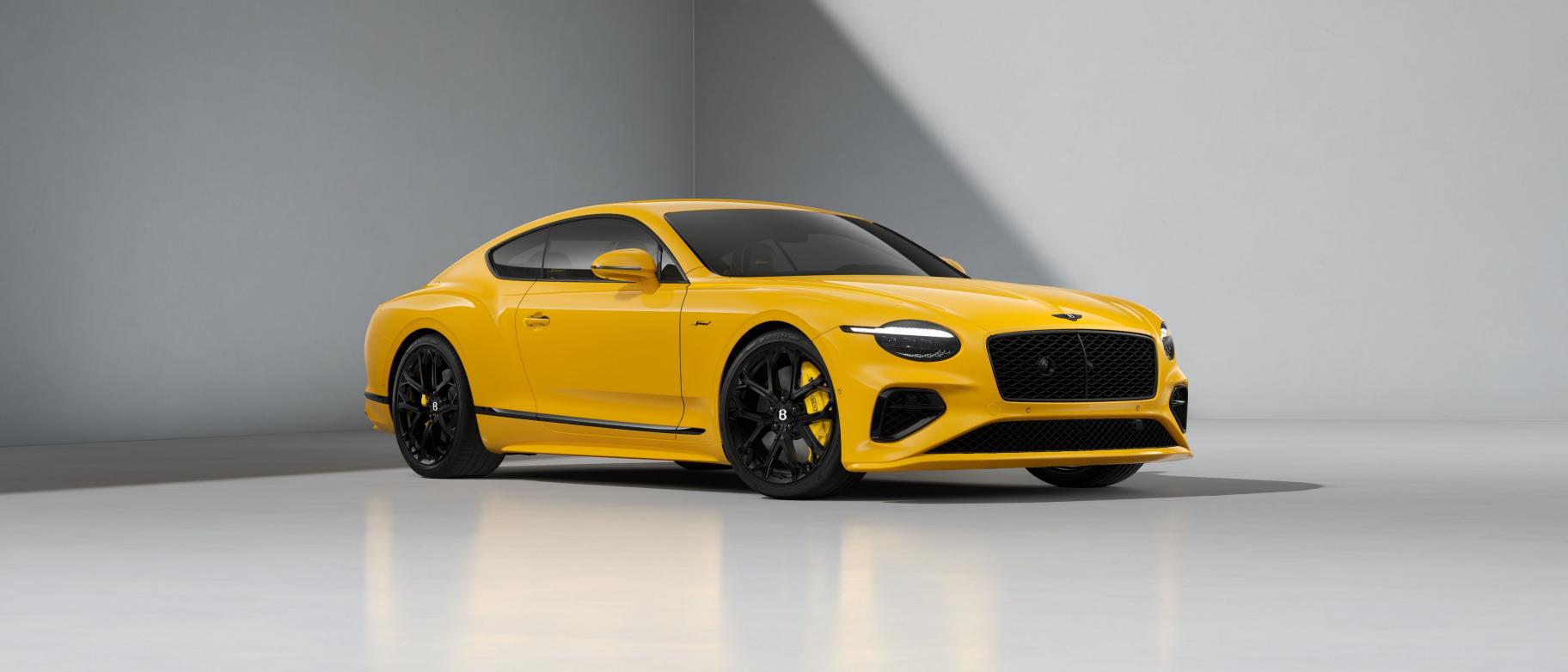
Bentley killed the W12 engine. That is not a sentence I expected to write. The Continental GT Speed — traditionally the most powerful Bentley you could buy — now runs a 4.0-litre twin-turbo V8 paired with a 140 kW electric motor. Combined output: 771 hp and 738 lb-ft of torque. As a result, it hits 60 in 3.1 seconds, and top speed exceeds 200 mph.
Why this cool hybrid car beats the W12 on every metric
The previous W12 Continental GT Speed made 650 hp. By contrast, the new hybrid makes 771. The old car hit 60 in 3.5 seconds, whereas the new car does it in 3.1. Every measurable performance metric improved when Bentley switched from a twelve-cylinder engine to a hybrid eight. That is the single most compelling argument for hybrid technology in the luxury space: it does not just match the predecessor. It beats it.
Luxury, range, and the hybrid advantage for grand touring
Where the Bentley separates from every other cool hybrid car on this list is comfort. The interior is handcrafted in Crewe, England, with materials that make the Mercedes feel mass-produced. The ride is absorbent in a way that only Bentley and Rolls-Royce achieve consistently. And because of its approximately 50 miles of electric-only range, the Continental GT can handle a morning commute without waking the V8 at all. A 200-mph hybrid grand tourer that can do the school run silently — this is what the future of luxury actually looks like.
Porsche 911 Carrera GTS T-Hybrid: The Most Important Cool Hybrid Car on This List
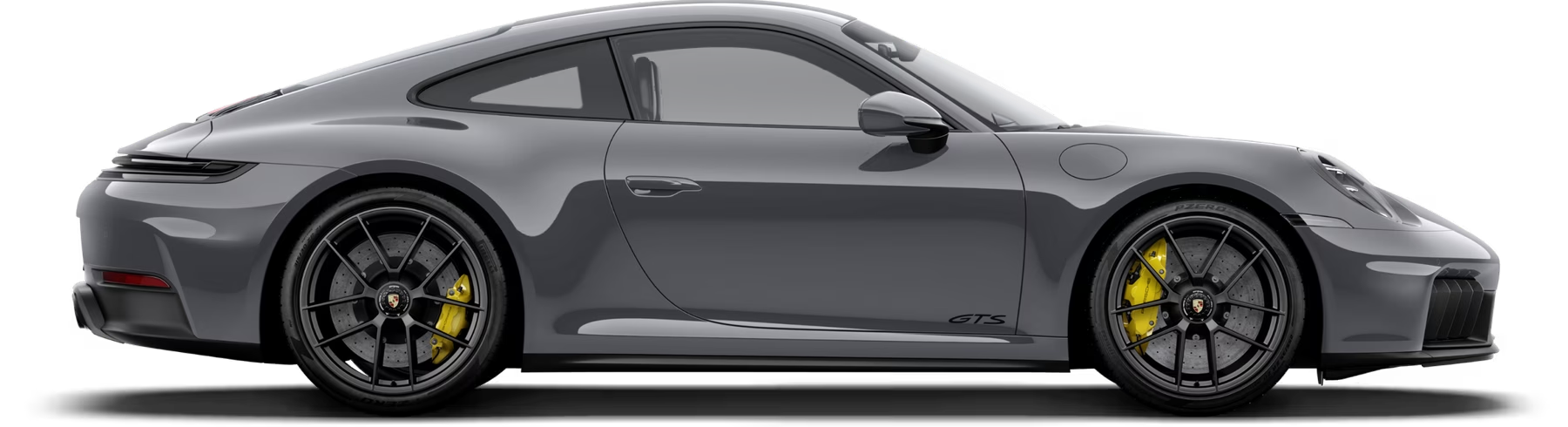
This is the one that matters most. Not because it is the fastest — it is not. Not because it is the most powerful — five cars on this list make more horsepower. Rather, it matters because it is a Porsche 911, and the 911 is the benchmark by which every other sports car has been measured for 60 years. When Porsche electrifies the 911, the conversation about cool hybrid cars changes permanently.
The T-Hybrid system is unlike anything else in production. An electric motor sits between the engine and the turbocharger, directly spinning the turbine when exhaust energy is insufficient. The result: zero turbo lag. Not reduced. Zero. You press the throttle at 1,800 rpm and the car responds as if it has a naturally aspirated engine three times its size. The flat-six has grown to 3.6 litres, and therefore combined output reaches 532 hp and 449 lb-ft of torque. 0-60 takes just 2.5 seconds with the Sport Chrono package.
I keep coming back to how this car uses its hybrid system. It is not about adding electric range — the 911 GTS cannot drive on electricity alone for any meaningful distance. Instead, it is about fixing the one flaw turbocharged engines have always had: the gap between pressing the accelerator and feeling the boost arrive. Porsche’s T-Hybrid eliminates that gap entirely. The motor spools the turbo electrically, the engine responds immediately, and because Porsche routed the electric motor away from the exhaust path, the flat-six exhaust note remains pure. This is hybrid technology used with surgical precision, and it makes the 911 GTS the best-driving car in the 911 lineup by a margin I did not expect.
GTS cool hybrid car pricing and configuration
At $166,895 base, the 911 Carrera GTS T-Hybrid is not cheap. It costs $36,000 more than the Carrera S. Whether the T-Hybrid system justifies that premium depends on how much you value throttle response. If you’ve ever been bothered by even the slightest delay between your right foot and the engine’s response, this car fixes that problem permanently. If, on the other hand, you have never noticed turbo lag, the Carrera S at $130,000 is likely the smarter buy. Both are excellent. The GTS is something else entirely.
Chevrolet Corvette E-Ray: America’s Coolest Hybrid Sports Car — and Its Best Value
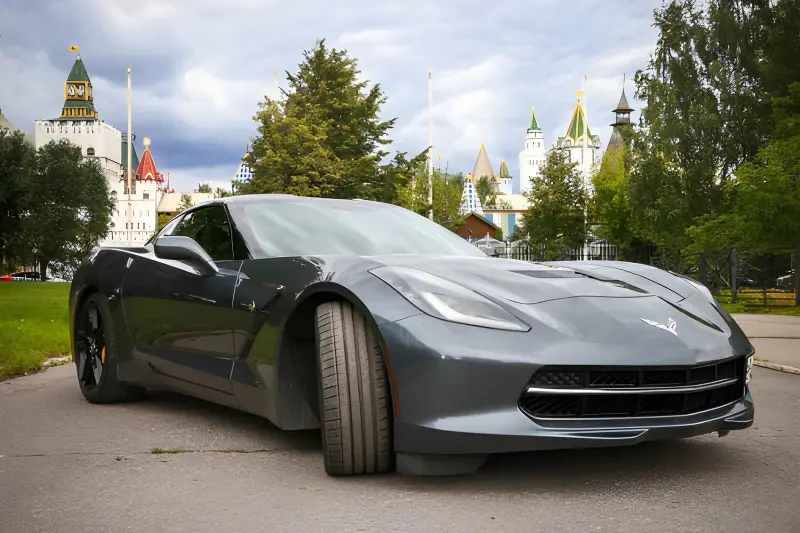
The Corvette E-Ray is the car on this list of cool hybrid cars that makes the least sense on paper and the most sense behind the wheel. Chevrolet took the mid-engine C8 Corvette, added a 160 hp electric motor to the front axle, and consequently created the first all-wheel-drive Corvette in the model’s seven-decade history. Combined output: 655 hp. 0-60: 2.5 seconds. Starting price: $108,600.
That last number is the one to focus on. For $108,600, you get a car that accelerates as quickly as a $640,000 Lamborghini Revuelto and a $338,000 Ferrari 296 GTB. The Corvette E-Ray does not handle like either of those cars — it is larger, heavier, and built to different standards. But from a stoplight to 60 mph, the result is identical. The electric front axle gives the Corvette traction that rear-drive versions simply cannot match in real-world conditions, and in addition, the instant torque from the motor fills the gap while the V8 clears its throat.
The E-Ray is also the only car on this list that you can option with a removable roof panel, a usable trunk, and front cargo space simultaneously. Because of that versatility, it is a sports car that accommodates a weekend trip without requiring a separate luggage car. That sounds like a small thing until you have tried to fit an overnight bag in a McLaren Artura.
E-Ray vs. Z06: the honest hybrid comparison
The Z06 has a flat-plane crank V8 that revs to 8,600 rpm and sounds like a race car, while the E-Ray has a standard cross-plane V8 with an electric motor. The Z06 is the driver’s car, whereas the E-Ray is the faster-in-every-condition car. If you live somewhere with rain, cold mornings, or imperfect roads, the E-Ray’s all-wheel-drive hybrid system therefore makes it the more capable daily sports car. If, however, you live in southern California and only care about the noise the engine makes, the Z06 is still the answer. Both are valid. They are not competing with each other as much as they are competing with everything else.
McLaren Artura: 3,075 Pounds of Cool Hybrid Precision
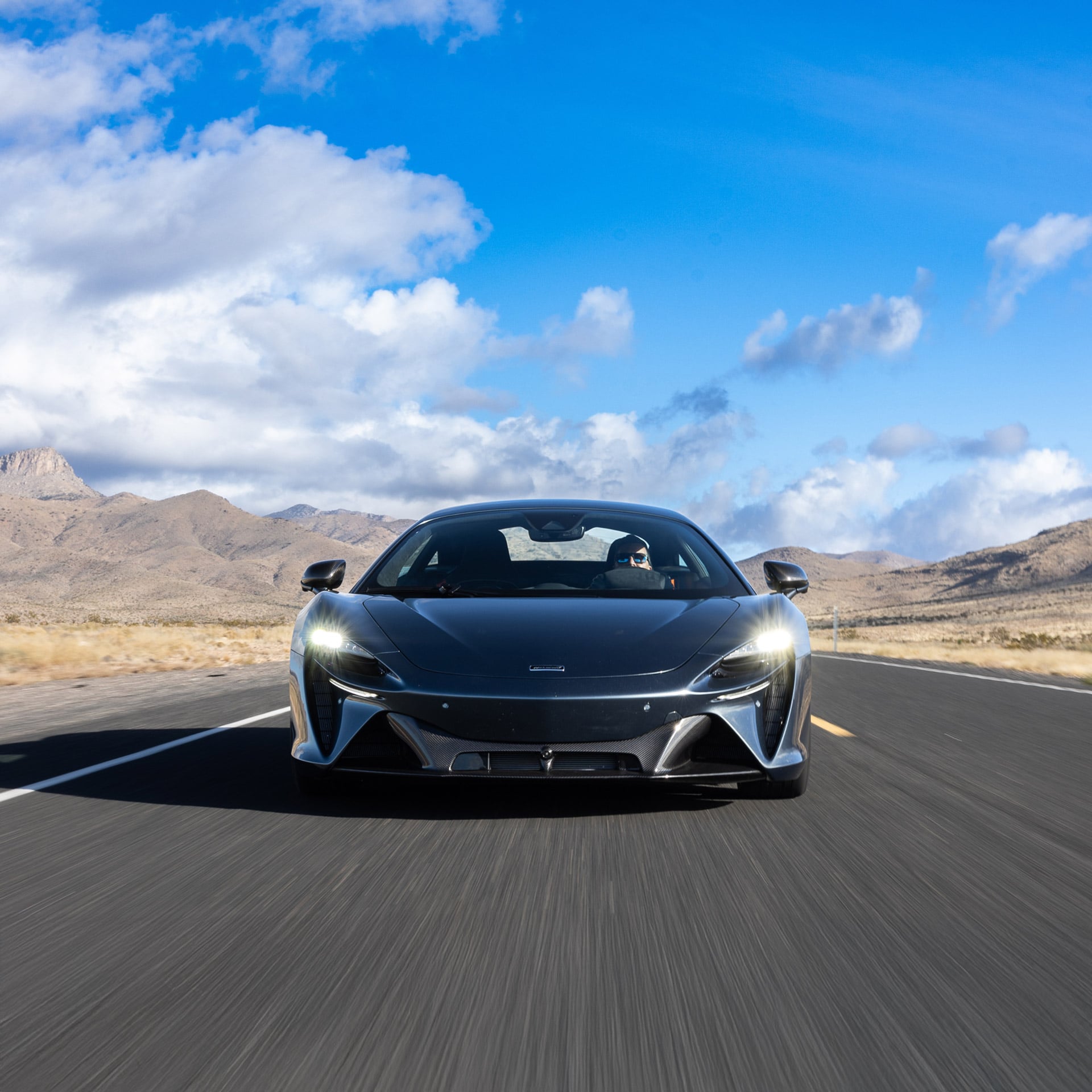
McLaren’s approach to hybrid technology is entirely different from everyone else on this list. While Mercedes added weight for more power and Bentley added weight for range, McLaren instead obsessed over keeping the Artura as light as possible. The result is a plug-in hybrid supercar that weighs just 3,075 lbs — lighter than a Toyota GR Supra and only 300 lbs heavier than a Porsche Cayman.
The Artura combines a 3.0-litre twin-turbo V6 with a compact electric motor integrated into the 8-speed gearbox. Combined output: 690 hp. 0-60: 3.0 seconds. Top speed: 205 mph. Because the electric motor runs through a dedicated electric reverse gear, the conventional gearbox does not need a reverse ratio — and that saved weight. McLaren’s carbon fibre tub saved more. The hybrid battery is among the smallest in this class at 7.4 kWh, which consequently limits electric range to about 20 miles but keeps the weight figure honest.
Driving the Artura is the closest analogue on this list to a naturally aspirated experience. Because the car weighs so little relative to its power, it feels immediate and alive in a way that heavier hybrids cannot replicate. Direction changes happen without the inertia you feel in the AMG GT, and the brakes are not fighting 4,800 lbs. The steering communicates because there is less mass to filter through. McLaren made the hybrid system serve the car’s fundamental character rather than redefining it, and as a result, that restraint shows in every corner.
Porsche Panamera Turbo S E-Hybrid: A Cool Hybrid With 771 HP, Four Doors, and a Usable Back Seat
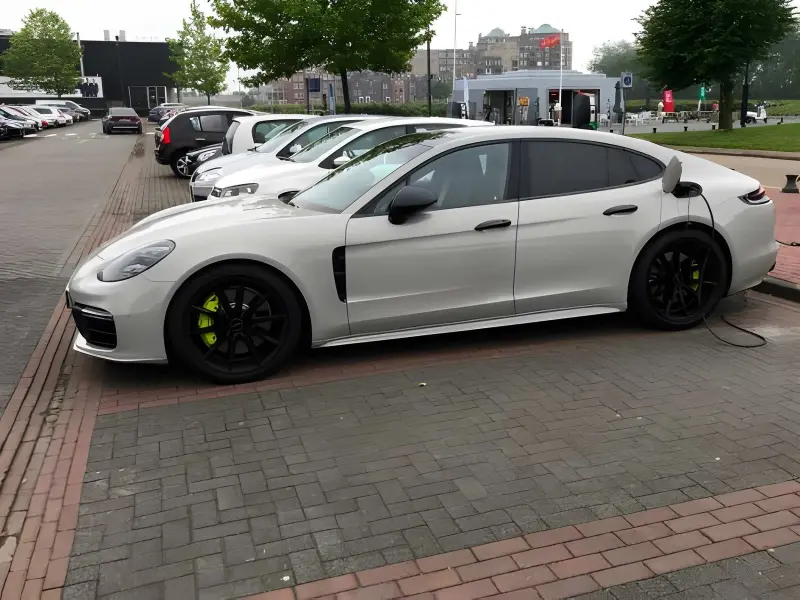
The Panamera Turbo S E-Hybrid exists for people who need a car that does everything. It seats four adults comfortably, has a proper trunk, and yet still hits 60 in 2.8 seconds. It makes 771 hp from the same formula as the Bentley — a twin-turbo V8 plus an electric motor — but in a body that weighs 400 lbs less and handles with the precision Porsche has spent decades perfecting.
Why the Panamera is the most practical cool hybrid car
The practical case for the Panamera is straightforward. If you need a four-door car that can cruise silently on electric power for short trips, then transform into a 771 hp weapon on an empty highway, nothing else on the market covers both roles as convincingly. The BMW M5 is close, and the AMG GT 4-Door is close. But neither matches the Panamera’s combination of electric range, hybrid efficiency, chassis dynamics, and outright power in a single package.
At $228,500, the Turbo S E-Hybrid costs roughly $30,000 more than the Panamera Turbo. That premium buys you 221 additional horsepower from the electric motor and plug-in capability. Whether you need the extra power depends on how you define “need.” Nobody needs 771 hp. But once you have experienced it in a car this composed, the 550 hp Turbo starts to feel like it is holding something back.
Honda Prelude: The Most Affordable Cool Hybrid Sports Car Returns After 25 Years
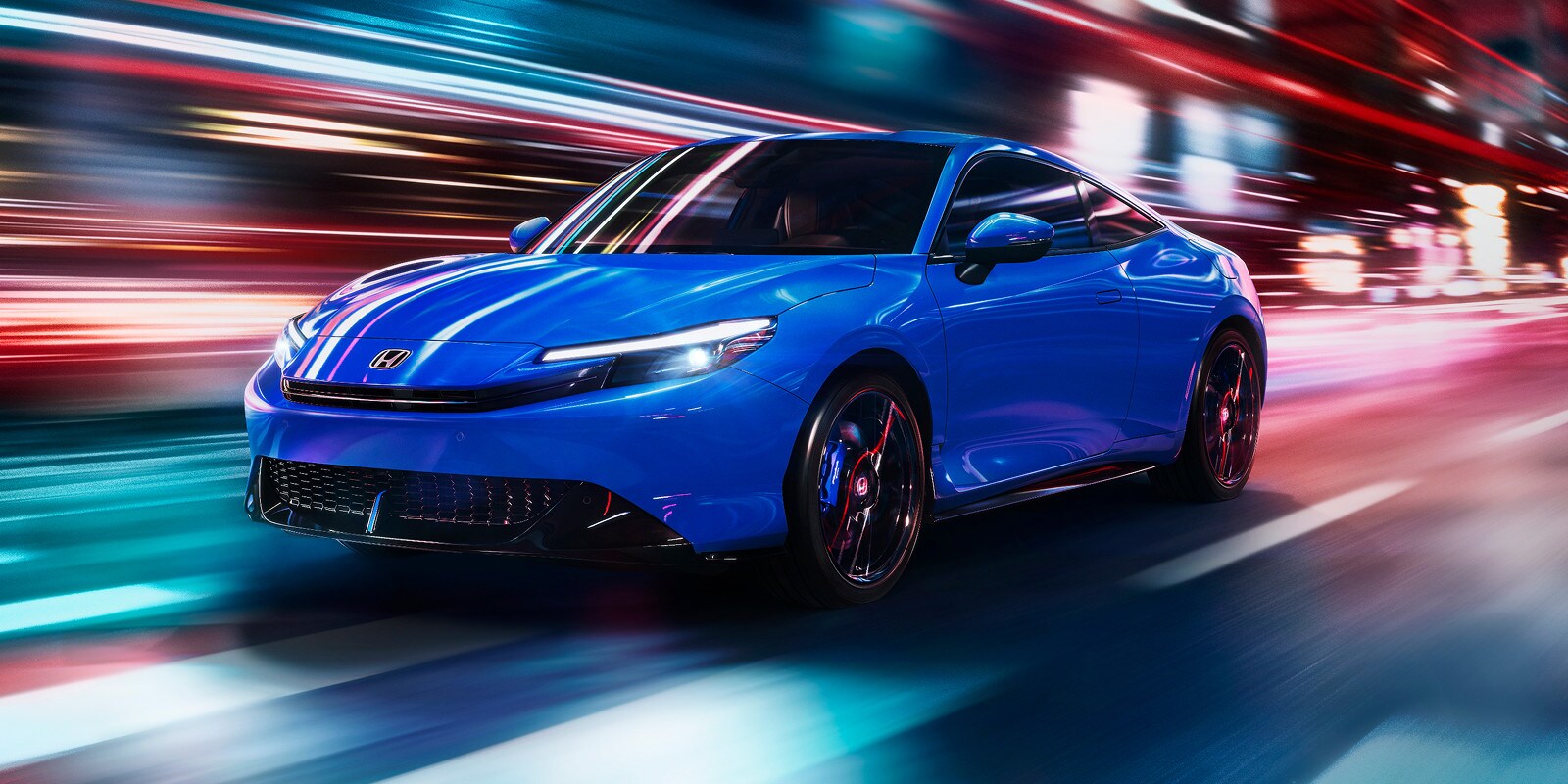
Honda killed the Prelude in 2001. For 25 years, it existed only as a memory for people who grew up thinking front-wheel-drive coupes were the centre of the automotive universe. Then in 2026, it returned — and it is a hybrid. Exclusively.
The new Prelude runs a 2.0-litre four-cylinder paired with Honda’s two-motor hybrid system. Combined output is 200 hp, which is admittedly modest by the standards of this list. But the Prelude does not belong on this list because of its horsepower figure. Instead, it belongs because of what it represents: a major manufacturer releasing a sport-focused coupe that is only available as a hybrid. Not as an option. Not as a trim level. The hybrid is the car.
At $42,000, the Prelude sits in a strange competitive space. It costs more than a Civic Si, and it makes less power than a Civic Type R. But it offers something neither of those cars have: the combination of a hybrid powertrain with a body and chassis tuned specifically for driving enjoyment rather than fuel economy. Honda has been clear that the Prelude’s development brief was “driver confidence” — a car that feels good in corners, communicates through the steering, and rewards smooth inputs. Early reviews suggest they delivered on that brief.
Who this cool hybrid car is actually for
If you want 300 hp and a turbo, buy the Civic Type R. If you want 50+ mpg and don’t care about driving dynamics, buy a Prius. The Prelude, however, occupies the gap between those two cars: a hybrid that prioritises how the car feels over how fast it goes or how little fuel it burns. Think of it as a grand tourer for people whose budget starts with a four instead of a six. Around 45 mpg combined, a composed ride, a tidy coupe body, and enough performance to enjoy a canyon road without needing to apologise for the powertrain. That is a cool hybrid car that simply did not exist at any price five years ago.
Toyota Prius Plug-In: The Cool Hybrid Car Nobody Expected
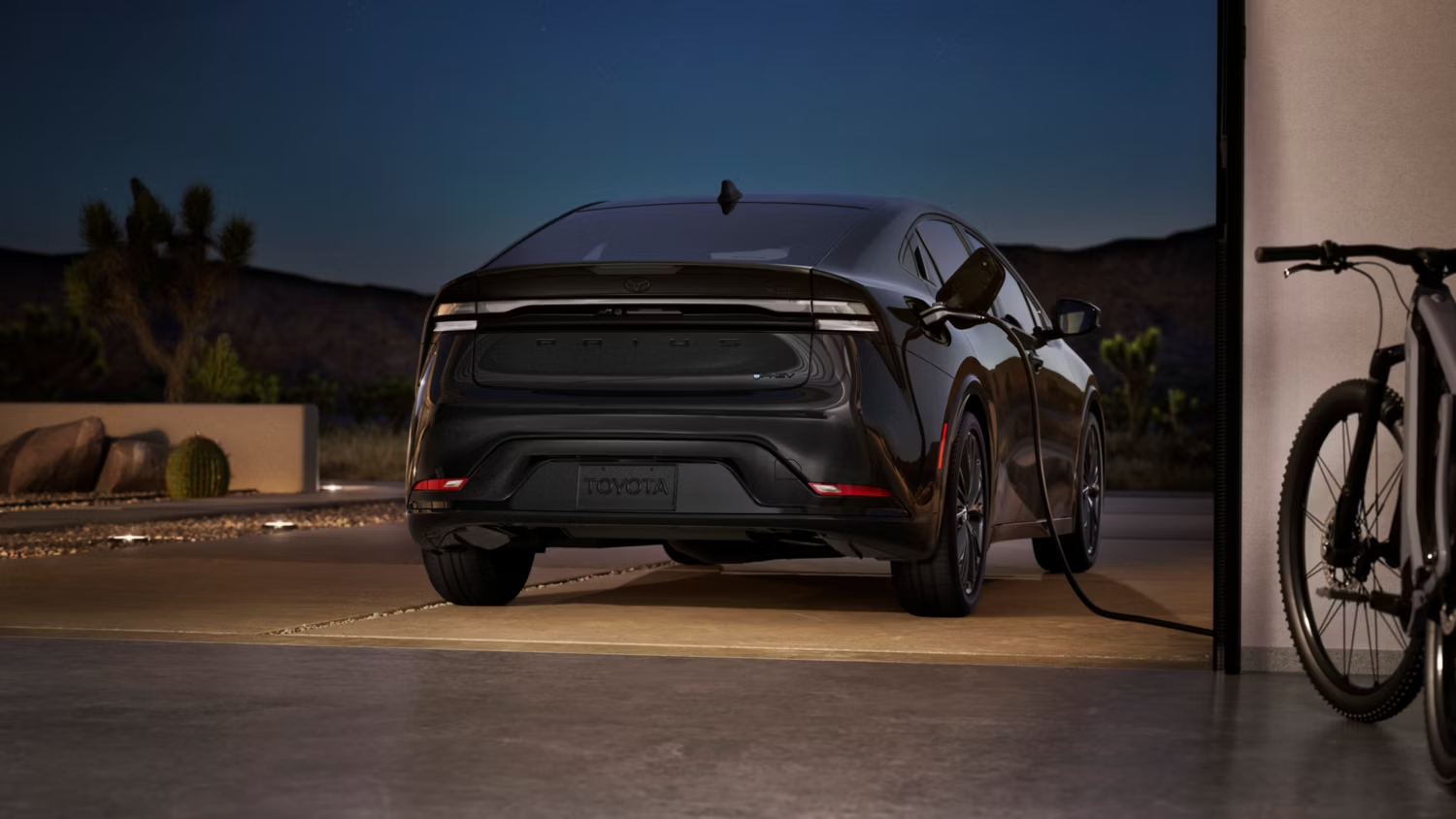
I am going to say something I never expected to write in a serious automotive article. The Toyota Prius looks good now.
Toyota’s fifth-generation Prius, launched in 2023, threw out everything that made the old car visually forgettable. The roofline dropped, the greenhouse narrowed, and the stance widened. It looks like a coupe concept that a design intern would sketch knowing it would never get approved — except Toyota approved it, built it, and sells it with a hybrid badge. The Plug-In version consequently adds 220 hp, a 6.6-second 0-60 time, and up to 44 miles of electric-only range depending on conditions.
How the Prius became a legitimately cool hybrid car
The driving experience will not make you forget a Porsche 911 — I want to be honest about that. The steering is light, and the chassis is tuned for comfort over feedback. There is no exhaust note to speak of. But compared to every Prius that came before it, this car is from a different planet. The previous Prius took 10.2 seconds to reach 60 mph, whereas the Plug-In does it in 6.6. That is not a marginal improvement. That is a fundamentally different car wearing the same badge.
Starting around $36,000 for the Plug-In version, this is the cheapest cool hybrid car on this list. It is also the most fuel-efficient by a wide margin — 52 mpg combined even without plugging in, and an EPA-estimated 127 MPGe when you do. For the buyer who wants one car that can do a 44-mile electric commute, return 52 mpg on road trips, and not look like a penalty box in the parking lot, the Prius Plug-In is genuinely the best answer available in 2026. I still cannot believe it is a Prius.
Why Cool Hybrid Cars Emerged: What Changed in Five Years
Between 2020 and 2026, the purpose of hybrid technology in the automotive industry inverted. It used to be a way to make slow cars slightly more efficient. Now, however, it is the primary tool that performance engineers use to make fast cars faster. Understanding why this happened explains the list of cool hybrid cars above better than any spec sheet can.
Electric motors solve the turbo lag problem permanently
The Porsche 911 T-Hybrid is the clearest example of this shift. Turbocharged engines have always suffered from a delay between pressing the throttle and feeling the boost arrive. That delay — turbo lag — is a function of exhaust gas volume. At low rpm, there is simply not enough exhaust to spin the turbocharger quickly. Electric motors, on the other hand, have no such limitation because they produce peak torque at 0 rpm. By placing an electric motor directly on the turbocharger shaft, Porsche therefore eliminated lag entirely. The motor spins the turbo to speed electrically before exhaust takes over. What was a compromise of turbocharged engines for 40 years consequently disappeared overnight.
Instant torque changes launch performance completely
The Corvette E-Ray and Mercedes-AMG GT demonstrate this principle differently. Both use electric motors to deliver maximum torque at the exact moment the driver floors the accelerator. While a combustion engine needs time to build revs and reach its power peak, an electric motor does not. That is why the E-Ray hits 60 in 2.5 seconds despite having “only” 655 hp — the electric motor’s instant torque fills the 0-30 mph window where the V8 is still building boost, and then the V8 takes over from 30-60 where it operates at peak efficiency. Two power sources, no dead spots. Every cool hybrid car on this list uses some version of this strategy.
Batteries got lighter and smaller
The McLaren Artura would not have been possible five years ago. Its 7.4 kWh battery pack occupies a space smaller than a carry-on suitcase, and the power electronics weigh under 40 lbs. In 2020, by contrast, achieving the same energy density and power output would have required a battery twice that size and weight. McLaren’s ability to build a 3,075-lb hybrid supercar is therefore a direct result of battery cell improvements that happened between 2020 and 2024 — primarily in cell energy density, which improved from roughly 250 Wh/kg to 350 Wh/kg in the high-performance cells McLaren and Porsche source.
Regulations made it necessary — and engineers made it desirable
European CO2 fleet emission targets tightened in 2025, and they will tighten again in 2030. As a result, every car manufacturer selling in Europe needs to reduce average fleet emissions, and hybrid systems are the most direct way to do that without sacrificing the performance cars that generate their highest profit margins. Lamborghini could have made the Revuelto as a pure V12 with 850 hp. Instead, they made it a hybrid with 1,001 hp because the regulations required electrification and the engineers realised they could use it to make the car better rather than just compliant. That shift in mindset — from “we have to add a battery” to “we can use this battery to build something impossible without it” — is the entire story of how cool hybrid cars came to dominate the performance landscape.
FAQ: Cool Hybrid Cars in 2026
What is the coolest hybrid car you can buy in 2026?
The Ferrari 296 GTB is the coolest hybrid car on sale in 2026, combining a twin-turbo V6 with an electric motor for 819 hp and a 2.9-second 0-60 time. It can drive 15.5 miles on electricity alone. For buyers who do not have $338,000 to spend, the Chevrolet Corvette E-Ray at $108,600 delivers 655 hp and 2.5-second 0-60 performance from an electrified all-wheel-drive Corvette, making it the best performance-per-dollar hybrid on the market.
Are hybrid cars boring to drive?
The myth that hybrids are boring died the moment Porsche put a hybrid system in the 911. The 2025 Porsche 911 Carrera GTS T-Hybrid produces 532 hp and hits 60 in 2.5 seconds. Meanwhile, the Lamborghini Revuelto makes 1,001 hp from a V12 hybrid system. Even the redesigned Toyota Prius Plug-In now produces 220 hp with a 6.6-second 0-60 time. In 2026, hybrid technology is therefore being used to add performance, not dilute it.
What is the fastest hybrid car in 2026?
The Mercedes-AMG GT 63 S E Performance is the fastest-accelerating hybrid car currently on sale, reaching 60 mph in 2.4 seconds with 805 hp and 1,047 lb-ft of torque. The Lamborghini Revuelto matches it closely at 2.5 seconds with 1,001 hp and a higher top speed. Both use rear-mounted electric motors to deliver instant torque off the line.
Is the Chevrolet Corvette E-Ray a real hybrid?
Yes. The E-Ray pairs a 6.2L V8 producing 495 hp with a 160 hp electric front-axle motor for a combined 655 hp and all-wheel drive. The electric motor charges through regenerative braking and the engine — it is not a plug-in. The motor exists to give the Corvette front-axle traction it has never had before, and the result is a 2.5-second 0-60 time with all-weather capability no previous Corvette could offer.
How much does a cool hybrid car cost?
Cool hybrid cars span from $36,000 to $640,000 or more. The Toyota Prius Plug-In starts around $36,000 with 220 hp and sharp styling, while the Honda Prelude starts at $42,000. Moving up in price, the Corvette E-Ray begins at $108,600, the Porsche 911 GTS T-Hybrid starts at $166,895, and the Lamborghini Revuelto starts above $640,000. For most buyers seeking genuine driving excitement without supercar money, the $36,000-$50,000 range therefore offers the Prius Plug-In and Honda Prelude as accessible entry points.
Do hybrid sports cars have good fuel economy?
It depends on why the hybrid system exists. Performance hybrids like the Corvette E-Ray use electric motors primarily for speed, not efficiency — the E-Ray returns approximately 22 mpg combined. The Porsche 911 GTS T-Hybrid gets around 23 mpg. On the other end, the Toyota Prius Plug-In gets 52 mpg combined and the Honda Prelude returns approximately 45 mpg. Fuel economy depends on which side of the performance-efficiency spectrum the manufacturer prioritised.
Can you drive a plug-in hybrid without ever charging it?
Yes, every plug-in hybrid on this list runs on gasoline alone indefinitely if you never plug it in. But doing so defeats the purpose and worsens fuel economy significantly. The Ferrari 296 GTB gets 15.5 miles of electric-only range that covers most short trips without burning any fuel. The Bentley Continental GT Speed gets approximately 50 miles. If you buy a PHEV and never charge it, you are paying the hybrid premium for zero hybrid benefit — the worst possible financial outcome.
Final Verdict: The Best Cool Hybrid Cars to Buy in 2026
Five years ago, “cool hybrid” was an oxymoron to most car enthusiasts. In 2026, it is a redundancy. The ten cool hybrid cars on this list range from a $36,000 Toyota to a $640,000 Lamborghini, and every one of them is faster, more capable, or more engaging to drive because of its electric motor rather than in spite of it.
If I had to choose one car from this list to live with daily, it would be the Porsche 911 Carrera GTS T-Hybrid. Not because it is the fastest or the most powerful, but rather because its hybrid system solves a genuine engineering problem — turbo lag — without adding weight, complexity, or compromise. It makes the best sports car in the world incrementally better at the thing the 911 has always done best: responding to the driver. The hybrid system is invisible until you realise the car is doing something no non-hybrid turbocharged car can do. That is the highest compliment a hybrid powertrain can receive.
For buyers who cannot spend $166,895 on a Porsche, the honest answer is the Toyota Prius Plug-In at $36,000. Not because it is exciting in the same way — it is not — but because it is the car on this list that has changed the most from its predecessor. The distance between the old Prius and the new one is, in fact, greater than the distance between the old 911 and the new one. And that transformation, from the most boring car on the road to something you might actually want to look at twice, is the coolest thing a cool hybrid car has done yet.
Last updated: May 27, 2026 — All MSRP, horsepower, and 0-60 mph figures verified against manufacturer specifications, Car and Driver, and Edmunds testing data as of May 2026.