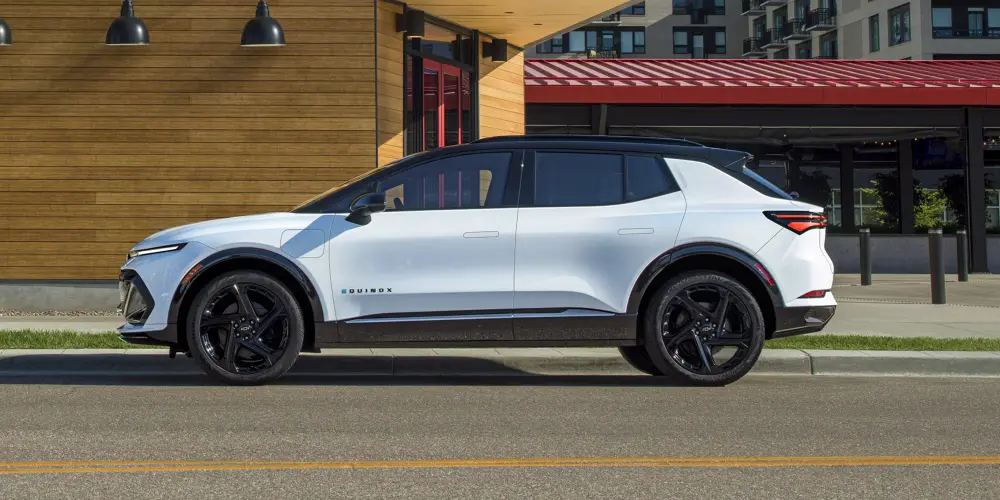
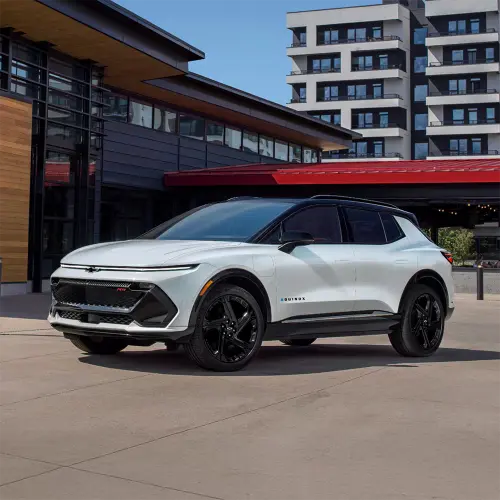
The Chevrolet Equinox EV is the best EV under $40.000 in 2026 if you charge at home, especially for families or anyone who needs usable space without compromise. Starting at $35,000 (before incentives), it delivers 319 miles of EPA range, actual SUV dimensions, and GM’s improving Ultium charging network access—making it the first sub-$40k EV that doesn’t feel like a budget concession.
This isn’t for luxury seekers or performance junkies. It’s for practical buyers who need a daily driver that replaces a gas crossover without range anxiety or cramped interiors.
Why the Equinox EV Wins for Home Charging
Home charging transforms how you use an EV, and the Equinox EV is built around that reality. With a 240V Level 2 charger (which costs $400–800 installed), you’ll add roughly 25–30 miles of range per hour. That means overnight charging fully replenishes the battery, even after a 60-mile commute.
Here’s what matters: the Equinox’s 85 kWh battery is large enough that you’re not constantly monitoring charge levels like you would with smaller-battery EVs. Real-world range sits around 280–300 miles in mixed driving, based on early owner reports—closer to EPA estimates than many competitors. Cold weather? Expect 220–240 miles in winter, which is still workable for most daily routines.
Compare that to the Nissan Leaf (149–212 miles) or even the Hyundai Kona Electric (261 miles). Both are cheaper, but their smaller batteries mean you’re living closer to your range limits. The Equinox gives you breathing room.
Affordable EV Options: What You’re Actually Getting vs. Alternatives
The other serious contender is the Tesla Model 3 Rear-Wheel Drive at $38,990. It’s faster (0–60 in 5.8 seconds vs. 7+ for the Equinox), handles better, and has access to Tesla’s Supercharger network. For highway road-trippers, that infrastructure edge is real.
But here’s the trade-off: the Model 3 is a sedan with 23 cubic feet of cargo space. The Equinox EV offers 57 cubic feet with seats folded. If you haul gear, groceries, or kids’ sports equipment, that difference is massive. The Equinox also rides higher and feels more familiar if you’re coming from a gas-powered SUV.
The Volkswagen ID.4 ($38,995) is another option, but its software has frustrated owners, and VW’s charging network partnerships lag behind GM’s Ultium access to Tesla Superchargers (rolling out in 2025–2026). The Equinox’s infotainment, while not perfect, is more responsive.
| Model | Starting Price | EPA Range | Cargo Space | Charging Access |
|---|---|---|---|---|
| Chevy Equinox EV | $35,000 | 319 mi | 57 cu ft | Ultium + Tesla SC |
| Tesla Model 3 RWD | $38,990 | 272 mi | 23 cu ft | Tesla Supercharger |
| VW ID.4 | $38,995 | 275 mi | 64 cu ft | Electrify America |
| Hyundai Kona Electric | $32,875 | 261 mi | 45 cu ft | Electrify America |
The Home Charging Economics for Budget EVs
Charging at home costs roughly $0.04–0.14 per kWh depending on your utility. For the Equinox EV, that’s about $3.40–$11.90 to fully charge the 85 kWh battery—giving you 300 miles for the price of a fast-food meal. Over three years, you’ll save $4,000–$6,000 compared to fueling a 30-mpg gas SUV at $3.50/gallon.
The federal tax credit adds $7,500 (if you qualify), dropping the effective price to $27,500. Some states stack additional rebates. Suddenly, you’re comparing a $27,500 EV with more space and lower running costs than a $32,000 Honda CR-V.
Battery warranty? Eight years/100,000 miles on the Equinox. GM projects 10% degradation after 200,000 miles under normal use, according to official Chevrolet documentation. That’s conservative—real-world data from the Bolt EUV (similar chemistry) shows closer to 5–7% after 100,000 miles.
Who Should Skip This Best EV Under $40,000
If you don’t have home charging, the equation changes. Public charging adds cost ($0.30–0.60/kWh at fast chargers) and time. The Equinox’s 150 kW max DC charging speed is average—you’ll get 10–80% in about 40 minutes. Not terrible, but not class-leading like Hyundai’s 800V architecture (Ioniq 5/Kia EV6, both slightly above $40k now).
Also skip the Equinox if you prioritize driving dynamics. The Model 3 is sharper and more engaging. The Equinox drives like a competent, comfortable crossover—nothing more.
The Bottom Line on the Best EV Under $40.000 in 2026
The best EV under $40.000 in 2026 for home chargers is the Chevrolet Equinox EV because it balances real-world range, usable space, and ownership costs better than anything else at this price. It’s the first affordable EV that doesn’t ask you to compromise on practicality.
Your next step: calculate your actual driving needs using your current mileage, then test drive the Equinox EV alongside a Model 3. Compare how each fits your routine—not just spec sheets. For most families charging at home, the Equinox makes more sense than its numbers suggest.
For a deeper look at real-world range testing, check out our winter EV range comparison or visit the EPA’s FuelEconomy.gov for official ratings and charging cost calculators.