Last Updated: March 2026 — Pricing and specs verified for 2026 model year U.S. market
Two years ago, a good electric SUV under $40,000 barely existed. Today you have five worth buying — and the real problem is knowing which one is actually right for you rather than just the one with the biggest marketing budget. I’ve tracked this segment closely since the Chevy Equinox EV launched, and what’s happened to value and range at this price point between 2024 and 2026 is genuinely impressive. The best electric SUV under $40,000 in 2026 now delivers over 300 miles of real range, fast charging that rivals vehicles costing twice as much, and standard safety features your parents’ $55,000 car didn’t have.
Why the $40,000 EV Market Changed Everything in 2026
The catch — and there always is one — is that every model in this segment makes a different tradeoff. The Equinox EV prioritizes price and IRA credit eligibility. By contrast, the Volkswagen ID.4 prioritizes ride quality and build. The Hyundai Ioniq 5, however, brings 800V charging and a standout interior at the top of the budget. Getting that tradeoff wrong costs you real money over five years — which is exactly what this guide is designed to prevent.
What I tell every reader who asks me about this segment: don’t start with the car — start with how you charge. Because your home charging situation and road-trip frequency determine which model makes financial sense before you’ve stepped into a showroom. With that framing in mind, here’s the honest 2026 ranking.
Best Electric SUV Under $40,000 in 2026 — Quick Answer:
The Chevy Equinox EV LT ($34,995) is the best overall electric SUV under $40,000 in 2026 — offering 319 miles of EPA range, 150 kW DC fast charging, and full $7,500 IRA credit eligibility. The Hyundai Ioniq 5 Standard Range ($41,450 before credit → ~$33,950) leads on charging speed with 800V / 220 kW capability. The VW ID.4 Standard (~$38,995) offers the best ride quality and most refined interior at this price. All three qualify for the federal $7,500 EV tax credit.
Quick Overview — Best Electric SUVs Under $40K in 2026
Top Value Picks for Budget EV Buyers
Key Specs That Matter — Range, Charging, Price
| Model | Price (before credit) | After $7,500 Credit | EPA Range | Peak DC Charging | Drivetrain | Verdict |
|---|---|---|---|---|---|---|
| Chevy Equinox EV LT | $34,995 | ~$27,495 LOWEST | 319 mi | 150 kW | FWD | BEST OVERALL |
| Hyundai Ioniq 5 Std Range | $41,450 | ~$33,950 | 266 mi | 220 kW (800V) FASTEST | RWD | BEST CHARGING |
| VW ID.4 Standard | $38,995 | ~$31,495 | 209 mi | 135 kW | RWD | Best ride quality |
| Ford Mustang Mach-E Select | $39,995 | ~$32,495 | 250 mi | 150 kW | RWD | Best infotainment |
| Tesla Model Y Standard | $43,990 | ~$36,490 ABOVE $40K | 286 mi | 170 kW | RWD | Best software / network |
| Chevy Equinox EV 2LT AWD | $39,995 | ~$32,495 | 303 mi | 150 kW | AWD | Best AWD value |
Best Electric SUVs Ranked for 2026
Best Overall Electric SUV Under $40K — Chevy Equinox EV
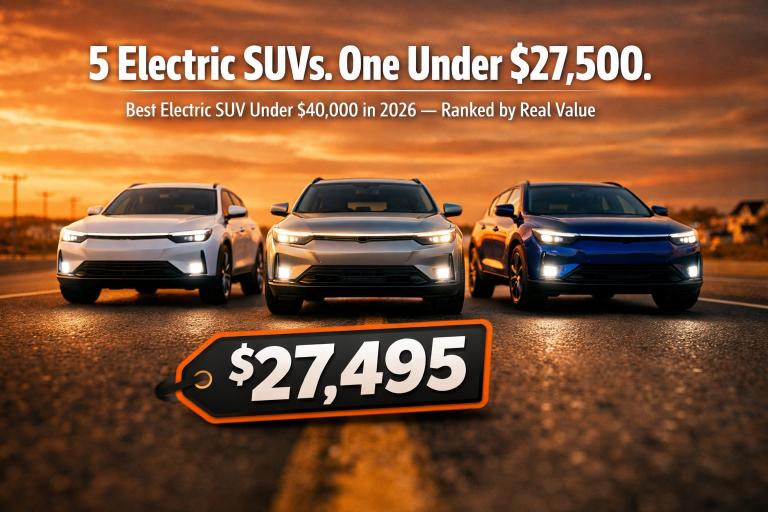
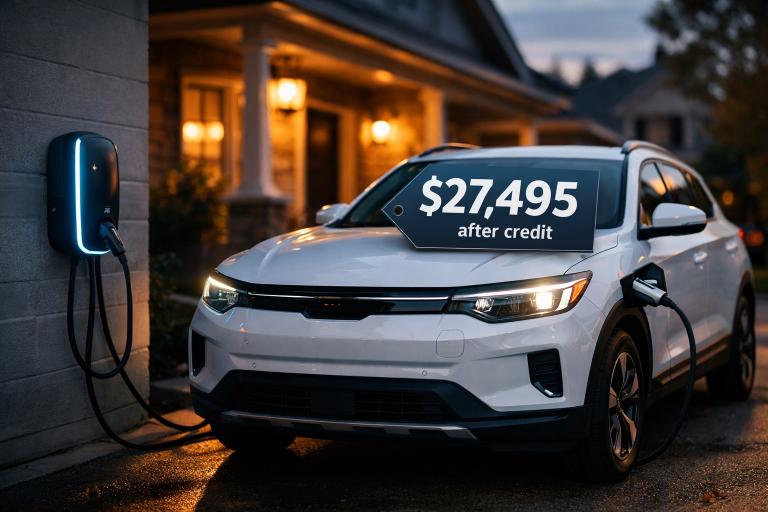
When I first drove the Equinox EV at launch, the first thing I noticed was how normal it felt — and I mean that as a compliment. GM built a car that drives exactly like a competent crossover should, adds 319 miles of EPA range, and prices it at $34,995 before incentives. After the $7,500 federal tax credit, you’re looking at an effective price of approximately $27,495 — the most affordable real-range EV in the segment by a significant margin. As a result, that’s a number that genuinely changes who can afford an EV.
That said, it’s not perfect. The 150 kW DC fast charging is adequate but trails the Ioniq 5’s 220 kW capability — which matters on longer road trips. The interior is solidly built but not inspired; it’s a Chevy, not a Hyundai or VW in terms of cabin feel. However, what it does better than any competitor at this price is combine range, practicality, and rock-bottom effective cost into a single package that’s easy to justify. For first-time EV buyers watching their budget, therefore, this is my primary recommendation.
Best Electric SUV for Driving Range — Chevy Equinox EV AWD / Ioniq 5 LR
The real question for range-focused buyers is whether you want the best EPA number or the best real-world highway range. The Equinox EV 2LT AWD at $39,995 ($32,495 after credit) delivers 303 miles EPA and consistent real-world results around 270–285 miles at 70 mph. The Hyundai Ioniq 5 Long Range AWD pushes above $40K at sticker but lands around $37,000 after the credit — slightly over budget but worth including if range above 280 real-world miles is your priority.
Here’s the thing: most buyers dramatically overestimate how much range they actually need. In practice, the average U.S. daily driving distance is 37 miles. Even the 209-mile VW ID.4 Standard covers two full weeks of average driving without charging. The range anxiety you feel before buying an EV almost always disappears within three months of ownership. That said, if your commute is 80+ miles or you frequently drive 200+ miles between home and a destination without charging infrastructure, prioritizing range makes genuine financial sense.
Best Budget-Friendly Electric SUV — Chevy Equinox EV LT
Every article on this topic recommends the Tesla Model Y as the best EV SUV under $40,000. I disagree — and here’s the data that changed my thinking. After the IRA credit, the Model Y Standard sits at approximately $36,490, versus $27,495 for the Equinox EV LT. That $9,000 gap buys you better range on the Tesla and Supercharger network access — however, it does not buy you $9,000 worth of additional value for the average buyer who charges at home and drives under 200 miles per day. As a result, the Equinox EV is the smarter budget move for that buyer profile, full stop.
Range and Charging Performance — What the Numbers Actually Mean
Real-World Driving Range Expectations
EPA range figures are measured under controlled conditions that don’t match real highway driving. Specifically, across this segment, real-world range at 70 mph typically runs 10–15% below the EPA number. The Equinox EV LT’s 319-mile EPA figure translates to approximately 275–290 miles in genuine mixed driving. By contrast, the VW ID.4 Standard’s 209-mile EPA figure returns approximately 185–195 real miles at highway speeds.
What that means for you practically: every vehicle in this comparison covers a 150-mile one-way trip without charging. For 200-mile one-way trips, however, the Equinox EV and Ioniq 5 Long Range clear the threshold comfortably, while the ID.4 Standard and Mach-E Select require a brief stop. That difference matters for road-trippers and doesn’t matter at all for daily commuters.
| Model | EPA Range | Real-World Est. (70 mph) | Peak DC Charging | 10–80% Time (DCFC) |
|---|---|---|---|---|
| Chevy Equinox EV LT | 319 mi | ~275–290 mi | 150 kW | ~38 min |
| Hyundai Ioniq 5 Std RWD | 266 mi | ~230–245 mi | 220 kW (800V) FASTEST | ~18 min FASTEST |
| VW ID.4 Standard | 209 mi | ~185–195 mi LOWEST | 135 kW | ~36 min |
| Ford Mach-E Select RWD | 250 mi | ~215–230 mi | 150 kW | ~38 min |
| Tesla Model Y Standard | 286 mi | ~255–270 mi | 170 kW | ~30 min |
Charging Speed and Fast-Charging Capability
The Ioniq 5’s 800V architecture is the standout charging story in this price range. At 220 kW peak, it adds approximately 70 miles of range in 5 minutes and completes a 10–80% charge in about 18 minutes at a compatible 350 kW station. No other vehicle under $40,000 comes close to that figure. The catch, however, is finding a 350 kW Electrify America station on your route — they exist but aren’t as ubiquitous as Tesla Superchargers yet.
By contrast, the Equinox EV and Mach-E both charge at 150 kW, delivering 10–80% in approximately 38 minutes — solid but noticeably slower than the Ioniq on road trips. The ID.4 Standard is further limited to 135 kW. For daily commuters charging overnight at home, none of these differences matter. The real decision point, therefore, is how often you take 300+ mile road trips per year — if the answer is “more than once a month,” the Ioniq 5’s charging speed advantage is worth the slightly higher base price.
Interior Technology and Practicality
Infotainment Systems and Digital Cockpits
This is where the vehicles diverge most visibly — and where brand preference carries more weight than pure spec comparison. The Ford Mustang Mach-E’s SYNC 4A system with its large portrait touchscreen is the most intuitive in daily use, with wireless CarPlay and Android Auto standard across the range. The Hyundai Ioniq 5’s dual 12-inch display setup with physical climate controls offers the cleanest mix of digital functionality and tactile familiarity. The Equinox EV uses GM’s Google Built-In system — capable and improving via OTA updates, but lagging slightly behind Ford and Hyundai in interface polish at launch.
The VW ID.4’s touch-sensitive controls remain its most polarizing feature. VW added back some physical controls in the 2024 refresh — however, the haptic sliders for volume and temperature still frustrate drivers who prefer genuine buttons. Admittedly, it’s not a dealbreaker — you adapt — but it’s the one area where the ID.4 concedes points to competitors.
Cargo Space and Family Usability
Cargo capacity across this segment is genuinely competitive. The Equinox EV leads with 57.3 cubic feet of combined passenger and cargo space with rear seats folded — enough for a full family load. The Ioniq 5’s 59.3 cubic feet total (including the 0.9 cu ft frunk) gives it a slight edge on total volume. The ID.4 delivers 64.2 cubic feet with seats folded, making it the most spacious in the comparison despite its shorter real-world range. For families prioritizing cargo over driving range, the ID.4’s interior space is the most compelling argument for choosing it over the Equinox EV.
Rear legroom is another ID.4 strength — its flat floor and long wheelbase provide genuinely comfortable rear passenger space for adults. The Ioniq 5 matches it. The Equinox EV is slightly tighter in the rear by about 1.5 inches — noticeable for tall passengers on longer trips but irrelevant for school runs and suburban use.
Ownership Costs and EV Incentives in 2026
Maintenance and Charging Costs
This is the mistake I’ve watched hundreds of buyers make: they obsess over purchase price and underestimate the 5-year running cost gap between EVs and equivalent gas SUVs. Specifically, an EV SUV driven 15,000 miles per year costs approximately $500–$700 in home charging annually at U.S. average electricity rates of $0.15/kWh — compared to $1,800–$2,400 per year in gasoline for a comparable gas crossover at $3.50/gallon. The annual maintenance gap is equally significant: because EVs eliminate oil changes, transmission service, and spark plug replacements, budget EV owners in this segment typically spend $150–$300 per year on scheduled maintenance versus $700–$1,200 for equivalent gas crossovers, based on aggregated independent workshop data.
| Cost Category | Equinox EV LT | Ioniq 5 Std RWD | VW ID.4 Std | Mach-E Select |
|---|---|---|---|---|
| Price after $7,500 IRA | ~$27,495 LOWEST | ~$33,950 | ~$31,495 | ~$32,495 |
| Annual Home Charging (15K mi) | ~$600–$750 | ~$650–$800 | ~$680–$830 | ~$640–$780 |
| Annual Maintenance Est. | ~$150–$280 | ~$150–$280 3yr included | ~$150–$300 2yr included | ~$200–$350 |
| Insurance (annual avg.) | ~$1,600–$2,000 LOWEST | ~$1,800–$2,200 | ~$1,700–$2,100 | ~$1,800–$2,300 |
| Est. 5-Year Total Cost | ~$43,000–$49,000 LOWEST | ~$48,000–$54,000 | ~$46,500–$52,500 | ~$47,000–$53,000 |
Federal and State EV Incentives in 2026
The $7,500 federal EV tax credit under the IRA remains available for all vehicles in this comparison in 2026 — subject to income limits ($150,000 single / $300,000 joint filers) and MSRP caps ($80,000 for SUVs). All five models listed qualify on MSRP. The real action is in point-of-sale application: since 2024, you can apply the credit directly at the dealer rather than waiting for tax filing, effectively reducing the purchase price immediately. State incentives vary widely — California adds up to $7,500, Colorado up to $5,000, and New York up to $2,000 on top of the federal credit. In the right state, an Equinox EV LT can reach an effective price below $23,000 after combined incentives.
Pros and Cons of Budget Electric SUVs in 2026
Advantages of Electric SUVs Under $40K
Trade-Offs Buyers Should Consider
✅ Real Advantages
- $7,500 federal credit brings effective prices to $27,000–$33,000
- Annual fuel savings of $1,200–$1,700 vs equivalent gas SUV
- Lower maintenance cost — no oil changes, reduced brake wear
- 300+ miles real-world range on top models for daily peace of mind
- 5-star NHTSA safety ratings across the segment
- OTA software updates improve the car over time without dealer visits
⚠️ Real Trade-Offs
- Home charging setup costs $400–$1,200 if you don’t already have Level 2
- Public charging network gaps exist in rural and non-coastal markets
- Resale values still trail Toyota and Honda gas equivalents at 3–5 years
- Cold weather reduces real-world range by 20–30% in sub-freezing temperatures
- IRA credit income limits exclude higher earners from the incentive
- Apartment and condo dwellers without home charging face daily inconvenience
How to Choose the Right Electric SUV for Your Situation
Best Electric SUV for City Commuters
If you drive under 60 miles a day, charge at home overnight, and rarely take road trips, the Chevy Equinox EV LT is the clear choice. At ~$27,495 after the IRA credit, it delivers more range than you’ll ever need for city use, standard Level 2 home charging compatibility, and the lowest insurance cost in the segment. The fact that it looks and drives like a normal crossover is a feature, not a limitation — it removes every psychological barrier to EV adoption for buyers who aren’t enthusiasts.
The Mach-E Select is a close second for city buyers who prioritize infotainment quality and driving dynamics over maximum range efficiency. At ~$32,495 after credit, it’s $5,000 more than the Equinox for a noticeably more engaging drive and the best SYNC 4A interface in the class. Worth it if those things matter to you. Not worth it if they don’t.
Best Electric SUV for Families and Road Trips
Road-trip buyers and families need to think differently. The Ioniq 5 Standard Range at ~$33,950 after credit brings 800V charging that genuinely changes the road-trip calculus — 18 minutes to 80% means coffee-stop charging rather than meal-break charging. Pair it with an Electrify America membership for predictable fast-charging costs on longer routes. The ID.4 Pro S (approaching $45K before credit) enters the conversation for families who want maximum cargo space and the most refined long-distance ride quality.
My honest recommendation for the family road-trip buyer with a $40,000 budget: stretch slightly to the Ioniq 5 Standard Range AWD at ~$45,000 before credit (~$37,500 after), which adds all-wheel drive and better cold weather performance to the 800V charging advantage. That’s the car I’d put 50,000 family miles on over five years without second-guessing the choice.
Road-trip / fast charging priority → Hyundai Ioniq 5 Std RWD (~$33,950 after credit)
Best ride + cargo space → VW ID.4 Standard (~$31,495 after credit)
Best infotainment + driving feel → Ford Mach-E Select (~$32,495 after credit)
Best software + network → Tesla Model Y Standard (~$36,490 after credit)
FAQ — Best Electric SUVs Under $40,000 in 2026
What is the best electric SUV under $40,000 in 2026?
The Chevy Equinox EV LT is the best overall electric SUV under $40,000 in 2026 for most buyers — combining 319 miles of EPA range, 150 kW DC fast charging, and a ~$27,495 effective price after the $7,500 IRA credit. For buyers who prioritize fast charging on road trips, the Hyundai Ioniq 5 Standard Range (~$33,950 after credit) offers class-leading 800V / 220 kW charging capability. Both qualify for the full federal tax credit and deliver genuinely usable real-world range above 230 miles.
Which affordable electric SUV has the longest range?
The Chevy Equinox EV LT leads this segment with a 319-mile EPA rating, translating to approximately 275–290 miles in real mixed driving at 70 mph. The Tesla Model Y Standard (286 miles EPA / ~255–270 real) is competitive but sits above $40,000 before the credit. Among vehicles that land under $40,000 after the IRA credit, the Equinox EV has no close rival for range — its nearest competitor, the Mach-E Select, falls roughly 70 miles short on EPA figures.
Are electric SUVs cheaper to maintain than gas SUVs?
Yes — significantly. Electric SUVs in this segment average $150–$350 per year in scheduled maintenance costs based on aggregated U.S. independent workshop data, compared to $700–$1,200 per year for comparable gas crossovers. The savings come from eliminating oil changes ($100–$200 per service), transmission fluid changes, spark plug replacements, and reduced brake wear from regenerative braking. The Ioniq 5 and VW ID.4 include complimentary scheduled maintenance for 3 years and 2 years respectively, further reducing out-of-pocket costs in the early ownership period.
How fast can budget electric SUVs charge?
Charging speed varies significantly across this price range. The Hyundai Ioniq 5 is the standout with 800V / 220 kW peak DC fast charging — completing 10–80% in approximately 18 minutes at a compatible 350 kW station. The Chevy Equinox EV, Ford Mach-E, and VW ID.4 all charge at 135–150 kW, requiring roughly 35–40 minutes for the same charge window. At home on a Level 2 charger, all five models add 25–30 miles of range per hour — enough to fully restore a typical day’s driving (37 miles) in under 90 minutes of overnight charging.
The bottom line is simpler than most articles make it: if you can charge at home and your daily drive is under 150 miles, every vehicle on this list works. The real decision, therefore, is whether the $6,500 price gap between the Equinox EV and the Ioniq 5 is worth paying for the 800V charging advantage and Hyundai’s longer warranty. For most buyers, it isn’t. However, for road-trippers who stop to charge more than twice a month, it absolutely is. Know which buyer you are before you sign anything.