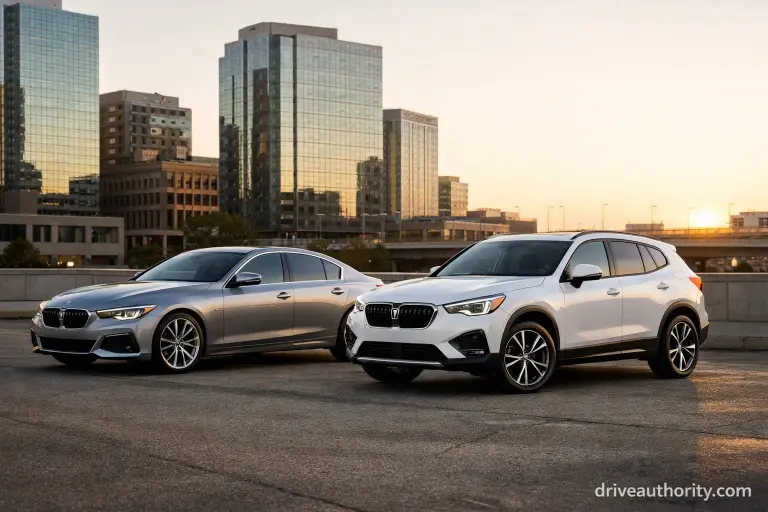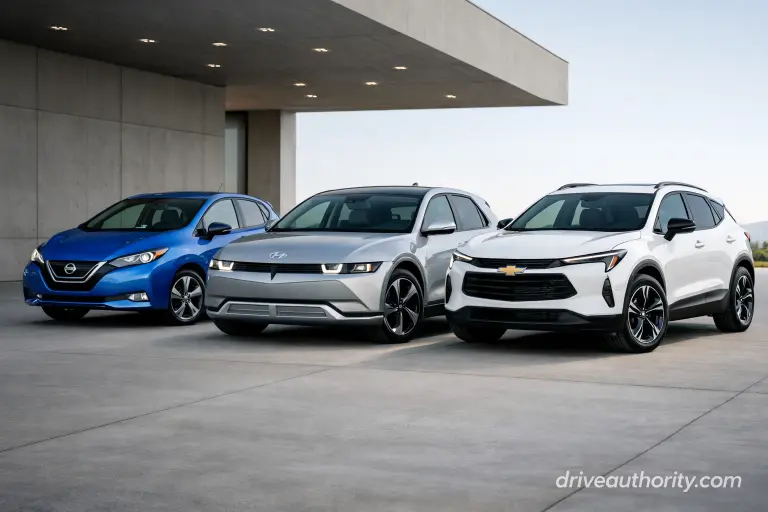
Introduction: Why “Best Electric Cars for the Money” Matters
Electric vehicles have moved beyond early-adopter status and environmental virtue signaling. Today’s EV market offers something more practical: genuine long-term value. The best electric cars for the money deliver reliable range, lower operating costs, and strong resale value without requiring a six-figure investment.
Yet finding true value means looking past marketing claims and EPA estimates. Real-world range differs from official figures. Charging costs vary dramatically based on your setup. Depreciation patterns separate winners from costly mistakes. This guide cuts through the noise to identify which electric vehicles actually deliver on their value promise, backed by ownership realities and total cost analysis.
You don’t need to spend luxury money to get a compelling EV. What you need is clarity on which models balance purchase price, practical range, and ownership costs in ways that make financial sense for your situation.
What Makes Electric Cars the Best Value for Money
Value in electric vehicles extends far beyond the window sticker. The best electric cars for the money combine reasonable purchase prices with lower operating costs and acceptable depreciation. This creates a total ownership equation that beats both overpriced EVs and many gasoline alternatives.
Real value emerges from the intersection of upfront affordability and long-term economics. An EV that costs $5,000 less but requires expensive charging or depreciates rapidly isn’t a bargain. Conversely, a premium EV with rock-solid reliability and minimal running costs might justify its higher price over five years of ownership.
The calculation depends on your driving patterns, charging access, and how long you plan to keep the vehicle. A commuter driving 15,000 miles annually sees different value than someone taking frequent road trips. Understanding these variables matters more than comparing sticker prices.
Key Metrics We Use
Real-world range vs EPA/WLTP figures forms our starting point. Official estimates often exceed what drivers experience in mixed conditions with climate control running. We focus on achievable range in typical use, not ideal testing scenarios.
Charging cost and infrastructure access dramatically affects operating economics. Home charging at off-peak rates costs roughly one-third of public fast charging. Your access to home charging fundamentally changes the value equation.
Insurance and maintenance scenarios reveal hidden costs. EVs generally cost less to maintain than gasoline vehicles, but insurance premiums vary significantly by model. Battery warranties differ substantially between manufacturers, affecting long-term risk.
Residual value and depreciation patterns determine what your EV actually costs over time. Some models hold 60% of their value after three years, while others drop to 40%. This 20-percentage-point difference represents thousands of dollars in real cost.
2026 Nissan LEAF – Updated Value Leader
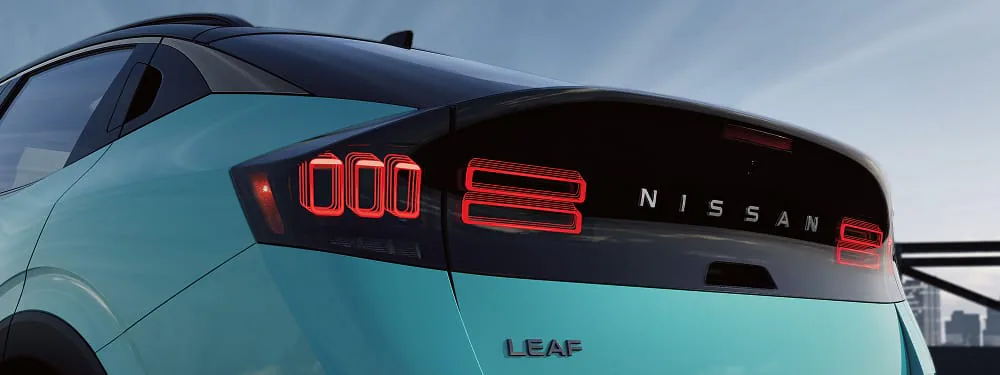
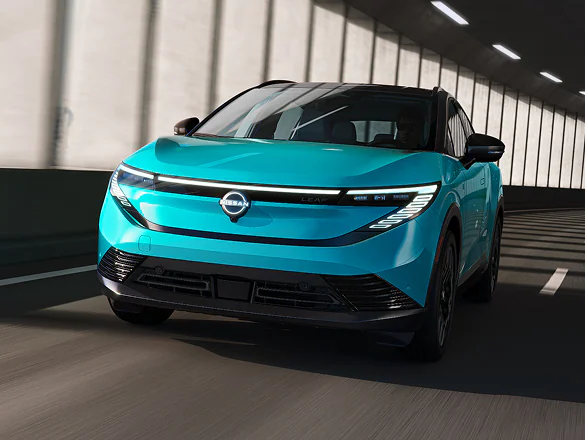
The refreshed 2026 Nissan LEAF continues a surprising run as one of the best electric cars for the money, particularly after recent updates addressing previous weaknesses. Nissan added thermal management improvements and increased the base battery capacity, tackling the two main criticisms that plagued earlier versions. Learn more about the latest LEAF updates on Nissan’s official site.
Real-world range now sits comfortably at 200-215 miles in mixed driving for the standard battery version, with the extended range model achieving 280-300 miles. These figures assume moderate climate control use and mixed highway-city driving, not hypermiling techniques or ideal conditions. For urban and suburban commuters, this range eliminates daily charging anxiety while keeping the purchase price accessible.
The LEAF’s value proposition strengthens through predictable ownership costs. Nissan’s dealer network means accessible service, and the platform’s maturity translates to fewer software bugs and better-understood maintenance patterns. Insurance costs remain moderate compared to newer EV models with expensive sensor arrays and complex driver assistance systems.
Charging flexibility improved with the addition of CCS fast charging capability alongside the previous CHAdeMO standard. While not the fastest charging EV available, the LEAF adds 150 miles of range in roughly 35-40 minutes at public fast chargers. For daily use with home charging, you’ll rarely need public infrastructure.
The value calculation works best for buyers with predictable commutes, home charging access, and no regular need for 400-mile road trips. The LEAF delivers reliable, affordable electric transportation without premium pricing or luxury pretensions.
Hyundai Ioniq 5 / Ioniq 5 N-Line – Balanced Performance Value
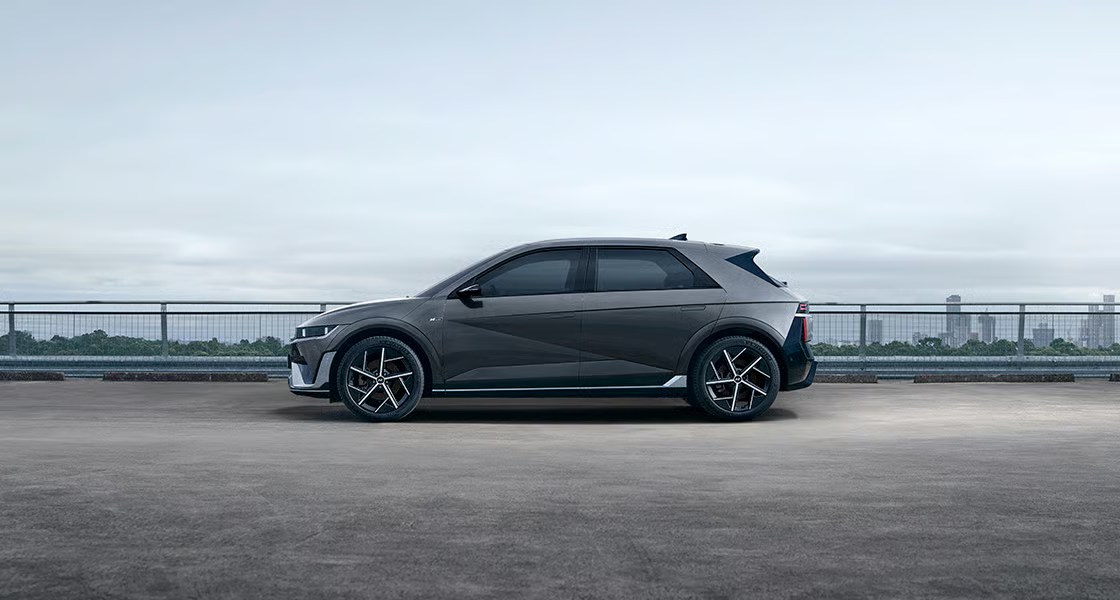
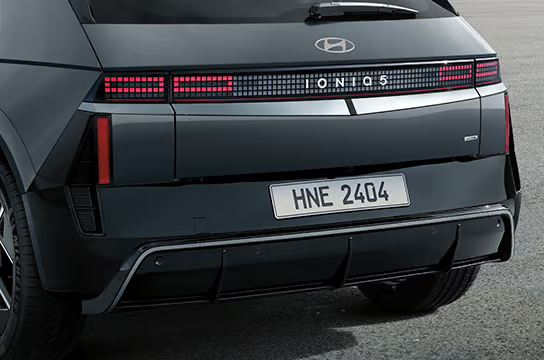

The Hyundai Ioniq 5 strikes an unusual balance: premium features and performance at near-mainstream pricing. Real-world range consistently hits 270-290 miles in mixed driving, placing it among the most capable EVs regardless of price. The N-Line variant extends this to 300-315 miles while adding performance-oriented suspension tuning.
Fast charging performance separates the Ioniq 5 from most competitors. The 800-volt architecture enables 10-80% charging in approximately 18 minutes under ideal conditions. Real-world charging from 20-80% typically takes 22-28 minutes, still exceptionally quick. This capability transforms road trip viability and reduces the premium you’d pay for longer-range alternatives. The U.S. Department of Energy tracks EV range and charging infrastructure developments nationwide.
Build quality and interior space exceed expectations at this price point. The cabin uses quality materials without luxury car prices, and the stretched wheelbase creates genuinely spacious rear seating. Families cross-shopping three-row SUVs often find the Ioniq 5’s interior volume adequate with significantly better efficiency.
Hyundai’s comprehensive warranty package adds substantial value. The 10-year, 100,000-mile battery warranty provides long-term confidence, and the 5-year, 60,000-mile bumper-to-bumper coverage exceeds most competitors. This matters when calculating total ownership risk and resale value.
The Ioniq 5 appeals to buyers wanting an EV that doesn’t compromise. You get strong range, fast charging, quality construction, and good warranty coverage without stepping into luxury pricing territory. It’s one of the best electric cars for the money when you factor in the complete ownership experience rather than just the purchase price.
Chevrolet Equinox EV – Family Value Champion

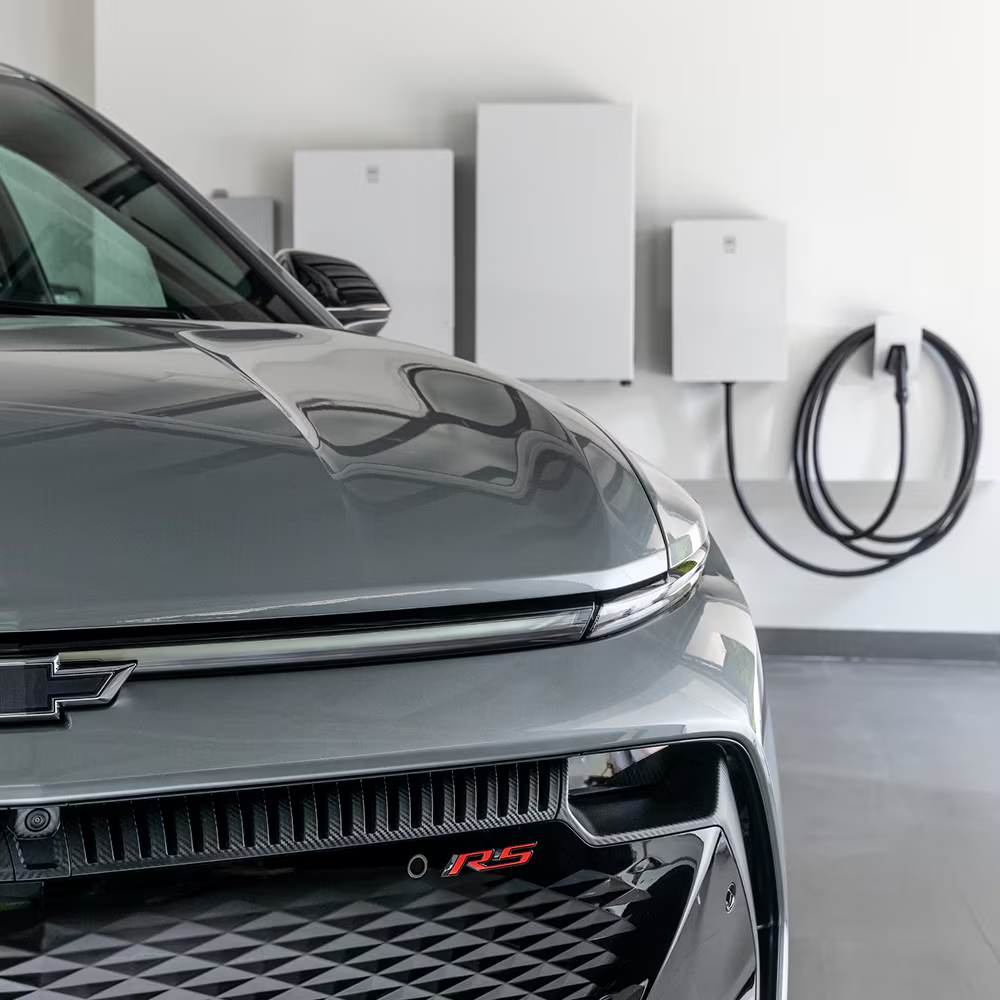
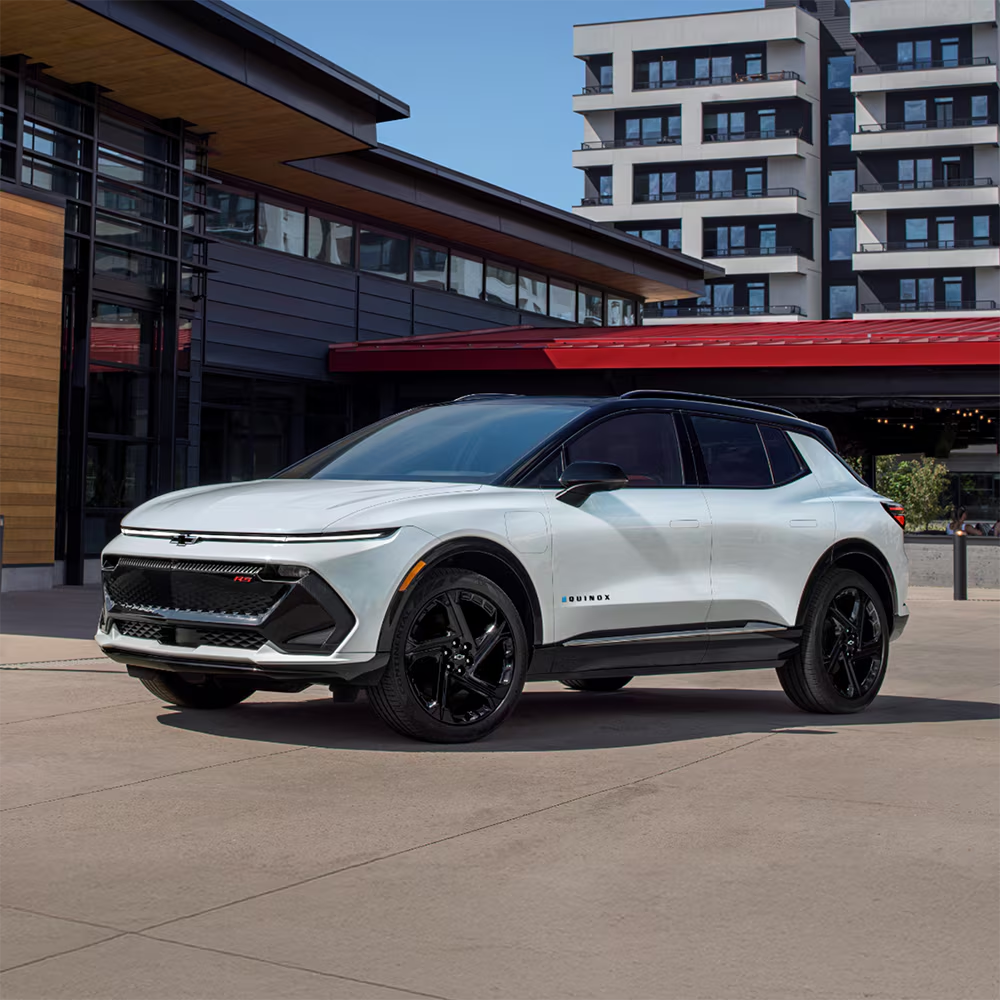
The 2025-2026 Chevrolet Equinox EV targets the sweet spot in the EV market: affordable family transportation with competitive range and features. Starting prices undercut most electric SUVs by $5,000-8,000, yet the Equinox EV delivers genuinely usable range and interior space.
Real-world range varies by trim, with the base model achieving 240-260 miles and upper trims reaching 280-300 miles in typical driving. This positions the Equinox EV as practical for daily use and occasional longer trips, particularly for families with predictable driving patterns and home charging.
Interior space impresses for the price point. The Equinox EV offers more cargo volume than many compact gasoline SUVs and competitive rear seat room. Parents transporting kids and gear find the practical storage solutions and easy-clean materials more valuable than luxury brand prestige.
GM’s charging network partnerships improve the ownership experience significantly. Access to the Tesla Supercharger network, combined with growing availability of other fast charging options, reduces range anxiety for buyers worried about public infrastructure. The vehicle comes with adapters and integrated payment systems that simplify charging away from home.
Long-term ownership costs favor the Equinox EV through GM’s established dealer network and straightforward maintenance requirements. While not luxury-car refined, the Equinox EV delivers reliable family transportation at costs that make sense against gasoline alternatives. It represents one of the best electric cars for the money when your priority is practical value rather than performance or prestige. If you’re also considering hybrid options, check out our guide on best hybrid SUVs for families.
Best Electric Cars Under $45,000 That Deliver Real Value
Nissan Leaf (Previous Generation) – Classic Value Champion
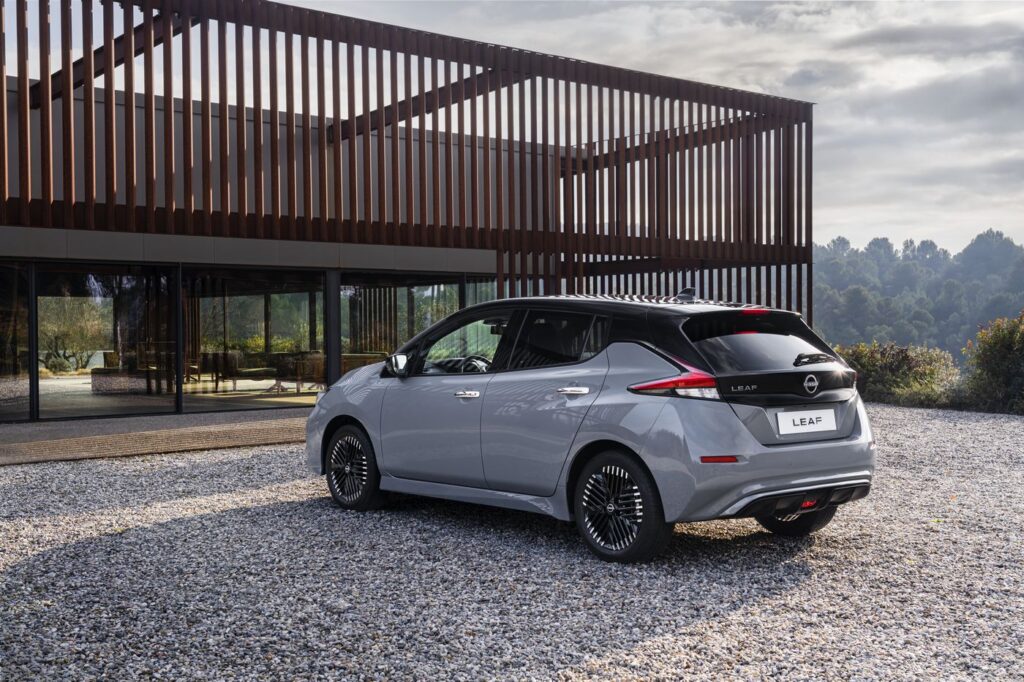
The earlier-generation Nissan LEAF remains relevant in the used EV market and as new old stock. These vehicles deliver proven reliability and simplicity at prices $8,000-12,000 below newer alternatives. Real-world daily range sits at 140-160 miles for the 40 kWh version, perfectly adequate for city and suburban commuting.
The LEAF’s maturity works in buyers’ favor. Mechanics understand the platform, parts availability remains strong, and the simple design minimizes expensive repairs. For budget-minded buyers prioritizing low total cost over maximum range, previous-generation LEAFs represent exceptional value. Explore more about used EV buying tips on our comprehensive guide.
Chevrolet Bolt EV – Solid Range at Entry Price
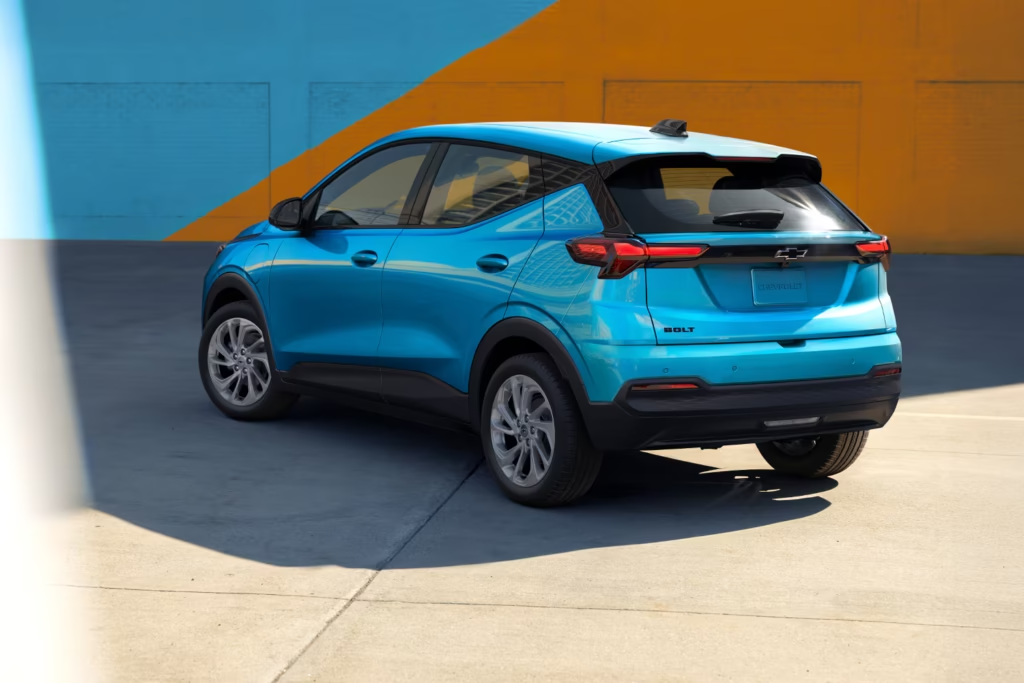
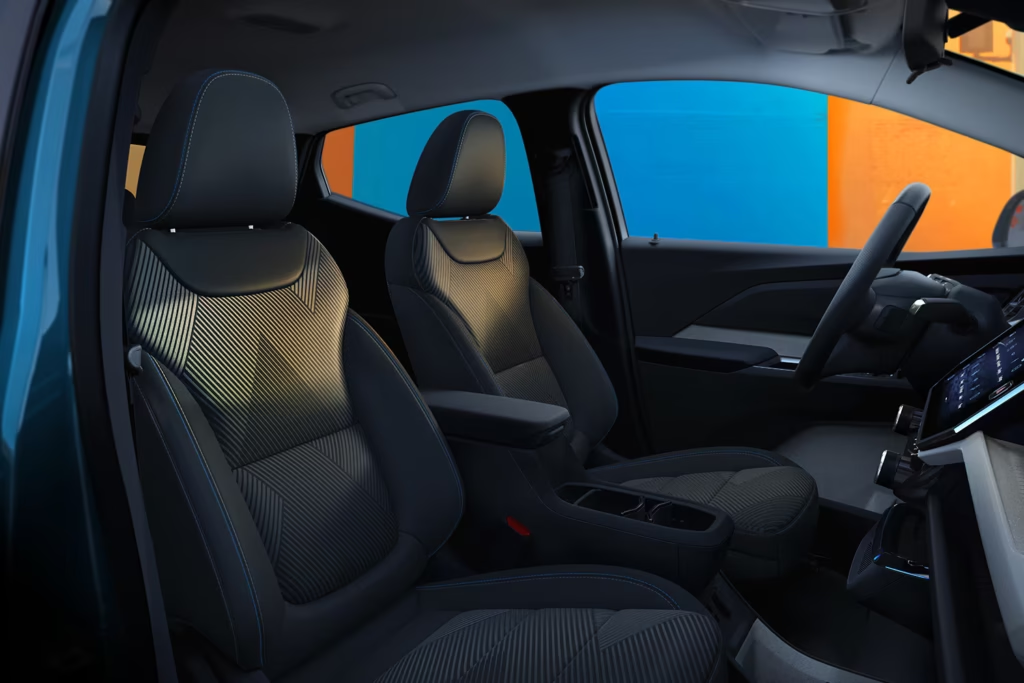
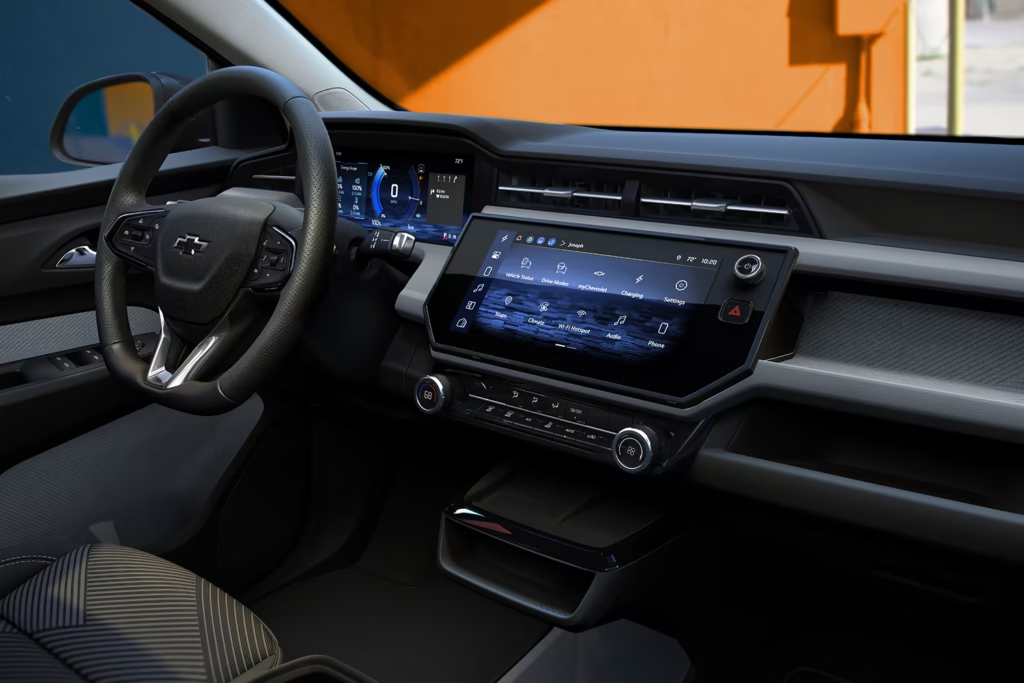
The Chevrolet Bolt EV delivered 240-260 miles of real-world range at prices significantly below competing EVs before production ended. Used Bolt EVs now offer tremendous value, with low mileage examples available at prices that make them among the most cost-effective EVs available.
The mature platform provides affordable servicing through GM’s extensive dealer network. Battery warranties transfer to subsequent owners, reducing used-buyer risk. For buyers accepting slightly older technology and design in exchange for proven range at low cost, the Bolt EV remains one of the best electric cars for the money in the used market.
2026 Toyota bZ4X – Reliability Expectations Meet EV Value
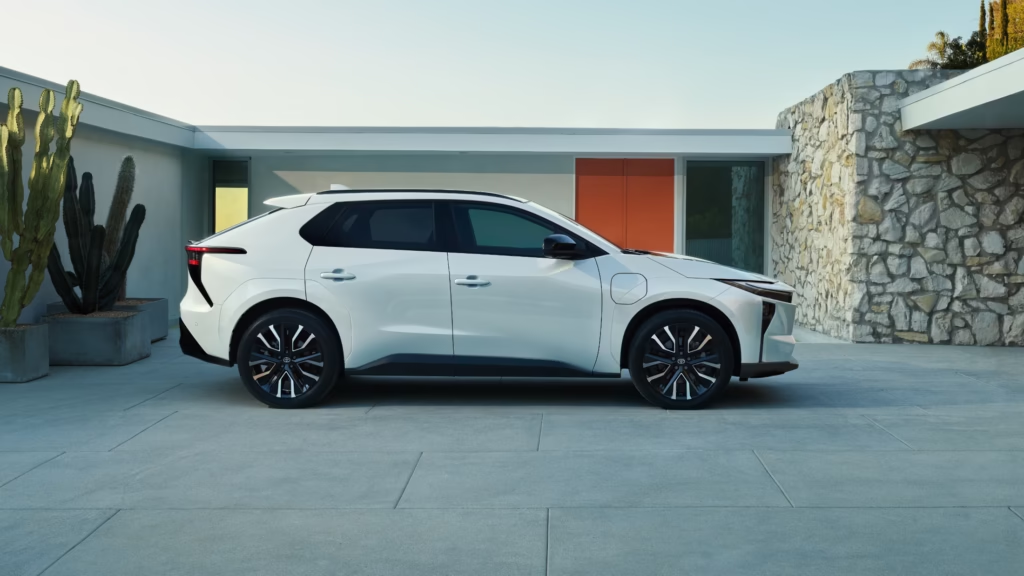


Toyota’s updated bZ4X addresses early criticisms with increased range and improved charging speeds. The strong value proposition combines Toyota’s reliability reputation with competitive EV range and features. Real-world range improved to 250-270 miles, making it practical for varied driving needs.
The comprehensive safety suite comes standard, and Toyota’s dealer network provides accessible service nationwide. While not the longest-range or fastest-charging EV available, the bZ4X appeals to buyers prioritizing reliability and brand confidence over cutting-edge performance. The improved value positioning makes it competitive among the best electric cars for the money for conservative buyers making their first EV purchase.
Real World Range Comparisons – What You Actually Get
Official EPA and WLTP range estimates provide standardized comparisons but rarely match real driving conditions. Environmental factors, driving style, and accessory use significantly impact achievable range. Understanding realistic expectations prevents disappointment and helps identify which EVs truly deliver on their range promises.
Temperature affects battery performance substantially. Cold weather can reduce range by 20-35% depending on heating system efficiency and battery thermal management. Hot weather impacts range less dramatically, typically reducing efficiency by 10-15% when running air conditioning. EVs with heat pump systems maintain better cold-weather efficiency than those relying on resistive heating.
Highway driving reduces EV range more than city driving, the opposite of gasoline vehicles. Sustained speeds above 70 mph increase energy consumption significantly. An EV rated for 300 miles might achieve only 220-240 miles on a 75 mph highway drive. City driving allows regenerative braking to recover energy, often matching or exceeding EPA estimates.
Best range EVs by price bracket:
In the affordable segment under $40,000, the Chevrolet Equinox EV and Nissan LEAF offer the strongest real-world range relative to price. Expect 240-260 miles in mixed driving from these vehicles when equipped with larger battery packs.
Mid-range crossovers between $40,000-55,000 deliver the best overall value in range per dollar. The Hyundai Ioniq 5, Kia EV6, and Ford Mustang Mach-E consistently achieve 270-290 miles in real-world conditions, balancing purchase price with practical range.
Premium long-range models above $55,000 deliver 300+ miles reliably, but diminishing returns emerge. The incremental range costs significantly more per mile than mid-range alternatives. For buyers who primarily charge at home, paying premium prices for the longest range rarely makes economic sense. The EPA’s fuel economy website provides official range ratings and efficiency comparisons.
Total Cost of Ownership: What Electric Cars Really Cost
Understanding total ownership costs reveals which electric vehicles genuinely qualify as the best electric cars for the money. Purchase price represents just one component of the equation. Operating costs, maintenance expenses, insurance premiums, and depreciation combine to determine actual cost per mile over your ownership period.
Charging Costs (Home vs Public)
Home charging transforms EV economics dramatically. Owners with access to home charging at residential electricity rates pay approximately $0.03-0.05 per mile, depending on local rates and vehicle efficiency. A typical 250-mile charge costs $8-15 when charging overnight at off-peak rates. Real owners report monthly charging costs as low as $30-50 for typical commuting patterns.
Public charging costs vary widely but generally run $0.10-0.18 per mile at fast charging stations. The same 250-mile charge might cost $25-40 at public fast chargers. This three-to-fourfold cost difference makes home charging access crucial for maximizing EV value. Buyers without reliable home charging face operating costs closer to efficient gasoline vehicles.
Workplace charging, where available, often provides free or discounted rates. Some employers offer charging as a benefit, effectively eliminating fuel costs for commuters. This access can tip the value equation dramatically in favor of EV ownership even at higher purchase prices.
Maintenance & Warranty
Electric vehicles require significantly less maintenance than gasoline vehicles. No oil changes, spark plugs, transmission services, or exhaust system repairs. Typical maintenance includes tire rotations, brake inspections (which last longer due to regenerative braking), and cabin air filters. Annual maintenance costs typically run $300-500 compared to $800-1,200 for gasoline vehicles.
Battery warranties vary substantially between manufacturers and directly impact long-term value. Hyundai and Kia offer 10-year, 100,000-mile coverage. Most mainstream manufacturers provide 8-year, 100,000-mile warranties. These warranties typically guarantee 70% capacity retention, meaning significant coverage against premature battery degradation.
Software updates and recalls highlight EV ownership differences. Over-the-air updates fix bugs and occasionally add features without dealer visits. However, some manufacturers handle recalls poorly, requiring extended dealer visits for software issues. Research manufacturer service reputations before purchasing.
Insurance, Tax Credits, and Incentives
Insurance costs for EVs vary more by model than by powertrain. High-performance EVs with expensive battery packs and sensor arrays cost significantly more to insure than affordable models. The Nissan LEAF typically costs less to insure than the Tesla Model S, despite both being electric. Shop insurance quotes before finalizing your purchase. For more details on EV incentives, visit the IRS Clean Vehicle Credit page.
Federal tax credits of up to $7,500 apply to qualifying new EVs, with specific income limits and vehicle price caps. Not all EVs qualify due to battery sourcing and final assembly requirements. Used EV purchases may qualify for $4,000 credits under certain conditions. State and local incentives vary dramatically, with some jurisdictions offering additional thousands in rebates or reduced registration fees.
These incentives substantially change the value calculation. A $45,000 EV effectively costs $37,500 after federal credits, placing it competitively against $35,000 gasoline vehicles when you factor in fuel savings. Research all available incentives in your area before comparing EV costs to gasoline alternatives.
Depreciation & Resale Value
Depreciation patterns separate good EV deals from costly mistakes. Electric vehicle depreciation has been volatile, with some models losing 50-60% of their value in three years while others maintain 50-55% residual values.
Currently, models with strong depreciation resistance include the Hyundai Ioniq 5, Kia EV6, and refreshed Nissan LEAF. These vehicles benefit from competitive pricing, strong warranties, and good owner satisfaction. Tesla vehicles historically held value well but have shown increased depreciation as competition intensified and prices dropped on new models.
Rapid technology advancement drives EV depreciation concerns. Buyers worry that newer models with better range and faster charging will make current EVs obsolete. This affects luxury EVs more severely than affordable models, as the technology premium depreciates faster than basic transportation value.
Calculating total cost requires estimating your vehicle’s value at your expected ownership endpoint. A vehicle purchased for $45,000 and worth $25,000 after five years costs you $4,000 annually in depreciation alone, before operating costs. Understanding these patterns helps identify the best electric cars for the money based on your ownership timeframe.
Finding the Best Electric Car Value for Your Lifestyle
Best for Commuters
Daily commuters with predictable routes and home charging access benefit most from affordable, efficient EVs. The Nissan LEAF and Chevrolet Equinox EV deliver ample range at prices that make economic sense compared to gasoline alternatives. These vehicles offer 200-260 miles of real range, covering typical weekly commutes on a single charge. Read our article on best EVs for daily commuters for more detailed comparisons.
Commuter priorities favor reliability, low operating costs, and straightforward ownership over maximum range or performance. The best electric cars for the money in this category minimize total cost per mile while providing comfortable, predictable transportation.
Best for Range Seekers
Buyers regularly driving 150+ miles daily or taking frequent longer trips need EVs delivering strong real-world range above 280 miles. The Hyundai Ioniq 5 N-Line and upper-trim Chevrolet Equinox EV provide this range at prices below luxury alternatives.
Fast charging capability matters more for range seekers, as even long-range EVs require charging on extended trips. The Ioniq 5’s 800-volt architecture provides the fastest charging in its price class, reducing road trip delays significantly.
Best for Families & Space
Family buyers need interior volume, cargo flexibility, and practical features over sporty performance. The Chevrolet Equinox EV offers the best combination of space and value, with competitive range and features at prices below most electric SUVs.
The Nissan LEAF provides adequate family space for smaller households prioritizing affordability. Its proven reliability and simple operation appeal to parents wanting predictable transportation without luxury car complexity or cost.
Best for Tech & Safety First Buyers
Technology-focused buyers appreciate advanced driver assistance, sophisticated infotainment, and regular software updates. The Hyundai Ioniq 5 delivers comprehensive driver assistance features standard, with intuitive interfaces and reliable performance.
The Toyota bZ4X emphasizes safety suite completeness and integration quality over cutting-edge features. For conservative buyers prioritizing proven technology and comprehensive safety coverage, Toyota’s approach offers reassurance worth the modest range and performance compromises.
Charging Network Realities – What to Expect
Public charging infrastructure has improved substantially but remains inconsistent across regions and networks. Understanding charging realities helps set appropriate expectations and identify whether specific EVs work for your situation.
Home charging provides the foundation for positive EV ownership. Installing a Level 2 charger costs $500-2,000 depending on electrical panel capacity and installation complexity. This investment pays back quickly through dramatically lower per-mile costs and daily convenience. You begin each day with a full charge, eliminating most public charging needs. Learn more about home charging installation from ChargePoint’s installation guide.
Public Level 2 charging works well for destination charging while shopping, dining, or working. These chargers add 20-30 miles per hour, adequate for topping up during extended stops. Costs vary from free to $2-4 per hour, making them economical when you’re already parked.
Fast charging networks determine road trip viability. Tesla’s Supercharger network offers the most reliable experience with widespread coverage and high reliability rates. Other networks have improved but show more variability in station availability and functionality. The Ioniq 5’s fast charging speed reduces dependence on network reliability since you spend less time charging overall.
Typical charging workflows involve home charging for daily use and public fast charging for road trips. Budget 25-35 minutes for an 20-80% fast charging stop, adding 150-200 miles of range. Plan trips with charging stops every 180-220 miles to maintain battery health and avoid range anxiety.
Regional differences matter significantly. Urban areas and major highways offer good charging coverage, but rural regions remain underserved. Research charging availability along your common routes before purchasing, especially if you lack home charging access.
Common EV Buying Mistakes to Avoid
Ignoring real ownership cost beyond MSRP leads buyers to focus exclusively on purchase price while overlooking operating costs and depreciation. Calculate five-year total cost including charging, maintenance, insurance, and estimated resale value. The cheapest EV to purchase isn’t always the best electric car for the money over your ownership period.
Prioritizing maximum range over usable everyday range causes buyers to overpay for range they’ll rarely use. Honestly assess your typical driving patterns. Most drivers cover fewer than 50 miles daily, making 200+ mile range more than adequate with home charging. Paying premium prices for 400-mile range makes sense only for specific use cases.
Forgetting to calculate charging availability leaves buyers frustrated when reality doesn’t match expectations. Buyers without home charging face dramatically higher operating costs and inconvenience. If you can’t charge at home or work regularly, factor public charging costs and time into your value calculation. An EV might not be the best choice without reliable charging access.
Overlooking true depreciation differences between models costs buyers thousands in unexpected losses. Research historical depreciation patterns for models you’re considering. Rapid depreciation on some EVs eliminates any fuel cost savings through higher cost of ownership. The best electric cars for the money maintain reasonable resale values alongside low operating costs.
Buying first-year models increases risk of bugs and undiscovered issues. Second or third model years typically resolve early problems while maintaining similar pricing. Unless you need the absolute latest features, letting early adopters identify problems saves money and frustration.
Underestimating cold weather impact disappoints buyers in northern climates. If you regularly drive in sub-freezing temperatures, account for 25-35% range reduction. This might require buying a longer-range model than temperate-climate buyers need, changing the value equation.
Frequently Asked Questions
What are the best electric cars for the money in 2026?
The Nissan LEAF, Hyundai Ioniq 5, and Chevrolet Equinox EV represent the strongest value propositions. The LEAF offers proven reliability and low ownership costs for commuters. The Ioniq 5 balances range, charging speed, and features at competitive pricing. The Equinox EV delivers family-friendly space and range at prices below most electric SUVs.
How far can electric cars really go on a charge?
Real-world range typically falls 10-20% below EPA estimates in mixed driving conditions. Expect 200-260 miles from affordable EVs and 270-300 miles from mid-range models in typical use. Cold weather, highway speeds, and climate control use reduce these figures further. Plan on usable range roughly 70-80% of the EPA estimate for conservative trip planning.
Are electric cars cheaper to own than gas cars?
EVs cost less to operate and maintain but may carry higher purchase prices and insurance costs. With home charging, operating costs run $0.03-0.05 per mile versus $0.10-0.15 for gasoline vehicles. Maintenance costs drop by 50-60%. Over five years, most EVs cost less to own than equivalent gasoline vehicles, especially after incentives. The advantage increases with higher annual mileage.
Which EV has the lowest cost per mile?
The Nissan LEAF delivers among the lowest total cost per mile when considering purchase price, charging costs, and maintenance. Affordable purchase pricing, proven reliability, and efficient operation combine for approximately $0.35-0.45 per mile over five years with average driving. Used Chevrolet Bolt EVs offer even lower costs for buyers accepting slightly older technology.
Are affordable EVs worth it for long trips?
Affordable EVs work adequately for occasional long trips but require more planning and charging stops than premium long-range models. The Ioniq 5’s fast charging capability makes it viable for regular road trips despite mid-range pricing. For buyers taking frequent 400+ mile trips, a plug-in hybrid might provide better value than an affordable EV or the premium for a luxury long-range model.
Do cheaper EVs hold value well?
Depreciation varies more by specific model than by price category. The Nissan LEAF and Hyundai Ioniq 5 have shown reasonable value retention in their price segments. However, some affordable EVs depreciate rapidly due to technology improvements and price competition. Research specific model depreciation history rather than assuming affordable equals poor resale value. Strong warranties help maintain resale confidence.
Conclusion: Select the Best EV for Your Budget and Needs
The best electric cars for the money combine reasonable purchase prices with low operating costs and acceptable depreciation. No single EV wins every category, making your specific needs and circumstances crucial to identifying the right choice.
For commuters prioritizing low total ownership cost, the Nissan LEAF delivers proven value and reliability. Families needing space at affordable prices find the Chevrolet Equinox EV offers the best combination of room and range. Buyers wanting balanced capability without luxury pricing benefit from the Hyundai Ioniq 5’s combination of range, charging speed, and features.
Real-world range, actual charging costs, and honest depreciation estimates matter more than marketing claims or EPA ratings. Calculate total five-year ownership costs including purchase price, charging based on your access, maintenance, and estimated resale value. Factor in available tax credits and incentives to determine true out-of-pocket costs.
The best electric car for the money depends on your driving patterns, charging access, and ownership priorities. Match vehicle capabilities to your actual needs rather than chasing maximum range or latest features. An EV that meets your requirements at $40,000 delivers better value than one offering unnecessary capability at $55,000.
Make informed decisions based on realistic range expectations, confirmed charging costs for your situation, and researched depreciation patterns. The best electric cars for the money provide years of low-cost, reliable transportation without requiring luxury budgets or accepting significant compromises.