Last Updated: May 2026 — GCC and Southeast Asia pricing, ASEAN NCAP ratings, powertrain specifications, and 3-year residual value data verified
GAC Motor offers a genuine price advantage — 15–30% below equivalent Japanese and Korean SUVs — but most buyers asking about GAC are really asking one question: does the saving hold up when it comes time to sell? The answer is largely no, and that changes the entire calculation. A GAC GS8 priced at approximately $28,000–$32,000 in GCC markets retains around 35–45% of its value after three years; a similarly priced Toyota Fortuner or Hyundai Santa Fe retains 55–65%. On a $30,000 purchase, that gap means you recover roughly $9,000 from a GAC versus $18,000 from the Toyota. The $10,000 upfront saving evaporates almost entirely in depreciation — and that is the fact every GAC Motor review needs to state clearly before discussing anything else. GAC is still a rational purchase, but only under specific conditions: you plan to keep the car at least five years, you live within reasonable range of a GAC service centre, and you value a generous standard equipment list over long-term resale confidence.
GAC Motor — The Short Answer for Global Buyers:
GAC Motor offers good value for buyers who keep their vehicles for 5+ years and live within range of an established dealer network. The GS4 and GS8 are the models worth evaluating — both are priced 15–30% below Japanese/Korean equivalents and include ADAS features (AEB, lane keeping, adaptive cruise, blind spot monitoring) as standard. The critical limitation is depreciation: GAC retains 35–45% of value at three years versus 55–65% for Toyota or Honda, meaning the upfront saving largely disappears if you sell before five years. No GAC model holds a Euro NCAP rating. ASEAN NCAP gives the GS8 four stars. GAC is worth shortlisting in UAE, Saudi Arabia, Philippines, and Malaysia. It is not worth considering if you plan to sell at three years or if you cannot confirm a service centre within 80 km.
Where GAC Motor Operates — Market Availability in 2026
Before evaluating any GAC model, confirm whether your market has the dealer density to support one. This is the factor that most reviews skip over, and it is the one most likely to affect your ownership experience.
GAC Motor has its strongest international presence in GCC markets — UAE, Saudi Arabia, Oman, Kuwait, and Qatar. The brand established a firm foothold there from 2018 onwards, and service infrastructure is reasonably mature by 2026. In Southeast Asia, GAC competes in the Philippines, Malaysia, Thailand, and Indonesia with an adequate but uneven dealer network; urban coverage is acceptable, rural coverage is patchy. In Africa, select presence in Egypt and a handful of sub-Saharan markets exists, but parts availability can add days to routine service.
GAC is not sold through authorised dealers in the United States or any EU member state. Imports via grey market channels exist but carry no warranty protection, no official service network, and no NHTSA or Euro NCAP compliance — do not buy one this way. In the UK and Australia, GAC has no established dealer presence as of May 2026.
For buyers in well-served markets — Dubai, Abu Dhabi, Riyadh, Manila, Kuala Lumpur — the service infrastructure concern is less acute. GAC’s GCC network in particular has grown to a point where the post-purchase experience is broadly comparable to second-tier European brands operating in the same region.
GAC Motor Model Lineup: GS4, GS8, and What Else Is Worth Knowing
GAC sells a broad range globally, but two models account for the overwhelming majority of purchase interest from buyers seriously evaluating the brand: the GS4 compact SUV and the GS8 large SUV. The others are worth knowing about, but they are not the reason most buyers look at GAC.
The GS4 is GAC’s highest-volume model internationally. It is a compact SUV in the Toyota RAV4 / Honda CR-V class, powered by a 1.5L turbocharged four-cylinder producing approximately 169 hp and paired with a CVT or 7-speed DCT depending on the market variant. It positions as a feature-rich alternative to Japanese competitors at a meaningfully lower price.
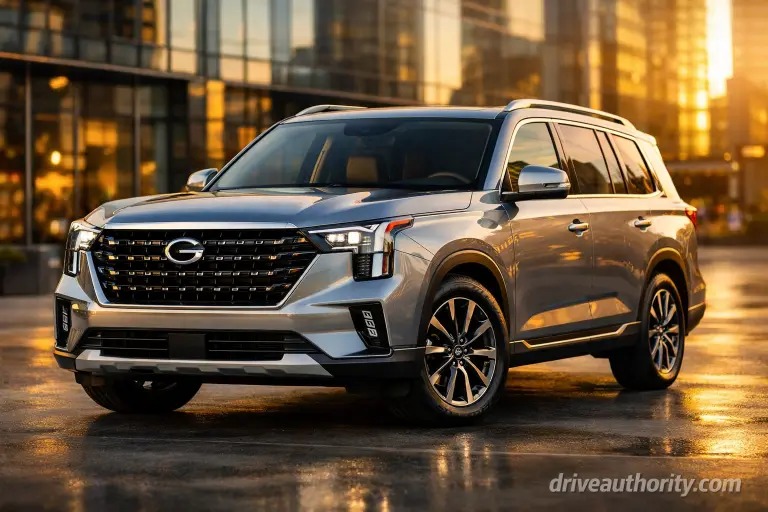
The GS8 is the brand’s flagship and most compelling product. It is a three-row SUV that competes directly with the Hyundai Santa Fe, Kia Sorento, and Nissan Pathfinder. The 2.0T engine delivers 252 hp with a ZF-sourced 8-speed automatic — a premium transmission supplier that gives the powertrain more credibility than the GS4’s in-house gearbox. The GS8 is where GAC’s value case is strongest, because the price differential against the competition is widest ($8,000–$15,000) while still offering a comparable feature set.
| Model | Segment | Engine | GCC Price (USD equiv.) | Verdict |
|---|---|---|---|---|
| GS4 | Compact SUV | 1.5T / ~169 hp | ~$20,000–$25,000 | STRONG VALUE |
| GS8 | Large 3-row SUV | 2.0T / 252 hp (ZF 8-spd) | ~$28,000–$32,000 | BEST CASE |
| Emkoo | Coupe-style SUV | 1.5T hybrid or 2.0T | ~$22,000–$28,000 | NICHE |
| Empow | Sport sedan | 1.5T / 177 hp | ~$18,000–$22,000 | LIMITED DEMAND |
| M8 | MPV (7-seat van) | 2.0T / 224 hp | ~$30,000–$38,000 | Fleet/family hauler |
| Aion Y / Aion S | EV compact SUV / sedan | Electric (select markets) | Not widely available | DEALER DEPENDENT |
The Aion electric sub-brand deserves a note. GAC separates its EV lineup under the Aion brand, which competes primarily in China and a small number of international markets. Where Aion vehicles are available (some Southeast Asian markets, select Middle East dealers), they present an interesting proposition, but the service and parts infrastructure for the electric drivetrains is even thinner than for GAC’s ICE models. Approach them with additional caution unless your dealer can confirm local battery servicing capability.
Price and Depreciation: Is the GAC Saving Real After Three Years?
This is the most important section in this article. The upfront price gap between GAC and mainstream competitors looks compelling. Run the depreciation numbers and it looks far less so.
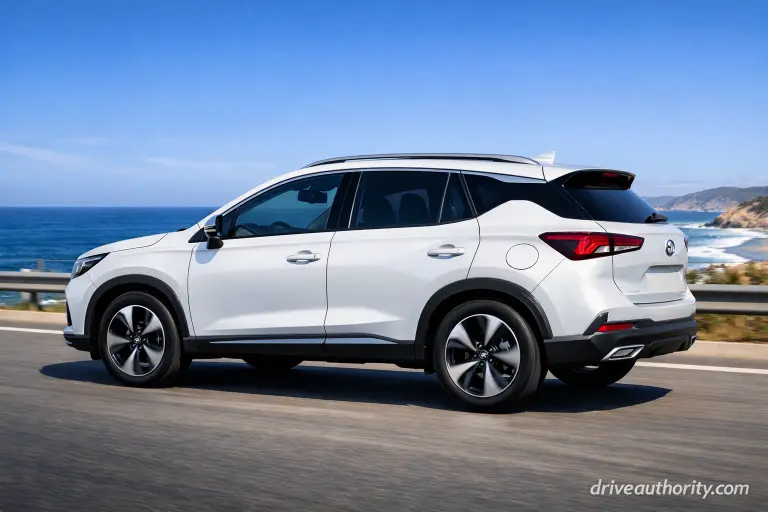
Take a representative comparison in a GCC market. A GAC GS8 costs approximately $30,000. A Hyundai Santa Fe costs approximately $40,000. The $10,000 saving looks decisive. Now apply the depreciation figures. At three years:
- GAC GS8: retains approximately 40% — around $12,000 residual
- Hyundai Santa Fe: retains approximately 58% — around $23,200 residual
The GAC owner recovers $12,000; the Hyundai owner recovers $23,200. The GAC owner spent $10,000 less upfront but absorbs $11,200 more in depreciation — a net cost of approximately $1,200 more over three years of ownership, despite starting with the cheaper car. The two vehicles arrive at similar total cost by year three.
There is one scenario where the depreciation argument weakens: very high-mileage buyers. A driver covering 50,000+ km annually runs through the depreciation curve faster regardless of brand, and the initial purchase price advantage becomes a more significant factor when the vehicle is being worked hard from day one.
GAC’s warranty terms are competitive — 5 years/150,000 km on the powertrain. This is stronger than Toyota’s standard powertrain warranty in GCC markets (3 years/unlimited or 5 years/unlimited depending on territory) and matches Hyundai’s 5-year coverage. The warranty matters most in year 4–5 when most competitor warranties have expired and GAC’s is still active.
Performance and Technology: GS4 and GS8 Specifications Compared
GAC’s engineering has closed the gap with mainstream competitors at a specification level. The powertrain and feature-set comparison no longer reads as clearly lopsided as it did five years ago — which is part of why the brand is growing.
| Specification | GAC GS4 | GAC GS8 | Competitor Benchmark |
|---|---|---|---|
| Engine | 1.5L turbo, ~169 hp, ~250 Nm | 2.0L turbo, 252 hp, 400 Nm | Hyundai Santa Fe: 2.5T / 277 hp |
| Transmission | CVT or 7-spd DCT | ZF 8-spd automatic PREMIUM SUPPLIER | 8-spd automatic (most rivals) |
| 0–100 km/h | ~9.5–10.5 sec | ~8.0–8.5 sec | Santa Fe 2.5T: ~8.0 sec |
| Fuel consumption | 8–10 L/100km (real-world) | 10–12 L/100km (real-world) | Santa Fe 2.5T: ~10–11 L/100km |
| Standard ADAS | AEB, LDW, LKA, ACC, BSM ALL STANDARD | AEB, LDW, LKA, ACC, BSM, rear cross-traffic ALL STANDARD | Some rivals charge for full ADAS suite |
| Infotainment | 12.3-inch touchscreen, wireless CarPlay | 14.6-inch touchscreen, 12.3-inch digital cluster | Comparable to Korean rivals’ mid-trim |
| Seating | 5-seat | 7-seat | Santa Fe: 7-seat; RAV4: 5-seat |
The GS8’s use of a ZF-sourced 8-speed automatic transmission is significant and worth highlighting. ZF supplies gearboxes to BMW, Audi, and Rolls-Royce; choosing it for the GS8 indicates GAC is prioritising transmission quality on its flagship model rather than using an in-house unit. Long-term reliability data on the GS8’s ZF unit in high-heat markets is limited but the hardware provenance is credible.
Standard ADAS equipment is where GAC consistently outpoints the competition at its price level. In the $28,000–$32,000 GCC segment, it is common for Japanese and Korean rivals to put full lane-keeping assist and adaptive cruise behind a trim-level paywall. GAC includes the full suite as standard. For a buyer who prioritises driver assistance technology, this is a genuine differentiator — not just a marketing talking point.
Safety Ratings: C-NCAP vs ASEAN NCAP — What the Stars Actually Mean
GAC’s safety ratings require careful reading. The brand’s own communications emphasise five-star C-NCAP results. Buyers outside China need to understand what C-NCAP is — and what it is not.
C-NCAP is the Chinese domestic safety assessment programme. It tests vehicles against Chinese road conditions and impact scenarios and is administered independently from Euro NCAP or ANCAP. C-NCAP has historically been considered less demanding than Euro NCAP; its five-star threshold does not directly correspond to five stars in Euro NCAP testing. A five-star C-NCAP result does not predict a five-star Euro NCAP result. The Chery Tiggo 8 Pro, for example, holds five C-NCAP stars and zero Euro NCAP stars — because it has never been submitted for Euro NCAP testing.
The more meaningful data point for international buyers is ASEAN NCAP. The GAC GS8 holds a four-star ASEAN NCAP rating. ASEAN NCAP uses Euro NCAP test protocols adapted for Southeast Asian road conditions and is a credible independent assessment. Four stars in ASEAN NCAP indicates solid but not class-leading performance — broadly comparable to mid-grade ratings from established brands. The GS4 does not hold an ASEAN NCAP rating as of May 2026.
Standard active safety equipment partially compensates for the absence of a Euro NCAP result. AEB systems intervene before a crash occurs; the GS4 and GS8 include autonomous emergency braking as standard fitment. AEB has been shown in European research to reduce rear-end collision rates by approximately 38%, according to Euro NCAP’s own Active Safety study data. A vehicle with standard AEB is meaningfully safer in daily driving than the crash structure data alone would suggest.
Reliability, Service Network, and Long-Term Ownership
Long-term reliability data on GAC is limited — not because GAC vehicles are unreliable, but because the international fleet is too young to produce the kind of high-mileage longitudinal evidence available for Toyota, Honda, and Hyundai. What exists suggests the powertrain is adequate rather than exceptional.
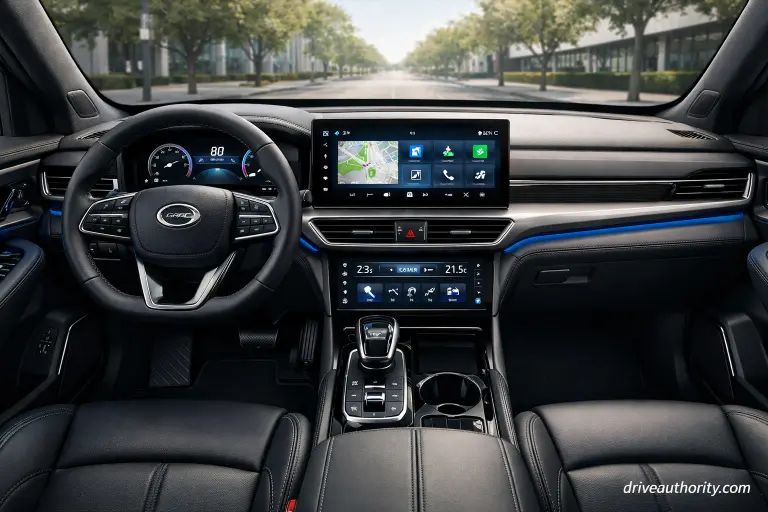
Owner feedback collected from GCC and Southeast Asian forums through 2024–2025 identifies a consistent pattern. The most frequent complaints concern infotainment software stability (unexpected reboots on early-build units, partially resolved by over-the-air updates), cabin trim quality on lower variants (fit and finish of hard plastics), and, in some markets, parts lead times extending to two to four weeks for non-standard components. The powertrain itself — engine and transmission — does not feature prominently as a complaint category, which is the most important finding.
For buyers in the UAE and Saudi Arabia, GAC’s service network is competent. Authorised dealers in these markets use trained technicians and carry standard parts inventory. Service costs for routine maintenance are approximately 20–30% lower than equivalent Japanese brands, partly reflecting lower parts pricing and partly reflecting shorter labour times (GAC designs for serviceability at Chinese market labour rates). This running cost advantage compounds over five years of ownership.
The 5-year/150,000 km powertrain warranty is a meaningful backstop. At the price point where GAC competes, this coverage exceeds what Toyota and Honda offer in most GCC markets on the powertrain (typically 3 years/unlimited or 5 years/unlimited, varying by territory). Hyundai’s 5-year/unlimited warranty is comparable in scope. Read the warranty exclusions carefully — specifically what constitutes “regular maintenance” and which fluid or filter services must be performed at an authorised dealer to preserve warranty validity.
Who Should Buy GAC Motor — and Who Shouldn’t
The decision framework is straightforward once you apply the depreciation data and the service network check. GAC is a rational purchase for a defined buyer profile. It is a poor purchase for several others.
Buy GAC if you…
- Plan to keep the car for 5+ years — the upfront saving delivers genuine value over a longer ownership window
- Have confirmed an authorised GAC service centre within 80 km of your home or workplace
- Are in the UAE, Saudi Arabia, Philippines, or Malaysia — markets with established GAC dealer infrastructure
- Prioritise standard ADAS equipment and interior size over brand prestige and long-term resale data
- Cover high annual mileage (40,000+ km/yr) — the lower running costs and purchase price compound favourably under intensive use
- Are comparing the GS8 specifically — the price gap against 3-row competitors is widest and the ZF transmission adds credibility
Avoid GAC if you…
- Plan to sell or trade in within 3 years — the depreciation erases the purchase saving and likely costs you more overall
- Cannot confirm an authorised dealer within 80 km — routine service and warranty claims become disproportionately inconvenient
- Are in a market with no official GAC presence (UK, Australia, EU, US) — do not buy via grey market import
- Require Euro NCAP or ANCAP safety data as part of your decision — no GAC model has been independently rated to these standards
- Are financing over 3 years with a balloon payment based on residual value assumptions — GAC’s lower residuals create balloon shortfall risk
- Drive 80,000+ km annually in remote areas — parts lead times of 2–4 weeks become unacceptable at high usage and remote locations
Frequently Asked Questions: GAC Motor
Is GAC Motor a reliable brand?
Based on owner reports from GCC and Southeast Asian markets through 2024–2025, GAC’s powertrain (engine and transmission) does not feature as a common complaint area, which is the most important reliability indicator. The most frequently reported issues are infotainment software instability on early-build units and cabin trim quality on lower-spec variants — both of which affect comfort rather than mechanical reliability. Long-term data beyond 150,000 km is limited because GAC’s international fleet is relatively young. The 5-year/150,000 km powertrain warranty provides financial backstop against major mechanical failure during the ownership window where reliability uncertainty is highest.
How does GAC Motor compare to Toyota and Honda?
GAC delivers roughly 70–80% of the quality of a mainstream Japanese SUV at 60–70% of the price — in terms of specifications, standard equipment, and interior presentation. Where Toyota and Honda retain a clear advantage is in long-term reliability evidence (decades of high-mileage data), global service network density, and resale value (55–65% at three years versus 35–45% for GAC). For buyers in markets where Toyota has stronger dealer coverage, the service network argument alone often tips the balance. For buyers in well-served GAC markets who prioritise upfront cost and features, the comparison is more genuinely competitive.
Is the GAC GS8 a good buy in the UAE?
Yes, for the right buyer profile. The GS8 at approximately $28,000–$32,000 undercuts the Hyundai Santa Fe and Nissan Pathfinder by $8,000–$12,000, includes full ADAS as standard, and uses a ZF 8-speed transmission. GAC’s UAE dealer network is established enough for routine servicing to be convenient. The purchase makes sense if you plan to own for 5+ years — buyers planning to sell at 3 years will find the depreciation advantage has been consumed. GAC’s warranty (5yr/150k km powertrain) is a meaningful backstop for UAE buyers who drive high annual mileage.
What safety rating does the GAC GS8 have?
The GAC GS8 holds a 4-star ASEAN NCAP rating, which uses Euro NCAP test protocols adapted for Southeast Asian conditions — a credible independent assessment. GAC also reports 5-star C-NCAP ratings across its range; C-NCAP is China’s domestic safety programme and does not directly translate to Euro NCAP or ANCAP results. No GAC model holds a Euro NCAP or ANCAP rating as of May 2026. All GS8 variants include automatic emergency braking, lane departure warning, lane keeping assist, adaptive cruise control, and blind spot monitoring as standard.
Can you buy a GAC Motor in the UK, Australia, or the US?
Not through authorised channels. GAC does not have an established dealer network in the UK, Australia, or the United States as of May 2026. Grey market imports exist but carry no factory warranty, no authorised service network, and no compliance with local safety and emissions regulations (NCAP, NHTSA, ADR). Do not buy a GAC via a grey market importer — the absence of warranty and service support negates the price advantage entirely and creates regulatory risk in markets with strict vehicle compliance requirements.
Which GAC model is the best value?
The GS8 represents GAC’s strongest value case globally. The price gap against three-row Japanese and Korean SUVs is widest — $8,000–$15,000 in GCC markets — while the ZF-sourced 8-speed transmission and standard 7-seat configuration make it genuinely competitive on specification. The GS4 offers solid value in the compact segment but faces stiffer competition from more established brands with better resale records. The Emkoo and Empow serve niche preferences and are not the primary reason to consider GAC.
How much does a GAC Motor lose in value?
GAC vehicles retain approximately 35–45% of their purchase price after three years, based on observed used-vehicle pricing in GCC and Southeast Asian markets. This compares to 55–65% for Toyota and Honda equivalents in the same markets. On a $30,000 purchase, the GAC owner recovers approximately $12,000 at three years; the Toyota owner recovers approximately $18,000 from a $30,000 equivalent. The depreciation gap is the single most important financial fact about GAC ownership — it largely neutralises the upfront price saving in a three-year ownership window. Buyers keeping the car for five or more years recover more value from the lower purchase price.
GCC pricing from GAC Motor regional dealer pricing data and press materials, verified May 2026. Competitor pricing from Hyundai, Toyota, and Nissan GCC configurators. Residual value data derived from observed used-vehicle market pricing in UAE and Philippine classifieds, Q1 2026 — treat as indicative rather than actuarial. ASEAN NCAP rating from aseanncap.com. Standard ADAS specifications from GAC Motor international press kit. Owner reliability feedback sourced from GCC and Philippine owner forums. Competitor warranty terms from manufacturer GCC regional websites, May 2026. Fuel consumption figures are real-world estimates derived from international press test data; official figures vary by market variant.