The simplest honest answer: Buick electric cars do not exist in North America in 2026. Not one. There is no Buick EV at any US or Canadian dealership, no Electra model on sale, no plug-in hybrid option, and furthermore no confirmed date for when any of that changes. As a result, the brand’s entire current lineup — Envista, Encore GX, Envision, and Enclave — runs on conventional gasoline engines. That is not a gap in the lineup. That is the lineup.
However, the complication that makes this article worth writing: Buick does make electric cars — the Electra E5 and Electra E4 — and has been selling them since 2023. In China. Indeed, built by the SAIC-GM joint venture on GM’s Ultium battery platform, these are real vehicles with real specs, real reviews, and real sales figures. Nevertheless, they are not vehicles any North American buyer can walk into a dealership and purchase. Consequently, the gap between what Buick builds globally and what it sells in the US is the central story of the brand’s electrification strategy in 2026, and it has real consequences for anyone searching “Buick electric cars” with a purchase decision in mind.
Buick sells zero electric vehicles in the United States or Canada in 2026. The brand manufactures two EVs — the Electra E5 (mid-size SUV, ~320–385 mi CLTC range) and Electra E4 (coupe-style SUV) — but both are sold exclusively in China. Buick’s stated goal of an all-electric North American lineup by 2030 has no confirmed product timeline or pricing. For US buyers who want a GM-platform EV today, the Chevrolet Equinox EV starts at $33,900 and the Cadillac Lyriq starts at $57,195. Those are the available options. Buick is not one of them.
Buick Electric Cars in 2026: What Actually Exists and Where
In fact, this is where most articles on Buick electric cars get confusing, because the answer depends entirely on which country you are standing in. Specifically, in China, Buick is an active EV manufacturer with two models on sale. By contrast, in North America, Buick is a gasoline-only brand. Both of those statements are true at the same time, and importantly, the difference is not a delay or a logistics issue — it is a deliberate regional strategy by General Motors.
The full Buick lineup, classified by powertrain
| Vehicle | Powertrain | Market | Approx. Starting Price | Electric? |
|---|---|---|---|---|
| Buick Electra E5 | Battery-electric (Ultium, 65–79.7 kWh) | China only | ~$23,600 USD | Yes |
| Buick Electra E4 | Battery-electric (Ultium, 65–79.7 kWh) | China only | ~$21,500 USD | Yes |
| Buick Envista | 1.2L turbo gasoline | North America | $24,795 | No |
| Buick Encore GX | 1.2L / 1.3L turbo gasoline | North America | $26,600 | No |
| Buick Envision | 2.0L turbo gasoline | North America | $37,800 | No |
| Buick Enclave | 2.5L turbo gasoline | North America | $48,995 | No |
That table is the clearest way to see the disconnect. In short, Buick’s electrification story is a China story. The vehicles are real. The technology is proven. However, the North American version of that story has not started.
Section verdict: Therefore, if you are shopping for Buick electric cars in the US or Canada in 2026, you are shopping for a product category that does not yet exist in your market.
The Buick Electra E5: The EV You Cannot Buy in America
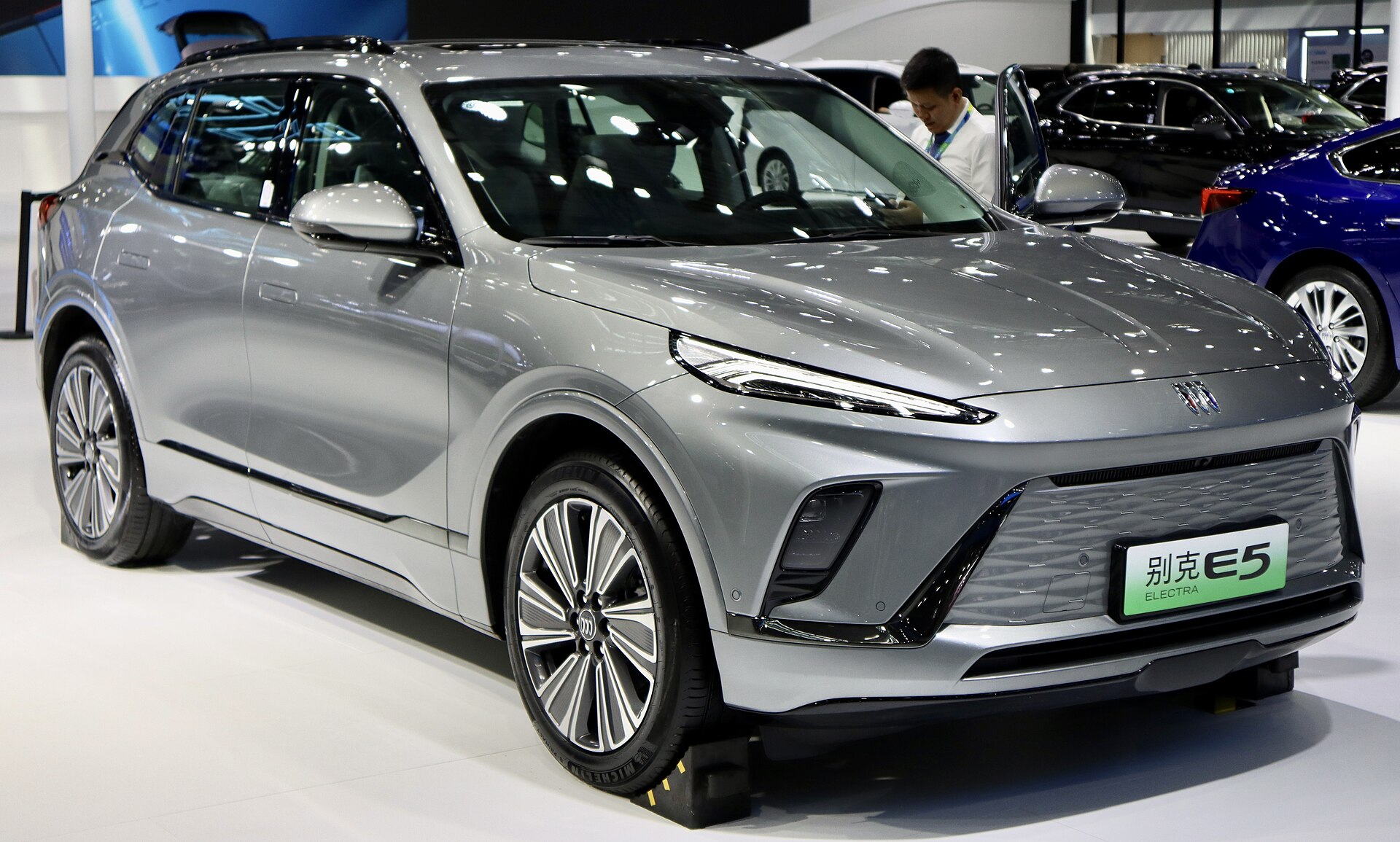
The Electra E5 is the vehicle that makes searching “Buick electric cars” so frustrating. On paper, it is exactly the kind of electric crossover SUV that would sell well in the US — competitive range, a premium interior, and a price point that undercuts most of its segment. However, the problem is geography: the E5 was designed for the Chinese market by the SAIC-GM joint venture, and as a result, GM has not committed to bringing it to North America.
Electra E5 specifications
| Spec | Base FWD | Long Range FWD | AWD |
|---|---|---|---|
| Battery capacity | 65 kWh | 79.7 kWh | 79.7 kWh |
| CLTC range | 515 km (~320 mi) | 620 km (~385 mi) | 580 km (~360 mi) |
| Estimated EPA-equivalent range | ~255–270 mi | ~305–325 mi | ~285–305 mi |
| Motor output | ~201 hp (150 kW) | ~241 hp (180 kW) | ~283 hp (211 kW) |
| Drive type | Front-wheel drive | Front-wheel drive | All-wheel drive |
| DC fast charge (30–80%) | ~30 min | ~28 min | ~28 min |
| Display | 30-inch curved 6K OLED | ||
| Platform | GM Ultium (BEV3) | ||
| Approx. starting price (USD) | ~$23,600 | ~$27,000 | ~$30,400 |
Where the E5 impresses
In particular, three things stand out in those numbers. Firstly, the starting price of approximately $23,600 USD is genuinely aggressive — cheaper than a base Chevrolet Equinox EV at $33,900 and, moreover, roughly half the price of a Cadillac Lyriq. Secondly, the 30-inch curved 6K OLED display is the same class of screen used in the $57,000-plus Lyriq, which consequently makes the E5’s interior feel significantly more expensive than its price suggests. Thirdly, the refreshed 2025 model introduced Ultium 2.0 platform improvements and, in addition, a 900-volt charging architecture on select trims — claiming approximately 210 miles of range added in just 10 minutes of ultra-fast charging. If that figure holds in real-world conditions, it puts the E5 among the fastest-charging mass-market EVs globally.
Where the E5 is struggling
The commercial reality, however, is less encouraging. According to China Passenger Car Association data reported by Gasgoo, the Electra E5 sold just 41 units in April 2026 — a 65.8% year-over-year decline. Furthermore, year-to-date through April, total sales reached only 171 units. For context, BYD’s Song Plus sold over 40,000 units in the same month. Although the E5 was positioned as a “lifeline” for Buick in China when it launched in 2023, domestic Chinese EV competition — from BYD, NIO, XPeng, and Geely — has since intensified so rapidly that even a well-engineered product at a competitive price can struggle to hold share.
As a result, that sales trajectory has a direct consequence for North American buyers: it weakens the business case for GM to invest in US homologation, EPA certification, and a separate supply chain for a model that is not generating volume even in its home market.
The Buick Electra E4: The Sporty Sibling, Same Geography Problem
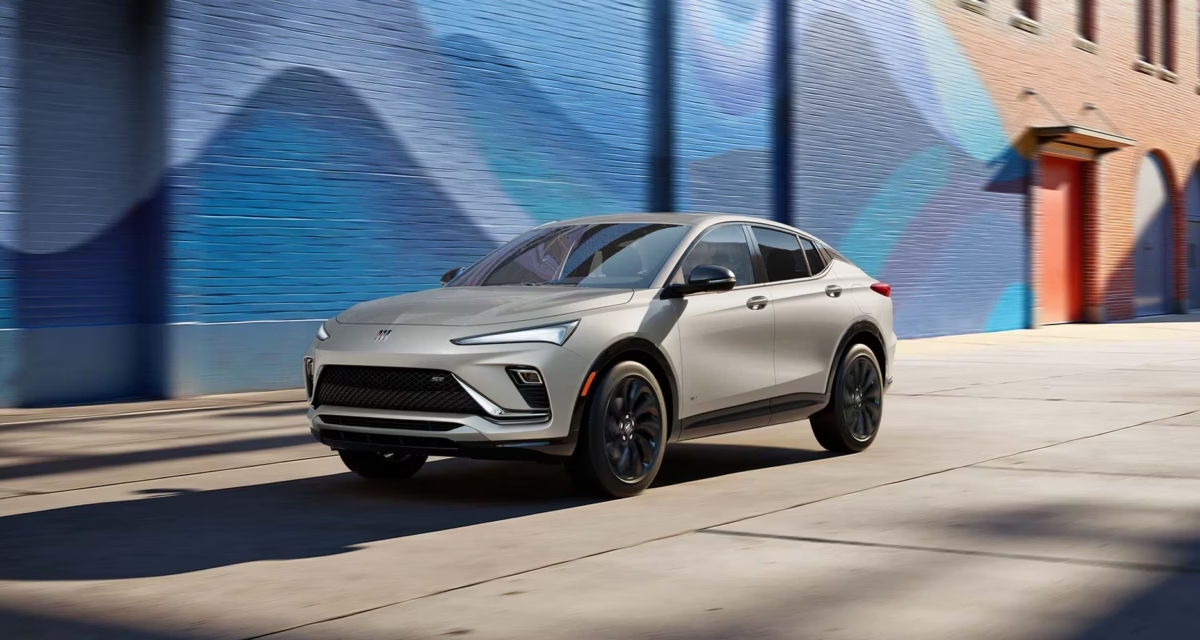
The Electra E4 is the coupe-styled counterpart to the E5 — specifically, a lower, sleeker crossover with a more rakish roofline and a sportier positioning. Although it shares the Ultium platform, the 30-inch OLED display, and most of the E5’s mechanical hardware, it targets a buyer who wants a more dynamic appearance and is consequently willing to trade a small amount of rear headroom for it.
How the E4 differs from the E5
| Attribute | Electra E4 | Electra E5 |
|---|---|---|
| Body style | Coupe-style crossover | Traditional mid-size SUV |
| Height (approx.) | ~1,580 mm (62.2 in) | ~1,640 mm (64.6 in) |
| Roofline | Sharply sloped | Conventional |
| GS (Gran Sport) variant | Available — AWD, 0–100 km/h in 6.2 sec | Not offered |
| Max range (CLTC) | ~620 km (~385 mi) | ~620 km (~385 mi) |
| Interior focus | Sport aesthetics, tighter cockpit | Space and utility, larger cargo area |
| Starting price (USD approx.) | ~$21,500 | ~$23,600 |
E4 GS performance in context
The E4’s GS (Gran Sport) trim is the most performance-oriented variant in the Electra family — AWD with a combined output that pushes the 0–100 km/h sprint to approximately 6.2 seconds. Admittedly, that is not Tesla Model Y Performance territory (3.7 seconds), but it is nonetheless competitive with the Hyundai Ioniq 5 Long Range AWD (5.2 seconds) and, in addition, faster than the base Chevrolet Equinox EV (6.6 seconds).
Just like the E5, the E4 is sold only in China. Consequently, there is no announced plan to bring it to North America. Although the coupe-SUV segment is competitive in the US (Tesla Model Y, Ford Mustang Mach-E, BMW iX3), Buick has not signalled any intention to enter it with the E4.
Section verdict: The Electra E4 is a genuinely interesting product — sportier positioning, a compelling GS trim, and an aggressive price. Nevertheless, its limitation is identical to the E5’s: you cannot buy it in the United States or Canada.
Why Buick Has No EV in North America — And When That Might Change
The absence of Buick electric cars in the US is not an oversight or a supply-chain accident. Instead, it is the result of three overlapping strategic decisions GM made between 2019 and 2024 — and consequently, understanding those decisions is the only way to assess whether a Buick EV is coming soon or not.
Decision 1: Brand sequencing
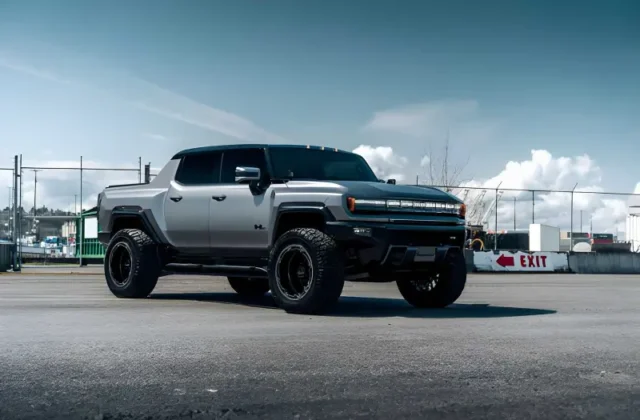
GM chose to roll out Ultium EVs in a specific brand order: Cadillac first (Lyriq, 2022), then Chevrolet second (Equinox EV, Blazer EV, Silverado EV, 2023–2024), followed by GMC third (Hummer EV, Sierra EV, 2022–2024), and finally Buick last. The logic was financial — Cadillac’s luxury positioning could absorb higher early production costs, while Chevrolet’s volume could absorb mid-cycle costs. As a result, Buick, positioned between the two, was placed at the back of the queue.
Decision 2: Market demand recalibration
Meanwhile, EV demand growth in the US slowed through 2024–2025. In addition, the federal $7,500 EV tax credit expired on September 30, 2025. Hybrid sales, by contrast, grew 36% year-over-year through Q1 2026 according to Cox Automotive registration data. Therefore, GM responded by slowing its overall EV rollout cadence, and Buick — already at the back of the line — was consequently the easiest brand to delay further.
Decision 3: China-first product development
Buick’s EV engineering was concentrated at SAIC-GM, the Chinese joint venture where Buick has historically generated strong sales volume. Specifically, the Electra E5 and E4 were designed for Chinese consumer preferences, Chinese regulatory standards, and Chinese manufacturing economics. As a consequence, adapting those vehicles for US-market sale would require EPA certification, FMVSS compliance modifications, US-specification charging standards, and a separate supply chain — none of which is trivial or cheap, particularly when the home-market sales performance of those vehicles has weakened.
The timeline question
Buick has stated a goal of an all-electric North American lineup by 2030. Furthermore, the “Electra” nameplate has been trademarked in the US. However, beyond those two data points, there is no publicly confirmed product, no pricing, and no launch date. Although industry analysts at Cox Automotive and BloombergNEF have speculated that the first US-market Buick EV could arrive as early as 2027 or 2028, that remains speculation, not announcement.
Section verdict: In summary, the delay is structural, not accidental. It reflects GM’s brand-sequencing strategy, softer-than-expected US EV demand, and the China-first development path of Buick’s EV products. Overall, the 2030 all-electric goal remains stated but unsupported by a visible product pipeline.
The Ultium Platform: What Buick’s Future EVs Will Be Built On
Whatever Buick eventually sells in the US as an EV will almost certainly be built on GM’s Ultium battery platform — the same modular architecture that currently underpins the Chevrolet Equinox EV, Cadillac Lyriq, GMC Hummer EV, and the Chinese-market Electra models. In other words, understanding Ultium is understanding what Buick’s eventual EV will be capable of.
Battery chemistry and cost evolution
GM is currently transitioning from high-nickel cathode chemistries toward Lithium-Manganese-Rich (LMR) cells. According to GM, this shift can reduce battery costs by at least $6,000 per vehicle while still maintaining 400-plus mile ranges. As a result, the technology targets cost parity with internal-combustion vehicles without subsidies.
Furthermore, global average battery pack costs have dropped to approximately $80/kWh in 2026, down from ~$149/kWh in 2023 according to BloombergNEF. GM has accordingly maintained a target of sub-$100/kWh cell costs and is pursuing further reductions through vertical integration and a new 500,000-square-foot Battery Cell Development Centre in Michigan.
Modular architecture and charging capabilities
Ultium uses large-format pouch cells that can be configured in various pack sizes (50 kWh to 200+ kWh). Consequently, this enables everything from a sub-$30,000 compact to a 9,000-pound Hummer EV on the same fundamental architecture.
In terms of charging, Ultium supports up to 350 kW DC fast charging on 800-volt configurations, along with Level 2 AC charging up to 19.2 kW. Additionally, the 2025 Electra E5 refresh introduced a 900-volt system with claimed 210-mile range additions in just 10 minutes.
What this means for future Buick EV buyers
The practical implication is significant: when a North American Buick EV eventually arrives, it will benefit from several years of Ultium production learning, cost reductions, and chemistry improvements that earlier GM EVs (Lyriq, first-generation Equinox EV) did not have. Whether that advantage is worth waiting an uncertain number of years to capture is, ultimately, the buyer’s individual calculation.
The Wildcat EV Concept: A Design Study, Not a Future Product
The Buick Wildcat EV appears in nearly every article about Buick electric cars, so it is therefore worth addressing directly: the Wildcat EV is not a production vehicle and is not scheduled to become one.
Unveiled in June 2022, the Wildcat EV was a “design study” — in essence, a concept car built to showcase Buick’s new visual language, including the modernized tri-shield logo, aggressive front fascia, and signature “check mark” daytime running lights. Although those design cues have since appeared on production Buick models (Envista, Encore GX, Envision), the Wildcat itself — a two-door, low-slung electric coupe with biometric sensors and a “Zen Mode” interior — was always a brand statement, not a product preview.
As a result, future Buick EVs in North America will carry the “Electra” nameplate, not the Wildcat name. Consequently, any website suggesting a 2026 or 2027 “Buick Wildcat EV” production launch is misinterpreting the concept’s purpose.
Better Alternatives to Buick Electric Cars for US Buyers in 2026
This is the section that actually matters for anyone with a purchase decision to make. In particular, Buick’s target market — premium-positioned crossover SUV buyers who want something more refined than Chevrolet but less expensive than Cadillac — is already well-served by electric vehicles from other brands in 2026. Accordingly, the table below maps the Buick segments to the EV alternatives that currently exist.
Segment-by-segment electric replacements
| Buick Segment | Buick ICE Model | EV Alternative | Starting MSRP | EPA Range | Notes |
|---|---|---|---|---|---|
| Subcompact SUV | Envista ($24,795) | Chevrolet Equinox EV 1LT | $33,900 | 319 mi | Same GM Ultium platform; closest to a “Buick EV” in DNA |
| Compact SUV | Encore GX ($26,600) | Hyundai Ioniq 5 | $44,950 | 303 mi | Premium cabin, 800V ultra-fast charging, 5-year warranty |
| Mid-size SUV | Envision ($37,800) | Tesla Model Y Long Range | $44,990 | 320 mi | Largest Supercharger network, lowest depreciation among EVs |
| Mid-size SUV (alt) | Envision ($37,800) | Ford Mustang Mach-E | $42,995 | 269 mi | Sport-oriented, strong driving dynamics, NACS adapter included |
| Premium mid-size | Envision Avenir ($45,200) | Cadillac Lyriq | $57,195 | 314 mi | Same GM Ultium; luxury-tier interior, Super Cruise |
| Three-row SUV | Enclave ($48,995) | Kia EV9 | $56,395 | 304 mi | Three-row seating, 800V charging, highway driving assist |
| Value crossover | Envista ($24,795) | Toyota bZ4X | $43,070 | 252 mi | Conservative but reliable, Toyota Safety Sense 3.0 |
The GM-family pick: Chevrolet Equinox EV
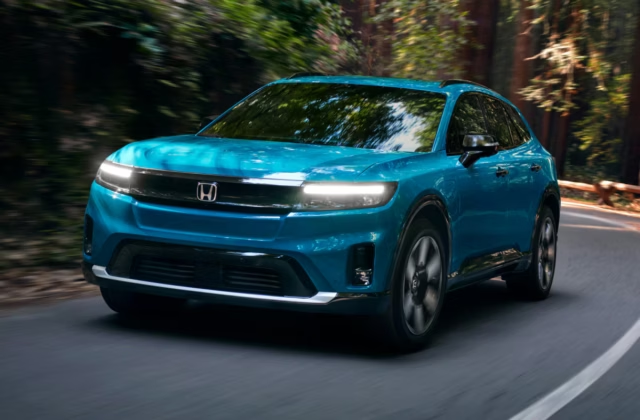
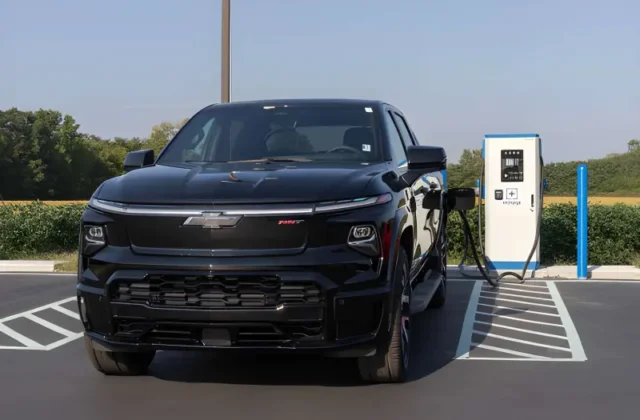
For buyers whose loyalty is to General Motors rather than specifically to the Buick badge, the Chevrolet Equinox EV is the most obvious substitute. Specifically, it runs on the same Ultium platform that any future Buick EV would use, starts at $33,900 — less than any Buick SUV except the Envista — and moreover delivers 319 miles of EPA-rated range. Admittedly, the interior is more functional than luxurious, which is where a Buick version would theoretically differentiate. However, the fundamental driving experience, charging capability, and technology stack are shared DNA. Our analysis of the most reliable EV cars covers the Equinox EV’s early reliability data in detail.
The luxury pick: Cadillac Lyriq
On the other hand, for buyers who want the premium end of the GM experience and are willing to pay for it, the Cadillac Lyriq at $57,195 occupies the space a top-trim Buick EV would target. In particular, the Lyriq has a 33-inch LED display, Super Cruise hands-free driving, and a cabin that genuinely feels like luxury rather than near-luxury. Although the $12,000-plus price gap over a loaded Buick Envision Avenir is real, if the alternative is waiting an indefinite number of years for a Buick EV that may or may not materialise, then paying more for a vehicle that exists today has its own logic.
The efficiency pick: Tesla Model Y
Finally, the Tesla Model Y Long Range remains the highest-volume EV in the US for a reason: 320 miles of range, access to the largest fast-charging network in North America, and furthermore depreciation rates that are consistently 8–12 percentage points better than the average EV, according to KBB May 2026 retention data. As a result, it is the lowest-risk choice in the segment, even if the minimalist interior and Tesla ownership experience are not for everyone.
Section verdict: In short, there is no shortage of electric crossover SUVs in the price range and market position where Buick would compete. The segment is well-covered. Consequently, the only thing missing is a Buick badge on any of them.
Should You Wait for a Buick Electric Car, or Buy Something Else?
In truth, this is the question I hear most often from readers who are loyal to the Buick brand and want to go electric. Ultimately, the answer depends on how you weight brand preference against time and opportunity cost.
If your current vehicle can wait
- Your current vehicle runs well and you are not under purchase pressure.
- You specifically value the Buick brand identity (quieter ride, premium-but-not-luxury positioning, dealer service relationship).
- You can tolerate a wait of 2–4 years without a confirmed timeline.
- You are willing to accept that the product may not match your expectations when it arrives — specs, pricing, and availability are all unknown.
If you want a GM-platform EV available today
- You want the same Ultium platform a Buick EV would use, available today.
- The Chevrolet Equinox EV’s price ($33,900) or the Cadillac Lyriq’s premium ($57,195) fits your budget.
- You have home charging installed or can install it within 90 days.
- You want to start capturing EV operating cost savings now rather than paying gas prices for 2–4 more years.
If you need an EV within the next 12 months
- You need a vehicle within 12 months and an EV is a requirement.
- You value proven EV reliability data and a mature charging ecosystem (Tesla, Hyundai/Kia).
- Depreciation risk is a primary concern — Tesla Model Y and Toyota bZ4X currently hold value better than any GM EV.
- You want a three-row electric SUV now (Kia EV9).
The honest assessment: brand loyalty to Buick and a requirement for an electric vehicle are currently incompatible constraints in North America. As a result, one of them has to give. For most readers who have contacted us with this question, the EV requirement is the load-bearing one — specifically, they want electric because of operating cost, environmental preference, or driving experience, and the badge is therefore negotiable. In that case, the alternatives listed in the previous section are where the purchase goes.
Home Charging for Future Buick EV Buyers
Regardless of which electric vehicle you choose — or whether you decide to wait for a Buick EV — home Level 2 charging is the single infrastructure decision that most affects whether an EV saves you money or costs you more. Specifically, for any future Buick Electra model on the Ultium platform, a 48-amp Level 2 charger will add approximately 30–35 miles of range per hour, thereby refilling a typical daily commute overnight on a standard 240V circuit. For a complete walkthrough of charger sizing, panel requirements, and installation costs, our home EV charging setup guide covers the decision in detail.
Recommended Level 2 charger for Ultium-platform vehicles
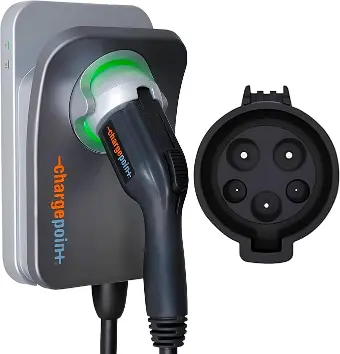
Notably, if Buick brings the 900-volt charging architecture from the refreshed Electra E5 to North America, maximum Level 2 AC rates would remain the same (19.2 kW). However, DC fast charging speeds would increase significantly. Either way, the home charger recommendation above is forward-compatible with any Ultium vehicle regardless of voltage architecture.
Methodology
Vehicles included: Every Buick model currently manufactured globally, including China-market Electra E5 and E4 models and the full North American ICE lineup (Envista, Encore GX, Envision, Enclave). Competitor EVs from Chevrolet, Cadillac, Tesla, Hyundai, Kia, Ford, and Toyota are included for comparison.
Pricing source: Buick.com US configurator for North American models, SAIC-GM product literature and Chinese automotive press for Electra models, and competitor manufacturer sites — all accessed June 2026. Chinese pricing converted at prevailing USD/CNY exchange rates.
Range and efficiency data: EPA figures from fueleconomy.gov for US-market vehicles. CLTC figures from SAIC-GM official data for China-market vehicles, with estimated EPA-equivalent ranges noted (CLTC figures are typically 15–25% higher than EPA equivalents).
Sales data: China Passenger Car Association (CPCA) monthly registration data as reported by Gasgoo, accessed June 2026. US market trends from Cox Automotive Q1 2026 registration reports.
Battery and platform data: GM investor presentations, BloombergNEF battery cost projections, and GM official announcements on Ultium platform evolution and LMR battery chemistry development.
What was excluded: Speculation about unannounced products. Any “leaked” or “rumoured” Buick EV models without official GM confirmation. Fleet-only variants and non-US/non-China market configurations.
Assumptions: No US federal EV tax credit applied (expired September 30, 2025). State and local incentives not modelled due to regional variation. Depreciation comparisons use KBB May 2026 retention curves.
FAQ: Buick Electric Cars in 2026
Does Buick make electric cars in 2026?
Buick manufactures two electric vehicles — the Electra E5 and Electra E4 — but both are sold exclusively in China through the SAIC-GM joint venture. In the United States and Canada, Buick sells zero electric vehicles. The entire North American lineup runs on gasoline engines. The brand’s stated goal of an all-electric lineup by 2030 has no publicly confirmed product roadmap or launch timeline.
What is the Buick Electra E5?
The Electra E5 is a mid-size all-electric crossover SUV built on GM’s Ultium battery platform. It starts at approximately $23,600 USD in China, offers battery options from 65 kWh to 79.7 kWh with CLTC ranges of 515–620 km (roughly 320–385 miles), and features a 30-inch curved 6K OLED display. The 2025 refresh introduced a 900-volt charging architecture claiming 210 miles of range added in 10 minutes. Despite strong initial reception, sales have declined sharply — just 41 units sold in April 2026.
Can I buy a Buick electric car in the United States?
No. As of June 2026, no Buick electric vehicle is available at any US or Canadian dealership. The Electra E5 and E4 are China-only. While Buick has trademarked the Electra name in North America, no official US launch date, pricing, or specifications have been announced. For a GM-platform EV available today, the Chevrolet Equinox EV starts at $33,900 and the Cadillac Lyriq starts at $57,195.
When will Buick sell electric cars in North America?
Buick has stated a goal of an all-electric North American lineup by 2030 but has not confirmed any specific model, price, or timeline. Industry analysts have speculated the first US-market Buick EV could arrive in 2027 or 2028, but no announcement supports that timeline. The original rollout has been delayed by softer EV demand, tariff uncertainties, and GM’s broader electrification recalibration. Waiting for a product without a confirmed launch date carries real opportunity cost.
What happened to the Buick Wildcat EV?
The Wildcat EV was a concept car unveiled in June 2022 as a design study — not a production preview. It showcased Buick’s modernized visual language, including the new tri-shield logo and “check mark” lighting signature. Those design cues now appear on production models like the Envista and Encore GX. The Wildcat itself is not scheduled for production, and future Buick EVs will use the “Electra” nameplate, not the Wildcat name.
How does the Buick Electra E5 compare to the Chevrolet Equinox EV?
Both share GM’s Ultium platform, but they serve different markets. The Equinox EV is available in the US at $33,900 with 319 miles of EPA range. The E5 is China-only at ~$23,600 with up to 620 km CLTC range (roughly 305–325 miles EPA-equivalent). The E5 has a more premium interior with its 30-inch OLED display, but the comparison is academic for US buyers — only the Equinox EV is purchasable.
What are the best alternatives to Buick electric cars in 2026?
Within the GM family, the Chevrolet Equinox EV ($33,900) is the value option and the Cadillac Lyriq ($57,195) is the luxury option — both on the same Ultium platform. Outside GM, the Tesla Model Y ($44,990, 320 mi), Hyundai Ioniq 5 ($44,950, 303 mi), Ford Mustang Mach-E ($42,995, 269 mi), and Kia EV9 ($56,395, 304 mi, three-row) cover the crossover segments where Buick competes with gas models.
Final Verdict
The headline finding is the cleanest one I can deliver: Buick electric cars are a China product, not a North American one, in 2026. Indeed, the Electra E5 and E4 are real vehicles with real engineering, built on a proven platform, and offered at aggressive prices. However, they are also vehicles no North American buyer can purchase, test drive, or service at a local dealership. In essence, that is the entire story in two sentences.
The gap is real, and it has a cost
Crucially, GM’s decision to sequence Buick last in the Ultium rollout means the brand is missing the 2024–2027 window where premium-positioned electric crossovers are establishing their market shares, their charging habits, and their brand associations. Meanwhile, Tesla, Hyundai, and Kia are building customer bases in the exact segment Buick would target. Consequently, every quarter without a Buick EV on US lots is a quarter where those competitors entrench further. Ultimately, whether Buick’s eventual entry can recapture that ground depends on product quality, pricing, and timing — none of which is visible today.
What I would actually do with the money
Personally, if I were a Buick-loyal buyer who wanted an electric crossover in 2026, I would buy a Chevrolet Equinox EV. After all, the platform DNA is identical to what a Buick Electra would carry. The price is $33,900. Moreover, the range is 319 EPA-rated miles. Admittedly, the interior is less premium than a Buick would offer, but it exists — and as a result, the three to four years of fuel savings, lower maintenance costs, and real-world EV experience you accumulate between now and whenever Buick launches its US EV are worth more than waiting for a badge.
Premium and budget-conscious alternatives
Additionally, for buyers who want the premium experience and can spend more, the Cadillac Lyriq at $57,195 is the closest thing to “what a Buick EV would feel like if it existed” — same company, same platform, same technology, but positioned one tier higher.
On the other hand, for buyers who are brand-agnostic and want the best financial outcome, the Tesla Model Y Long Range at $44,990 carries the lowest depreciation risk of any EV in the segment and furthermore has the strongest charging infrastructure in North America. Admittedly, it is not the most exciting recommendation. Nevertheless, it is the most defensible one.
In summary, the shortest version: Buick electric cars exist, just not where you can buy them. Furthermore, the alternatives are real, available, and — in some cases — built on the exact same platform. Therefore, do not wait for a product without a confirmed launch date when the market is full of vehicles that do the job today.
Last updated: June 12, 2026 — Buick global lineup, Electra E5/E4 China-market specs and April 2026 sales data, GM Ultium platform status, competitor EV pricing and EPA range figures verified.