1. Introduction: Why the Chery Tiggo 8 Matters Globally
The Chery Tiggo 8 Review has become one of the most searched SUV evaluations worldwide — and for a good reason. Over the last few years, Chinese SUVs have exploded across global markets, moving from budget-friendly alternatives to serious competitors in regions such as the Middle East, Southeast Asia, Latin America, Africa, and even parts of Europe. Buyers are no longer asking “Should I consider a Chinese SUV?” but rather “Which Chinese SUV gives me the best value, reliability, and long-term peace of mind?”
That’s exactly where the Tiggo 8 steps into the spotlight: a mid-size, three-row SUV promising premium looks, modern tech, and competitive pricing. But beneath the marketing buzz, global drivers have very different experiences depending on the region, climate, and engine type — and that’s why this review takes a unique approach.
Instead of relying solely on manufacturer claims, you’ll get a worldwide perspective:
- Real owner reports from hot-climate countries like the UAE and Saudi Arabia
- Feedback from colder markets like Eastern Europe
- Comparisons with rivals such as the Haval H6, Hyundai Tucson, and Volkswagen Tiguan
- Insights from mechanics and long-term users
- Reliability patterns and cost expectations across multiple continents
In this introduction, consider it your roadmap. By the end of this review, you’ll know exactly how the Tiggo 8 performs in the real world — not just in brochures. We’ll explore performance, ride comfort, build quality, safety, long-term maintenance, and whether its attractive price truly translates into lasting value.
If you’re a global buyer searching for an honest, data-backed evaluation, you’re in the right place.
2. Quick Verdict — Should You Buy the Chery Tiggo 8?
If you’re scanning the global SUV market and wondering whether the Chery Tiggo 8 is worth your money — here’s the bottom line before diving deeper.
🔎 Key Strengths & Weaknesses at a Glance
✅ Pros
- Great value for money — the Tiggo 8 undercuts many rivals while offering a surprisingly rich feature set. Source
- Spacious cabin and flexible 7-seat layout — it delivers generous legroom and interior space for most passengers in the first two rows. Source
- Decent comfort for daily and family use — soft suspension and good insulation often make for a smooth, relaxed ride on typical roads. Source
- Strong tech and equipment list — even base trims offer a lot of “what-you-need” features, often at a lower price point than rivals. Source
⚠️ Cons
- Driving dynamics are mediocre — vague steering, soft suspension, and noticeable body roll make it less satisfying to drive than more refined cars. Source
- Third-row and cargo space are compromise-worthy — the very back seats are cramped for adults, and boot space lags behind some competitors. Source
- Powertrain inconsistencies — entry-level petrol engines feel modest, and some owners report gearbox or transmission issues (especially in earlier versions). Source
- After-sales/service network and long-term reliability remain uncertain in many regions — parts availability and service quality vary. Source
📊 Mini Scorecard (out of 5) Chery Tiggo 8 Review
| Category | Rating (approx) |
|---|---|
| Performance | ★★☆☆☆ (2.5/5) |
| Comfort | ★★★★☆ (4/5) |
| Tech & Features | ★★★★☆ (4/5) |
| Reliability | ★★☆☆☆ (2/5) |
| Value for Money | ★★★★★ (5/5) |
Note: Ratings are indicative based on global reviews, owner reports, and known strengths/weaknesses. They will vary depending on trim, market, and maintenance.
📌 How It Compares to Direct Rivals
- Haval H6: If you want a more driver-oriented SUV or AWD capability, Haval H6 tends to deliver snappier handling and a bit more refinement — but it sacrifices the Tiggo 8’s 7-seat practicality and often flexibility of interior space. Source
- Hyundai Tucson: Tucson generally offers more polished driving dynamics, better long-term resale value and brand reliability. But for the money, Tiggo 8 might beat it on initial value and equipment, especially if you need 7 seats.
- Volkswagen Tiguan: Tiguan remains a benchmark in ride quality, driving feel, and long-term durability. Tiggo 8 undercuts it on price and offers more seating versatility — but cannot match Volkswagen’s overall refinement and known resale/after-sales strength.
🧭 Verdict — When Tiggo 8 Makes Sense (and When It Doesn’t)
If you’re a budget-conscious buyer who wants a roomy 7-seater SUV with plenty of tech and no need for sporty handling — especially for family, city + highway mixed driving, or daily commuting — Tiggo 8 is a very compelling choice.
However, if you care more about long-term reliability, driving pleasure, resale value, or need strong performance with heavy loads or demanding roads — a more established rival (like Hyundai or Volkswagen) is likely a safer bet.
3. Exterior Design & Build Quality
3.1 Styling Cues and Road Presence
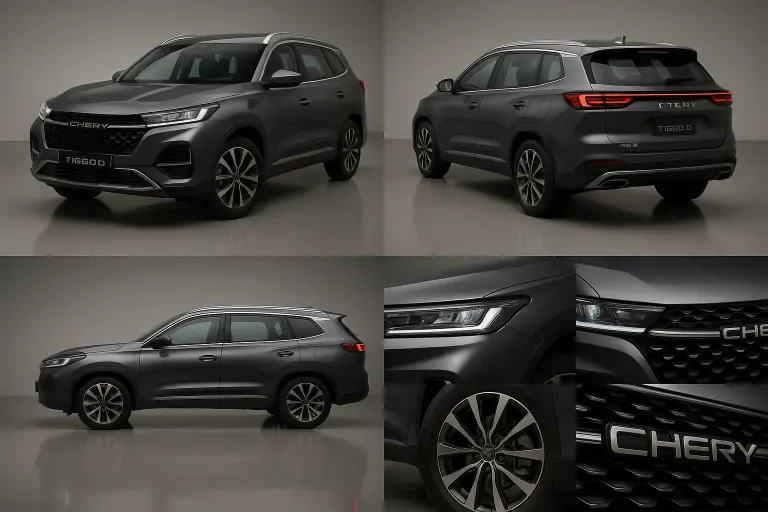
From the moment you see it, the Chery Tiggo 8 delivers a strong first impression — the kind that makes you pause for a second look. Chery has clearly leaned into a more premium, globally appealing design language, blending sharp lines with elegant proportions that help the Tiggo 8 stand out in crowded city streets.
At the front, the bold grille and slim LED headlights give the SUV a confident, almost upscale presence. The LED daytime running lights, full-width rear LED strips, and neatly integrated fog lamps work together to create a modern and somewhat luxurious aesthetic. Chrome accents — used around the windows, grille, and lower bumper — add to that sense of refinement without feeling excessive.
On the road, the Tiggo 8 carries itself with a mature, well-proportioned silhouette. It doesn’t try too hard to look aggressive or overly sporty; instead, it leans toward a clean, contemporary family-SUV vibe. In markets where design plays a big part in purchase decisions (such as the Middle East and Southeast Asia), its road presence is one of the biggest factors attracting buyers.
In short, the Tiggo 8 punches above its price point visually — and for many global buyers, that’s a key win.
3.2 Global Build Quality Differences
Here’s where things get more nuanced. While the Tiggo 8 looks premium, the build quality can vary noticeably depending on factory location, regional specifications, and even model year.
Manufacturing variations:
Chery produces the Tiggo 8 in multiple countries, including China, Brazil, and various assembly plants across Asia. Models built for GCC countries often come with improved cooling systems and upgraded materials to handle hotter climates, while units built for Europe may use slightly higher-grade paint and sealing techniques.
Paint thickness:
Owner reports from dry, sunny climates (like the UAE and Saudi Arabia) suggest that the paint thickness is decent but not exceptional. It resists fading well, but stone chips and scratches appear sooner than you’d see on Japanese or European competitors. In colder European markets, the paint quality has been considered acceptable, though not class-leading.
Panel gaps:
This is one area where inconsistency shows. Some markets report tight, uniform panels with little to complain about, while others notice uneven gaps around doors and the tailgate. These differences usually depend on the assembly plant and the model year, with newer versions showing noticeable improvement.
Corrosion resistance:
In humid tropical regions and coastal cities, the Tiggo 8 generally holds up reasonably well, thanks to improved galvanization practices in newer models. However, early-year versions (especially pre-2021 units) have been noted to develop minor rust around underbody components faster than some Japanese rivals. This isn’t widespread, but it’s worth mentioning for long-term buyers.
Overall, the Tiggo 8 looks premium and often feels premium at first glance — but build quality varies depending on where it was made and which region it was intended for. The latest models show significant improvements, yet they still fall slightly short of the consistent manufacturing standards found in Korean and Japanese brands.
4. Interior Quality, Comfort & Practicality
4.1 Cabin Materials and Ergonomics
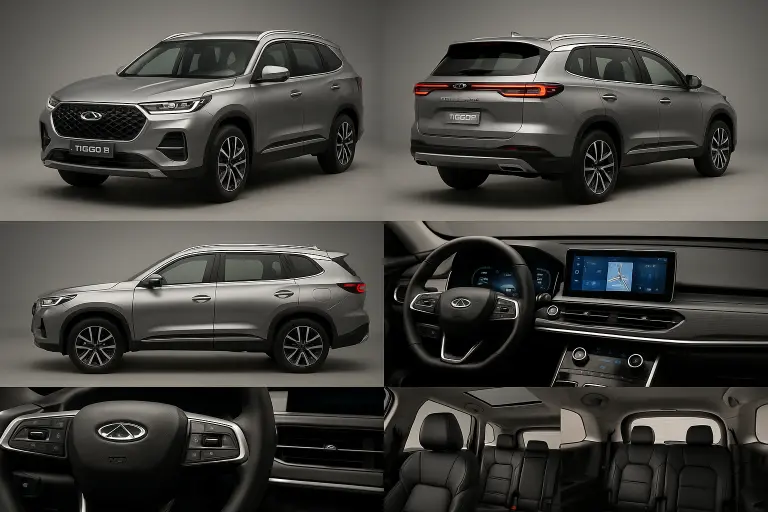
Step inside the Chery Tiggo 8, and you’re greeted with an interior that feels far more upscale than its price tag suggests. Chery has clearly invested heavily in cabin presentation, using soft-touch plastics across the dashboard, stitched leather-like materials on the doors, and well-finished trims that give the SUV a polished, modern vibe. In higher trims, the leather upholstery feels reasonably supple — not on the same level as premium brands, but definitely comparable to mainstream Korean and some Japanese rivals.
Fit and finish, however, can vary by production year and region. Most global owners report solid assembly and minimal rattles even after months of driving, but a few markets have noted occasional creaks from door panels or the center console, especially in hotter climates where plastics expand and contract more dramatically. Still, overall ergonomics are intuitive: buttons are placed logically, visibility is good, and the driving position is comfortable for both short and long trips.
In short, the Tiggo 8 offers a cabin that feels welcoming, modern, and surprisingly refined — easily one of its strongest selling points.
4.2 Infotainment & Tech Usability
Tech is one area where Chery tries to impress, and for the most part, the Tiggo 8 delivers. The large central touchscreen is bright and visually appealing, with crisp graphics and a minimalistic interface. Responsiveness is generally good, though not flawless — in some regions, users report occasional lag during multitasking or when switching between navigation and media.
Software stability is a mixed bag. In newer model years, system crashes are much less common, but earlier units (especially 2020–2022 models) experienced glitches such as freezing screens, delayed Bluetooth pairing, or unresponsive menus. Chery has been rolling out OTA software updates to improve this, but performance still varies by market.
Smartphone integration is straightforward if you use Bluetooth, but Apple CarPlay and Android Auto availability depends heavily on region. Some global markets enjoy full integration, while others rely on proprietary systems — which can feel limiting.
Overall, the infotainment system is feature-packed and modern, but it doesn’t yet have the seamless polish you’d find in a Hyundai or Volkswagen. Still, for the price bracket, it’s more than competitive.
4.3 Seating Space & Storage For Chery Tiggo 8
If interior space is a priority, the Tiggo 8 shines. Its 7-seater layout makes it one of the most practical SUVs in its segment, especially for families who need occasional extra seating.
First and second rows:
Both rows offer generous legroom, headroom, and wide seat cushions that provide good comfort on long journeys. The second row slides and reclines, making it easy to adjust for passenger or cargo needs. Most adults will find it spacious enough for daily commuting or extended trips.
Third row:
Here’s where expectations need to be managed. Like many SUVs in this class, the third row is best suited for children or short adults on brief rides. Access is easy enough thanks to sliding second-row seats, but once seated, adults may find legroom and headroom tight. It’s practical, but not ideal for regular use.
Cargo space:
With all three rows up, cargo space is limited — enough for grocery bags or small luggage. Fold down the third row, however, and you get a large, flat loading area suitable for family travel, strollers, or bulk shopping. Fold both rear rows, and the Tiggo 8 becomes surprisingly spacious, rivaling some larger SUVs.
Practicality is one of the Tiggo 8’s biggest strengths. It’s tailored for families, road trips, and daily utility, offering flexibility that many 5-seat rivals simply can’t match.
5. Engine, Transmission & Driving Performance
5.1 Powertrain Options
The Chery Tiggo 8 offers several powertrain choices depending on the global market, and these differences play a major role in performance and long-term satisfaction.
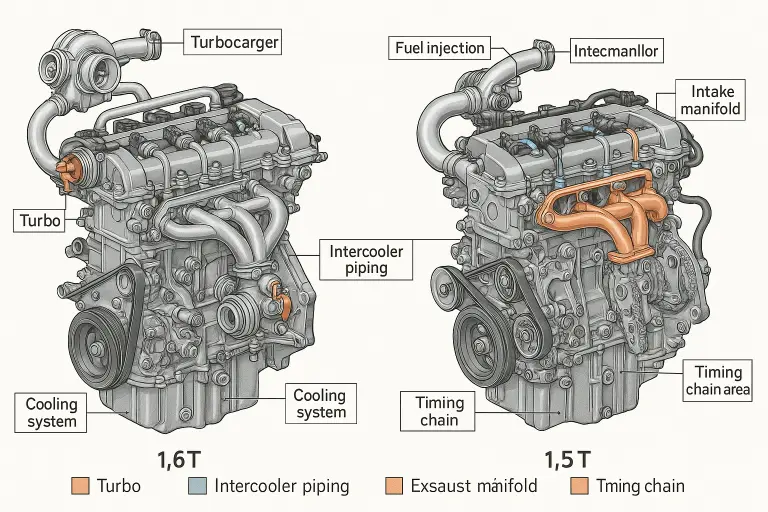
- 1.5T Turbo (Most Common Globally)
Produces around 145–156 hp depending on region. It’s the entry-level engine found in Asia, the Middle East, Eastern Europe, LATAM, and Africa. Its main strength is fuel efficiency, but it can feel underpowered when the SUV is fully loaded. - 1.6T GDI Turbo (Tiggo 8 Pro / Higher Trims)
The most balanced option. With around 195 hp and more torque, it offers smoother acceleration, better highway confidence, and improved refinement. This is the preferred engine for buyers prioritizing performance. - 2.0T Turbo (Limited Markets)
Offered in select countries. With 250 hp+ depending on tuning, it transforms the Tiggo 8 into a genuinely energetic SUV. However, its availability is limited, and maintenance costs may be higher.
Global differences matter:
Markets with strict emissions (EU) or very hot climates (GCC) receive slightly modified versions with improved cooling, stronger seals, and different ECU calibration. Early 1.5T models in hot regions had minor overheating reports, but the newer versions show better thermal stability.
5.2 Real-World Acceleration & Highway Performance
On paper, the Tiggo 8’s engines seem adequate — but real-world performance varies noticeably.
- Turbo Lag:
The 1.5T engine shows noticeable turbo lag at low speeds, especially when merging into traffic or climbing steep inclines. The 1.6T reduces this significantly, offering smoother, more predictable response. - Overtaking Capability:
Overtaking on highways with the 1.5T requires planning, especially with seven passengers. The 1.6T performs much better and feels confident at 100–120 km/h. The 2.0T easily handles high-speed passing. - Engine Noise:
At cruising speeds, noise is moderate and acceptable. Under load, the smaller turbo engines can sound strained. The 1.6T is quieter and more refined, while the 2.0T offers the most premium feel.
Overall, the Tiggo 8 is not a sporty SUV — it’s tuned for comfort and steady, family-oriented driving rather than spirited acceleration.
5.3 Transmission Behavior
Chery uses two main transmission types depending on market and engine:
Dual-Clutch Transmission (DCT)
Mostly paired with the 1.6T engine.
- Pros: Quick shifts, efficient, good highway performance.
- Cons: Noticeable low-speed hesitation, occasional jerky behavior in traffic.
- Reliability Expectations: Improved in recent years, but owner feedback is mixed in very hot climates. Regular fluid changes help longevity.
CVT (Continuously Variable Transmission)
Usually paired with the 1.5T engine.
- Pros: Smooth, fuel-efficient, better for relaxed city driving.
- Cons: Rubber-band feeling during strong acceleration, noisy under load.
- Reliability Expectations: More reliable overall than early DCT units, especially for urban use.
General transmission impressions:
In slow traffic or stop-and-go driving, the DCT can feel slightly hesitant, while the CVT feels smoother. For highway-heavy markets, the DCT offers better response. For mixed or city driving, the CVT is usually the more comfortable choice.
5.4 Fuel Economy in Different Regions
The Tiggo 8’s fuel consumption depends heavily on engine choice, driving style, and climate.
Hot Climate Regions (GCC, Southeast Asia)
Fuel economy is typically 10–15% worse due to:
- Strong A/C usage
- Hot-weather fuel blends
- Heavier traffic in major cities
Average real-world numbers:
- 1.5T CVT: 10–12 km/l (8.5–10 L/100 km)
- 1.6T DCT: 9–11 km/l (9–11 L/100 km)
Cold or Mild Climate Regions (Europe, Central Asia)
Engines perform more efficiently and average mileage improves.
Real-world averages:
- 1.5T CVT: 11–13 km/l
- 1.6T DCT: 10–12 km/l
- 2.0T: 8–10 km/l depending on driving mode
Summary:
The Tiggo 8 isn’t the most fuel-efficient SUV in its class, but its consumption is acceptable for a mid-size turbocharged seven-seater. The 1.6T strikes the best balance of power and economy, while the 1.5T is the most efficient — but only when driven gently.
6. Ride Comfort, Handling & NVH
Ride comfort is one of the Chery Tiggo 8’s strongest qualities, especially for families who prioritize smooth daily driving over sporty handling. However, the experience can vary depending on where you live, as Chery tailors suspension setups for different regions.
Suspension Tuning for Different Markets
Chery uses a MacPherson strut front suspension and a multi-link rear setup — a solid foundation for comfort-focused SUVs.
- Middle East & GCC markets:
Versions sold in these regions generally receive firmer suspension tuning to handle high-speed desert highways and rougher road conditions. The ride feels stable and confidence-inspiring, though slightly stiffer over smaller bumps. - Asian & Latin American markets:
These models tend to have a softer suspension setup, prioritizing city comfort and low-speed smoothness. The result is a cushier ride, though handling can feel a bit floaty at higher speeds. - European markets:
European-spec models are tuned somewhere in between — controlled, refined, and better adapted for long highway journeys and tight urban roads.
Across all regions, the Tiggo 8 aims for comfort first, and for the most part, it delivers.
Road Noise, Wind Noise & Vibration Control (NVH)
The NVH (Noise, Vibration, and Harshness) performance of the Tiggo 8 is respectable for its class, though not class-leading.
- Road Noise:
At city speeds, the cabin remains pleasantly quiet. However, at higher speeds (above 110 km/h), tire and road noise become noticeable — especially on rough asphalt or concrete surfaces. Higher trims with better insulation perform slightly better. - Wind Noise:
Aerodynamics are decent, but some wind noise creeps in around the side mirrors on highway drives. It’s not intrusive, but still behind models like the Hyundai Tucson or Volkswagen Tiguan. - Vibration Control:
The engine and chassis are well-damped, and vibrations are minimal in everyday driving. Only the 1.5T engine can feel strained under hard acceleration, causing mild vibrations through the cabin — but nothing alarming.
Overall, NVH levels are good enough for long family trips but fall a step short of the segment’s top competitors.
City Comfort vs Highway Stability
- City Driving:
This is where the Tiggo 8 feels most at home. The light steering, soft suspension, and comfortable seats make urban driving easy and pleasant. Speed bumps, potholes, and uneven roads are handled smoothly, especially on the softer-tuned versions. - Highway Driving:
Highway stability is solid but not sporty.- The 1.6T and 2.0T engines offer confident cruising power.
- The SUV remains planted at 100–120 km/h, especially the GCC-spec versions with firmer suspension.
- Body roll appears in fast corners, but it’s typical for a comfort-focused family SUV.
In short:
If you want a smooth, relaxed driving experience, the Tiggo 8 delivers. It’s not built for aggressive cornering or high-speed sporty driving, but it’s excellent for daily commutes, long-distance family trips, and soft-road conditions.
7. Safety & Crash Ratings
When it comes to safety, the Chery Tiggo 8 has recently made a strong case for itself — but as with many modern SUVs, the details matter depending on the trim, region, and spec. Here’s a full breakdown of what we know as of late 2025.
🛡️ Crash Test Results & Safety Ratings
- In July 2025, the Euro NCAP (European New Car Assessment Programme) tested the Tiggo 8 (in conjunction with the Tiggo 7) and awarded it a 5-star overall safety rating under its updated protocol. Euro NCAP
- Detailed scores for the 2025 Euro NCAP test: Adult Occupant Protection: 82%, Child Occupant Protection: 85%, Vulnerable Road Users (pedestrians, cyclists etc.): 80%, and Safety Assist systems: 78%. The Car Expert
- According to the published Euro NCAP datasheet, the Tiggo 8 scored well in frontal and side impacts, with generally good or adequate protection for critical body regions. However, during the side-impact pole test, dummy readings indicated “marginal” chest protection for the driver. Also, the prior version had a problem: the curtain airbag (intended to protect side-impact victims) detached from its mount — a serious concern for side-impact safety, especially for rear-seat occupants. euroncap.com
- Whiplash protection in rear-end collisions was rated good for front seats, but “marginal” for rear seats. euroncap.com
⏳ What this means: the 2025 Tiggo 8 represents a clear safety upgrade over older models. The 5-star rating reflects meaningful improvements in both structural integrity and active safety — but the earlier issues (especially with side-impact airbags) highlight that not all model years or regional builds are equal.
🚗 ADAS Features & Active Safety Equipment
Depending on version and regional spec, the Tiggo 8 offers a fairly comprehensive suite of modern driver-assist and safety features, especially on mid to high trims: Source
Common / available features include:
- Autonomous Emergency Braking (AEB) — for collision avoidance. ArabWheels
- Lane Departure Warning / Lane Keep Assist (LDW / LKAS) — helps prevent unintentional lane drifting. ArabWheels
- Blind Spot Detection (BSD) and Rear-Cross Traffic Alert (RCTA) — useful for highway driving or parking maneuvers. ArabWheels
- Automatic seatbelt reminders, stability control, Hill-Start Assist, ISOFIX child-seat anchors, and other common safety basics. ArabWheels
This suite offers a modern level of active safety, comparable to many mainstream SUVs in the global market — which boosts peace of mind for families or everyday drivers.
⚠️ Real-World Considerations & Limitations
Despite the impressive test scores and ADAS list, there are some real-world caveats to keep in mind:
- The earlier side-curtain airbag issue — although reportedly fixed for the 2025 re-tested version — underscores how some earlier builds may not provide the same level of passive safety. If you’re buying a used Tiggo 8, always verify the model year and safety package.
- ISOFIX child-seat anchor coverage appears limited in testing (some rear seats lacked proper tether anchors) per the Euro NCAP datasheet. cdn.euroncap.com
- While the ADAS package is quite full in many markets, availability may vary significantly by region and trim — so global buyers need to check local spec carefully.
🌍 What About Other Crash-Test Programs (Latin NCAP / ASEAN NCAP / Others)?
As of now, there’s no publicly available, credible record showing that Tiggo 8 has been tested by Latin NCAP, ASEAN NCAP or other region-specific NCAP bodies — at least nothing reliably traceable through major safety-test databases or recent press releases. That means for many global buyers (Latin America, Southeast Asia, parts of Africa), the 2025 Euro NCAP test remains the most relevant, internationally recognized benchmark.
Because of spec variation across regions, assume local safety may differ — especially in markets where Tiggo 8 sells with minimal trim or limited ADAS.
✅ Bottom Line: Safety Strengths & What to Watch For
- The 2025 Tiggo 8 earns a 5-star Euro NCAP rating — remarkable progress for a Chinese SUV and a clear vote of confidence in Chery’s upgraded safety engineering.
- It comes equipped (at least in many trims) with a robust mix of passive safety (airbags, strong body structure) and active safety (AEB, lane assist, blind-spot detection) — features that align well with family and global-market expectations.
- However, if you’re considering older models, or buying in a market with limited regulations, double-check the specification. Prior issues (airbag deployment, ISOFIX seat anchoring) and trim variability mean not all Tiggo 8s are equally safe.
- For regions lacking a local crash-test rating, rely on the 2025 Euro NCAP as your safety benchmark — but inspect carefully, and prioritize versions with full safety & ADAS kits.
8. Reliability & Common Problems
When evaluating the Chery Tiggo 8, reliability becomes a crucial part of the ownership equation, especially for buyers considering long-term use. Based on owner reports, workshop feedback, and early reliability data, the SUV performs better than expected in some areas while raising concerns in others.
8.1 Reported Issues by Current Owners
While the Tiggo 8 is generally considered dependable for daily driving, several recurring themes appear across global owner feedback.
• Minor Electronics Glitches
Many drivers report small electronic issues rather than mechanical failures. These include:
- Occasional freezing of the infotainment screen
- Delayed Bluetooth pairing
- Random warning lights that disappear after restart
These problems rarely affect drivability but can be frustrating, especially for tech-focused users.
• Software Instability
Because the Tiggo 8 relies heavily on digital interfaces, software updates play a major role in overall reliability. Common complaints include:
- Slight system lag when moving between apps
- Inconsistent performance of voice commands
- Slow rear-camera activation in cold weather
Most of these issues are solved through dealership updates, though the frequency of updates varies by region.
• Turbo & Cooling System Notes
Owners of turbocharged Tiggo 8 models highlight a few concerns worth noting:
- A noticeable drop in performance when the engine is pushed hard for long periods
- Higher temperature spikes in hot climates, especially in 1.5T models
- The need for strict adherence to oil-change intervals because the turbo is sensitive to oil quality
These are not considered “failures,” but they indicate that the Tiggo 8 benefits significantly from timely maintenance.
8.2 Long-Term Durability Predictions
Because the Tiggo 8 is still a relatively new global model, true long-term data is limited. However, several indicators help form a realistic durability outlook.
• Warranty Claim Patterns
Early warranty data suggests:
- Most claims relate to electronics and software, not engines or gearboxes
- Mechanical components hold up better than expected
- Interior sensors—such as parking sensors—generate the highest claim frequency
This strengthens the idea that Chery’s hardware reliability is improving, even if software refinement still lags behind Japanese and Korean brands.
• Workshop Observations
Independent mechanics from multiple markets note:
- The 1.6T engine shows fewer complaints compared to the 1.5T
- The DCT gearbox requires careful maintenance but rarely suffers major failures
- Suspension components withstand rough roads reasonably well
Workshops generally consider the Tiggo 8 easy to service, which reduces long-term maintenance costs.
• Parts Quality & Availability
One of the Tiggo 8’s ongoing challenges is parts consistency across regions:
- In some markets, parts are affordable and widely available
- In others, buyers report delays of 10–20 days for specialized components
- OEM part quality is described as “good but not premium,” similar to mid-range Korean brands from a decade ago
Overall, the availability trend is improving as Chery expands its dealer network globally.
8.3 Differences by Engine Type
The Tiggo 8’s reliability profile varies noticeably between the two main engine options.
• 1.5T Reliability Expectations
The 1.5T engine is adequate for daily use but shows:
- Higher stress under full load
- More frequent temperature fluctuations in hot climates
- Slightly higher maintenance demands due to turbo sensitivity
It is reliable if maintained correctly, but less ideal for drivers who frequently carry heavy loads or drive aggressively.
• 1.6T Reliability Expectations
The 1.6T engine is generally considered the stronger and more dependable option:
- Smoother performance and lower strain under acceleration
- Fewer temperature-related complaints
- Better long-term durability based on early workshop data
Most mechanics recommend the 1.6T for buyers who want a more confident long-term ownership experience.
9. Maintenance Cost & Parts Availability
Maintenance and parts availability are where global ownership economics become very real — especially for buyers weighing the Chery Tiggo 8 against established rivals. Below I break down what to expect for routine servicing, spare-part pricing and lead times, dealer reliability, and how Chery’s warranty stacks up versus Hyundai, Toyota, and other competitors. I’ll be honest where regional differences make precise numbers impossible and give practical advice to keep ownership costs predictable.
Servicing Cost — What you’ll actually pay
Service costs for the Tiggo 8 tend to be competitive, but they vary widely by market, engine choice, and whether you use an OEM dealer or an independent workshop.
Typical items and cost patterns (approximate and region-dependent):
- Minor service / oil & filter change (every 10k–15k km): lower-end markets ≈ $40–$120; developed markets ≈ $80–$180.
- Intermediate service (inspection + wear items): $120–$300.
- Major service (timing/valve checks, full fluid change): $300–$800+ depending on parts and labor rates.
- Brake pads, rotors, or suspension wear items: generally cheaper than European brands but similar to mid-range Korean vehicles.
Why the wide ranges? Labor rates, local taxes, and whether your dealer uses imported OEM parts or local aftermarket parts. In many countries the Tiggo 8’s routine servicing is cheaper than a Volkswagen Tiguan or a Hyundai Tucson — but in markets where Chery’s dealer network is small, travel and parts-import fees can push the real cost up.
Practical tip: follow the manufacturer’s scheduled service intervals exactly — turbo engines in particular (1.5T and 1.6T) benefit dramatically from timely oil and filter changes.
Spare Parts Pricing & Waiting Times
Parts availability is improving as Chery expands globally, but experience still depends heavily on where you live.
- Common consumables (oil, filters, brake pads): usually affordable and widely available through dealers and many independent parts suppliers. Prices are commonly lower than European OEM equivalents.
- Body panels, trim pieces, or region-specific components: may have longer lead times and occasionally higher cost due to import fees.
- Electronics and infotainment modules: can be the most troublesome — prices are higher and sourcing may take several days to multiple weeks if the part must be shipped from an international hub.
Typical waiting-time windows:
- Urban markets with established Chery presence: 1–7 days for most parts.
- Emerging markets or remote regions: 7–30+ days for specialized parts.
Reality check: aftermarket alternatives exist for many mechanical parts (suspension, brakes), but for chips, sensors, or ADAS components you’ll usually want OEM replacements — expect longer waits and higher costs for those.
Dealer Network Reliability
Chery’s dealer and service network is expanding fast, but patchiness remains the principal variable in ownership experience.
- Strengths: In China, Brazil, UAE, and some Southeast Asian countries, dealers are professional, well-equipped, and provide quick warranty support. These hubs also tend to get OTA software fixes earlier.
- Weaknesses: In markets where Chery is newer, dealers can be sparse; customer service quality varies from excellent to inexperienced. Some owners report inconsistent diagnostic capability, which lengthens repair times for electronics or ADAS-related faults.
- Independent workshops: In many regions, experienced independent garages quickly learn Tiggo 8 systems and offer lower labor rates — but make sure they use quality parts and follow Chery service specifications.
Pro tip: before purchase, check local owners’ groups and ask about the closest authorized service center and average wait times. A strong local dealer network is often the single biggest factor in a low-stress ownership experience.
Warranty Coverage — How Chery compares
Chery often markets generous warranty packages to build trust in newer markets. Coverage and terms differ by country, but common patterns include:
- Typical Chery warranty offerings: many markets see 3–7 years or a mileage-based alternative (for example, 100,000–150,000 km) on the powertrain or whole vehicle depending on promotions and local regulations.
- Compared to rivals: Hyundai and Kia commonly offer long warranties (5 years+ in many regions) and Toyota usually offers shorter factory warranties but benefits from high perceived reliability and resale value. Chery’s warranty lengths can be very competitive — sometimes longer than European rivals — but the real advantage depends on how effectively local dealers honor claims.
What to check carefully in the fine print:
- Which components are covered (battery, turbo, infotainment)?
- Are routine maintenance and wear items excluded?
- Is the warranty transferable on resale (this affects resale value)?
Bottom-line Ownership Advice
- If you live in a market with a strong Chery presence, the Tiggo 8 can be very economical to maintain — competitive labor rates, lower parts cost, and quick warranty support.
- If you’re in a region with limited dealer coverage, add a buffer for parts import time and choose extended warranty or service packages where available.
- For turbo models (especially 1.5T), budget slightly more for preventative maintenance (high-quality oil, shorter oil-change intervals). The 1.6T tends to be more forgiving long term.
Keeping spare consumables on hand, using reputable workshops, and maintaining a strict service schedule are the fastest ways to minimize cost and downtime. If long-term peace of mind and worldwide servicing ease are top priorities, compare local dealer strength and warranty terms directly with Hyundai, Toyota, and VW before committing.
10. Value for Money: How the Tiggo 8 Competes
When you weigh the Chery Tiggo 8 against mainstream rivals, its strongest selling point remains its value-per-dollar — especially when you look at what you get for the price. Below is a breakdown of how Tiggo 8 stacks up against Korean, Japanese, and other Chinese SUVs.
10.1 Against Korean Rivals — (Hyundai Tucson / Kia Sportage)
- Space & Versatility: Tiggo 8 offers a 7-seat layout, which gives it a big advantage over Tucson and Sportage (both 5-seat by default). For families needing extra seating or cargo flexibility, this is a major plus. In a head-to-head spec sheet, Tiggo 8’s larger dimensions and seating count often translate into better ‘usability per dollar’. Yallamotor.com
- Features & Equipment: Many Tiggo 8 trims come generously equipped — features that in a Hyundai/Kia might cost extra or belong to higher trims. This means you get more “bang for buck.” Reviews note that Tiggo 8 undercuts the price of Tucson while offering a larger vehicle and seven seats.
- Running & Maintenance Costs: According to some comparative analyses, Tiggo 8’s claimed fuel consumption and maintenance costs can be lower than equivalent Korean rivals — especially when factoring in its bigger size and capacity.
Verdict vs Korean rivals: If you prioritize space, practicality, and value — especially as a family vehicle — Tiggo 8 often offers better value per dollar than Tucson or Sportage. However, for driving dynamics, long-term brand recognition, and resale value, Tucson/Sportage may still hold the edge.
10.2 Against Japanese Rivals — (Honda CR-V / Mitsubishi Outlander)
- Price vs Features: Compared to SUVs like CR-V or Outlander, Tiggo 8 tends to undercut on price while offering similar or even greater equipment and seating flexibility. For example, in markets where Tiggo 8 is offered as a hybrid or well-equipped trim, the feature set becomes hard to ignore. CarsGuide
- Seven-seat Utility: Many CR-V versions are 5-seaters (or cramped 5+2), while Outlander often comes at a higher price. Tiggo 8, on the other hand, gives a true 7-seat (or near enough) layout at a more accessible cost — which is often the main concern for buyers needing family transport or extra cargo flexibility.
- Cost-Benefit Balance: Given often lower purchase price and similar equipment, the Tiggo 8 tends to deliver excellent cost-benefit balance compared with Japanese rivals, especially for budget-conscious buyers or those seeking maximum value.
Verdict vs Japanese rivals: For buyers valuing practicality, affordability, and generous features — Tiggo 8 is hard to beat. If you prioritize long-term resale, proven reliability, and brand trust — CR-V or Outlander may still be safer bets, but at a higher starting cost.
10.3 Against Other Chinese Rivals — (Haval H6, Geely Okavango)
- Head-to-head Value: Compared to Haval H6, the Tiggo 8 often offers more interior space (7 seats vs 5), better utility for families, and competitive pricing. For many buyers, that trade-off (less sporty or AWD vs more seats and practicality) makes sense.
- Warranty & Ownership Costs: In some markets, Tiggo 8 comes with competitive warranty and service plans that rival or even outperform other Chinese SUVs — a factor which improves its long-term value proposition.
- Overall Package: When comparing price, spec, seating, and ongoing costs, Tiggo 8 often delivers better “value-per-dollar” than Okavango or H6 — especially for buyers needing a family car with flexibility rather than a compact SUV.
Verdict vs Chinese rivals: Tiggo 8 often stands out as the most balanced and “worth it” option, especially for practical owners. While some rivals may edge in driving feel or niche strengths (e.g. H6’s handling, AWD), for broad value — Tiggo 8 tends to win.
💡 Final Value-per-Dollar Verdict
If you’re shopping globally and value space, features, versatility, and affordability, Chery Tiggo 8 delivers one of the best “value-per-dollar” deals in its class.
- For families, budget-conscious buyers, or those needing a 7-seater with generous equipment, Tiggo 8 often outpaces Korean, Japanese, and many Chinese rivals when you consider what you get for the price.
- That said, if your priorities include brand resale value, driving refinement, or long-term proven reliability — more established rivals may still offer a safer long-term investment.
In short: Tiggo 8 is a smart value buy, especially if you understand its trade-offs and maintain it properly.
11. Pros and Cons
Here’s a clear, honest breakdown of the main advantages and drawbacks of the Chery Tiggo 8 — based on reviews, owner feedback, and global-market observations. Use this summary to quickly gauge whether it fits what you value most in an SUV.
✅ Pros
- Strong value for money — Tiggo 8 delivers SUV-size, 7 seats, and a feature-rich package at a price well below many competitors. For buyers mindful of budget vs utility, that’s a big win.
- Spacious cabin & practicality — generous first- and second-row space, usable third row (for kids or short trips), and a flexible cargo layout when seats are folded down. Great for families and daily versatility.
- Good tech and modern features — even mid-range trims tend to offer a broad equipment list: touchscreen infotainment, safety aids (in many markets), decent comfort and convenience features. For the price, you get impressive technology.
- Attractive, global-friendly design — the exterior styling punches above its price category: contemporary lines, modern LED lights and chrome accents that give it an upscale look and solid road presence.
⚠️ Cons
- Software glitches and electronic hiccups — infotainment delays, occasional bugs, and region-dependent functionality of smart features can frustrate users expecting seamless experience.
- Mixed long-term reliability — while mechanical robustness (engine, chassis, basic components) is generally acceptable, long-term durability especially for electronics, turbo systems, or cooling systems remains uncertain — depending heavily on maintenance and region.
- Dealer network inconsistency — in markets where the brand’s presence is still growing, availability of quality service, genuine parts, and prompt repairs can vary widely — which can complicate maintenance and repairs.
- Third-row limitations for adults — the third row can handle children or short trips, but legroom and headroom make it a compromise for regular adult use. Cargo space with all seats occupied is limited compared to larger SUVs.
🔧 Which Tiggo 8 Trim Is Right for You?
Best for Budget Buyers — “Entry / Base Trim (Aspire / Comfort / Standard)”
- These trims include the essentials: LED lights, 19-inch wheels, dual-zone climate or A/C, power driver seat, standard safety & ADAS features, and a decent infotainment screen. carwow.co.uk
- If your priorities are: lowest possible purchase price, acceptable comfort for daily driving, reasonable efficiency and running costs — this trim gives you “SUV space + basic modern features” at the lowest cost.
- Good for: city driving, small families, occasional 3rd-row use, or first-time SUV buyers who are cautious about budget.
- Trade-offs: you miss out on premium touches (sunroof, ventilated/heated seats, high-end audio, luxury extras).
👉 Verdict: for anyone wanting a Tiggo 8 as an affordable, functional SUV without paying for features you might not use — go for the base/entry trim.
Best for Families — “Mid-to-Mid-High Trim (Comfort+, Luxury, or mid-range 7-seater trims)”
- These trims keep the 7-seat layout and add convenience features that matter with family use: decent cabin materials, potentially better seat comfort, dual-zone climate (or better A/C), and flexible interior layout for kids + cargo. Chery
- The value here comes from balancing price and practicality: you get the roomy interior and versatility that make daily commuting + weekend trips comfortable.
- Best when your typical use includes transporting multiple passengers (kids, relatives), occasional long trips, or you need flexibility (cargo + seats).
- Trade-offs: you still may not get the top luxury or performance — but you get much better utility than the base trim.
👉 Verdict: For families or regular multi-passenger use, the mid-range “family-oriented” trim is the sweet spot of comfort, space, and value.
Best Performance / Feature-Rich Choice — “Top Trims (Summit / Premium / Pro / Pro-Max)”
- These trims come packed: advanced comfort (ventilated/heated seats, maybe seat massage, possibly power-adjustable & memory seats), premium cabin touches, premium audio (e.g. Sony 12-speaker system), sunroof/panoramic roof, advanced safety/ADAS, possibly better suspension tuning or higher-end drivetrain options in some markets. Parkers
- If you want the full Tiggo 8 “experience” — maximum comfort, improved interior feel, better tech & convenience — this trim delivers.
- Also suitable if you care about “buy it, enjoy it fully, and don’t compromise” — ideal for long trips, comfort-first driving, or those who appreciate creature comforts.
- Trade-offs: higher purchase price, potentially higher maintenance cost, and diminishing “value per dollar” compared to base or mid trims.
👉 Verdict: If budget is secondary, and you want comfort + performance + features at a high level — the top-trim Tiggo 8 is justified.
Best for Resale Value / Long-Term Ownership — “Well-Equipped Mid/High Trim (not necessarily top priced, but balanced)”
- Resale value often depends on how “complete” the car feels at resale time: a mid-to-high trim that offers a robust set of features (good safety, ADAS if available, decent interior, 7-seats) tends to hold value better than a bare-bones base trim.
- A well-equipped mid or upper-mid trim offers a good balance: not overly expensive to buy or maintain, yet attractive enough for future buyers or second-hand markets (because comfort, space, practicality remain strong selling points).
- Also, mid/high trims usually mean better build/materials, which may age more gracefully than base trims — a plus for resale or long-term ownership.
- Trade-offs: you pay more upfront than base trim; you won’t have all top-tier luxuries but strike a balance between cost, comfort, and future returns.
👉 Verdict: If you care about long-term value — you are better off with a mid-to-mid-high trim, not necessarily the top-of-the-line but well-equipped enough to remain competitive in used-car markets.
🎯 My Recommendation (Given a Typical Global Buyer)
- If you prioritize initial buying cost + basic SUV utility → go for the entry/ base trim.
- If you want real-world practicality for family or mixed use (city & occasional trips) → mid-level / family-oriented trim is ideal.
- If you value comfort, tech, and full-feature experience, and budget allows → top trim (Summit / Premium / Pro / Pro-Max) makes sense.
- If you care about resale value and long-term ownership economics, a well-equipped mid-to-upper trim gives the best balance.
13. Final Verdict — Is the Chery Tiggo 8 Worth It?
Buying an SUV today isn’t just about horsepower, touchscreen size, or how the grille looks under streetlights — it’s about long-term value, everyday comfort, and whether the vehicle integrates smoothly into your lifestyle. After reviewing performance, reliability patterns, comfort levels, ownership costs, and global market feedback, the conclusion is clearer than many expect: the Chery Tiggo 8 offers one of the strongest value-to-features ratios in the mid-size SUV segment, especially for markets where pricing and practicality matter as much as branding.
This is where the Tiggo 8 stands out — not as the absolute best in refinement or long-term durability, but as a compelling alternative for buyers who want more features and interior space without committing to the cost of a Korean or Japanese equivalent. Its strongest cards are space, design, comfort, and equipment density. Its weaknesses, while noticeable, are manageable: software stability, mixed long-term reliability expectations, and dealer support inconsistency depending on region.
Who Should Definitely Consider the Tiggo 8?
Value-focused buyers
If you want maximum features per dollar, it’s hard to ignore. You’re getting seven seats, strong tech, and upscale styling at a price that often undercuts segment leaders by thousands.
Growing families
You’ll appreciate the interior room, thoughtful seating practicality, and comfort-leaning suspension. It’s a family-friendly cruiser, not a sporty SUV — and that positioning works in its favor.
New SUV buyers stepping into the mid-size segment
It’s forgiving, comfortable, and well-equipped — a smart way to move up in size without overspending.
Who May Want to Think Twice?
Buyers prioritizing long-term durability over features
Japanese competitors like the CR-V or Outlander still have a reliability edge, even if they lack equipment at similar price points.
Tech-sensitive buyers who dislike glitches
The infotainment system has improved with updates, but occasional software hiccups remain one of the most commonly reported drawbacks.
Heavy highway drivers
The comfort bias means high-speed stability and engine noise isolation are good, not class-leading.
The Bottom Line
This Chery Tiggo 8 Review makes one thing clear: the Tiggo 8 isn’t just a budget SUV — it’s a serious contender that proves Chinese automakers are no longer playing catch-up, but competing directly with global brands on value and technology. It won’t satisfy every driver, but for many, it represents the sweet spot where luxury-like comfort and pricing finally meet.
If you’re choosing with logic, value consciousness, and real-world practicality in mind — the Tiggo 8 is not just “worth considering.”
It’s a smart buy.
14. FAQ
Is the Chery Tiggo 8 reliable?
Reliability is generally decent when maintained correctly, especially in markets with strong dealer support. Some owners report minor electronics or software issues, but major mechanical failures are not widespread across recent year models.
Does the Tiggo 8 have engine problems?
The most mentioned concerns involve early turbo lag, occasional cooling-system feedback, and DCT hesitation at low speeds. These are not universal problems, but they’re worth noting when test-driving or selecting an engine variant.
Is the Chery Tiggo 8 fuel-efficient?
Fuel efficiency varies by engine and climate. The 1.6T often performs better than the 1.5T under load, and warm regions may see slightly higher consumption. Overall, economy is fair for a seven-seat turbo SUV.
How safe is the Tiggo 8?
Safety ratings differ by region, but the Tiggo 8 is equipped with essential ADAS features like AEB, blind-spot monitoring, and lane assist in higher trims. Crash test scores range from moderate to strong depending on configuration.
Is the Tiggo 8 good for families?
Yes — its spacious cabin, comfortable ride, and seven-seat layout make it well-suited for family use. The third row is better for children or short trips, but overall practicality is a major selling point.
Does the Tiggo 8 have good resale value?
Resale value is improving globally, especially as Chinese vehicles gain acceptance. Mid- and high-spec trims usually hold value better than base models, though Japanese rivals still retain resale stronger over long ownership cycles.