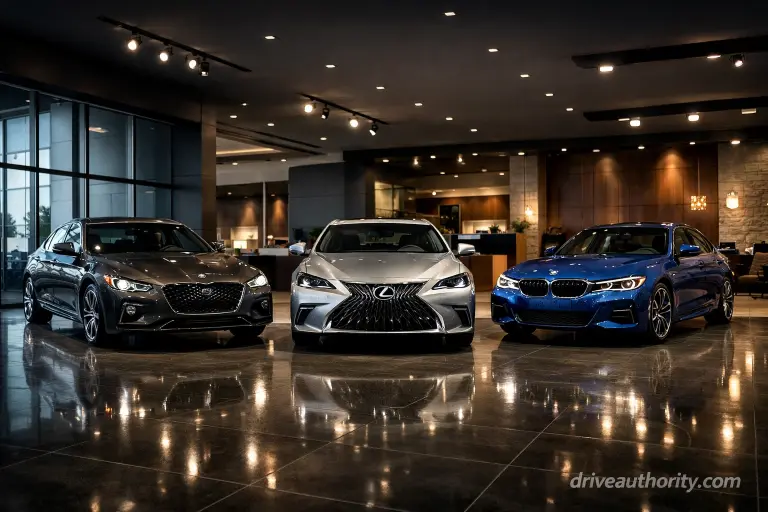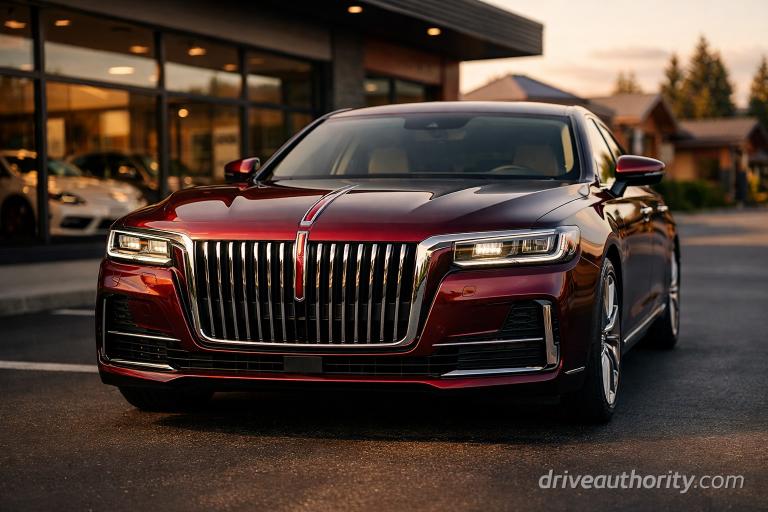
You’ve seen the Hongqi badge and sleek designs online—but when you search “hongqi car price,” you’re not just looking for a number. You’re wondering if a Chinese luxury brand can deliver premium quality without the premium pain, or if you’re about to gamble on an unknown.
⚡ Quick Verdict
Hongqi pricing only makes sense for buyers who value exclusivity over convenience and can absorb steep depreciation as the cost of novelty. If this is your primary car, the math doesn’t work. If it’s your third car, the rules change entirely.
TL;DR Price Reality:
- Under $55K: Risky but unique—only if you have backup transportation
- $55K–$70K: Only justifiable as second/third car with service access
- $70K+: Buy only if depreciation is completely irrelevant to you
If you want hassle-free luxury ownership, stop reading here—Hongqi isn’t for you.
Quick Price Snapshot (2026):
- Entry Hongqi sedans (H5): $45,000–$55,000
- Mid-size luxury (H7): $55,000–$70,000
- Flagship models (H9, E-HS9 EV): $70,000–$85,000+
Prices reflect non-official imports to US & Canada, as Hongqi isn’t officially sold through traditional dealerships in North America.
Direct Answer
Hongqi car price in the US and Canada ranges from approximately $45,000 for entry-level sedans like the H5 to over $85,000 for flagship models like the H9 or E-HS9 electric SUV through specialty importers. The core issue isn’t the sticker price—it’s whether Hongqi’s luxury positioning justifies costs that rival established German and Japanese brands when dealer networks, parts availability, and resale values remain completely unproven in North America. For most buyers, how much a Hongqi costs matters less than whether “affordable luxury” from China means smart value or expensive risk.
Pricing estimates are based on specialty import listings, importer disclosures, and regional transaction data from US & Canadian dealers as of January 2026.
What This Problem Really Is
The hongqi car price dilemma comes down to value perception versus market reality. Hongqi positions itself as China’s answer to Mercedes-Benz and Audi, with pricing that reflects luxury ambitions rather than budget-brand roots. You’re not paying $60,000 for a rebadged economy car—you’re paying for legitimate leather, advanced driver-assistance systems, and design language inspired by Rolls-Royce.
But here’s the reality: Hongqi auto lacks the decade-long ownership data, widespread service infrastructure, and brand recognition that justify similar pricing from BMW or Lexus. A $50,000 Hongqi H5 competes on paper with a Honda Accord Touring or entry-level Genesis G70—but those rivals come with proven reliability records, easy parts sourcing, and strong resale values.
In practical terms, choosing between a $55,000 Hongqi H7 and a $54,000 Genesis G70 isn’t just comparing features. You’re weighing known refinement against unknown depreciation. The Hongqi might offer ventilated rear seats and a 12.3-inch screen, but the Genesis guarantees parts at hundreds of US dealerships, a 10-year powertrain warranty, and resale values that hold 45–50% after five years.
Understanding Gray-Market Import Economics (Critical Context)
Since Hongqi isn’t officially sold through traditional US/Canada dealerships, every North American Hongqi passes through specialty import channels who add 20–35% to Chinese MSRP. This markup covers:
- Shipping and customs compliance
- EPA/DOT modifications for North American regulations
- Limited warranty support (typically shorter than factory)
- Import dealer profit margins on low-volume sales
A $50,000 H5 in Shanghai becomes a $65,000 purchase in Los Angeles—not because the car is worth more, but because you’re subsidizing the entire import infrastructure. Unlike established brands with economies of scale, every Hongqi sold in North America carries these fixed costs. This context applies throughout this article whenever pricing is discussed.
Hongqi Pricing in North America: Why It Feels Expensive
Many assume the price premium reflects overcharging for unproven quality—but that’s only half true. Hongqi isn’t a budget brand pretending to be luxury; it’s a legitimate premium automaker owned by FAW Group with genuine investment in materials, technology, and design. The E-HS9 electric SUV uses the same battery suppliers as premium European EVs and offers air suspension standard—features that cost extra on many $70,000+ competitors.
The confusion comes from comparing Chinese domestic pricing to North American import reality. In China, Hongqi benefits from government fleet purchases, subsidies, and national pride—factors that don’t translate to US/Canada markets. As explained in the import economics section, these costs and infrastructure investments add 20–35% to any Chinese MSRP.
Another myth: “If it’s Chinese, it must be cheaper than other Chinese EVs.” That logic applies to budget brands like BYD or MG. Hongqi deliberately prices above mass-market Chinese competitors to signal premium status—similar to how Genesis prices higher than Hyundai despite shared engineering, or how Volvo positions itself as semi-premium despite corporate ties to mainstream brands.
Secondary Factors Affecting Final Price
Beyond import economics, three variables influence what you actually pay:
Electric vs Gas Models: Hongqi’s EV lineup (E-HS9, E-QM5) typically costs $10,000–$20,000 more than gas equivalents, even before EV ownership costs. The E-HS9 starts around $72,000 in markets where it’s sold—competitive with the Audi e-tron but lacking charging infrastructure partnerships buyers expect at that price.
Trim-Level Confusion: Hongqi uses Chinese naming conventions that don’t translate cleanly to Western markets. A “mid-level” H7 might include features Americans expect as standard while omitting basics like wireless CarPlay, making price comparisons difficult.
Regional Dealer Variation: Vancouver importers might price 10–15% higher than Miami counterparts due to local demand, service overhead, and Canadian compliance costs. Always compare multiple importers before committing.
🔎 Reality Check So Far
At this point, the pattern is clear: Hongqi’s price isn’t inflated by greed—it’s inflated by friction. The car itself delivers legitimate luxury content at competitive pricing in China. The premium you pay in North America covers the cost of bringing a stateless brand into a market with no infrastructure to support it. The remaining question is whether you’re willing to pay for that friction knowingly.
5-Year Cost Comparison (Real Ownership Loss)
The single biggest cost difference is depreciation—not maintenance or insurance.
| Cost Factor | Hongqi H7 ($60,000) | Genesis G80 ($50,000) | Difference |
|---|---|---|---|
| Purchase Price | $60,000 | $50,000 | +$10,000 |
| 5-Year Depreciation | ~$39,000 (65%)* | ~$22,500 (45%) | +$16,500 |
| Annual Maintenance | $2,000–$2,500 | $900–$1,200 | +$5,500 (5 years) |
| Insurance Premium | 25% higher than avg | Standard luxury | +$3,500 (5 years) |
| Parts Availability | 2–4 weeks shipping | Same-day local | Time cost |
| Total 5-Year Loss | ~$48,000 | ~$31,200 | +$16,800 |
Over five years, Hongqi ownership cost roughly one additional used luxury sedan in losses alone. That $16,000–$18,000 gap represents the real cost of buying novelty instead of infrastructure.
Because Hongqi has no resale floor in North America, buyers should assume worst-case depreciation similar to defunct luxury imports. Saab lost over 80% of resale value within 6 years after U.S. exit (2009–2015), despite strong product quality. Fisker Karma owners saw resale collapse within 36 months once service networks failed. According to Kelley Blue Book, luxury sedans from non-established brands typically lose 55–70% of value within five years. This is risk modeling based on historical precedent, not prediction—actual depreciation depends on brand survival and market acceptance.
Should You Even Be Looking at Hongqi? (Decision Framework)
Answer these three questions:
1. Do you live in a major metro with specialty import support?
- ✅ Yes (Vancouver, Toronto, SF, Miami, LA) → Continue
- ❌ No → Stop here. Service challenges will dominate ownership.
2. Is this your primary/only car?
- ✅ Primary car → Hongqi economics don’t work. Consider proven luxury alternatives.
- ✅ Second/third car → Depreciation and service hassles matter less. Continue.
3. Can you absorb 60%+ depreciation as the “cost of exclusivity”?
- ✅ Yes → Hongqi might deliver value as a novelty purchase.
- ❌ No → Your money goes further with Genesis, Volvo, or CPO German luxury.
🚩 Do NOT Buy a Hongqi If:
- You need dealer financing (most banks won’t finance gray-market imports)
- You cannot tolerate 30+ days downtime for parts or major repairs
- You plan to resell within 36 months (depreciation hits hardest early)
- This is your only household vehicle (no backup during service)
- You live more than 100 miles from specialty import support
Three Buyer Profiles: Who Actually Buys Hongqi?
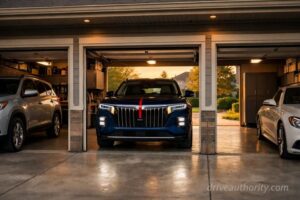
Understanding why people pay hongqi car price helps clarify if you fit the profile:
The Status Contrarian: Wants anti-German luxury. Tired of seeing BMWs at every stoplight. Values uniqueness over resale. Typically owns 2+ vehicles. Depreciation tolerance: High
The Political/Industrial Buyer: Works in tech, renewable energy, or industries with China exposure. Sees Hongqi as diversification from Tesla/German dominance. Views purchase as statement or research. Depreciation tolerance: Medium-High
The Collector/Novelty Enthusiast: Buys cars like art pieces. Owns cars nobody else has. Plans to keep long-term regardless of value. Already owns “practical” daily drivers. Depreciation tolerance: Irrelevant
Some buyers know all of this—and still buy Hongqi. Not because the math works, but because emotional utility outweighs financial logic. If exclusivity, political statement, or collector appeal matter more than resale value, the premium becomes psychologically justifiable even when economically irrational.
How to Tell If This Affects You
Hongqi ownership cost becomes a critical decision factor if you fit these scenarios:
You’re shopping luxury on a $50,000–$70,000 budget and want features like massaging seats, panoramic roofs, and powerful engines without stretching to $80,000+ German brands. Hongqi offers legitimate luxury content at that price—but only if you’re comfortable with limited service options and unknown resale.
You’re considering Chinese EVs as Tesla alternatives. Hongqi’s electric models compete on range (370+ miles claimed) and luxury—but cost more than BYD or NIO equivalents. The question becomes whether Hongqi’s premium badge justifies $15,000–$25,000 over more established Chinese EV brands with better North American support.
You’re drawn to exclusivity over practicality. A Hongqi H9 turns heads in North America because almost nobody owns one. If making a statement matters more than easy service, the price might feel justified. But if you need a daily driver that any mechanic can service, you’re paying for inconvenience.
Who Should (and Shouldn’t) Consider Hongqi
| ✅ Good Fit | ❌ Not Recommended |
|---|---|
| Living in major metro with import specialists | Need reliable daily transportation |
| Own 2+ vehicles (backup available) | Limited budget for unexpected repairs |
| Accept 60%+ depreciation as novelty cost | Plan to keep car 7+ years |
| Value exclusivity over resale | Live outside major urban areas |
| Comfortable with 2–4 week part delays | First-time luxury buyer |
| Wealthy collector or third-car buyer | Financing the purchase |
Practical Next Steps
1. Compare Against “Questioned Luxury” Brands, Not Proven Ones
Don’t compare Hongqi only to Lexus or Acura—those brands already won the trust battle. Instead, cross-shop against:
- Genesis G80 ($50,000–$65,000): Korean luxury still building reputation, but with 10-year warranty and dealer network
- Volvo S90 ($55,000–$70,000): Semi-premium positioning, Chinese ownership, but established US service
- CPO Maserati Ghibli ($45,000–$55,000): Luxury with reliability questions, but Italian cachet and service access
These comparisons are fairer because they all ask buyers to accept some risk or trade-off for the price.
2. Calculate Total Ownership Cost With Worst-Case Assumptions
Use online calculators to project 5-year costs including:
- Insurance: 20–30% higher for rare imports
- Maintenance: $2,000–$2,500/year vs. $900–$1,200 for mainstream luxury
- Depreciation: Model 65% loss (worst-case scenario for unknown imports)
A $60,000 Hongqi with 65% depreciation costs you $39,000 in value loss alone—versus $22,500 for a Genesis G80. Add $6,000 extra maintenance over 5 years, and the “affordable luxury” narrative collapses under real ownership math.
3. Verify Local Service Before Any Deposit
Call independent import specialists and ask specific questions:
- “Do you currently service Hongqi vehicles?”
- “Can you source common wear parts within 7 business days?”
- “What’s your diagnostic capability for Chinese CAN-bus systems?”
If answers are vague (“we can figure it out”), walk away. A $700 brake job that takes three weeks isn’t luxury ownership. Check forums discussing Chinese car reliability to find real owner experiences with service access.
4. For Electric Models: Audit Charging Infrastructure Personally
If considering the E-HS9 or E-QM5, don’t rely on range specs alone. This isn’t about vehicle quality—it’s about ecosystem maturity. Physically map:
- CCS fast-charging locations on your common routes
- Backup charging options if primary stations are occupied
- Public charging costs vs. home charging economics
Hongqi EVs use standard CCS connectors but lack Tesla’s Supercharger access (for now) and partnerships with Electrify America. A 300-mile EV becomes a 150-mile car if charging infrastructure doesn’t align with your travel patterns. Factor in realistic charging times—a $72,000 Hongqi EV might cost $400/month more in time and inconvenience than a Tesla Model S.
5. Negotiate Aggressively, Then Walk Away Once
Specialty import dealers mark up Hongqis 25–40% because demand is curiosity-driven, not volume-based. Strategy:
- Offer 18–22% below asking price
- Present comparable alternatives (Genesis, Volvo CPO) at lower prices
- Walk away if they don’t move significantly
- Wait 10–14 days—they’ll likely call back
Unlike negotiating with a Lexus dealer (where margins are tight), Hongqi importers have massive room to discount because they’re selling exclusivity, not scale. If they refuse to budge meaningfully, they’re treating you like a collector, not a car buyer—and you’ll overpay accordingly.
6. Consult an Expert for Complex Decisions
If you’re still uncertain whether Hongqi pricing reality makes sense for your situation, consult a specialty import advisor who evaluates total ownership costs for rare brands. They can assess your local service options, project realistic resale values based on comparable defunct luxury brands, and compare financing terms (import vehicles often carry 1–2% higher interest rates).
For electric Hongqi models, speak with an EV specialist familiar with Chinese charging standards and battery warranties. FAW’s battery tech is legitimate, but warranty claims on a $15,000 battery pack replacement differ wildly between official channels and non-official import pipelines.
Frequently Asked Questions
How much does a Hongqi cost in the US?
Hongqi cars cost between $45,000 and $85,000+ in the US through specialty importers. Entry sedans like the H5 start around $45,000–$55,000, mid-size luxury models (H7) run $55,000–$70,000, and flagship models like the H9 or E-HS9 electric SUV exceed $70,000. These prices are 20–35% higher than Chinese MSRP due to import economics, compliance costs, and dealer margins on low-volume sales.
Is Hongqi available in Canada?
Hongqi isn’t officially sold through traditional dealerships in Canada as of 2026. Some specialty importers in Vancouver and Toronto offer Hongqi models through non-official channels at similar pricing to US markets—typically $45,000–$85,000+ depending on model and trim, plus applicable provincial taxes.
Why is Hongqi pricing so expensive compared to other Chinese brands?
Hongqi positions itself as China’s premium luxury brand, comparable to Mercedes-Benz rather than budget brands like BYD. Legitimate luxury materials, advanced technology, and premium positioning justify higher base pricing than other Chinese EVs. Additionally, import economics add 20–35% to Chinese MSRP for North American buyers.
Are Hongqi cars worth the price?
Worth depends entirely on your buyer profile. Hongqi delivers legitimate luxury features at $50,000–$70,000, but lacks proven reliability data, widespread service infrastructure, and established resale values. If this is your primary car, the economics don’t work—you’ll lose $15,000–$20,000 more over 5 years versus Genesis or Volvo. If this is your second or third car and you value exclusivity over convenience, the premium might be justified as a novelty cost.
Final Takeaway
Understanding hongqi car price in the US and Canada means recognizing you’re not just buying a car—you’re subsidizing an entire market experiment. The $45,000–$85,000 price range reflects legitimate luxury content, but also includes the risk premium of betting on a brand with no North American resale floor, limited service infrastructure, and uncertain long-term survival.
For wealthy collectors, political contrarians, or buyers who own multiple vehicles and value exclusivity, Hongqi delivers legitimate differentiation at $50,000–$70,000. For primary-car buyers optimizing for value, similar money buys dramatically better ownership economics from proven luxury brands, Genesis, Volvo, or established Chinese EVs with better support.
From a market-logic standpoint, this is not a close call—it’s a conditional one. The price is real. The value depends entirely on whether you’re buying transportation or making a statement.
External Resources: