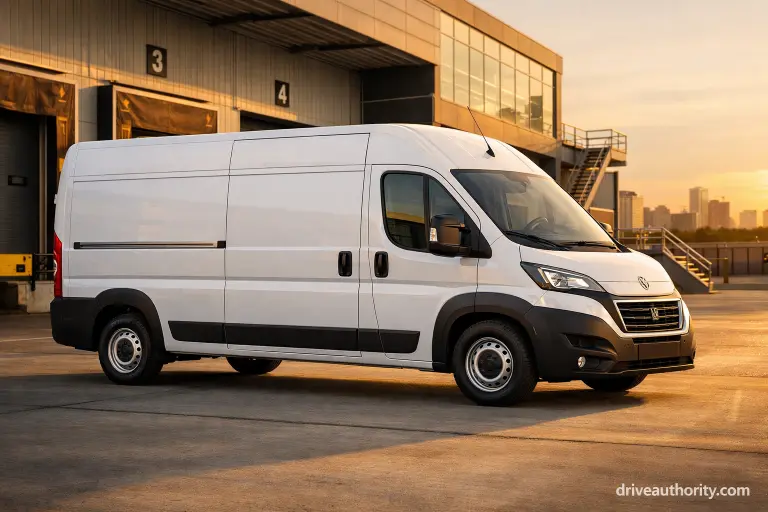
You’re comparing large vans for your delivery fleet or conversion project, and the Peugeot Boxer 2026 keeps appearing in your research. But here’s what you’re actually wondering: will it handle your daily workload without breaking the bank? Can you trust the electric version for urban deliveries? And how does it stack up against the Ford Transit or Fiat Ducato you’re also considering?
The Peugeot Boxer 2026 enters a brutally competitive segment where purchase price matters less than total cost of ownership, and where a wrong choice means years of expensive repairs or inadequate payload capacity. This review cuts through the marketing material to examine what the Peugeot Boxer 2026 delivers in real-world commercial use—from diesel efficiency to electric range anxiety, and everything in between.
What the Peugeot Boxer 2026 Actually Competes Against
Before diving into specifications, understand where the Peugeot Boxer 2026 sits in the market hierarchy. This is a large commercial van rated up to 3.5 tonnes GVW, placing it directly against the Fiat Ducato (which shares the same platform), Citroën Jumper (another platform twin), Ford Transit, Mercedes Sprinter, and Renault Master.
These aren’t consumer vehicles where brand loyalty drives decisions. Commercial buyers evaluate load volume, fuel consumption per kilometer, service intervals, and resale values with spreadsheet precision. The Peugeot Boxer 2026 must prove its worth on operational metrics, not style points.
Peugeot Boxer 2026 Diesel Engine Options: Power Versus Economy Tradeoffs
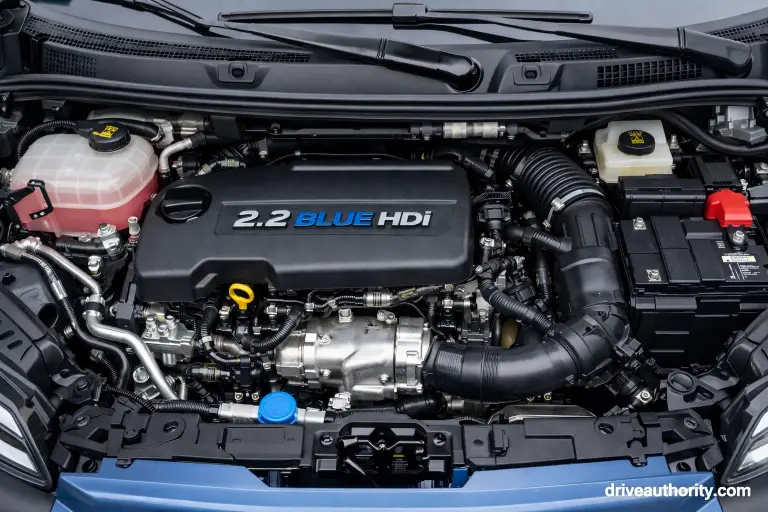
The Boxer’s diesel lineup centers on a 2.2-liter BlueHDi four-cylinder engine in three states of tune. All versions meet Euro 6E emissions standards, but your choice depends entirely on how you’ll use the van.
120 HP Version: The Urban Efficiency Specialist
This entry-level diesel suits light-load urban work—think courier services with frequent stops or tradesperson vans carrying tools rather than bulk materials. The six-speed manual transmission keeps costs down, and fuel economy sits at the lower end of the 8.2-12.1 L/100km range Peugeot quotes.
Who needs this: Small businesses doing predictable city routes with payload under 1,000 kg. The lower purchase price and reduced fuel consumption offset the lack of highway passing power.
Who shouldn’t buy this: Anyone regularly driving fully loaded on motorways or tackling mountainous terrain. You’ll spend more time downshifting than moving forward.
140 HP Version: The Goldilocks Option
This mid-range diesel handles most real-world commercial scenarios without excessive fuel consumption. More importantly, it’s available with Peugeot’s eight-speed automatic transmission (EAT8), which transforms long-haul driving comfort and reduces driver fatigue in stop-and-go traffic.
The automatic transmission adds roughly €2,500-3,500 to the purchase price depending on configuration. For fleets with high driver turnover or routes involving heavy urban congestion, that premium pays for itself in reduced training time and driver preference.
180 HP Version: Maximum Payload Performance
The top diesel specification exists for operators running at maximum GVW regularly—refrigerated transport, heavy equipment hauling, or long-distance distribution. This engine provides adequate power reserves when climbing grades fully loaded, but expect fuel consumption toward the higher end of Peugeot’s quoted range.
Reality check: Unless you routinely operate near weight limits or in mountainous regions, the 140 HP version delivers 90% of this engine’s capability at lower running costs.
Peugeot Boxer 2026 E-Boxer Electric: Promise Versus Practical Reality
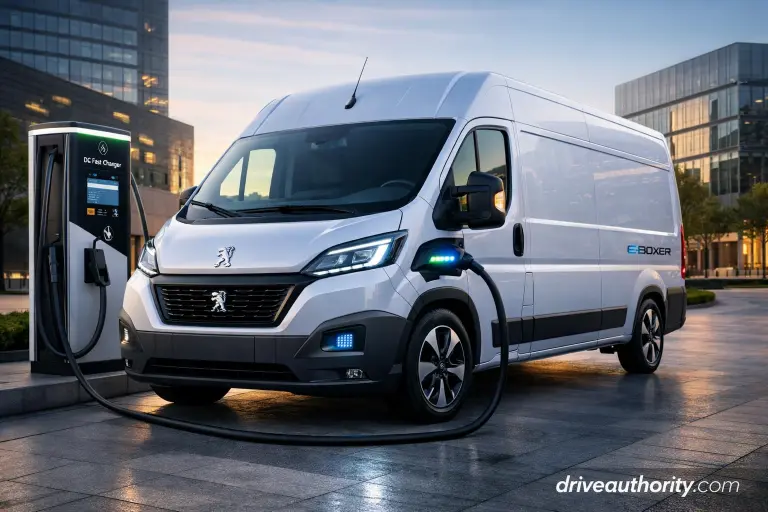
The fully electric E-Boxer represents Peugeot’s answer to increasingly strict urban emissions zones and zero-emission delivery mandates. On paper, the Peugeot Boxer 2026 electric version offers compelling specifications: 270 HP, 400 Nm of torque, and up to 430 km of WLTP urban range from its 110 kWh battery.
Here’s what Peugeot’s marketing materials won’t emphasize about electric van ownership.
Range Reality: Urban Versus Highway Driving
That 430 km range figure applies specifically to urban WLTP testing—constant stop-and-go driving at moderate speeds where regenerative braking recovers energy. Real-world range varies dramatically based on:
- Highway driving: Expect 250-300 km at motorway speeds, where aerodynamic drag dominates and regenerative braking contributes nothing
- Winter operation: Cold weather reduces range by 20-30% due to battery chemistry and cabin heating demands
- Payload impact: A fully loaded E-Boxer uses significantly more energy than an empty one, reducing range proportionally
Charging Infrastructure Considerations
The E-Boxer includes an 11 kW onboard charger, requiring approximately 10 hours for a full charge from empty on a standard three-phase supply. Fast charging to 80% takes 55 minutes under ideal conditions using a compatible DC fast charger.
What This Means for Peugeot Boxer 2026 Electric Operations
Urban delivery operations with overnight depot charging work well. Long-haul or multi-shift operations face charging bottlenecks unless you invest in depot charging infrastructure or plan routes around public fast-charging stations.
Total Cost of Ownership: Electric Versus Diesel
The E-Boxer commands a substantial premium—starting prices begin around €50,500 compared to €30,400 for the entry-level diesel. Whether that premium makes financial sense depends entirely on your specific use case:
Electric makes sense for:
- Urban delivery fleets with predictable daily mileage under 200 km
- Operations in low-emission zones where diesel vans face access restrictions or charges
- Businesses where overnight charging infrastructure already exists
- Applications where quieter operation matters (residential deliveries, early-morning routes)
Diesel remains more practical for:
- Long-haul distribution exceeding 300 km daily
- Multi-shift operations requiring rapid refueling
- Areas lacking reliable charging infrastructure
- Businesses unable to absorb the higher upfront cost
Peugeot Boxer 2026 Body Configurations: Matching Specifications to Real Needs
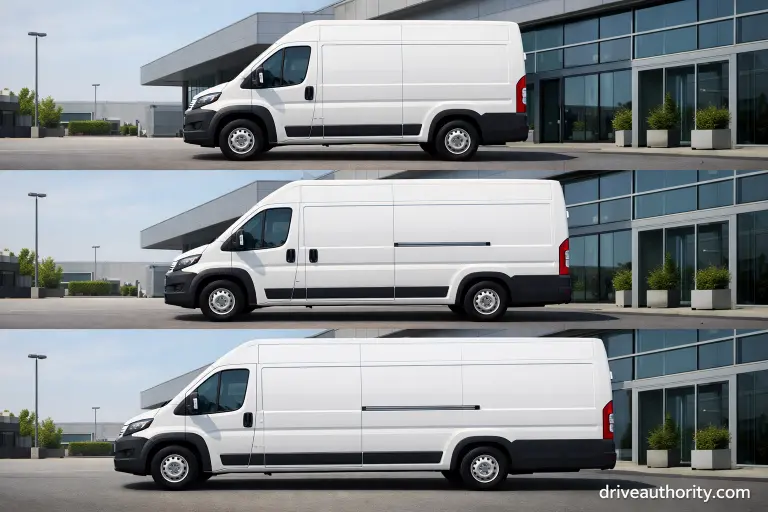
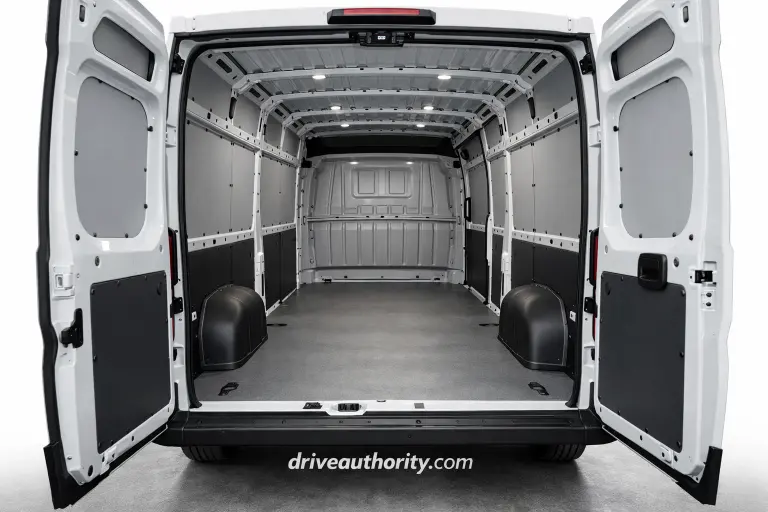
The Boxer’s strength lies in configuration versatility. Four length options (L1 through L4) and multiple roof heights create load volumes from 8 cubic meters to 17 cubic meters.
Choosing the Right Size for Your Operation
L1/L2 configurations (short/medium): Better maneuverability in tight urban environments, easier parking, lower purchase price. Choose these if your business involves frequent stops in congested areas and payloads prioritize value density over pure volume.
L3/L4 configurations (long/extra-long): Maximum volume for bulky goods, furniture removal, or large equipment transport. The tradeoff: significantly harder to maneuver in narrow streets and limited parking options.
Roof Height Considerations
Higher roofs (H2/H3) allow standing inside for van conversions or easier loading of tall items. They also increase wind resistance and fuel consumption on highways.
Peugeot Boxer 2026 Interior: Functional Rather Than Luxurious
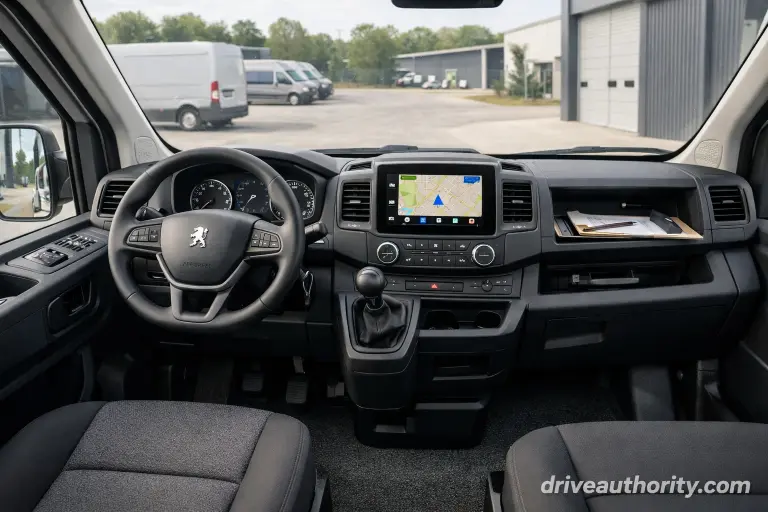
Commercial vehicles prioritize durability and practicality over creature comforts. The Peugeot Boxer 2026 cabin reflects this philosophy with hard-wearing plastics and straightforward controls. You won’t find soft-touch materials or ambient lighting.
What you do get: excellent visibility through large mirrors and tall seating position, adequate storage for paperwork and personal items, and climate control that effectively manages the large cabin volume. Ergonomics suit long driving days without excessive fatigue.
The optional 7-inch touchscreen (Professional trim and above) handles navigation and smartphone integration competently. Don’t expect the responsiveness of consumer vehicle interfaces, but functionality covers essential business needs.
Equipment Levels: What You Actually Need
Peugeot offers three main trim levels, each targeting different buyer priorities:
Base Trim
Air conditioning, Bluetooth audio, cruise control. Sufficient for purely functional commercial use where the van serves as a tool rather than a workplace.
Professional Trim
Adds 7-inch touchscreen, reversing camera, fog lights, and improved seating. The reversing camera alone justifies this upgrade for operations involving frequent tight maneuvering or driver liability concerns.
Premium Trim
Navigation, lane-keeping assist, advanced driver assistance systems (ADAS), keyless entry. These features primarily benefit fleets prioritizing driver safety or businesses where the van also serves client-facing functions.
How the Peugeot Boxer 2026 Compares to Key Rivals
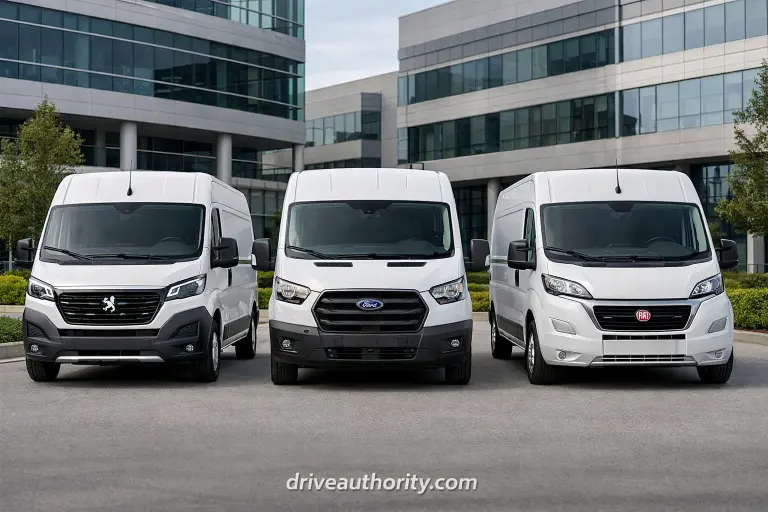
The Peugeot Boxer 2026 shares its fundamental architecture with the Fiat Ducato and Citroën Jumper—all three vans roll off the same production line with different badges and minor trim variations. This commonality means similar capabilities, shared parts availability, and comparable reliability profiles.
Peugeot Boxer 2026 vs Ford Transit
The Transit offers more engine options and superior technology integration. Ford’s dealer network and parts availability often edge out Stellantis brands for some operators. However, the Peugeot Boxer 2026 typically undercuts Transit pricing by 5-10% for comparable specifications.
Peugeot Boxer 2026 vs Mercedes Sprinter
The Sprinter commands premium pricing but delivers superior build quality, more refined driving dynamics, and better residual values. If your operation prioritizes long-term ownership or professional image, the Sprinter justifies its cost premium. For price-sensitive fleet operations, the Peugeot Boxer 2026 offers similar core functionality at lower acquisition cost.
Peugeot Boxer 2026 vs Renault Master
Closely matched on capability and pricing. The deciding factors often come down to local dealer support quality and existing brand relationships rather than meaningful product differences.
Pricing Structure: Understanding the Real Numbers
Peugeot lists the Peugeot Boxer 2026 from €30,399 (ex-VAT) for the base 120 HP diesel panel van. That figure represents the absolute entry point—expect to pay €33,000-37,000 for a properly specified diesel workhorse with Professional trim and reasonable payload capacity.
Electric E-Boxer models start at €50,499 (ex-VAT), with most configurations landing in the €52,000-56,000 range. These prices exclude any available EV incentives, which vary significantly by market and business classification.
Financing reality: Most commercial buyers lease rather than purchase outright. Monthly lease costs and available warranty packages matter more than list prices. Request total cost of ownership projections including fuel, insurance, and maintenance when comparing quotes.
Who Should Choose the Peugeot Boxer 2026?
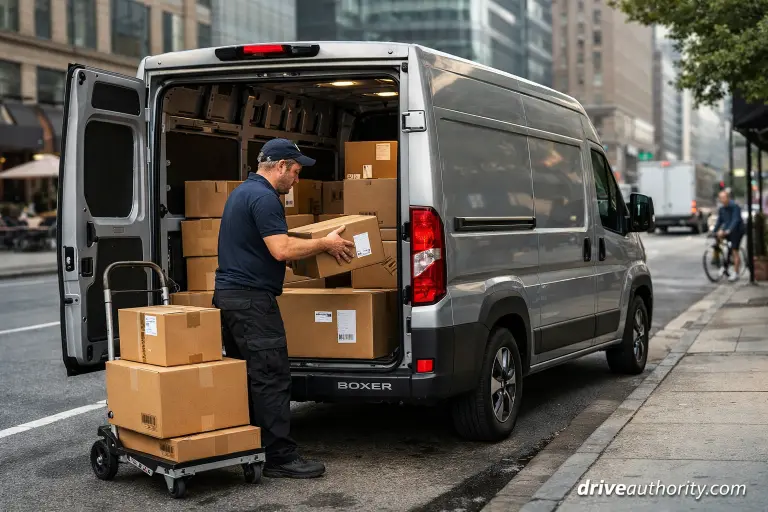
The Peugeot Boxer 2026 makes most sense for specific buyer profiles rather than serving as a universal recommendation:
Ideal for:
- Budget-conscious fleet operators prioritizing acquisition cost over premium features
- Businesses requiring extensive body customization (motorhome conversions, specialty equipment installations)
- Urban delivery operations considering electric for emission zone compliance
- Companies with existing Stellantis brand relationships and service networks
Look elsewhere if:
- You prioritize cutting-edge technology and driver assistance features (consider Transit or Sprinter)
- Maximum refinement and premium image matter for client-facing operations (Sprinter)
- You need extreme reliability in harsh operating conditions (Toyota Proace or Volkswagen Crafter might better suit specific applications)
The Bottom Line: A Capable Tool for Cost-Conscious Operators
The Peugeot Boxer 2026 delivers fundamental commercial van capability without premium pricing or unnecessary features. It won’t impress drivers accustomed to car-like refinement, and it doesn’t push technological boundaries.
What the Peugeot Boxer 2026 does well: provides adaptable load capacity, reasonable operating costs, and sufficient reliability for typical commercial duty cycles at prices that allow businesses to acquire vehicles without excessive capital outlay.
The diesel versions represent proven, economical workhorses for varied commercial applications. The E-Boxer serves specific urban delivery use cases well but requires careful operational analysis before committing to electric propulsion.
Next steps for serious buyers: Test drive both diesel and electric versions in conditions matching your actual usage. Request total cost of ownership projections from dealers including maintenance and fuel costs. Compare financing terms rather than focusing solely on list prices. And critically, verify local dealer service capacity—even the best van on paper fails if you can’t get it serviced promptly when issues arise.
The Peugeot Boxer 2026 won’t excite enthusiasts or win design awards. For business operators who view vans as investments rather than purchases, it offers rational capabilities at competitive pricing—exactly what commercial buyers actually need.
FAQ: Peugeot Boxer 2026 Buyer Questions
What’s the real-world fuel consumption for the Peugeot Boxer 2026 diesel? Expect 9-10 L/100km for the 140 HP version in mixed driving with moderate loads. Urban stop-and-go pushes toward 11-12 L/100km, while unladen highway cruising can achieve 8-9 L/100km. The 120 HP version improves economy by roughly 0.5-1 L/100km.
Should I buy the automatic transmission on the Peugeot Boxer 2026? For fleets with multiple drivers or routes involving heavy traffic, the eight-speed automatic justifies its €2,500-3,500 premium through reduced driver fatigue and easier operation. Single-driver operations doing primarily highway miles can skip it without significant disadvantage.
How does Peugeot Boxer 2026 E-Boxer range hold up in winter? Expect 25-30% range reduction in cold weather due to battery chemistry impacts and cabin heating demands. A 400 km summer range becomes 280-300 km in winter conditions. Plan routes accordingly or maintain diesel backup vehicles.
What’s the payload capacity difference between Peugeot Boxer 2026 versions? Base L2H2 configurations typically offer 1,200-1,400 kg payload. Higher roof and longer body versions reduce payload to 1,000-1,200 kg due to increased body weight. Electric versions sacrifice 200-300 kg payload compared to diesel equivalents due to battery mass.
Is the Peugeot Boxer 2026 reliable for high-mileage commercial use? Reliability aligns with typical Stellantis commercial vehicles—adequate rather than exceptional. Plan on normal wear items (brakes, suspension components) at standard intervals. The 2.2 diesel engine has proven durable in fleet service according to commercial fleet reports. Maintain regular service schedules and budget for repairs beyond basic warranty coverage.