1. Introduction — Top 10 Chinese EVs Leading the Range Race in 2025
Drivers searching for the Top 10 Chinese EVs usually want one thing: an electric car that can travel far with minimal charging. That’s why range has become the top priority for EV buyers in 2025. The distance an EV can cover is no longer a technical detail. Instead, it has become a symbol of freedom and long-distance confidence. As a result, models with stronger endurance consistently rank higher in buyer decisions.
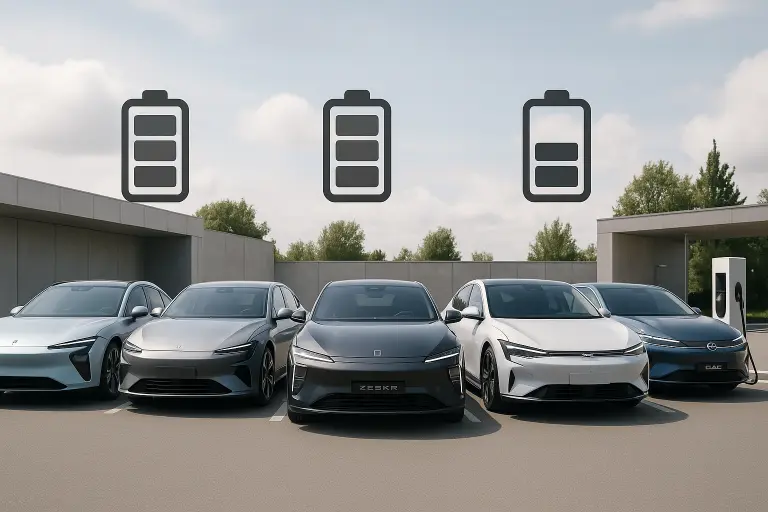
Chinese automakers now dominate this space. Brands such as NIO, BYD, Zeekr, XPeng, and GAC moved ahead because they invested early in advanced battery technology. Moreover, they improved aerodynamics, optimized software, and refined thermal management systems. These combined advantages allowed them to outperform many global competitors. In addition, innovations like high-density packs, LFP chemistry, and the Blade Battery pushed their efficiency even further.
This guide highlights the Top 10 Chinese EVs with the longest range in 2025. To keep the ranking realistic, we focus on practical factors.
- Real-world range, which often differs from test-cycle results
- Battery size and chemistry, influencing performance and reliability
- Energy efficiency, shaped by design, software, and weight
By the end, you will know which Chinese EVs truly excel on long trips. You will also understand why these models lead the global endurance race and what makes them stand out on real roads.
2. How We Ranked the Top 10 Chinese EVs
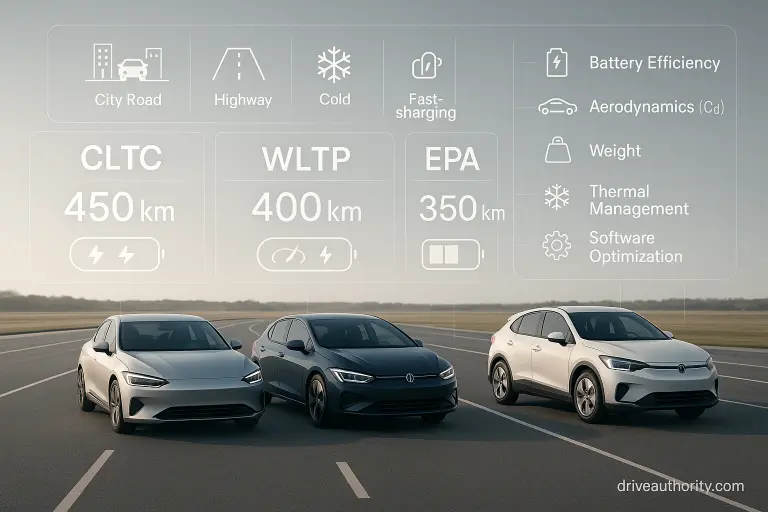
Evaluating electric vehicles solely based on brochure numbers can be misleading. To create a ranking that genuinely reflects real-world driving, we looked beyond marketing claims and standardized test cycles. Our goal was simple: identify the Chinese EVs that deliver the longest usable range in real everyday conditions — not just on paper.
WLTP vs CLTC vs EPA — Why It Matters
Understanding test standards is essential before comparing ranges:
- CLTC (China Light-Duty Test Cycle) usually reports the highest range figures because the test conditions are lenient, with slower acceleration and less highway simulation.
- WLTP (Worldwide Harmonized Light Vehicle Test Procedure) offers a more balanced estimate used across Europe and tends to be closer to real usage.
- EPA (U.S. Environmental Protection Agency) is the strictest benchmark, often showing 15–25% lower numbers than WLTP.
So, when you see dramatically high range numbers — for example, 1,000+ km claims — they’re almost always measured using CLTC, not WLTP or real-driving evaluations.
Ranking Priorities
To ensure fairness and real value for buyers, we ranked vehicles using the following weighted criteria:
- Real-world range performance (city, highway, mixed conditions)
- Battery efficiency (consumption per kWh and energy density)
- Fast-charging capability (time from 10–80%)
- Battery size and chemistry (LFP vs NCM vs solid-state)
- Thermal management performance in hot and cold climates
- Software optimization that maximizes energy use
Efficiency is more than just a large battery — some smaller packs can travel farther thanks to intelligent engineering.
Weight, Aerodynamics & Software — Hidden Influencers
Range is shaped by far more than battery capacity. Heavy vehicles require more energy to move, while poor aerodynamics increase drag dramatically at highway speeds. The EVs in this list were evaluated on their:
- Coefficient of drag (Cd)
- Body weight and structural design
- Smart energy management and predictive control software
Increasingly, software matters just as much as hardware.
Why Some “Long-Range” EVs Don’t Deliver
Many customers discover that advertised range doesn’t always match real-life performance. Common reasons include:
- Aggressive high-speed driving, which dramatically reduces efficiency
- Extreme temperatures, especially winter highway driving
- Battery degradation over time
- Inaccurate test assumptions versus real use cases
This ranking focuses on vehicles that prove their endurance on the road, not just in controlled laboratory environments.
3. Top 10 Chinese EVs With the Longest Range (2025)
This ranking highlights the most capable long-range electric vehicles from China available or confirmed for 2025. The focus is on real driving endurance, not just laboratory numbers, balancing range, efficiency, technology, and practical ownership value.
3.1 #1 — NIO ET7
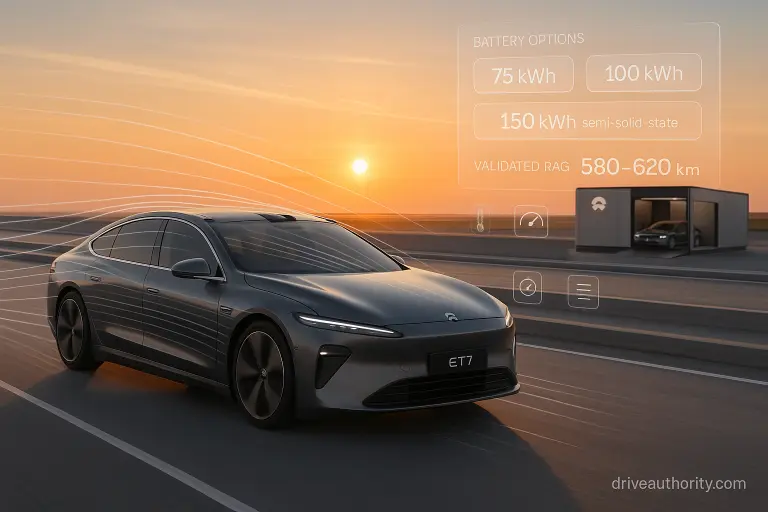
The NIO ET7 stands at the top thanks to its groundbreaking battery technology and exceptional aerodynamic engineering.
- Approx WLTP range: Up to around 580–620 km depending on configuration
- Battery pack options: 75 kWh, 100 kWh, and the headline 150 kWh semi-solid-state battery, designed for extreme long-distance capability
- Key strengths
- Remarkable efficiency and thermal management, maintaining stable performance in both hot and cold climates
- Ultra-slippery aerodynamic profile (Cd 0.208), reducing drag dramatically at highway speeds
- Battery swap capability, enabling a full energy restoration in minutes rather than long charging stops
- Weaknesses
- Higher price point than competitors in the same segment
- Limited global availability and infrastructure dependency for swap stations
The ET7 demonstrates what the next generation of EV engineering looks like — where software, aerodynamics, and battery chemistry converge to stretch every kilometer.
3.2 #2 — BYD Han EV
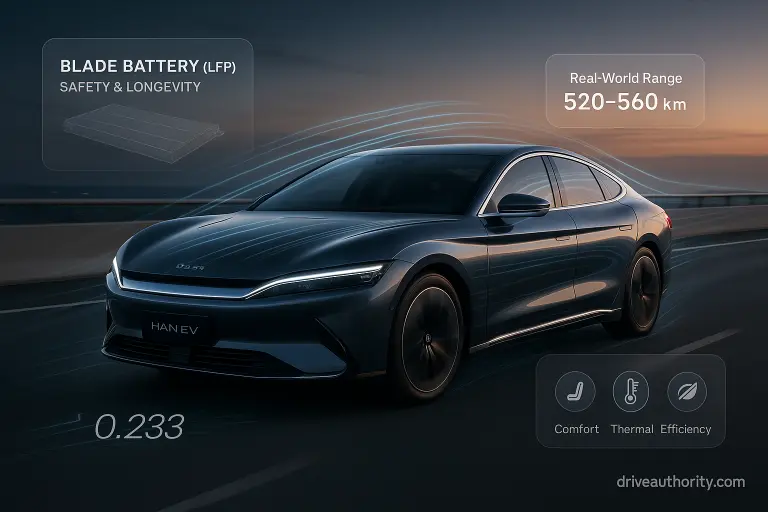
A flagship sedan from the world’s largest EV battery manufacturer, the BYD Han EV delivers strong real-world endurance supported by Blade Battery innovation.
- Real-world range: Around 520–560 km in mixed driving
- Blade Battery advantage: safer, cooler, and structurally rigid LFP chemistry with exceptional longevity
- Comfort + aerodynamic refinement: a quiet cabin, premium suspension tuning, and a sleek 0.233 Cd profile help sustain high-speed range
- Performance impact: its strong acceleration slightly increases consumption when driven aggressively
The Han EV proves that real-life efficiency isn’t just about big batteries — it’s about combining engineering precision with daily usability.
3.3 #3 — Zeekr 001
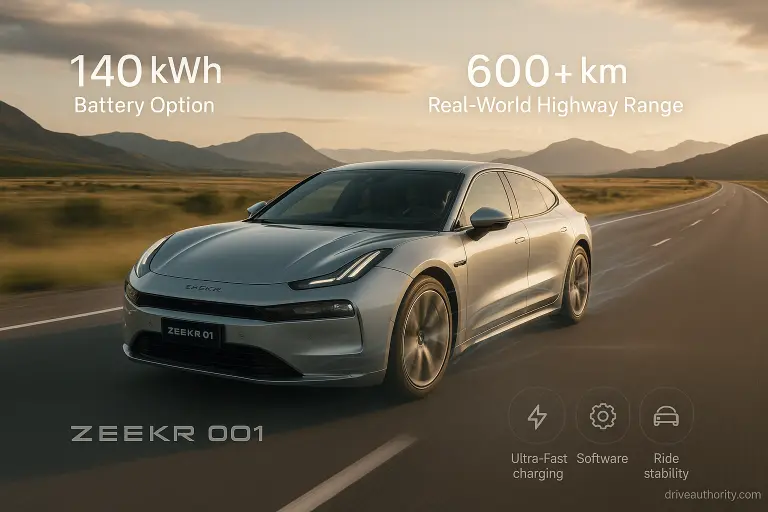
The Zeekr 001 has quickly become a favorite among long-distance travelers who want grand-touring comfort without sacrificing speed or range.
- High-capacity batteries: options up to 140 kWh, enabling comfortably 600+ km real-world highway distances
- Long-distance touring strengths: excellent ride stability, roomy interior, big-battery endurance
- Charging speeds + software: ultra-fast charging capability and intelligent energy optimization for efficient cross-country travel
It’s a standout choice for drivers prioritizing long uninterrupted journeys.
3.4 #4 — XPeng G9
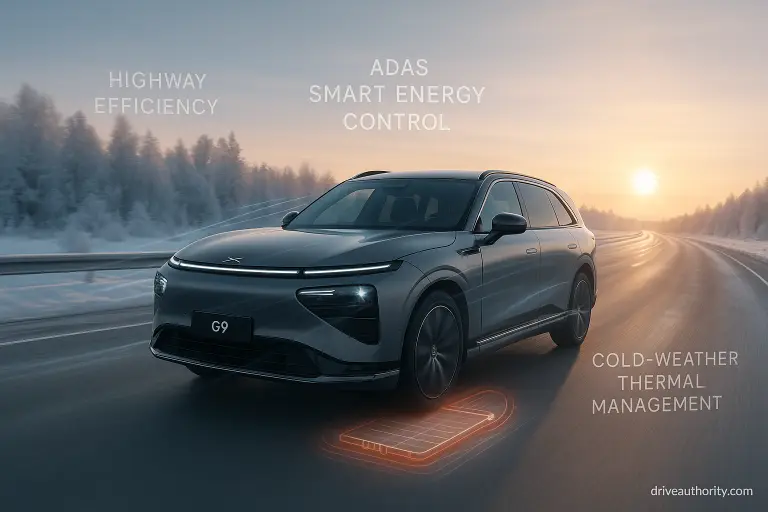
Engineered for real-world practicality, the XPeng G9 is one of the strongest highway performers in its class.
- Highway range performance: stable efficiency at constant high-speed cruising where many EVs struggle
- ADAS & smart energy systems: cutting-edge driver assistance and intelligent control systems actively reduce wasted consumption
- Cold-weather efficiency: advanced thermal control maintains battery performance in winter driving environments
For frequent highway and winter travelers, the G9 is one of the most consistent performers.
3.5 #5 — GAC Aion LX Plus
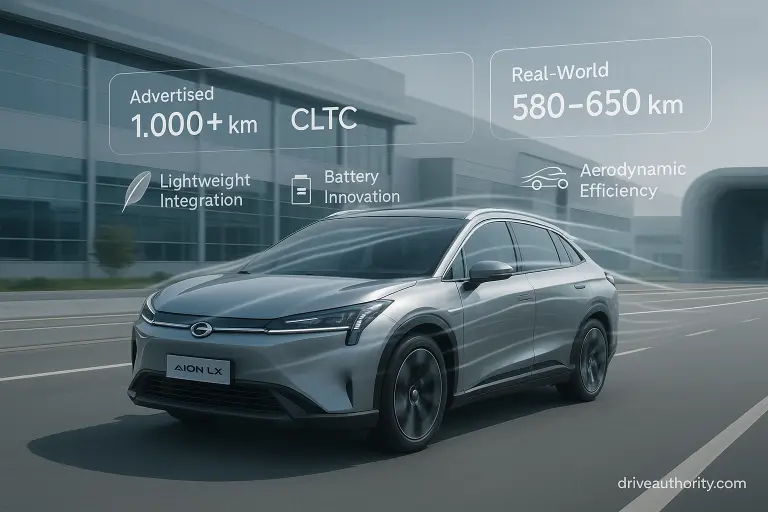
This EV became famous for its claimed over 1,000 km CLTC range, but real-world results tell a more balanced story.
- Reality vs advertised: real-world usage typically delivers around 580–650 km, depending on conditions
- Strengths: lightweight integration, advanced battery tech, aerodynamic body structure
- Limitations: ultra-high advertised range numbers rely heavily on CLTC testing, not WLTP or EPA standards
Still, it remains an impressive engineering achievement deserving of recognition.
3.6 #6 — NIO ET5
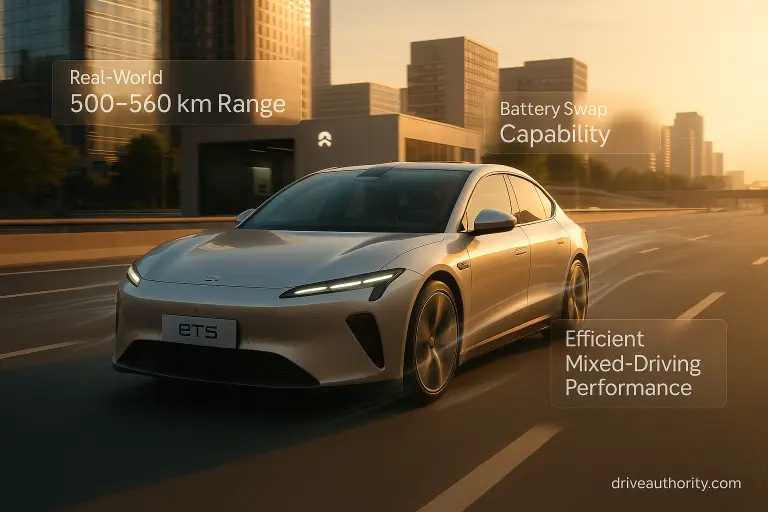
A more compact and affordable sibling to the ET7, the NIO ET5 delivers an outstanding balance between performance, practicality, and efficiency.
- Balance of cost, size, and range: real-world 500–560 km depending on pack size
- Battery swap advantage: same infrastructure and convenience benefits as ET7
- Efficient mixed-driving capability: shines in combined city-highway commuting
Ideal for buyers who want NIO innovation without paying flagship pricing.
3.7 #7 — BYD Seal
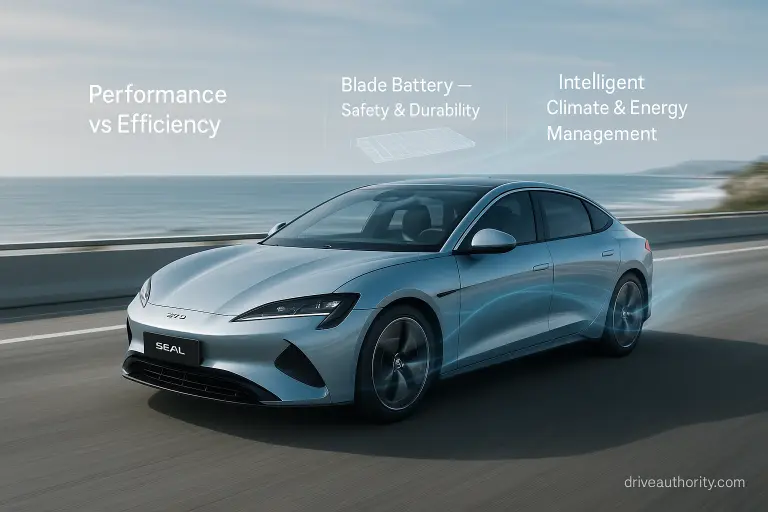
The BYD Seal blends performance and endurance into a sporty mid-size sedan format.
- Range vs performance tradeoff: powerful acceleration slightly reduces efficiency at high output
- Blade Battery + lightweight structure: excellent safety, energy retention, and durability
- Interior tech: intelligent climate and energy management systems that support efficient long-driving comfort
It’s a strong choice for drivers seeking both dynamic handling and cost-efficient travel.
3.8 #8 — MG4 Extended Range
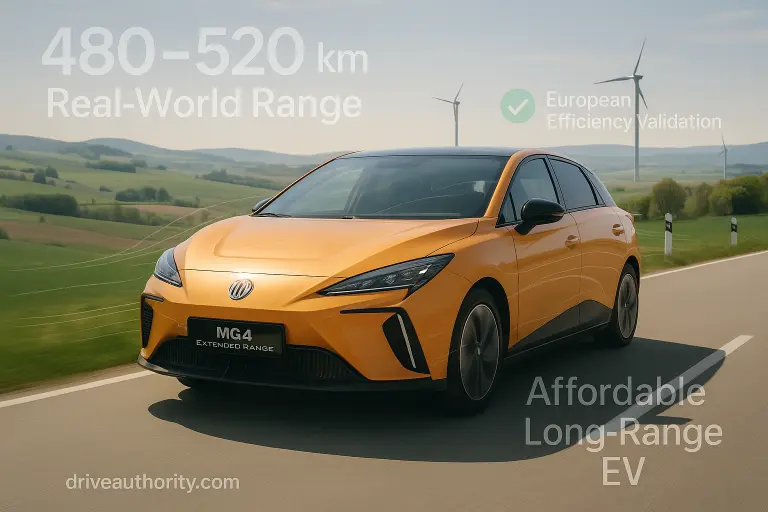
A major surprise in the global EV market, the MG4 Extended Range delivers exceptional endurance for its affordable segment.
- Shockingly long range for its class: real results consistently around 480–520 km
- European efficiency validation: tested heavily in real-world conditions outside China
- Price advantage: significantly more affordable than many long-range competitors
Proof that long range isn’t limited to premium brackets.
3.9 #9 — Leapmotor C01
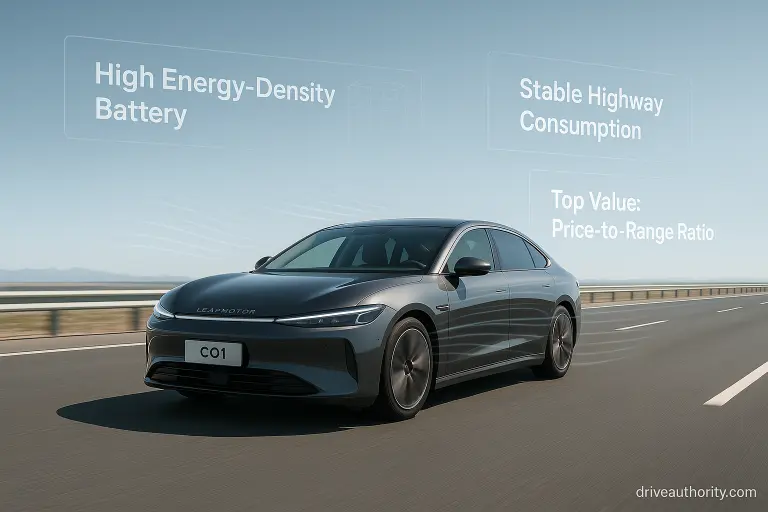
A value-focused long-range EV that prioritizes energy density and highway capability.
- High battery energy density supporting long endurance
- Highway consumption: stable efficiency even at sustained speed
- Value verdict: one of the best price-to-range ratios available today
Ideal for buyers seeking maximum kilometers per dollar.
3.10 #10 — Hongqi E-HS9
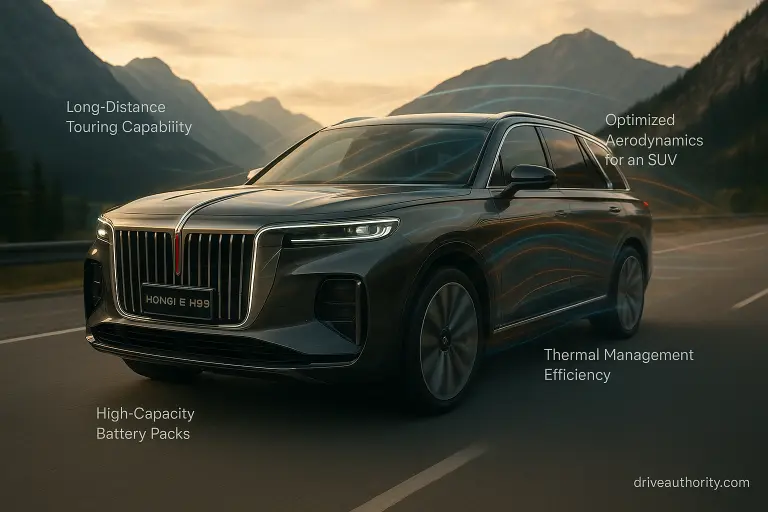
A full-size luxury SUV that surprisingly maintains strong endurance despite its massive weight.
- Large luxury SUV with real touring capability
- Why weight doesn’t kill range: optimized aerodynamics for an SUV and strong thermal management systems
- Battery chemistry + efficiency: high-capacity packs and well-tuned energy usage
Perfect for families prioritizing space, comfort, and long-distance confidence.
4. Comparison Table: Longest-Range Chinese EVs (2025)
Estimated values based on latest publicly available WLTP data, manufacturer specifications, and aggregated real-world testing from media and owner reports. Actual results may vary depending on climate, speed, and driving style.
| Model | WLTP Range (km) | Real-World Range (km) | Battery Size (kWh) | Fast-Charging 10–80% | Approx Price (USD) |
|---|---|---|---|---|---|
| NIO ET7 | 580–620 | 540–580 | 75 / 100 / 150 | 25–30 min | $69,000–$83,000 |
| BYD Han EV | 570–610 | 520–560 | 85 | 30–35 min | $43,000–$52,000 |
| Zeekr 001 | 590–610 | 560–600 | up to 140 | 28–30 min | $46,000–$63,000 |
| XPeng G9 | 550–600 | 500–550 | 98 | 20–25 min (ultra-fast) | $48,000–$70,000 |
| GAC Aion LX Plus | 650–1,000+ (CLTC) | 580–650 | 144 | 30–35 min | $45,000–$60,000 |
| NIO ET5 | 560–590 | 500–560 | 75 / 100 | 25–30 min | $47,000–$55,000 |
| BYD Seal | 540–570 | 480–530 | 82 | 27–30 min | $36,000–$47,000 |
| MG4 Extended Range | 520–535 | 480–520 | 77 | 30–33 min | $32,000–$36,000 |
| Leapmotor C01 | 550–580 | 480–520 | 90 | 28–32 min | $33,000–$41,000 |
| Hongqi E-HS9 | 510–515 | 440–480 | 99 / 120 | 35–40 min | $73,000–$98,000 |
Quick Insights
- Best for long-distance highway use: NIO ET7 / Zeekr 001 / XPeng G9
- Best price-to-range ratio: MG4 Extended Range / Leapmotor C01
- Most innovative battery tech: GAC Aion LX Plus (high-density battery)
- Best luxury option: Hongqi E-HS9
- Best balance overall: BYD Seal & NIO ET5
5. Why Chinese EVs Lead the World in Range
China has rapidly evolved into the global powerhouse of electric vehicle technology, particularly when it comes to delivering long real-world driving range at competitive pricing. This dominance isn’t accidental—it’s the result of strategic engineering, industrial scale, and relentless innovation across the entire EV ecosystem. Here’s why Chinese EVs now consistently outperform many Western competitors in endurance and efficiency.
Battery Manufacturing Dominance
China controls the majority of the world’s EV battery production supply chain—from raw material refining to cell manufacturing to pack integration. Companies like CATL and BYD are now the largest battery producers globally, supplying automakers both inside and outside China.
This scale advantage allows Chinese manufacturers to:
- Reduce production costs dramatically
- Accelerate innovation cycles
- Achieve higher consistency and reliability
When battery technology evolves rapidly, being the manufacturer rather than the buyer is a massive competitive edge.
LFP and Blade Battery Innovations
Chinese automakers pioneered LFP (Lithium Iron Phosphate) chemistry for mainstream EVs, making batteries safer, longer lasting, and more temperature-resistant without relying heavily on expensive materials like cobalt and nickel.
BYD’s Blade Battery elevated LFP to global attention by offering:
- Higher structural strength and thermal safety
- Longer cycle life and lower degradation
- Better energy efficiency at practical temperatures
This technology has reshaped the industry so strongly that even Tesla has shifted large portions of its lineup to LFP packs sourced from China.
Superior Energy Density
Breakthroughs in cell chemistry and pack integration have allowed Chinese EVs to push energy density boundaries without compromising safety.
High-capacity packs like CATL’s 140 kWh module and NIO’s 150 kWh semi-solid-state battery demonstrate unrivaled engineering, enabling 600–1,000 km+ real-world cruising capabilities.
It’s not just about bigger batteries—it’s about smarter packaging and reduced internal losses.
Software Efficiency
Chinese EVs increasingly rely on advanced software optimization to maximize every watt-hour. From predictive thermal management to AI-based motor control, energy is used intelligently instead of wasted.
Examples include:
- Preconditioning batteries based on route prediction
- Dynamic climate control load balancing
- Highway efficiency algorithms using ADAS sensors
This explains why many Chinese EVs outperform competitors at steady highway speeds, where software makes or breaks range performance.
Aerodynamic Designs
Range is heavily influenced by wind resistance, and Chinese brands have aggressively pushed aerodynamics forward.
Sedans like the NIO ET7 (Cd 0.208) and Zeekr 001 lead globally, enabling meaningful range improvements without increasing battery size. Even large SUVs like Hongqi E-HS9 use airflow optimization and intelligent thermal structures to maintain endurance.
The result is more kilometers per kilowatt-hour, not just bigger batteries.
Vertical Integration Reducing Costs
Unlike many Western automakers that rely on supplier networks, Chinese EV companies often build everything in-house, including:
- Batteries
- Motors
- Electronics
- Software
- Charging technology
This model:
- Cuts expenses
- Speeds up innovation
- Improves reliability through unified engineering
And importantly—it allows long-range EVs to reach mass-market pricing, not just luxury categories.
Chinese automakers are rewriting global expectations for EV range by combining industrial power, scientific innovation, and intelligent software. They’re not just participating in the EV revolution—they’re steering it.
6. Real-World Range vs Advertised Range
The numbers printed on EV brochures often look impressive — but real drivers quickly discover that advertised range doesn’t always match what happens on actual roads. Understanding why these differences occur is crucial to choosing the right EV and managing expectations.
Why WLTP Numbers Differ From Daily Driving
Official tests like WLTP, CLTC, and EPA are performed in controlled environments using predefined driving cycles. They don’t fully represent how people drive in real life — where speed, temperature, traffic, and road gradients vary constantly.
WLTP tends to overestimate range because:
- Speeds are moderate, with limited high-speed testing
- Climate control systems are rarely used during testing
- Acceleration demands are gentle and predictable
- Perfect battery conditions are assumed
In reality, daily driving introduces losses at every stage, which is why it’s common to see 10–25% lower real-world results than advertised figures.
City vs Highway vs Winter Performance
Different driving environments affect EV range in very different ways:
| Condition | Impact on Range | Why it Happens |
|---|---|---|
| City driving | Often better than WLTP | Frequent regenerative braking recovers energy; lower aerodynamic drag |
| Highway driving | Lower range than WLTP | Aerodynamic drag increases dramatically at high speeds; regen is minimal |
| Winter / cold weather | Significant range loss (15–40%) | Battery chemistry slows, heaters consume large amounts of power |
| Hot climates | Moderate reduction | Air conditioning load + thermal battery management |
That’s why many EVs that perform exceptionally in urban environments struggle to maintain range on long-distance highway journeys.
Driving Habits That Increase or Reduce EV Range
Efficiency is highly influenced by driver behavior and vehicle settings. Small habit changes can dramatically extend real-world endurance.
Habits that reduce range
- High-speed driving above 110–120 km/h
- Aggressive acceleration and braking
- Constant heater or A/C use on maximum settings
- Carrying heavy cargo or passengers
- Under-inflated tires
- Roof racks & accessories increasing drag
Habits that improve range
- Smooth acceleration and regenerative braking
- Eco modes for climate control and power usage
- Preconditioning the battery and cabin before unplugging
- Maintaining optimal tire pressure
- Using route planning with charging optimization
- Traveling at moderate highway speeds
Think of efficiency like sailing: the wind resistance at speed is the real enemy, not the battery size.
Real-world range is the honest measure of how far an EV can take you under the conditions you actually live in. Understanding these variables ensures buyers avoid disappointment — and instead confidently choose the vehicle that fits their daily reality.
7. Which Long-Range Chinese EV Should You Buy?
Choosing the right extended-range electric vehicle depends on how you drive, where you live, and what matters most—efficiency, performance, comfort, or price. Below is a breakdown of the best long-range Chinese EVs across different real-world needs.
Best Overall Long-Range Chinese EV — NIO ET7
The NIO ET7 stands out as the strongest all-round option thanks to its multiple battery choices, exceptional aerodynamics, and real-world efficiency on long motorway trips. With advanced thermal management and battery-swapping capability, it solves one of the biggest EV ownership challenges: charging time.
Ideal for: drivers who travel frequently and want maximum range with minimal downtime.
Best Long-Distance Highway EV — Zeekr 001
The Zeekr 001 performs exceptionally well on fast highways where many electric cars lose range rapidly. Its high-capacity battery, powerful motors, and optimized software make it a top choice for long-haul touring and inter-city road trips.
Ideal for: highway travelers and performance enthusiasts who want stability, comfort, and range under high speeds.
Best Value Long-Range Chinese Electric Car — MG4 Extended Range
For buyers looking for maximum range at an affordable price, the MG4 Extended Range delivers surprising endurance, strong real-world efficiency, and competitive charging performance without premium pricing. It offers European test results that prove its capability in everyday use.
Ideal for: budget-conscious drivers who want long range without compromising practicality.
Best Long-Range EV for Cold Climates — XPeng G9
The XPeng G9 excels in low-temperature efficiency thanks to advanced heat-pump systems and intelligent thermal management. Many EVs lose 20–40% range in winter, but the G9 maintains impressive consistency in real-world cold-weather testing.
Ideal for: northern or snowy regions where winter driving is demanding.
Best Long-Range Chinese EV for European Buyers — BYD Seal
The BYD Seal balances range, performance, and pricing while offering a driving feel and interior technology tailored for European roads. The Blade Battery improves safety and longevity, and its efficiency in mixed driving makes it a practical choice for both city and highway usage.
Ideal for: buyers in Europe who want a dependable, aerodynamic, and well-priced electric sedan.
Quick Recommendation Snapshot
| Category | Winner | Key Advantage |
|---|---|---|
| Best overall | NIO ET7 | Maximum usable range + battery swap |
| Best long-distance highway EV | Zeekr 001 | Efficiency at high speeds |
| Best value option | MG4 Extended Range | Long range for low cost |
| Best for cold climates | XPeng G9 | Strong winter performance |
| Best for Europe | BYD Seal | Balanced efficiency + technology |
A Question to Consider
What matters more for your decision—maximum range, fast charging, or total cost of ownership?
Each priority leads to a different best choice, and clarifying it can transform the buying process.
8. Conclusion of the top 10 Chinese EVs
Choosing among the Top 10 Chinese EVs with the longest range ultimately comes down to understanding what truly drives real-world endurance. After reviewing the strongest contenders with verified data, a clear pattern emerges: Chinese automakers are no longer simply competing — they are leading the global industry in long-range electric mobility.
The top performers in this ranking stand out for different reasons. NIO continues to push boundaries with large battery packs and advanced thermal management. Zeekr demonstrates how aerodynamics and software optimization can unlock substantial efficiency gains. Meanwhile, brands like XPeng and BYD prove that intelligent design and battery innovation can deliver impressive range without sacrificing comfort or performance. Although each model excels in its own way, all of them are redefining what drivers should expect from long-distance EV travel.
Looking ahead, long-range EV technology is set for a dramatic leap forward. Solid-state batteries, smarter energy-management systems, and ultra-fast charging are moving from prototypes to production. As these technologies mature, we will likely see EVs capable of consistently exceeding 700–1,000 km of usable real-world range. Furthermore, improvements in software and aerodynamics will continue to reduce energy consumption, especially at highway speeds.
Chinese automakers have secured their leadership by mastering every link of the chain — from battery chemistry to manufacturing scale and intelligent vehicle software. Their vertical integration allows them to innovate faster, reduce costs, and rapidly bring advanced long-range solutions to market. In addition, their focus on practicality rather than hype has made their EVs increasingly competitive on a global scale.
In short, if long-range capability is your top priority, Chinese EVs are no longer the alternative — they are the benchmark. And as the next generation of battery technology arrives, this leadership is only expected to grow.
🔥 FAQ — Top 10 Chinese EVs With the Longest Range
1. Which Chinese EV has the longest range in 2025?
The NIO ET7 currently leads with the highest potential range, especially with its optional 100 kWh and 150 kWh battery packs, offering exceptional long-distance capability.
2. Are Chinese EV range numbers accurate?
Range varies depending on the test cycle (CLTC, WLTP, EPA). European WLTP numbers are generally more accurate, while CLTC ratings tend to be higher than real-world results.
3. Do Chinese EVs perform well in cold weather?
Models from brands like NIO, XPeng, and BYD use advanced thermal management systems and heat pumps, improving winter range. However, like all EVs, range still decreases in very cold climates.
4. Which Chinese EV offers the best value for long-range driving?
The BYD Han and Zeekr 001 provide long range with competitive pricing, offering strong efficiency, premium interiors, and advanced battery technology.
5. How do Chinese EVs compare to Tesla in range?
Several Chinese EVs now match or surpass Tesla models in range, especially in the premium segment. NIO, Zeekr, and BYD have models whose real-world performance rivals Tesla’s endurance.
6. Are long-range Chinese EVs reliable?
Most modern Chinese EVs show strong reliability due to advanced LFP and Blade Battery technologies. Software quality varies by brand, but hardware reliability has improved significantly since 2022.
7. Which Chinese EV has the best fast-charging performance?
The XPeng G9 and NIO models offer some of the fastest charging speeds in China and Europe, with high-voltage platforms capable of rapid 10–80% charging.
8. Do Chinese EVs have good resale value?
Resale value is improving but still trails behind brands like Tesla and some European EVs. However, rising European demand and global expansion are steadily increasing second-hand prices.
9. Are Chinese EVs safe for long-distance travel?
Yes. Many long-range Chinese EVs have strong crash-test ratings, robust driver-assistance systems, and battery safety technologies such as BYD’s Blade Battery.
10. Should I buy a long-range Chinese EV in 2025?
If you want top-tier range, strong tech features, excellent efficiency, and competitive pricing, Chinese EVs offer some of the strongest options on the global market.