Introduction: Why GAC Motor Reviews Matter
You’re considering a GAC Motor vehicle, and you’re smart to be cautious. Chinese automakers have flooded global markets with promises of value, technology, and compelling warranties. But which brands deliver beyond the showroom floor? That’s where comprehensive GAC Motor reviews become essential.
GAC Motor represents an interesting middle ground in the Chinese automotive expansion story. Not as aggressive as BYD’s EV push, not as established as Geely’s global acquisitions, GAC has quietly built a reputation in Asia, the Middle East, and parts of Africa while eyeing Western markets. For buyers in the UK, GCC nations, Southeast Asia, and those watching potential US entry, understanding what GAC Motor actually delivers matters more than what their brochures promise.
This article provides honest GAC Motor reviews grounded in real-world ownership data, regional buyer experiences, and practical cost analysis. You’ll learn where GAC succeeds, where it falls short, and most importantly, whether it makes sense for your specific situation and market. No marketing fluff, just the clarity you need to make an informed vehicle decision.
What Is GAC Motor? Brand Background & Global Footprint
From Domestic Strength to Global Expansion
GAC Motor, officially Guangzhou Automobile Group Motor Co., emerged from one of China’s largest state-owned automotive conglomerates. Founded in 1997, GAC Group built its foundation through joint ventures with Honda, Toyota, and Fiat Chrysler before launching its wholly-owned passenger vehicle brand, GAC Motor (previously marketed as Trumpchi domestically), in 2010.
The domestic Chinese success came quickly. By focusing on SUVs and sedans that offered near-premium features at mainstream prices, GAC captured significant market share in tier-one Chinese cities. The brand’s reputation for quality control, relative to other domestic Chinese manufacturers, helped establish credibility before international expansion.
GAC Motor’s International Market Strategy
Global ambitions accelerated after 2019. GAC Motor entered the Middle East and North Africa first, recognizing the region’s appetite for value-focused SUVs. Southeast Asian markets followed, then select African nations. Plans for US market entry were announced multiple times but repeatedly delayed due to regulatory hurdles, geopolitical tensions, and the need to meet stricter safety and emissions standards. UK and European interest remains exploratory, with limited official presence as of early 2025.
Production & Quality Philosophy
GAC Motor operates modern manufacturing facilities in Guangzhou with claimed production capacity exceeding 600,000 units annually. The company emphasizes its technical partnerships, though these are primarily component-level rather than full platform sharing. Unlike some Chinese brands that license older platforms from European or Japanese partners, GAC develops most architectures in-house, which brings both innovation potential and execution risk.
Quality control standards have improved measurably since 2015. Early models suffered from inconsistent fit and finish, but recent iterations show narrower panel gaps, better paint quality, and more refined interiors. However, global spec vehicles sometimes differ from domestic Chinese models, with cost reductions visible in materials and sound insulation depending on the target market.
GAC Motor Lineup Overview
Passenger Car & SUV Range
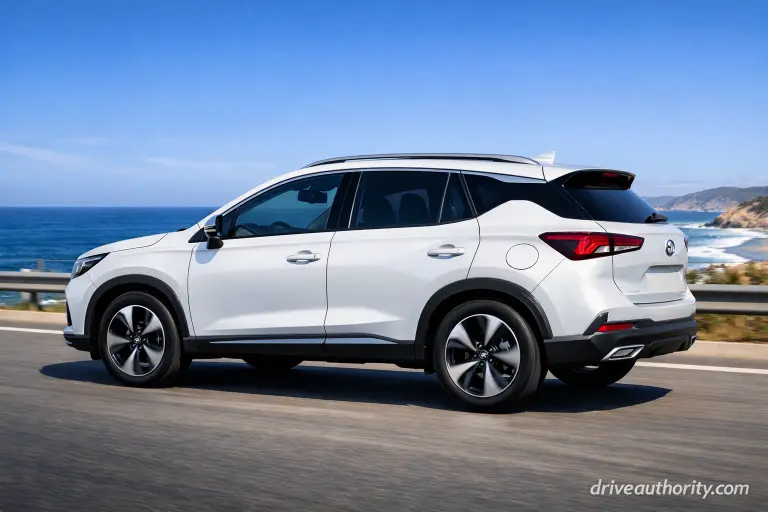
GAC Motor’s international lineup centers heavily on SUVs, reflecting both Chinese domestic preferences and global market trends. The core models include the GS3, a compact crossover competing with Honda HR-V and Hyundai Kona; the GS4, a mid-size family SUV; and the GS8, a three-row offering targeting Toyota Highlander and Honda Pilot buyers on tighter budgets.
The GS8 represents GAC’s flagship effort, featuring either turbocharged gasoline or hybrid powertrains depending on market. Build quality here reaches the brand’s highest standard, with soft-touch materials, dual-screen infotainment setups, and comprehensive driver assistance features as standard in higher trims.
GAC Motor Electric and Hybrid Options
The Emkoo (known as Empow in some markets) brings a more modern design language with coupe-like SUV styling. The M8 MPV serves markets where minivans remain popular, particularly Southeast Asia and the Middle East. Electric and plug-in hybrid variants exist under the Aion sub-brand in China, though international availability remains limited and market-specific.
Sedans like the GA4 and GA6 see minimal international distribution, as GAC recognizes that global buyers increasingly favor SUVs and crossovers over traditional three-box sedans.
Price Positioning (Global Context)
GAC Motor positions itself firmly in value territory, typically undercutting mainstream Japanese and Korean competitors by 15 to 30 percent while offering comparable or superior equipment levels. In GCC markets, a well-equipped GS8 might start around $28,000 to $32,000 USD equivalent, whereas a similarly equipped Hyundai Santa Fe or Nissan Pathfinder commands $38,000 to $45,000.
Southeast Asian pricing follows similar logic. In markets like the Philippines or Malaysia, GAC undercuts Mitsubishi and Mazda while matching or exceeding standard feature sets. This aggressive value proposition attracts first-time SUV buyers and those trading up from budget brands without stretching to premium pricing.
Regional Pricing Variations
Pricing strategies vary significantly by region. In some African markets, import duties and limited volume push GAC prices closer to mainstream competitors, eroding the value advantage. Any potential US or UK entry would likely require pricing well below $30,000 for compact models to overcome brand unfamiliarity and perception challenges.
Trim & Feature Hierarchy
GAC typically offers two to three trim levels per model internationally. Base trims include essentials: LED lighting, touchscreen infotainment with smartphone connectivity, cloth or synthetic leather seating, and basic driver assistance like lane keeping and adaptive cruise control on newer models.
Mid-level trims add genuine leather, panoramic sunroofs, upgraded sound systems, larger wheels, and more comprehensive safety suites. Top-spec variants approach premium territory with ventilated seats, ambient lighting, 360-degree cameras, and advanced driver assistance systems that, in testing, perform adequately though not class-leading.
The feature-per-dollar calculation remains GAC’s strongest selling point. Equipment that costs $3,000 to $5,000 extra on a Honda or Toyota often comes standard on equivalent GAC trims. This appeals strongly to tech-focused buyers and those who prioritize visible amenities over brand heritage.
GAC Motor Reviews — Real World Performance & Reliability
Driving Experience and Handling
GAC Motor vehicles deliver competent, comfortable transportation without exciting anyone. The ride quality trends toward soft, prioritizing bump absorption over sharp handling. This suits daily commuting and family duty well, particularly in markets with imperfect road surfaces. Body roll appears in spirited cornering, but most buyers in this segment prioritize comfort over dynamics.
Engine performance varies by market and model. Turbocharged 1.5-liter four-cylinders power most compact and mid-size offerings, producing adequate power for merging and highway passing though feeling strained when fully loaded.
GAC Motor Powertrain Performance
The 2.0-liter turbo in the GS8 and Emkoo provides genuinely strong acceleration, with smooth power delivery and respectable fuel economy given the performance level. Transmission refinement represents an area of inconsistency. Newer models with eight-speed automatics shift smoothly in normal driving, though occasionally hunting between gears in traffic. Some markets receive older six-speed units that feel less polished, with noticeable shift delays and occasional harshness during downshifts.
Noise and Refinement Levels
Noise, vibration, and harshness control has improved but still trails segment leaders. Wind noise becomes noticeable above 70 mph, and engine sounds intrude more than in equivalent Hondas or Toyotas. The GS8 flagship model demonstrates better NVH isolation with additional sound deadening, but even here, refinement doesn’t quite match established competitors.
Build & Mechanical Reliability
Early reliability data on GAC Motor vehicles shows mixed but improving patterns. Models from 2020 and newer demonstrate fewer reported issues than earlier generations, suggesting manufacturing and design maturation. However, the limited time these vehicles have spent in global markets means long-term reliability remains uncertain.
Common reported issues include electronic gremlins: infotainment system freezes, occasional sensor failures in driver assistance systems, and connectivity problems with smartphone integration. These typically resolve through software updates, though dealer service quality varies significantly by market and affects resolution speed.
GAC Motor Long-Term Durability
Mechanical durability appears adequate for the segment. Engines and transmissions show few catastrophic failure patterns in the first 60,000 to 80,000 kilometers, which represents the bulk of available international ownership data. Suspension components hold up reasonably well, though some markets report premature wear on bushings and control arm bearings, possibly related to road conditions or driving style rather than inherent design flaws.
The real reliability question remains unanswered: how do these vehicles perform at 150,000 kilometers and beyond? Japanese and Korean competitors have decades of data proving longevity. GAC Motor reviews consistently note that buyers must trust limited evidence and brand promises.
What Independent Owners Say
Owner forums and review aggregators across Middle Eastern and Southeast Asian markets reveal consistent themes. Positive feedback centers on value, features, and initial quality. Buyers appreciate getting leather seats, panoramic sunroofs, and advanced safety tech for thousands less than mainstream alternatives. First-year ownership satisfaction runs high.
GAC Motor Service Experience Concerns
Concerns emerge around service experience and long-term support. Dealer networks remain thin in many markets, forcing owners to travel significant distances for warranty work. Independent mechanics sometimes refuse GAC repairs due to unfamiliarity or parts sourcing challenges. This creates anxiety for owners in regions with limited dealer presence.
Resale value worries dominate ownership discussions. Early GAC owners in markets like the UAE and Saudi Arabia report depreciation rates 10 to 20 percent higher than Toyota or Hyundai equivalents. This dramatically affects total cost of ownership despite lower purchase prices. Smart buyers factor this into their financial calculations before committing.
Regional Brand Sentiment
Brand sentiment varies regionally. Southeast Asian buyers, accustomed to Chinese brands, show more acceptance. Middle Eastern buyers, with strong loyalty to Japanese reliability, remain more skeptical. In both regions, GAC fares better than lesser-known Chinese brands but still fights perception battles against established players.
Safety, Technology, and In-Car Features
Safety Ratings & Active Systems
GAC Motor’s safety record shows promise but lacks comprehensive independent verification in Western markets. Chinese New Car Assessment Program (C-NCAP) tests yield strong scores, with recent models achieving five-star ratings. However, C-NCAP historically used less stringent protocols than Euro NCAP or IIHS testing, making direct comparisons difficult.
Where independent testing exists, results vary. The GS8 achieved a respectable four-star rating in ASEAN NCAP testing, with good adult occupant protection but weaker scores for child safety and vulnerable road users. The structure proved solid in frontal and side impacts, though safety assist technologies scored lower due to less sophisticated sensor calibration.
GAC Motor Driver Assistance Features
Standard active safety equipment on newer GAC models includes automatic emergency braking, lane departure warning, lane keeping assist, adaptive cruise control, and blind spot monitoring on mid-level trims and above. These systems function adequately in clear conditions but show limitations in rain, low light, or complex traffic scenarios. False positives occur more frequently than with Toyota or Honda equivalents, occasionally causing driver frustration and system deactivation.
Airbag counts meet or exceed segment standards, with six to eight airbags depending on trim and market. Electronic stability control, traction control, and anti-lock brakes come standard across the range. The safety foundation exists; refinement and real-world crash data collection remain ongoing processes.
Infotainment & Connectivity
GAC Motor’s infotainment systems represent both a strength and weakness. The hardware impresses: large 10-to-12-inch touchscreens with sharp graphics, quick response times, and attractive interfaces. The software experience proves less consistent.
Wireless Apple CarPlay and Android Auto support appears on most newer models, providing the smartphone integration most buyers prioritize. The native system includes navigation, voice control, and vehicle settings management. However, menu structures sometimes confuse with illogical placement of common functions buried in submenus.
GAC Motor Tech Reliability
Voice recognition works adequately for basic commands but struggles with accents or complex requests. System stability varies. Some owners report occasional freezes requiring hard resets, though over-the-air software updates have addressed many early bugs. The larger concern involves long-term software support. Will GAC continue updating infotainment systems on five-year-old vehicles, or will aging software create obsolescence before mechanical wear justifies replacement?
Connectivity features include 4G connectivity in some markets, supporting remote vehicle monitoring and control through smartphone apps. Functionality includes remote start, lock/unlock, climate pre-conditioning, and vehicle location tracking. These features work when they work, but server reliability and app polish lag behind mainstream competitors.
Comfort & Interior Quality
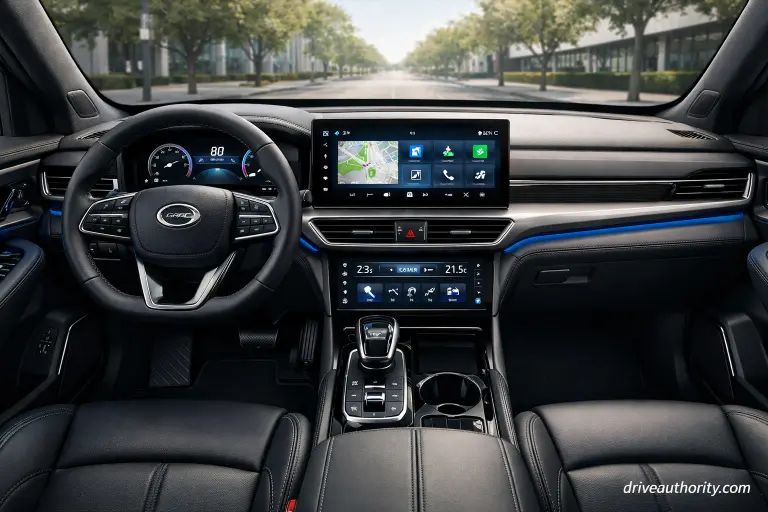
Interior quality represents one of GAC Motor’s stronger competitive advantages. Soft-touch materials cover most upper surfaces, with stitched synthetic leather on dashboards and door panels. Fit and finish has improved markedly, with consistent panel gaps and solid-feeling controls. The tactile experience approaches mainstream brands, though careful inspection reveals harder plastics in lower areas and slightly cheaper switchgear.
GAC Motor Seating and Space
Seating comfort rates well for most body types. Front seats offer good support with sufficient adjustment range. Second-row space in three-row models like the GS8 accommodates adults comfortably for moderate trips, with adequate legroom and headroom. Third rows follow segment norms: acceptable for children, cramped for adults on anything beyond short journeys.
Climate control systems cool and heat effectively, though fan noise at higher speeds exceeds premium competitors. Automatic climate control responds reasonably quickly to temperature changes and maintains set points adequately. Separate rear climate zones appear in higher trims, appreciated by family buyers.
Cabin storage solutions meet expectations without innovation. Cupholders, door pockets, and center console bins provide adequate space for daily items. Thoughtful touches like wireless charging pads and multiple USB ports show attention to modern buyer needs.
Real Ownership Costs: Fuel, Maintenance & Depreciation
Fuel Economy in Daily Use
GAC Motor’s claimed fuel economy figures follow NEDC or WLTP standards depending on market, which means real-world consumption typically runs 10 to 20 percent higher. The turbocharged 1.5-liter engines in models like the GS3 and GS4 achieve roughly 8 to 10 liters per 100 kilometers in mixed driving, equivalent to 23 to 29 mpg. Highway-focused driving improves to 7 to 8 liters per 100 km.
The 2.0-liter turbo in the GS8 consumes more as expected: 10 to 12 liters per 100 km in mixed conditions, roughly 19 to 23 mpg. This matches or slightly exceeds mainstream three-row SUV competitors, acceptable given the performance delivered.
GAC Motor Hybrid Efficiency
Hybrid variants available in select markets achieve significantly better economy, particularly in stop-and-go traffic, though real-world highway gains prove more modest. Driving style impacts fuel consumption significantly. Aggressive acceleration exploits turbo power but rapidly increases fuel use. Smooth, anticipatory driving yields economy closer to official claims. Payload and climate control use also affect consumption noticeably, as with any vehicle.
Premium fuel recommendations appear on some turbocharged models, adding to operating costs in markets where fuel prices vary significantly by octane rating. Using regular fuel doesn’t cause immediate damage but may reduce performance and efficiency.
Service & Maintenance Profiles
Scheduled maintenance intervals follow industry norms: oil changes every 10,000 kilometers or annually, with major services at 20,000 and 40,000-kilometer intervals. Official dealer service costs run moderate, typically 20 to 30 percent below Toyota or Honda equivalents for comparable work.
GAC Motor Parts Availability
Parts availability presents the primary ownership concern. In markets with established dealer networks, routine service parts remain readily available. However, less common components or body panels can require weeks or months to source, particularly in regions where GAC maintains limited presence. This becomes critical after accidents or for repairs requiring specialized parts.
Independent mechanic acceptance varies. In Southeast Asia, where Chinese brands proliferate, mechanics willingly service GAC vehicles. In the Middle East and other regions, some independent shops refuse GAC repairs due to unfamiliarity, diagnostic tool limitations, or concerns about parts sourcing. This forces owners toward potentially more expensive dealer service.
Warranty coverage provides some protection against unexpected repair costs, but post-warranty ownership represents a calculated risk. Without extensive long-term reliability data and uncertain parts availability, budgeting for potentially higher maintenance costs after 100,000 kilometers makes financial sense.
Warranty, Resale, and Longevity Signals
GAC Motor offers competitive warranty coverage: typically five years or 150,000 kilometers for the powertrain, with three to five years on other components depending on market. This matches or exceeds Japanese competitors and approaches Korean brands’ seven-year offerings. Warranty terms provide valuable protection during the highest-risk early ownership period.
However, warranty value depends entirely on dealer network accessibility. A comprehensive warranty becomes meaningless if the nearest authorized service center sits 300 kilometers away. Buyers must verify local dealer presence and service capabilities before purchase.
GAC Motor Resale Value Reality
Resale value remains GAC Motor’s Achilles heel. Limited brand recognition, uncertain long-term reliability, and thin used car market demand combine to create steep depreciation curves. Three-year-old GAC vehicles in markets with sufficient transaction data show residual values of 35 to 45 percent of original purchase price, compared to 55 to 65 percent for Toyota or Honda equivalents.
This depreciation reality fundamentally alters the value equation. A $30,000 GAC that loses $18,000 in value over three years costs more than a $40,000 Toyota that loses $16,000 over the same period. Smart buyers calculate total cost of ownership including depreciation, not just purchase price savings.
Longevity signals remain mixed. The limited time GAC vehicles have operated globally means few examples exceed 150,000 kilometers. Anecdotal evidence suggests adequate durability for moderate-mileage use, but high-mileage taxi or commercial applications show accelerated wear patterns on certain components. Whether this reflects design limitations or maintenance quality remains unclear.
GAC Motor Reviews — Regional Buyer Perspectives
US Market Considerations
GAC Motor’s planned US entry has been repeatedly delayed since initial announcements around 2019. The challenges facing Chinese automakers attempting US market entry extend beyond simple regulatory compliance. Federal safety standards (FMVSS) require extensive crash testing and validation. Emissions regulations demand expensive engine certifications. The absence of free trade agreements means 25 percent tariffs on light trucks and significant duties on passenger vehicles.
GAC Motor US Entry Challenges
Beyond regulatory barriers, GAC would face intense brand perception challenges. American buyers demonstrate strong loyalty to domestic, Japanese, and European brands. Chinese vehicles carry stigma regarding quality and safety, however unfounded for modern products. Building dealer networks, service infrastructure, and consumer trust requires massive capital investment with uncertain return timelines.
For American buyers curious about GAC, parallel import or grey market options exist but carry significant risks: no manufacturer warranty, questionable parts availability, and potential registration difficulties. Unless GAC commits seriously to US market entry with proper infrastructure, American buyers should view the brand as hypothetical rather than practical choice.
UK & European Perspectives
GAC Motor maintains minimal official presence in the UK and broader European Union as of early 2025. Test programs and feasibility studies have occurred, but full-scale market entry faces challenges similar to the US: stringent regulatory requirements, intense competition, and need for dealer network investment.
European buyers prioritize build quality, driving dynamics, and diesel efficiency in ways that don’t perfectly align with GAC’s current product strengths. The brand’s value-focused positioning works better in emerging markets than in mature European markets where buyers can access extensive used car inventory from established premium brands.
GAC Motor European Regulatory Hurdles
Type approval requirements for EU sale demand expensive compliance with Euro 7 emissions standards, crash safety regulations, and cybersecurity requirements. For a brand without guaranteed sales volume, this investment carries significant risk. UK buyers interested in GAC vehicles face even more limited options post-Brexit, with separate UK type approval requirements adding complexity. The handful of grey market imports that exist receive no manufacturer support, creating ownership challenges that overwhelm any purchase price savings.
GCC & MENA GAC Motor Reviews
The Gulf Cooperation Council and broader Middle East/North Africa region represents GAC Motor’s strongest international presence. Dealer networks operate in the UAE, Saudi Arabia, Oman, Kuwait, and Qatar, with varying degrees of establishment and service capability.
The value proposition resonates strongly here. Regional buyers appreciate SUVs, technology features, and competitive pricing. The GS8 in particular attracts families seeking three-row capacity without premium brand pricing.
GAC Motor Climate Performance
Climate control performance matters enormously in 50-degree Celsius summer heat, and GAC’s systems generally cope adequately though running constantly and consuming significant fuel. However, the harsh climate stresses vehicles aggressively. Early feedback suggests GAC’s cooling systems, batteries, and interior materials hold up reasonably well but show accelerated aging compared to Japanese competitors. Paint oxidation, dashboard cracking, and rubber seal deterioration appear slightly earlier than owners might expect from brands like Toyota or Honda.
Service experiences vary significantly by emirate or country. Dubai and Riyadh offer reasonable dealer accessibility, but remote areas suffer long travel distances for warranty work. Parts availability remains adequate for routine maintenance but problematic for body panels or specialized components. Owners report weeks or months waiting for accident repair parts.
The secondary market reveals the depreciation reality starkly. Three-year-old GAC vehicles sell at 40 to 50 percent of original price, while Toyota Fortuners or Honda Pilots retain 60 to 70 percent. Buyers prioritizing total cost of ownership must factor this significantly.
Southeast Asia & Africa GAC Motor Reviews
Southeast Asian markets including the Philippines, Malaysia, Thailand, and Indonesia see more established GAC presence. Brand acceptance runs higher here, with Chinese vehicles normalized through brands like Geely, Chery, and BYD. GAC benefits from this general acceptance while positioning slightly upmarket from budget Chinese offerings.
GAC Motor Value in Emerging Markets
Price competitiveness strongly favors GAC in these markets. Local assembly or favorable import arrangements help GAC undercut Japanese and Korean competitors significantly. For budget-conscious family buyers, the feature-per-dollar equation often outweighs brand heritage concerns.
Parts availability and independent service networks function better in Southeast Asia. Mechanics familiar with Chinese vehicles readily service GAC models. Aftermarket parts, while not abundant, exist for common maintenance items. This reduces long-term ownership anxiety compared to markets with minimal Chinese brand presence.
African markets show similar patterns where GAC maintains presence. South Africa, Nigeria, Kenya, and North African countries see varying GAC penetration. The brand’s affordability appeals in price-sensitive markets, though dealer networks remain thin outside major cities. Parts sourcing challenges persist, though regional supply chains for Chinese vehicles slowly improve.
Resale values in both regions follow global patterns: significantly weaker than Japanese competitors but acceptable for buyers who factor this into purchase decisions. The key remains understanding total cost of ownership rather than focusing solely on attractive purchase prices.
GAC Motor Reviews vs Competitors
GAC Motor vs Toyota and Honda
The Toyota and Honda comparison represents GAC Motor’s most challenging competitive battle. These Japanese brands have spent decades building reputation for reliability, holding resale value better than virtually any competitors, and delivering predictable ownership experiences.
GAC’s value proposition centers on offering 70 to 80 percent of Toyota/Honda quality and reliability for 60 to 70 percent of the price, with superior standard equipment. A GAC GS8 undercuts a Toyota Highlander by $10,000 to $15,000 while offering comparable interior space, more standard features, and genuinely competitive performance.
Reliability Gap Analysis
However, the reliability gap matters more than GAC would prefer. Toyota and Honda engines routinely exceed 300,000 kilometers with routine maintenance. GAC has no comparable track record. This uncertainty, combined with steeper depreciation, means the apparent purchase price advantage evaporates when calculating total five-year ownership costs including resale.
For buyers keeping vehicles long-term or driving high annual mileage, Toyota and Honda justify premium pricing through proven durability and lower depreciation. For buyers who prioritize features, lease rather than buy, or replace vehicles frequently, GAC’s value equation strengthens considerably.
GAC Motor vs Hyundai and Kia
Korean brands Hyundai and Kia represent closer competitive alignment with GAC Motor. Both offered value-focused products before climbing toward mainstream quality, both emphasized warranties to overcome skepticism, and both invested heavily in design and features to differentiate from Japanese competitors.
GAC currently sits roughly where Hyundai/Kia positioned themselves 10 to 15 years ago: decent products at attractive prices, fighting perception battles, and trying to prove long-term reliability. The difference lies in market maturity. Korean brands have largely won their reliability battle and now command near-Japanese pricing. GAC still trades primarily on value and features.
Warranty and Value Comparison
Direct product comparisons favor Korean brands in refinement, driving dynamics, and proven longevity. A Hyundai Santa Fe drives more precisely than a GAC GS8, feels more solid, and benefits from extensive US and European market validation. However, GAC typically undercuts Hyundai/Kia by 15 to 25 percent while offering similar or superior standard equipment.
Warranty comparison shows interesting contrasts. Hyundai/Kia’s seven-year/100,000-mile powertrain warranty exceeds most competitors. GAC offers competitive five-year/150,000-kilometer coverage but with less extensive dealer networks to honor it. The warranty becomes less valuable if accessing service requires extensive travel.
For value-focused buyers in markets where both brands maintain presence, Hyundai/Kia represent safer choices with slightly higher purchase prices. GAC appeals to buyers prioritizing maximum features per dollar and willing to accept slightly higher risk regarding long-term reliability and resale value.
GAC Motor Reviews vs Chinese Peers (BYD, Geely, Chery)
Among Chinese automakers, GAC Motor positions slightly upmarket from brands like Chery and Changan while lacking BYD’s electric vehicle leadership or Geely’s global acquisition strategy (Volvo, Lotus, Polestar, etc.).
Electric Vehicle Technology Comparison
BYD’s dominance in electric and plug-in hybrid technology overshadows GAC’s more conservative powertrain approach. For buyers prioritizing electrification, BYD offers more options, more advanced technology, and stronger ecosystem integration. However, GAC’s traditional powertrains may appeal to buyers skeptical of EV charging infrastructure or battery longevity in their markets.
Geely benefits from technology transfer from Volvo and other acquisitions, visible in interior quality, safety systems, and overall refinement. Geely vehicles often feel more European in character than GAC’s offerings. However, GAC matches or exceeds Geely in value proposition, typically offering more standard equipment at comparable price points.
Chery and other budget-focused Chinese brands undercut GAC pricing significantly but with noticeably lower quality materials, less refined driving experiences, and weaker dealer networks. GAC occupies a sweet spot: better than budget Chinese brands while remaining significantly cheaper than established Japanese/Korean competitors.
Comparison Table: GAC Motor Reviews vs Key Competitors
| Factor | GAC Motor | Toyota/Honda | Hyundai/Kia | Chinese Peers |
|---|---|---|---|---|
| Purchase Price | $$ | $$$$ | $$$ | $ – $$ |
| Standard Features | Excellent | Good | Very Good | Good – Excellent |
| Proven Reliability | Limited Data | Excellent | Very Good | Limited Data |
| Resale Value | Weak | Excellent | Good | Weak |
| Dealer Network | Variable | Excellent | Very Good | Variable |
| Warranty Coverage | Good | Good | Excellent | Good |
| Refinement | Good | Excellent | Excellent | Fair – Good |
Pros & Cons (Quick Decision Guide)
Pros:
GAC Motor delivers exceptional value on paper, with standard equipment lists that embarrass mainstream competitors at similar price points. Panoramic sunroofs, leather seating, large touchscreens, and comprehensive driver assistance systems come standard where others charge thousands extra. For feature-focused buyers on limited budgets, this value proposition proves compelling.
Build quality has improved significantly, with recent models showing tight panel gaps, solid-feeling construction, and interior materials that approach mainstream standards. The gap between GAC and established brands narrows with each model generation, suggesting trajectory toward genuine competitiveness.
GAC Motor Value Advantages
Competitive pricing creates immediate appeal. Depending on market, GAC vehicles cost 15 to 30 percent less than equivalent Japanese or Korean competitors while offering comparable or superior equipment. This pricing advantage opens SUV ownership to buyers who might otherwise afford only compact sedans.
The emerging global footprint means buyers in an expanding range of markets can actually purchase and service GAC vehicles. Unlike Chinese brands with minimal international presence, GAC has committed to building service networks in key regions, though execution remains inconsistent.
Modern design language, particularly in recent models like the Emkoo, demonstrates GAC’s ability to create visually appealing vehicles that don’t immediately signal budget-focused positioning. Interior aesthetics and technology interfaces have reached competency, if not excellence.
Cons:
Service network inconsistency represents the most significant practical concern. Dealer presence varies dramatically by market, with some regions well-served while others lack even basic service capability. This creates real ownership challenges when problems arise.
GAC Motor Reliability Concerns
Limited long-term reliability data forces buyers to accept uncertainty. Unlike Toyota or Honda, where decades of evidence predict reliable 300,000-kilometer lifespans, GAC Motor reviews consistently show the brand asks buyers to trust improving quality without extensive validation. Early signs prove promising but incomplete.
Depreciation rates significantly exceed mainstream competitors, creating total cost of ownership calculations that undermine apparent purchase price savings. A vehicle losing 60 percent of value in three years costs more than one losing 40 percent, regardless of initial price difference.
Parts availability concerns extend beyond routine maintenance. Accident repairs or replacement of failed components can require weeks or months in markets with limited GAC infrastructure. This creates both inconvenience and potential extended vehicle downtime.
Brand Perception Challenges
Brand perception battles continue, particularly in Western markets and among buyers prioritizing established reputations. Overcoming decades of “Chinese quality” skepticism requires time and consistent product delivery that GAC is working toward but hasn’t fully achieved.
Refinement gaps persist compared to mainstream competitors. Wind noise, road noise, and powertrain intrusion exceed Honda or Toyota levels. For buyers prioritizing serenity and isolation, this matters significantly.
Buyer Recommendations (Actionable Advice)
Best GAC Motor Models for Each Buyer Type
Daily Commuter / Value Seeker: The GS4 represents the sweet spot for buyers prioritizing efficient, comfortable transportation with maximum features per dollar. Adequate performance, good fuel economy, comprehensive equipment, and manageable size suit urban and suburban commuting well. Avoid base trims if possible; mid-level equipment dramatically improves ownership satisfaction.
GAC Motor Family Vehicle Options
Family SUV Needs: The GS8 delivers three-row capability at prices that undercut mainstream competitors significantly. Families needing space for children, cargo, and occasional adult passengers in the third row will appreciate the value proposition. However, consider carefully whether your local dealer network supports your area adequately for long-term ownership peace of mind. Learn more about choosing the right family SUV.
Tech Lovers / EV Interest: If available in your market, GAC’s hybrid or plug-in hybrid variants offer modern powertrain technology at accessible pricing. The infotainment systems, while imperfect, provide most connectivity features buyers actually use. However, for pure EV needs, BYD likely offers superior technology and charging ecosystem compared to GAC’s limited electric offerings.
When GAC Motor Reviews Support Purchase
GAC Motor makes genuine sense in specific scenarios. Buyers in markets with established dealer networks, who plan to keep vehicles for moderate terms (three to five years), who prioritize features and space over brand prestige, and who can absorb steeper depreciation should consider GAC seriously.
Lease situations favor GAC particularly well. When someone else bears the depreciation risk, GAC’s excellent equipment levels and adequate reliability for moderate terms create genuine value. This applies primarily in markets where GAC leasing programs exist with competitive rates.
Low-Mileage Use Cases
Second-vehicle scenarios or low-mileage use cases reduce reliability uncertainty. A GAC serving as a family hauler driven 10,000 kilometers annually faces lower failure risk than one serving as a long-distance commuter at 40,000 kilometers annually.
Buyers in Southeast Asia, GCC markets, or other regions where GAC maintains stronger presence face less ownership risk. Dealer accessibility, parts availability, and mechanic familiarity improve ownership experience dramatically compared to markets where GAC barely exists.
Price-sensitive buyers unwilling or unable to stretch to mainstream brand pricing find genuine transportation value in GAC products. The vehicles deliver competent, comfortable mobility with modern features at prices that open ownership to broader audiences.
When to Consider Alternatives to GAC Motor
Long-term ownership plans lasting beyond five years favor established brands despite higher purchase prices. Toyota and Honda’s proven 300,000-kilometer durability, combined with slower depreciation, creates better total cost of ownership for buyers keeping vehicles until mechanical end-of-life.
High-Mileage Considerations
High-mileage drivers should factor greater uncertainty into GAC ownership calculations. Covering 40,000 kilometers annually reaches typical Chinese market data limits within two years, entering unknown reliability territory. Established brands offer greater confidence for high-mileage scenarios.
Buyers prioritizing resale value must honestly assess whether GAC’s depreciation patterns align with their financial planning. If strong resale value matters for trade-in or future sale, mainstream competitors justify higher purchase prices through retained value.
Remote or rural buyers lacking nearby dealer access should probably avoid GAC entirely. The warranty becomes meaningless if service requires 300-kilometer round trips. Parts availability issues compound this challenge, creating potential for extended downtime when repairs become necessary.
Premium Experience Seekers
Buyers seeking ultimate refinement, driving engagement, or prestige won’t find satisfaction in GAC products regardless of value proposition. If the journey matters as much as the destination, or if brand perception significantly impacts ownership satisfaction, spending more on established premium or near-premium competitors makes sense.
Frequently Asked Questions
What are the most reliable GAC Motor models according to reviews?
Current data suggests the GS8 demonstrates the most consistent reliability among GAC’s international lineup, likely benefiting from flagship status and more comprehensive quality control. The GS4 shows adequate reliability for moderate-mileage use, with fewer reported issues than smaller or older models. However, true long-term reliability assessment requires more time and accumulated mileage than currently exists in international markets. Early ownership (first 60,000 kilometers) appears generally trouble-free, with electronic issues more common than mechanical failures. GAC Motor reviews from Southeast Asia and GCC markets provide the most extensive real-world data available.
Is GAC Motor available in my region?
GAC Motor maintains varying presence across global markets. The Middle East and North Africa, particularly GCC nations like UAE, Saudi Arabia, and Qatar, offer the most established networks. Southeast Asian markets including the Philippines, Malaysia, and Thailand provide decent availability. Select African markets have limited presence. The UK and European Union lack significant official distribution networks as of early 2025. US availability remains hypothetical despite years of announced intentions. Check the official GAC Motor website for your region or search for local dealers; absence of established dealers strongly suggests avoiding GAC ownership in your area.
How do GAC Motor reviews compare to Toyota, Honda, and Hyundai?
GAC Motor offers 60 to 70 percent of mainstream competitor pricing with 70 to 80 percent of the quality, reliability, and refinement, but with superior standard equipment levels. Toyota and Honda deliver proven longevity exceeding 300,000 kilometers and maintain superior resale value, justifying higher purchase prices for long-term or high-mileage ownership. Hyundai and Kia sit between GAC and Japanese brands in pricing, quality, and reliability, offering seven-year warranties backed by extensive service networks. GAC’s value proposition works best for moderate-term ownership (three to five years), lower annual mileage, and markets with established dealer presence where parts availability supports ownership. Independent GAC Motor reviews consistently highlight this value-versus-longevity tradeoff.
Are GAC Motor parts expensive or hard to find?
Parts costs for routine maintenance run moderate to low, typically 20 to 30 percent below Toyota or Honda equivalents. Oil filters, brake pads, and other wear items remain readily available in markets where GAC maintains dealer presence. However, specialized components, body panels, and complex mechanical parts can require extended wait times, sometimes weeks or months in regions with limited GAC infrastructure. Independent mechanics in markets with multiple Chinese brands generally service GAC vehicles willingly and can source aftermarket alternatives for some components. The parts challenge grows significantly in markets where GAC barely exists, making ownership impractical without nearby dealer support. This concern appears frequently in GAC Motor reviews from regions with limited dealer networks.
Do GAC Motor vehicles hold their value?
No, GAC Motor vehicles depreciate significantly faster than mainstream Japanese and Korean competitors. Three-year residual values typically range from 35 to 45 percent of original purchase price, compared to 55 to 65 percent for Toyota or Honda equivalents. This steep depreciation fundamentally impacts total cost of ownership calculations. A GAC purchased for $30,000 and worth $12,000 after three years loses $18,000, while a $40,000 Toyota worth $24,000 loses only $16,000. Smart buyers must calculate total ownership costs including depreciation rather than focusing solely on attractive purchase prices. Lease scenarios where someone else bears depreciation risk significantly improve GAC’s value equation. GAC Motor reviews consistently identify depreciation as the brand’s biggest ownership challenge.
Is GAC Motor good for long-term ownership?
Long-term ownership remains uncertain due to limited accumulated mileage data in international markets. Current evidence suggests adequate durability for moderate-mileage use through 100,000 kilometers, with electronic issues more common than mechanical failures. However, GAC vehicles lack the extensive 300,000-kilometer-plus track record that makes Toyota and Honda safe long-term bets. Parts availability concerns compound long-term ownership risk, particularly in markets with thin dealer networks. Buyers planning to keep vehicles beyond five years or drive high annual mileage should probably choose mainstream competitors with proven longevity despite higher purchase prices. GAC works better for moderate-term ownership (three to five years) where initial quality matters more than ultimate durability. Most GAC Motor reviews recommend limiting ownership to the warranty period for maximum peace of mind.
What do GAC Motor reviews say about fuel economy?
Real-world fuel economy typically runs 10 to 20 percent higher than official NEDC or WLTP figures. The turbocharged 1.5-liter engines achieve roughly 23 to 29 mpg (8 to 10 L/100km) in mixed driving, while the 2.0-liter turbo in the GS8 manages 19 to 23 mpg (10 to 12 L/100km). Hybrid variants offer significantly better economy in city driving. Fuel efficiency matches mainstream competitors, making it neither a strength nor weakness in GAC Motor reviews. Driving style impacts consumption significantly, with smooth acceleration yielding results closer to official claims.
Are GAC Motor reviews positive about safety?
GAC Motor reviews show improving safety performance, with recent models achieving strong C-NCAP scores and respectable ASEAN NCAP ratings where tested. Standard active safety features include automatic emergency braking, lane keeping assist, and adaptive cruise control on most trims. However, comprehensive Euro NCAP or IIHS testing remains limited, making direct comparisons to Western-market vehicles difficult. The safety foundation appears solid, though sensor calibration and system refinement trail established competitors. Airbag counts and structural integrity meet segment standards according to available GAC Motor reviews and testing data.
What warranty does GAC Motor offer?
GAC Motor typically offers five years or 150,000 kilometers powertrain warranty, with three to five years coverage on other components depending on market. This matches or exceeds Japanese competitors and approaches Korean brands’ seven-year offerings. However, warranty value depends entirely on dealer network accessibility. A comprehensive warranty becomes meaningless if the nearest authorized service center sits 300 kilometers away. Buyers should verify local dealer presence and service capabilities before purchase. GAC Motor reviews consistently emphasize checking dealer accessibility before committing to purchase.
Conclusion: The Global Buyer Verdict
GAC Motor represents an interesting proposition in the evolving global automotive landscape. The brand delivers genuine value through aggressive pricing, generous standard equipment, and improving quality that suggests positive trajectory. For buyers in the right circumstances and markets, GAC vehicles provide competent, comfortable transportation with modern features at prices that expand accessibility.
However, honest GAC Motor reviews must acknowledge significant limitations. Service network inconsistency creates real ownership challenges in markets where dealer presence remains thin. Limited long-term reliability data forces buyers to accept uncertainty that established competitors have long since resolved. Most significantly, steep depreciation rates undermine apparent purchase price advantages when calculating total cost of ownership including resale value.
Making the Right GAC Motor Decision
A smart GAC buyer understands these tradeoffs clearly. In markets with established dealer networks and reliable parts availability, ownership risks are far easier to manage. Instead of keeping a vehicle until the mechanical end of its life, they typically plan for moderate-term ownership of three to five years. Feature depth and interior space matter more to them than brand prestige, and they’re prepared to absorb—or strategically mitigate—depreciation. Above all, they accept a calculated level of risk in exchange for meaningful upfront savings.
For buyers meeting these criteria, GAC Motor deserves serious consideration alongside mainstream alternatives. The value proposition proves genuine for specific use cases. However, buyers prioritizing proven longevity, strong resale value, extensive dealer networks, or ultimate refinement will find that mainstream Japanese and Korean competitors justify higher purchase prices through measurably superior total cost of ownership.
Final GAC Motor Reviews Verdict
The final answer to whether GAC Motor makes sense depends entirely on your specific situation, market, priorities, and risk tolerance. This brand offers neither the safe choice of Toyota nor the bargain-basement gamble of unknown Chinese manufacturers. Instead, GAC occupies interesting middle ground: improving products at attractive prices, carrying more risk than established brands but less than budget alternatives.
Make your GAC Motor decision with clear understanding of both opportunities and limitations, and you’ll likely achieve satisfaction. Approach blindly chasing low purchase prices without considering the complete ownership picture, and disappointment becomes probable. Research your local dealer network, calculate total cost of ownership including depreciation, honestly assess your ownership timeline and mileage needs, and make your decision based on complete information rather than marketing promises.
For more comprehensive automotive reviews and buying guides for SUVs and family vehicles, explore trusted automotive journalism sources. Consider reading Chinese automotive brand comparisons to contextualize GAC Motor reviews within the broader market. Smart buyers approach GAC Motor reviews as one data point among many, building complete pictures before committing tens of thousands of dollars to any vehicle purchase.
That’s how globally savvy buyers approach GAC Motor reviews and make choices they won’t regret.