The risks of buying a cheap electric car in 2026 are real, specific, and rarely mentioned in the showroom. Budget EVs have never been more tempting — prices are falling, government incentives are generous, and the range numbers on paper look increasingly competitive. But the sticker price is only the beginning of the story. Between accelerated battery degradation, software abandonment, weak resale values, and hidden ownership costs, a cheap electric car can quietly cost far more than a more expensive one over a five- or ten-year ownership window. This guide breaks down every major risk category, puts real numbers against them, and tells you exactly what to check before signing anything.
Whether you’re looking at a new sub-$25,000 EV, a used electric car with high mileage, or an entry-level import, the framework here applies. For context on which affordable EVs are genuinely worth considering, see our affordable electric cars 2026 guide — it covers the smart buys alongside the traps this article focuses on.
Jump To Section
- What Counts as a “Cheap Electric Car” in 2026?
- Risk #1 – Accelerated Battery Degradation
- Risk #2 – Hidden Long-Term Ownership Costs
- Risk #3 – Lower Build Quality & Component Durability
- Risk #4 – Safety Compromises & Tech Limitations
- Risk #5 – Software & OTA Support Uncertainty
- Risk #6 – Rapid Depreciation & Weak Resale Value
- Risk #7 – Warranty Limitations & Manufacturer Stability
- Cheap EV vs Mid-Range EV: Cost Simulation
- Who Should (and Shouldn’t) Buy a Cheap EV?
- How to Reduce the Risks: 2026 Buyer Checklist
- FAQs
- Final Verdict
What Counts as a “Cheap Electric Car” in 2026?
Before examining the risks of buying a cheap electric car, it’s worth defining what “cheap” actually means in 2026’s market. The segment has expanded significantly — and not all budget EVs carry the same risk profile.
New Budget EVs Under $25,000
This category includes government-subsidized domestic models, Chinese imports in markets where they are legally available, and entry-level offerings from mainstream brands stripping features to hit a price point. These cars are brand new, carry manufacturer warranties, and benefit from current battery chemistry — but they often make compromises in thermal management, ADAS capability, build material quality, and software support depth that only become apparent after the first two or three years of ownership.
Used EVs With High Battery Mileage
A three- to five-year-old EV priced under $20,000 is almost always cheap for a reason. First-generation NMC battery packs degrade faster than current LFP chemistry, and a used EV that has covered 60,000–80,000 miles may be operating at 75–80% of its original range. Without a battery health certificate, you are buying blind. The real-world EV battery lifespan data makes clear that chemistry, climate, and charging habits determine degradation far more than age alone.
Low-Spec Base Trims With Reduced Range
Several mainstream manufacturers offer base-trim EVs with smaller battery packs — 40–45 kWh versus 60–75 kWh in higher trims — specifically to advertise a lower entry price. These models carry legitimate brand support and solid build quality, but their reduced range makes them functionally limiting for anything beyond urban commuting, and their resale value suffers accordingly.
| Category | Typical Price Range | Primary Risk | Warranty Status |
|---|---|---|---|
| New budget EV (<$25k) | $18,000–$24,999 | Build quality, software support | Full manufacturer warranty |
| Used EV (3–5 yrs old) | $12,000–$22,000 | Battery degradation, no OTA updates | Likely expired or partial |
| Base trim / short range | $22,000–$27,000 | Range limitation, resale value | Full manufacturer warranty |
| Entry-level import | $15,000–$23,000 | Parts availability, brand stability | Varies by brand/market |
Risk #1 – Accelerated Battery Degradation
Of all the risks of buying a cheap electric car, battery degradation is the one with the most direct financial consequence. It affects range, daily usability, resale value, and — in the worst case — triggers a battery replacement that can cost more than the car is worth.
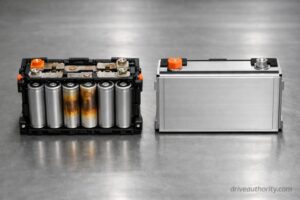
LFP vs NMC Battery Chemistry in Budget EVs
The battery chemistry fitted to a budget EV has a larger impact on long-term ownership than almost any other specification. LFP (Lithium Iron Phosphate) chemistry — now standard in most BYD models and increasingly common across Chinese EVs — degrades slowly, tolerates 100% charge daily without penalty, and performs well in heat. NMC (Nickel Manganese Cobalt) chemistry, which dominates older and some current budget EVs, degrades faster under aggressive charging cycles and in high-ambient temperatures. A budget EV fitted with NMC chemistry and no active thermal management is a long-term reliability risk that its sticker price does not reflect. See also: how BYD electric cars hold up after 3 years for a real-world chemistry comparison.
Thermal Management Shortcuts in Cheap Models
Active liquid cooling for the battery pack adds cost — typically $800–$1,500 to the bill of materials. Many cheap EVs cut this entirely, relying on passive air cooling instead. The result is accelerated degradation in hot climates, reduced fast-charging performance, and higher cell-level stress during repeated charge cycles. This shortcut is invisible at purchase and devastating at year four or five in warm-weather markets.
Real-World Range Loss After 5–8 Years
Real-world degradation data from budget EVs with passive cooling and NMC chemistry consistently shows capacity falling to 75–78% of original within 80,000 miles. On a car that started with 180 miles of real-world range, that means approximately 135–140 miles at year five — before accounting for seasonal variation, which can reduce usable range by a further 20–25% in cold weather. For a vehicle purchased primarily for its affordability, that range compression fundamentally changes the ownership proposition.
The Replacement Cost vs Vehicle Value Problem
A battery replacement for a budget EV typically costs $5,000–$9,000 depending on pack size and brand. On a car that cost $20,000 new and is now worth $9,000–$11,000 on the used market, that repair bill exceeds the vehicle’s value. This is the core financial trap of cheap EV ownership — the very thing that makes the car cheap (smaller, less sophisticated battery) is also what makes the long-term cost catastrophic if replacement becomes necessary.
Battery Warning Signs to Check Before Buying
- No active liquid thermal management — check the spec sheet explicitly
- NMC chemistry in a model over 3 years old with 50,000+ miles
- Battery warranty shorter than 8 years / 100,000 miles
- No third-party battery health certificate available for used purchases
- Capacity at or below 80% — many manufacturers can replace under warranty at this threshold; verify coverage before buying used
Risk #2 – Hidden Long-Term Ownership Costs
The risks of buying a cheap electric car extend well beyond the battery. A cluster of secondary costs — charging infrastructure, insurance, and software subscriptions — can add thousands to the total ownership bill in ways that a sticker price comparison completely obscures.
Charging Infrastructure Limitations
Budget EVs frequently use slower onboard AC chargers (7.4 kW vs 11 kW in mid-range models) and slower DC fast-charge rates (50 kW vs 100–150 kW). This means longer charging stops on every long journey and higher per-kWh costs on networks that charge by time rather than energy delivered. For buyers without home charging capability, the cost penalty is significant. The real cost of public EV charging makes clear that DC fast charging regularly runs 3–4x the cost of home electricity — a gap that widens when your car charges slowly. If you’re setting up home charging, our home EV charging setup guide covers installation costs and what to budget.
Insurance Premium Differences for Budget EVs
Insurance costs for budget EVs are counterintuitively high relative to their purchase price. Repair costs for EV-specific components — battery packs, power electronics, structural aluminum — do not scale down with the vehicle’s price. A $20,000 budget EV can carry repair bills comparable to a $40,000 mainstream EV after a moderate collision, which insurers price accordingly. Some budget EV models from newer or smaller brands also attract higher premiums due to limited repair network data and parts availability uncertainty.
Software Paywalls & Subscription Features (2026 Trend)
An accelerating trend across budget EVs — particularly from newer Chinese and European brands — is the migration of features from hardware to software subscriptions. Heated seats, extended range modes, enhanced navigation, and advanced driver assistance features are increasingly activated by subscription rather than included at purchase. On a cheap EV, these subscriptions can add $200–$600 annually to ownership cost while delivering features that were standard equipment on equivalent combustion cars a decade ago.
| Cost Category | Cheap EV Estimate (5 yr) | Mid-Range EV Estimate (5 yr) |
|---|---|---|
| Home charger installation | $800–$1,200 | $800–$1,200 |
| Public charging (no home charger) | $3,500–$5,500 | $2,800–$4,200 |
| Insurance premium (above petrol baseline) | $400–$900/yr | $200–$500/yr |
| Software subscriptions | $0–$2,500 | $0–$1,500 |
| Maintenance (brakes, tires, fluid) | $1,800–$3,200 | $1,500–$2,800 |
Risk #3 – Lower Build Quality & Component Durability
The risks of buying a cheap electric car include physical build quality compromises that are easy to miss on a brief test drive but compound significantly over years of ownership.

Suspension & Brake Wear From Heavy Battery Packs
Electric vehicles are heavier than equivalent combustion cars — often by 300–500 kg — due to their battery packs. Budget EVs frequently use suspension components engineered for lighter conventional vehicles, creating accelerated wear in ball joints, control arm bushings, and shock absorbers. Brake wear is lower than combustion cars due to regenerative braking, but tire wear is higher due to weight and instant torque delivery. Budget models that have not re-engineered their chassis geometry for EV weight distribution show measurably higher suspension wear rates in long-term owner surveys.
Interior Material Degradation in Budget Models
Hard plastics, thin seat bolsters, and cost-reduced door panel materials age poorly. In a cheap EV you plan to keep 8–10 years, interior degradation becomes a real quality-of-life issue and a resale value suppressor. This matters more in an EV than a combustion car because there is no engine or exhaust noise to mask cabin resonance — interior quality is perceptually more prominent in the ownership experience.
Electronic Module Failure Rates
Budget EVs use lower-specification electronic control units, infotainment processors, and sensor arrays. Failure rates for these components in the 4–7 year ownership window are meaningfully higher than in premium-segment EVs. Out-of-warranty electronic module replacements — onboard chargers, DC/DC converters, BMS controllers — regularly cost $800–$2,500 per event and are the leading cause of unexpected repair bills in the cheap EV segment. Our guide to common problems in Chinese electric cars documents the specific failure patterns emerging from the largest segment of the budget EV market.
Risk #4 – Safety Compromises & Tech Limitations
Safety is an area where the risks of buying a cheap electric car are most ethically significant. Cost-cutting at the bottom of the market sometimes manifests in ways that affect occupant protection — not just convenience features.
ADAS Feature Gaps in Low-Cost EVs
Advanced driver assistance systems — automatic emergency braking, lane-keep assist, blind-spot monitoring, adaptive cruise control — are increasingly expected as standard equipment. Budget EVs in the sub-$25,000 segment frequently omit or significantly downgrade these systems. A cheap EV without functional AEB at low speeds or a reliable lane-departure warning is not just less convenient — it is statistically less safe in urban environments where these systems have the highest impact. For a full picture of how Chinese EVs perform in independent crash assessments, see Chinese car crash test results.
Crash Test Ratings vs Structural Cost-Cutting
EV structural integrity is closely linked to battery pack integration — a well-engineered EV uses the battery as a structural element, improving rigidity. Budget EVs that use adapted combustion-car platforms rather than purpose-built EV architectures often achieve lower crash test scores and provide less effective side-impact protection. NCAP and IIHS ratings vary significantly within the budget segment, and checking them before purchase is non-negotiable.
Outdated Battery Protection Systems
Battery management systems in older or cheaper EVs may lack the cell-level monitoring resolution and thermal runaway detection speed of current-generation systems. This is a low-probability but high-consequence risk. It is also one that is entirely invisible to buyers without access to engineering documentation — making warranty coverage and brand reputation the practical proxies for safety assurance in this category.
| Safety Feature | Cheap EV (<$25k) | Mid-Range EV ($35–$50k) |
|---|---|---|
| Automatic Emergency Braking | Basic or optional | Standard, multi-scenario |
| Blind Spot Monitoring | Often absent | Standard |
| Euro NCAP / IIHS Rating | 3–4 stars typical | 4–5 stars typical |
| Battery thermal runaway protection | Passive / basic BMS | Active multi-layer system |
| Structural platform | Often adapted ICE platform | Dedicated EV architecture |
Risk #5 – Software & OTA Support Uncertainty
Software risk is one of the least discussed risks of buying a cheap electric car, yet it has grown into a primary ownership concern in 2026. Unlike mechanical components, software support is entirely at the manufacturer’s discretion — and budget brands are the most vulnerable to support discontinuation.
Over-the-Air Updates Ending Early
Several smaller EV brands that entered Western markets between 2020 and 2023 have already discontinued OTA update pipelines for their early models, effectively freezing those vehicles at their launch software state. Without updates, known bugs go unpatched, efficiency improvements developed post-launch are unavailable, and — in some cases — safety-adjacent features like regenerative braking tuning and battery charging curves cannot be optimized. This is not a theoretical risk. It has already happened to real owners. The electric cars to avoid in 2026 flags specific models where software support has been discontinued or is uncertain.
Infotainment System Obsolescence
Budget EVs ship with lower-specification infotainment processors that cannot handle the computational demands of future software versions. By year four or five, the system may lag, fail to support updated mapping APIs, or become incompatible with smartphone integration standards. Unlike a phone where you simply buy a new device, infotainment hardware in a car is typically fixed for the vehicle’s life unless the manufacturer offers a costly hardware upgrade program.
Cybersecurity Risks in Budget Platforms
Connected vehicle cybersecurity requires ongoing patching. A cheap EV from a brand that has reduced or ended software support is a vehicle with known, unpatched vulnerabilities. As vehicles become more connected — and as over-the-air attack surfaces expand — this transitions from a theoretical concern to a practical ownership risk, particularly for vehicles used in commercial or fleet contexts.
Risk #6 – Rapid Depreciation & Weak Resale Value
Depreciation is arguably the single largest financial risk of buying a cheap electric car — and the one most buyers underestimate at the point of purchase.
Market Oversupply of Low-Range EVs
The budget EV segment is oversupplied. As new models with better range and lower prices continue to enter the market, older budget EVs with 150–200 mile real-world range face severe competition from newer models offering 250+ miles at similar or lower prices. This technology-driven obsolescence accelerates depreciation far beyond what conventional combustion cars experience at equivalent age.
Battery Health Impact on Resale
A degraded battery is the single largest resale value suppressor in the used EV market. A budget EV at 70,000 miles with no battery health certificate and unknown chemistry will typically sell for 15–25% less than an equivalent model with documented health above 85%. Given that cheap EVs often lack the battery management sophistication to present clean health data, sellers frequently cannot demonstrate the battery condition that buyers increasingly demand.
Brand Perception & Consumer Trust
Brand recognition drives resale value in ways that have nothing to do with mechanical condition. A used Toyota hybrid retains value because buyers trust the name. A used EV from a brand that has reduced its market presence, been acquired, or attracted negative press — regardless of actual vehicle condition — faces a trust discount in the used market that compounds the mechanical depreciation. For buyers considering Chinese EVs specifically, Chinese car reliability data for 2025 provides current brand-level trust benchmarks.
| Resale Milestone | Cheap EV (% of new price) | Mid-Range EV (% of new price) |
|---|---|---|
| Year 1 | 62–70% | 72–80% |
| Year 3 | 38–48% | 55–65% |
| Year 5 | 24–34% | 42–52% |
| Year 8 | 12–22% | 28–38% |
Risk #7 – Warranty Limitations & Manufacturer Stability
A warranty is only as valuable as the company standing behind it. This is one of the most underweighted risks of buying a cheap electric car — particularly in a segment populated by newer, smaller, or financially fragile manufacturers.
Shorter Battery Warranty Terms
The industry benchmark for battery warranty in 2026 is 8 years / 100,000 miles with a guaranteed minimum capacity retention (typically 70%). Several budget EV manufacturers offer shorter terms — 5 years or 60,000 miles — or omit the capacity retention guarantee entirely. A warranty without a capacity floor is largely meaningless: the battery can degrade to 71% of original capacity and the manufacturer has no obligation to act. Always verify both the duration and the capacity retention threshold before purchase.
Startup EV Brand Bankruptcy Risk
Multiple EV brands that were selling vehicles in Western markets as recently as 2022 have since entered administration, been acquired, or withdrawn from key markets. Buyers who purchased those vehicles are now navigating warranty claims through administrators, sourcing parts from third-party suppliers, and operating cars without any OTA support. This risk is not evenly distributed — it is concentrated in the budget segment, where margins are thinnest and brand financial resilience is lowest.
Parts Availability & Service Network Gaps
A cheap EV from a brand with 12 service centers in your country has fundamentally different long-term ownership risk than a Toyota with 1,200. When specialist repairs are needed — battery module replacement, inverter service, high-voltage system work — you need a certified technician within a reasonable distance. Budget EV brands frequently cannot provide this coverage outside major metropolitan areas. Our overview of common problems with Chinese EVs includes service network gaps as a recurring owner complaint.
Pre-Purchase Checklist: Warranty & Manufacturer Stability
- Battery warranty: minimum 8 years / 100,000 miles with stated capacity retention floor
- Manufacturer financial health: check for recent funding rounds, revenue data, or restructuring news
- Service network: verify certified repair centers within 50 miles of your home and workplace
- Parts lead time: ask the dealer how long a common repair part (inverter, onboard charger) takes to arrive
- Brand market commitment: check for confirmed future model launches — brands investing in new products are less likely to exit
Head-to-Head Cost Simulation – Cheap EV vs Mid-Range EV
The most effective way to understand the risks of buying a cheap electric car is to run the numbers across the full ownership period rather than comparing sticker prices. The table below models a realistic 10-year ownership scenario for a typical buyer driving 12,000 miles per year.
| Category | Cheap EV (~$22,000) | Mid-Range EV (~$38,000) |
|---|---|---|
| Purchase price (after incentives) | $18,500 | $33,000 |
| Battery warranty | 5–6 yrs / 60k miles | 8 yrs / 100k miles + capacity floor |
| 10-yr maintenance | $4,500–$7,000 | $3,500–$5,500 |
| 10-yr energy cost | $5,500–$8,000 | $4,800–$7,000 |
| 10-yr insurance premium | $9,000–$14,000 | $8,000–$12,000 |
| Potential battery event (if needed) | $5,000–$9,000 | $0–$3,000 (under warranty longer) |
| Resale value at year 10 | $2,500–$5,000 | $8,000–$14,000 |
| Software support length | 3–5 years (estimated) | 8–12 years (established brands) |
| Estimated 10-yr net cost | $40,000–$52,000 | $38,000–$51,000 |
The overlap in the final row is intentional and important: when you model the full 10-year cost including depreciation, battery risk, and maintenance, a cheap EV’s advantage over a mid-range EV is often $2,000–$5,000 at best — and in adverse scenarios (battery replacement, brand exit, high insurance), the cheap EV costs more. The $16,000 sticker price gap at purchase is the number that feels real. The net cost gap over 10 years is frequently less than $5,000, and sometimes negative.
Key Takeaways – Cheap EV vs Mid-Range EV Cost Reality
- The sticker price gap is large. The 10-year net cost gap is often small — or reversed.
- Battery replacement risk is the single largest swing factor in the cheap EV cost model.
- Resale value loss in the cheap segment is severe — often losing 75–85% of value in 10 years.
- Mid-range EVs from established brands retain value, carry longer warranties, and cost less to insure relative to repair risk.

Who Should (and Shouldn’t) Buy a Cheap Electric Car?
Good Fit Profiles
A cheap electric car makes genuine sense for urban short-distance drivers covering fewer than 8,000 miles per year, where battery degradation accumulates slowly and the limited range is never a constraint. It also works well for lease-focused buyers who will return the car within 3 years — before battery degradation, software obsolescence, and warranty expiry become factors. Finally, incentive-maximizing buyers in markets with generous EV grants can substantially reduce the net purchase cost, changing the risk calculus significantly. If you’re a first-time EV buyer, also review the most common first-time EV buyer mistakes before committing.
High-Risk Profiles
A cheap electric car is a poor fit for long-distance commuters who regularly cover 15,000–20,000+ miles annually — degradation accumulates faster, charging stops are more frequent, and the range compression from battery aging becomes operationally significant within 4–5 years. It is also a poor fit for 10+ year ownership planners, where the compounding of battery risk, software obsolescence, parts availability, and brand stability creates a cluster of long-term exposures that cheaper purchase prices do not adequately offset. Resale-focused buyers should also avoid the cheap segment — the depreciation curves shown above make clear that exit value is severely limited.
How to Reduce the Risks of Buying a Cheap Electric Car (2026 Buyer Checklist)
Battery Health Inspection Steps
- Request a battery state-of-health (SoH) report from the manufacturer’s app or a third-party tool (Recurrent, FIXD, or equivalent)
- Verify the chemistry: LFP preferred over NMC for long-term ownership
- Confirm active liquid thermal management is present — not passive air cooling
- Check if the battery is still within the manufacturer’s capacity warranty threshold
Ownership Cost Calculation Method
- Calculate total 10-year cost: purchase price + energy + maintenance + insurance − resale value
- Add a $5,000–$7,000 battery risk contingency for NMC models over 4 years old
- Compare the result to a mid-range alternative — the gap is usually smaller than the sticker prices suggest
- Use our monthly EV ownership cost breakdown as a baseline for your market
Warranty & Service Network Verification
- Confirm battery warranty term, mileage cap, and minimum capacity retention percentage in writing
- Locate the three nearest certified service centers — if none within 50 miles, reconsider
- Ask the dealer for the average parts lead time on high-voltage components
- Search for manufacturer financial news from the last 12 months before committing to a smaller brand
Software Support Timeline Confirmation
- Ask the brand explicitly: “How many years of OTA updates do you commit to for this model?”
- Check whether core features (range, charging, navigation) require active subscriptions
- Verify that safety-critical software (AEB, battery management) updates are provided free of charge
- Research whether the manufacturer has discontinued support for any previous models
FAQs – Risks of Buying a Cheap Electric Car
Are cheap electric cars worth buying in 2026?
For the right buyer in the right circumstances — yes. Urban commuters, short-lease buyers, and incentive-eligible purchasers can extract real value from cheap EVs. For high-mileage drivers, long-term keepers, or resale-focused buyers, the 10-year total cost of ownership regularly matches or exceeds that of a more expensive mid-range EV, making the “cheap” label misleading.
What is the biggest risk of buying a cheap electric car?
Battery degradation combined with a weak or short warranty is the largest single risk of buying a cheap electric car. A battery replacement event costing $5,000–$9,000 on a vehicle worth $10,000–$14,000 creates a write-off scenario that eliminates every penny of the original purchase price saving and then some.
Do budget EV batteries degrade faster?
Often yes — particularly older NMC chemistry models without active thermal management. LFP chemistry, now standard in many newer budget EVs, degrades more slowly and is more tolerant of daily 100% charging. Chemistry and thermal management design matter far more than price alone. Always verify which battery type is fitted before buying.
How long do cheap electric cars last?
The drivetrain of a cheap EV — the electric motor, reduction gear, and power electronics — can realistically last 15+ years. The limiting factor is not mechanical longevity but battery capacity, software support, and parts availability. A cheap EV from a brand with thin service presence and short OTA support windows may become functionally obsolete in 6–8 years despite being mechanically operable.
Is it better to buy a used premium EV than a new cheap EV?
In many cases, yes. A 2–3 year-old premium EV from an established brand — with remaining battery warranty, proven software support, global parts availability, and documented build quality — offers substantially better long-term value than a new cheap EV with an uncertain track record. The key check is battery health: verify state-of-health above 85% and confirm remaining warranty coverage before purchasing any used EV.
What should I check before buying a low-cost electric vehicle?
Battery chemistry (LFP preferred), thermal management type (active liquid cooling preferred), warranty duration and capacity retention floor, manufacturer service network density in your area, OTA support commitment length, and 10-year total cost of ownership including insurance, energy, maintenance, and realistic resale value. Also check for any recent news about the manufacturer’s financial stability or market presence changes.
Why are some electric cars so cheap in 2026?
Lower costs come from a combination of smaller battery packs, older or simpler battery chemistry, adapted combustion-car platforms rather than purpose-built EV architecture, thinner feature sets, reduced ADAS capability, lower-grade interior materials, and — in some cases — manufacturer subsidies or loss-leader pricing to gain market share. None of these compromises are necessarily disqualifying individually, but the combination determines the long-term ownership risk profile. Our guide to why Chinese EVs are so cheap explains the structural cost drivers in detail.
Final Verdict – Are the Savings Worth the Risks of Buying a Cheap Electric Car?
The risks of buying a cheap electric car are not reasons to avoid the segment entirely — they are reasons to enter it with precision. The buyers who fare worst are those who compare sticker prices and assume the savings are real and durable. The buyers who fare best are those who run the full 10-year cost model, verify the battery chemistry and warranty, and match the vehicle’s capability to their actual ownership profile.
If you drive fewer than 10,000 miles per year, plan to own for 3–5 years, have home charging, and are buying from a brand with a committed service network and a solid battery warranty, a cheap EV in 2026 can be a genuinely smart financial decision. If you drive long distances, plan to keep the car a decade, rely on public charging, or need strong resale value, the math almost always favors spending more at purchase to reduce long-term exposure.
The $16,000 sticker gap feels enormous on the day you buy. Spread across 10 years of ownership, it often shrinks to less than $1,500 per year — and in adverse scenarios, it inverts entirely. Buy on total cost, not on price.
To compare long-term EV ownership costs across specific models, see our best electric cars for the money rankings, explore the best EVs under $40,000 in 2026 for mid-range alternatives, or review affordable EVs in 2026 — smart buys vs traps to identify which budget models pass the checklist above.