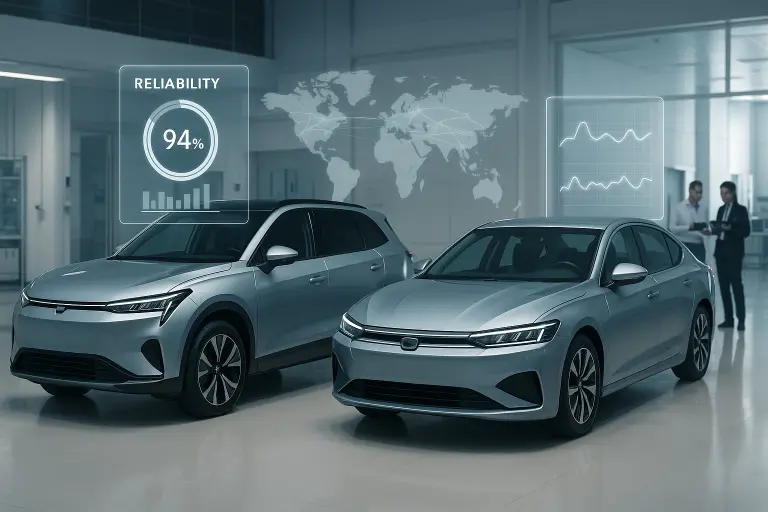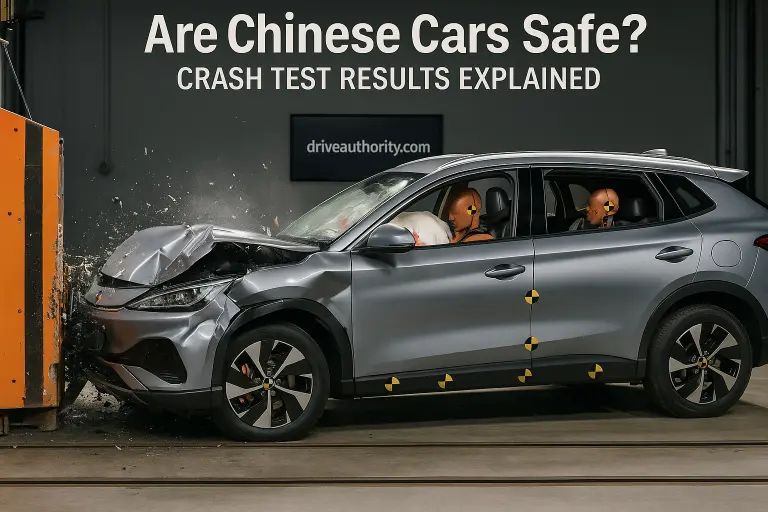
Are Chinese cars safe? For many buyers, this question still triggers hesitation. Early Chinese-made vehicles entering global markets earned a reputation for weak crash protection and limited safety equipment. Although those models are largely gone, the perception remains—shaped by outdated experiences rather than current evidence.
However, the reality has changed quickly. Over the past decade, Chinese car brands have expanded aggressively across Europe, the Middle East, and Latin America. Manufacturers like BYD, MG, Geely, NIO, and XPeng now sell millions of vehicles globally, many of them competing head-to-head with established Japanese and European brands. As a result, consumers are right to ask again—this time with fresh data—are Chinese cars safe today?
This article answers that question using independent crash-test results, detailed analysis of modern safety technology, and real-world performance data. Instead of relying on assumptions or marketing claims, we’ll examine how Chinese cars perform when safety is measured objectively—and what that means for real buyers making real decisions.
2. How Car Safety Is Measured
When asking are Chinese cars safe, it’s essential to understand how vehicle safety is actually measured. True safety is not a single feature or star badge. Instead, it’s a layered system built around prevention, protection, and survival.
Active vs. Passive Safety
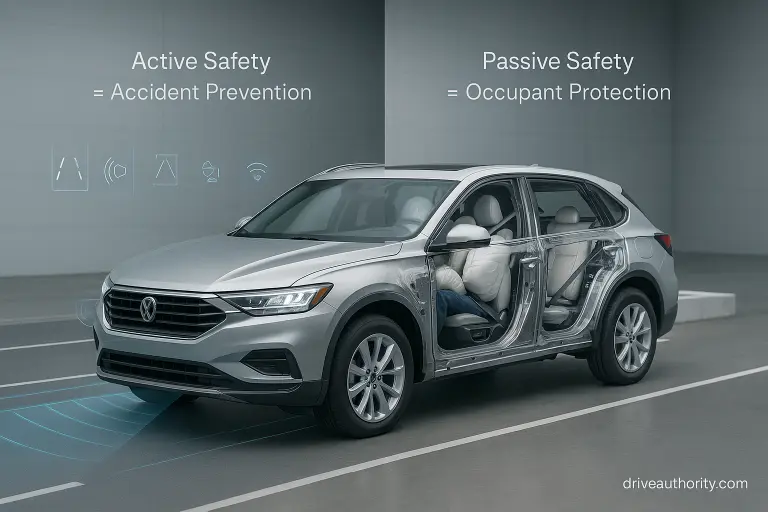
Car safety is generally divided into active and passive systems.
Active safety focuses on avoiding accidents altogether. These systems work continuously in the background to prevent collisions. They include:
- Automatic Emergency Braking (AEB)
- Lane Keeping Assist (LKA)
- Adaptive Cruise Control (ACC)
- Blind-spot monitoring
Passive safety, on the other hand, protects occupants once a crash is unavoidable. This includes:
- Airbags and seatbelt pretensioners
- Crumple zones
- Reinforced passenger cabins
- Child-seat anchoring systems
A truly safe car must perform well in both areas. Strong electronics cannot compensate for weak structure, and solid steel alone cannot prevent human error.
Structural Integrity vs. Electronic Assistance
Many buyers are impressed by screens and software, yet structural integrity remains the foundation of safety. High-strength steel, aluminum reinforcements, and precise welds determine how crash energy is absorbed and redirected away from occupants.
Electronic assistance adds another layer, but it is only effective if the structure beneath it is sound. This is why modern safety evaluations examine both the physical crash outcome and the performance of driver-assistance systems under stress.
Why Crash Tests Matter More Than Marketing Claims
Manufacturers can claim almost anything in advertisements. Crash tests, however, are conducted by independent organizations under controlled, repeatable conditions. These tests reveal:
- How well the cabin holds its shape
- Whether airbags deploy correctly
- How much force reaches the driver, passengers, and pedestrians
In short, crash-test results cut through branding and price bias. They provide the most reliable answer to whether a car—Chinese or otherwise—can protect lives when it matters most.
3. Understanding Crash Test Programs and How They Answer “Are Chinese Cars Safe?”
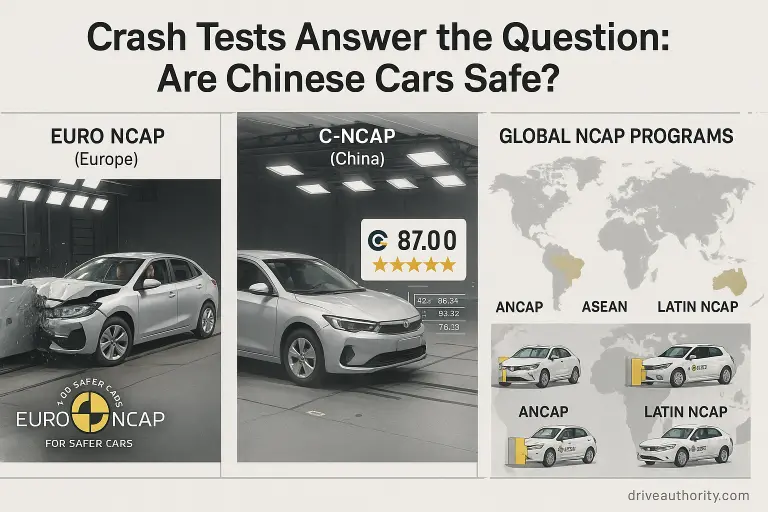
3.1 Euro NCAP (Europe): Why Euro NCAP Results Matter When Asking Are Chinese Cars Safe
- Test categories and star ratings
- Why Euro NCAP is considered the global gold standard
3.2 C-NCAP (China): Do High Scores Prove Chinese Cars Are Safe?
- How C-NCAP differs from Euro NCAP
- Why scores are often higher
3.3 ANCAP, ASEAN NCAP & Latin NCAP: What Global Safety Tests Reveal About Chinese Cars
- Regional relevance for Chinese exports
If you want, the next refinement step would be:
- tightening character length for snippet optimization, or
- adding semantic variations (“Chinese vehicle safety,” “safety of Chinese cars”) to strengthen topical authority without repetition.
4. Chinese Cars in Euro NCAP: Real Results on Whether Chinese Cars Are Safe
When discussing are Chinese cars safe, Euro NCAP results offer the clearest and most credible evidence. Unlike marketing claims, Euro NCAP applies the same strict testing standards to every vehicle sold in Europe—regardless of brand origin or price.
Chinese Brands Tested in Europe
Over the past few years, several Chinese manufacturers have submitted vehicles to Euro NCAP testing as part of their European expansion. These include brands such as BYD, MG, Geely (via Volvo-linked platforms), NIO, and XPeng. Importantly, these models are not specially prepared prototypes. They are production vehicles pulled directly from dealer stock, ensuring realistic results.
Euro NCAP Star Ratings Overview
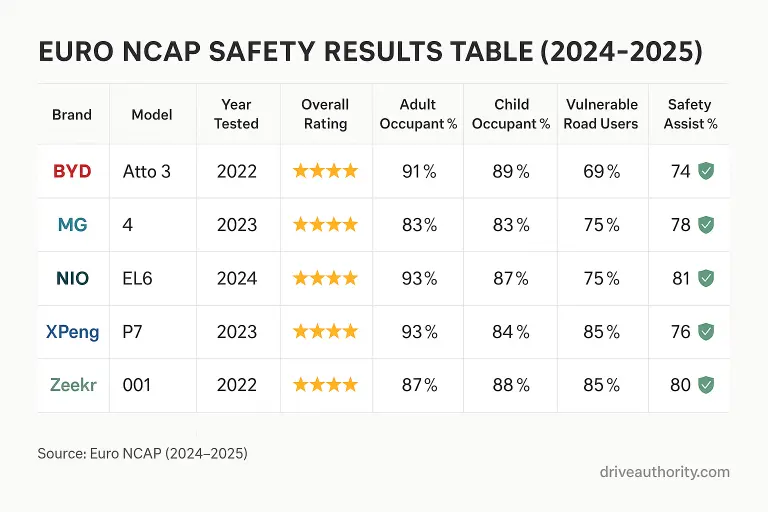
The majority of modern Chinese models tested in Europe have achieved 4- or 5-star safety ratings. These scores are based on four core areas:
- Adult occupant protection
- Child occupant protection
- Vulnerable road user (pedestrian and cyclist) safety
- Safety assist technologies
In several cases, Chinese electric vehicles have matched—or exceeded—the scores of similarly priced European and Japanese competitors.
What These Results Actually Mean
A high Euro NCAP rating confirms more than basic crash survival. It shows that:
- The passenger cabin remains stable in severe impacts
- Airbags deploy correctly and consistently
- Electronic safety systems intervene effectively in real-world scenarios
In practical terms, these results indicate that many modern Chinese cars meet or surpass global safety expectations. The question is no longer whether Chinese cars can be safe, but which models deliver the strongest protection for real drivers and families.
5. Top Chinese Cars With 5-Star Safety Ratings: Proof That Chinese Cars Can Be Safe
When evaluating are Chinese cars safe, nothing speaks louder than consistent 5-star Euro NCAP results. These ratings are not symbolic. They reflect structural strength, intelligent safety systems, and real-world crash protection. Below are some of the strongest-performing Chinese vehicles tested to date—and why they scored so highly.
BYD Atto 3: Safety Built Around Battery Protection
The BYD Atto 3 achieved a 5-star Euro NCAP rating thanks to a well-balanced safety package. Its standout strength lies in:
- A rigid passenger cell using high-strength steel
- Excellent side-impact and pole-impact performance
- BYD’s Blade Battery, designed to resist thermal runaway
In addition, the Atto 3 scored strongly in Safety Assist, showing reliable emergency braking and lane support—critical for urban and family driving.
MG4: High Safety at an Affordable Price
The MG4 surprised many experts by earning a 5-star rating in a highly competitive segment. Its success came from:
- Strong adult and child occupant protection scores
- Standard ADAS features across most trims
- Stable structural behavior in frontal offset crashes
For a relatively low-cost electric hatchback, the MG4 demonstrates how far Chinese engineering has progressed in passive and active safety.
NIO ET5: Premium Safety With European Standards
The NIO ET5 was engineered specifically for global markets, and it shows. Its high score was driven by:
- Advanced multi-airbag deployment timing
- Excellent whiplash protection
- Sophisticated driver-monitoring and collision avoidance systems
NIO’s focus on European safety expectations makes the ET5 a strong answer to anyone questioning whether Chinese cars are safe at the premium level.
XPeng G9: Technology-Led Crash Avoidance
The XPeng G9 stands out for its advanced electronic safety architecture. Key contributors to its 5-star result include:
- High-performance AEB at city and highway speeds
- Robust side-structure design for SUV impacts
- Redundant radar and camera systems for reliability
Its strength is not only surviving crashes, but actively preventing them.
Geely Models: Shared Platforms, Proven Safety
Several Geely-backed models benefit from global platform sharing with Volvo. This connection brings:
- Proven crash structures
- Consistent airbag and restraint design
- High pedestrian safety scores
Geely’s strategy shows that Chinese manufacturers can accelerate safety maturity by integrating established global engineering standards.
What Helped These Models Achieve High Scores
Across all these vehicles, the pattern is clear:
- Strong body structures using modern materials
- Safety systems included as standard, not paid extras
- Extensive testing aimed at global—not local—markets
Taken together, these results provide strong, data-backed evidence that many modern Chinese cars are not only safe, but competitively so by international standards.
6. Structural Safety: Are Chinese Cars Well Built and Truly Safe?
When people ask are Chinese cars safe, they are often really questioning build quality. Electronics can impress in a showroom, but structural safety is revealed only in a crash. This is where modern Chinese manufacturers have made their most significant, and least visible, progress.
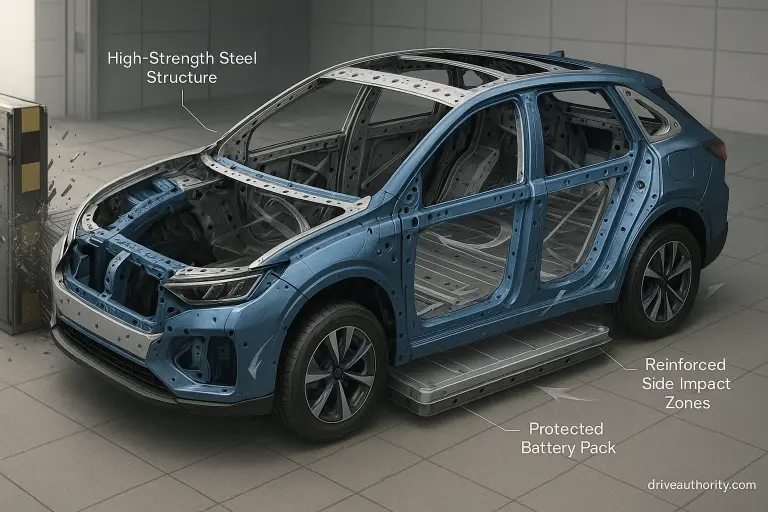
Use of High-Strength Steel and Aluminum
Today’s leading Chinese carmakers rely heavily on high-strength and ultra-high-strength steel, combined with strategic aluminum components. In many recent models:
- Over 70% of the body structure uses high-strength steel
- Load paths are engineered to distribute impact forces away from occupants
- Hot-formed steel reinforces the A- and B-pillars
These materials choices are comparable to those used by established European brands. More importantly, they are validated through independent crash testing—not internal claims.
Battery Pack Protection in Electric Vehicles
For electric vehicles, the battery pack becomes part of the structural equation. Chinese EV manufacturers have invested heavily in:
- Rigid battery enclosures integrated into the chassis
- Multi-layer shielding against penetration during impacts
- Automatic high-voltage disconnect systems after a crash
Designs such as BYD’s Blade Battery show particularly strong resistance to deformation, even in severe side impacts. This directly addresses fears around battery damage and post-crash hazards.
Side-Impact and Pole-Impact Performance
Side impacts are among the most dangerous crash types due to limited crumple space. Recent Euro NCAP data shows that many Chinese cars perform well in:
- Lateral impact tests at urban speeds
- Pole-impact scenarios that simulate collisions with trees or light poles
Strong door beams, reinforced sills, and stable roof structures play a decisive role here. The result is consistent cabin integrity, which is the core requirement for occupant survival.
Taken together, these structural factors make it clear that modern Chinese cars are no longer lightly built compromises. In many cases, they meet—or exceed—the structural safety expectations of global markets.
7. Advanced Safety Technology in Chinese Cars: How Technology Supports the Question “Are Chinese Cars Safe?”
Structural strength is only one side of the safety equation. To fully answer are Chinese cars safe, we also need to examine how well they prevent accidents in the first place. This is where advanced driver-assistance systems (ADAS) play a decisive role—and where many Chinese manufacturers have become surprisingly competitive.
ADAS Systems: AEB, LKA, and ACC
Most modern Chinese cars now offer a comprehensive ADAS package, often as standard equipment rather than paid options. These systems typically include:
- Automatic Emergency Braking (AEB) for vehicles, pedestrians, and cyclists
- Lane Keeping Assist (LKA) to reduce unintended lane departures
- Adaptive Cruise Control (ACC) for maintaining safe following distances
In independent testing, several Chinese models have shown strong performance in low-speed city scenarios, where collision avoidance matters most. Consistency and reliability, not just feature presence, are key—and recent Euro NCAP assessments reflect measurable improvement.
Camera and Radar Setups
Chinese manufacturers commonly use multi-sensor architectures, combining cameras, radar, and in some premium models, lidar. This redundancy improves accuracy in:
- Poor weather conditions
- Night driving
- Complex urban environments
By processing data from multiple sources, these systems reduce false braking and missed detections—two of the most common criticisms of early ADAS implementations.
Comparison With Toyota, Volkswagen, and Tesla
When compared directly:
- Toyota prioritizes conservative, highly reliable ADAS behavior
- Volkswagen balances safety systems with driver comfort
- Tesla relies heavily on camera-based software updates
Many Chinese brands sit somewhere in between. They often match Toyota and VW in core safety functionality, while offering more hardware than Tesla at similar price points. However, long-term software refinement and driver trust are areas where legacy brands still hold an edge.
Overall, the presence and performance of modern ADAS systems provide strong evidence that Chinese cars are no longer behind in active safety technology. In several segments, they are already competing on equal technical ground.
8. EV-Specific Safety: Battery Fire & Thermal Protection — A Critical Part of Are Chinese Cars Safe
For electric vehicles, safety concerns often shift from crash survival to battery fires and thermal runaway. This fear is especially common when discussing Chinese EVs. To properly answer are Chinese cars safe, battery chemistry and real-world fire data must be examined—calmly and scientifically.
LFP vs. NMC: Key Safety Differences
Most Chinese EV manufacturers rely heavily on LFP (Lithium Iron Phosphate) batteries, while many Western brands still use NMC (Nickel Manganese Cobalt) chemistry.
From a safety perspective:
- LFP batteries are significantly more thermally stable
- They tolerate higher temperatures before entering thermal runaway
- They are less prone to chain reactions after physical damage
NMC batteries offer higher energy density, but they carry a higher thermal risk under severe abuse conditions. This is one reason many Chinese brands prioritize LFP for mass-market vehicles.
Blade Battery and Similar Safety-First Designs
BYD’s Blade Battery is one of the most cited examples of safety-focused EV design. It uses:
- Long, flat cells arranged to reduce internal stress
- Direct structural integration into the vehicle floor
- Proven resistance to nail penetration and crush tests
Other Chinese manufacturers have adopted similar concepts, reinforcing battery packs as structural elements rather than isolated components. This approach improves both crash safety and fire resistance.
Real-World Fire Statistics vs. ICE Vehicles
Despite public perception, real-world data consistently shows that EVs catch fire less frequently than internal combustion engine (ICE) vehicles when adjusted for total vehicles on the road.
Key findings from global safety studies indicate:
- Fuel leaks and engine heat remain the leading causes of vehicle fires
- EV fire incidents are rarer but receive disproportionate media coverage
- Modern EVs are designed to isolate battery damage after a crash
When viewed objectively, battery safety in modern Chinese EVs aligns with—and in some cases exceeds—global norms. The evidence suggests that battery fire risk is often overstated, especially when discussing newer Chinese electric vehicles.
9. Common Safety Myths About Chinese Cars — Separating Perception From Reality
Public opinion often lags behind data. When people ask are Chinese cars safe, the question is frequently shaped by persistent myths rather than current evidence. Let’s address the most common misconceptions—using facts, not assumptions.
Myth 1: “Cheap = Unsafe”
Lower prices are often mistaken for lower safety. In reality, many Chinese manufacturers achieve cost efficiency through:
- Vertical integration of components
- Domestic supply-chain control
- High production volumes
Safety equipment such as multiple airbags and ADAS features is often standard, not optional. Euro NCAP results clearly show that price alone is a poor predictor of crash protection.
Myth 2: “Chinese Safety Standards Are Weak”
While China’s domestic regulations historically differed from European ones, this gap has narrowed significantly. More importantly:
- Vehicles exported to Europe must meet Euro NCAP and EU type-approval standards
- Global-market Chinese models are engineered to pass the strictest tests, not the easiest
Crash-test performance—not country of origin—is what determines safety.
Myth 3: “EVs Are More Dangerous”
Electric vehicles are often perceived as fire hazards. However, large-scale insurance and fire data consistently show:
- EVs catch fire less often than gasoline cars
- Modern battery management systems actively prevent thermal escalation
- Post-crash electrical isolation reduces secondary risks
The danger feels higher because EV fires are visually dramatic and heavily reported—not because they are statistically more common.
Data-Backed Reality Checks
Across independent crash tests, safety audits, and real-world statistics, one conclusion emerges clearly:
Modern Chinese cars must be judged by verified results, not legacy reputations. When evaluated objectively, many perform at the same safety level as established global brands.
The real question is no longer whether Chinese cars can be safe—but whether buyers are still relying on outdated assumptions instead of current data.
10. How Chinese Cars Compare to Japanese & European Brands on Safety
To answer are Chinese cars safe in a meaningful way, comparison is unavoidable. Safety only becomes clear when Chinese vehicles are placed side by side with Japanese and European competitors under the same testing conditions. When this is done, the results challenge many long-held assumptions.
Crash Scores: Side-by-Side Results
In recent Euro NCAP testing cycles, several Chinese models have achieved equal or higher star ratings than similarly sized cars from Toyota, Volkswagen, and Renault. Key observations include:
- Comparable adult and child occupant protection scores
- Strong side-impact and whiplash performance
- Consistent cabin stability across impact types
While premium European brands may still lead in marginal score differences, the gap has narrowed dramatically—especially in mass-market segments.
Safety Technology at Different Price Points
This is where Chinese cars often gain a clear advantage. Many Chinese models include:
- Full ADAS suites as standard
- Multiple airbags across all trims
- Driver monitoring and advanced AEB without costly packages
By contrast, Japanese and European brands frequently reserve these features for higher trims. As a result, a base-model Chinese car may offer more active safety than a more expensive rival.
Value-to-Safety Ratio
When price is factored into safety outcomes, Chinese cars perform exceptionally well. Buyers often receive:
- 5-star crash protection
- Advanced collision avoidance systems
- Modern EV battery safety
—at a significantly lower cost. This does not mean every Chinese car is safer than every Japanese or European model. It means that the safety you get for the money is often higher.
In practical terms, Chinese manufacturers have shifted the conversation. Safety is no longer a trade-off for affordability. Instead, it has become a competitive advantage—especially for informed buyers who compare data, not badges.
11. Are Chinese Cars Safe for Families? What the Data Really Shows
For families, the question are Chinese cars safe carries extra weight. Safety is no longer abstract—it’s about protecting children, passengers, and vulnerable road users in everyday driving. This is where crash-test data becomes especially valuable.
Child-Seat Protection Scores
Euro NCAP places strong emphasis on child occupant protection, and many Chinese cars perform well in this category. High scores are driven by:
- ISOFIX anchor availability across multiple seating positions
- Clear airbag deactivation systems for front child seats
- Low injury readings for child dummies in frontal and side impacts
Several Chinese SUVs and hatchbacks have achieved child safety scores comparable to family favorites from Toyota and Volkswagen, making them credible options for parents.
Pedestrian and Cyclist Safety
Family safety extends beyond the cabin. Modern Chinese cars increasingly show strong performance in pedestrian and cyclist protection, thanks to:
- Energy-absorbing front structures
- Active hoods in higher-end models
- AEB systems designed to detect vulnerable road users
Urban driving scenarios—school zones and residential areas in particular—benefit directly from these technologies.
SUV vs. Sedan: Safety Differences Explained
SUVs often feel safer due to their size, but crash data tells a more nuanced story:
- SUVs generally perform better in multi-vehicle collisions
- Sedans often offer superior handling and lower rollover risk
- Safety depends more on structure and technology than body style
Well-engineered Chinese sedans can be just as safe as SUVs when crash-tested under the same conditions.
Overall, the evidence suggests that many Chinese cars are well-suited for family use, provided buyers choose models with strong crash ratings and comprehensive safety systems. For families willing to evaluate data rather than reputation, the options are broader than ever.
12. Verdict: Are Chinese Cars Safe?
So, are Chinese cars safe? Based on independent crash-test results, real-world data, and modern engineering standards, the answer is no longer ambiguous. Many Chinese cars on today’s global market meet—and in some cases exceed—the safety expectations set by established Japanese and European brands.
That said, safety is not uniform across all models. Chinese cars are a safe choice when they:
- Achieve strong Euro NCAP or equivalent crash ratings
- Include comprehensive ADAS systems as standard
- Use modern platforms designed for global markets, not domestic-only compliance
In these conditions, Chinese vehicles offer an impressive balance of structural protection, active safety, and value.
However, buyers should still approach any purchase with informed caution. Before committing, it’s wise to:
- Check official crash-test scores for the exact model and year
- Verify which safety systems are standard versus optional
- Consider long-term software support and safety updates
In conclusion, the safety conversation has shifted. The question is no longer whether Chinese cars can be safe, but which Chinese cars deliver the highest level of protection for your needs. For buyers willing to compare data rather than rely on outdated perceptions, the evidence clearly shows that modern Chinese cars are safe, competitive, and increasingly trustworthy.
FAQ: Common Questions About Are Chinese Cars Safe
Do Chinese cars pass Euro NCAP tests?
Yes. Many modern Chinese cars pass Euro NCAP tests with high scores, including 4- and 5-star ratings. Brands such as BYD, MG, NIO, XPeng, and Geely have submitted production vehicles to Euro NCAP, where they are tested under the same standards as European and Japanese brands. Passing Euro NCAP confirms strong crash protection, effective airbags, and reliable safety-assist systems.
Are Chinese EVs safe in crashes?
Independent data shows that Chinese EVs are safe in crashes when evaluated by global testing programs. Their skateboard-style platforms often provide:
- Rigid passenger cells
- Low centers of gravity, reducing rollover risk
- Well-protected battery packs with automatic power shutoff
In side-impact and pole-impact tests, several Chinese EVs perform on par with established electric models from Europe and the U.S.
Which Chinese car is the safest?
There is no single “safest” Chinese car for every situation. However, models such as the BYD Atto 3, MG4, NIO ET5, XPeng G9, and Geely-based platforms consistently rank among the safest based on Euro NCAP results. The safest choice depends on:
- Vehicle size and body style
- Latest model year and platform
- Availability of full ADAS features
Always check the exact crash-test score for the specific model and year.
Are Chinese cars safe for families?
Yes—many Chinese cars are safe for families, especially those with high child-occupant and pedestrian protection scores. Family-friendly strengths often include:
- Strong ISOFIX and child-seat compatibility
- Effective AEB systems for urban driving
- Good pedestrian and cyclist detection
As with any brand, families should prioritize vehicles with verified crash-test ratings and comprehensive safety systems rather than relying on brand reputation alone.