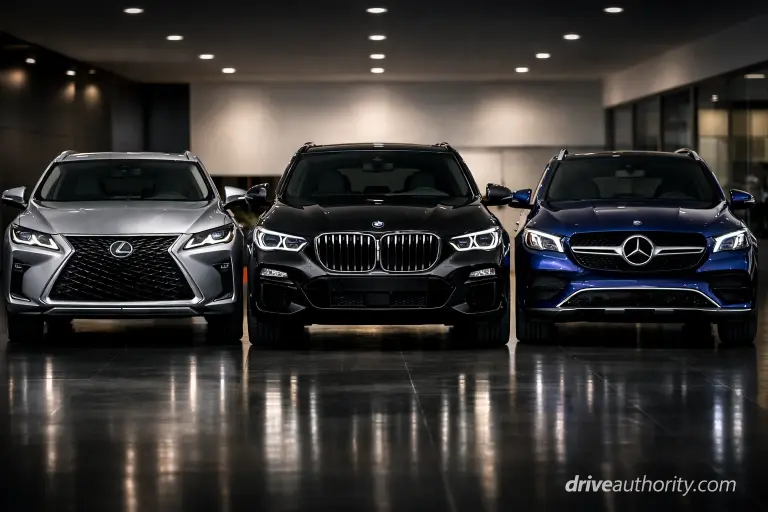
Why the Best Luxury Car Brands Prioritize Reliability and Ownership Cost
You’ve saved for years, test-driven the vehicles, and narrowed your choice to three best luxury car brands. The salesperson emphasizes the prestige badge, the advanced technology, the premium materials. However, what they won’t tell you is how much that air suspension costs to replace at 80,000 miles, or why the infotainment system that wowed you today might frustrate you in three years.
The gap between luxury purchase and luxury ownership is where most buyers get caught. Consequently, a $50,000 luxury SUV can cost $8,000 or $18,000 to own over five years depending on the badge. Meanwhile, maintenance intervals, parts costs, and engineering complexity vary wildly between brands that seem comparable on the showroom floor.
This isn’t about finding the cheapest luxury car. Instead, it’s about identifying the best luxury car brands that deliver refinement, comfort, and prestige without punishing you with repair bills and depreciation. Therefore, we’re ranking the top luxury car brands by what matters after you drive off the lot: long-term reliability and total ownership cost in the US and UK markets.
How This Luxury Car Brand Ranking Was Built
This ranking evaluates the best luxury car brands through an ownership lens rather than a marketing one. Furthermore, we’ve prioritized criteria that directly impact your wallet and peace of mind over the 5-10 year ownership window most luxury buyers actually keep their vehicles.
Evaluation Criteria for Reliable Luxury Brands
First, we analyzed long-term reliability scores from Consumer Reports, J.D. Power, and What Car? UK surveys covering 5-10 year ownership periods. Additionally, we examined warranty coverage including standard terms, powertrain protection, and certified pre-owned (CPO) program strength. Moreover, maintenance and repair cost trends from independent service centers and dealer networks in both US and UK markets played a crucial role.
Next, we considered parts availability and service network strength affecting repair turnaround times and independent mechanic options. Finally, depreciation and resale performance using real transaction data rather than manufacturer claims completed our analysis.
Data Sources for Luxury Vehicle Reliability
We’ve excluded luxury brands without sufficient long-term reliability data in US and UK markets. Instead, we focused on brands with established service networks in both regions. Consequently, the brands ranked here represent the intersection of refinement and ownership realism, backed by data from Consumer Reports and J.D. Power.
What Makes Some Luxury Car Brands More Reliable
Not all luxury engineering is created equal. As a result, the brands that rank highest share specific design philosophies that prioritize longevity over cutting-edge risk.
Proven Engineering Philosophy in Top Luxury Brands
Proven engineering over first-to-market innovation separates reliable luxury from problematic luxury. Similarly, brands using naturally aspirated engines or well-established turbocharged powertrains consistently outperform those chasing horsepower through complex twin-turbo configurations or novel hybrid architectures. For example, the Mercedes-AMG 4.0L twin-turbo V8 delivers thrilling performance but requires timing chain service and turbo replacements far more frequently than Lexus’s naturally aspirated V6.
Electronics Strategy and Long-Term Reliability
Electronics strategy matters enormously for long-term ownership. Therefore, brands using straightforward, modular infotainment systems and simpler climate control interfaces age better than those integrating every function into touchscreen menus. In contrast, physical buttons don’t need software updates, and wiring harnesses without 47 modules rarely develop mysterious electrical gremlins.
Suspension Design and Ownership Costs
Suspension design philosophy reveals itself after 60,000 miles. Although air suspension provides magic-carpet ride quality when new, air struts and compressors cost $1,500-3,000 per corner to replace. Meanwhile, brands favoring steel springs and quality dampers deliver 90% of the comfort at a fraction of the long-term cost.
Ultimately, the reliability leaders understand that luxury buyers want refinement that lasts, not technology that impresses for two years then requires expensive repairs.
Best Luxury Car Brands Ranked by Reliability and Ownership Cost
#1 Lexus — The Benchmark for Reliable Luxury Brands
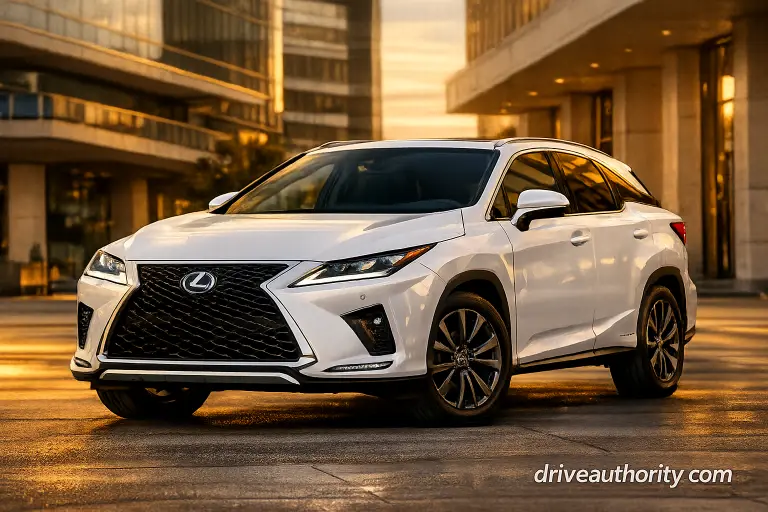
Model Examples:
- US: Lexus ES (midsize sedan), RX (midsize SUV), NX (compact SUV), GX (body-on-frame SUV)
- UK: Lexus ES, NX, RX, UX (subcompact SUV)
Why Lexus Leads Luxury Brand Reliability Rankings
Lexus doesn’t just lead luxury reliability rankings—it often outscores mainstream brands. Furthermore, the secret isn’t mysterious. Toyota’s engineering discipline permeates every Lexus model, prioritizing components that work predictably over those that wow temporarily.
The brand’s naturally aspirated engines and conservative hybrid systems avoid the complexity plaguing German rivals. For instance, the ES 350’s 3.5L V6 uses technology perfected over two decades. Additionally, it doesn’t make supercar power, but it starts reliably at -15°F and runs smoothly at 150,000 miles. Similarly, the RX 450h hybrid powertrain, now in its fourth generation, shares core architecture with the Toyota Highlander Hybrid—proven in hundreds of thousands of family vehicles.
Moreover, Lexus minimizes air suspension even in flagship models. Specifically, the RX uses conventional struts. Meanwhile, the GX employs a hydraulic system far simpler than Range Rover’s electronic complexity. Consequently, fewer actuators, sensors, and control modules mean fewer $2,000 repair surprises.
Lexus Ownership Cost Profile
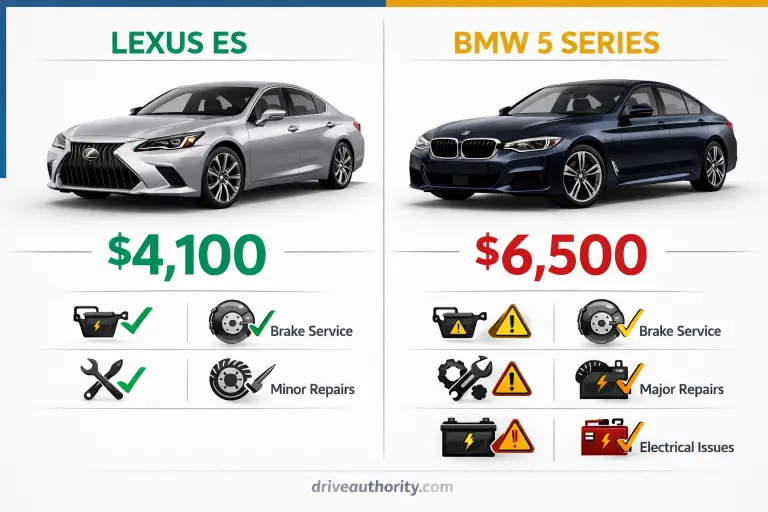
Scheduled maintenance costs for a Lexus ES average $4,100 over five years versus $6,200 for a BMW 5 Series. Furthermore, oil changes, brake services, and fluid replacements follow Toyota’s conservative intervals. As a result, independent mechanics service Lexus vehicles without proprietary diagnostic equipment.
CPO programs offer exceptional value. Additionally, Lexus Certified Pre-Owned includes comprehensive warranty coverage, often extending powertrain protection to 100,000 miles. Therefore, buyers in both US and UK markets benefit from strong resale values—an RX hybrid typically retains 55-60% of its value after five years, compared to 45-50% for German luxury SUVs.
Best Lexus Buyers
Buyers prioritizing peace of mind over driving dynamics. Moreover, owners planning 7-10+ year ownership cycles. Finally, anyone who wants luxury comfort without fearing the post-warranty period.
#2 Acura — Balanced Luxury With Japanese Reliability
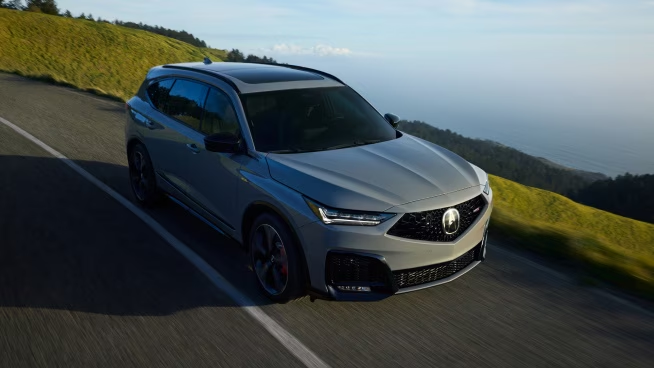
Model Examples:
- US: Acura MDX (three-row SUV), RDX (compact SUV), TLX (sport sedan)
- UK: Not officially available; comparable buyers consider Honda CR-V Hybrid with premium options or import specialist services
Why Acura Ranks Among Best Luxury Car Brands for Reliability
Acura occupies the sweet spot between Lexus’s conservative approach and European brands’ complexity. Furthermore, the brand uses Honda’s legendary V6 engines and increasingly refined turbocharged four-cylinders without the extreme tuning that causes long-term problems.
The MDX’s 3.5L V6 and 10-speed automatic transmission deliver smooth, responsive performance with Honda’s reputation for 200,000+ mile durability. Similarly, the RDX’s 2.0L turbocharged engine operates at moderate boost pressures, avoiding the thermal stress that shortens turbo lifespan in German competitors.
Additionally, Acura’s Super Handling All-Wheel Drive (SH-AWD) system adds driving engagement without sacrificing reliability. Therefore, the mechanical torque-vectoring system uses proven components rather than electronic wizardry, and independent mechanics can service AWD components without dealer-only equipment.
Acura Ownership Cost Analysis
Insurance costs sit below German luxury brands while maintenance predictability mirrors Honda. For example, a 60,000-mile service on an Acura RDX costs approximately $2,800 versus $4,200 for a comparable BMW X3. Moreover, parts availability through Honda’s extensive dealer network keeps repair costs reasonable, even for luxury-specific components.
Resale values remain strong in the US market, supported by Honda’s reliability reputation. Consequently, an MDX typically retains 50-55% of its value after five years—better than most non-Lexus luxury SUVs.
Best Acura Buyers
Drivers who want more engagement than Lexus offers without sacrificing reliability. Additionally, buyers attracted to premium features and driving dynamics but concerned about European luxury maintenance costs.
#3 Genesis — Rapid Climb Among Best Luxury Car Brands With Smart Engineering
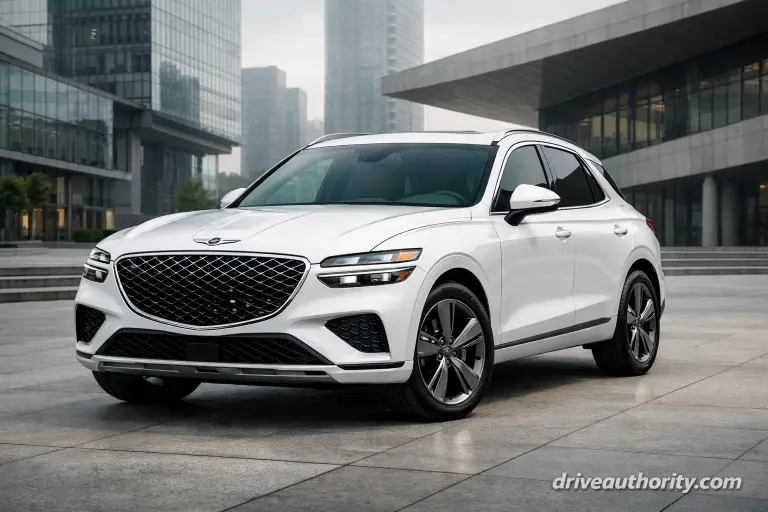
Model Examples:
- US: Genesis G80 (midsize sedan), GV70 (compact SUV), GV80 (midsize SUV)
- UK: GV60 (electric crossover), GV70, G80 (expanding dealer network)
Why Genesis Delivers Reliable Luxury Brand Performance
Genesis entered luxury by learning from others’ mistakes. Rather than matching BMW’s complexity, Hyundai’s luxury division focused on robust engineering and conservative powertrains wrapped in upscale materials.
The brand’s turbocharged engines operate at moderate boost pressures, and the eight-speed automatic transmissions use ZF components proven in thousands of European vehicles. Furthermore, Genesis shares platforms with mainstream Hyundai models, which sounds less premium but delivers parts cost efficiency and widespread serviceability.
Moreover, build quality has impressed owners who feared Korean luxury might cut corners. As a result, interior materials hold up well, electronics remain stable, and the decades of experience that established brands spent perfecting reliability shows in Genesis’s trouble-free ownership reports.
Genesis Ownership Cost and Warranty Advantage
Genesis’s warranty strategy changes the ownership calculation entirely. Specifically, the US market offers 10-year/100,000-mile powertrain coverage and 5-year/60,000-mile comprehensive coverage. Additionally, even maintenance is complimentary for three years or 36,000 miles. This isn’t marketing fluff—it’s a financial cushion that European brands don’t offer.
UK buyers receive 5-year unlimited mileage warranty, stronger than most luxury competitors. Meanwhile, as Genesis expands its UK dealer network, service accessibility continues improving, though it doesn’t yet match Lexus or BMW coverage in all regions.
However, depreciation remains the uncertainty. As a newer luxury brand, Genesis vehicles depreciate faster than established nameplates—typically 50-55% after five years. Nevertheless, the warranty coverage offsets this for original owners, and CPO buyers benefit from both lower purchase prices and remaining warranty protection.
Best Genesis Buyers
Buyers seeking near-German premium feel with significantly lower cost risk. Additionally, first-time luxury buyers hesitant about maintenance expenses. Finally, anyone who values comprehensive warranty protection over badge prestige.
#4 Mazda — Near-Luxury Refinement Without Luxury Brand Pricing
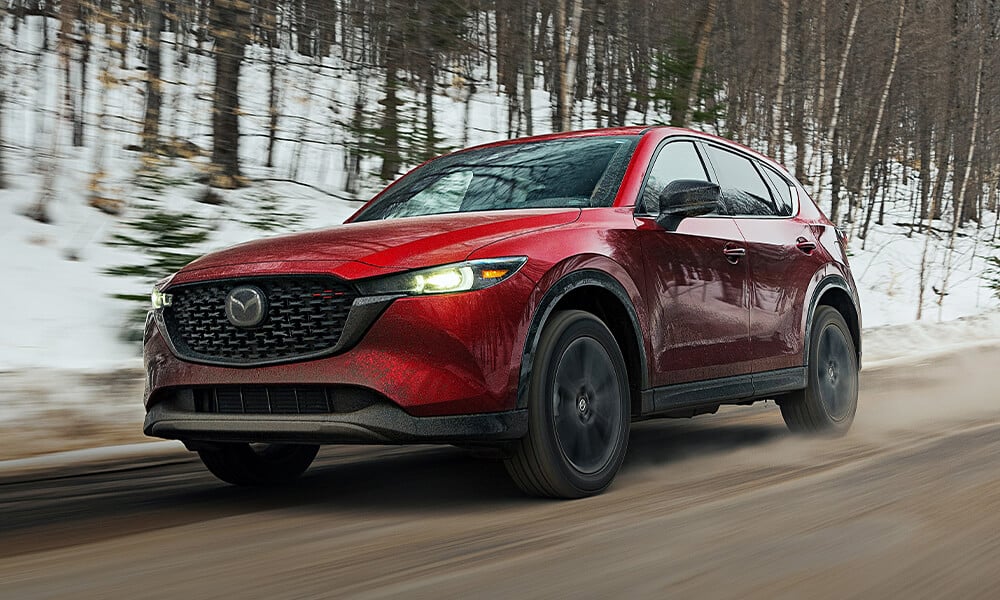
Model Examples:
- US: Mazda CX-5 Signature, CX-90 Premium Plus
- UK: Mazda6 Takumi, CX-60 Takumi, CX-90
Why Mazda Competes With Best Luxury Car Brands
Mazda occupies an interesting position: not technically luxury, but delivering luxury-level refinement in top trims without luxury-level ownership costs. Furthermore, the brand’s Skyactiv engineering philosophy prioritizes efficiency and longevity, and reliability scores consistently exceed mainstream competitors.
The CX-5’s 2.5L turbocharged engine uses straightforward technology—no complex multi-stage turbo systems or novel combustion strategies. Similarly, Mazda’s six-speed automatic transmissions feel dated compared to 10-speed rivals, but they’re proven across hundreds of thousands of vehicles. Meanwhile, the newer CX-90 uses a turbocharged inline-six and 8-speed automatic from the same engineering mindset: established technology refined thoroughly.
Additionally, interior quality in Signature and Takumi trims rivals entry-level luxury. Specifically, materials feel premium, fit and finish is tight, and Mazda avoids the electronic complexity that plagues German luxury. You won’t find 17-way power seats with memory controlled through touchscreen menus—but you also won’t pay $1,200 to fix them.
Mazda Ownership Cost Advantages
Maintenance costs track with mainstream brands, not luxury pricing. For instance, a 60,000-mile service interval for a CX-5 costs approximately $2,200—roughly half the equivalent for a BMW X3. Moreover, parts availability through Mazda’s extensive dealer network and cross-compatibility with mainstream components keeps repairs affordable.
Insurance costs sit between mainstream and luxury rates. Specifically, a CX-90 costs about 15% more to insure than a Honda Pilot but 25% less than a comparable BMW X5.
Therefore, resale values outperform mainstream SUVs while remaining below traditional luxury. A CX-5 retains approximately 50% of its value after five years—better than most non-luxury vehicles but trailing Lexus and Acura.
Best Mazda Buyers
Buyers who want luxury feel without committing to luxury ownership costs. Additionally, value-conscious shoppers who prioritize materials and driving refinement over badge prestige.
#5 Volvo — Scandinavian Comfort With Ownership Trade-Offs
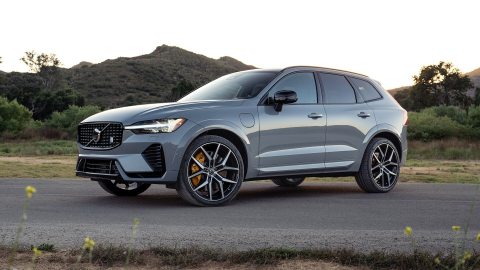
Model Examples:
- US: Volvo XC60 (compact luxury SUV), XC90 (midsize SUV)
- UK: Volvo XC40, XC60, XC90
Why Volvo Ranks Mid-Tier Among Luxury Car Brands
Volvo rebuilt its reputation around safety, and that focus extends to reliability—with qualifications. Furthermore, modern Volvos prioritize occupant protection, driver assistance technology, and interior comfort. As a result, reliability scores sit solidly mid-pack among luxury brands, neither exceptional nor problematic.
The brand’s turbocharged and mild-hybrid powertrains deliver strong performance but add complexity compared to Lexus’s approach. Specifically, the 2.0L four-cylinder engine, used across most of the lineup with various boost configurations, performs well but requires more frequent attention than naturally aspirated rivals. Consequently, timing belt replacements, turbocharger service, and hybrid system maintenance come at luxury prices.
Nevertheless, interior quality remains strong, and Volvo’s minimalist Scandinavian design ages well visually. Moreover, the brand’s commitment to long-term ownership shows in thoughtful details—durable leather, physical buttons for key functions, and straightforward diagnostics.
Volvo Ownership Cost Reality
Maintenance and repair costs sit noticeably higher than Lexus, Acura, or Genesis, but below BMW and Mercedes-Benz. Therefore, expect approximately $5,500 in scheduled maintenance over five years for an XC60, plus higher-than-average repair costs for turbocharger and mild-hybrid components.
Resale values perform well in the UK market, where Volvo’s reputation is stronger. Specifically, XC60 and XC90 models typically retain 50-55% of their value after five years. However, US depreciation is slightly faster—around 45-50%—as American buyers remain more cautious about Swedish luxury.
Best Volvo Buyers
Safety-focused buyers willing to accept moderate maintenance costs for Scandinavian design and class-leading driver assistance technology. Additionally, families prioritizing occupant protection and comfort over driving dynamics or cost minimization.
#6 BMW — Performance Luxury With Ownership Complexities
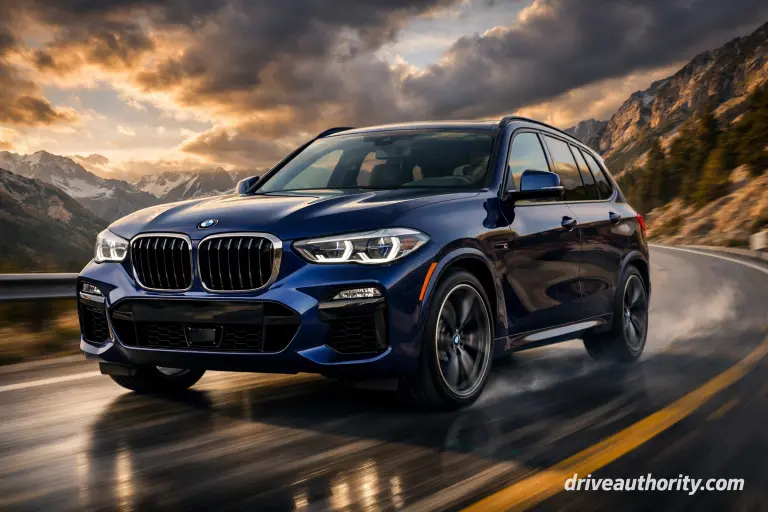
Model Examples:
- US: 3 Series, 5 Series, X3, X5
- UK: 3 Series, 5 Series, X3, X5
Why BMW’s Luxury Brand Reliability Is Mixed
BMW delivers on its “Ultimate Driving Machine” promise. Furthermore, the steering feedback, chassis balance, and powertrain responsiveness exceed most luxury competitors. Therefore, if driving engagement is your priority, BMW belongs on your shortlist.
However, reliability tells a more complicated story. BMW consistently ranks below Japanese luxury brands and often trails Genesis in long-term dependability surveys. Moreover, the issues aren’t catastrophic failures—modern BMWs rarely strand you—but they accumulate expensive repairs that Japanese rivals simply don’t require.
Engineering Complexity in BMW Luxury Vehicles
The complexity behind BMW’s performance creates the ownership challenge. For instance, twin-turbo engines deliver thrilling power but require more frequent service and expensive turbocharger replacements. Similarly, the 8-speed automatic transmission is smooth and responsive, but electronic valve body failures cost $3,000-5,000 to repair. Meanwhile, optional air suspension provides excellent ride quality, but air strut replacement costs make steel-sprung rivals look brilliant.
Electronics remain BMW’s persistent weakness. Specifically, iDrive systems occasionally need software reflashing. Additionally, the complex network of control modules can develop communication errors. And those electronic parking brakes and active roll stabilization systems? They work beautifully until they require four-figure repairs.
BMW Ownership Cost Reality
BMW ownership costs climb quickly after the warranty expires. Specifically, scheduled maintenance alone averages $6,500 over five years—double a comparable Lexus. Furthermore, unscheduled repairs add significantly more. Therefore, a typical 5 Series requires approximately $4,000 in repairs between years four and six, compared to under $1,500 for a Lexus ES.
Parts and labor costs run at luxury premiums. For example, an alternator replacement that costs $600 on a Honda Accord runs $1,200-1,800 on a BMW 3 Series. Moreover, many repairs require dealer-level diagnostic equipment, limiting independent mechanic options.
Consequently, depreciation hits harder than Japanese luxury. A 5 Series typically retains 40-45% of its value after five years, and depreciation accelerates sharply beyond the warranty period as buyers recognize the maintenance costs ahead.
Best BMW Buyers
Driving enthusiasts who understand and accept the ownership cost trade-offs. Additionally, buyers who plan to sell before the warranty expires or who budget realistically for post-warranty repairs. Finally, anyone for whom driving engagement justifies higher maintenance expenses.
#7 Mercedes-Benz — Prestige and Innovation, Higher Cost Penalty
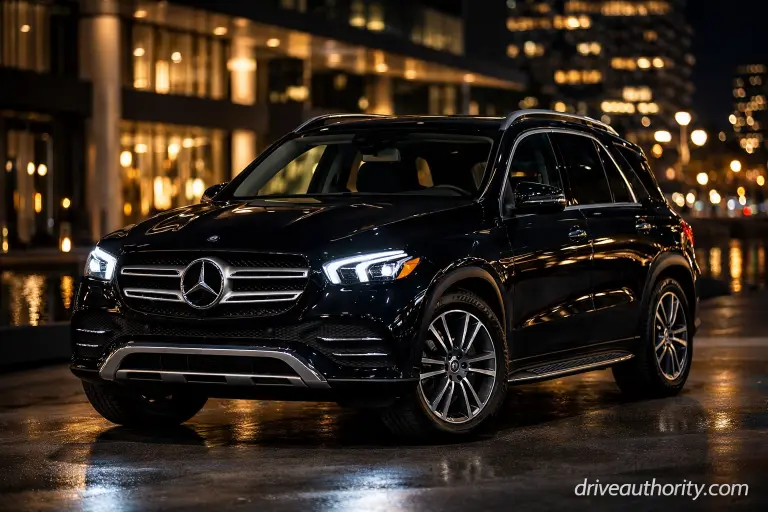
Model Examples:
- US: C-Class, E-Class, GLC, GLE
- UK: A-Class, C-Class, E-Class, GLC, GLE
Why Mercedes-Benz Luxury Brand Reliability Lags
Mercedes-Benz pioneered countless technologies now standard across the industry. Furthermore, active safety systems, advanced driver assistance, and infotainment sophistication often debut in Mercedes vehicles years before competitors adopt them. However, that innovation leadership comes with ownership consequences.
The brand’s reliability scores sit near the bottom among luxury manufacturers. Specifically, Consumer Reports and J.D. Power consistently rank Mercedes below average, and What Car? UK surveys show similar patterns. Moreover, the problems aren’t isolated to specific models—complexity permeates the lineup.
Technology-First Engineering Costs
Technology-first engineering drives the reliability challenges. For instance, COMAND and MBUX infotainment systems offer impressive features but suffer from software glitches and hardware failures. Similarly, air suspension appears across most models, providing exceptional ride quality and inevitable repair costs. Meanwhile, the brand’s turbocharged engines perform well but require expensive maintenance, and the 9-speed automatic transmission has developed a reputation for rough shifting and valve body problems.
Even seemingly simple components become complicated. For example, replacing headlight assemblies with adaptive LED systems costs $2,000-3,500. Additionally, fixing the electronic trunk latch requires proprietary diagnostic equipment. And those beautiful 12.3-inch digital displays? They occasionally fail entirely, and replacement costs exceed $3,000.
Mercedes-Benz Ownership Cost Analysis
Mercedes-Benz represents the highest maintenance and repair cost tier among mainstream luxury brands. Specifically, scheduled maintenance averages $7,500 over five years—more than double Japanese luxury competitors. Furthermore, unscheduled repairs add thousands more, particularly after year four.
Labor rates at Mercedes dealerships often exceed $200 per hour, and many repairs require extensive disassembly due to packaging complexity. Moreover, independent mechanics can handle basic maintenance, but diagnostic and repair expertise for newer models remains limited outside dealer networks.
Therefore, depreciation pressure intensifies after the warranty expires. E-Class sedans typically retain only 35-40% of their value after five years, and depreciation continues sharply. Consequently, the used market recognizes the maintenance costs ahead, and buyers discount accordingly.
Best Mercedes-Benz Buyers
Short-term ownership, typically lease cycles of 3-4 years. Additionally, buyers who prioritize cutting-edge technology and prestige over long-term value. Finally, anyone who wants the latest features and accepts that innovation comes with ownership costs.
Luxury Car Brand Comparison Table
| Brand | Reliability | 5-Year Ownership Cost | Depreciation | Engineering Complexity |
|---|---|---|---|---|
| Lexus | ★★★★★ | ★★☆☆☆ (Low) | ★★★★☆ (Strong retention) | ★★☆☆☆ (Simple) |
| Acura | ★★★★☆ | ★★☆☆☆ (Low) | ★★★☆☆ (Good retention) | ★★☆☆☆ (Simple) |
| Genesis | ★★★★☆ | ★★★☆☆ (Moderate) | ★★☆☆☆ (Faster depreciation) | ★★★☆☆ (Moderate) |
| Mazda | ★★★★☆ | ★★☆☆☆ (Low) | ★★★★☆ (Strong retention) | ★★☆☆☆ (Simple) |
| Volvo | ★★★☆☆ | ★★★★☆ (High) | ★★★☆☆ (Moderate retention) | ★★★★☆ (Complex) |
| BMW | ★★★☆☆ | ★★★★☆ (High) | ★★☆☆☆ (Faster depreciation) | ★★★★☆ (Complex) |
| Mercedes-Benz | ★★★☆☆ | ★★★★★ (Very High) | ★★☆☆☆ (Fastest depreciation) | ★★★★★ (Very Complex) |
Star ratings are comparative based on long-term reliability data, ownership cost analysis, and engineering complexity assessments.
New vs Certified Pre-Owned: Luxury Brand Ownership Cost Impact
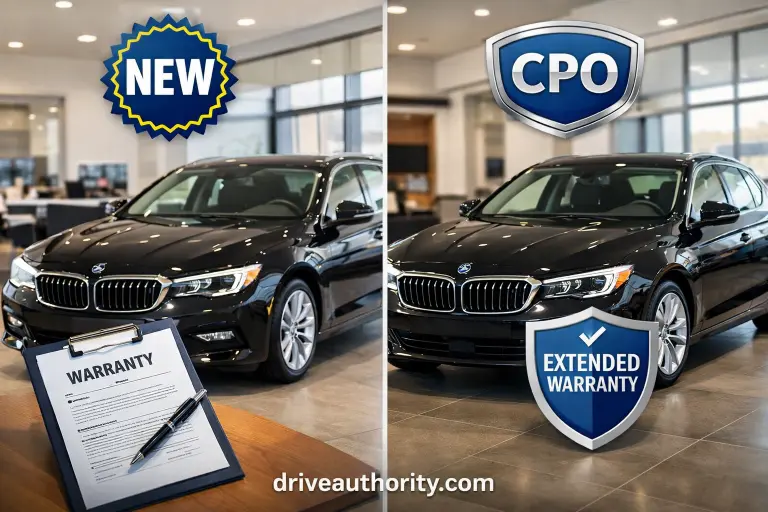
The new-versus-used decision dramatically changes the ownership equation, especially for luxury brands with steep depreciation curves or strong CPO programs.
Depreciation Patterns Across Luxury Car Brands
Depreciation patterns vary significantly by brand. First, Lexus and Acura depreciate gradually, losing 20-25% in the first year and another 15-20% by year three. In contrast, German luxury brands depreciate faster—30-35% in year one, 20-25% in year two. Consequently, a $60,000 BMW loses approximately $21,000 in value during the first year, while a $60,000 Lexus loses about $14,000. Therefore, that $7,000 difference could cover several years of maintenance.
CPO Programs for Best Luxury Car Brands
CPO programs offer exceptional value for brands with strong warranty coverage. For instance, Lexus CPO extends powertrain warranty to 100,000 miles and includes comprehensive coverage for two years. Similarly, Genesis CPO maintains much of the original 10-year powertrain protection. However, for German brands, CPO becomes almost essential—the extended warranty coverage offsets the repair costs that arrive predictably after year four.
UK buyers should prioritize CPO more heavily than US buyers. Specifically, Approved Used programs from Lexus, BMW, and Mercedes-Benz UK include comprehensive warranty coverage that independent dealers can’t match. Therefore, the additional cost—typically 5-10% over private sale prices—pays for itself when the air suspension or infotainment system fails.
Private Sale vs Dealer Comparison
Private sale versus dealer comparison becomes straightforward: if you’re buying a Lexus or Acura, private sale offers better value because reliability concerns are minimal. However, if you’re buying BMW or Mercedes-Benz, pay the CPO premium or budget $3,000-5,000 per year for repairs.
Real Cost of Ownership for Luxury Car Brands
Understanding true ownership costs requires looking beyond monthly payments to the complete financial picture over your intended ownership period.
Maintenance Schedules for Top Luxury Brands
Maintenance and repair schedules vary dramatically by brand. For example, Lexus follows conservative Toyota intervals—oil changes every 10,000 miles, major service every 30,000. In contrast, BMW requires more frequent service, with additional inspections and fluid replacements. Meanwhile, Mercedes-Benz’s maintenance schedules assume dealer service at premium rates. Consequently, over five years, scheduled maintenance alone ranges from $4,100 (Lexus) to $7,500 (Mercedes-Benz).
Unscheduled Repair Costs by Luxury Brand
Unscheduled repairs tell the bigger story. Specifically, Lexus and Acura owners report minimal repairs during the first 100,000 miles beyond wear items like brakes and tires. However, BMW and Mercedes-Benz owners face turbocharger replacements ($2,500-4,000), electronic component failures ($1,000-3,000), and air suspension repairs ($2,000-5,000 per corner). Therefore, these aren’t possibilities—they’re patterns confirmed across thousands of vehicles.
Insurance Cost Differences Among Luxury Brands
Insurance costs reflect both vehicle value and repair expenses. Generally, luxury vehicles cost 30-50% more to insure than mainstream equivalents, but German luxury brands command the highest premiums. For instance, a BMW X5 costs approximately 15-20% more to insure than a comparable Lexus RX, reflecting both parts costs and repair frequency.
Fuel Efficiency Impact on Ownership Cost
Fuel efficiency creates ongoing cost differences. Specifically, Lexus and Acura hybrid models deliver real-world fuel economy in the low-to-mid 30s MPG, while German luxury performance models often struggle to reach 25 MPG in mixed driving. Therefore, over 15,000 miles annually, the difference costs $500-800 per year at current fuel prices.
Technology Aging in Luxury Vehicles
Technology aging curves matter more than most buyers anticipate. For example, Mercedes-Benz’s five-year-old COMAND system feels dated compared to modern smartphones, while Lexus’s simpler interface ages more gracefully because it attempted less initially. Consequently, cars loaded with cutting-edge technology in 2020 now feel obsolete, while those with straightforward systems remain functional.
Independent vs OEM Service Pricing
Independent versus OEM service pricing becomes crucial after the warranty expires. Specifically, Lexus and Acura maintain reasonable parts pricing and allow independent mechanics to service most systems without proprietary tools. However, BMW and Mercedes-Benz design many components to require dealer-level diagnostics, limiting independent service options. Therefore, when independent service is possible, costs typically run 30-40% below dealer rates.
Common Mistakes Buyers Make With Luxury Car Brands
Luxury purchases often go wrong in predictable ways. Therefore, recognizing these patterns helps you avoid expensive regrets.
Chasing Prestige Over Reliability
Chasing prestige over reliability leads to buyer’s remorse when the $2,800 repair bill arrives. Specifically, the Mercedes-Benz badge impresses neighbors, but those neighbors won’t help pay for the air suspension replacement. Therefore, if you need the prestige for business or personal satisfaction, budget accordingly. However, if you don’t genuinely need the badge, consider whether Lexus or Genesis delivers 90% of the refinement at 50% of the ownership cost.
Ignoring Post-Warranty Costs
Ignoring post-warranty costs creates financial stress when maintenance expenses arrive unexpectedly. Furthermore, buyers focus on the affordable lease payment or the manageable financed purchase price, then face reality when the warranty expires. Therefore, if you plan to keep the vehicle beyond 50,000 miles, research actual repair costs using Consumer Reports, Edmunds True Cost to Own, and owner forums. Consequently, the patterns are clear and consistent.
Prioritizing Tech Features That Fail Early
Prioritizing tech features that fail early backfires quickly. For instance, that panoramic sunroof adds appeal on the test drive and potential water leaks after three years. Similarly, the electronic rear hatch seems convenient until the $1,200 actuator fails. Meanwhile, adaptive LED headlights provide excellent visibility and $3,000 replacement costs. Therefore, simple questions separate smart buyers from frustrated owners: “What fails on this feature, and what does it cost to fix?”
Underestimating Insurance and Parts Costs
Underestimating insurance and parts costs creates ongoing budget pressure. Specifically, luxury vehicles with expensive replacement parts and complex repair procedures command higher insurance premiums. Therefore, before committing to purchase, get actual insurance quotes—not estimates—and research common parts costs. Consequently, the difference between brands can equal $1,500-2,500 per year.
Best Luxury Car Brands by Buyer Type
Different buyers have different priorities. Therefore, here’s how to match brand to need:
Best Luxury Brand for Long-Term Ownership: Lexus
If you plan to keep your luxury vehicle for 8-12 years, Lexus delivers the lowest total cost of ownership with the least stress. Furthermore, the reliability advantage compounds over time, and strong resale values preserve more of your investment when you eventually sell. Learn more about long-term vehicle ownership strategies.
Best Value Luxury Car Brand: Genesis
Genesis offers the best balance of luxury refinement and ownership protection for buyers entering the luxury market. Moreover, the warranty coverage eliminates most ownership risk during the period you’re likely to keep the vehicle. Therefore, the lower purchase price offsets faster depreciation.
Best Luxury Brand for Driving Dynamics: BMW
If driving engagement matters more than ownership costs, BMW remains the clear choice. Additionally, the steering, chassis balance, and powertrain responsiveness exceed rivals. However, just budget realistically for the maintenance and repair costs that will inevitably arrive.
Best Safety-Focused Luxury Car Brand: Volvo
Volvo’s commitment to occupant protection and driver assistance technology leads the industry. Therefore, if safety is your primary concern and you’re willing to accept moderate maintenance costs, Volvo delivers peace of mind that other brands don’t match.
Best Near-Luxury Brand Under Luxury Budget: Mazda
Mazda’s premium trims deliver luxury materials, refinement, and driving dynamics at mainstream pricing. However, you sacrifice the badge and some features, but gain mainstream reliability and ownership costs while enjoying luxury-level comfort.
Best Luxury Brand for Short Ownership Cycles: Mercedes-Benz
If you lease or trade every 3-4 years, Mercedes-Benz offers cutting-edge technology and prestige without forcing you to absorb the post-warranty maintenance costs. Furthermore, the innovation leadership and comprehensive feature sets justify the premium during the period you’ll actually own the vehicle.
Frequently Asked Questions About Best Luxury Car Brands
What is the most reliable luxury car brand?
Lexus dominates luxury reliability rankings consistently across Consumer Reports, J.D. Power, and What Car? UK surveys. Specifically, the brand’s Toyota engineering foundation, conservative powertrain choices, and focus on long-term durability create ownership experiences that exceed mainstream brands, let alone luxury competitors. Therefore, if reliability is your priority, Lexus remains the clear choice among the best luxury car brands.
Which luxury car brand is cheapest to own long-term?
Lexus offers the lowest total cost of ownership among traditional luxury brands, followed closely by Acura. Specifically, when factoring purchase price, maintenance costs, repair frequency, and resale value over 10 years, Lexus typically costs $15,000-25,000 less than equivalent BMW or Mercedes-Benz models. Meanwhile, Genesis challenges this with strong warranty coverage, but faster depreciation narrows the advantage for long-term owners.
Are German luxury car brands reliable?
German luxury cars deliver excellent driving dynamics and cutting-edge technology, but reliability ranks below Japanese luxury brands. Specifically, BMW, Mercedes-Benz, and Audi consistently score in the bottom half of reliability surveys. Moreover, the complexity that enables their performance and features also creates more points of failure. Therefore, German luxury cars aren’t unreliable in the sense of frequent breakdowns, but they require more frequent repairs and higher maintenance costs than Japanese rivals among the best luxury car brands.
Do luxury brand hybrids cost more in maintenance?
It depends on the brand. Specifically, Lexus hybrids follow Toyota’s conservative hybrid strategy and often require less maintenance than non-hybrid luxury vehicles because regenerative braking reduces brake wear and the hybrid system’s simpler design eliminates the traditional starter and alternator. However, German luxury hybrids and plug-in hybrids add complexity and maintenance costs, particularly when combining turbocharged engines with hybrid systems.
What luxury car brand holds value best in US versus UK markets?
Lexus holds value best in both markets, though the degree varies. Specifically, in the US, Lexus vehicles typically retain 55-60% of their value after five years. Meanwhile, in the UK, where the brand has strong reputation but smaller market share, retention ranges from 50-55%. In contrast, German luxury brands depreciate faster in both markets, with Mercedes-Benz particularly soft in the UK used market. However, Genesis faces steeper depreciation in both regions due to newness and brand establishment, but the warranty coverage offsets this for original owners.
Conclusion: Why the Best Luxury Car Brands Prioritize Reliability Over Prestige
The best luxury car brands deliver refinement, comfort, and prestige without forcing you to choose between driving your luxury vehicle and affording to repair it. Furthermore, true luxury means confident ownership—knowing your vehicle will start reliably, age gracefully, and maintain its comfort without punishing you financially.
Lexus, Acura, and Genesis offer the best combination of luxury experience and ownership cost transparency. Therefore, you’ll enjoy premium materials, refined driving dynamics, and upscale features while spending dramatically less over 5-10 years than German luxury alternatives. Consequently, for buyers prioritizing long-term value, these brands prove that reliability is the ultimate luxury feature.
Meanwhile, BMW and Mercedes-Benz remain valid choices for specific buyer types: driving enthusiasts willing to pay for engagement, short-term owners who’ll never face post-warranty costs, or buyers who genuinely need cutting-edge technology and prestige for business or personal reasons. However, just budget honestly for the ownership costs rather than discovering them later through expensive surprises.
Ultimately, the best luxury car brands aren’t determined by marketing budgets or racing pedigrees. Instead, they’re identified by ownership experiences that deliver confidence, predictability, and value long after the showroom excitement fades. Therefore, choose the brand that matches your priorities, budget realistically for ownership, and enjoy luxury that lasts well beyond the warranty period. For more guidance on selecting your next vehicle, explore our luxury vehicle comparison guides.