Last Updated: March 2026 — Pricing, battery data, and model year guidance current for the 2026 used market
Finding the best used Tesla to buy in 2026 isn’t as simple as picking the cheapest listing. Tesla’s aggressive price cuts over the past three years mean some model years lost 40–50% of their value — which is great news for buyers who know which versions to target. But buy the wrong year or the wrong trim, and you inherit early build quality issues, outdated Autopilot hardware that blocks key features, or a battery already showing significant degradation. This guide cuts through all of it: which used Tesla models offer the best value in 2026, which years to target, and what to check before signing anything.
Best Used Tesla to Buy in 2026 — Quick Answer:
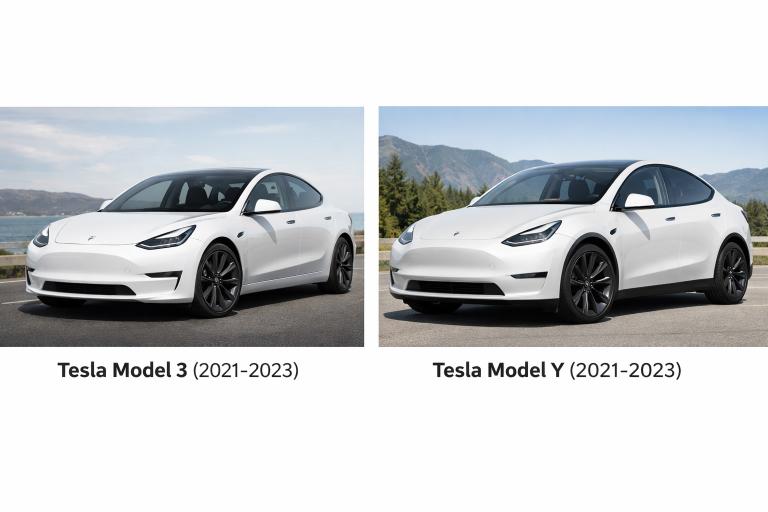
The Tesla Model 3 (2021–2023) is the best used Tesla for most buyers — priced between $22,000–$32,000, strong software longevity, and FSD Hardware 3.0 compatibility. The Model Y (2022–2023) is the best choice for families at $28,000–$38,000. Avoid pre-2019 Model S and X unless buying a refreshed powertrain — and always run a battery state-of-health check before purchase.
Quick Overview — Best Used Tesla Models in 2026
Top Value Picks for Most Buyers
| Model | Best Years | Used Price Range (2026) | EPA Range | FSD HW | Verdict |
|---|---|---|---|---|---|
| Model 3 LR AWD | 2021–2023 | $26,000–$34,000 | ~358 miles | HW3 ✅ | BEST VALUE |
| Model Y LR AWD | 2022–2023 | $30,000–$40,000 | ~330 miles | HW3 ✅ | BEST FAMILY |
| Model 3 Standard | 2021–2022 | $18,000–$26,000 | ~272 miles | HW3 ✅ | BEST BUDGET |
| Model S Long Range | 2021+ (Plaid refresh) | $55,000–$80,000 | ~405 miles | HW3 ✅ | Premium pick |
| Model S (pre-2019) | 2015–2018 | $18,000–$30,000 | ~265 miles | HW1/2 ⚠️ | APPROACH CAREFULLY |
| Model X (pre-2021) | 2016–2020 | $35,000–$55,000 | ~305 miles | HW2.5 ⚠️ | APPROACH CAREFULLY |
Tesla Models or Years to Approach Carefully
Pre-2019 Model S and X vehicles — while often attractively priced — carry a specific hardware risk: most run Autopilot Hardware 1 or 2.5, which Tesla has confirmed will not receive FSD updates. Buying one locks you out of Tesla’s current and future driver assistance software regardless of whether you pay for FSD. Early Model X vehicles (2015–2018) also had documented falcon-wing door reliability issues and powertrain recalls that, while mostly addressed, add friction to used ownership. These aren’t cars to avoid entirely — but they require careful pre-purchase inspection and realistic expectations about software longevity.
Tesla Model 3 — The Most Practical Used Tesla in 2026
The Model 3 dominates the used Tesla market for good reason: it’s the most affordable entry point, the most widely available, and the model with the longest production track record. If you’re buying a used Tesla for the first time, the Model 3 is almost always the right starting point.
Best Model 3 Years for Reliability and Value
The sweet spot for used Model 3 purchases in 2026 is the 2021–2023 production window. These vehicles reflect Tesla’s post-Fremont quality improvements — tighter panel gaps, improved interior materials, better paint consistency, and the move to a heat pump on Long Range and Performance trims for better cold-weather range retention. The 2021+ cars all come with Autopilot Hardware 3.0 (HW3), which is the minimum hardware generation needed for Tesla’s current FSD Supervised feature set and future updates.
The 2019–2020 Model 3 is a reasonable second choice — generally solid mechanically, though it predates the heat pump and some interior refinements. Avoid 2018 and earlier unless you find an exceptionally well-maintained example at a price reflecting the hardware limitations.
Real-World Range and Ownership Experience
The Model 3 Long Range AWD delivers approximately 320–340 miles in real-world mixed driving conditions — among the best in its class for a sub-$35,000 used vehicle. Battery degradation on well-maintained 2021–2023 examples is typically minimal at 3–4 years old: most report 95–98% state of health under 50,000 miles. Annual maintenance costs are low — Tesla recommends tire rotation every 6,250 miles, brake fluid check every 2 years, and cabin air filter replacement annually. Total annual service cost typically runs $200–$400 for routine items.
Tesla Model Y — Best Used Tesla for Families in 2026
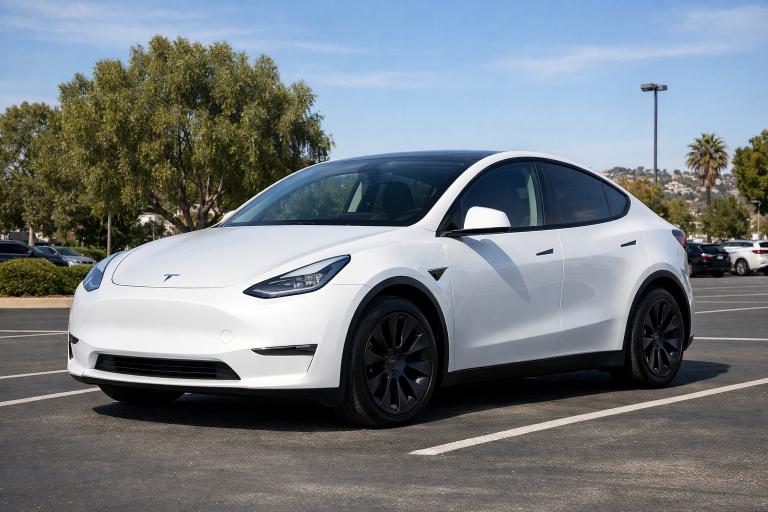
The Model Y is the world’s best-selling vehicle for a reason — and in the used market, 2022–2023 examples now represent exceptional value for buyers who need SUV practicality without paying new-car prices.
Cargo Space, Practicality, and Daily Use
The Model Y’s 68 cubic feet of cargo capacity with seats folded, optional third-row seating for children, and front trunk storage make it a genuinely practical family vehicle. The rear seats fold flat — useful for cargo transport — and the interior is more spacious than the Model 3 in every dimension that matters for families. The 2022+ Model Y benefits from the same heat pump standard equipment as the refreshed Model 3, improving cold-weather range retention by approximately 10–15% versus pre-heat pump models. All 2022+ examples run HW3 for full FSD hardware compatibility.
Used Model Y Price Trends in 2026
Model Y pricing in the used market has stabilized after the sharp depreciation of 2023–2024 triggered by Tesla’s new-car price reductions. A 2022 Model Y Long Range AWD with 30,000–50,000 miles currently lists in the $30,000–$38,000 range — representing approximately 35–40% depreciation from its original MSRP of around $52,000–$56,000. This makes the 2022 LR AWD one of the strongest value propositions in the entire used EV market, not just within the Tesla lineup. Buyers who qualify for the used EV federal tax credit (vehicles under $25,000 are the threshold — most Model Y examples exceed this) will need to evaluate standard-range variants or older examples to access the $4,000 credit.
Tesla Model S and Model X — Premium Used Tesla Options in 2026
Performance and Luxury Features
For buyers with larger budgets, the post-2021 refreshed Model S and Model X represent genuinely compelling used luxury EVs. The refreshed Model S Long Range offers approximately 405 EPA miles — the longest range of any Tesla — with a Plaid variant hitting 0–60 in under 2 seconds. The refreshed interior with a yoke steering wheel (or round wheel on newer builds), large landscape display, and rear entertainment screens puts it in direct competition with Mercedes EQS and BMW iX at a significantly lower used price. A 2022–2023 Model S Long Range now lists in the $55,000–$75,000 range — roughly half its original MSRP.
Known Reliability Concerns in Older Model S and X
Pre-2021 Model S and X (particularly 2015–2019 vehicles) carry documented reliability concerns that are important to understand before purchase. The 17-inch portrait touchscreen in pre-2021 Model S used an eMMC chip that frequently failed — Tesla issued a recall and replacement program, but not all vehicles have been updated. The Model X’s falcon-wing doors had documented actuator and weather-sealing issues in early production. Air suspension components on high-mileage examples can require replacement ($1,500–$3,000). And critically, pre-HW3 vehicles (most pre-2019 examples) will not receive further FSD software updates regardless of FSD purchase status.
Tesla Battery Life and Degradation in Used Teslas
How Long Tesla Batteries Typically Last
Tesla’s battery longevity data — aggregated from thousands of owner reports across Tesla forums and third-party trackers like Teslike and EV Database — consistently shows that Tesla batteries degrade more slowly than most buyers expect. Based on this aggregated data, Model 3 and Model Y batteries average approximately 10–15% capacity loss over 200,000 miles — meaning a vehicle with 80,000 miles typically retains 93–96% of its original capacity under normal charging habits. The key variable is charging behavior: vehicles that were regularly DC fast-charged to 100% and stored at high charge levels show faster degradation than those maintained at 80–90% daily charge.
Tesla’s battery and drive unit warranty covers 8 years or 100,000–150,000 miles depending on trim (Model 3 Standard: 8yr/100K; Long Range and Performance: 8yr/150K), guaranteeing a minimum 70% capacity retention. A 2021 Model Y purchased used in 2026 typically has 3–4 years of battery warranty remaining — a meaningful financial protection for the new owner.
How to Check Tesla Battery Health Before Buying
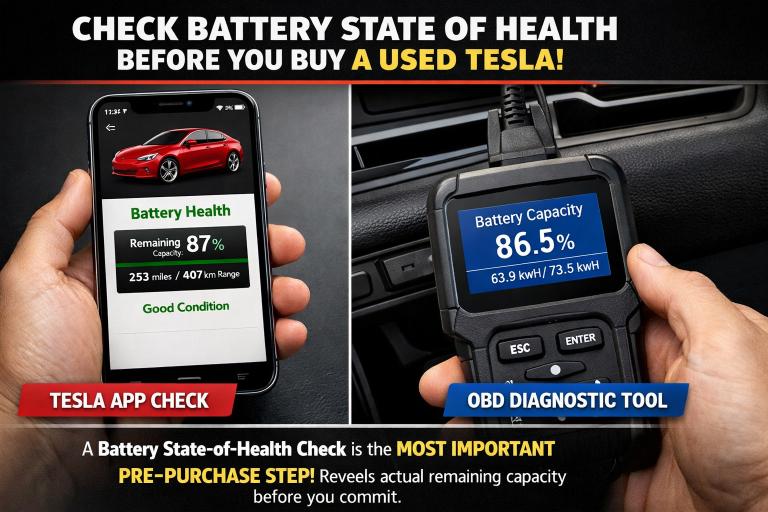
There are three reliable methods to verify battery state of health before purchasing a used Tesla. First, request access to the Tesla app under the seller’s account — the app shows estimated range at full charge in real time, which compared to the original EPA figure gives a rough degradation indicator. Second, ask for a Tesla Service pre-purchase inspection ($150–$250) which includes a battery diagnostic and a full system health report. Third, use a third-party OBD-II tool compatible with Tesla (such as Scan My Tesla or Tesla Fi) during a test drive to pull detailed battery cell data. Never skip battery verification on any used EV purchase above $20,000 — it’s the highest-value single check you can perform.
What to Check Before Buying a Used Tesla in 2026
Software Updates, Autopilot Hardware, and Feature Access
Tesla’s software ecosystem is a core part of the ownership value — but it’s also a source of hidden risk on older vehicles. Before purchasing, verify the vehicle’s Autopilot hardware generation via the touchscreen under Controls → Software → Additional Vehicle Information. HW3 (Hardware 3.0) is the minimum generation for current FSD Supervised features and future updates. HW2.5 vehicles received a free upgrade to HW3 if they had FSD purchased — but verify this was completed, not just promised. Also check whether any FSD subscription or purchased FSD transfers with the vehicle — Tesla policies on FSD transfer have varied, and a transferred FSD purchase adds significant value to a used listing.
Charging History and Warranty Coverage
Ask the seller for charging history context: How often was the vehicle DC fast-charged? Was it regularly charged to 100%? Was it left at high state of charge for extended periods? While you can’t verify all of this independently, a seller who can’t answer these questions about a Tesla — which logs all charging events — should prompt additional scrutiny. Also verify remaining warranty: enter the VIN at Tesla’s website or ask Tesla service to confirm the remaining battery and drive unit warranty coverage. A vehicle that transfers with 2–3 years of battery warranty remaining is materially more valuable than an identical vehicle with expired coverage.
② Run battery state-of-health check (target: above 90% SOH)
③ Verify remaining battery + drive unit warranty via VIN
④ Check for open recalls at nhtsa.gov
⑤ Request Tesla Service pre-purchase inspection ($150–$250)
⑥ Confirm whether FSD purchase transfers with the vehicle
Final Buying Advice — Which Used Tesla Should You Choose in 2026?
💰 Best Used Tesla for Budget Buyers
- Model: Tesla Model 3 Standard RWD
- Year: 2021–2022
- Price: $18,000–$24,000
- Range: ~260–272 miles real-world
- Why: HW3 hardware, low maintenance, Supercharger access, potential used EV credit eligibility under $25K
🏆 Best Used Tesla for Long-Term Ownership
- Model: Tesla Model Y Long Range AWD
- Year: 2022–2023
- Price: $30,000–$38,000
- Range: ~310–330 miles real-world
- Why: Heat pump, HW3, 3–4 yr battery warranty remaining, highest resale retention, family cargo space
Best Used Tesla for Budget Buyers
If your budget is under $25,000, the 2021–2022 Model 3 Standard Range RWD is your target. It clears the federal used EV tax credit threshold ($25,000 price cap), runs HW3, and delivers 260–272 miles of real-world range — more than sufficient for the average U.S. daily commute of 37 miles. Battery health on these vehicles at 3–4 years old is typically excellent. The Supercharger network access alone makes this a more practical used purchase than any other EV at the same price point.
Best Used Tesla for Long-Term Ownership
The 2022–2023 Model Y Long Range AWD is the most complete used Tesla purchase in 2026. It combines family-suitable cargo space, excellent real-world range, heat pump cold-weather performance, HW3 for future software updates, and residual battery warranty coverage — at a price now 35–40% below its original MSRP. Buyers who keep vehicles for 5–7 years will find the ownership cost per mile of this configuration competitive with almost any vehicle in its class, gas or electric.
FAQ — Buying a Used Tesla in 2026
What is the best used Tesla model to buy in 2026?
For most buyers, the 2022–2023 Tesla Model Y Long Range AWD is the best used Tesla purchase in 2026 — combining practical cargo space, ~330 miles of real-world range, HW3 Autopilot hardware, heat pump cold-weather efficiency, and 3–4 years of remaining battery warranty at a used price 35–40% below the original MSRP. Budget buyers should target the 2021–2022 Model 3 Standard RWD, which offers similar technology at $18,000–$24,000 and qualifies for the federal used EV tax credit.
How many miles can a Tesla battery last?
Based on aggregated owner data, Tesla batteries in Model 3 and Model Y vehicles typically retain 85–92% capacity at 150,000–200,000 miles under normal charging habits. Tesla’s battery warranty guarantees a minimum 70% capacity for 8 years or 100,000–150,000 miles depending on trim. Real-world data consistently shows Tesla batteries outlasting the warranty period without reaching the 70% threshold under normal use — making high-mileage examples a reasonable purchase when battery health is verified before buying.
Are used Teslas expensive to maintain?
No — used Teslas have among the lowest routine maintenance costs of any vehicle in their price class. With no oil changes, no spark plugs, and minimal brake wear due to regenerative braking, annual maintenance typically runs $200–$450 for routine items (tire rotation, brake fluid, cabin filter). The main out-of-warranty cost risks are the 12V auxiliary battery ($200–$350 replacement), tire wear (heavier EVs wear tires faster than equivalent gas cars), and occasional suspension components on high-mileage examples.
Is it safe to buy a high-mileage Tesla?
Yes — with proper pre-purchase verification. A Tesla with 80,000–120,000 miles that passes a battery state-of-health check (above 88–90% SOH), has HW3 Autopilot hardware, and comes with documented service history is a reasonable purchase. The EV drivetrain has fewer failure-prone components than a gas engine at equivalent mileage. The key risks at high mileage are battery degradation (check SOH), 12V auxiliary battery condition, suspension wear, and tire replacement frequency. A pre-purchase Tesla Service inspection at $150–$250 addresses all of these systematically.