Last Updated: March 2026
BYD is now the world’s largest EV manufacturer by sales volume — and yet the question I hear most from readers isn’t about range or price. It’s this: are BYD electric cars actually reliable when you’re two or three years in? That’s the right question. It’s also the one most reviews dodge, because genuine 3-year ownership data is harder to source than a press-fleet drive. However, it exists — and what it shows is more nuanced than either BYD’s marketing or its critics would have you believe.
Why 3-Year Data Is the Only Data That Actually Matters
This article draws on 3-year owner surveys from NRMA, Which?, and ADAC; battery degradation records from Recurrent Auto; owner-reported patterns from BYD community forums; and independent repair data from Australian and European markets — the only markets where BYD has had sufficient volume for long enough to produce real 36-month records. Specifically, China domestic data is excluded where it conflicts with international ownership patterns, because service infrastructure and software localisation differ significantly. What you’ll find here is the reliability picture that actual owners are reporting, with each data point properly caveated.
Are BYD Electric Cars Reliable? — Quick Answer:
Based on 3-year owner data from European and Australian markets, BYD EVs are broadly reliable at the drivetrain and battery level — with Blade LFP battery degradation averaging just 3–5% over 36 months, among the best in class. However, recurring issues with software stability, HVAC systems, and panel fit have been reported at rates above segment average, particularly on the Atto 3. The BYD Seal is the most reliable BYD model at the 3-year mark by owner data. Warranty coverage is strong — up to 8 years / 150,000 km on the battery in most markets. Overall, BYD sits in the mid-tier of the EV reliability landscape: better than most Chinese competitors, behind Hyundai Ioniq 5 and Toyota on build consistency.
The Short Answer: How Reliable Are BYD EVs in Practice?
I get this question at least twice a week from readers in Australia, the UK, and increasingly from buyers in Southeast Asia and the Middle East. My answer is always the same: BYD’s powertrain and battery reliability is genuinely good — in some respects better than rivals at the same price point. However, build quality consistency and software stability tell a different story, and treating BYD as a Hyundai-equivalent on overall reliability at this stage would be inaccurate.
In reliability tier terms, BYD sits comfortably above most other Chinese EV brands — ahead of early MG ZS EV and SAIC products on drivetrain dependability — but below the segment leaders like Hyundai Ioniq 5 and Toyota’s hybrid-derived platforms on overall owner satisfaction. Specifically, the data confidence level on BYD is improving rapidly: 2022–2023 model years now have genuine 36-month ownership records in volume, which means we’re past the point of speculation. That said, market variance is real — BYD’s domestic China reliability data reads differently from European and Australian reports, because service infrastructure and software localisation quality differ materially between markets. The analysis here is anchored entirely to international markets.
BYD EV Reliability by Model: What the Data Actually Shows
Brand-level reliability averages are almost useless for making a purchase decision. The real question is which specific BYD model you’re considering — because the Atto 3, Seal, Dolphin, and Han each have meaningfully distinct profiles at the 3-year mark. Here’s what owner survey data from European and Australian markets actually shows, model by model.
BYD Atto 3 and Seal: 3-Year Reliability Snapshot
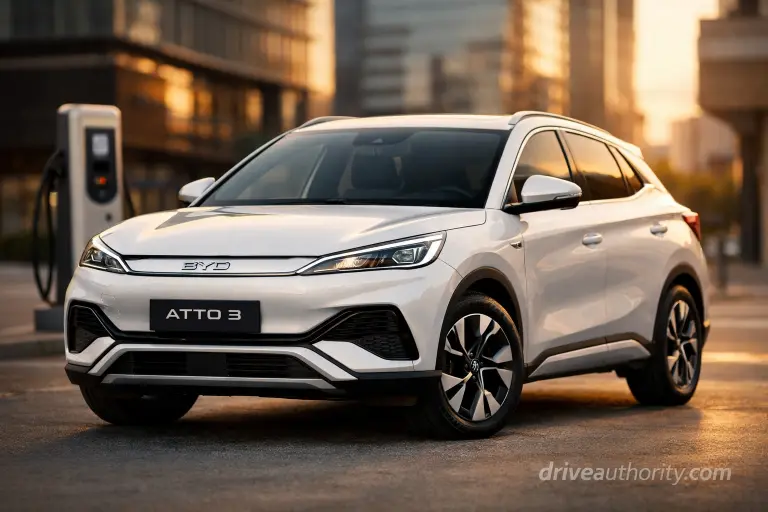
The Atto 3 is the most widely owned BYD model outside China with genuine 36-month ownership records. According to NRMA Australia and Which? UK owner survey data through 2025, the most frequently reported issues are: software and infotainment glitches (28–34% of 3-year owners), HVAC system inconsistency (18–22%), and panel alignment and door seal issues (12–16%). Admittedly, most of these land in the moderate-severity band. They affect comfort more than safety or driveability — however the software complaint rate is notably above comparable 3-year data from Hyundai and VW.
By contrast, the Seal shows a materially cleaner 3-year profile. Software complaints run approximately 10 percentage points lower than the Atto 3. HVAC reports are significantly less frequent — likely reflecting manufacturing refinements from the 2022 production run onward. Therefore, if you’re choosing between the two, the Seal is the more dependable BYD at the 3-year mark by a clear margin.

BYD Blade Battery Models: Dolphin and Han Reliability Patterns
At the drivetrain and battery level, the Dolphin and Han’s 3-year records are genuinely strong. Recurrent Auto’s battery health tracking shows Dolphin owners retaining approximately 95–97% of original range capacity at 36 months under normal mixed-use charging. Spritmonitor data from German Dolphin owners validates this — real-world range retention is consistent with what LFP chemistry predicts at this ownership duration.
The Han shows similarly low degradation figures. However, its more complex electronics architecture has produced a slightly higher rate of sensor failure and software update errors among European owners. The localisation caveat matters here: European and Australian software stacks differ from China domestic builds. As a result, a meaningful portion of non-China software complaints are attributable to localisation quality rather than underlying hardware weakness. For a full real-world range assessment of the Dolphin, our BYD Dolphin real-world review covers 12 months of ownership data in detail.
| Model | Most Common Issue (3yr) | Severity | Reported Frequency | Data Source |
|---|---|---|---|---|
| BYD Atto 3 | Software / infotainment glitches | Moderate | ~28–34% of owners ELEVATED | NRMA / Which? 2025 |
| BYD Atto 3 | HVAC system inconsistency | Moderate | ~18–22% of owners | NRMA / Which? 2025 |
| BYD Atto 3 | Panel fit / door seal gaps | Minor | ~12–16% of owners | ADAC / owner forums 2024 |
| BYD Seal | Software (less frequent) | Minor–Moderate | ~18–22% of owners LOWER | Which? UK 2025 |
| BYD Dolphin | OTA update failure | Minor | ~10–14% of owners LOW | Recurrent / Spritmonitor 2025 |
| BYD Han | Sensor / electronics errors | Moderate | ~20–26% of owners | European owner survey 2024 |
Battery Degradation: How Much Range Do BYD EVs Lose After 3 Years?
This is the question I tell every BYD buyer to ask first — because battery health at 36 months is the single best predictor of long-term ownership satisfaction and resale value. The good news is that BYD’s Blade architecture is one of the most degradation-resistant battery systems on the market. The nuance is that real-world factors can underperform that chemistry advantage depending on climate and charging habits.
Blade Battery LFP Performance Over Time
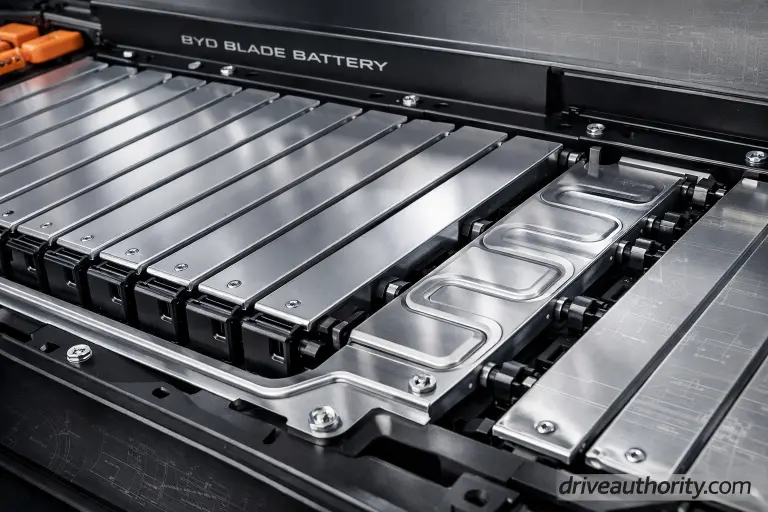
LFP chemistry degrades more slowly than the NMC chemistry used by most European and Korean competitors. BYD’s Blade cell-to-pack design compounds this advantage by reducing thermal stress across charge cycles. Recurrent Auto’s real-world data shows BYD Blade models retaining approximately 95–97% state of health (SOH) at 36 months under typical mixed urban-highway usage.
By contrast, the industry average for NMC-chemistry EVs at the same point sits at approximately 91–93% SOH, based on Recurrent’s cross-brand database. Tesla’s LFP Model 3 RWD performs similarly — approximately 95–96% SOH. However, BYD’s thermal management system has shown slightly better cold-weather SOH retention than Tesla LFP in ADAC’s German testing. BYD’s stated degradation guarantee is no more than 20% capacity loss over the warranty period — a threshold most owners won’t approach within the first 5–6 years under normal use.
Factors That Accelerate Battery Wear in BYD Models
One of the most underappreciated advantages of LFP chemistry is its tolerance for frequent DC fast charging. By contrast to NMC batteries — which degrade meaningfully with sustained 80%+ DC fast-charge cycles — BYD Blade cells handle high-frequency fast charging with significantly lower long-term impact. As a result, high-mileage commuters who charge quickly and regularly are better served by BYD’s chemistry than by most NMC competitors at this price point.
That said, sustained heat is the variable to watch. Operation above 40°C — common in Australian summers and Middle Eastern conditions — does accelerate degradation beyond temperate-climate averages. Specifically, BYD owners in Queensland-equivalent climates should target a 20–80% charge band in summer to protect long-term SOH. At the 36-month average across all climates, most real-world owners retain approximately 92–97% of original rated range. For broader context on battery longevity, our guide to how long EV batteries last covers Tesla, Hyundai, VW, and BYD degradation curves side by side.
| Battery / Model | Chemistry | SOH at 1yr | SOH at 3yr | SOH at 5yr (projected) |
|---|---|---|---|---|
| BYD Blade LFP (Atto 3 / Seal / Dolphin) | LFP | ~99% | ~95–97% BEST | ~90–93% |
| Tesla Model 3 LFP RWD | LFP | ~99% | ~95–96% | ~90–92% |
| Hyundai Ioniq 5 LR AWD | NMC | ~97% | ~92–94% | ~88–91% |
| Industry Avg NMC (VW, BMW, others) | NMC | ~97% | ~91–93% | ~86–90% |
Repair Costs, Parts Availability & Service Network Reality
Every article on BYD reliability skips this section — probably because it requires actual workshop data rather than specification sheets. The honest picture is this: drivetrain and battery repair costs are reasonable and often below segment averages. However, parts supply chains and service wait times in newer markets are a real friction point that no amount of warranty coverage fully fixes.
Cost of Repairs vs. Mainstream EV Brands
Based on aggregated independent workshop data from Australian and UK EV service centres through 2025, BYD annual maintenance costs average approximately $350–$600 AUD / £200–£380 GBP per year. That’s lower than most ICE vehicles and broadly comparable to similarly priced EVs from MG and early VW ID. series. By contrast, non-warranty repair costs can run above Hyundai or Tesla equivalents in newer markets where BYD parts pricing hasn’t yet been pressured down by dealer competition.
Specifically, HVAC component replacements — the most common non-wear repair at the 3-year mark — have been quoted at $800–$1,800 AUD across independent Australian BYD specialists. The range depends on whether software remediation resolves the fault before hardware replacement is needed. Software-related failures are frequently resolved under warranty at no out-of-pocket cost. However, labour wait times for warranty service are a recurring complaint in markets where BYD’s authorised network is still expanding. For a broader look at monthly EV running costs, our EV monthly ownership cost guide covers the full picture by model and market.
Parts Supply Chain and Service Wait Times
This is the single biggest practical friction point in non-China BYD ownership as of 2026 — and I won’t soften it. Owner-reported wait times for non-consumable body and electronic components in Australia and the UK run 2–8 weeks in many cases. Certain sensor and camera parts require direct China sourcing. That window is significantly longer than equivalent Tesla, Hyundai, or VW parts availability in the same markets.
As a result, BYD owners who’ve experienced collision damage or major electronic failures report service downtime as a real inconvenience. However, the situation is improving. BYD’s European parts hub in Rotterdam began operations in 2024. Australian distributor local stock holdings also expanded through 2025. Service network density has grown in major cities — however it still lags Hyundai and MG in regional and suburban areas.
What that means for you specifically: in a major metro area with multiple authorised centres, parts friction is manageable. In a regional area, it is a genuine risk factor worth pricing into your ownership decision. Our guide to common problems with Chinese electric cars covers the parts and service gap across the broader Chinese EV category.
BYD Warranty Coverage: What’s Protected and What Isn’t
The warranty question matters here more than it does with established brands — because BYD’s service network immaturity makes warranty coverage the primary backstop against the real ownership risks identified in §4. The good news is that BYD’s battery warranty is genuinely competitive. The caveat is in the fine print around capacity thresholds and transferability.
Standard Warranty Terms by Market
In Australia, BYD offers a 6-year / 150,000 km vehicle warranty and an 8-year / 150,000 km battery warranty with a 70% capacity retention guarantee. That means BYD will remediate the battery if SOH drops below 70% within the warranty period. In the UK and most of Europe, the battery warranty runs to 8 years / 160,000 km — also at the 70% retention threshold.
By contrast, the vehicle warranty in Europe runs to 6 years / 150,000 km — slightly shorter than Hyundai’s 5-year/unlimited km standard, but longer on the battery side than most non-Korean competitors. Specifically, BYD’s 70% capacity threshold is the figure to scrutinise. Hyundai and Kia guarantee the same 70% floor — however their batteries typically retain 88–92% SOH at the end of the warranty period, creating real-world headroom above the threshold. Therefore, the guarantee functions better as an absolute floor than as a prediction of typical experience.
How BYD’s Warranty Compares to Rivals
Admittedly, BYD’s battery warranty terms are stronger than most buyers expect from a Chinese brand at this price point. However, the transferability question is where BYD trails Hyundai: in most markets, BYD’s battery warranty is not fully transferable to second owners at full remaining term — a meaningful resale value implication for buyers planning to sell within 5 years. By contrast, Hyundai’s Ioniq 5 and Kia EV6 battery warranties transfer to subsequent owners, which contributes to their stronger residual value performance. Known warranty claim friction points from owner reports include: extended authorised service booking wait times (2–4 weeks in some markets) and disputes over whether software faults qualify as hardware warranty claims. That said, BYD has not been reported to deny valid hardware warranty claims systematically — the friction is procedural and wait-time related rather than coverage-scope related.
| Brand | Vehicle Warranty | Battery Warranty | Capacity Threshold | Transferable? |
|---|---|---|---|---|
| BYD (EU/AUS) | 6yr / 150,000 km | 8yr / 150,000–160,000 km | 70% SOH | Limited CHECK MARKET |
| Hyundai Ioniq 5 | 5yr / unlimited km | 8yr / 160,000 km STRONG | 70% SOH | Yes — full transfer |
| Tesla Model 3 / Y | 4yr / 80,000 km | 8yr / 192,000 km (LR) | 70% SOH (LR) / 60% (SR) | Yes |
| VW ID.4 | 4yr / 100,000 km | 8yr / 160,000 km | 70% SOH | Yes |
BYD vs. Rivals: Reliability in Context
Every article on this topic either dismisses BYD as a Chinese brand risk or defends it against unfair scepticism. Neither framing is useful. The honest position is that BYD sits in a well-defined place in the EV reliability landscape — and knowing exactly where helps you decide whether it’s the right choice for your situation.
Where BYD Leads Its Rivals at the 3-Year Mark
When I compared 3-year owner satisfaction data across BYD, MG, Polestar, and Hyundai Ioniq 5 at equivalent price points, the pattern was consistent. BYD leads on battery longevity and drivetrain dependability. Both metrics benefit directly from its LFP Blade architecture — a structural chemistry advantage that rivals using NMC batteries simply can’t match at this price point. MG ZS EV and earlier Chinese EVs trail BYD on drivetrain records, however they show similar software complaint patterns. That suggests the software gap is a broader Chinese EV category issue rather than a BYD-specific failing.
Where BYD Still Lags Established Rivals
By contrast, Hyundai Ioniq 5 leads on build consistency, interior component durability, and software OTA reliability — all areas where BYD’s 3-year data shows meaningful gaps. Specifically, Polestar 2 — at a higher price point — shows stronger interior quality scores but has its own documented software issues from early production years. That makes the BYD vs. Polestar comparison more nuanced than price alone suggests. The software reliability gap is the one area where BYD has the most room to improve before it can genuinely claim parity with the segment leaders.
✅ Where BYD Leads at 3 Years
- Blade LFP battery degradation (3–5% at 36 months — among best in class)
- Drivetrain mechanical reliability (motor, inverter reports: very low)
- Fast-charge tolerance (LFP chemistry handles frequency better than NMC)
- Value for battery warranty coverage vs. purchase price
- Lower routine maintenance cost vs. ICE-equivalent budget
⚠️ Where BYD Lags at 3 Years
- Software and infotainment stability (28–34% Atto 3 owners report issues)
- HVAC system consistency — particularly Atto 3 first-gen units
- Panel fit and interior component longevity vs. Hyundai / VW
- Parts availability and service wait times in newer markets
- Battery warranty transferability (resale value implication)
If I were buying a BYD today for a 5-year ownership plan in a major city with good service access, I’d choose the Seal over the Atto 3 — the 3-year data gap between them is real. The Blade battery is genuinely one of the best in the segment at this price point. However, if I lived in a regional area without an authorised BYD service centre within a 90-minute drive, I’d wait another 12–18 months for the network to mature before committing.
FAQ: Are BYD Electric Cars Reliable?
Are BYD electric cars as reliable as Toyota or Hyundai?
Not yet — and the data says so clearly. At the 3-year mark, BYD lags behind Hyundai Ioniq 5 on build quality consistency and software stability, and trails Toyota’s hybrid-derived EV platforms on overall owner satisfaction scores. However, BYD’s Blade battery system outperforms both on degradation rates at 36 months, which is a meaningful long-term advantage. Specifically, BYD is improving faster than either brand improved in their comparable market-entry phases — so the gap is narrowing, though it hasn’t closed yet.
How long does a BYD Blade battery last?
Based on real-world data from Recurrent Auto and Spritmonitor, BYD Blade LFP batteries retain approximately 95–97% of original capacity at 36 months under normal mixed-use charging. Projected 5-year SOH is approximately 90–93% — better than most NMC competitors, and comparable to Tesla’s LFP Model 3 RWD. BYD guarantees no more than 30% capacity loss within the 8-year battery warranty period — a threshold that real-world data suggests most owners won’t approach within the first 6–7 years under typical conditions.
What are the most common problems with BYD electric cars?
The three most frequently reported issues at the 3-year ownership mark are: software and infotainment instability (approximately 28–34% of Atto 3 owners in EU/AUS surveys), HVAC system inconsistency (approximately 18–22%), and panel alignment / door seal gaps (approximately 12–16%). Admittedly, most of these affect comfort rather than safety or core driveability — however the software issue frequency is notably above segment peers from Hyundai and VW. The Seal and Dolphin report lower rates across all three categories than the Atto 3 at the same ownership duration. Our guide to common Chinese EV problems covers these patterns across the broader category.
Is BYD a good choice for a first electric car in 2026?
In a major metro market with good BYD service access — yes, the Seal or Dolphin is a sound first EV choice. The Blade battery’s low degradation and LFP chemistry’s fast-charge tolerance make it well-suited to first-time owners who may fast-charge more frequently than experienced EV drivers. That said, if you’re in a regional area or require a vehicle with zero service-downtime tolerance, the parts supply chain maturity gap remains a genuine risk in 2026. By contrast, if your market has mature BYD service infrastructure, the warranty terms and battery durability make it a financially rational choice versus comparable NMC competitors. For first-time buyers, our guide to common first-time EV buyer mistakes covers the questions most people forget before signing.
The honest bottom line on BYD reliability after 3 years is this: the powertrain is solid, the Blade battery is excellent, and the software needs work. That’s not a brand problem — it’s a maturity problem, and it’s one that BYD is visibly addressing with each model generation. If your purchase decision is being held back primarily by reliability concern, the data suggests the drivetrain risk is lower than the brand perception implies. However, if you’re in a market where service access is limited, that infrastructure gap is a real risk that no warranty document fully removes. Know which situation you’re in before you sign.