🕒 Last updated: March 2026 — Verified against current warranty documentation and owner data
Are Chinese cars reliable in 2026? Yes — for most buyers in markets with established dealer support. Brands like BYD and MG score 130–170 PP100 in initial quality studies, competitive with mid-tier Korean brands. EVs show stronger drivetrain durability than ICE models. The main risks are software stability in the first 12 months and parts delays in thin-coverage markets.
Chinese car brands have gone from punchline to serious global contender in under a decade — but are Chinese cars reliable in 2026, or are buyers still taking a risk? This guide evaluates long-term durability using owner reports, crash ratings, warranty terms, battery degradation data, and resale trends across global markets to give you a clear, evidence-based answer before you commit.
How We Assess Whether Chinese Cars Are Reliable in 2026
Reliability benchmarks have evolved significantly. Modern assessments go beyond whether the engine starts — they track electronic fault frequency, OTA software update stability, structural integrity past 60,000 km, and warranty claim resolution speed. Understanding these metrics is the only way to get an honest answer to the Chinese car reliability question.
Repair Frequency & Severity — The PP100 Index Explained
The most widely used reliability metric is Problems Per 100 Vehicles (PP100), tracked by J.D. Power’s Initial Quality Study and Vehicle Dependability Study. Chinese brands entering European and Australian markets are now formally included. According to J.D. Power’s 2025 IQS data, MG and BYD registrations in monitored Western markets score in the 130–170 PP100 range for initial quality — comparable to mid-tier Korean brands circa 2018, and notably behind Toyota and Honda’s current 95–115 range.
Severity context matters: a rattling trim panel and a transmission failure carry equal weight in raw PP100 counts. Chinese brands perform acceptably on minor issues but electrical fault severity remains a concern in first and second-generation models.
Warranty Claims & Service Campaign Data
Warranty claim rates are a more honest reliability signal than owner perception alone. BYD issued voluntary software service campaigns for infotainment and ADAS systems across its Atto 3 and Seal lineup in 2024 — an indicator of active issue management, but also a flag for early adopters. MG’s parent SAIC issued minor suspension and steering calibration updates across ZS and MG4 models in European markets. ADAC’s technical assessments of Chinese EVs sold in Germany have flagged similar software-first fault patterns, with mechanical failures remaining rare.
3–5 Year Chinese Car Reliability Benchmarks
The most candid reliability data comes from 3+ year owners. Long-term reliability assessments from 2025 consistently show that MG ZS and MG4 owners beyond 50,000 km report suspension wear, infotainment lag, and intermittent ADAS sensor faults — not catastrophic mechanical failures. BYD’s 5-year Western market ownership data is still maturing, but domestic Chinese fleet data points to strong LFP powertrain durability.
Chinese Car Build Quality & Engineering Progress
The engineering gap between Chinese automakers and established Japanese or Korean brands has narrowed dramatically since 2022, driven by proprietary platform development and serious R&D investment — not just cost reduction.
Platform Sharing & Global R&D Investment
BYD’s e-Platform 3.0 — used across the Atto 3, Seal, and Dolphin — was engineered in-house and validated in extreme climate markets from Norway to Saudi Arabia. Chery’s T1X platform underpins models sold in over 80 countries. SAIC/MG operates a dedicated R&D centre in the UK that contributed directly to the MG4 achieving a 5-star Euro NCAP rating in 2023, according to Euro NCAP’s published results. This is no longer badge engineering — these are ground-up platforms, and the crash test data confirms it.
LFP vs NMC Battery Durability — Which Is More Reliable?
One of the clearest reliability advantages in Chinese EVs is battery chemistry. Most mass-market models use Lithium Iron Phosphate (LFP) — known for exceptional thermal stability, longer cycle life (3,000–4,000 full cycles vs 1,000–1,500 for NMC), and lower thermal runaway risk. BYD’s Blade Battery extends this with a structural cell-to-pack design that removes module-level failure points entirely.
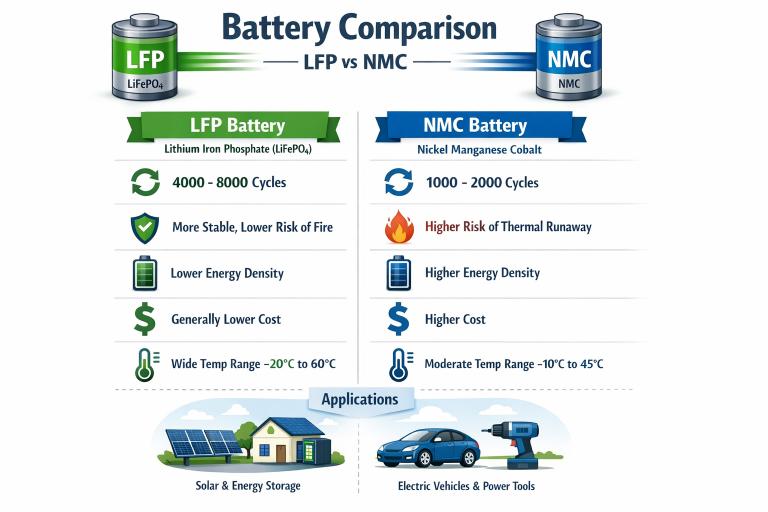
In practical daily charging, LFP batteries degrade more slowly than NMC packs — particularly for owners who charge to 100% regularly. The tradeoff is slightly lower energy density, which explains range figures below equivalent NMC competitors. For a full breakdown of how this plays out over ownership, see our guide on how long EV batteries last.
Software, OTA Updates & Infotainment Stability
Chinese brands have invested heavily in large, feature-rich infotainment systems — and some early software architecture reflects ambition outpacing stability. Early MG4 units shipped with infotainment lag and screen freeze bugs, patched via OTA within 6 months. BYD’s DiLink system has improved substantially since 2023 but still draws criticism for response lag on lower-spec trims.
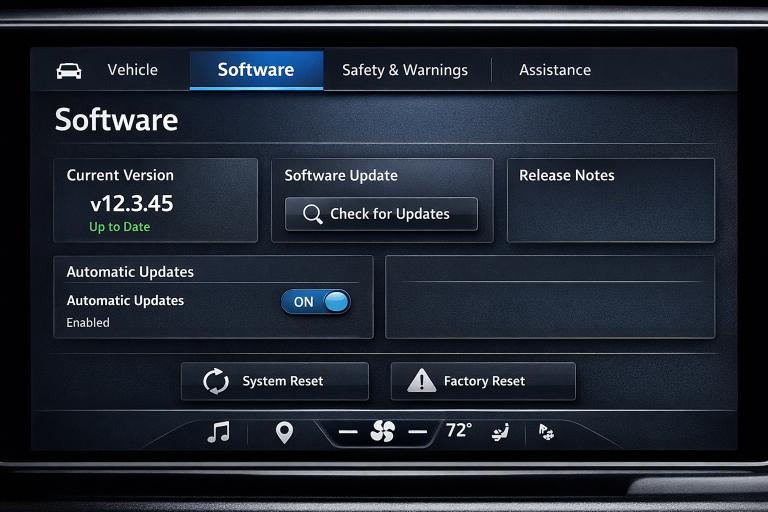
The key advantage: OTA update capability is standard across most 2025–2026 Chinese models. Many software issues that previously required dealer visits are now resolved remotely — a genuine long-term reliability differentiator over legacy manufacturers with slower update pipelines.
Common Chinese Car Problems Reported by Owners
Based on aggregated owner forums, ADAC breakdown statistics, Which? reliability surveys, and warranty claim patterns, the following represents the most honest picture of Chinese car problems in current ownership cycles.
Electrical & Software Glitches in Chinese EVs
The most frequently reported issue across Chinese EVs and ICE models alike is electrical and software instability — phantom dashboard warnings, infotainment resets, and ADAS calibration errors. The majority are resolved via software updates rather than parts replacement, keeping actual repair costs low while creating first-year ownership frustration. ADAC’s 2024 breakdown statistics for Chinese-branded vehicles in Germany confirmed that electrical faults account for the largest share of reported issues, though roadside mechanical failures remain uncommon.
Interior Wear, Fit-and-Finish, & Build Consistency
Panel gaps, soft-touch materials wearing faster than expected, and rattling trim appear disproportionately in reviews of Chinese cars under $25,000. This is less true of premium-positioned models like the BYD Han or NIO ET5 — where material quality receives consistently positive assessments from Which? and Auto Express reviewers — and more true of entry-level Chery and BAIC products.
Parts Availability & Chinese Car Service Delays
Outside established dealer markets — particularly in Southeast Asia, parts of Eastern Europe, and secondary African markets — sourcing replacement parts for Chinese models takes longer than for Japanese or Korean equivalents. This is improving as supply chains mature, but it remains a real consideration in thin-coverage regions. See our full breakdown of hidden costs of Chinese EVs for what this means financially over a 3-year ownership period.
| Issue Type | Frequency | Est. Repair Cost | Affected Segments |
|---|---|---|---|
| Infotainment / Software Glitch | High (most OTA-resolved) | $0–$150 | All segments; EVs most common |
| ADAS Sensor Recalibration | Moderate | $80–$300 | Mid-range & above |
| Interior Trim / Panel Gaps | Moderate (cosmetic) | $50–$400 | Budget segment (<$22K) |
| Suspension Wear (early onset) | Low–Moderate | $200–$600 | ICE models, high-km drivers |
| Battery Degradation (>15%) | Low (LFP), Moderate (NMC) | Warranty-covered in most cases | EVs past 100,000 km |
| Parts Availability Delays | Moderate (region-dependent) | Variable | Thin-coverage markets |
Sources: Aggregated from ADAC breakdown statistics 2024, Which? reliability survey data, and owner community reports (MG Owners Club UK, BYD Australia forums).
Chinese EV Reliability vs Gas and Hybrid Models
Within Chinese brand lineups, EVs and ICE models don’t carry the same reliability profile. The differences are meaningful for buyers deciding between powertrain types.
Fewer Moving Parts — Why Chinese EVs Outperform ICE Models
An electric motor has roughly 20 moving parts. A turbocharged petrol engine has over 200. This mechanical simplicity translates directly into lower drivetrain failure frequency. BYD and MG EVs in 3-year ownership reviews consistently report zero drivetrain failures as the norm, whereas turbocharged ICE models from the same brands occasionally show turbocharger wear and cooling system issues at higher mileage. For most urban and commuter buyers, the Chinese EV reliability profile is genuinely stronger than the ICE equivalent.
Chinese EV Battery Degradation Trends in 2026
LFP batteries in mass-market Chinese EVs show capacity retention of approximately 88–92% after 100,000 km, based on aggregated fleet data from Chinese domestic registrations and early European owner surveys compiled by EV database platforms including Recurrent and ADAC’s EV fleet monitoring. NMC-equipped models show moderately faster degradation under fast-charging-heavy patterns. Both fall within — or near — standard warranty thresholds (typically 70% capacity after 8 years or 160,000 km).
Hybrid & Turbocharged Engine Reliability in Chinese Models
Chinese plug-in hybrids represent an increasing share of 2025–2026 lineups, and their reliability profile is more nuanced. BYD’s DM (Dual Mode) system and Chery’s PHEV architecture have both been revised across multiple generations and are now considered mature by independent workshop assessors.
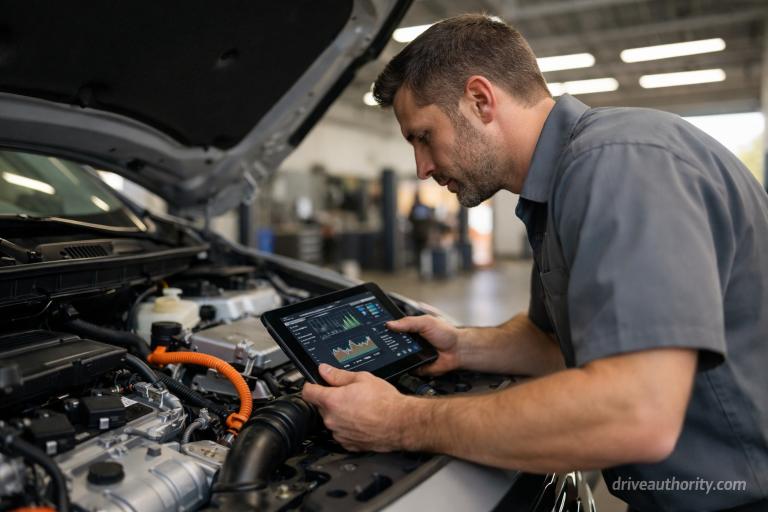
However, early PHEV adopters in 2022–2023 experienced gearbox calibration issues that required dealer attention — an issue largely resolved in current production runs. Used Chinese PHEV buyers should verify software version history before purchasing. For a direct comparison of how these powertrain types stack up financially, see our EV vs hybrid vs plug-in hybrid guide.
Chinese Car Warranty Coverage & Global After-Sales Support
Warranty terms are one of the clearest signals of manufacturer confidence in product reliability. Chinese brands have been notably aggressive on coverage — frequently exceeding Japanese and European competitors at equivalent price points.
Standard Warranty Terms by Region
Most Chinese brands in global markets offer 5-year/100,000 km vehicle warranties as standard — versus the 3-year/60,000 km (36K miles) standard that many established brands still apply. In Australia and the UK, MG offers 7-year coverage on new registrations, confirmed in SAIC’s published 2025 warranty documentation. This is partly a market entry strategy, but it does provide genuine financial protection for buyers — particularly relevant given the software stability concerns noted above.
Battery Warranty & Capacity Guarantees
The battery warranty is the most critical coverage point for any EV purchase. The following reflects published brand documentation for 2025–2026 model years:
| Brand | Vehicle Warranty | Battery Warranty | Capacity Threshold |
|---|---|---|---|
| BYD | 6 yr / 150,000 km | 8 yr / 160,000 km | ≥70% retention |
| MG (SAIC) | 7 yr / 100,000 km (UK) | 8 yr / 150,000 km | ≥70% retention |
| Chery / OMODA | 5 yr / 100,000 km | 8 yr / 120,000 km | ≥70% retention |
| NIO | 4 yr / 120,000 km | Battery-as-a-Service model | Swap-based; no degradation cap |
| GWM / Haval | 5 yr / 100,000 km | 8 yr / 150,000 km | ≥70% retention |
Source: Published brand warranty documentation, 2025–2026 model year. Terms vary by market — always verify with local dealer before purchase.
Dealer Network Expansion & After-Sales Reality in 2026
Dealer density is the practical limitation of warranty value. BYD now operates over 4,500 service points globally outside China. MG has dense coverage across the UK, Australia, and the Middle East. In Eastern Europe, Latin America, and secondary African markets, coverage remains thin — creating service lag risk that partially offsets strong warranty terms on paper. Buyers in the UK and EU are in the best position to benefit from current dealer expansion.
Chinese Car Resale Value & Depreciation Trends
Reliability directly influences resale value — and for Chinese cars in 2026, the depreciation picture is mixed. Brands are improving, but market perception hasn’t fully caught up, creating risk for some buyers and opportunity for others.
3-Year Residual Value Data for Chinese Cars
Based on used car market pricing data from the UK (Auto Trader), Australia (CarsGuide), and the UAE, the average 3-year residual value for Chinese EVs sits at approximately 38–48% of original purchase price. This compares unfavorably with Japanese equivalents (typically 48–58%) and Tesla (averaging 45–52% post-2023 price adjustments). The gap is narrowing — MG4 residual values in the UK improved by approximately 4–6 percentage points between 2023 and 2025 — but it hasn’t closed.
Brand Perception & Used Market Demand
MG benefits from residual brand recognition in the UK. BYD is building a genuine product-merit reputation in Australia and Scandinavia. Brands without established identities — Leapmotor, Deepal, Voyah — face steeper depreciation curves because used buyers cannot reliably assess long-term support confidence. This dynamic is time-sensitive: early buyers absorb the depreciation premium; buyers in 3–5 years may find considerably better used market value as brand track records mature.
How Chinese Car Reliability Ratings Affect Used Prices
In used car markets, reliability perception drives asking price more than documented fault rates. A Chinese model with no mechanical faults but a reputation for software glitches will trade at a lower price than a functionally equivalent Japanese alternative. This is measurable in current UK and Australian classifieds data and should factor directly into your total ownership cost calculation — particularly if you plan to sell or trade in within four years. Our monthly EV ownership cost breakdown covers this in full.
Should You Buy a Chinese Car in 2026? (Decision Framework)
The Chinese car reliability question doesn’t have a universal answer — it has a buyer-specific one. Here’s a clear framework for three distinct buyer profiles.
Best for Budget-Focused Buyers Prioritizing Value
If purchase price and total cost of ownership matter more than maximum resale retention, Chinese cars — particularly MG and BYD — represent compelling value in 2026. The best Chinese EVs in 2026 offer competitive real-world range, modern safety technology, and long warranty coverage at 20–35% below equivalent Japanese or Korean models. The ownership experience is likely to include minor software frustrations in year one but is unlikely to involve serious mechanical failures if you buy from a brand with established local dealer coverage.
Best for Tech-Forward & EV Early Adopters
If technology density matters — large screens, advanced driver assistance, OTA updates, and innovative features — Chinese brands consistently deliver more hardware per dollar than European or Japanese alternatives. BYD’s DiPilot ADAS, NIO’s software ecosystem, and Xpeng’s highway autopilot features are genuinely competitive. Accept that software refinement may require 12–18 months of OTA updates to fully stabilize on new models, and the value proposition is difficult to challenge. See our full Chinese EV quality analysis for a detailed feature comparison.
When to Choose Established Japanese or Korean Brands Instead
If parts availability in your market is limited, you plan to keep the vehicle beyond 7 years, or strong resale retention is critical to your next purchase, Japanese brands like Toyota and Honda hold a measurable reliability advantage. The data gap has narrowed, but it hasn’t disappeared — particularly for ICE and hybrid buyers outside major dealer markets. For high-mileage buyers or those in regions with limited service infrastructure, the additional purchase premium for a Japanese or Korean brand may be justified.
- Confirm local dealer density — minimum 2–3 service points within 50 km
- Verify warranty terms in writing for your specific market (not global website)
- Check whether the model has received any service campaigns or OTA patches
- Research parts lead times for the specific brand in your country
- Review owner forums for 12-month+ ownership reports — not just first-drive reviews
- Factor in 3-year residual value if you plan to sell or trade in
- Confirm battery warranty capacity threshold (aim for ≥70% retention clause)
- For PHEVs: verify current software version has resolved known gearbox calibration issues
FAQs — Are Chinese Cars Reliable in 2026?
Are Chinese EVs reliable long term?
Most Chinese EVs using LFP battery chemistry show strong long-term reliability — particularly drivetrains, which benefit from far fewer moving parts than ICE engines. Battery degradation typically stays within warranty thresholds (≥70% capacity) past 100,000 km based on available fleet data. Software stability continues improving via OTA updates but can be frustrating in the first 12–18 months of a new model’s lifecycle.
Do Chinese cars have expensive repair costs?
Most reported issues are software-related and resolved at low or zero cost via OTA updates or straightforward dealer visits. Mechanical repairs, where required, are priced comparably to Korean-brand equivalents. The largest cost risk is parts availability delays in markets without dense dealer networks — which extends repair times and increases downtime costs rather than parts prices themselves.
How do Chinese cars compare to Japanese brands for reliability?
Japanese brands — particularly Toyota and Honda — still hold a measurable reliability advantage in 5-year and 10-year ownership data, reflected in J.D. Power VDS scores and ADAC breakdown statistics. However, the gap has narrowed significantly since 2022. Chinese EVs are now competitive with mid-tier Japanese models in the 0–60,000 km range. Japanese hybrids and ICE models remain the benchmark for high-mileage, long-term durability.
Are parts easy to find for Chinese cars outside China?
For established brands like MG, BYD, and Haval in authorized dealer markets, parts availability is broadly acceptable — comparable to Korean brands a decade ago. For newer entrants or regions with thin dealer presence, lead times can reach 2–6 weeks for non-standard parts. This is improving annually as brands invest in regional parts warehousing ahead of further model expansion.