Last Updated: March 2026 — Prices reflect 2026 U.S. EIA and Supercharger rate data
Charging a Tesla at home costs between $10 and $17 per full charge using the 2026 U.S. national average electricity rate of $0.17/kWh — compared to $23–$42 at a Tesla Supercharger, depending on your state and the model you drive. That cost gap adds up to thousands of dollars over five years depending on how and where you charge. Whether you’re comparing a Tesla against a gas car or trying to budget your real monthly electricity bill, this guide breaks down every number clearly — no vague estimates, just 2026 data you can actually use.
How much does it cost to charge a Tesla in 2026?
Home charging costs $9–$17 per full charge at the national average of $0.17/kWh, depending on battery size. A Supercharger session costs $18–$42 depending on model and location. The average driver pays $51–$56/month charging at home — compared to roughly $146/month in gas for a comparable 30 MPG car.
Tesla Charging Cost Basics in 2026
Your Tesla charging cost depends on three things: where you charge, which model you drive, and the electricity rate you’re paying per kilowatt-hour. Get all three right and a full charge can cost under $10. Ignore them and you’ll pay five times that at a public fast charger in a high-rate state. Here’s the foundation you need before running any numbers.
Average Cost per kWh in the U.S. (Residential vs Public)
According to the U.S. Energy Information Administration, the national average residential electricity rate sits at approximately $0.17 per kWh in 2026 — though this varies sharply by state. California averages around $0.29/kWh, while states like Louisiana and Oklahoma average closer to $0.11–$0.12/kWh. Tesla Supercharger rates currently range from $0.28 to $0.42 per kWh depending on local utility costs and whether you’re charging during peak hours. Third-party DC fast charging networks run $0.35 to $0.50 per kWh in most markets.
| Charging Source | Avg. Rate (2026) | Cost per 100 Miles* | Notes |
|---|---|---|---|
| Home (U.S. National Avg.) | $0.17/kWh | ~$4.25 | Based on ~4 mi/kWh real-world efficiency |
| Tesla Supercharger | $0.28–$0.42/kWh | $7.00–$10.50 | Varies by state, time of day |
| Third-Party DC Fast Charge | $0.35–$0.50/kWh | $8.75–$12.50 | Electrify America, EVgo, ChargePoint |
| Gas Car (30 MPG, $3.50/gal) | $3.50/gallon | $11.67 | 2026 national average gas price estimate |
Battery Size & Model Impact (Model 3, Model Y, Model S, Model X)
Tesla battery capacity kWh varies across the lineup — and that directly determines your cost per full charge. A larger battery delivers more range but costs more per charging session. Here’s how each 2026 model compares at the national average home rate of $0.17/kWh and a mid-range Supercharger rate of $0.35/kWh:
| Model | Usable Battery | Full Charge (Home) | Full Charge (Supercharger) | EPA Range |
|---|---|---|---|---|
| Model 3 Standard Range | ~57.5 kWh | ~$9.78 | ~$18–$24 | ~272 mi |
| Model 3 Long Range AWD | ~82 kWh | ~$13.94 | ~$23–$34 | ~358 mi |
| Model Y Long Range AWD | ~82 kWh | ~$13.94 | ~$23–$34 | ~330 mi |
| Model S Long Range | ~100 kWh | ~$17.00 | ~$28–$42 | ~405 mi |
| Model X Long Range | ~100 kWh | ~$17.00 | ~$28–$42 | ~348 mi |
How Much Does It Cost to Charge a Tesla at Home?
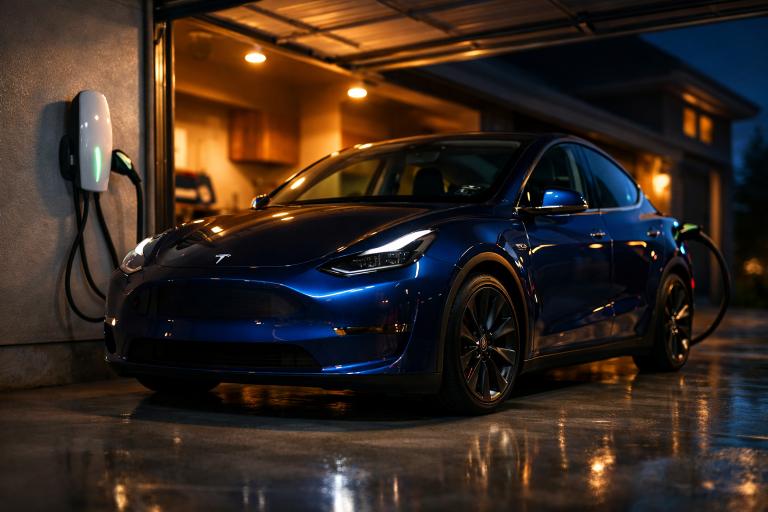
Home charging is where Tesla’s economics make the strongest case. If you have a dedicated outlet and charge overnight, you’re effectively driving for the equivalent of $1.00–$1.50 per gallon in fuel value — and that’s at the national average rate. Drivers with access to Time-of-Use off-peak plans pay even less. Here’s how the monthly math works out.
Monthly Charging Cost Based on Driving Habits
The average U.S. driver covers approximately 1,250 miles per month (15,000 miles per year). A Tesla Model Y Long Range achieves roughly 3.8–4.2 miles per kWh in real-world combined driving, meaning 1,250 miles requires approximately 298–329 kWh per month. At $0.17/kWh, that works out to $51–$56 per month in home charging cost.
Compare that directly to a gasoline car averaging 30 MPG with gas at $3.50/gallon: 1,250 miles costs about $146/month in fuel alone. The monthly savings from home charging run $90–$95 for the average driver — before factoring in reduced maintenance costs.
| Annual Mileage | Tesla Home Cost/Month | Gas Car Cost/Month (30 MPG) | Monthly Savings |
|---|---|---|---|
| 10,000 miles/yr | ~$34 | ~$97 | ~$63 |
| 15,000 miles/yr | ~$54 | ~$146 | ~$92 |
| 20,000 miles/yr | ~$71 | ~$194 | ~$123 |
| 25,000 miles/yr | ~$89 | ~$243 | ~$154 |
Time-of-Use Rates & Off-Peak Savings
Many U.S. utilities offer Time-of-Use (TOU) electricity plans with off-peak overnight rates as low as $0.09–$0.13/kWh during hours like 9 PM–6 AM. Tesla’s built-in smart load management system lets you set a charging schedule in the app so the car only draws power when rates are cheapest — no manual intervention needed.
In states with dedicated EV utility programs — California, Colorado, Georgia, Texas, and others have active programs in 2026 — your effective monthly home charging cost can drop to $28–$40/month for the average driver. Over 5 years, choosing the right utility rate plan could save an additional $1,000–$1,500 compared to charging at standard daytime rates.
How Much Does It Cost to Charge a Tesla at a Public Station?
Public charging costs are a different conversation — and one that surprises a lot of new Tesla owners. While still typically cheaper than filling a gas tank, Supercharger pricing is 2–2.5× higher than home electricity rates. Understanding how that pricing works before you rely on it regularly is important, especially for apartment dwellers or frequent road trippers.
Tesla Supercharger Pricing Structure (Per kWh vs Per Minute)
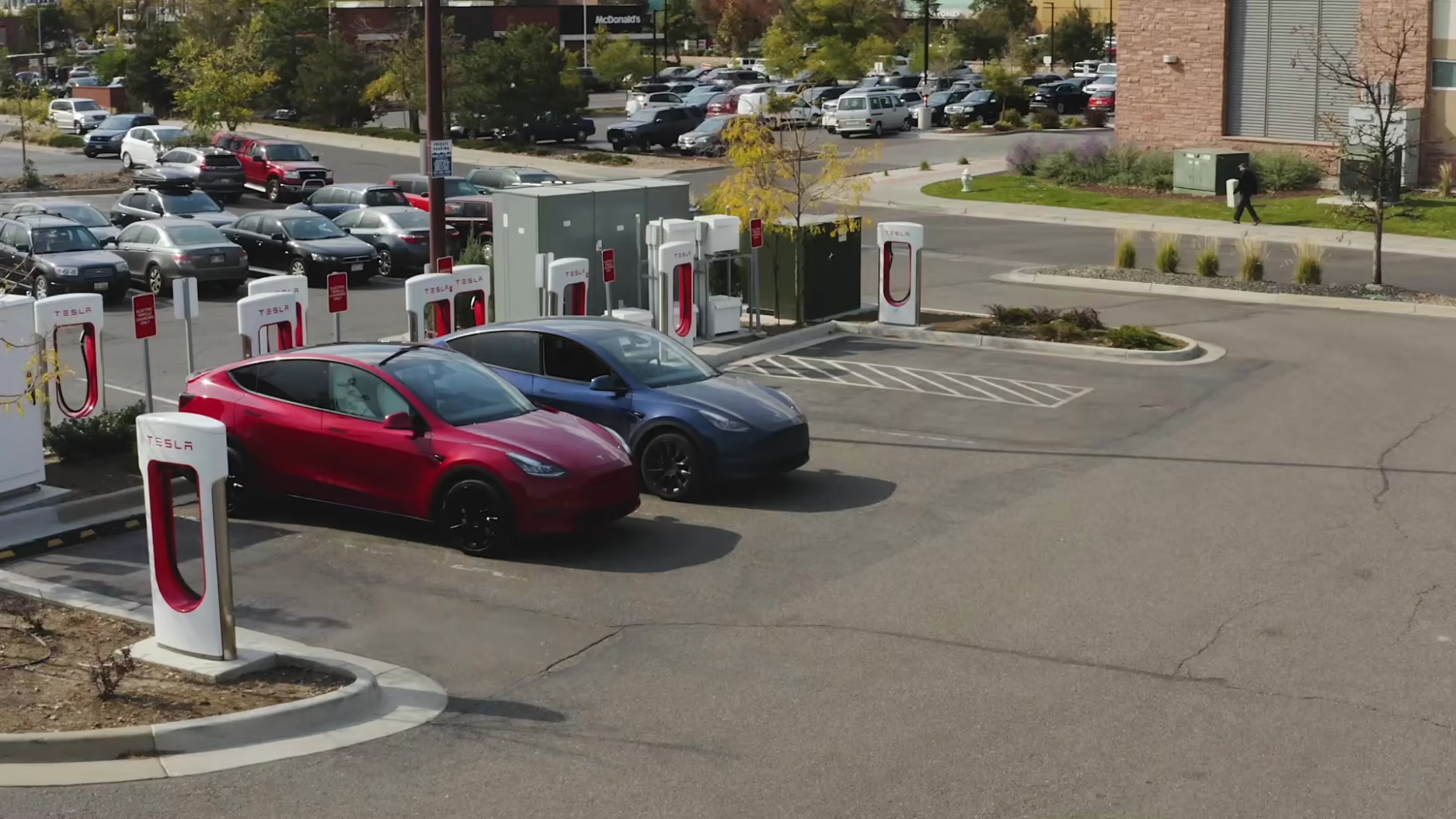
Tesla Superchargers bill either per kWh or per minute based on local utility regulations. In most U.S. states in 2026, billing is per kWh, currently averaging $0.28–$0.42/kWh. In states where per-kWh billing for third-party EV charging isn’t yet permitted, Tesla charges per minute at two tiers: a slower rate under 60 kW and a faster rate above that threshold.
Peak-hour pricing adds approximately $0.05–$0.10/kWh above baseline rates at many locations, typically between 4–9 PM on weekdays. Tesla also charges an idle fee — currently $1.00/minute or more — when a car remains plugged in after reaching full charge during busy periods. The fee is waived if you move within a few minutes, but it’s easy to miss.
Third-Party DC Fast Charging Networks
Third-party DC fast chargers remain relevant in regions with lower Supercharger density, and Tesla vehicles can access them via CCS adapter. Electrify America, EVgo, and ChargePoint typically charge $0.35–$0.50/kWh, with membership plans reducing rates by $0.03–$0.06/kWh in most cases. Some networks also add a session initiation fee of $1.00–$1.50 per charge, which doesn’t appear in the headline per-kWh rate — factor this in for short top-up sessions where it meaningfully increases effective cost.
| Charging Source | Est. Rate (2026) | Cost per 100 Miles (Model Y) | Session Fee |
|---|---|---|---|
| Home (U.S. Avg.) | $0.17/kWh | ~$4.25 | None |
| Tesla Supercharger (avg.) | $0.35/kWh | ~$8.75 | None |
| Electrify America | $0.43/kWh | ~$10.75 | None (Pass+ plan available) |
| EVgo | $0.45/kWh | ~$11.25 | ~$0.99 session fee |
| ChargePoint DC Fast | $0.40/kWh | ~$10.00 | Varies by location |
Cost Per Mile Comparison — Tesla vs Gasoline Car
Cost per mile is the cleanest way to compare EV and gas ownership economics — it removes battery size differences and shows the real fuel-cost gap mile by mile. In 2026, that gap remains compelling for home-charging Tesla owners, and remains at least marginal even for those relying heavily on public charging.
Real Cost Per Mile (Electric vs Gas in 2026)
A Tesla Model 3 Long Range achieves approximately 4.0 miles per kWh in combined real-world driving. At $0.17/kWh home rate, that’s roughly $0.043 per mile. A comparable gas sedan averaging 32 MPG at $3.50/gallon costs approximately $0.109 per mile — making the Tesla about 2.5× cheaper to fuel per mile when home-charged.
Long-Term Savings Over 5 Years
Over 5 years at 15,000 miles per year (75,000 total miles), the fuel cost advantage of home-charging a Tesla compounds meaningfully. The projection below uses stable 2026 pricing as a conservative baseline — actual savings increase if gas prices rise or if you qualify for off-peak TOU rates.
| Vehicle Scenario | Annual Fuel Cost | 5-Year Total | 5-Year Savings vs Gas Sedan |
|---|---|---|---|
| Tesla — Home Only ($0.17/kWh) | ~$638 | ~$3,188 | Saves ~$5,015 |
| Tesla — Mixed (70% Home, 30% Supercharger) | ~$835 | ~$4,175 | Saves ~$4,028 |
| Tesla — Public Charging Only | ~$1,313 | ~$6,563 | Saves ~$1,640 |
| Gas Sedan — 32 MPG, $3.50/gal | ~$1,641 | ~$8,203 | — |
| Gas SUV — 24 MPG, $3.50/gal | ~$2,188 | ~$10,938 | Tesla home saves ~$7,750 |
Hidden Factors That Affect Tesla Charging Costs
The numbers in the sections above assume average conditions. In real-world ownership, several variables push charging costs higher than baseline estimates — and most buyers underestimate at least one of them.
Charging Efficiency Loss & Weather Impact
No EV transfers 100% of grid electricity into usable battery energy. Tesla’s onboard AC-to-DC conversion at Level 2 speed introduces a 10–15% efficiency loss, meaning you’re paying for slightly more kWh than the battery actually stores. DC fast charging (Supercharger) is more efficient at the point of transfer but generates more heat, which can trigger charging speed limits on hot days.
Cold weather is the more impactful variable for most owners. In temperatures below 20°F, real-world Tesla range can drop 20–40% compared to EPA-rated figures, based on aggregated third-party cold-climate range testing data. That means you’ll charge more frequently and pay more per driven mile during winter months if you live in a northern climate.
Demand Charges, Idle Fees & Peak Pricing
Public charging carries cost layers that home charging doesn’t. Beyond the per-kWh rate, Tesla Superchargers charge an idle fee once your car is full and the station is at capacity — currently $1.00 per minute or more in most U.S. markets. This is waived if you move the car within a few minutes after charging completes, but it adds up fast if you step away from the station.
Peak-hour pricing at Superchargers typically runs $0.05–$0.10/kWh above off-peak rates between 4–9 PM on weekdays. Third-party networks also vary: some charge per session initiation on top of per-kWh fees, and others vary rates dynamically by demand. Always check the network’s app before plugging in — the headline rate on the charger itself doesn’t always reflect your final cost.
Is Charging a Tesla at Home or Public Cheaper in 2026?
For most Tesla owners, the answer is unambiguous: home charging wins on economics every time. The rate gap between $0.17/kWh at home and $0.35/kWh at a Supercharger is more than 2× — and compounds over 50,000 to 100,000 miles of ownership into thousands of dollars. The right choice depends on your living situation, but here’s a clear decision framework.
🏠 Best Case: Home Charger
- Daily commuters driving under 60 miles/day
- Homeowners with a garage or dedicated parking
- Drivers in states with TOU off-peak EV plans
- Anyone with predictable, route-based driving patterns
- High-mileage drivers (savings scale with every mile)
⚡ When Public Charging Makes Sense
- Apartment renters without dedicated charging access
- Road trippers using the Supercharger network
- Drivers needing occasional rapid top-ups mid-day
- Those with free or discounted workplace Level 2 charging
- Second-car owners with low monthly mileage
Best Scenario for Daily Commuters
If you drive 30–50 miles per day and charge at home overnight on a 240V outlet, your daily charging cost runs roughly $1.28–$2.13 per day at the national average rate. That’s lower than a single gallon of gas. A Level 2 home charger refills 30–50 miles of range in under two hours — meaning the car is always full in the morning without a single detour to a charging station. Over a full year, this scenario saves the average commuter $1,000–$1,200 in fuel costs alone versus a 30 MPG gas car.
Best Scenario for Apartment Renters or Road Trips
Apartment renters relying primarily on public charging should budget $80–$130 per month at mixed network rates — still lower than the average gas car fuel bill, but with less of a savings gap. For road trips, the Tesla Supercharger network remains the most reliable fast-charging option in the U.S., with trip planner software routing stops automatically to minimize both time and per-mile cost. Non-Tesla EV owners using CCS adapters can also access the Supercharger network in 2026, though at slightly higher rates in most markets.
FAQ — Tesla Charging Cost (2026)
How much does it cost to fully charge a Tesla Model 3?
A Tesla Model 3 Long Range (82 kWh usable battery) costs approximately $13.94 to fully charge at home at the 2026 national average rate of $0.17/kWh. At a Supercharger averaging $0.35/kWh, the same charge costs roughly $28.70. In practice, most owners charge to 80% — bringing the home cost to around $11.15 per session. The Standard Range Model 3 (57.5 kWh) costs approximately $9.78 for a full home charge.
Is it cheaper to charge a Tesla at night?
Yes — significantly so in most U.S. states. Time-of-Use electricity plans offer off-peak overnight rates of $0.09–$0.13/kWh during hours like 9 PM–6 AM, compared to $0.17–$0.25/kWh during daytime peak hours. Tesla’s scheduling feature in the app lets you set a departure time and it charges automatically at the cheapest hours. In states like California and Colorado, dedicated EV rate programs can cut your effective overnight charging cost by 40–50% compared to peak daytime rates.
How much does a Tesla add to your electric bill?
For the average U.S. driver covering 1,250 miles per month, a Tesla adds approximately $51–$56 per month to a home electricity bill at $0.17/kWh. On an off-peak TOU plan, that drops to $28–$40/month. The impact varies widely by region — California and New York residents will see a larger monthly increase due to higher baseline electricity rates, while drivers in Texas, Georgia, or Louisiana will see less impact on their bill.
Is public charging more expensive than gas?
Usually not — but it depends on your car’s efficiency and local rates. At $0.35–$0.45/kWh for DC fast charging, a Tesla Model Y costs roughly $8.75–$11.25 per 100 miles, which is less than a 25 MPG gas car at $3.50/gallon ($14/100 miles). However, if you’re comparing against a fuel-efficient hybrid (50+ MPG), the gap narrows considerably. Public EV charging is generally still cheaper than gas for most scenarios — but home charging offers by far the clearest cost advantage and should be the primary source whenever accessible.