Buying your first car in 2026 is equal parts exciting and overwhelming. The market has never been more crowded — or more nuanced. You’re no longer just choosing between sedans and SUVs; you’re navigating hybrid powertrains, federal EV tax credits, driver-assistance tech that varies wildly by trim level, and financing terms that can quietly cost you thousands over five years. This guide cuts through the noise. Whether you’re a college student working with a $15,000 budget, a young professional eyeing a commuter hybrid, or a new parent looking for a safe, practical SUV, the best cars for first-time buyers come down to one equation: lowest total cost of ownership combined with the highest peace of mind.
What First-Time Buyers Should Prioritize in 2026
First cars are rarely dream cars — and that’s fine. The smartest first-time buyers treat the purchase as a financial decision, not an emotional one. That means looking past the sticker price.
Total Cost of Ownership vs. Purchase Price
A $22,000 car can easily cost more over five years than a $27,000 car, depending on insurance, fuel, and maintenance. Before you sign anything, calculate the full picture:
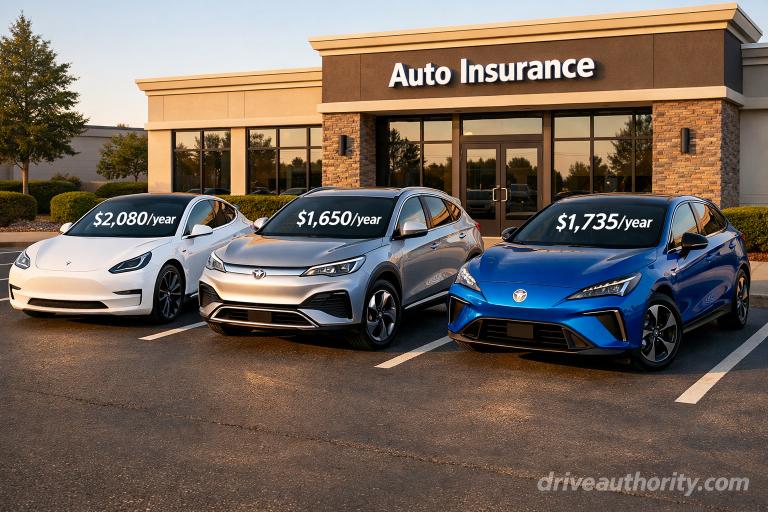
- Insurance: Young drivers (under 25) pay significantly higher premiums. The make, model, and trim you choose directly affects your monthly rate.
- Fuel: At current gas prices, the difference between 28 MPG and 40 MPG is roughly $700–$1,000 per year on a 12,000-mile driving habit.
- Maintenance: Japanese brands (Toyota, Honda) consistently post lower 5-year maintenance costs than European equivalents at similar price points.
- Depreciation: Some vehicles lose 40–50% of their value in three years. Others retain 60% or more. This matters enormously when you’re ready to trade up.
Safety Tech & Driver-Assistance Standards in 2026
By 2026, automatic emergency braking (AEB), lane-keep assist, and blind-spot monitoring are standard or near-standard on most new vehicles. However, quality varies. NHTSA and IIHS ratings don’t just measure crashworthiness — they now evaluate how well ADAS systems perform in real-world conditions. First-time buyers should look for vehicles with a Top Safety Pick+ rating and standard forward collision warning with pedestrian detection, not just optional packages.
Financing Approval & Insurance Considerations
If this is your first financed purchase, expect lenders to scrutinize your credit more closely. A score below 670 may push your APR into double digits. Getting pre-approved through a credit union before visiting a dealership gives you leverage. On insurance: sedans and subcompact SUVs typically cost less to insure than coupes or performance-trim variants. Check best cheap car insurance for new drivers in 2026 before you fall in love with a model.
| Must-Have Features | Nice-to-Have Features |
|---|---|
| Automatic emergency braking | Wireless Apple CarPlay / Android Auto |
| Rearview camera | Heated front seats |
| Lane departure warning | Sunroof / panoramic roof |
| Reliable fuel economy (30+ MPG combined) | Ventilated seats |
| IIHS Top Safety Pick (or better) | 360-degree camera |
| Wired smartphone connectivity | Premium audio system |
| Factory warranty (3yr/36k minimum) | Adaptive cruise control |
Best Sedans for First-Time Buyers (2026 Picks)
Sedans remain the most practical and affordable entry point for most first-time buyers. Lower insurance premiums, better fuel economy, and easier parking make them hard to argue against — especially in urban and suburban environments.
Most Reliable Compact Sedan: Toyota Corolla
The 2026 Toyota Corolla remains the benchmark for reliability in the compact segment. It earned IIHS Top Safety Pick+ status, offers Toyota Safety Sense 3.0 as standard equipment across all trims, and has one of the lowest predicted maintenance costs of any vehicle in its class. The base LE trim starts under $23,000 and delivers 32 MPG city / 41 MPG highway — compelling numbers for a daily driver. Long-term ownership data shows Corolla owners spend significantly less on unplanned repairs compared to competitors over a 5-year window.
Best Fuel-Efficient Gas or Hybrid Option: Honda Civic Hybrid
The Honda Civic Hybrid delivers 50 MPG combined — effectively erasing fuel costs as a meaningful monthly expense for most commuters. It drives like a conventional car (no range anxiety, no charging infrastructure dependency), and Honda’s reliability record keeps insurance underwriters happy, which translates to lower premiums for young drivers. The Civic also scores well on resale value, typically retaining around 58% of its value after three years.
Best Value for Low Insurance Rates: Mazda3
The Mazda3 punches well above its price point on interior quality and safety ratings, but what makes it compelling for first-time buyers is its historically low insurance premium footprint. Its standard i-Activ AWD option (on the AWD trim) adds all-weather confidence without the SUV price premium. Mazda’s 2.5L naturally-aspirated engine is simple, proven, and cheap to maintain.
| Model | MSRP (Base) | MPG (Combined) | Est. Annual Insurance* | Safety Rating | 5-Year Cost Est. |
|---|---|---|---|---|---|
| Toyota Corolla LE | $22,950 | 35 MPG | $1,650 | IIHS TSP+ | ~$38,000 |
| Honda Civic Hybrid Sport | $26,900 | 50 MPG | $1,720 | IIHS TSP+ | ~$37,500 |
| Mazda3 Sedan FWD | $24,100 | 32 MPG | $1,580 | IIHS TSP+ | ~$39,200 |
*Insurance estimates are national averages for drivers aged 22–26 with a clean record. Actual rates vary by state, credit score, and coverage level.
Best SUVs for First-Time Buyers (2026 Picks)
Small SUVs now outsell sedans in the US by a wide margin — and the value equation has improved dramatically. Ground clearance, cargo utility, and the psychological comfort of a higher seating position make them a natural first-car choice, as long as you’re realistic about the fuel and insurance cost tradeoffs.
Best Subcompact SUV Under Budget: Hyundai Kona
The 2026 Hyundai Kona starts well under $25,000 and comes loaded. Standard safety tech, a 10.25-inch touchscreen on most trims, and a turbocharged 1.6L engine that outperforms its displacement suggest. Hyundai’s 5-year/60,000-mile powertrain warranty is one of the most reassuring things you can have on your first financed vehicle. The Kona also comes in an all-electric variant for those in charging-friendly areas.
Best Hybrid SUV for New Drivers: Toyota RAV4 Hybrid
The RAV4 Hybrid is arguably the most sensible first SUV for a buyer who plans to keep the vehicle long-term. It includes standard AWD (no extra cost), 39 MPG combined, and reliability scores that are class-leading. It costs more upfront (~$33,000 base) but the 5-year fuel savings, lower depreciation, and minimal maintenance costs make the math work. Check out our detailed Toyota RAV4 vs Honda CR-V comparison if you’re torn between the two.
Best Small SUV for Safety & Resale Value: Subaru Forester
Subaru’s EyeSight driver-assistance suite is among the best in the industry at this price point, and the Forester’s resale value consistently outperforms the segment average. Standard symmetrical AWD is a genuine differentiator for buyers in snowy or wet climates. It’s not the most exciting vehicle in the segment — but it’s one of the most dependable, and dependability matters more in a first car than almost anything else.
| Model | Cargo Space | MPG (Combined) | AWD Available | 5-Year Depreciation |
|---|---|---|---|---|
| Hyundai Kona | 25.5 cu ft | 30 MPG | Optional | ~42% |
| Toyota RAV4 Hybrid | 37.5 cu ft | 39 MPG | Standard | ~32% |
| Subaru Forester | 35.4 cu ft | 29 MPG | Standard | ~38% |
Electric & Hybrid Cars for First-Time Buyers
The EV conversation in 2026 is more nuanced than ever. Federal incentives, improved charging infrastructure, and a wider range of affordable models have made EVs genuinely worth evaluating — but not for every buyer in every situation.
When an EV Makes Financial Sense
An EV makes strong financial sense if you own or rent a home where you can install a Level 2 charger, your daily commute is under 80 miles round-trip, and you can access the federal clean vehicle tax credit (up to $7,500 for qualifying vehicles and income levels in 2026). Under those conditions, the monthly cost of owning an electric car can be dramatically lower than a comparable gas vehicle. EVs also benefit from lower maintenance costs — no oil changes, fewer brake replacements (thanks to regenerative braking), and simpler drivetrains overall.
Charging Access & Apartment Living Considerations
This is where many first-time EV buyers stumble. If you rely on street parking or live in an apartment complex without charging infrastructure, home charging isn’t an option — and public charging adds friction to daily life. The expansion of NACS (North American Charging Standard) has improved cross-network compatibility in 2026, but charging speed and availability still vary considerably by region. Our home EV charging setup guide and EV range anxiety explainer are worth reading before committing. If you’re in a charging-constrained situation, a hybrid — particularly a Toyota or Honda hybrid — gives you most of the fuel savings without the infrastructure dependency.
First-time EV buyer tip: Before factoring in the federal credit, make sure the vehicle you’re considering qualifies under current 2026 income and MSRP caps. Battery sourcing requirements under the Inflation Reduction Act have shifted eligibility across multiple models — confirm directly with the dealer or IRS tool before purchase.
Hidden Costs First-Time Buyers Often Miss
The purchase price is just the opening bid. A surprisingly large number of first-time buyers enter the ownership phase underprepared for the real monthly financial picture.
Insurance Premiums for Young Drivers
Drivers under 25 pay the highest insurance premiums in the US — often 40–60% more than the national average for the same vehicle. Your choice of vehicle has a direct impact. Sports cars, turbocharged models, and vehicles with high theft rates (some Hyundai and Kia models still carry elevated premiums post the 2022–2023 TikTok theft wave) cost significantly more to insure. Stick to vehicles with good IIHS ratings, standard safety tech, and a low theft profile. Then compare at least three insurance quotes before finalizing any purchase.
Registration, Taxes & Dealer Fees
State registration fees, sales tax, documentation fees, and dealer prep charges can add $1,500–$4,000 to your out-of-pocket costs at signing. Never negotiate based solely on the sticker price — negotiate the out-the-door price and get itemized documentation on every fee before you agree to anything. Some dealer fees are negotiable; others (like sales tax) are not.
Extended Warranties — Worth It or Not?
For a new Toyota, Honda, or Hyundai with the factory powertrain warranty intact, a third-party extended warranty is rarely a smart financial move in the first three years. You’re paying for coverage that overlaps with what you already have. If you’re buying used — particularly outside of a Certified Pre-Owned (CPO) program — an extended warranty from a reputable provider makes more sense, especially beyond 60,000 miles. Read the exclusions carefully; many “bumper-to-bumper” warranties exclude far more than their marketing implies.
New vs. Used — What’s Smarter for First-Time Buyers in 2026?
There’s no universally right answer, but the framework for deciding is simpler than most buyers realize.
Depreciation & Certified Pre-Owned (CPO) Advantages
New vehicles depreciate roughly 15–25% in their first year. Buying a 2–3 year old CPO vehicle means someone else absorbed that hit. Toyota, Honda, and Hyundai all run strong CPO programs with multi-point inspections, extended warranties, and roadside assistance. A 2023 or 2024 CPO Corolla or Civic gives you near-new reliability at a used price — often $4,000–$7,000 less than its new equivalent. The catch: interest rates on used vehicles are typically higher than new ones, which can partially offset the price advantage on financed purchases.
Warranty Coverage & Peace of Mind
First-time buyers tend to underestimate the psychological value of warranty coverage. A major mechanical failure in year two can be financially devastating if you’re not covered. New vehicles provide that coverage by default. CPO vehicles extend it. If you’re buying a non-CPO used vehicle, budget for a pre-purchase inspection from an independent mechanic — typically $150–$200 and worth every dollar.
| Budget | Credit Score | Risk Tolerance | Best Choice |
|---|---|---|---|
| Under $15,000 | Any | Low | Non-CPO used (with inspection) — focus on Toyota/Honda with service history |
| $15,000–$22,000 | 650+ | Low–Medium | CPO vehicle from a brand with strong warranty program |
| $22,000–$30,000 | 680+ | Medium | New base or mid trim — maximize factory warranty and safety tech |
| $30,000+ | 720+ | Low | New hybrid or small SUV — prioritize 5-year ownership cost over brand prestige |
FAQs — Best Cars for First-Time Buyers
What is the best car for a first-time buyer on a budget?
For budgets under $25,000, the Toyota Corolla and Honda Civic consistently offer the best combination of reliability, fuel efficiency, safety ratings, and low ownership costs. Both have decades of real-world durability data behind them and strong resale values that protect your investment.
Should first-time buyers choose new or used cars?
Buyers with limited cash and lower credit scores often do better with a 2–3 year old CPO vehicle. Buyers with strong credit and stable income can benefit from new car incentives and lower interest rates. Run the 5-year total cost of ownership comparison — not just the sticker price — before deciding.
Are electric cars good for first-time drivers?
EVs are a smart choice if you have home charging access and qualify for federal tax credits. Without reliable home charging, the convenience tradeoffs outweigh the savings. A hybrid is a lower-risk entry into fuel-efficient driving for most first-time buyers in 2026.
How much should a first-time buyer spend on their first car?
A common rule is to keep total vehicle costs (payment + insurance + fuel + maintenance) under 15–20% of monthly take-home pay. For most first-time buyers, that points toward a purchase price between $18,000 and $28,000, depending on income, down payment, and insurance costs.
Final Recommendation Framework
After comparing dozens of models across price, reliability data, safety ratings, and real-world ownership costs, the decision framework simplifies into three buyer profiles and one consistent 3-step process.
🎓 College Student / Tight Budget
Best pick: Toyota Corolla LE (new) or CPO Honda Civic. Prioritize warranty coverage, low insurance footprint, and proven reliability over any feature list.
💼 Young Professional Commuter
Best pick: Honda Civic Hybrid or Toyota RAV4 Hybrid. Fuel savings compound quickly on longer commutes. Both carry strong resale values when you’re ready to move up.
👨👩👧 Small Family Starter Vehicle
Best pick: Subaru Forester or Toyota RAV4. Standard AWD, superior crash test performance, and cargo practicality make these the responsible choice when passengers matter most.
Regardless of which profile fits you, the decision process stays the same:
- Set your total monthly budget — not just the car payment. Include insurance, fuel, and a maintenance reserve before you set foot in a dealership.
- Compare 5-year ownership cost — use tools like Edmunds True Cost to Own or your own spreadsheet. The cheapest car to buy is rarely the cheapest car to own.
- Choose safety and reliability over brand prestige — your first car should build your financial stability, not your image. A dependable, low-drama vehicle gives you the platform to make smarter choices on your next purchase.
For more context on the ongoing cost of vehicle ownership, see our guide to cost of owning a car per month in the US and our breakdown of electric car vs gas car total costs. The numbers will clarify what no showroom salesperson ever will.