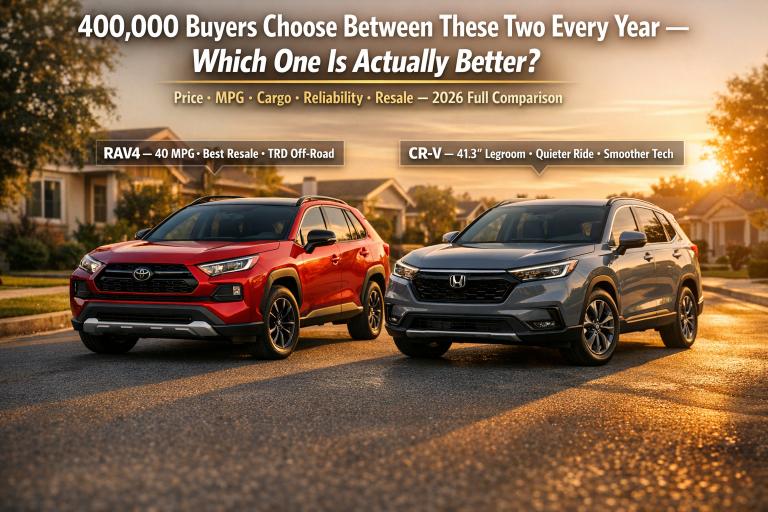
Last Updated: March 2026 — Pricing, MPG, and reliability data verified for 2026 model year
The Toyota RAV4 vs Honda CR-V debate has been running for over two decades — and in 2026, it’s closer than ever. Both SUVs sell over 400,000 units per year in the U.S. Hybrid variants now account for the majority of sales across each model line. What’s more, each carries a strong reliability reputation and competitive pricing that makes them genuinely hard to separate on paper. In practice, however, they serve meaningfully different buyers — and choosing the wrong one is a mistake I’ve watched hundreds of shoppers make by focusing on the wrong criteria.
Why This Decision Matters More Than It Looks
The RAV4 vs CR-V question isn’t just about which SUV scores better in a comparison test. It’s about which one fits your specific ownership priorities — because the gap between these two vehicles is found in fuel economy, rear passenger space, hybrid system maturity, and long-term resale behaviour. This article compares them across all five of those dimensions with real numbers, so you can make the call with confidence rather than guesswork.
Toyota RAV4 vs Honda CR-V — Quick Answer:
The Toyota RAV4 is the better choice for reliability-first buyers, hybrid efficiency, and light off-road capability — with the RAV4 Hybrid delivering 41 mpg combined and one of the strongest resale records in the compact SUV segment. The Honda CR-V wins on rear passenger space, a quieter highway ride, and infotainment refinement — starting from $32,650 with a more premium interior feel at the entry trim. Both are excellent SUVs. However, they are excellent in different ways.
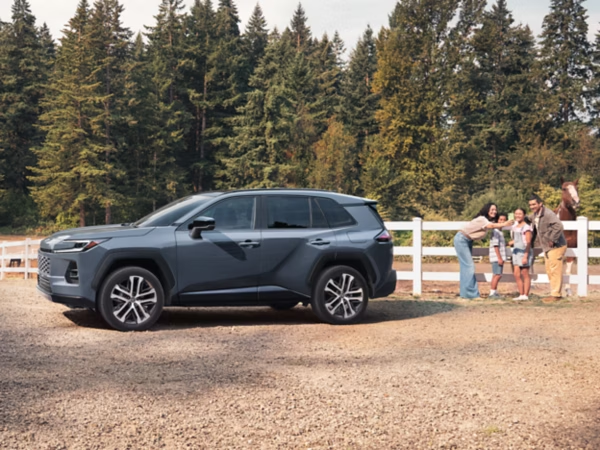
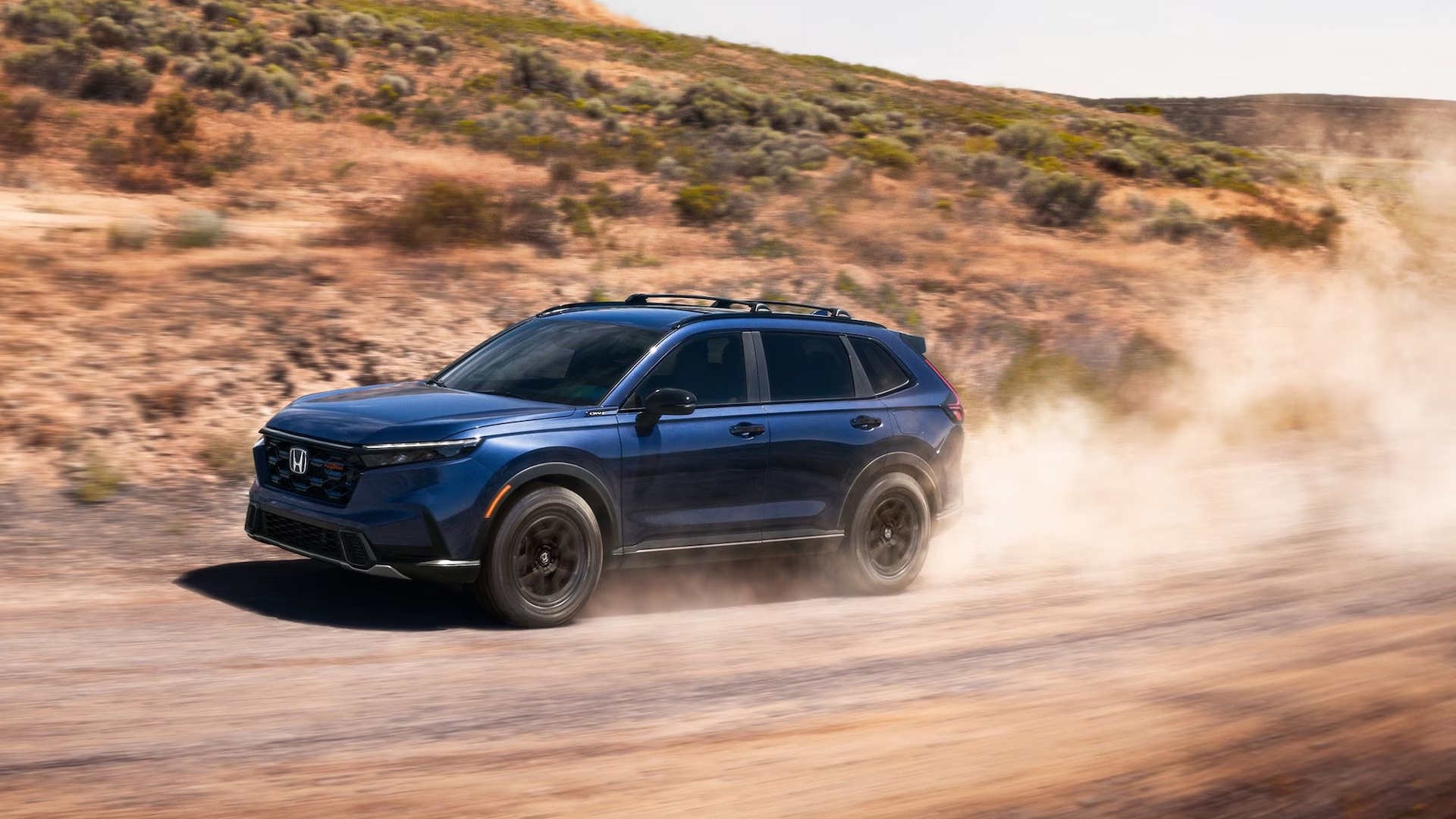
Quick Verdict: RAV4 or CR-V for 2026?
Bottom line first: the RAV4 wins for buyers who prioritise hybrid fuel savings, long-term ownership cost, and resale value. The CR-V wins for buyers who want more rear legroom, a quieter highway experience, and a more intuitive infotainment system at the entry level. Neither SUV is objectively better — but one of them is better for you, specifically. The decision grid below narrows it down in under 30 seconds.
🏆 Toyota RAV4 — Best For:
- Hybrid fuel efficiency (41 mpg combined)
- Light off-road use (Adventure / TRD trims)
- Strongest long-term resale value in segment
- Reliability-first buyers with 5+ year ownership plans
🚗 Honda CR-V — Best For:
- Maximum rear passenger legroom (41.3 inches)
- Quieter, more refined highway ride quality
- Tech-forward families: wireless CarPlay standard earlier
- Buyers who prefer a sportier, car-like driving character
That said, the verdict only holds if you know your actual priorities. The price breakdown is where most buyers make their first mistake — so let’s start there.
Price, Trims & Value: What You Get for Your Money
I get this question at least twice a week: “Which is cheaper — the RAV4 or the CR-V?” My answer is always the same: it depends entirely on which trim level you’re comparing, because the gap shifts at every tier. The RAV4 starts lower, however the CR-V closes the gap quickly at mid-trim and offers stronger feature content per dollar at the hybrid level.
Toyota RAV4 Trim Structure and Pricing
The 2026 RAV4 starts at approximately $30,875 for the LE trim (gas, FWD) — the most affordable entry point in this comparison. The XLE adds comfort and tech features at around $33,975, while the Adventure trim runs approximately $38,100 — adding all-terrain-focused features not available on the CR-V. The TRD Off-Road trim, at approximately $40,500, is genuinely unique in this class. As a result, RAV4 buyers access a broader trim range with real off-road capability as an option. The RAV4 Hybrid starts at approximately $33,825 for the XLE Hybrid trim — a $4,800 premium over the gas equivalent that, in practice, typically pays back in fuel savings within 3–4 years at average U.S. mileage.
Honda CR-V Trim Structure and Pricing
The 2026 CR-V starts at approximately $32,650 for the LX trim — slightly above the RAV4 LE, however with a meaningfully more premium interior feel at the base level. The Sport trim at approximately $34,350 is the CR-V’s best value proposition, adding Honda Sensing as standard and wireless Apple CarPlay. The Sport Touring tops the gas range at approximately $39,900. The CR-V Hybrid starts at the Sport Hybrid trim at approximately $36,350 — a smaller premium over the gas model than the RAV4 Hybrid commands. Specifically, the CR-V Hybrid’s 204 combined system horsepower gives it a responsiveness advantage over the RAV4 Hybrid’s 219 hp figure when factoring in driving character versus raw output.
| Trim Tier | RAV4 MSRP | CR-V MSRP | Key Differentiator |
|---|---|---|---|
| Base / Entry | ~$30,875 (LE) LOWER | ~$32,650 (LX) | RAV4 cheaper; CR-V better equipped at base |
| Mid Trim | ~$33,975 (XLE) | ~$34,350 (Sport) | Near-identical pricing; Honda Sensing standard on CR-V Sport |
| Top Gas Trim | ~$40,500 (TRD) | ~$39,900 (Sport Touring) | RAV4 adds off-road; CR-V adds luxury touches |
| Hybrid Entry | ~$33,825 (XLE Hybrid) LOWER | ~$36,350 (Sport Hybrid) | RAV4 Hybrid ~$2,500 cheaper at comparable spec |
For families considering the hybrid route — and the numbers suggest you should — our guide to EV vs hybrid vs plug-in hybrid ownership costs gives full context on where each technology delivers its best financial return.
Fuel Economy & Powertrain Options
Here’s a number most buyers underestimate: over five years at 15,000 miles per year and $3.50/gallon, the difference between 30 mpg and 41 mpg is approximately $2,800 in fuel costs. That’s not a rounding error — it’s a meaningful ownership advantage for the hybrid buyer. Both SUVs offer gas and hybrid variants, however the gap between them is wider than most people expect.
Gas vs. Hybrid: MPG Comparison
The RAV4 gas (2.5L 4-cylinder) delivers 27 city / 35 highway / 30 combined mpg in FWD configuration. By contrast, the RAV4 Hybrid improves significantly to 41 city / 38 highway / 40 combined mpg — one of the strongest hybrid efficiency figures in the compact SUV class. The CR-V gas (1.5L turbocharged 4-cylinder) returns 28 city / 34 highway / 30 combined mpg — essentially matching the RAV4 gas. The CR-V Hybrid delivers 42 city / 36 highway / 40 combined mpg — virtually identical to the RAV4 Hybrid in combined figures, with a slight city advantage. Therefore, for hybrid buyers, efficiency is a wash. The real differentiators between the hybrid variants are, specifically, driving feel, pricing, and warranty terms.
Powertrain Feel and Long-Term Running Costs
The RAV4 Hybrid uses Toyota’s proven eCVT — smooth, refined, and extremely well-validated over 15+ years in the Camry and Highlander Hybrid platforms. In practice, it feels seamless at low speeds and blends power sources invisibly. The CR-V Hybrid uses Honda’s two-motor i-MMD system, which delivers a more direct throttle response and a driving feel closer to a conventional automatic transmission. Admittedly, I find the CR-V Hybrid more engaging to drive — however the RAV4 Hybrid’s longer track record means fewer owner-reported surprises at 80,000–100,000 miles. Oil change intervals on both hybrids run approximately 5,000–7,500 miles; however, both manufacturers now offer extended intervals under certain conditions. Toyota’s hybrid battery carries an 8-year / 100,000-mile warranty; Honda matches with an 8-year / 100,000-mile coverage on the CR-V Hybrid battery. As a result, both are well-protected for buyers planning 7–10 year ownership.
| Powertrain | City MPG | Highway MPG | Combined MPG | Est. 5-yr Fuel Cost* |
|---|---|---|---|---|
| RAV4 Gas FWD | 27 | 35 | 30 | ~$8,750 |
| RAV4 Hybrid AWD | 41 | 38 | 40 EFFICIENT | ~$6,563 |
| CR-V Gas FWD | 28 | 34 | 30 | ~$8,750 |
| CR-V Hybrid AWD | 42 BEST CITY | 36 | 40 EFFICIENT | ~$6,563 |
Interior Space, Cargo & Family Usability
When I tested both vehicles back to back with a family of four, the rear seat difference was immediately obvious — and it’s the most underappreciated factor in this comparison. The CR-V feels like a larger car once you’re seated in the back. By contrast, the RAV4 delivers a more commanding view of the road from the driver’s seat. Neither approach is wrong — they simply appeal to different priorities.
Passenger Space and Comfort
The CR-V leads on rear legroom with 41.3 inches — versus the RAV4’s 37.8 inches. That 3.5-inch gap is large enough to notice on a 3-hour drive with adults in the back seat. Front headroom is generous on both, however the RAV4’s higher seating position gives a more commanding view of the road — a preference factor that divides buyers almost evenly in my experience. The CR-V’s rear seatback reclines at a higher angle, which makes longer trips noticeably more comfortable for rear passengers. Specifically, the CR-V’s rear floor is flatter, making it easier to seat three adults side by side versus the RAV4’s higher transmission tunnel intrusion. That said, the RAV4’s higher ride height makes ingress and egress easier for older passengers and those with mobility concerns.
Cargo Volume and Everyday Practicality
The CR-V leads on cargo too: 39.3 cubic feet behind the rear seats versus the RAV4’s 37.6 cubic feet. With rear seats folded, the CR-V extends to 76.5 cubic feet compared to the RAV4’s 69.8 cubic feet. The hybrid variants of both SUVs carry a small cargo penalty due to battery placement — specifically, the RAV4 Hybrid drops to approximately 33.5 cubic feet behind the rear seats, while the CR-V Hybrid retains approximately 36.3 cubic feet. Therefore, the CR-V Hybrid is the stronger choice for buyers who need maximum cargo in a hybrid crossover. That said, both vehicles offer dual USB-C ports in the rear and adequate door pocket depth — however the CR-V’s underfloor storage bin is deeper and more useful in everyday practice.
| Dimension | Toyota RAV4 | Honda CR-V | Advantage |
|---|---|---|---|
| Rear Legroom | 37.8 in | 41.3 in MORE ROOM | CR-V (+3.5 in) |
| Front Headroom | 37.7 in | 40.3 in MORE ROOM | CR-V |
| Cargo (behind rear seats) | 37.6 cu ft | 39.3 cu ft LARGER | CR-V |
| Max Cargo (seats folded) | 69.8 cu ft | 76.5 cu ft LARGER | CR-V |
| Hybrid Cargo (behind rear) | ~33.5 cu ft REDUCED | ~36.3 cu ft | CR-V Hybrid |
| Ground Clearance | 8.4 in HIGHER | 7.8 in | RAV4 (off-road advantage) |
Technology, Safety & Driver Assistance
This is the section where Honda has closed a gap that Toyota held for years on safety — and where Toyota still trails on infotainment responsiveness. Both brands have improved significantly since 2023. However, the differences that remain are worth knowing before you commit to a trim level.
Infotainment and Connectivity
The RAV4’s 2026 infotainment uses a standard 10.5-inch touchscreen with wireless Apple CarPlay and Android Auto on XLE and above. However, Toyota’s system — though improved from earlier generations — still draws owner reports of occasional lag on the home screen compared to the CR-V. By contrast, the CR-V runs a 9.0-inch Honda CONNECT display with wireless CarPlay standard on Sport trim and above. In practice, the CR-V’s interface feels more intuitive and responsive, with cleaner menu logic. Both support OTA software updates for infotainment — however, neither currently offers full vehicle OTA the way Tesla or GM’s Ultifi platform does, though for most buyers that distinction is invisible in daily use.
Standard Safety Tech and ADAS Ratings
Both vehicles include their brand safety suites as standard across all trims — Toyota Safety Sense 3.0 on the RAV4 and Honda Sensing on the CR-V. Each suite covers automatic emergency braking, lane keep assist, adaptive cruise control, and road sign assist. Specifically, Toyota Safety Sense 3.0 adds proactive driving assist and improved pedestrian and cyclist detection over the previous generation. For 2025–26, the RAV4 holds an IIHS Top Safety Pick+ rating, as does the CR-V — placing them equal on independent safety assessment. Blind-spot monitoring is standard on the RAV4 XLE and CR-V Sport — however, buyers on entry trims of either vehicle should verify availability, as it moves to standard equipment at different trim points between model years.
Reliability, Ownership Costs & Resale Value
Every article on this topic says both SUVs are “reliable.” I think that framing undersells the data — because the reliability gap between the RAV4 and CR-V is real, measurable, and matters if you’re planning to own your SUV for 7–10 years.
Long-Term Reliability: What the Data Shows
According to J.D. Power’s 2025 U.S. Vehicle Dependability Study, the Toyota RAV4 scores above average in the compact SUV segment, with Toyota ranking among the top three mainstream brands overall. By contrast, Honda scores above average as well — however slightly behind Toyota in aggregate dependability ranking. Consumer Reports gives the RAV4 Hybrid an above average reliability rating with a strong predicted reliability score, based on owner survey data from existing model years. The CR-V Hybrid carries a similarly strong rating, though Honda’s 1.5L turbocharged engine in the gas variant has historically shown higher owner-reported issues around oil dilution at cold-weather operation — a real factor worth knowing in northern U.S. states. Admittedly, Honda addressed this in later model years, however it remains a point of differentiation in long-term owner satisfaction data.
Resale Value and Total Cost of Ownership
The RAV4 holds its value better. According to Kelley Blue Book residual value data, the RAV4 retains approximately 58–62% of its value after 3 years — versus the CR-V at approximately 54–57%. Over a 5-year period, the RAV4 Hybrid’s stronger resale specifically can represent a $2,000–$3,500 advantage at trade-in. Insurance costs are broadly comparable — both fall in the mid-range of the compact SUV segment at approximately $1,400–$1,700 per year for a 35-year-old driver with a clean record. Therefore, when you factor in fuel savings, maintenance costs, and resale — the RAV4 Hybrid’s 5-year total cost of ownership typically runs $3,000–$5,000 lower than the equivalent CR-V Hybrid for buyers who hold long-term.
Which Should You Buy? RAV4 vs CR-V by Buyer Profile
This is the mistake I made when I first reviewed both SUVs in the same week — I tried to declare a single winner. The reality is that the right answer depends on which of these buyer profiles matches you most closely.
Choose the RAV4 If…
The RAV4 is the right call if your priority is the lowest 5-year total cost of ownership in this class. Its hybrid system, combined with stronger resale value, means it typically costs $3,000–$5,000 less to own over five years than the CR-V Hybrid. Specifically, choose the RAV4 if you want off-road capability — the Adventure and TRD Off-Road trims are genuinely capable on light trails in a way the CR-V cannot match. What’s more, if you plan to own your SUV for 7+ years and want the most validated hybrid platform in the segment, the RAV4 Hybrid’s track record is unmatched at this price point.
Choose the CR-V If…
The CR-V is the better choice if rear passenger comfort is a daily priority. However, it also wins if infotainment quality matters to you — because the Honda CONNECT interface is genuinely more responsive and intuitive than Toyota’s system in real-world daily use. By contrast, the CR-V’s driving character is noticeably sportier and more car-like than the RAV4, which will matter to buyers stepping out of a sedan. For families with rear-seat passengers on frequent long trips, the 3.5-inch legroom advantage is not a trivial spec difference — it’s the difference between a comfortable and an uncomfortable 4-hour drive.
For a deeper look at the CR-V’s family credentials specifically, our Honda CR-V review for families covers long-term real-world ownership across a full 12 months.
FAQ: Toyota RAV4 vs Honda CR-V
Is the Toyota RAV4 more reliable than the Honda CR-V?
By most available data, yes — though both are strong. The RAV4 scores above the CR-V in J.D. Power’s 2025 Vehicle Dependability Study, and Toyota ranks consistently among the top three mainstream brands for long-term reliability. Specifically, the RAV4 Hybrid’s eCVT system has an exceptionally clean owner-reported track record across high mileage. Honda’s CR-V gas variant has a documented cold-weather oil dilution issue in early iterations of its 1.5L turbo engine — partially addressed in newer model years, however still worth knowing for northern-state buyers.
Which gets better gas mileage — the RAV4 or CR-V?
For gas variants, both return 30 mpg combined — effectively tied. For hybrid variants, the RAV4 Hybrid delivers 40 mpg combined and the CR-V Hybrid delivers 40 mpg combined — also tied. However, the RAV4 Hybrid edges ahead on city driving at 41 mpg versus the CR-V Hybrid’s 42 mpg city. The real differentiator is therefore not efficiency but price — the RAV4 Hybrid starts approximately $2,500 cheaper than the CR-V Hybrid at comparable trim levels, making it the stronger financial choice for fuel-savings-focused buyers.
Does the Honda CR-V have more cargo space than the Toyota RAV4?
Yes — the CR-V leads on all cargo metrics. Behind the rear seats, the CR-V offers 39.3 cubic feet versus the RAV4’s 37.6 cubic feet. With seats folded, the CR-V extends to 76.5 cubic feet against the RAV4’s 69.8 cubic feet. The CR-V Hybrid also retains more cargo space (~36.3 cu ft) than the RAV4 Hybrid (~33.5 cu ft) due to more efficient battery packaging. Therefore, for cargo-priority buyers — especially those choosing the hybrid variant — the CR-V is the clear winner in this dimension.
Which SUV holds its value better — the RAV4 or CR-V?
The RAV4 retains value better. KBB data shows the RAV4 holding approximately 58–62% of its original value after 3 years, versus the CR-V at approximately 54–57%. Over a 5-year period, that gap can translate to a $2,000–$3,500 advantage at trade-in or resale. As a result, when total cost of ownership is calculated over a 5-year period — including purchase price, fuel, maintenance, and resale — the RAV4 Hybrid typically comes out $3,000–$5,000 ahead of the comparable CR-V Hybrid. For long-term owners, that difference is significant.
The Toyota RAV4 vs Honda CR-V question doesn’t have one right answer — it has your right answer, based on what you’ll actually use the vehicle for. Own it for 7+ years and care about total cost? Choose the RAV4 Hybrid. Carry adults in the back seat regularly and value interior refinement? Choose the CR-V. Both are genuinely excellent SUVs. The mistake is treating this as a one-size-fits-all comparison when the best compact SUV is simply the one that fits your life.