- Winter range matters more than EPA ratings — multiply your longest drive by 1.5 to find your real minimum
- Charging speed beats range capacity if you road trip 2+ times yearly
- Total cost after federal + state incentives can swing $10,000–$15,000 — verify before comparing sticker prices
The rest of this guide explains why these models work — and when they don't.
If you're searching for affordable electric cars under $40,000, you're probably not comparing specs — you're trying to avoid buying the wrong car. One that looks perfect on paper but quietly punishes you every winter, every road trip, or every charging stop.
The real challenge isn't defining affordability — it's avoiding the hidden compromises that turn a good deal into a daily frustration.
What This Problem Really Is
When buyers search for affordable electric cars, they're not just looking for low sticker prices. They're trying to solve a specific tension: electric vehicles promise lower operating costs and environmental benefits, but mainstream options from Tesla, Rivian, and legacy automakers often exceed $50,000. The real issue is identifying which budget EVs sacrifice the right features (premium audio, leather seats) versus the wrong ones (charging speed, battery thermal management, safety systems).
This creates a decision trade-off. A $28,000 EV with 220 miles of range might seem perfect until you realize it adds 90 minutes to road trips because of slow DC charging. Meanwhile, a $38,000 model with identical range but faster charging infrastructure could save you 15 hours annually if you drive to visit family twice monthly.
The affordability question becomes: which compromises align with your specific use case, and which will frustrate you within six months of ownership?
What this means for you: Charging speed matters more than range if you road trip twice a year or more.
Why Most People Misunderstand It
Many buyers assume "affordable" simply means the lowest purchase price, leading them to compare base MSRPs without factoring in total cost of ownership. A $32,000 EV that qualifies for a $7,500 federal tax credit effectively costs $24,500 — but only if you have sufficient tax liability that year. Canadian buyers face different provincial rebates ranging from zero in some provinces to $7,000 in Quebec.
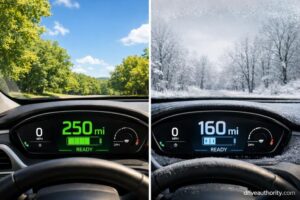
Common mistake: Others focus exclusively on EPA range estimates, treating them like guaranteed performance numbers. In reality, cold weather can reduce range by 30–40% in northern climates, turning a 250-mile summer car into a 160-mile winter commuter. If your daily round trip is 140 miles, that's cutting it uncomfortably close during January in Manitoba or Minnesota.
The most common misconception is that all EVs charge at similar speeds. A car with 800-volt architecture might gain 200 miles in 18 minutes at a DC fast charger, while a 400-volt system takes 45 minutes for the same charge. For buyers who rarely road trip, this doesn't matter. For those visiting relatives four hours away, it's the difference between a tolerable break and genuine frustration.
Range loss is predictable, not random. Charging speed compounds frustration over time. And incentives distort perceived affordability in ways most buyers never check. A 250-mile summer EV becomes 160 miles in January — suddenly your 140-mile commute has zero margin for error.
Secondary Factors (Not the Main Cause)
Brand recognition and resale concerns play a supporting role. Established automakers like Chevrolet, Hyundai, and Nissan offer more predictable depreciation curves than newer Chinese brands entering North American markets. While Chinese EVs offer compelling value propositions, buyers worry about service networks and long-term parts availability.
Charging infrastructure compatibility matters regionally but isn't the primary obstacle most assume. Tesla's Supercharger network now accommodates non-Tesla vehicles in many areas, and CCS chargers are widely available along major highways. The real limitation is home charging access — if you rent an apartment without dedicated parking, even the most affordable EV becomes complicated.
Feature prioritization creates secondary confusion. Some budget EVs include advanced driver assistance but skip heated seats. Others offer premium interiors but use older battery chemistry. These trade-offs don't determine whether a car works for you, but they affect daily satisfaction.
Affordable EVs That Get the Trade-Offs Right
Here's how three popular affordable EVs actually compare in winter range and charging speed:
| Model | Winter Range | Charging Speed | Starting Price (After Incentives) |
|---|---|---|---|
| Chevy Equinox EV | 220–240 miles | Fast (190 mi / 30 min) | ~$35,000 |
| Hyundai Kona Electric | 180–200 miles | Moderate (150 mi / 35 min) | ~$33,000 |
| Used Chevy Bolt EUV | 160–180 miles | Slow (145 mi / 45 min) | ~$20,000 |
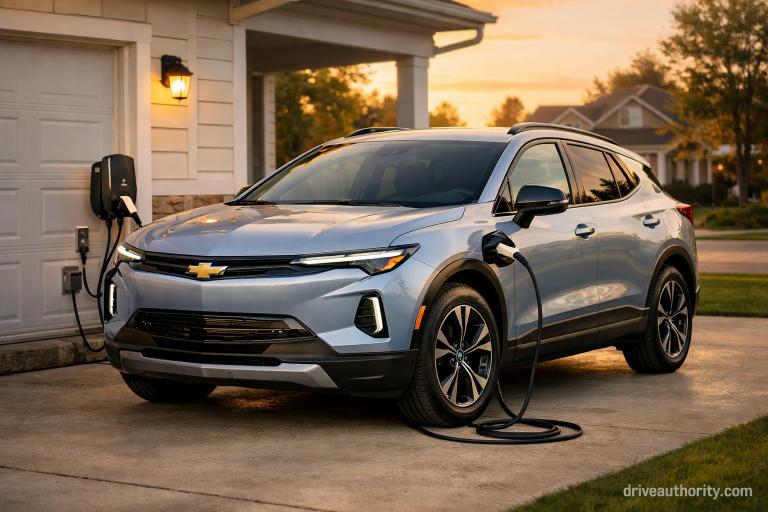
Chevrolet Equinox EV — Best balance of price, range, and charging capability. Delivers 319 miles EPA-rated range and fast DC charging without premium pricing. Strong winter performance with heat pump standard. Starts around $35,000 after federal incentives, making it genuinely accessible for middle-income buyers. Learn more about affordable EVs that avoid common pitfalls.
Hyundai Kona Electric — Superior cold-weather efficiency and predictable ownership costs. Battery thermal management system maintains performance in Canadian winters and northern US states. Established service network reduces long-term risk. Qualifies for full federal incentives when configured properly.
Used Chevrolet Bolt EUV — Maximum value under $25,000 for buyers accepting shorter range (247 miles EPA). Proven reliability after battery recall resolution. Ideal for dedicated commuter role in two-car households. Available inventory expanding as leases end.

Complete Affordable EV Comparison (Real-World Focus)
This table compares what actually affects daily ownership — not marketing numbers. The focus is on winter usability and charging time, two factors that matter more than headline range for affordable EV buyers.
| Model | Real Range (Winter) | DC Charging Speed | Best For | Main Compromise |
|---|---|---|---|---|
| Chevy Equinox EV Best Overall for Road Trips |
220–240 miles | Fast (190 mi in 30 min) | Year-round drivers who road trip 2–4 times annually | Interior materials, tech features |
| Hyundai Kona Electric Best for Cold Climates |
180–200 miles | Moderate (150 mi in 35 min) | Northern states/provinces, reliability priority | Total range, cargo space |
| Used Chevy Bolt EUV Best Budget-First Option |
160–180 miles | Slow (145 mi in 45 min) | Local driving only, two-car households | Road trip capability, charging speed |
For more detailed analysis on range expectations and performance, see our guides on EV range anxiety and how long EV charging actually takes.
What Actually Decides Affordability
If you've read this far and feel overwhelmed, here's what genuinely matters:
- Winter range needs — Your longest regular drive × 1.5 = minimum rated range required
- Charging speed — Road trippers need <35 minutes for 150+ miles; commuters can skip this
- Total cost after incentives — Federal + state/provincial rebates can swing $10,000–$15,000
Everything else is preference, not necessity.
How to Tell If This Affects You
You're dealing with affordability constraints that require careful model selection if:
- Your budget caps at $35,000–$40,000 after incentives, ruling out most mainstream EVs but leaving several viable options
- You drive 30–60 miles daily and can charge at home overnight, making limited range acceptable
- You take 2–4 road trips annually over 200 miles, requiring at least moderate DC fast-charging capability
- You live in a region with extreme winter temperatures where range degradation significantly impacts usability
- You're a first-time EV buyer uncertain which features matter versus which are marketing hype
You might have more flexibility than you think if:
- Your household has a second vehicle for long trips, allowing the EV to serve as a dedicated commuter
- Your employer offers workplace charging, reducing home infrastructure requirements
- You live in California, Colorado, or Canadian provinces with substantial incentives stacking with federal credits
Decision trigger: If your commute hits 60% of the EV's winter range, stop rationalizing — you need a bigger battery or workplace charging. Borderline range creates anxiety that ruins ownership.
Common Objection: "Aren't EV Batteries a Long-Term Risk?"
This concern is outdated. Modern affordable EVs include federally mandated 8-year/100,000-mile battery warranties, and real-world data shows most batteries retain 85–90% capacity after 100,000 miles. The Chevrolet Bolt has proven exceptionally durable through five model years. Battery degradation is gradual and predictable — not the sudden failure many buyers fear. The bigger risk is buying an EV with inadequate range for your needs from day one, not battery health at year eight.
Practical Next Steps
Phase 1 — Before You Shop
Identify your real-world range requirement. Calculate your longest regular drive and multiply by 1.5 to account for winter conditions and battery degradation over time. If that number is 180 miles, don't buy a 200-mile EPA-rated car — you need 270+ miles of rated range for comfortable year-round use. Models like the Chevrolet Equinox EV hit this threshold without exceeding budget.
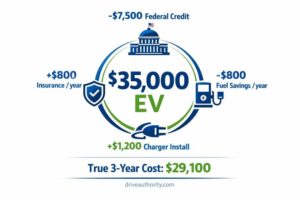
Verify total ownership costs, not just sticker price. Use your province or state's EV incentive calculator to determine actual post-rebate cost. Factor in insurance (EVs often cost 15–25% more to insure), electricity rates for home charging, and potential installation of a Level 2 home charger ($500–$2,000). A $36,000 EV with $7,500 in credits and $800 annual fuel savings becomes cheaper than a $28,000 gas car within three years. Our monthly EV ownership cost breakdown walks through these calculations.
Phase 2 — Before You Sign
Test charging infrastructure along your routes. Before purchasing, identify DC fast chargers between your home and the three places you drive most frequently beyond daily range. Use PlugShare or ChargePoint apps to verify charger reliability ratings and network compatibility with your shortlisted models. If your annual Thanksgiving drive has zero functional chargers for 180 miles, that vehicle isn't affordable — it's incompatible. Our guide on public EV charging costs and home charging setup explains the infrastructure you'll actually need.
Prioritize warranty coverage over feature lists. Budget EVs should include minimum 8-year/100,000-mile battery warranties (federally mandated, but verify coverage details). Extended powertrain warranties matter more than panoramic sunroofs when you're stretching your budget. Brands with established North American service networks — Hyundai, Kia, Chevrolet, Nissan — reduce risk compared to newer market entrants, though some Chinese brands are proving reliable.
Avoid these common first-time buyer mistakes. Don't purchase based solely on EPA range without test-driving in conditions matching your climate. Don't assume all Level 2 chargers deliver the same speed — output varies from 3.3 kW to 19.2 kW, affecting overnight charging. Don't skip the pre-purchase home electrical inspection if installing a 240V outlet. Our comprehensive guide on first-time EV buyer mistakes covers these scenarios in detail.
For Canadian buyers: Provincial incentives in BC, Quebec, and Nova Scotia can reduce effective purchase price by $8,000–$12,000 when combined with federal programs. Cold-weather performance matters more than US buyers realize — prioritize heat pump-equipped models and battery thermal management systems.
For US buyers: State incentives in California, Colorado, and New York stack with federal credits, but phase-outs based on income and vehicle price create complexity. Verify eligibility before assuming $7,500 in savings. Southern states with minimal winter weather allow smaller battery packs to remain practical year-round.
When to Consider Expert Help
If you've narrowed choices to 2–3 models but remain uncertain which best fits your driving patterns, consult an EV specialist or dealership advisor familiar with regional charging infrastructure. They can clarify real-world range expectations for your climate and identify whether specific models have known issues in your area. Certified mechanics can also inspect used affordable EVs for battery health before purchase, preventing expensive surprises. For complex scenarios involving multiple incentives or unique charging situations, professional guidance helps avoid costly mistakes.
Frequently Asked Questions
Are affordable EVs worth it long-term?
Yes, if total ownership costs work in your favor. Most affordable EVs save $600–$1,200 annually in fuel costs compared to gas vehicles, and maintenance runs 30–40% lower due to fewer moving parts. Over a typical 6-year ownership period, a $35,000 EV can cost less total than a $28,000 gas equivalent when factoring in incentives and operating expenses. See our analysis of best electric cars for the money.
What's the best affordable EV for winter driving?
The Hyundai Kona Electric excels in cold climates due to its battery thermal management system and heat pump, which minimize range loss in freezing temperatures. The Chevrolet Equinox EV also performs well with standard heat pump technology. Avoid older Nissan Leaf models, which lack active thermal management and suffer significant winter degradation. For detailed cold-weather considerations, see our EV range anxiety guide.
Is buying used better than new under $40,000?
It depends on your risk tolerance and warranty priorities. Used Chevrolet Bolt models (2022–2023) offer exceptional value at $18,000–$25,000 with remaining battery warranties, but you sacrifice the latest charging technology and federal incentives. New EVs under $40,000 qualify for up to $7,500 in federal credits and come with full 8-year battery warranties, often making them financially comparable to 2-year-old used models when incentives apply.
How much do affordable EVs actually cost per month?
After incentives, most affordable EVs cost $350–$550 monthly with financing, plus $40–$80 for electricity (assuming 1,000 miles monthly at $0.13/kWh). Insurance adds $120–$180 depending on coverage and location. Total monthly ownership typically runs $510–$810, which often matches or beats comparable gas vehicles when you account for $120–$180 monthly fuel savings. See our complete monthly EV cost breakdown for regional variations.
Affordable electric cars under $40,000 are best defined as EVs that deliver daily reliability without sacrificing the features that matter most for real-world ownership: winter range capability, charging speed that matches your travel patterns, and warranty protection that survives budget constraints.
If you're still undecided, default to the model with the fastest charging and strongest winter performance within your budget. Those two factors create more daily regret than any missing feature. Most EV regret doesn't come from what you paid — it comes from what you underestimated.
This guide is written by an independent EV analyst reviewing real-world ownership data since 2019.