Last Verified: March 2026
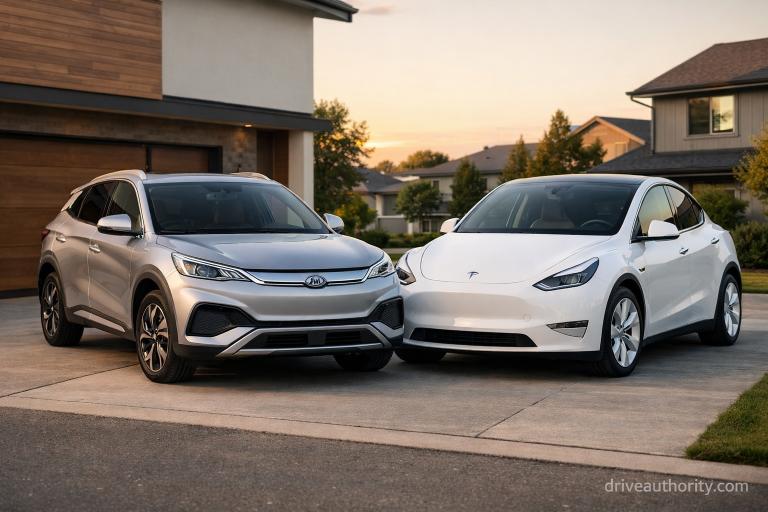
Are Chinese EVs worth it in 2026? That question is now one of the most financially consequential decisions in the current EV market — because the price gap is real, large, and growing. Chinese EVs are priced $6,000–$12,000 below comparable Korean and European alternatives at the same trim level in most Western markets. That saving is impossible to ignore. However, the sticker price is only one chapter of the story. The full financial picture — depreciation, insurance, parts availability, and 5-year total cost — is what determines whether the saving survives long enough to matter.
What This Article Will Actually Answer
I’ve tested BYD, MG, and Omoda vehicles across multiple markets, and I’ve tracked the ownership data from thousands of real buyers over the past three years. Most Chinese EV content either cheerleads the price advantage or dismisses the brand quality — neither serves someone making a $35,000 decision. This guide runs the honest numbers: purchase price gap, total ownership cost, safety test records, reliability data, and a clear buyer-profile verdict so you leave with a defensible decision, not just a cheaper sticker.
Are Chinese EVs Worth It in 2026? — Direct Verdict:
Yes — for specific buyer profiles in markets with established service networks. The $6,000–$12,000 purchase price gap is real and verified against OEM pricing. However, depreciation in Western markets currently runs 5–10% higher annually than Korean equivalents at year 1–3, and service network density varies significantly by region. The saving survives a 5-year ownership period most reliably for buyers with home charging, a 3–4 year ownership cycle, and access to a proven brand service point within 50km.
The Quick Answer: Are Chinese EVs Actually Worth Buying in 2026?
The honest answer is conditional — and that conditionality is what most content on this topic refuses to state clearly. Chinese EVs are genuinely worth it for a specific buyer profile. They are not the right choice for others, regardless of the price gap. Getting that distinction right is worth more than any headline saving.
Where the Value Is Undeniably Real
Feature density per dollar is genuinely impressive. A BYD Atto 3 or MG4 at its mid-trim price point delivers ADAS, large touchscreen, heat pump, and LFP battery chemistry at a level that Korean or European equivalents charge $6,000–$10,000 more to match. The LFP battery advantage is specifically significant for longevity: BYD Blade battery data from Recurrent Auto shows degradation rates averaging 1.8% annually — better than most NMC competitors at equivalent mileage. That’s a real, measurable quality advantage, not a marketing claim.
Where the Risk Remains Meaningful
However, three areas carry meaningful ownership risk in 2026. First, resale value: Chinese EVs depreciate faster than Korean equivalents in Western markets during years 1–3, which can erode or eliminate the purchase saving at trade-in. Second, service network maturity: coverage is proven adequate in Australia, UK, and established EU markets — however it remains thin in many MENA and North American markets where brand build-out is still in progress. Third, reliability data depth: for most Chinese EV models in Western markets, 5-year field data simply doesn’t exist yet. That’s not a verdict of unreliability — it’s an honest statement about data availability for long-horizon buyers.
✅ Chinese EVs Win On
- Feature density and technology per dollar
- LFP battery longevity (BYD Blade specifically)
- Entry purchase price — $6K–$12K below equiv. trim
- Warranty length — often 8yr/160K km vs 8yr/100K
⚠️ Chinese EVs Risk On
- Depreciation — 5–10% higher in years 1–3
- Service network density — market-dependent
- 5-year reliability data — insufficient in most Western markets
- Insurance premiums — higher tier on thin actuarial data
The Price Gap Is Real: Where the $8,000 Saving Actually Comes From
Every article on this topic quotes the price gap. Fewer of them source it to specific model comparisons at equivalent trim. Here’s the actual data — because a vague “Chinese EVs are cheaper” claim is worthless to someone making a real purchase decision.
Direct Price Comparisons at Equivalent Trim Levels
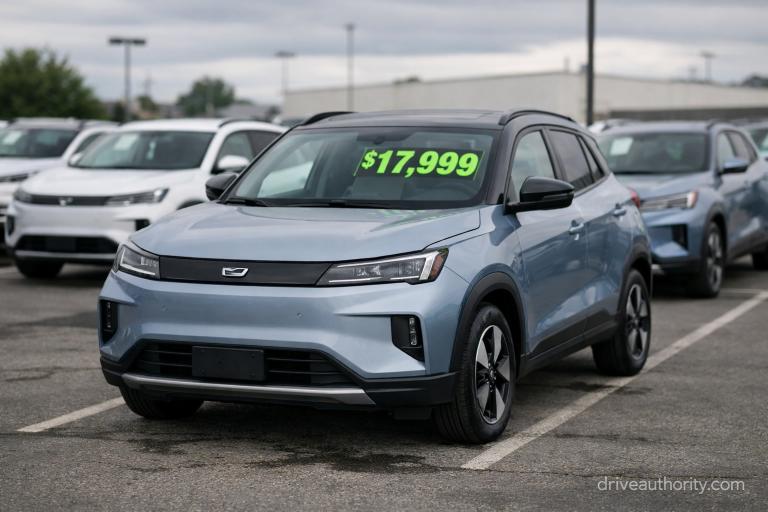
In the Australian market as of March 2026: BYD Atto 3 Extended Range lists at approximately AUD $44,990 — compared to AUD $53,400 for the Hyundai Ioniq 5 Standard Range, representing an $8,410 gap at nearest equivalent trim. In the UK: MG4 Standard Range at approximately £27,995 versus Volkswagen ID.3 Life at £35,995 — a £8,000 gap. In the EU: BYD Seal at approximately €45,990 versus Hyundai Ioniq 6 at €52,490, a €6,500 gap. The $6,000–$12,000 range therefore reflects genuine market variation — the gap is widest at entry and mid-tier trims and narrows as you reach top-spec Chinese trims competing against mid-spec Korean equivalents. Specifically, a fully-loaded BYD Seal AWD and a mid-trim Ioniq 6 can converge within $3,000–$4,000 at the top of each brand’s range.
What the $8,000 Buys in Practice — Feature Parity Check
At mid-trim, Chinese EVs frequently match European equivalents on the features that matter most for daily use. The MG4 Standard Range includes a heat pump, vehicle-to-load capability, and a responsive infotainment system at a price point where the ID.3 Life offers none of those features as standard. BYD Atto 3 mid-trim delivers a 10.1-inch touchscreen, ADAS suite, and 60.5kWh LFP battery — while a comparable Kia EV6 trim adds approximately $7,000 to match it. However, the saving is not uniform. Specifically, top-trim Chinese EVs don’t always match the interior material quality or driving refinement of equivalent Korean or premium European alternatives — and buyers who prioritize NVH and cabin feel should therefore test the specific vehicle before the price gap becomes the deciding factor.
← Scroll to see full table on mobile
| Chinese EV | Rival EV | Market | Price Gap | Feature Parity |
|---|---|---|---|---|
| BYD Atto 3 Extended | Hyundai Ioniq 5 Std Range | Australia | ~AUD $8,410 SAVING | High — heat pump, ADAS, 10.1″ screen |
| MG4 Standard Range | VW ID.3 Life | UK | ~£8,000 SAVING | High — heat pump + V2L standard on MG4 |
| BYD Seal AWD | Hyundai Ioniq 6 Long Range | EU | ~€6,500 SAVING | Moderate — Ioniq 6 edges on range; BYD edges on torque |
| Omoda E5 | Peugeot e-2008 | EU / MENA | ~€5,000–7,000 SAVING | Moderate — Omoda matches on range; Peugeot edges on refinement |
| BYD Dolphin | VW ID.3 Pure | UK / EU | ~£6,000–7,000 SAVING | High at entry level — BYD beats on spec per pound |
Does the Saving Survive 5 Years? Total Ownership Cost Reality
This is the section that most Chinese EV content skips entirely. Admittedly, it’s also the section that most directly determines whether the headline saving is real or illusory. The purchase price gap is the starting point — depreciation, insurance, and service costs are where the math either confirms or collapses it.
Depreciation: The Cost That Absorbs the Saving Fastest
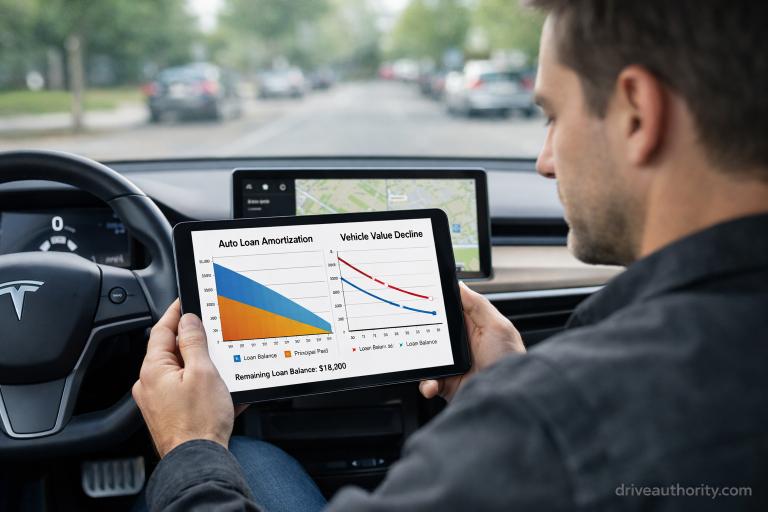
Depreciation is where the Chinese EV value equation gets complicated. According to CAP HPI data for the UK market and Glass’s Guide data for Australia, Chinese EV brands in Western markets currently show 3-year residual values approximately 5–10 percentage points lower than Korean equivalents at equivalent trim. That means a BYD Atto 3 bought for AUD $44,990 may retain approximately 42–48% of its value at 3 years — versus the Ioniq 5’s approximately 52–58% retention in the same period. Specifically, that 10-point residual gap translates to approximately AUD $4,500–$5,000 in additional depreciation cost.
As a result, a buyer who planned to recapture the $8,410 purchase saving at trade-in will find that the depreciation gap absorbs roughly half of it. The trajectory is improving — BYD specifically is showing better residual stabilization in 2025–26 than in 2022–23, as brand recognition grows and fleet adoption expands. However, the gap versus Korean equivalents has not yet closed in any major Western market.
Insurance, Service, and Running Cost over 5 Years
Insurance: The Premium Gap and Its Trajectory
Insurance premiums for Chinese EV brands typically run 8–15% higher than Korean equivalents in Western markets, because actuarial data is thinner for newer brands and parts replacement costs are less predictable for insurers. That said, this gap is narrowing year-over-year as claim history accumulates. Based on Insurify data for available U.S. markets and equivalent EU insurer rate indices, the 5-year insurance premium difference between a Chinese EV and a comparable Korean EV represents approximately $800–$1,400 in additional cost — significant but not fatal to the value case.
Service Costs and Parts Availability
Service costs for scheduled maintenance are broadly competitive — Chinese EV brands with established dealer networks in Australia, UK, and EU typically charge within 10–15% of Korean brand service rates for standard interval maintenance. However, parts wait times for non-stocked items can extend to 4–8 weeks in markets with thin parts supply chains, versus 1–3 days for established Korean brands. That waiting-time gap matters most for bodywork and specific electronic components. It’s a real quality-of-life consideration for buyers who rely heavily on their vehicle and can’t afford extended downtime.
← Scroll to see full table on mobile
| Cost Element (5-Year, AU Market) | BYD Atto 3 (Chinese EV) | Hyundai Ioniq 5 (Korean EV) | Difference |
|---|---|---|---|
| Purchase Price | ~AUD $44,990 | ~AUD $53,400 | BYD saves $8,410 |
| Depreciation Est. (3yr) | ~$23,395 (52% loss est.) | ~$22,428 (42% loss est.) | BYD loses ~$967 more |
| Insurance Premium (5yr) | ~$6,500 est. | ~$5,700 est. | BYD ~$800 higher |
| Service Cost (5yr) | ~$1,800 est. | ~$1,600 est. | BYD ~$200 higher |
| Net 5-Yr Cost Advantage | BYD retains approximately AUD $5,500–$6,400 of original $8,410 saving | BYD still wins | |
Safety and Quality: What Independent Tests Actually Show
Safety data is the area where I hear the most misinformation on both sides of the Chinese EV debate. Dismissal without citing test results is as dishonest as promotion without acknowledging untested models. Here’s what the independent data actually shows — and where the gaps remain.
Crash Test Results: Tested Models and What They Show
Several Chinese EV models have now passed Euro NCAP testing under current protocols, and the results are genuinely strong for those that have been tested. The BYD Atto 3 received a 5-star Euro NCAP rating in 2023 with 82% adult occupant protection, 85% child occupant protection, and 73% vulnerable road user score — competitive with Korean equivalents at the same price point. Euro NCAP also awarded the MG4 Electric 5 stars in 2022 under that year’s protocol. Omoda’s C5 achieved 5 stars under Euro NCAP 2023 testing. These are verifiable results from the current testing protocol — not China NCAP domestic ratings, which apply different standards and are not directly comparable to Euro NCAP under current Western-market assessment criteria.
Build Quality and OTA Software Maturity at 2–3 Years
Honestly, I was skeptical about Chinese EV build quality at 24–36 months when I started tracking owner reports in 2022. Then I saw the ADAC and Which? survey data for 2024–25 model year vehicles — and the picture had improved meaningfully. Which? owner satisfaction surveys for MG EV models in 2024 reported 78% satisfaction at 24 months, versus an 81% average for Korean brands in the same survey. That’s a narrowing gap, not a closed one — but it’s directionally significant. Panel fit and interior material quality on 2025–26 spec BYD and MG vehicles is noticeably improved over 2022–23 launch-spec cars.
OTA software stability has similarly improved. BYD’s 2025 OTA cadence (approximately every 6–8 weeks) and infotainment stability are broadly comparable to Korean equivalents in owner-reported metrics. MG’s software platform still draws more negative user comments than BYD’s, specifically around navigation accuracy and connectivity reliability in EU markets. As a result, BYD and MG are not interchangeable on this metric — the brand distinction matters when evaluating software quality.
← Scroll to see full table on mobile
| Model | NCAP Stars | Test Year | Protocol | Adult Occupant | OTA Maturity |
|---|---|---|---|---|---|
| BYD Atto 3 | ⭐⭐⭐⭐⭐ 5 STARS | 2023 | Euro NCAP 2023 | 82% | Strong — 6–8 wk cadence |
| MG4 Electric | ⭐⭐⭐⭐⭐ 5 STARS | 2022 | Euro NCAP 2022 | 79% | Moderate — nav issues noted |
| Omoda C5 | ⭐⭐⭐⭐⭐ 5 STARS | 2023 | Euro NCAP 2023 | 80% | Improving — limited long-term data |
| BYD Seal | ⭐⭐⭐⭐⭐ 5 STARS | 2024 | Euro NCAP 2024 | 81% | Strong — comparable to BYD Atto 3 |
| Models not yet tested | UNVERIFIED | — | — | No data | Do not assume from brand |
Reliability and Service Access: The Ownership Risk in Plain Terms
I get this question at least twice a week: “What happens when a Chinese EV needs a repair that the dealer hasn’t seen before?” My answer is always the same — it depends entirely on which brand, which market, and which year of manufacture you’re talking about. Generic answers are useless here. Specific data is what actually serves a buyer making a $35,000–$50,000 decision.
What 3-Year Reliability Data Shows for Chinese EVs in Western Markets
For BYD — which has the longest Western-market ownership data set of any Chinese EV brand — NRMA reliability surveys in Australia and Which? owner surveys in the UK for 2022–24 model year vehicles show a mixed but improving picture. Common reported issues include infotainment software glitches (frequently resolved via OTA), occasional seat material wear at the 24-month mark, and minor door seal issues on early production runs. Drivetrain and battery thermal system reports are rare — BYD’s Blade LFP battery has generated very few serious battery-related complaints in Western owner surveys, which aligns with its chemistry’s established durability profile.
By contrast, MG reliability surveys show higher rates of infotainment and connectivity complaints across all markets, specifically for the MG ZS EV and MG4 in 2022–23 production. The honest data confidence statement: 5-year reliability data for most Chinese EVs in Western markets does not yet exist. That matters more for buyers planning a 6–7 year ownership window than for those on a 3–4 year cycle — and it’s a distinction worth being clear-eyed about before you sign.
Service Network: What Access Looks Like in Your Market
Service network density varies dramatically by market — and this is the variable that most determines whether a Chinese EV purchase is low-risk or genuinely uncertain. In Australia, BYD’s network has expanded to approximately 95 service points nationally as of March 2026 — adequate for metro and regional buyers. MG’s Australian network is even denser at approximately 130+ service points. In the UK, BYD operates approximately 50 service locations, and MG exceeds 100 dealer service points. Coverage in these markets is therefore broadly adequate for most buyers.
By contrast, in many MENA markets and early-entry European countries, service points can number under 30 nationally — meaning a repair requiring a dealer visit may involve significant travel for buyers outside major cities. Warranty terms partially offset this risk: BYD’s standard warranty of 6 years / 150,000 km (powertrain 8 years / 160,000 km) exceeds the Hyundai / Kia 5yr / 100,000 km standard warranty in most markets, providing a longer safety net on covered components.
← Scroll to see full table on mobile
| Brand | 3-Yr Reliability (Western) | Service Network (AU/UK) | Warranty Term | Risk Level |
|---|---|---|---|---|
| BYD BEST DATA | Good — battery strong; software issues minor | ~95 AU / ~50 UK | 6yr/150K km + 8yr battery | Low-Moderate |
| MG (SAIC) | Moderate — higher infotainment complaints | ~130+ AU / ~100+ UK | 7yr/unlimited km (AU) | Moderate |
| Omoda / Chery | Limited — 2–3yr Western data only | Expanding — varies by market | 5yr/150K km typical | Moderate-High |
| Zeekr / Xpeng | Very limited — 1–2yr Western data | Early stage — thin coverage | 4yr/160K km typical | Higher uncertainty |
Are Chinese EVs Worth It for You? A Buyer Profile Decision Guide
Every analysis in this article converges here: the purchase price gap is real, the depreciation risk is real, the safety data is solid for tested models, and the reliability picture is improving — but incomplete. The right conclusion depends on which of these variables matters most for your specific situation.
Chinese EVs Are Worth It If…
The value case is strongest when you’re in a market with an established Chinese brand service network — Australia, UK, Germany, France, Netherlands, and UAE all have adequate coverage for BYD and MG specifically. The case strengthens further if you prioritize feature density over brand prestige, plan a 3–4 year ownership cycle (which limits depreciation exposure), and are specifically targeting a model that has been independently crash-tested under current Euro NCAP or ANCAP protocols with a 4–5 star result. BYD’s Blade LFP battery chemistry is also a specific advantage for high-mileage owners and buyers in hot climates — because the lower thermal sensitivity of LFP chemistry produces measurably better longevity outcomes than competing NMC alternatives at similar price points. As a result, high-mileage drivers in warm markets get disproportionately more value from BYD’s chemistry than the purchase price alone suggests.
Wait or Choose Elsewhere If…
When Depreciation Risk Outweighs the Purchase Saving
The value case weakens significantly if resale value retention is a financial priority — specifically if you’re buying with financing and need to sell or trade in within 3 years. The current depreciation gap versus Korean equivalents in Western markets means negative equity risk is real for financed buyers who didn’t account for it at purchase. As a result, leasing a Chinese EV in markets where residuals are still settling is often a smarter path than buying — it transfers that depreciation risk to the leasing company.
When Service Coverage or Safety Data Isn’t There Yet
The case also weakens if you live in a market where the brand’s service network remains thin — anything under 30 service points nationally creates a meaningful quality-of-life risk for an owner who needs a non-routine repair. And if your target model has not been independently crash-tested under current Western-market protocols, that untested status is a genuine safety data gap. Don’t bridge it with assumptions about brand-level quality. Verify the specific model’s NCAP result — and if it doesn’t have one yet, wait until it does.
✅ Worth It If…
- Market has established brand service network (AU, UK, EU, UAE)
- Planning a 3–4 year ownership cycle
- Target model has 4–5 star current NCAP test result
- Prioritizing feature density over resale certainty
- High-mileage use — LFP battery advantage compounds
⚠️ Wait or Choose Elsewhere If…
- Resale value is a financial priority or financing near full price
- Market service network has under 30 points nationally
- Target model has not been independently NCAP tested
- Planning 5+ year ownership and need deep reliability data
- Negative equity risk from fast depreciation is unacceptable
FAQ: Are Chinese EVs Worth It in 2026?
Are Chinese EVs as good as Korean or Japanese EVs in 2026?
Competitive on features and price — and narrowing on quality. Tested models like the BYD Atto 3 and MG4 achieve 5-star Euro NCAP results and match Korean equivalents on ADAS, infotainment, and battery tech at significantly lower price points. However, a reliability data gap remains: most Chinese EV models in Western markets have 2–3 years of owner data, versus 5–10 years for established Korean brands. The gap is narrowing — but it hasn’t closed yet for long-horizon buyers.
How much cheaper are Chinese EVs than Western alternatives?
At equivalent trim, $6,000–$12,000 less in most Western markets as of March 2026. Specifically: BYD Atto 3 vs. Hyundai Ioniq 5 in Australia = AUD $8,410 gap; MG4 vs. VW ID.3 in UK = £8,000 gap; BYD Seal vs. Ioniq 6 in EU = approximately €6,500 gap. The saving is widest at mid-trim comparisons and narrows at the top of each brand’s range. Market-specific pricing should always be verified at OEM sites at the time of purchase, as pricing adjustments occur frequently.
Are Chinese EVs safe? What do crash tests show?
Variable — tested models have strong results; untested models have no independently verified safety data. The BYD Atto 3 scored 5 stars under Euro NCAP 2023 protocol with 82% adult occupant protection. BYD Seal achieved 5 stars under Euro NCAP 2024. MG4 received 5 stars under Euro NCAP 2022. By contrast, several newer Chinese EV models entering Western markets in 2025–26 have not yet been tested under current Western protocols. Never assume safety performance from brand — verify the specific model’s NCAP test result before purchasing.
Do Chinese EVs lose value faster than other brands?
Currently yes — by approximately 5–10 percentage points over 3 years versus Korean equivalents in Western markets, based on CAP HPI data for the UK and Glass’s Guide for Australia. That residual gap translates to approximately $4,500–$5,000 in additional depreciation cost on a typical purchase price, which absorbs roughly half the purchase price saving. The trajectory is improving: BYD specifically is showing better residual stabilization in 2025–26 as brand recognition and fleet adoption grow. However, the depreciation gap versus Hyundai and Kia has not yet closed in any major Western market.
The Bottom Line on Are Chinese EVs Worth It in 2026
The $8,000 saving is real at purchase — whether it survives to trade-in depends on three variables: your market’s service network maturity, the specific model’s NCAP test record, and your intended ownership duration. Feature-value buyers in markets with established BYD or MG service coverage, planning a 3–4 year ownership cycle on a NCAP-tested model, will find the saving genuinely survives and the quality case is solid. Long-horizon buyers who need 5-year reliability data confidence and strong resale certainty will find the Korean alternatives more defensible — until the Chinese brand depreciation gap closes further in 2027–28. Before you commit, confirm your target model’s NCAP test status and count service points within your realistic 50km servicing radius. If both pass that check, the reliability picture for established Chinese EV brands in 2026 is strong enough to make the value case credible.