Last Updated: May 2026 — US DOE maintenance data, EIA electricity rates, Cox Automotive depreciation data, and EPA efficiency figures verified
Most lists of EV benefits lead with emissions and saving the planet. That framing misses the benefits that actually change how you experience car ownership day to day. The benefit EV drivers most consistently say they did not expect — and could not give up — is not fuel savings or acceleration. It is this: the car is always full when you wake up. No gas stations. No planning. No detours at 7 a.m. on the way to work. You plug in at home and the car charges overnight while you sleep. That single shift in how a car integrates into your life is harder to articulate before you experience it, and obvious the moment you do.
The other nine benefits on this list are similarly underrated in car-buying conversations — and several of them are quantifiably larger than the marketing suggests. The fuel savings over five years beat most buyers’ estimates. The maintenance gap between EV and gas is wider than a single oil change. The battery warranty is better than most engine warranties on gas vehicles. And the used EV market in 2026 offers a buyer’s opportunity — driven by aggressive depreciation in 2022–2024 — that is unlikely to last another two or three years. What follows is the complete picture, with the numbers attached.

10 Real Benefits of Electric Cars — Summary
The most impactful EV benefits in 2026: never stopping at a gas station again (home charging), approximately $686/year in fuel savings at 12,000 miles with home charging, ~$900/year in maintenance savings (no oil, no transmission, fewer brake jobs), instant torque that makes every car feel faster in daily driving, a cabin that is noticeably quieter above 40 mph, stable energy prices that don’t spike with crude oil markets, an 8-year / 100,000-mile battery warranty that exceeds most gas powertrain warranties, one-pedal driving that reduces fatigue in stop-and-go traffic, used EV prices down 30–50% from 2022 peaks, and software updates that improve the car after purchase. None of these benefits work without home charging access — that precondition applies to benefits 1, 2, 5, and 8 directly.
-
1
You Never Stop at a Gas Station Again
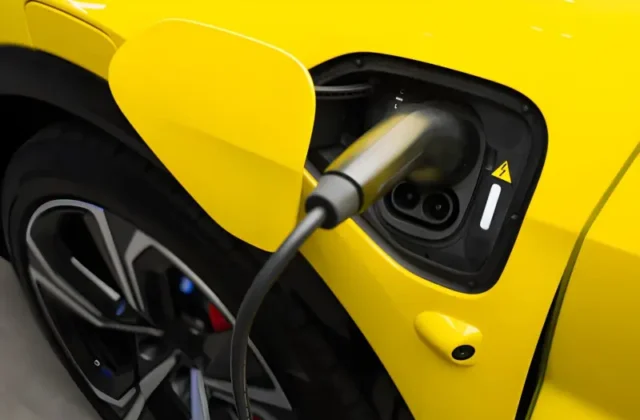
This is the benefit that EV owners consistently say they underestimated before buying and could not give up after. The car charges at home while you sleep. Every morning the battery is at whatever level you set as your target — typically 80–90% to protect long-term chemistry. You leave the house with a full car, every day, without having planned anything.
The time saving is not trivial. The average American stops at a gas station roughly once every 10–14 days and spends approximately 8–12 minutes per stop including driving time, pumping, and paying. That is around 30–45 minutes per month, 6–9 hours per year. Across a five-year ownership period: 30–45 hours returned to your life. The convenience is not the main financial argument for EVs — but it is, for many owners, the most emotionally compelling one once they have experienced it.
The caveat: this benefit requires home charging. An EV owner without home charging who relies on public DC fast chargers has traded gas station stops for charger stops — which are less frequent but longer. The benefit reverses.
Real-world impact: High — applies to every driver with home charging access -
2
Fuel Savings Are Larger Than the Ads Suggest — With One Condition
EV advertising has done the category a disservice by overstating savings in one direction and understating the conditions required for them. The accurate numbers are still compelling — but only with home charging.
At the US national average residential electricity rate of approximately $0.14 per kWh and a mainstream EV consuming 3.5 miles per kWh, the cost to drive 12,000 miles per year is about $600. A comparable gas vehicle at 28 mpg and $3.00 per gallon costs approximately $1,286 for the same distance. The difference is $686 per year, $3,430 over five years.
Add the maintenance savings (benefit 3), and the combined annual saving versus a comparable gas car is approximately $1,586 — or roughly $7,930 over five years. For a vehicle that costs $6,000–$8,000 more upfront, that fully closes the purchase price gap within the ownership window.
Without home charging — relying instead on public DC fast chargers at $0.35–$0.50/kWh — the fuel saving shrinks to roughly $400–$600 over five years rather than $3,430. That is a $2,800–$3,000 difference in the value proposition based on a single infrastructure variable.
Real-world impact: $3,430 over 5 years with home charging · drops to $573 without itScenario Annual Fuel/Charging Cost 5-Year Total Saving vs Gas EV — home charging ($0.14/kWh) $600 BEST $3,000 $3,430 saved EV — public DC only ($0.40/kWh avg) $1,371 $6,857 $573 saved Gas car — 28 mpg at $3.00/gal $1,286 $6,430 Baseline Assumes 12,000 miles/year. EV efficiency: 3.5 mi/kWh. Home electricity: US EIA national average $0.14/kWh (2025). Public DC fast: $0.40/kWh (Electrify America / EVgo typical rate, May 2026). -
3
Maintenance Is Genuinely Simpler — Not Just Cheaper
The $900/year maintenance saving figure from US DOE data is accurate, but the number undersells the change in ownership experience. It is not just that EV maintenance costs less — it is that most of it disappears entirely rather than becoming cheaper.
An EV has no engine oil to change, no oil filter, no air filter (for the engine), no spark plugs, no ignition coils, no timing belt or chain, no transmission fluid, no coolant for a combustion engine block, no catalytic converter, and no exhaust system. None of these items need inspection, replacement, or disposal. A typical gas car accumulates $400–$600 in these costs annually across a standard service schedule. In an EV, those line items are simply absent.
Brakes last significantly longer on EVs than on gas vehicles. Regenerative braking — which converts the car’s kinetic energy back into battery charge when decelerating — does the work of the physical brake pads for the vast majority of daily driving. Many EV owners report that the original brake pads are still above minimum thickness at 60,000–80,000 miles. On a gas vehicle, brake pads typically need replacement every 25,000–50,000 miles depending on driving style and conditions.
AdvertisementWhat does remain: tyres (more frequent wear than gas cars due to torque delivery and vehicle weight), cabin air filters (annual), wiper blades (as needed), washer fluid, and the periodic 12V auxiliary battery replacement every 5–7 years. The total annual cost of these items for a well-maintained EV is approximately $300–$500, versus $1,100–$1,500 for a comparable gas vehicle (US DOE AFDC data, Consumer Reports 2025 long-term ownership survey).
Real-world impact: ~$900/year · ~$4,500 over five years · mostly items that disappear rather than get cheaper

-
4
Instant Torque Changes How the Car Feels at 25 mph, Not Just 0–60
EV performance marketing focuses almost exclusively on 0–60 times. That is the wrong metric for what most drivers actually feel. The real change is in the mid-range responsiveness that shapes everyday driving: merging onto a highway from a short on-ramp, overtaking on a two-lane road, pulling away cleanly from a roundabout, or accelerating from a yellow light before it turns red.
Electric motors deliver 100% of their maximum torque from 0 rpm — there is no power band to stay in, no turbo to spool, no gear to be in. Press the accelerator in an EV and the full force is available immediately. In a 28 mpg family crossover with a 2.5-litre four-cylinder engine, that same input requires the transmission to downshift, the revs to climb, and a half-second lag before momentum builds. In an EV at the same price point, the response is instant and linear.
This is why drivers who commute in stop-and-go traffic or live in urban environments often describe the EV driving experience as definitively better — not just equal — to gas vehicles that cost more. A $35,000 Chevrolet Equinox EV does not feel like a $35,000 gas vehicle in traffic. It feels faster, more controlled, and less fatiguing.
Real-world impact: Most felt in urban and suburban driving — not just at track-day speeds -
5
Your Energy Price Is Stable and Predictable
Between January 2020 and June 2022, US regular gasoline prices moved from approximately $2.20 per gallon to $5.00 per gallon — a 127% increase in 29 months. By January 2024 they had returned to approximately $3.10. That is a swing of $2.80 per gallon in under four years. For a driver covering 15,000 miles per year in a 28 mpg vehicle, the difference between $2.20 gas and $5.00 gas is approximately $1,500 per year. You had no control over it.
Residential electricity prices are not immune to increases — the US EIA reports a roughly 3–5% average annual rate increase over the past decade — but they do not spike 50% in a quarter. They do not respond to geopolitical shocks in the same way crude oil prices do. They move slowly, they are locally regulated, and they are predictable enough to budget around.
For a household that charges primarily at home, the energy cost of transportation becomes a largely fixed, predictable line item — closer to a utility bill than a commodity exposure. That stability has real financial planning value that rarely appears in EV cost comparisons, which typically use a single gas price figure and assume it holds for five years.
Real-world impact: Most valuable during gas price spikes — protection that does not appear in standard TCO models -
6
The Battery Warranty Is Better Than Most Engine Warranties
The battery is the component buyers most associate with EV risk — and understandably so, given replacement costs of $10,000–$16,000. What most buyers do not realise until they read the warranty documents is that the battery is also the most heavily warranted component on the vehicle.
The federal minimum for EV battery warranties in the US is 8 years / 100,000 miles with coverage for defects and capacity loss below a specified threshold (typically 70% of original capacity). In practice, most major manufacturers exceed the federal minimum: Hyundai and Kia offer 10 years / 100,000 miles on their EV batteries. Tesla covers 8 years / 100,000–150,000 miles depending on the model. GM’s Ultium platform carries 8 years / 100,000 miles. Ford’s BEVs carry 8 years / 100,000 miles.
Compare this to the powertrain warranty on a mainstream gas vehicle: the industry standard is 5 years / 60,000 miles. The component buyers fear most in an EV is covered for 60–100% longer than the component buyers don’t worry about in a gas car.
The practical implication: a 2022 EV bought used in 2026 still has at least 4–6 years of manufacturer battery warranty remaining. Buyers who are afraid of used EV battery risk often do not account for this coverage when evaluating their exposure.
Real-world impact: The feared component is better warranted than the equivalent gas engine — by a wide margin -
7
One-Pedal Driving Changes Your Relationship with Traffic
Most mainstream EVs offer a one-pedal driving mode in which lifting off the accelerator applies regenerative braking strong enough to bring the car to a complete stop — without touching the brake pedal. Once drivers adapt to it (typically within a week of daily use), it becomes the default way they interact with traffic.
The experience is less demanding than conventional driving in stop-and-go conditions. In heavy traffic, you modulate a single input — the accelerator — rather than alternating between two pedals. The deceleration is smooth, progressive, and predictable. Drivers who have used one-pedal driving for six months or more consistently report lower fatigue on commutes versus their previous gas vehicles. J.D. Power and Consumer Reports EV satisfaction data both show that one-pedal driving is among the top three features EV owners say they could not give up if returning to a gas vehicle.
The side effect is the brake longevity mentioned in benefit 3: when physical brake pads are rarely used in daily driving, they last two to three times as long as in a conventional gas car.
Real-world impact: Most felt by urban and suburban commuters — less relevant for predominantly highway drivers

-
8
The Cabin Is Quieter at Speed Than Any Gas Car in the Class
Above approximately 40 mph, road noise, tyre noise, and wind noise are the primary acoustic sources in any vehicle — gas or electric. Below 40 mph, the combustion engine is also a significant noise source. Remove the engine, and the low-speed sound environment in an EV is noticeably quieter. At highway speed, the difference is more subtle but still present: without engine resonance adding to the cabin acoustic profile, road and tyre noise become clearer and less mixed with mechanical sound.
The practical result is that conversations in EVs are easier at highway speed, audio systems are more clearly heard at lower volume settings, and long drives are less fatiguing. Drivers who regularly cover 200+ mile stretches — the segment that might seem like the wrong profile for an EV — often cite cabin quietness as an unexpected quality-of-life improvement that outlasts the novelty of the technology.
The difference is most dramatic in the transition from a gas car with four or six cylinders to an EV. Moving from a luxury gas vehicle to a premium EV is a smaller step. But from a mainstream crossover or sedan — a Honda Accord, a Toyota RAV4, a Hyundai Tucson — to any mainstream EV in the same price class, the quietness difference is immediately and consistently noticeable.
AdvertisementReal-world impact: Most noticeable in the 15–45 mph range and on sustained highway drives over 90 minutes -
9
The Used EV Market Is the Biggest Car Bargain in a Decade
This is the benefit that applies most specifically to 2026 buyers. It will not last indefinitely.
Three consecutive years of new-car price reductions — driven by Tesla’s aggressive cuts and followed by most major EV manufacturers — collapsed used EV values between 2022 and 2025. A 2022 Tesla Model Y Long Range that cost approximately $62,000 new is now available for $28,000–$34,000. A 2021 Hyundai Ioniq 5 that launched at $44,000 is selling for $22,000–$27,000. A 2021 Chevrolet Bolt EV that MSRP’d at $34,000 can be found for $14,000–$18,000.
Vehicle Original MSRP (New) Typical Used Price (2026) Approximate Drop Battery Warranty Remaining 2022 Tesla Model Y Long Range ~$62,000 $28,000–$34,000 BEST VALUE ~47–55% 4 years / up to ~60K mi 2021 Hyundai Ioniq 5 Standard Range ~$44,000 $22,000–$27,000 ~38–50% 5 years / up to ~60K mi (10yr Hyundai) 2021 Chevrolet Bolt EV ~$34,000 $14,000–$18,000 ~47–59% 3 years remaining (GM 8yr/100K) 2022 Kia EV6 Standard Range ~$42,000 $22,000–$28,000 ~33–48% 4 years / up to ~60K mi (10yr Kia) Used prices based on Cox Automotive / KBB market data, private seller listings, and certified pre-owned dealer inventory as of May 2026. Prices vary significantly by mileage, condition, and geography. Battery warranty remaining calculated from original sale date. The critical pre-purchase check on any used EV is battery state of health. Request a diagnostic report confirming the battery retains at least 80–85% of its original rated capacity. A battery at 85% health costs nothing to own beyond normal depreciation. A battery at 65% health may need replacement within three to four years — which changes the financial case entirely. This check takes 20 minutes with an OBD-II adapter and a compatible app (Leaf Spy for Nissan, ScanMyTesla or TeslaFi for Tesla, Car Scanner for most CCS vehicles).
Real-world impact: Specific to 2026 — used EV price depression has created a narrow window that market recovery will close -
10
The Car Improves After You Buy It
Most consumer electronics improve over time as software evolves. Cars historically have not — the vehicle you bought in 2019 performs the same in 2026 as it did when new, except for mechanical wear. EVs from manufacturers who support over-the-air (OTA) software updates break this pattern.
Tesla has delivered OTA updates since 2012. Current Tesla vehicles receive updates that have added features including new driving assistance modes, UI improvements, charging speed optimisations, range improvements through efficiency tuning, and new in-car applications — none of which required a dealer visit. A 2022 Tesla Model Y has features today that it did not ship with, without any owner action beyond accepting the update overnight.
OTA capability is expanding beyond Tesla: Rivian R1T and R1S receive OTA updates that have materially changed vehicle behaviour. GM’s Ultium vehicles support partial OTA updates. Ford has implemented OTA capability on Mustang Mach-E and F-150 Lightning. Several major manufacturers remain behind — Volkswagen, Hyundai, and Kia have inconsistent OTA deployment — but the direction of the industry is clear.
The inverse also applies: an EV that falls out of manufacturer software support — which is increasingly a risk for discontinued models — may become less capable over time as features require connected services that are no longer maintained. This is a real risk for buyers of 2019–2021 model year vehicles from brands that have subsequently exited or restructured their EV programmes.
Real-world impact: Strongest for Tesla and Rivian owners · varies significantly by manufacturer · check OTA update history before buying
The Honest Caveat: When These Benefits Don’t Apply
Eight of the ten benefits above are either reduced or eliminated for buyers who cannot charge at home. This is worth stating plainly rather than burying in a footnote.
Benefits That Require Home Charging
- Never stopping at a gas station (benefit 1) — you stop at chargers instead
- Fuel savings of $3,430 over 5 years (benefit 2) — drops to ~$573 on public DC
- Stable, predictable energy price (benefit 5) — DC fast pricing fluctuates and is higher
- One-pedal driving fatigue reduction (benefit 7) — still works, but the charging friction replaces the gas station friction
Benefits That Apply Regardless
- Maintenance savings (~$900/yr) — applies to all EV owners, home charging or not
- Instant torque and daily driving feel (benefit 4) — same regardless of charging method
- Battery warranty coverage (benefit 6) — applies to all buyers, new or used
- Quieter cabin at speed (benefit 8) — same regardless of charging method
- Used EV market bargains (benefit 9) — available to all buyers who do the SoH check
- OTA software improvements (benefit 10) — same regardless of charging method
For buyers without home charging, six of the ten benefits still apply. The maintenance saving alone — approximately $4,500 over five years — is meaningful. The instant torque, quiet cabin, battery warranty, used market opportunity, and software updates are all real regardless of your charging setup. The case for an EV without home charging is thinner than with it, but it is not zero.
Frequently Asked Questions
What is the biggest real-world benefit of owning an electric car?
For most owners with home charging access, the benefit they report as most transformative is never needing to stop at a gas station. The car charges overnight while they sleep and starts every day with a full battery — no planning, no detours, no waiting at a pump. The financial savings are larger in absolute terms ($686/year in fuel, $900/year in maintenance), but the gas station elimination is the benefit that consistently surprises buyers who did not expect to notice it as much as they do.
Do electric cars actually save money, or is that just marketing?
With home charging: yes, materially. At 12,000 miles per year and the US average electricity rate, home charging costs approximately $600/year versus $1,286 for a 28 mpg gas car at $3.00/gallon — a difference of $686/year, $3,430 over five years. Add the maintenance saving of approximately $900/year and the total is roughly $1,586/year, or $7,930 over five years. Without home charging, relying on public DC fast chargers, the fuel saving drops to approximately $573 over five years — not meaningless, but far below what marketing figures typically imply.
Are electric cars really cheaper to maintain?
Yes — and the saving is structural, not just cheaper versions of the same services. EVs have no engine oil, no oil filter, no air filter for a combustion engine, no spark plugs, no timing belt, no transmission fluid, and no exhaust system. These items simply do not exist. Brake pads last two to three times longer due to regenerative braking. The US DOE estimates the annual maintenance saving at approximately $900 versus a comparable gas vehicle, and Consumer Reports’ long-term ownership data is consistent with this figure.
What is one-pedal driving and is it actually better?
One-pedal driving uses the electric motor’s regenerative braking to slow the car when you lift off the accelerator — strongly enough to stop without touching the brake pedal. Most EV drivers adapt within days and find it less fatiguing in stop-and-go traffic because they modulate only one input rather than alternating between accelerator and brake. J.D. Power and Consumer Reports data consistently list one-pedal driving among the top features EV owners say they could not give up if returning to a gas vehicle. It also extends brake life significantly — physical pads are rarely used in normal urban driving.
How long does an EV battery last, and what does it cost to replace?
EV batteries are warranted for 8 years / 100,000 miles as a federal minimum, with most manufacturers exceeding this (Hyundai and Kia cover 10 years / 100,000 miles). Real-world battery degradation data shows most batteries retain 85–90% of original capacity after 100,000 miles with normal home-charging habits. Degradation accelerates with frequent DC fast charging and in extreme temperatures. If replacement is needed after warranty, typical costs are $10,000–$16,000 for a Tesla Model Y pack, $8,000–$12,000 for a Hyundai Ioniq 5 or Kia EV6, and $5,000–$8,000 for a Chevrolet Bolt EV (smaller pack).
Is buying a used electric car a good idea in 2026?
For buyers who do the battery health check — yes, strongly. Used EV prices have dropped 30–55% from their 2021–2022 peak MSRPs due to three years of new-car price cuts and increased supply. A 2022 Tesla Model Y Long Range that cost $62,000 new is available for $28,000–$34,000. These vehicles still have 4–6 years of manufacturer battery warranty remaining. The mandatory pre-purchase step is a battery state-of-health diagnostic: confirm the battery retains 80%+ of its original rated capacity before buying. Below 75%, calculate replacement cost exposure before committing.
What is the honest reason NOT to buy an electric car?
Three situations genuinely favour a gas car or PHEV over a BEV in 2026: (1) you cannot charge at home and have no reliable workplace charging alternative, (2) you regularly drive 200+ miles in a single day without a convenient stop, or (3) your budget is firmly under $30,000 — the mainstream BEV market starts at approximately $35,000 new, and used EVs under $20,000 require careful battery health verification. For buyers in any of these three situations, a PHEV or efficient gas vehicle is a more financially rational choice than forcing an EV into a lifestyle it does not fit.