Last Updated: May 2026 — 2026 MSRP, EPA range figures, and KBB depreciation data verified
The Lucid Air has the longest range of any luxury EV sold today, the Porsche Taycan has the best driving dynamics, and the BMW i4 offers the most convincing case for buyers switching from a traditional premium brand. Those are the honest answers. The more important answer — the one most reviews skip — is that luxury EVs depreciate faster than any other segment in the automotive market. According to iSeeCars analysis, luxury EVs lost an average of 49.1% of their original value over three years through 2025. A Mercedes EQS that stickered at $104,400 can be found used for $58,000–$65,000. A used Lucid Air Grand Touring at $72,000 delivers 516 miles of EPA range for 45% less than new. If you are buying a luxury EV in 2026, the choice between models is secondary to the choice between buying new and buying used — and that question deserves an honest answer before you walk into a showroom.
Best Luxury EVs in 2026 — Quick Answer
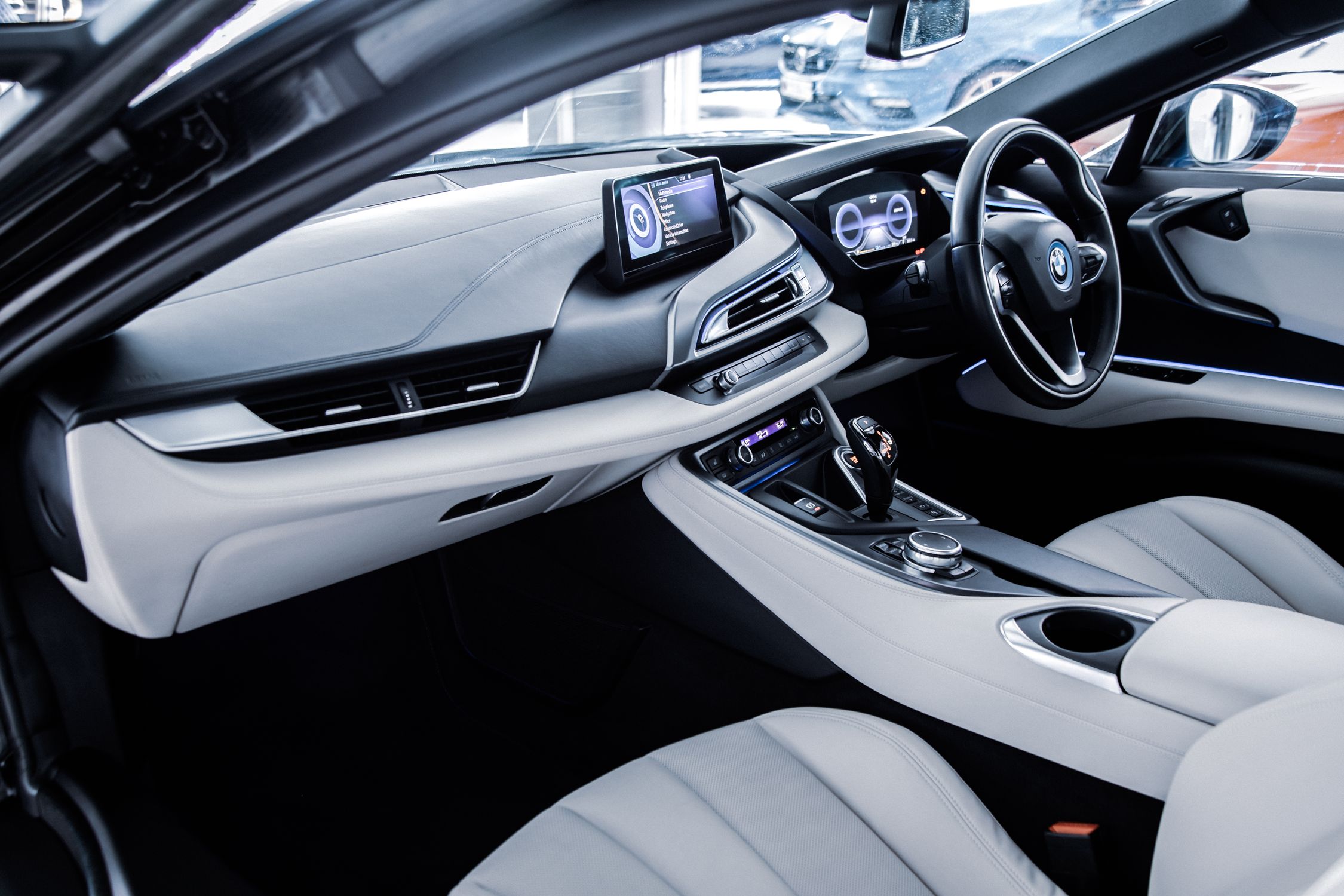
The Lucid Air leads on range (516 miles EPA, Grand Touring) and interior refinement. The Porsche Taycan leads on driving dynamics and charging speed (270kW peak). The BMW i4 offers the best value entry into the luxury EV segment at $57,300. The Genesis GV60 is the most underrated choice: near-luxury quality for $10,000–$20,000 less than German competitors. The critical caveat for every car on this list: luxury EVs depreciate 40–49% over three years — buy new only if you plan to keep the car for five years or more, or run the used-market math first.
2026 Luxury EV Rankings at a Glance
This table covers the six vehicles that best represent the 2026 luxury EV market across different buyer profiles. Prices are base MSRP before destination. Range is EPA-rated. Depreciation estimates are three-year projections based on iSeeCars and KBB residual value data.
| Vehicle | Base MSRP (2026) | EPA Range | 0–60 mph | Peak Charge Rate | 3-Year Resale | Best For |
|---|---|---|---|---|---|---|
| Lucid Air Pure | $69,900 | 410 mi BEST | 4.5 sec | 200 kW | ~$42,000 | Range, refinement |
| Lucid Air Grand Touring | $138,000 | 516 mi BEST | 3.0 sec | 300 kW | ~$78,000 | Maximum range, no compromises |
| Porsche Taycan | $90,900 | 242 mi | 5.1 sec | 270 kW BEST | ~$52,000 | Driving dynamics, charging speed |
| BMW i4 eDrive35 | $57,300 | 307 mi | 5.5 sec | 210 kW | ~$33,000 | Entry luxury EV, brand familiarity |
| Genesis GV60 AWD | $48,500 | 248 mi | 4.0 sec | 350 kW BEST | ~$29,000 | Value, technology, interior quality |
| Tesla Model S | $74,990 | 405 mi | 3.1 sec | 250 kW | ~$43,000 | Performance, Supercharger network |
| Mercedes EQS 450+ | $104,400 | 350 mi | 4.1 sec | 200 kW | ~$53,000 | Quietest cabin, traditional S-Class buyers |
Lucid Air: Range Champion and Interior Standard-Setter
The Lucid Air is the most technically impressive luxury EV currently sold in the United States, and it is not particularly close. With 516 miles of EPA-rated range in Grand Touring configuration and 410 miles at the Pure trim entry point, it solves range anxiety more completely than any competitor. The nearest rival — the Tesla Model S — falls 111 miles behind the Grand Touring at full charge.
Range is not the Air’s only advantage. Lucid designed the powertrain in-house, and the efficiency numbers show it: the Grand Touring achieves approximately 4.6 miles per kWh in real-world driving, compared to 3.8–4.0 for the Tesla Model S and 3.3–3.5 for the Mercedes EQS. That efficiency also means less energy consumed per mile, which reduces charging costs over the ownership period.
The interior is the other area where Lucid earns its premium positioning. The cabin prioritizes glass, open space, and material quality over screen real estate. The front windshield extends further forward than any other production car, creating a sense of space that Mercedes and BMW have not matched. Fit and finish, based on owner reports compiled by Consumer Reports, is competitive with BMW and improved significantly from the 2022–2023 production years as the company addressed early quality issues.
At $69,900, the Pure trim is the right entry point for most buyers. The Grand Touring at $138,000 is a remarkable engineering achievement, but at that price the depreciation math becomes uncomfortable quickly. An 18-month-old Lucid Air Grand Touring in the current market can be found in the $72,000–$85,000 range — the same car for $53,000–$66,000 less. The range advantage is real. Whether it is worth full MSRP is a separate question that depends almost entirely on how long you plan to keep the car.
Porsche Taycan: The Driver’s EV
The Porsche Taycan is the most rewarding luxury EV to drive, and it is the clearest case where one attribute justifies a vehicle’s premium over its competitors. No other luxury EV combines the Taycan’s steering feel, chassis balance, and driver engagement at any price point. For buyers who actively enjoy driving rather than treating the commute as dead time, the Taycan is the correct answer without further analysis.
The Taycan also leads the segment in charging speed by a significant margin. Peak charging at 270kW means a 10–80% charge in approximately 18 minutes on a compatible 350kW station. In comparison, the Mercedes EQS peaks at 200kW, the BMW i4 at 210kW, and the Tesla Model S at approximately 250kW. On a long road trip where charging stops determine total travel time, the Taycan’s charging advantage compounds meaningfully.

Where the Taycan asks for patience is range. The base Taycan at $90,900 is EPA-rated at 242 miles. The Taycan 4S with the Performance Battery Plus extends that to 283 miles; the Turbo S reaches 256 miles despite its larger battery, reflecting the power output’s consumption. None of these figures are weak in isolation, but against the Lucid Air’s 410–516 miles or even the Tesla Model S’s 405 miles, the gap is real and felt on longer drives. Taycan owners who road-trip regularly account for this by treating charging stops as planned breaks rather than delays — the 18-minute charge window makes this easier than in most other EVs.
The Taycan is the right choice if you value driving over everything else and accept that charging stops will be slightly more frequent than in a longer-range alternative. It is the wrong choice if maximum range or lowest entry price are your primary filters.
BMW i4 and i5: The Traditional Premium Choice
The BMW i4 is the most approachable entry point in the luxury EV segment. Starting at $57,300 for the eDrive35 rear-wheel-drive configuration, it costs $12,600 less than the base Taycan and $17,490 less than the base Lucid Air Pure. For buyers moving from a 3 Series or 5 Series, the i4 and i5 offer a familiar UX, established dealer infrastructure, and a driving character that retains BMW’s rear-biased dynamics — albeit in a noticeably softer form than the M Performance variants.
The i4 eDrive40 at $66,800 represents the strongest value configuration: 301 miles of EPA range, 335 horsepower, and a 0–60 time of 5.1 seconds in a package that feels genuinely complete rather than entry-spec. The xDrive40 adds all-wheel drive for an additional $4,000 and is worth considering in northern climates where winter traction matters. The M50 at $84,100 adds performance but approaches Taycan Turbo territory without matching Taycan driving dynamics.
The i5 sedan, starting at $67,900, brings the same powertrain in a larger, more executive-oriented body. If you need rear-seat space for adult passengers and want a BMW, the i5 is the answer over the i4. Both vehicles use BMW’s NACS-compatible charging port and can access Tesla Supercharger stations in addition to the DC fast charging networks — an advantage over European competitors that have been slower to adopt NACS.
Genesis GV60 and GV80 Electrified: Best Value in Luxury EVs
The Genesis GV60 is the most underrated choice in the 2026 luxury EV market. Starting at $48,500 for the all-wheel-drive configuration, it offers 800-volt charging architecture capable of 350kW peak rates — faster than the Porsche Taycan — a near-luxury interior that earned Genesis its highest J.D. Power Initial Quality scores to date, and a feature set that includes HDA2 hands-free highway assist, a premium Lexicon audio system, and a fingerprint authentication starter. The GV60 asks for $42,400 less than the Mercedes EQS for a functionally comparable ownership experience in anything other than peak road noise isolation.
The GV60’s 248 miles of EPA range is the one area where the value case has a visible limit. For buyers who primarily commute within a defined daily radius and charge at home overnight, 248 miles is adequate in most scenarios. However, buyers who regularly take 300-plus-mile road trips will notice the difference versus the Lucid Air or Tesla Model S. The 350kW charging capability partially offsets this: a GV60 can add 68 miles of range in five minutes on a compatible charger, making charging stops brief enough to manage road trips without the frustration of a slower charger.
The GV80 Electrified at $78,900 extends the Genesis value argument into the three-row SUV segment. EPA range is 280 miles, the drivetrain is shared with the GV60, and the interior quality matches or exceeds the BMW X5 at a lower price point. For buyers who need SUV practicality in the luxury EV segment, the GV80 Electrified vs. BMW iX comparison deserves serious attention before signing a BMW contract.
Tesla Model S: Performance First, Luxury Second
The Tesla Model S makes a straightforward case: 405 miles of EPA range, a 0–60 time of 3.1 seconds in standard configuration and 1.99 seconds in Plaid trim, and access to Tesla’s Supercharger network — which remains the most reliable, most widely distributed DC fast charging infrastructure in North America. If performance and charging reliability are the two variables that matter most to you, the Model S is the strongest argument in this comparison.
Where the Model S shows its age is interior execution. At $74,990, it competes directly with the Lucid Air Pure at $69,900 and undercuts the base Taycan at $90,900. Against the Lucid Air, the Model S interior feels notably less refined — the material choices, cabin noise suppression, and build quality gap has widened since Lucid entered production. Against the Taycan, the Model S offers far more range and lower cost, but the Taycan’s driving dynamics remain in a different category.
The Plaid at $89,990 is a specific-use case vehicle: it is the fastest accelerating production car under $100,000 and among the fastest of any price point. If straight-line performance is genuinely a priority, the Model S Plaid at $89,990 is cheaper and faster than competing supercars. If it is not, the additional $15,000 over the standard Model S has diminishing returns for daily driving.
One consistent Model S advantage that deserves explicit mention: over-the-air software updates have kept the Model S current in ways that traditional manufacturers have not matched. A 2022 Model S has received feature updates that add genuine value compared to the day it was delivered. This ongoing software development partially offsets the depreciation curve by extending the product’s relevance longer than a static hardware product would.
Mercedes EQS: Opulence, at a Price
The Mercedes EQS 450+ starts at $104,400 and delivers the quietest cabin of any electric vehicle currently in production. Wind noise suppression, road isolation, and interior sound management are genuinely exceptional — measurably better than the BMW i5, Lucid Air, or Tesla Model S at any speed. For buyers whose primary use case is being driven, or who spend significant time on highway commutes and value acoustic isolation, the EQS delivers on its core promise in a way that the numbers do not fully capture.
The EQS presents a more difficult case for buyers who drive themselves. Handling is soft by design — it is engineered around comfort and isolation rather than engagement. The Hyperscreen option adds a 56-inch curved OLED display spanning the full dashboard width, which is a visual achievement, but the interface has earned mixed responses from owners for usability in daily operation. Range at 350 miles is competitive but trails the Model S and Lucid Air meaningfully.
The strongest argument for the EQS in 2026 is the used market. At $104,400 new, the EQS is the most expensive car in this comparison by $14,400. At $58,000–$65,000 used, it is a different proposition entirely: near-flagship Mercedes quality, 350 miles of range, and the quietest cabin in the segment for roughly what a base BMW i4 costs new. If you are considering the EQS at all, run the used-market calculation before committing to a new purchase.
The Depreciation Warning Every Luxury EV Buyer Needs to Hear
This is the section most reviews skip. It is the most financially consequential section in this article.
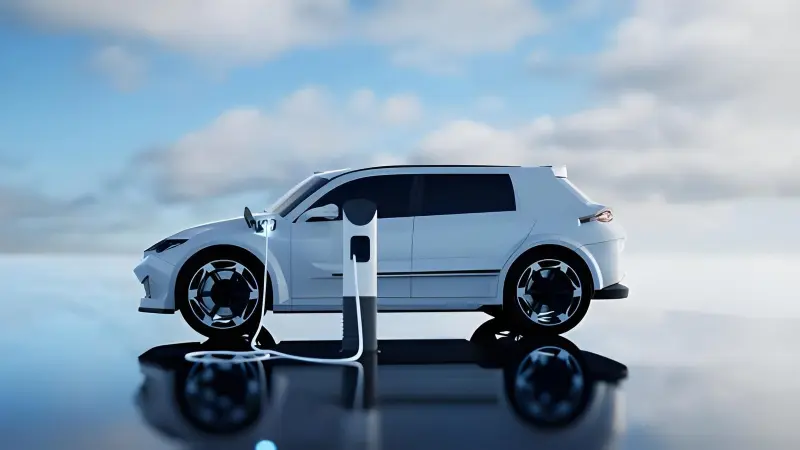
Luxury EVs depreciate faster than almost any other category of consumer goods you can purchase. The iSeeCars depreciation analysis of luxury EVs through 2025 found an average three-year value loss of 49.1% — meaning a vehicle that stickered at $100,000 is worth approximately $51,000 three years later. For comparison, luxury gas vehicles lost an average of 32.4% over the same period. The differential is driven by three compounding forces: the expiry of federal EV tax credits depressed used EV demand significantly; rapid technology advancement makes year-old models feel dated faster than in conventional vehicles; and EV inventory supply has increased faster than demand in the premium segment.
The practical result: the used luxury EV market in 2026 is extraordinary value for the buyer willing to purchase a vehicle with 20,000–40,000 miles on it.
| Vehicle | New MSRP | Est. Used (2–3 Yr Old) | $ Saved vs New | Value Verdict |
|---|---|---|---|---|
| Mercedes EQS 450+ | $104,400 | $58,000–$65,000 | $39,400–$46,400 | STRONG BUY USED |
| Lucid Air Grand Touring | $138,000 | $72,000–$85,000 | $53,000–$66,000 | STRONG BUY USED |
| Porsche Taycan | $90,900 | $50,000–$58,000 | $32,900–$40,900 | CONSIDER USED |
| Tesla Model S | $74,990 | $40,000–$48,000 | $26,990–$34,990 | CONSIDER USED |
| BMW i4 eDrive40 | $66,800 | $36,000–$42,000 | $24,800–$30,800 | CONSIDER USED |
Who Should Buy Which Luxury EV
Choose the Lucid Air If…
- Range anxiety has kept you from buying an EV — 410–516 miles ends that concern definitively
- Interior refinement and material quality rank above driving dynamics in your priorities
- You are willing to accept a smaller service network in exchange for a superior product
- You plan to own for five or more years to offset the steeper depreciation at entry
- A used example at $70,000–$85,000 fits your budget better than a new competitor at the same price
Choose the Porsche Taycan If…
- You actively enjoy driving and want the most engaging chassis in the luxury EV category
- Charging speed matters more to you than maximum range — the 270kW peak is the segment’s best
- You are coming from a Porsche 911, Boxster, or Cayman and expect that level of driver connection
- You value established Porsche dealer infrastructure over newer, less tested service networks
- You accept shorter range (242–283 miles) as the tradeoff for what the Taycan does best
Choose the BMW i4 or i5 If…
- You are a current BMW owner and want a familiar experience rather than a technology transition
- Entry price matters — the i4 at $57,300 is the cheapest path into the luxury EV segment
- A national dealer and service network is non-negotiable for your ownership experience
- NACS charging access to Tesla Superchargers is a priority for your road-trip patterns
- You need an i5 sedan for executive rear-seat space that the i4 coupe doesn’t provide
Choose the Genesis GV60 If…
- You want near-luxury quality at $15,000–$40,000 below German competitor pricing
- 800V architecture and 350kW charging capability appeal despite a lower badge recognition
- Your daily range needs are under 200 miles and you charge at home overnight
- Interior technology and standard feature content matter more than brand prestige
- You are the type of buyer who researches carefully and is not swayed by nameplate alone
Choose the Tesla Model S If…
- Performance — specifically straight-line acceleration — is a genuine priority, not just a nice-to-have
- The Supercharger network’s reliability and coverage is important for your road-trip patterns
- You want 400+ miles of range with proven long-term owner satisfaction data behind it
- Over-the-air software updates keeping the car current for the long ownership period matters to you
- You want the Model S Plaid’s 1.99-second 0–60 time and there is no alternative at any price
Choose the Mercedes EQS If…
- Acoustic isolation and cabin quiet are your first priority — no other EV matches the EQS here
- You are buying used — at $58,000–$65,000, the EQS is among the strongest value propositions in the used luxury EV market
- You are a current S-Class buyer migrating to electric and want minimal transition friction
- Rear-seat space and passenger comfort for a driven vehicle is the primary use case
- You are buying new, plan to keep it for seven-plus years, and Mercedes dealer service proximity is important to you
Methodology and Data Sources
Pricing data sourced from manufacturer configurators as of May 2026 and reflects base MSRP before destination charges, dealer markups, or available incentives. EPA range figures from fueleconomy.gov. Depreciation estimates based on iSeeCars’ three-year luxury EV depreciation analysis and KBB residual value projections for 2022–2023 model year examples. Used market pricing from Autotrader and Cars.com listings filtered to 25,000–45,000-mile examples, Q1 2026. Charging performance figures from manufacturer specifications; real-world rates vary by network, temperature, and state of charge at arrival. No federal EV tax credits applied — the $7,500 credit expired September 30, 2025 and is not factored into any pricing in this comparison.
Frequently Asked Questions
Which luxury EV has the longest range in 2026?
The Lucid Air Grand Touring leads with 516 miles of EPA-rated range — the highest of any electric vehicle available in the U.S. market in 2026. The Lucid Air Pure at $69,900 achieves 410 miles, making it the range leader even in base configuration. The Tesla Model S follows at 405 miles, and the Mercedes EQS 450+ at 350 miles. The Porsche Taycan trails the segment at 242–283 miles depending on trim and battery configuration.
Do luxury EVs depreciate faster than regular cars?
Yes, by a significant margin. iSeeCars analysis found luxury EVs lost an average of 49.1% of their value over three years through 2025, compared to 32.4% for luxury gas vehicles and roughly 28% for mainstream EVs. Three forces drive this: the expiry of federal EV tax credits reduced used EV demand, rapid technology progress accelerates perceived obsolescence, and new luxury EV inventory has grown faster than buyer demand. This makes the used luxury EV market compelling for budget-conscious buyers but means buying new requires a long ownership plan to justify.
Is the Porsche Taycan worth the premium over a BMW i4?
For driving enthusiasts, yes. The Taycan’s chassis dynamics, steering feedback, and all-around handling are in a different category from the i4. The i4 drives like a competent premium car; the Taycan drives like a sports car that happens to be electric. The cost difference is approximately $33,600 between the i4 eDrive40 ($66,800) and the base Taycan ($90,900). If driving engagement matters to you in daily use, that premium is defensible. If you primarily commute and the driving experience is secondary, the i4 is the better financial decision.
Should I buy a used luxury EV instead of a new one?
For most buyers at this price point, the answer is yes. A 2–3-year-old Mercedes EQS can be purchased for $58,000–$65,000 versus $104,400 new — the same car for $39,400 to $46,400 less. A used Lucid Air Grand Touring at $72,000–$85,000 delivers 516 miles of range for roughly half the new price. Exceptions apply if you need the latest model year for a specific feature, plan to lease with a manufacturer-subsidized residual, or want warranty coverage from day one. In all other cases, the used-market math is difficult to ignore at these depreciation levels.
Does the Genesis GV60 count as a true luxury car?
Genesis is Hyundai’s luxury brand — the equivalent of Lexus to Toyota or Acura to Honda. The GV60 interior, material quality, and feature content are genuinely competitive with entry-level BMW and Mercedes products. J.D. Power’s Initial Quality Study has ranked Genesis first or second among all brands in recent years, above BMW, Mercedes, and Audi. Whether the badge carries the same social signal as a German nameplate is a separate and entirely valid consideration, but on objective interior quality and reliability metrics, the GV60 earns its luxury designation.
Can luxury EVs use Tesla Superchargers?
Most 2025–2026 luxury EVs have adopted the NACS (North American Charging Standard) port and have access to the Tesla Supercharger network. BMW, Genesis, Mercedes, and Lucid vehicles either come with NACS natively or offer NACS adapters. Porsche Taycan models sold in North America from 2025 include NACS as standard. Verify the specific model year and trim configuration for the vehicle you are considering, as adapter availability varies by market and production date.
Which luxury EV is best for cold climates?
The Porsche Taycan and Genesis GV60 manage cold-weather range loss most effectively relative to their rated range, largely because their 800-volt architecture allows faster pre-conditioning of the battery before departure. The Taycan also benefits from a heat pump standard on most trims, which reduces cabin heating’s drain on the battery by approximately 30% compared to resistive heating in cold conditions. The Lucid Air includes an efficient thermal management system that performs well in cold weather testing, though real-world data from cold-climate markets is still accumulating relative to Tesla’s longer cold-weather track record.