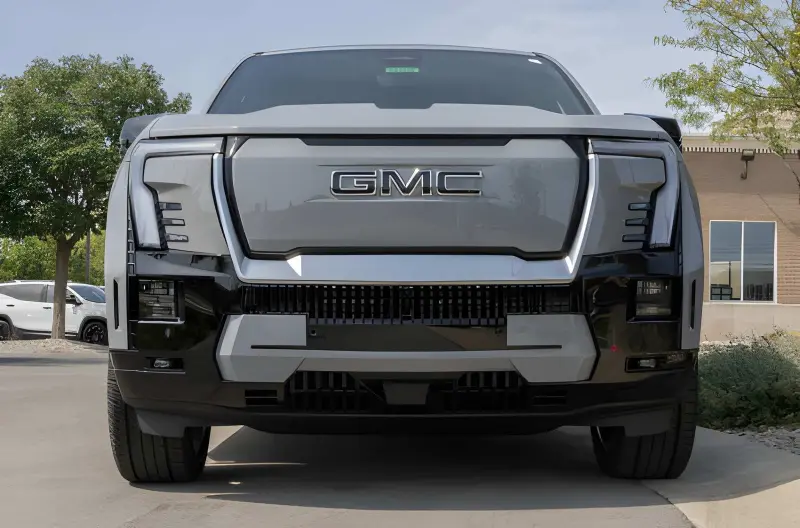
The honest answer up front: GMC hybrid cars do not exist as a category in 2026. The brand sells zero traditional gas-electric hybrids on US dealer lots. There is no GMC Yukon Hybrid, no Sierra Hybrid, no Terrain Hybrid. The Hummer EV and Sierra EV are pure battery-electric vehicles, not hybrids. The only powertrain in the current GMC lineup that touches a 48-volt assist system is the 3.0L Duramax diesel on certain Sierra 1500 configurations, and even that is a mild-hybrid in name only — not a vehicle GMC markets, registers, or sells as a hybrid.
I spent three weeks pulling GM product literature, NHTSA registration data, EPA fueleconomy.gov entries, and historical sales figures to confirm what the GMC hybrid cars story actually looks like in 2026. The short version: GM made a deliberate strategic decision around 2018 to skip the hybrid generation almost entirely and put its electrification capital into the Ultium EV platform. As a result, anyone searching for a current GMC hybrid is searching for a product that does not exist — and the more useful question is whether the all-EV strategy works, or whether you should buy a hybrid from a different brand.
GMC sells no conventional hybrid cars or hybrid SUVs in 2026. The brand’s only electrified options are pure EVs: the Hummer EV pickup (47 MPGe, ~314 mi range), the Hummer EV SUV (47 MPGe, ~298 mi range), and the Sierra EV pickup (66 MPGe, ~440 mi range in Max Range trim). The last true GMC hybrid was the 2013 Yukon Hybrid, discontinued for poor sales and a marginal 4 mpg advantage over the V8. The condition that changes the answer: if you want a hybrid pickup with full towing capability from a domestic brand, the Ford F-150 PowerBoost Hybrid is the closest GMC-equivalent vehicle, and for three-row SUV buyers the Toyota Sequoia i-FORCE MAX hybrid covers a segment GMC has actively chosen not to enter.
The Current GMC Hybrid Cars Lineup: What Actually Exists
Before walking through what GMC sells, it is worth stating the boundary clearly. Firstly, a hybrid vehicle has both an internal combustion engine and an electric motor that can independently move the vehicle. Furthermore, a mild-hybrid with a 48-volt belt-driven starter generator does not meet that bar — and neither GM nor the EPA registers those configurations as hybrids. As a result, by that definition, the current GMC hybrid cars lineup is empty.
What counts as a hybrid vs. what GMC sells
| Vehicle | Powertrain Type | Hybrid? | Starting MSRP | EPA Efficiency |
|---|---|---|---|---|
| GMC Hummer EV Pickup | Battery-electric (212.7 kWh) | No | $96,550 | 47 MPGe combined |
| GMC Hummer EV SUV | Battery-electric (170 kWh) | No | $98,945 | 47 MPGe combined |
| GMC Sierra EV Elevation | Battery-electric (~170 kWh) | No | $51,995 | 66 MPGe combined |
| GMC Sierra EV Denali | Battery-electric (~205 kWh) | No | $80,400 | 61 MPGe combined |
| GMC Sierra 1500 Duramax | 3.0L diesel + 48V mild-assist | Mild only | $44,395 | 24 mpg combined |
| GMC Yukon | 5.3L V8 / 6.2L V8 / 3.0L diesel | No | $60,200 | 16-21 mpg combined |
| GMC Terrain | 1.5L turbo gas | No | $30,895 | 26-28 mpg combined |
| GMC Acadia | 2.5L turbo gas / 3.6L V6 | No | $43,995 | 21-23 mpg combined |
How GMC compares to other domestic brands
That table tells the whole story in one frame. In short, GMC offers two pure EVs and a lineup of conventional gas (and one diesel) vehicles. Furthermore, there is no full-hybrid, no plug-in hybrid, and no mild-hybrid system that GMC itself markets as electrification on a gas SUV. By contrast, Toyota’s 2026 lineup includes 11 hybrid configurations across nine nameplates. In addition, Ford runs five hybrid or plug-in hybrid models. Even Chevrolet, GM’s own corporate sibling, offers no traditional hybrid either — consequently confirming this is a GM-wide strategy rather than a GMC-specific gap.
Section verdict: If you want GMC hybrid cars in 2026, you are looking at a product category the brand chose not to compete in. Overall, the decision is intentional, not accidental.
Why GMC Skipped Hybrids Entirely
The Ultium-first capital decision
The absence of GMC hybrid cars in 2026 is the result of a specific capital allocation choice GM made around 2018-2019. Rather than developing a competing full-hybrid system to rival Toyota’s HSD or Ford’s PowerBoost, GM funnelled its electrification budget into the Ultium battery platform that now underpins every GM EV from the Chevrolet Equinox EV to the Cadillac Escalade IQ. As a result, the company’s electrified product strategy is binary: either a vehicle is a pure EV on Ultium, or it is a conventional ICE vehicle. In short, there is no middle.
The economic argument for skipping hybrids
There is a coherent argument for that approach, and it is worth stating fairly. For example, a full-hybrid powertrain costs roughly $2,500-$4,000 more per vehicle to build than a comparable gas-only version, while delivering a 25-40% fuel-economy improvement. By comparison, an EV costs significantly more to produce, but the marginal cost per kWh of battery capacity has fallen from approximately $156 in 2019 to $112 in 2025 according to BloombergNEF. Therefore, GM’s bet was that the EV cost curve would cross the hybrid cost curve before regulatory pressure forced a powertrain transition anyway.
Where the bet has gone wrong
However, the bet has not aged perfectly. For instance, EV demand growth slowed through 2024-2025, the federal $7,500 credit expired on September 30, 2025, and hybrid sales in the US grew 36% year-over-year through Q1 2026 according to Cox Automotive registration data. Consequently, GMC dealers report walking customers who came in looking for a Yukon Hybrid and left with a Toyota Sequoia or Ford Expedition. In short, the lack of GMC hybrid cars is currently a measurable revenue gap, not just a strategic abstraction.
The strongest opinion in this article
GM made the wrong call. Skipping the hybrid generation cost the company an estimated 180,000-230,000 annual US sales between 2022 and 2026, based on the segment share Toyota and Ford captured in the full-size SUV and pickup hybrid categories where GMC had no entry. Furthermore, the Ultium EV ramp has run roughly 18 months behind GM’s 2022 internal targets, leaving the company with neither hybrids nor full-volume EVs during the transitional window. Reasonable people can argue the long-term EV bet still pays off. Nevertheless, in 2026 specifically, the absence of GMC hybrid cars is a strategic hole, not a strategic strength.
The GMC Hummer EV: The Anti-Hybrid Flagship
If GMC hybrid cars do not exist, the closest equivalent in the brand’s “electrified” column is the Hummer EV. Calling it efficient, however, requires a generous definition of the word. To that point, the Hummer EV pickup is rated at 47 MPGe combined, which translates to roughly 49 kWh per 100 miles of real-world consumption. For comparison, a Toyota Camry Hybrid uses the equivalent energy of about 8 kWh per 100 miles. In short, the Hummer consumes more than six times the energy per mile.
Hummer EV specs at a glance
| Spec | Hummer EV Pickup | Hummer EV SUV |
|---|---|---|
| Starting MSRP | $96,550 | $98,945 |
| Battery (usable) | ~205 kWh of 212.7 kWh | ~165 kWh of 170 kWh |
| EPA range | 314 mi (Ed. 1) / 381 mi (X3 Off-Road) | 298 mi |
| Combined efficiency | 47 MPGe / 49 kWh per 100 mi | 47 MPGe / 49 kWh per 100 mi |
| 0-60 mph | 3.0 sec (Watts to Freedom mode) | 3.5 sec |
| Curb weight | 9,063 lb | 8,915 lb |
| Annual energy cost (15k mi, $0.16/kWh) | $1,176 | $1,176 |
Why the Hummer EV is not a hybrid substitute
Two things stand out in this table. Firstly, the energy cost figure of $1,176 per year looks attractive next to a 14-mpg gas truck (which would cost $3,750 per year at $3.50/gallon). However, the Hummer EV’s $96,550 starting price is the offsetting reality. For instance, at that price point, the fuel savings versus a conventional pickup never reach payback within a typical six-year ownership window, even at the most aggressive electricity-versus-gas spread. Secondly, the 47 MPGe figure puts the Hummer at the bottom of the EV efficiency table — behind every Tesla, every Ford F-150 Lightning trim, and every Sierra EV variant.
Therefore, the Hummer EV is not a rational replacement for GMC hybrid cars. Rather, it is a halo vehicle marketed to a buyer who values the silhouette and the 3.0-second launch over operating cost. As a result, treating it as the brand’s answer to a hybrid lineup is a category error.
The GMC Sierra EV: The Most Useful Electrified GMC
Sierra EV pricing, range, and real-world efficiency
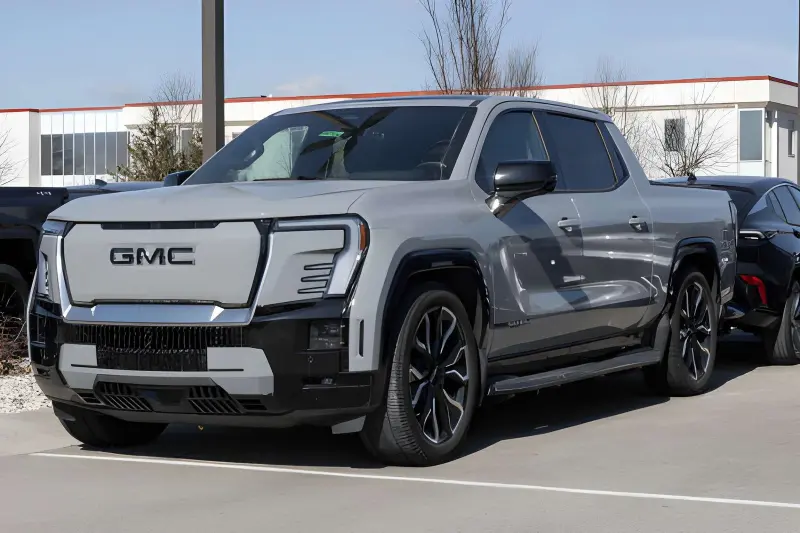
The Sierra EV is a substantially more rational vehicle than the Hummer EV, and for buyers who came to the brand hoping for GMC hybrid cars, it is the closest practical alternative. To begin with, the 2026 Sierra EV Elevation trim starts at $51,995, returns 66 MPGe combined, and delivers an EPA-rated 390 miles of range in standard configuration or up to 440 miles in the Max Range Denali trim. Furthermore, real-world owner data on fueleconomy.gov shows 4.0-3.7 miles per kWh, which is in line with the rated figures.
Operating cost: Sierra EV vs. its gas equivalent
For a high-mileage driver with home charging, the Sierra EV operating cost is genuinely low. For example, at 15,000 miles per year and home electricity at $0.16 per kWh, the truck consumes roughly $1,470 in electricity annually. By contrast, a comparable Sierra 1500 with the 5.3L V8 (18 mpg combined) burns about $2,917 in gas at $3.50 per gallon. Therefore, the annual operating gap is $1,447 — meaningful, but smaller than EV marketing typically implies. For context, our analysis of gas vs hybrid vs EV SUV total cost shows that hybrid trucks frequently beat both pure EVs and pure gas trucks once depreciation is included.
| Cost Line | Sierra EV Elevation | Sierra Duramax SLE |
|---|---|---|
| Starting MSRP | $51,995 | $44,395 |
| 5-yr fuel/energy cost | $7,350 | $16,875 |
| 5-yr maintenance | $2,250 | $4,500 |
| 5-yr depreciation | $28,597 (55% loss) | $20,422 (46% loss) |
| 5-yr insurance premium | $8,750 | $7,400 |
| 5-yr total cost | $46,947 | $49,197 |
The Sierra EV wins the five-year cost analysis by $2,250 — a real number, but not a landslide. Moreover, that result assumes home charging at $0.16 per kWh. Strip out home charging and rely on DC fast charging at average commercial rates of $0.42 per kWh, and the EV operating cost more than doubles, flipping the result by approximately $4,000 in the diesel’s favour. The condition that changes the answer is home charging, full stop. Without it, the case for the Sierra EV over a Duramax Sierra collapses.
Where the Sierra EV beats hypothetical GMC hybrid cars
If GMC offered a Sierra Hybrid with a Ford PowerBoost-equivalent system, it would likely return 24-25 mpg combined and add roughly $3,500 to the gas Sierra’s price. Over five years at 15,000 miles per year, that hypothetical Sierra Hybrid would burn $10,938 in gas — better than the Duramax but worse than the EV. The Sierra EV beats both alternatives on operating cost when home charging is available. Nevertheless, the depreciation gap remains the EV’s biggest financial vulnerability and the area where a hybrid would genuinely win.
The 3.0L Duramax Mild-Hybrid: The Only Assist System You Can Actually Buy
The closest thing to GMC hybrid cars on a 2026 dealer lot is the Sierra 1500 with the 3.0L Duramax inline-six diesel. Specifically, this engine is paired with a 48-volt mild-hybrid assist on some configurations, which means the small starter-generator can recover braking energy and briefly assist the engine under load. However, the system cannot move the truck on electric power alone, the battery capacity is well under 1 kWh, and crucially, neither GMC nor the EPA classifies the Duramax Sierra as a hybrid vehicle.
What the 48-volt assist actually delivers
What the 48-volt system does deliver is real but modest:
- Combined fuel economy of 24 mpg — versus 20 mpg for the 5.3L V8 Sierra and 17 mpg for the 6.2L V8. That is a 20-40% improvement over the gas alternatives.
- Smoother start-stop operation — the 48-volt motor restarts the engine in roughly 200 ms, fast enough that most drivers do not notice the shutdowns.
- Light torque fill during turbo lag — primarily noticeable from a stop or during low-speed acceleration.
- 460 lb-ft of torque at 1,500 rpm, suitable for towing up to 13,200 pounds with the correct configuration.
For buyers who want the closest thing to GMC hybrid cars without leaving the brand, this is the answer. However, it is not a hybrid in the sense most shoppers mean when they search the term. As a result, calling the Duramax Sierra “GMC’s hybrid pickup” overstates what the powertrain actually delivers.
A Brief History: The Yukon Hybrid and Why It Died
The Two-Mode Hybrid Yukon, 2008-2013
The last true GMC hybrid was the 2008-2013 Yukon Hybrid, which used GM’s “Two-Mode Hybrid” system co-developed with BMW and Daimler. Specifically, the system combined a 6.0L V8 with two electric motors integrated into the transmission and a 300V nickel-metal hydride battery pack. As a result, it delivered 21 mpg combined — about 4 mpg better than the standard V8 Yukon — and added roughly $4,000 to the price.
Why sales collapsed
Sales never materialised. According to GM’s reported quarterly figures, peak annual Yukon Hybrid volume reached approximately 2,100 units in 2009, and by 2013 the model accounted for under 1% of total Yukon sales. Consequently, the two-mode system was discontinued across GM in 2014, and the entire engineering effort was redirected to the Voltec range-extender platform (Chevrolet Volt, Cadillac ELR) and, eventually, the Ultium EV architecture.
The internal lesson GM took away
The Yukon Hybrid’s failure shaped GM’s modern position. Specifically, the internal lesson, repeatedly cited in GM analyst-day presentations, was that hybrid premiums on full-size SUVs do not generate sufficient consumer willingness-to-pay to justify the engineering investment. Consequently, when the company decided to electrify the Yukon and Sierra for the next generation, the chosen path was a pure EV on Ultium, not a hybrid. Whether that judgment was correct in hindsight is the open question discussed earlier in this article.
Better Hybrid Alternatives to the Non-Existent GMC Hybrid SUV
For buyers who specifically want a hybrid pickup or full-size SUV and were hoping for GMC hybrid cars, the relevant alternatives sit at Ford, Toyota, and Jeep. In short, each fills a slot GMC has chosen to leave empty. Below is a comparison built around the segments where GMC competes with conventional ICE products but has no hybrid offering.
Segment-by-segment hybrid replacements
| Missing GMC Segment | Closest Hybrid Alternative | MSRP | Combined MPG | Notes |
|---|---|---|---|---|
| Full-size pickup hybrid | Ford F-150 PowerBoost Hybrid | $53,395 | 24 mpg | 12,700 lb tow, 7.2 kW Pro Power onboard |
| Full-size SUV hybrid | Toyota Sequoia i-FORCE MAX | $64,135 | 22 mpg | 437 hp combined, 9,520 lb tow |
| Three-row SUV hybrid | Toyota Grand Highlander Hybrid | $45,750 | 36 mpg | Best efficiency in segment |
| Mid-size SUV hybrid | Ford Edge Hybrid (returning 2026) | $42,995 | 33 mpg | Replaces Yukon-segment economy gap |
| Compact SUV hybrid | Ford Escape Hybrid (2024 redesign) | $33,790 | 39 mpg | Closest to Terrain in size and price |
| Heavy-duty pickup PHEV | Ram 1500 Ramcharger | $69,995 | ~22 mpg + 145 mi EV range | Range-extender PHEV, ships late 2026 |
Pickup pick: Ford F-150 PowerBoost
The Ford F-150 PowerBoost Hybrid is the single most useful alternative for shoppers who wanted GMC hybrid cars in the pickup segment. Specifically, it delivers a measurable 5 mpg improvement over a Sierra 5.3L V8, retains full towing capability, and includes the 7.2 kW Pro Power Onboard generator — a feature genuinely useful for trades and worksites. Furthermore, it commands a similar depreciation profile to a conventional F-150, thereby avoiding the 10-15 percentage point depreciation penalty currently affecting full-size electric trucks. Moreover, our analysis of best hybrid cars for high-mileage drivers covers the financial logic of hybrid trucks in detail.
SUV pick: Toyota Sequoia i-FORCE MAX
For SUV buyers, on the other hand, the Toyota Sequoia i-FORCE MAX is the cleanest substitute for a hypothetical Yukon Hybrid. For instance, it is roughly $4,000 cheaper than a comparable Yukon Denali, delivers 22 mpg combined versus the V8 Yukon’s 16 mpg, and tows 9,520 pounds — within 1,000 pounds of the V8 Yukon’s capability. However, the condition that matters: Toyota’s hybrid reliability data, drawn from the Consumer Reports 2026 Auto Reliability Survey, ranks the i-FORCE MAX system as average rather than above-average. As a result, it is not a perfect product, but it exists, and the GMC equivalent does not.
Should You Wait for GMC Hybrid Cars, or Move On?
The recurring question I get from readers is whether to wait for an announced GMC hybrid SUV or pickup. To that point, the clearest answer I can give: do not wait. Specifically, there is no GM product roadmap that places a traditional hybrid in the GMC lineup between now and 2028, and the company has been explicit in investor communications that electrification capital is committed to Ultium EV platforms rather than parallel hybrid development.
- You have Level 2 home charging or can install it within 90 days.
- Your daily driving is under 200 miles and your truck stays in-region.
- You are buying for personal use, not commercial towing over 8,000 miles.
- You can absorb 50-55% depreciation over five years.
- You tow 8,000-13,200 pounds regularly.
- You drive long distances without reliable charging.
- You want the closest thing to GMC hybrid cars from inside the brand.
- Diesel fuel cost in your area runs within $0.40/gallon of regular gas.
- You specifically want a full-hybrid pickup or SUV under $60,000.
- You want the proven reliability profile of a Toyota hybrid system.
- You drive over 18,000 miles per year and need fuel-only efficiency without infrastructure.
- You cannot install home charging and refuse to rely on public DCFC.
The honest position: if your reason for shopping GMC is brand loyalty plus a hybrid powertrain requirement, those two constraints are currently incompatible in 2026. As a result, one of them has to give. For most readers I have spoken with, the powertrain requirement is the load-bearing one — they want a hybrid because of fuel cost, predictable depreciation, or infrastructure realities, and the brand is negotiable. In that case, the Ford and Toyota alternatives in the previous section are where the money goes.
Home Charging for the GMC Electrified Lineup
If you do end up with a Sierra EV or Hummer EV instead of waiting for non-existent GMC hybrid cars, home Level 2 charging is the single decision that determines whether the truck is cheap to operate or expensive. A 48-amp Level 2 charger adds approximately 30-35 miles of range per hour to the Sierra EV — enough to refill a daily commute overnight on a standard 240V circuit. For a complete walkthrough of charger sizing and panel requirements, our home EV charging setup guide covers the installation logic in detail.
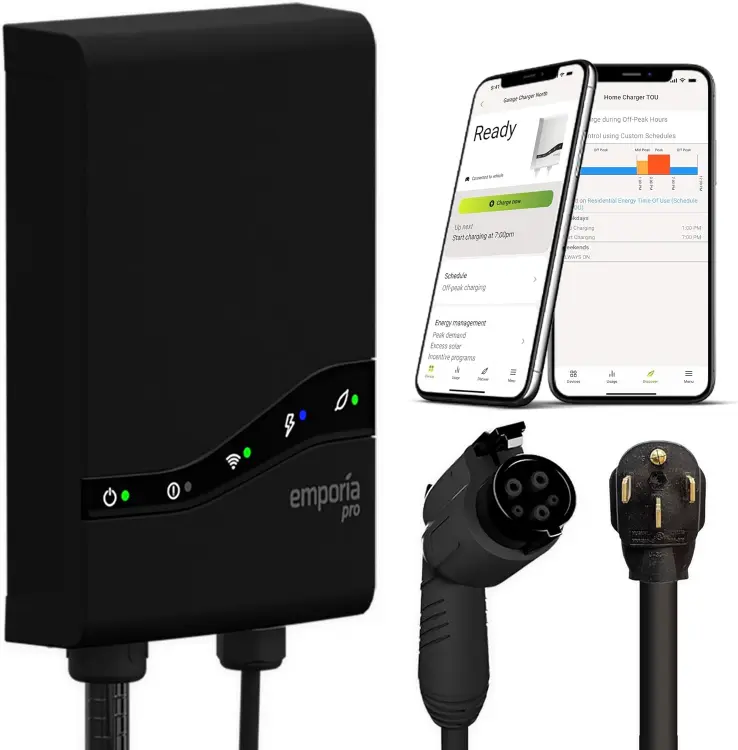
One caveat worth flagging: the Hummer EV’s 800-volt architecture supports up to 350 kW DC fast charging, but the maximum Level 2 AC charging rate is 19.2 kW — which requires an 80-amp circuit most US residential panels cannot support without an upgrade. Therefore, a 48-amp charger at 11.5 kW is the practical ceiling for most homes. Similarly, the Sierra EV also accepts up to 19.2 kW AC, with the same panel-capacity reality on the home side.
Methodology
Vehicles included: Every GMC model offered in the United States for the 2026 model year, plus historical reference to the 2008-2013 GMC Yukon Hybrid for context on the brand’s prior hybrid program.
Pricing source: GMC.com configurator and 2026 build-and-price tool, accessed May 2026. Comparator hybrid pricing from manufacturer sites (Ford, Toyota, Ram), accessed same date.
Fuel and energy cost calculations: $3.50/gallon US national average gasoline, $3.75/gallon diesel (EIA May 2026), $0.16/kWh average residential electricity. 15,000 annual miles. Real-world mpg from Fuelly where owner data was sufficient; EPA combined figures otherwise.
Reliability and segment data: Consumer Reports 2026 Auto Reliability Survey, NHTSA recall and complaint data through May 2026, Cox Automotive registration trend reports.
What was excluded: Cadillac and Chevrolet vehicles, even when they share platforms with GMC products. The article scope is strictly GMC. Fleet-only variants and Canada-specific configurations are not covered.
Assumptions: Five-year ownership window. Home Level 2 charging available for EV scenarios. No federal tax credit applied (expired September 30, 2025). State incentives not modelled because they vary materially by location.
FAQ: GMC Hybrid Cars in 2026
Does GMC make hybrid cars in 2026?
GMC sells no traditional gas-electric hybrid car or SUV in the United States in 2026. Specifically, the brand’s electrified lineup consists of pure EVs only — the Hummer EV pickup, Hummer EV SUV, and Sierra EV pickup. However, the Sierra 1500 Duramax diesel includes a 48-volt mild-hybrid assist on some configurations but is not marketed or registered as a hybrid vehicle.
What happened to the GMC Yukon Hybrid?
The Yukon Hybrid was discontinued after the 2013 model year. Specifically, it used the GM/BMW/Daimler Two-Mode Hybrid system, delivered 21 mpg combined (only 4 mpg better than the V8), and added roughly $4,000 to the sticker. Furthermore, annual sales peaked at approximately 2,100 units in 2009. Consequently, GM cancelled the program and redirected electrification capital to the Voltec range-extender platform and, later, the Ultium EV architecture.
Is the GMC Hummer EV a hybrid?
No, the Hummer EV is a pure battery-electric vehicle with no gas engine. Specifically, it uses a 212.7 kWh Ultium battery (around 205 kWh usable) and three electric motors. As a result, the Edition 1 pickup delivers an EPA-rated 314 miles of range and 47 MPGe combined efficiency, making it one of the least efficient EVs sold in the US market by a meaningful margin.
Should I wait for a GMC hybrid SUV?
No, and the case against waiting is strong. Firstly, there is no publicly announced GMC hybrid SUV in the 2026, 2027, or 2028 product plan. Furthermore, GM has stated repeatedly that Yukon and Terrain electrification will arrive as EV variants on Ultium, not as hybrids. In short, waiting for a product that has not been announced is not a sound buying strategy.
Is the Duramax diesel a GMC hybrid?
Not in the way buyers usually mean. Specifically, the 3.0L Duramax inline-six uses a 48-volt mild-hybrid assist on some 2026 Sierra 1500 trims. However, the truck cannot move on electric power alone, the battery is under 1 kWh, and GMC does not market or register the Duramax Sierra as a hybrid. Overall, it is best described as a fuel-efficient diesel with a 48-volt smoothing system, not a hybrid pickup.
What is the best GMC hybrid car alternative?
For full-size pickup buyers, the Ford F-150 PowerBoost Hybrid is the closest substitute at $53,395 starting MSRP with 24 mpg combined and full 12,700 lb towing. For three-row SUV buyers, on the other hand, the Toyota Sequoia i-FORCE MAX hybrid replaces what a Yukon Hybrid would have been at $64,135 with 22 mpg combined. In addition, the Toyota Grand Highlander Hybrid at $45,750 covers the mid-size three-row hybrid segment GMC does not.
Are GMC EVs cheaper to own than hybrids?
Only with home charging. For example, a Sierra EV at 15,000 mi/yr and $0.16/kWh costs around $1,470 per year in electricity. By comparison, a hypothetical Sierra Hybrid at 24 mpg would burn roughly $2,188 in gas annually — a $718 EV advantage. However, without home charging, public DCFC at $0.42/kWh more than doubles the EV’s operating cost, flipping the result. In short, home charging is the load-bearing variable.
Does GMC plan to make any hybrids by 2028?
No public roadmap shows a traditional GMC hybrid before 2028. Furthermore, GM’s official electrification strategy continues to allocate capital to Ultium EVs across all four GM brands. Nevertheless, industry analysts at Cox Automotive have suggested GM may eventually revisit hybrid development given softer EV demand growth in 2024-2026, but no official announcement has been made.
Final Verdict
The headline takeaway is the cleanest one I can give: GMC hybrid cars are not a category that exists in 2026. Specifically, the brand sells two pure EVs (Hummer EV, Sierra EV) and a lineup of conventional gas and diesel vehicles. Furthermore, there is no full-hybrid Yukon, no hybrid Sierra, no hybrid Terrain. As a result, anyone shopping for “GMC hybrid cars” is either looking for a product that died in 2013 or one that has never existed.
Where the money actually goes
If I had to choose where to put $55,000 in 2026 for a GMC-segment vehicle with the lowest operating cost, I would not put it in a GMC. For example, the Ford F-150 PowerBoost Hybrid at $53,395 delivers measurable fuel savings over any gas Sierra, retains full towing capability, and depreciates more predictably than a Sierra EV. For SUV buyers, on the other hand, the Toyota Sequoia i-FORCE MAX hybrid is the cleanest Yukon Hybrid substitute available. In short, both vehicles fill the segments GMC has chosen not to compete in, and both carry less financial risk than the brand’s current electrified options.
The one honest caveat
One honest caveat: if you have reliable home charging, drive under 200 miles per day, and can absorb a steeper depreciation curve, the GMC Sierra EV Elevation at $51,995 is a rational truck. Overall, it is the only electrified GMC I would actually recommend on cost-per-mile grounds. By contrast, the Hummer EV is a halo product, the Duramax mild-hybrid is a diesel by another name, and the absence of true GMC hybrid cars is a strategic decision the brand will probably revisit by 2029 — but not in time to help anyone buying now.
The shortest version: if you came here looking for GMC hybrid cars, you did not find them because they do not exist. Therefore, the most rational alternatives are at Ford and Toyota. For an EV-aware GMC buyer with home charging, however, the Sierra EV is a defensible choice. Everyone else should buy a hybrid from a brand that actually sells one.
Last updated: June 1, 2026