Last Updated: May 2026 — Specs, certifications, and Amazon pricing verified
The best home EV charger for most buyers in 2026 is the ChargePoint Home Flex. It adjusts from 16A to 50A to work with almost any home electrical circuit, connects to every J1772 EV on the market, and has the most reliable smart-charging features of any hardwired unit we tested. If you already have a NEMA 14-50 outlet in your garage — common wherever a 240V dryer or RV hookup was previously installed — the AIMILER 32A is a simpler, less expensive option that requires no electrician and delivers 25 miles of range per hour, which covers the average US commute on an overnight charge.
There is one thing to check before comparing chargers: your car’s onboard charging rate. A 48-amp charger pushing 11.5 kW into a Chevrolet Bolt’s 11.5 kW onboard charger is optimal. The same charger on a base Nissan Leaf with a 6.6 kW onboard charger delivers exactly 6.6 kW, regardless of what the EVSE is rated at. Buying a 50-amp charger for a car with a 7.2 kW onboard charger is not wrong — you have headroom if you switch vehicles — but the speed difference versus a 32-amp unit is zero for that specific car. The right charger is determined by your electrical panel first, your car’s onboard charger rate second, and the EVSE brand third.
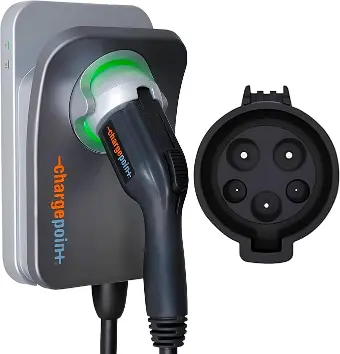
Best Home EV Chargers 2026 — Quick Answer
Best overall: ChargePoint Home Flex — adjustable 16–50A, works with any EV, best app and smart features. Best plug-in (no electrician): AIMILER 32A on a NEMA 14-50 outlet — 25 miles/hour, no hardwiring. Best for speed: Autel MaxiCharger 50A — 12 kW peak, requires a 60A circuit. Best for apartments: EVDANCE Level 1/2 — works on any outlet, fully portable. Check before buying: your car’s onboard charger rate caps actual charging speed — a 48A EVSE on a car with a 7.2 kW onboard charger delivers no more than 7.2 kW regardless of the EVSE’s rating.
What to Know Before Buying a Home EV Charger
Most buyers make the mistake of shopping for charger amperage before checking their electrical panel. These three numbers determine which charger makes sense for your home.
1. Your available circuit capacity. For a hardwired charger, your electrical panel needs a dedicated circuit. A 48-amp charger requires a 60-amp breaker. A 50-amp charger requires a 60–70-amp breaker. If your panel is already near capacity, the electrician bill to add a new 60-amp circuit — or upgrade the panel itself — can add $500–$2,000 to the total cost. Check your panel before ordering hardware.
2. Your car’s onboard charger (OBC) rate. This is the actual limiting factor. The OBC is the component inside your EV that converts AC power to DC power for the battery. Every EV has a maximum OBC rate. A 7.2 kW OBC will accept no more than 7.2 kW regardless of how powerful your EVSE is. Common OBC rates:
| EV Model | Onboard Charger (OBC) Rate | Optimal EVSE Amperage | Miles Added per Hour |
|---|---|---|---|
| Tesla Model 3/Y Long Range | 19.2 kW | 80A (needs 100A circuit) | ~55 mi/hr |
| Ford F-150 Lightning | 19.2 kW | 80A (needs 100A circuit) | ~54 mi/hr |
| Hyundai Ioniq 5 / Kia EV6 | 10.9–11 kW | 48A (needs 60A circuit) BEST MATCH | ~34 mi/hr |
| Chevrolet Bolt EV (2022–2023) | 11.5 kW | 48A (needs 60A circuit) BEST MATCH | ~36 mi/hr |
| Tesla Model 3/Y Standard Range | 7.2 kW | 32A (needs 40A circuit) | ~23 mi/hr |
| Nissan Leaf (base) | 6.6 kW | 32A (needs 40A circuit) | ~20 mi/hr |
3. Hardwired or plug-in. Hardwired chargers are permanently wired into your electrical panel — they require an electrician to install, cannot be moved, and typically support higher amperages. Plug-in chargers use a NEMA 14-50 outlet (common in US garages) and can be installed by the homeowner without an electrician if the outlet already exists. A plug-in 32A charger on a NEMA 14-50 outlet adds approximately 25 miles of range per hour — sufficient for the average 37-mile US round-trip commute with overnight charging. Only drivers who need maximum speed (F-150 Lightning, Tesla Long Range) benefit meaningfully from a hardwired 48A or 50A unit over a 32A plug-in.
The 7 Best Home EV Chargers in 2026
ChargePoint Home Flex
The only mainstream home charger that adjusts to match your circuit — from 16A to 50A in the appThe ChargePoint Home Flex earns the top position for one reason that matters more than any other spec: the adjustable amperage. You configure the charger’s output in the ChargePoint app from as low as 16A to as high as 50A, matching whatever circuit you have available. Buy it today on a 40-amp circuit, get your panel upgraded next year, bump it to 48A — no new hardware. No other hardwired charger in this price range does this.
The ChargePoint app is the best in this category — scheduling, energy usage tracking, reminders, Alexa and Google Home integration, and over-the-air firmware updates have kept the hardware current through three years of software improvements. The charger is certified by Underwriters Laboratories, rated NEMA 4 for outdoor use, and carries a 3-year hardware warranty. ChargePoint’s brand longevity also matters for a device you’re drilling into your garage wall: the company has been operating public and home charging infrastructure since 2007.
Who it’s for: Buyers who want the most future-proof, flexible hardwired solution and don’t want to think about whether their electrical panel can handle the unit they’re ordering. Who should skip it: Buyers who already know they have a 60-amp circuit and want maximum speed at a lower price — the WOLFBOX or EVIQO deliver the same 11.5 kW for considerably less.
- Adjustable 16–50A — works on almost any circuit
- Best app and smart-home integration in class
- Established brand with long support track record
- NEMA 4 outdoor rating
- 3-year warranty
- Higher price than equivalent-amp competitors
- 23 ft cable (shorter than most rivals’ 25 ft)
- Hardwired only — requires electrician
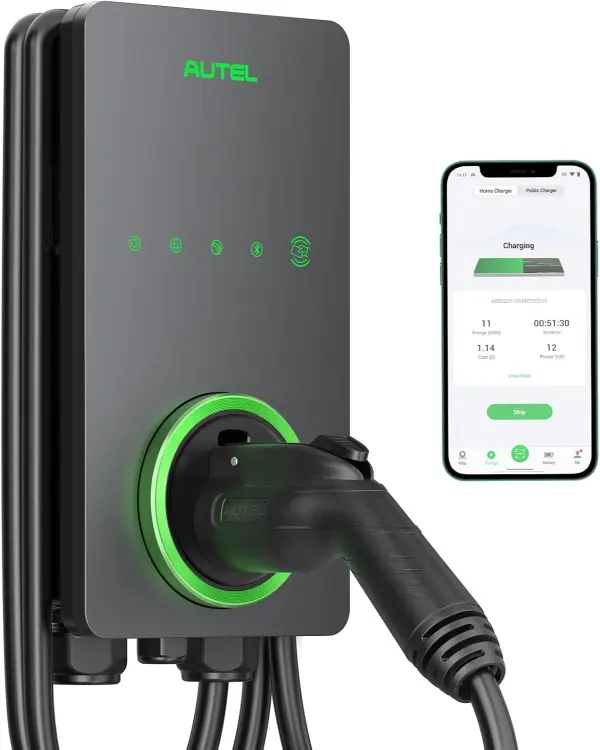
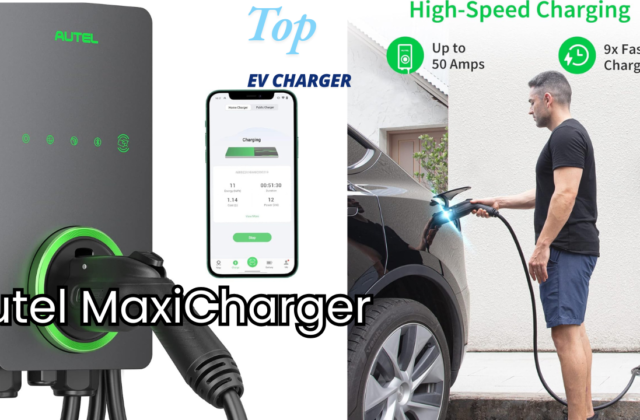
Autel MaxiCharger Level 2 EV Charger (Up to 50A)
Both WiFi and Bluetooth in the same unit — the only charger here with dual wireless connectivityAutel’s MaxiCharger is the most powerful unit in this roundup at 50 amps, delivering up to 12 kW. That peak matters for two specific vehicles: the Ford F-150 Lightning and Tesla Model 3/Y Long Range, both of which have 19.2 kW onboard chargers that throttle down to about 12 kW on a standard 50-amp home circuit. For those vehicles, the Autel adds around 36 miles of range per hour — the practical ceiling for a standard US residential panel without panel upgrade.
The dual WiFi and Bluetooth connectivity is a standout feature. WiFi handles scheduling, app monitoring, and OTA firmware updates over your home network. Bluetooth provides a local connection for setup and for situations where WiFi is unreliable in the garage — a common real-world problem with single-band routers and concrete walls. The 25-foot cable is longer than ChargePoint’s 23-foot unit. The Autel app provides energy tracking, session history, and charging schedules.
Who it’s for: Owners of F-150 Lightning, Tesla Long Range, or any 19.2 kW OBC vehicle who want the maximum home charging speed on a standard 60-amp residential circuit. Who should skip it: Anyone whose car has a 7.2 kW or 11 kW OBC — the 50A rating brings no benefit, and a 48A charger at a lower price is the smarter buy.
- 50A / 12 kW — fastest in this roundup
- WiFi + Bluetooth — both, not either/or
- 25 ft cable
- Energy monitoring and scheduling app
- Requires 60A+ circuit (62.5A NEC minimum, use 70A to be safe)
- No speed benefit unless car has 19.2 kW OBC
- Higher price than 48A alternatives with similar features
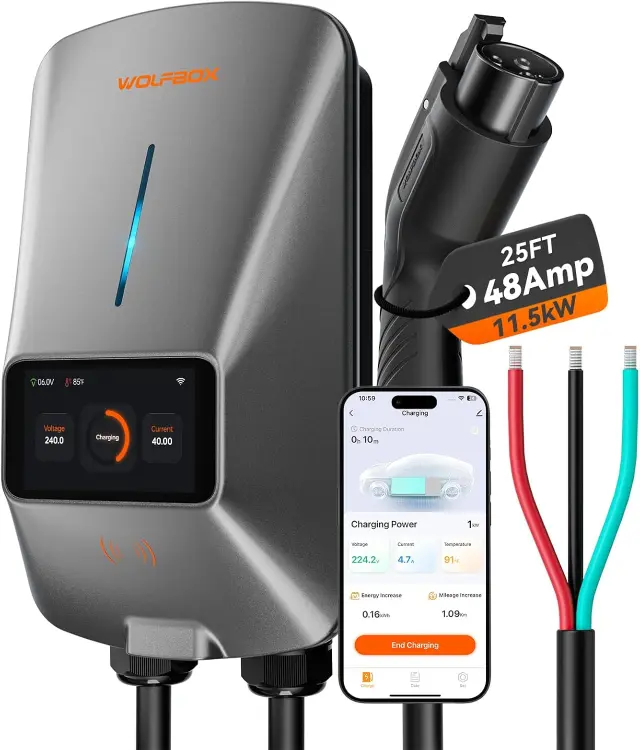
WOLFBOX Level 2 EV Charger 48A — Smart Display + RFID
The built-in display shows real-time power draw and session data without opening any appThe WOLFBOX stands out with two features absent from most competitors at this price: a built-in LCD display that shows real-time power draw, charging time, and session energy in kWh, and RFID card access control. The display is genuinely useful — you can check if the car is charging and how much power it’s drawing without unlocking your phone. For households with teenagers or shared vehicles, being able to confirm a charging session started is a practical quality-of-life improvement.
The RFID card access is the more niche feature, but it matters for specific use cases: landlords renting to EV-owning tenants, shared driveway situations, or anyone who wants to restrict access to the charger without relying on the app. The charger ships with two RFID cards and supports additional cards. Combined with WiFi scheduling and energy monitoring, the WOLFBOX has a more complete hardware-plus-access feature set than any other charger in this price tier.
Who it’s for: Buyers who want physical display feedback and/or RFID access control at a competitive 48A price point. Who should skip it: Buyers who only ever charge their own vehicle and have no need for access restriction — the display is nice but not worth a premium if you never use the RFID feature.
- Built-in LCD display — no app required to check status
- RFID card access — useful for shared or rental situations
- 48A / 11.5 kW — optimal for most EVs
- 25 ft cable
- Newer brand — shorter support track record than ChargePoint
- RFID adds no value for single-vehicle, single-user households
- Requires 60A circuit
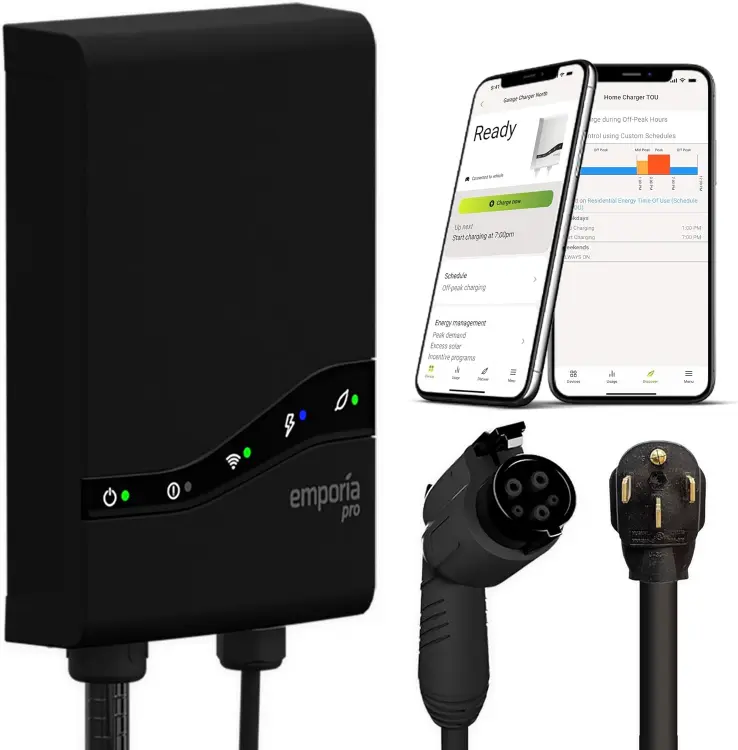
EMPORIA Pro Level 2 EV Charger — 48A PowerSmart
Emporia’s load management prevents your charger from tripping the panel when other appliances are runningEmporia is best known for its Vue energy monitor — a whole-home electricity tracking device that sits in your electrical panel. The EMPORIA Pro charger extends that product line with “PowerSmart,” an active load management feature that monitors your home’s total power consumption and automatically dials back the charger’s output when other high-draw appliances — electric dryers, ovens, HVAC — are running simultaneously. The result is that you can run a 48A charger on a panel that would normally require an expensive upgrade to support one.
This is the charger for buyers who have an older 100-amp panel that would struggle with a dedicated 60-amp EV circuit on top of existing loads. Rather than paying $1,500–$3,000 to upgrade to a 200-amp panel, PowerSmart manages the load dynamically. The dual install option — NEMA 14-50 plug or hardwired — adds flexibility: start with a plug-in if the outlet exists, hardwire later if desired.
Who it’s for: Homes with older 100-amp panels, multiple high-draw appliances, or buyers who want to avoid panel upgrade costs. Also ideal for existing Emporia Vue users who want energy data consolidated in one app. Who should skip it: Homes with a modern 200-amp panel — you don’t need load management and the simpler EVIQO or WOLFBOX save money.
- PowerSmart load management — prevents panel overload
- NEMA 14-50 plug or hardwired — choose at install time
- Integrates with Emporia Vue whole-home energy monitoring
- 48A / 11.5 kW when no load conflict exists
- Load management reduces speed when home consumption is high
- Overkill for homes with a modern 200A panel
- Best value if you already own an Emporia Vue — otherwise a niche fit
Image not available
EVIQO Level 2 EV Charger — 48A Hardwired
IP66 weather rating and dual UL/ETL certification at a lower price than the brand-name alternativesThe EVIQO’s primary case is straightforward: it delivers the same 48A / 11.5 kW as the WOLFBOX and ChargePoint at a meaningfully lower price, with the safety certifications that matter. UL and ETL certification means the hardware has been independently tested for electrical safety compliance by two separate certification bodies — both are nationally recognized testing laboratories (NRTLs) recognized by OSHA. This is the minimum safety bar to look for in any home EV charger.
The IP66 / NEMA 4 weather protection rating is among the best in this roundup — IP66 means the unit is completely dust-tight and protected against powerful water jets from any direction. For garages with open walls, exposed to rain splash, or in humid climates, this matters. The WiFi smart app covers scheduling and energy monitoring. The 25-foot cable handles most garage configurations.
Who it’s for: Buyers who need a solid, safety-certified 48A hardwired charger without paying the ChargePoint premium — particularly where outdoor exposure or weather protection is a concern. Who should skip it: Buyers who need adjustable amperage (ChargePoint wins), load management (EMPORIA), or physical access control (WOLFBOX).
- UL and ETL certified — the safety standard that matters
- IP66 / NEMA 4 — excellent weather protection
- 48A / 11.5 kW at a budget price
- WiFi scheduling and monitoring
- Requires 60A circuit — same as all 48A units
- Newer brand — less long-term reliability data than ChargePoint
- No adjustable amperage — fixed at 48A max
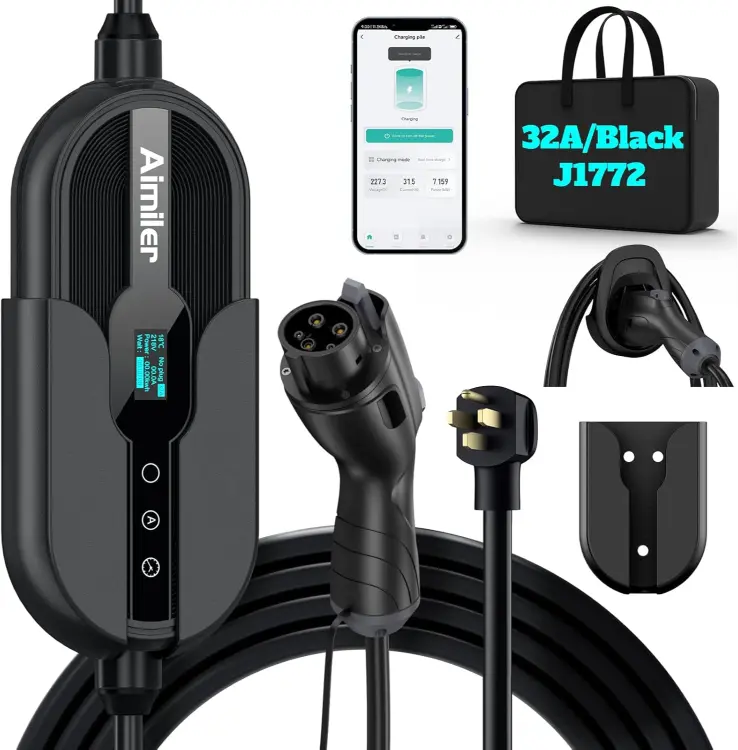
AIMILER Level 2 EV Charger — 32A NEMA 14-50 Plug-In
Plug into your existing NEMA 14-50 outlet — no electrician, no hardwiring, and 25 miles of range per hourThe AIMILER earns its position with a single practical advantage that the hardwired units above cannot offer: if you already have a NEMA 14-50 outlet in your garage, this charger requires no installation at all. Plug it in, download the app, and you have 32 amps of Level 2 charging delivering approximately 25 miles of range per hour. NEMA 14-50 outlets are common in US garages — they power 240V dryers, RV hookups, and workshop equipment. If yours exists, this charger costs less and installs in five minutes.
At 32A / 7.7 kW, the AIMILER is slower than the 48A hardwired units. However, the actual charging speed difference is irrelevant for most overnight charging scenarios. A car starting at 30% battery needs approximately 5.5 hours to reach 90% on a 32A charger. Most drivers plug in at around 9 PM and unplug at 7 AM — a 10-hour window that a 32A charger fills completely. The ETL certification confirms electrical safety compliance.
Who it’s for: Homeowners with an existing NEMA 14-50 outlet who want Level 2 charging immediately without an electrician visit. Also works for renters who have garage access with an appropriate outlet. Who should skip it: Drivers of F-150 Lightning or Tesla Long Range who need maximum speed — at 7.7 kW, this charger is a bottleneck for those specific vehicles’ 19.2 kW OBC.
- No electrician needed — plug into existing NEMA 14-50 outlet
- Portable — take it when you move
- ETL certified
- WiFi app for scheduling and monitoring
- 25 ft cable
- 32A cap — slower than hardwired 48A units
- Requires NEMA 14-50 outlet (or electrician to install one)
- Not rated for outdoor use — garage installation recommended
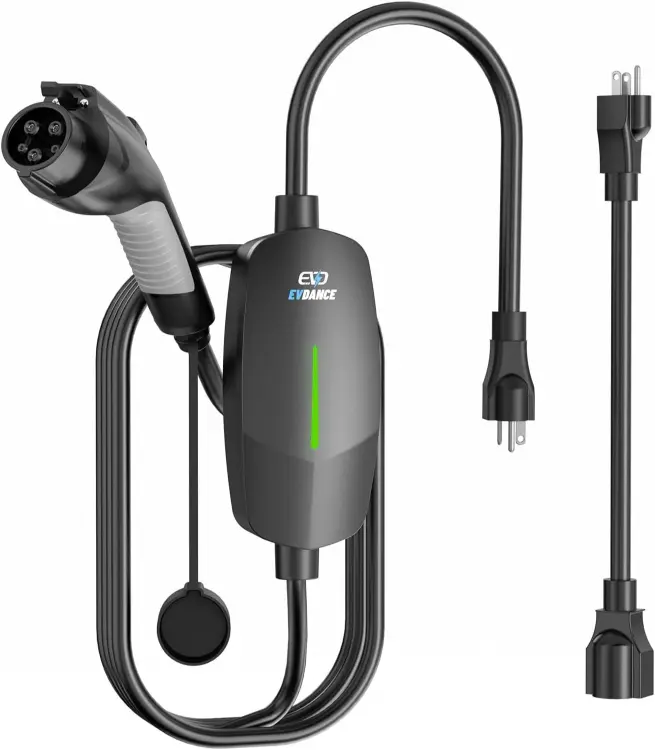
EVDANCE Level 1/2 Portable EV Charger — 12A/120V or 16A/240V
Works on a standard wall outlet — the only charger here that needs no special wiring at allThe EVDANCE is the only charger in this roundup that requires no dedicated EV circuit whatsoever. On a standard NEMA 5-15 outlet (every wall outlet in the US), it delivers 12A at 120V — approximately 4 miles of range per hour. On a NEMA 6-20 outlet (common in garages, workshops, and some utility areas), it delivers 16A at 240V — approximately 10–12 miles of range per hour. Neither is fast by Level 2 standards, but for an apartment dweller who can plug in overnight, 10 miles per hour over an 8-hour window adds 80 miles of range — more than enough for a typical daily commute.
The EVDANCE does not have WiFi or a dedicated app. It is a straightforward portable EVSE with a 25-foot cable, a J1772 connector, and a simple plug — NEMA 5-15 for 120V use, NEMA 6-20 for 240V. The dual-plug design means one unit covers both use cases, which matters for EV owners who travel and encounter different outlet availability.
Who it’s for: Apartment renters, condo owners without garage circuits, EV owners who travel and need a portable backup charger, or anyone whose primary charging option is a standard wall outlet. Who should skip it: Anyone with access to a NEMA 14-50 outlet — the AIMILER at a similar price point delivers more than twice the charging speed.
- No installation — works on any standard outlet
- Portable and lightweight — fits in the trunk
- Dual voltage: 120V or 240V in one unit
- 25 ft cable — longest reach of any portable charger
- Maximum 3.8 kW — significantly slower than Level 2 hardwired units
- No WiFi or scheduling
- Not suitable as primary charger for vehicles used for long commutes
Full Comparison Table
| Charger | Max Output | Install Type | Circuit Needed | Cable | Smart / WiFi | Certification | Best For |
|---|---|---|---|---|---|---|---|
| ChargePoint Home Flex | 16–50A / 12 kW ADJUSTABLE | Hardwired | 20–60A (matches setting) | 23 ft | WiFi + App + Alexa | UL Listed | Best Overall |
| Autel MaxiCharger 50A | 50A / 12 kW | Hardwired | 60A+ breaker | 25 ft | WiFi + Bluetooth BOTH | ETL | Best Speed |
| WOLFBOX 48A | 48A / 11.5 kW | Hardwired | 60A breaker | 25 ft | WiFi + LCD Display DISPLAY | ETL | Smart Features + RFID |
| EMPORIA Pro 48A | 48A / 11.5 kW | NEMA 14-50 or Hardwired | 60A or 50A outlet | 25 ft | WiFi + Load Mgmt POWERSMART | UL / ETL | Older Panels / Energy Mgmt |
| EVIQO 48A | 48A / 11.5 kW | Hardwired | 60A breaker | 25 ft | WiFi + App | UL + ETL DUAL CERT | Budget Hardwired |
| AIMILER 32A | 32A / 7.7 kW | NEMA 14-50 plug-in NO ELECTRICIAN | 40–50A outlet | 25 ft | WiFi + App | ETL | Plug-In, No Installation |
| EVDANCE Level 1/2 | 16A / 3.8 kW SLOWEST | NEMA 5-15 or 6-20 plug ANY OUTLET | Standard wall outlet | 25 ft | None | J1772 | Apartments / Portable |
Hardwired vs Plug-In: Which Installation Type Is Right for You
The hardwired vs plug-in decision is more consequential than charger brand. It determines your installation cost, flexibility, and whether you need an electrician.
You need maximum charging speed or long-term permanence
Hardwired chargers support up to 50A (12 kW), compared to 32A (7.7 kW) for most plug-in units on a NEMA 14-50 outlet. If your car has an 11 kW or higher OBC — Ioniq 5, EV6, Bolt EV, long-range Tesla — a hardwired 48A unit delivers noticeably more miles per hour than a 32A plug-in. Hardwired is also the right choice if you want a permanently installed unit that is less susceptible to being accidentally unplugged.
A NEMA 14-50 outlet already exists in your garage
A NEMA 14-50 outlet on a 50-amp circuit is already capable of 40A continuous draw — more than enough for a 32A EV charger. If that outlet exists, a plug-in charger installs in minutes with no electrician and no wall penetrations. The AIMILER 32A on a NEMA 14-50 delivers 25 miles per hour, which covers 250 miles of range on a 10-hour overnight window. For any car with a 7.2 kW or smaller OBC, the plug-in speed is identical to a hardwired 48A unit.
No NEMA 14-50 outlet exists and you want more than Level 1 speed
If your garage has no 240V outlet, adding one — whether for a plug-in charger or hardwired unit — requires an electrician either way. In this case, have the electrician install a 60-amp dedicated circuit and a hardwired charger while they’re already doing the work. The marginal labor cost of going from a NEMA 14-50 outlet install to a hardwired circuit is typically $100–$200. The long-term speed gain is worth it.
You rent, live in an apartment, or cannot modify the electrical system
The EVDANCE Level 1/2 is the only charger here that requires no circuit modification. On a 240V NEMA 6-20 outlet (common in garages and workshops), it delivers approximately 10–12 miles of range per hour. On a standard 120V wall outlet, approximately 4 miles per hour. For a driver covering 25–30 miles daily, a 120V overnight charge of 8 hours provides 32 miles of range — sufficient for most commute patterns.
Installation: What to Know Before You Order
Three practical points that most product reviews omit.
The NEC 80% rule and circuit sizing. The National Electrical Code requires that continuous loads — meaning loads running for more than 3 hours, which describes overnight EV charging — not exceed 80% of the circuit’s rated capacity. Therefore, a 48-amp EV charger must be on a circuit rated for at least 60 amps (48 ÷ 0.80 = 60). A 50-amp charger technically needs a 62.5-amp minimum — in practice, electricians use a 60-amp or 70-amp breaker. If an electrician quotes a 50-amp circuit for a 48-amp hardwired charger, that is an NEC violation.
Cable length matters for garage layout. Most chargers in this roundup use a 25-foot cable. However, the distance from the wall mounting point to your car’s charge port varies by vehicle. EV charge ports are located on the driver’s side front (Tesla), driver’s side rear quarter (Chevrolet Bolt, Hyundai Ioniq 5), passenger’s side front (Nissan Leaf), or rear (BMW i4). Measure from your planned mounting location to the furthest point your car’s charge port will be parked — 25 feet is sufficient for most single-vehicle garages, but tight for large two-car garages where the parking position varies.
Outdoor installation requires an outdoor-rated unit. If the charger will be on an exterior wall, under a carport, or in an open garage, verify the IP or NEMA weather protection rating before ordering. IP66 / NEMA 4 (EVIQO, ChargePoint Home Flex) handles rain, dust, and spray from any direction. Units without explicit outdoor ratings — like the AIMILER — should be installed in enclosed garages only.
Frequently Asked Questions
What is the best home EV charger for most people in 2026?
The ChargePoint Home Flex is the best home EV charger for most buyers because its adjustable 16–50A output works with virtually any home electrical circuit without needing to know your panel’s exact capacity at the time of purchase. The app is the most mature in the category, and ChargePoint’s track record since 2007 provides the best assurance of long-term software support. If you already have a NEMA 14-50 outlet in your garage and your car has a 7.2 kW onboard charger, the AIMILER 32A plug-in delivers the same real-world charging speed at a lower price with no electrician required.
Do I need an electrician to install a Level 2 home EV charger?
It depends on the installation type. Hardwired chargers always require a licensed electrician — they are permanently connected to your home’s electrical system, and the work involves adding a dedicated circuit to your panel. Plug-in chargers on NEMA 14-50 outlets do not require an electrician if the outlet already exists. However, if you need a new NEMA 14-50 outlet installed, that work also requires an electrician. The EVDANCE Level 1/2 portable charger requires no installation at all — it plugs into any standard wall outlet.
What amperage home EV charger do I actually need?
Look up your car’s onboard charger (OBC) rate before buying. A 32A charger (7.7 kW) is sufficient for vehicles with 7.2 kW OBCs, including Tesla Standard Range models and base Nissan Leaf. A 48A charger (11.5 kW) is optimal for Hyundai Ioniq 5, Kia EV6, Chevrolet Bolt EV, and most current EVs with 11 kW OBCs. Only the Ford F-150 Lightning and Tesla Long Range models with 19.2 kW OBCs benefit from a 50-amp charger. Buying a higher-amp charger than your car’s OBC handles causes no damage — it simply delivers no additional speed.
Can I use any of these chargers with a Tesla?
Yes. All seven chargers use the J1772 connector standard, which is compatible with all non-Tesla EVs. Tesla vehicles accept J1772 via the included adapter that comes with every Tesla. Therefore, any charger in this article works with a Tesla — you simply use the provided adapter. For Tesla-specific NACS (North American Charging Standard) native charging, you would need a Tesla Wall Connector, which is not in this roundup.
How much does a Level 2 home EV charger cost to run?
At the US national average residential electricity rate of $0.14/kWh, charging a typical 60–80 kWh EV battery from near-empty costs approximately $8.40–$11.20. At 12,000 miles per year and approximately 3 miles per kWh, the annual electricity cost for home charging is approximately $560–$700. This compares to approximately $1,286 for a 28 mpg gas car at $3.00/gallon — an annual saving of roughly $600–$700 for home-charging EV owners. Public Level 2 and DC fast charging rates range from $0.20–$0.50/kWh, which erases most of the fuel cost advantage.
What safety certifications should I look for in a home EV charger?
Look for UL listing or ETL certification — both indicate that an independent, OSHA-recognized Nationally Recognized Testing Laboratory (NRTL) has verified the product meets electrical safety standards. UL (Underwriters Laboratories) and ETL (Intertek) are the two most common in the US. Avoid chargers that carry neither certification, particularly from unknown brands without verifiable safety testing history. All seven chargers in this roundup carry at least one NRTL certification — the EVIQO carries both UL and ETL.
Is a 48A or 50A home charger worth the extra cost over a 32A unit?
Only for specific vehicles. If your car has an 11 kW or higher OBC — Hyundai Ioniq 5, Kia EV6, Chevrolet Bolt, BMW i4, and most 2023+ EVs — a 48A charger adds approximately 9 miles of range per hour compared to a 32A unit (34 mi/hr vs 25 mi/hr). For a 100-mile battery and a 10-hour overnight window, both chargers fully replenish the battery with hours to spare. The 48A upgrade matters only when you are starting from low state of charge and have limited charging time — for example, an 80-mile daily commute where you plug in late and unplug early.