By James Carter · Last updated: May 20, 2026 · 12 min read
Quick Answer
The Chevy EV charger is a solid, reliable Level 2 unit that does exactly one thing well: it charges your car overnight. At 48 amps and 11.5 kW, it matches the output of third-party chargers like the Autel MaxiCharger and ChargePoint Home Flex. Where it falls short is smart features. No energy monitoring, limited app functionality, and no scheduling flexibility compared to competitors at the same price. If you want plug-and-forget simplicity with GM branding, it works. If you want the charger that gives you the most control per dollar, the ChargePoint Home Flex or Autel MaxiCharger are better buys.
48A
Max amperage output
11.5 kW
Charging power on 240V
~37 mi/hr
Range added per hour
NEMA 4
Weatherproof rating
Table of Contents
- What You Actually Get With the Chevy EV Charger
- Charging Speed: Does 48 Amps Matter for Chevy Owners?
- Smart Features: Where GM’s Charger Falls Behind
- Installation: What It Costs and What Your Electrician Needs to Know
- Chevy EV Charger vs Autel vs EVIQO vs ChargePoint: Side-by-Side
- Who Should Buy the Chevy Charger and Who Should Not
- Three Alternatives Worth Considering
- FAQ
What You Actually Get With the Chevy EV Charger
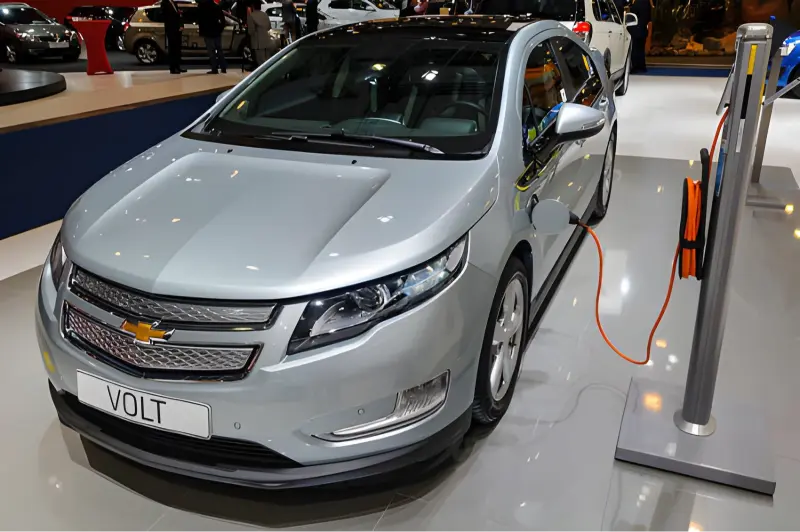
GM sells this as the charger built for its own vehicles. On paper, the pitch is simple: buy the brand’s charger, skip the research, and trust that the hardware was designed with your Equinox EV, Blazer EV, or Silverado EV in mind. That pitch is half right.
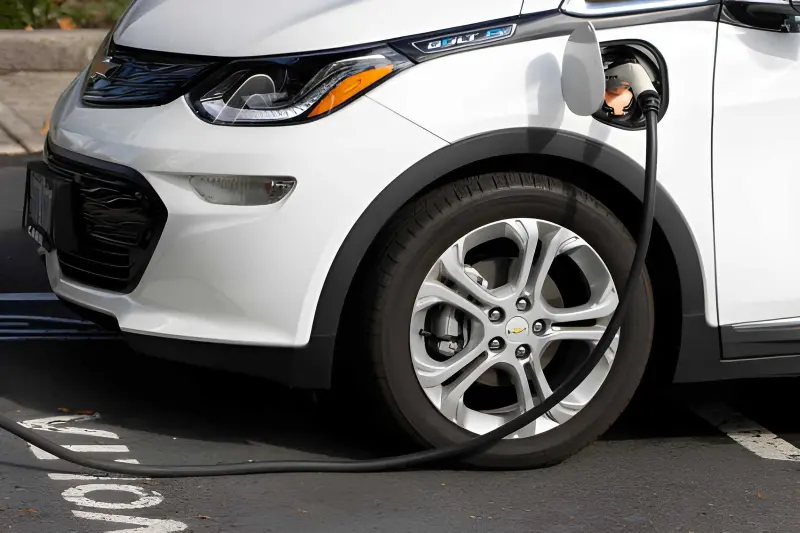
The hardware itself is competent. You get a hardwired Level 2 EVSE rated at 48 amps on a 240V circuit, which delivers 11.5 kW of charging power. That translates to roughly 37 miles of range per hour for most Chevy EVs. A 25-foot cable provides enough reach for most garage setups without needing an extension. The unit carries a NEMA 4 weatherproof rating, so outdoor installation is viable in rain, snow, and dust. Build quality is solid, with a clean industrial design that looks like it belongs on a garage wall rather than fighting with it.
The J1772 connector is universal. Despite the GM branding, this charger works with every non-Tesla EV on the market. If you swap brands later, the charger comes with you. That matters more than most buyers think at purchase time, because the average EV owner keeps their vehicle about 6.5 years, according to Cox Automotive data from 2025.
Where the “built for Chevy” story gets thin is the software. The app is basic. You can start and stop a session, and that is about the extent of it. There is no energy usage tracking, no detailed charging history, and no cost-per-session calculation. For a charger that costs as much as third-party units with richer apps, that gap stands out.
Charging Speed: Does 48 Amps Matter for Chevy Owners?
The short answer: yes, but only if your electrical panel supports it.
At 48 amps, the Chevy charger delivers 11.5 kW. On a 2026 Equinox EV with its 85 kWh usable battery, a 10%-to-100% charge takes roughly 8 hours overnight. That is fast enough for any daily driver who plugs in after work and leaves the next morning. For the Silverado EV with its larger 200 kWh battery on the RST trim, the same charger needs closer to 17 hours for a full charge from near-empty. That still works for weekend recovery, but it is tight for consecutive heavy-use days.
Here is the part many buyers overlook. A 48-amp charger requires a 60-amp dedicated circuit breaker. That is the NEC code requirement: 125% of the continuous load. If your panel is already loaded with central air, an electric dryer, and an electric range, adding a 60-amp circuit might require a panel upgrade. Panel upgrades run $1,500 to $3,000 depending on your area and electrician. That cost is invisible in every charger review, but it is real money that shows up on the installation invoice.
If your panel can only support a 40-amp breaker, the charger still works. It just drops to 32 amps and about 7.7 kW. For the Equinox EV, that extends the full charge to roughly 11 hours overnight. Still manageable for most schedules, but less margin.
How Charging Speed Compares Across Chevy EVs
| Vehicle | Usable Battery | 10%–100% Time | Daily Top-Up (50%–100%) |
|---|---|---|---|
| Equinox EV LT | 85 kWh | ~8 hrs | ~4 hrs |
| Blazer EV LT | 85 kWh | ~8 hrs | ~4 hrs |
| Silverado EV WT | 150 kWh | ~14 hrs | ~7 hrs |
| Silverado EV RST | 200 kWh | ~17 hrs | ~9 hrs |
For Equinox and Blazer owners, 48 amps is more than adequate. For Silverado RST owners, it is the minimum you should consider. If you are still deciding which Chevy EV fits your situation, our gas vs hybrid vs EV cost comparison breaks down the five-year ownership math. Anything less than 48 amps on the Silverado means you are gambling on having enough charge for the next day.
Smart Features: Where GM’s Charger Falls Behind
This is where the Chevy charger loses ground, and it loses it quickly.
The GM app lets you initiate and stop charging remotely. You can also schedule charging through your vehicle’s infotainment system to take advantage of off-peak electricity rates. That works fine if you are a single-Chevy household that never needs to think about the charger independently of the car.
But third-party chargers at this price offer considerably more. The ChargePoint Home Flex tracks energy consumption per session, calculates cost based on your electricity rate, and stores months of charging history. The Autel MaxiCharger goes further with Bluetooth and Wi-Fi connectivity, over-the-air firmware updates, and integration with home energy management systems. The EVIQO 48A charger offers Wi-Fi scheduling through its own app at a lower price point.
If you care about tracking what your EV actually costs to run month by month, the Chevy charger does not give you that data. You will need to calculate it yourself from your electricity bill. That is a gap that matters more than it seems, because the financial advantage of home charging over public DC fast charging is $3,945 over five years at 15,000 miles per year, based on DOE AFDC home charging data. Knowing exactly how much you spend per session helps you verify that advantage is real in your situation.
Installation: What It Costs and What Your Electrician Needs to Know
The Chevy EV charger is hardwired only. There is no NEMA 14-50 plug option. That means an electrician is not optional. It is required.
Typical installation cost for a hardwired 48-amp Level 2 charger runs $300 to $800 in most U.S. markets, assuming your electrical panel has capacity and the charger is mounted within 25 feet of the panel. If the panel is in the basement and the charger goes in a detached garage, expect $1,200 to $2,000 for the additional wiring run.
What to Tell Your Electrician
Your electrician needs to know three things before they quote the job. First, the charger requires a dedicated 60-amp circuit breaker on a 240V circuit with 6-gauge copper wire. Second, the unit is hardwired, so there is no plug to install, just a direct connection to the wiring. Third, if you want the charger outdoors, the circuit needs a weatherproof disconnect switch within sight of the unit per most local codes.
One detail that catches homeowners off guard: if your main panel is 100 amps, a 60-amp EV circuit may push you past your panel’s capacity. In that case, your electrician will recommend either a panel upgrade to 200 amps or a load management device that throttles the charger when other high-draw appliances are running. The panel upgrade is the bigger expense. The load management device costs $200 to $400 installed and is often the smarter move.
Hardwired installation has one advantage over plug-in units, however. It eliminates the NEMA 14-50 outlet as a potential failure point. Plug connections can loosen over time, especially with 40+ amp loads running for hours nightly. Hardwired units do not have that issue.
Chevy EV Charger vs Autel vs EVIQO vs ChargePoint: Side-by-Side
Here is the comparison that actually matters. All four chargers deliver the same 48-amp, 11.5 kW output. The differences are in features, app quality, and what you get for your money.
| Feature | Chevy EV Charger | Autel MaxiCharger | EVIQO 48A | ChargePoint Home Flex |
|---|---|---|---|---|
| Max Amperage | 48A | 50A | 48A | 50A |
| Max Power | 11.5 kW | 12 kW | 11.5 kW | 12 kW |
| Cable Length | 25 ft | 25 ft | 25 ft | 23 ft |
| Connector | J1772 | J1772 | J1772 | J1772 |
| Wi-Fi | Limited | Yes | Yes (2.4 GHz) | Yes |
| Bluetooth | No | Yes | No | No |
| Energy Monitoring | No | Yes | Yes | Yes |
| App Scheduling | Via vehicle only | Yes | Yes | Yes |
| Weatherproof Rating | NEMA 4 | NEMA 4 | NEMA 4 / IP66 | NEMA 3R |
| Installation | Hardwired only | Hardwired only | Hardwired only | Hardwired or plug-in |
| Certifications | UL Listed | UL Listed | UL & ETL | UL Listed, Energy Star |
| Warranty | 3 years | 3 years | 3 years | 3 years |
The ChargePoint Home Flex is the only unit here that offers both hardwired and plug-in installation. If you rent your home or might move, that flexibility matters. The Autel and EVIQO match or beat the Chevy charger in every software category while costing roughly the same. On pure hardware, all four are close enough that the charger you choose should come down to app quality and installation preference.
Who Should Buy the Chevy Charger and Who Should Not
Not every buyer needs the same charger, and the Chevy unit is right for a specific type of owner. Here is how to think about it.
Buy the Chevy EV Charger If:
- You own a Chevy EV and want a single-brand ecosystem where the car and charger are from the same manufacturer
- You prefer a simple, no-app-needed charging experience where you plug in and walk away
- Your electrical panel already supports a 60-amp circuit and outdoor installation is not needed
- You do not care about tracking energy consumption at the charger level, because your utility bill gives you enough visibility
Do Not Buy It If:
- You want to monitor exactly how much each charging session costs, because the Chevy charger does not report that
- You might switch to a non-GM EV within the next five years and want a charger with broader smart-home integration
- You rent your home and need a plug-in unit you can take with you when you move
- You have a solar system and want a charger that integrates with your inverter or home energy management platform
- You need Bluetooth as a backup connection method when your garage Wi-Fi is weak
I think the strongest case against the Chevy charger is not the hardware. The hardware is fine. It is the opportunity cost. At the same price, you can get a charger that does everything this one does and adds energy tracking, better scheduling, and broader compatibility. The only thing you lose is the GM logo on the front panel.
Three Alternatives Worth Considering
Autel MaxiCharger — 50A Level 2
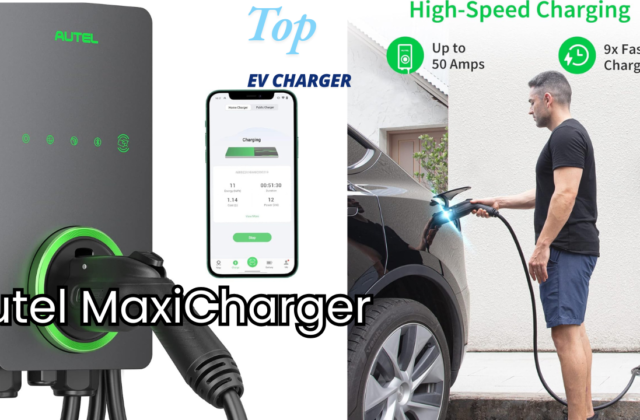
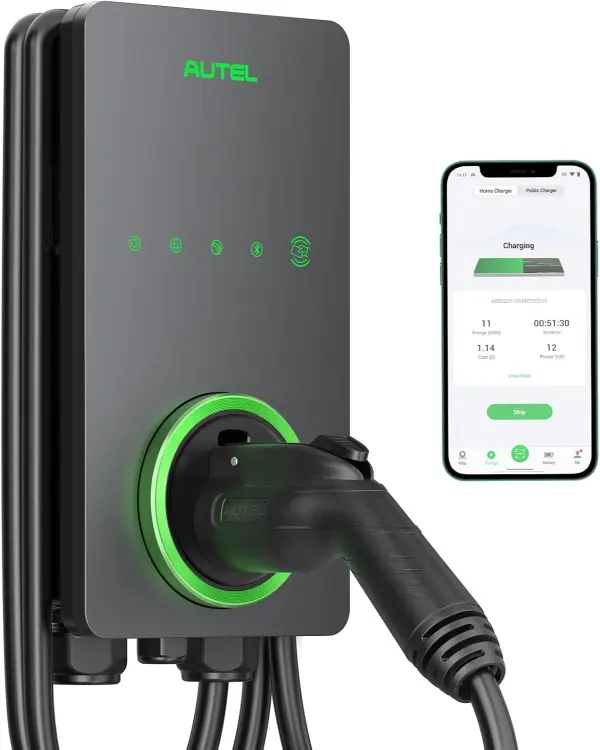
The Autel MaxiCharger delivers up to 50 amps and 12 kW, slightly exceeding the Chevy unit. Wi-Fi and Bluetooth connectivity provide two paths to the app, which is useful in garages with spotty Wi-Fi. The app tracks energy consumption per session, supports scheduled charging, and receives over-the-air firmware updates. It is the most feature-complete charger in this comparison at a comparable price point. Hardwired installation only, with a 25-foot cable and NEMA 4 weatherproofing.
Best for: Buyers who want the richest app experience and dual-connectivity reliability.

EVIQO 48A Level 2 Charger
The EVIQO 48A matches the Chevy charger’s output at 11.5 kW and adds Wi-Fi app control with energy monitoring and scheduled charging. It carries both UL and ETL certifications, and its IP66 / NEMA 4 rating makes it one of the more weather-resistant options for harsh outdoor environments. The 25-foot cable matches the Chevy unit. Where the EVIQO stands out is price: it typically costs less than both the Chevy charger and the ChargePoint Home Flex while delivering comparable smart features.
Best for: Budget-conscious buyers who still want app-based scheduling and energy tracking.
Check Price on Amazon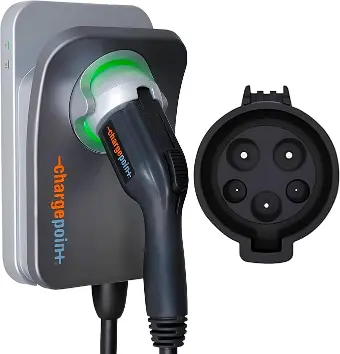
ChargePoint Home Flex — Up to 50A
The ChargePoint Home Flex is the most flexible unit in this comparison. It supports both hardwired and NEMA 14-50 plug-in installation, which makes it the clear pick for renters or anyone who might move. Amperage is adjustable from 16 to 50 amps, so it adapts to whatever circuit breaker your panel supports. The ChargePoint app is the most polished in this category: detailed session logs, cost tracking, Alexa and Google Home integration, and real-time charging status notifications. It also carries Energy Star certification. The 23-foot cable is 2 feet shorter than the competition, which could matter in larger garages.
Best for: Renters, multi-EV households, and buyers who want the best app experience with installation flexibility.
Check Price on AmazonMethodology
Charging time estimates use usable battery capacity divided by charger output (11.5 kW at 48A / 240V), with a 90% efficiency factor applied. Real-world times vary based on battery temperature, state of charge, and onboard charger limits. Home electricity cost uses the national average of $0.15/kWh (DOE AFDC, 2026). Public DC fast charging cost uses $0.38/kWh (Electrify America, EVgo, ChargePoint national average, 2026). Installation cost ranges sourced from HomeAdvisor and Angi averages for licensed electrician work in the continental U.S. Specifications verified against manufacturer product pages as of May 2026. Amazon affiliate links are used; DriveAuthority may earn a commission at no additional cost to the buyer.
FAQ
Is the Chevy EV charger compatible with non-GM vehicles?
Yes. It uses the standard J1772 connector, which works with every non-Tesla EV sold in the United States. Tesla owners need a J1772-to-NACS adapter, which Tesla sells for about $50.
How fast does the Chevy EV charger charge an Equinox EV?
At 48 amps on a 240V circuit, it adds approximately 37 miles of range per hour. A full charge from 10% to 100% on the Equinox EV’s 85 kWh battery takes roughly 8 hours. Plug in at 10 PM and you are full by 6 AM.
Does the Chevy EV charger require a 60-amp circuit breaker?
For full 48-amp output, yes. NEC code requires a circuit breaker rated at 125% of the continuous load. A 48-amp charger therefore needs a 60-amp breaker. If your panel only supports a 40-amp breaker, the charger operates at 32 amps and 7.7 kW instead.
Is the Chevy EV charger weatherproof for outdoor installation?
It carries a NEMA 4 rating, so it handles rain, snow, dust, and direct hose-down spray without issue. For outdoor mounting, your electrician should install a weatherproof disconnect switch within sight of the unit per local code requirements.
What is the warranty on the Chevy EV charger?
GM offers a 3-year limited warranty. All three alternatives reviewed here also carry 3-year warranties, so there is no advantage or disadvantage on coverage.
Can I install the Chevy EV charger myself?
No. The Chevy charger is hardwired only, which requires a licensed electrician for safe and code-compliant installation. This is not a plug-in unit. If you want a DIY-friendly option, the ChargePoint Home Flex offers a NEMA 14-50 plug-in configuration that anyone comfortable with a 240V outlet can handle.
How much does it cost to charge a Chevy EV at home vs public charging?
At the national average home electricity rate of $0.15/kWh, charging an Equinox EV from 10% to 100% costs about $12.75. The same charge at a public DC fast charger averaging $0.38/kWh costs roughly $32.30. Over five years at 15,000 miles per year, that difference adds up to $3,945, according to DOE AFDC data.
Should I buy the Chevy EV charger or a third-party alternative?
That depends on what you value. The Chevy charger is a clean, reliable unit with GM branding and a straightforward installation. But it costs the same as third-party chargers that offer energy monitoring, richer app scheduling, and in ChargePoint’s case, plug-in portability. If you just want to charge and forget, the Chevy unit does that. If you want data and flexibility, look at the Autel MaxiCharger or the ChargePoint Home Flex instead.

James Carter
Founder & Lead Analyst — DriveAuthority
James has spent over a decade analysing automotive markets, EV total cost of ownership, and the structural economics behind vehicle pricing. DriveAuthority was built to give buyers the same level of financial rigour applied to any major purchase decision — without the manufacturer-friendly framing common in traditional auto media.