The most affordable EV in 2026 — after the $7,500 federal tax credit — is the Chevrolet Equinox EV LS at approximately $27,495, and it also happens to have the highest EPA-rated range in its class at 319 miles. That combination makes it the default answer for most buyers. But EPA numbers are measured at 72°F with climate control off, and if you live anywhere that sees a January, that 319 miles becomes roughly 215 miles. This guide ranks the top affordable EVs in 2026 by three numbers that matter when the purchase leaves the showroom: real-world winter range, DC fast charging speed, and 3-year total cost. If you road-trip more than twice a year, DC fast charging speed will affect your daily satisfaction more than the sticker price difference between any two cars on this list.
Most Affordable EV 2026 — The Short Answer:
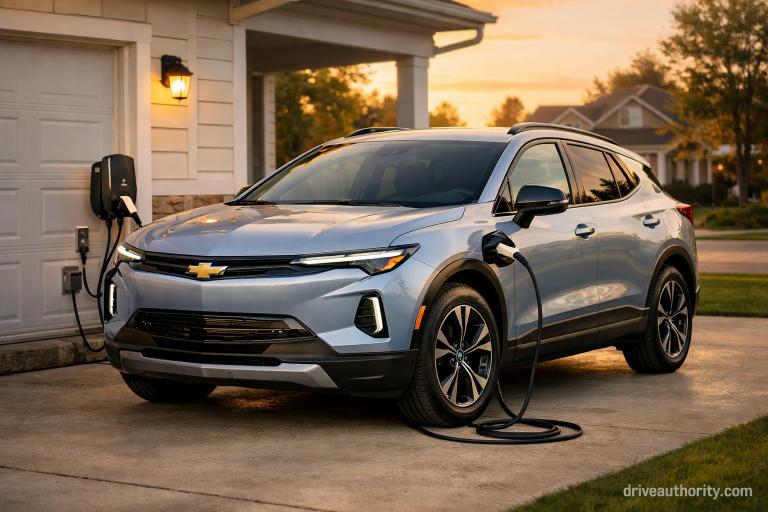
The Chevrolet Equinox EV LS ($27,495 after credit, 319mi EPA) wins on range-per-dollar. The Hyundai Kona Electric ($26,050 after credit, 261mi EPA) costs less upfront but charges more slowly. The Ioniq 6 Standard Range ($31,115 after credit, 240mi EPA) costs more but charges from 10–80% in roughly 18 minutes — faster than anything else in this class. A used Chevrolet Bolt EUV at $22,000–$26,000 is the cheapest entry point, but its 55kW DC charging ceiling makes 30-minute fast-charge stops add only about 50 miles. Do not buy the Bolt EUV if you road-trip more than once a month. Do not buy any EV in this class if you have no access to home or workplace charging.
How We Ranked Affordable EVs in 2026
EPA range is on the window sticker, so dealers use it. It is also measured under conditions that most buyers never experience — moderate temperature, no heater or air conditioning, constant-speed driving. The number that determines whether you make a charging stop before your destination is winter range, which EPA does not publish. Three metrics determine the real-world ownership experience for buyers in this price bracket:
Price after available incentives. The $7,500 federal tax credit under the OBBBA applies to EVs with final assembly in North America (which includes Mexico under USMCA). It is non-refundable against income tax and subject to MSRP caps ($80,000 for SUVs and trucks, $55,000 for sedans) and household income limits. Not every vehicle in this comparison qualifies; eligibility is noted for each. State incentives vary from $0 (most states) to $7,500 (California Clean Vehicle Rebate).
Real-world winter range. Recurrent’s dataset of 20,000+ EVs across North America shows an average winter range penalty of 25–35% at temperatures below 25°F when the cabin heater runs. A vehicle rated 319 miles EPA realistically delivers 207–239 miles in January in Chicago. Cold-weather figures in this guide reflect Recurrent real-world medians, not manufacturer estimates.
DC fast charging speed (kW ceiling and 10-80% time). For a road trip with a 250-mile leg, a 55kW charger requires roughly 60 minutes to restore 100 miles. A 150kW charger does the same in about 27 minutes. That 33-minute difference, repeated across a round trip, is the difference between a manageable stop and a frustrating one. Every vehicle’s DC ceiling and approximate 10-80% time at a compatible fast charger are included.
| Vehicle | Base MSRP | After Federal Credit | EPA Range | Winter Range (~25°F) | DC Fast Charge | 10–80% |
|---|---|---|---|---|---|---|
| Chevy Equinox EV LS TOP PICK | $34,995 | ~$27,495 | 319 mi | ~215 mi | 150 kW | ~35 min |
| Hyundai Kona Electric SE | $33,550 | ~$26,050* | 261 mi | ~190 mi | 100 kW | ~42 min |
| Hyundai Ioniq 6 SE SR BEST CHARGER | $38,615 | ~$31,115* | 240 mi | ~185 mi | 350 kW capable | ~18 min |
| VW ID.4 Standard Range | $38,995 | ~$31,495 | 209 mi | ~155 mi | 135 kW | ~38 min |
| Used Bolt EUV (2022–2023) CITY ONLY | $22,000–$26,000 used | ~$18,000–$22,000** | 247 mi | ~170 mi | 55 kW CEILING | ~55 min |
*Korean-assembled Hyundai models may not qualify for the full $7,500 federal credit depending on sourcing rules in effect at purchase date — confirm with the dealer before finalising. **Used EVs may qualify for a $4,000 used clean vehicle credit; income and price eligibility applies.
The 5 Most Affordable EVs in 2026, Ranked
Each vehicle below is evaluated on the three criteria from the methodology: price after credit, winter range, and DC fast charging ceiling. Comfort, cargo, and fit-and-finish are noted where they materially affect the ownership experience.
1. Chevrolet Equinox EV LS — Best All-Around Affordable EV in 2026
At $34,995 base ($27,495 after the $7,500 federal tax credit), the Equinox EV LS is assembled in Ramos Arizpe, Mexico and qualifies for the full federal credit. Its 85 kWh Ultium pack returns 319 miles EPA — which translates to approximately 215 miles in January in Minneapolis at sustained highway speeds with the heater running. The 150kW DC ceiling means a 10-80% charge at a compatible fast charger takes roughly 35 minutes and adds about 190 miles of range. That is not Tesla Supercharger territory, but it is competent enough for road trips with predictable stops.
The interior is straightforward: a horizontal 17.7-inch touchscreen, wireless Apple CarPlay and Android Auto, and a 200-hp front motor. Cargo behind the rear seats measures 57.3 cubic feet with seats folded. NHTSA gave the 2025 model a 5-star overall rating. The limitation is that 150kW is the ceiling — you will not see 200kW charging even at stations that support it, and public DC charging availability matters more than the car’s ceiling if you do not have home charging access.
2. Hyundai Kona Electric SE — Best for City and Suburban Use
The Kona Electric ($33,550 MSRP, ~$26,050 after available incentives) is the smallest vehicle on this list — roughly the same footprint as a Honda Civic — and that compactness works in its favour for urban parking and manoeuvrability. Its 64.8 kWh battery returns 261 miles EPA and approximately 190 miles in cold weather, which is adequate for commuters within 90 miles of a workplace charger. The 100kW DC ceiling means a 10-80% stop takes around 42 minutes.
The weak point is highway road trips. At 100kW, the Kona charges more slowly than the Equinox EV and significantly more slowly than the Ioniq 6. If your annual driving is mostly within 150 miles of home, this limitation is irrelevant. If you drive interstate regularly, the extra cost of the Equinox EV or Ioniq 6 pays back in time. Do not choose the Kona Electric if you drive more than one interstate leg per month.
Note: the Kona Electric is assembled in South Korea. As of mid-2026, its federal credit eligibility depends on sourcing provisions in effect at the time of purchase — verify with the dealer, as this changes. Hyundai frequently offers compensating finance support when the federal credit is unavailable.
3. Hyundai Ioniq 6 Standard Range SE — Best for Road Trips Under $35,000
The Ioniq 6 Standard Range is the only car in this comparison capable of drawing 350kW from a compatible charger. In practice, 10-80% at a 350kW Electrify America or EVgo station takes approximately 18 minutes — faster than a full tank of petrol at a busy station. The 240-mile EPA range is lower than the Equinox EV’s, but the charging speed means any range deficit is recovered in the time it takes to use a restroom and pay for coffee.
At $38,615 base ($31,115 after available incentives, credit eligibility subject to same Korean-assembly caveats as the Kona), the Ioniq 6 is $3,620 more expensive than the Equinox EV after incentives. The tradeoff is charging speed: on a 600-mile round trip, the Ioniq 6 will stop for roughly 18 minutes per charge versus 35 minutes for the Equinox EV. Two stops in each direction saves approximately 68 minutes — a meaningful number if you travel regularly. Our full Ioniq 6 review covers the real-world fast charging data in more detail.
4. VW ID.4 Standard Range — Best Cargo and AWD Option
The ID.4 Standard Range ($38,995 MSRP, ~$31,495 after the $7,500 federal credit — it qualifies, assembled in Chattanooga, Tennessee) has the weakest EPA range on this list at 209 miles and the weakest winter range at approximately 155 miles. Its strongest argument is interior space: 30.3 cubic feet behind the rear seats (versus 22.0 for the Ioniq 6 sedan) and an optional AWD variant for buyers in snowbelt states. The 135kW DC ceiling is a reasonable middle ground, putting 10-80% time at around 38 minutes.
The ID.4 Standard Range is the right choice only if you specifically need the cargo space or AWD and can plan charging stops around its shorter winter range. On a 200-mile winter day, a 155-mile effective range means mandatory charging. Buyers who want the ID.4 platform with confidence for longer trips should look at the Pro model with its 82 kWh battery and 291 miles EPA — but that moves the MSRP to $43,995 before credit.
5. Used Chevrolet Bolt EUV (2022–2023) — Best Budget Entry, Worst Road Tripper
A clean 2022 or 2023 Bolt EUV with under 40,000 miles runs $22,000–$26,000 at dealer and CPO retail. If the purchase price is under $25,000 and you meet income requirements, a $4,000 used clean vehicle credit reduces the net cost to approximately $18,000–$22,000. At that price, no new EV competes. The 247-mile EPA range and 65 kWh battery are genuinely adequate for daily driving within 120 miles of home.
The problem is the 55kW DC charging ceiling — a hardware limitation that cannot be updated. At 55kW, a 30-minute fast charge session adds approximately 50 miles. By comparison, the Equinox EV at 150kW adds approximately 190 miles in 30 minutes. On a 300-mile road trip, the Bolt EUV requires two or three charging stops where the Equinox EV needs one. This is not a minor inconvenience for regular highway users — it is a structural constraint that defines how the car can be used. Buy the Bolt EUV if 95% of your driving is within 120 miles of a home charger and interstate trips happen fewer than four times a year.
Winter Range: The Number That Actually Matters for Affordable EVs in 2026
Winter range is the most consequential number that no affordable EV manufacturer puts on the window sticker. The gap between EPA rating and January reality is not a bug — EPA testing conditions (72°F, climate control off) are standardised to allow comparison, not to reflect Buffalo in February. What matters for a buyer in Boston or Denver is that the stated 319-mile Equinox EV rating means approximately 215 miles when the heater is on and the temperature is 25°F.
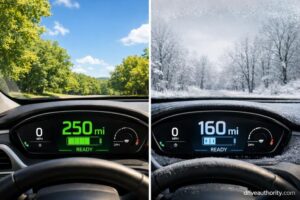
Two variables drive winter range loss: battery chemistry (lithium iron phosphate loses more range in cold but handles 100% daily charging without long-term degradation; NMC is the chemistry in most vehicles here) and climate system type. The Kona Electric and Ioniq 6 both use heat pump systems, which convert outside air to cabin heat more efficiently than resistive elements. Recurrent data shows heat pump cars losing roughly 25-28% of range in winter versus 30-35% for resistive-heater cars. At 319 miles EPA, that difference amounts to roughly 16-25 extra miles in January.
| Vehicle | EPA Range | Winter Range (~25°F) | Range Loss | Climate System | Verdict |
|---|---|---|---|---|---|
| Equinox EV LS | 319 mi | ~215 mi | ~33% | Resistive heat | BEST WINTER RANGE |
| Kona Electric SE | 261 mi | ~190 mi | ~27% | Heat pump | BEST % RETAINED |
| Ioniq 6 SE SR | 240 mi | ~180 mi | ~25% | Heat pump | Adequate; charging compensates |
| ID.4 Standard Range | 209 mi | ~155 mi | ~26% | Heat pump | PLAN STOPS CAREFULLY |
| Used Bolt EUV | 247 mi | ~170 mi | ~31% | Resistive heat | City-radius use only in winter |
The practical implication: a buyer in southern California or Texas can largely ignore winter range. A buyer in Ohio, Colorado, or New England is choosing between 155 miles and 215 miles of usable range on the same cold January day. That is a planning-relevant difference on any route over 130 miles. The broader monthly cost comparison for EVs versus petrol cars in various US states is covered separately.
DC Fast Charging Speed: Where Affordable EVs Lose Ground
Home charging covers roughly 80% of EV charging for most owners — a $200 Level 2 outlet installed in the garage adds 25-30 miles per hour overnight, and most people never leave their driveway with less than a full charge. DC fast charging matters for the remaining 20%: road trips, long commutes without workplace charging, and days where the schedule demands more range than the overnight charge provided. That 20% determines whether the car feels adequate or limiting.

| Vehicle | DC Peak (kW) | 10–80% Time | Miles Added / 30 min | Charger Type | Road Trip Rating |
|---|---|---|---|---|---|
| Ioniq 6 SE SR | 350 kW cap. | ~18 min | ~175 mi | CCS | BEST |
| Equinox EV LS | 150 kW | ~35 min | ~190 mi | CCS | STRONG |
| ID.4 Standard Range | 135 kW | ~38 min | ~140 mi | CCS | ADEQUATE |
| Kona Electric SE | 100 kW | ~42 min | ~115 mi | CCS | PLAN AHEAD |
| Used Bolt EUV | 55 kW | ~55 min | ~50 mi | CCS | AVOID HIGHWAYS |
A note on the Nissan Leaf: it is excluded from the main ranking because its DC charging still uses CHAdeMO on most trims, a connector standard that the US public charging network has largely abandoned. Finding a functioning CHAdeMO port on an interstate corridor is an unreliable proposition. The Leaf Plus 62 kWh offers 212 miles EPA at a competitive price, but the CHAdeMO situation makes road-trip planning genuinely stressful. It is a city commuter, and a finite one at that — the CHAdeMO network will not expand.
3-Year Total Cost — Why Cheapest Upfront Isn’t Always Cheapest
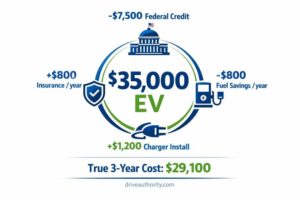
The sticker price difference between the used Bolt EUV and the Equinox EV LS is roughly $7,000–$10,000 after all credits. At first calculation, the Bolt looks obviously cheaper. The total picture at three years is less straightforward, because EV residual values in the sub-$30,000 segment are converging as more affordable models enter the market. The key variables: depreciation rate, electricity cost, and insurance premium differ meaningfully between a new and used EV.
| Vehicle | Net Purchase | 3yr Depreciation Est. | 3yr Electricity | 3yr Insurance Est. | 3yr Maintenance | 3yr Net Cost |
|---|---|---|---|---|---|---|
| Equinox EV LS | $27,495 | ~$9,600 (35%) | ~$4,050 | ~$5,400 | ~$1,200 | ~$20,250 |
| Kona Electric SE | ~$26,050 | ~$9,100 (35%) | ~$4,550 | ~$5,100 | ~$1,200 | ~$19,950 |
| Ioniq 6 SE SR | ~$31,115 | ~$11,200 (36%) | ~$4,050 | ~$5,700 | ~$1,200 | ~$22,150 |
| ID.4 Standard Range | ~$31,495 | ~$11,350 (36%) | ~$4,900 | ~$5,700 | ~$1,200 | ~$23,150 |
| Used Bolt EUV | ~$20,000 | ~$7,600 (38%) | ~$4,700 | ~$4,200 | ~$1,400 | ~$17,900 |
On a pure 3-year cost basis, the used Bolt EUV at approximately $17,900 net cost is cheaper — by about $2,000–$5,000 depending on electricity rates and insurance. The Kona Electric and Equinox EV run nearly the same total cost over three years despite a $1,400 purchase price difference. The ID.4 is the most expensive option at $23,150 without offering compensating range advantages over the Equinox EV.
What the table does not capture is the value of charging time. If you spend an additional 30 minutes at each of 20 road-trip stops over three years, that is 10 hours. Whether that is worth $2,000–$5,000 more in net cost is a personal calculation, not a financial one. Our complete EV buying guide walks through this calculation with different mileage and trip profiles.
Which Affordable EV in 2026 Is Right for You?
The right choice comes down to three questions: how far is your longest regular trip, do you have home or workplace charging, and how often do you drive interstate highways. Everything else — colour, interior trim, infotainment preference — is secondary to getting those three answers right.
Buy the Equinox EV LS if…
- You want the highest range in this class at the lowest price
- You road-trip occasionally (2–8 times a year) and can plan 35-minute stops
- You have Level 2 home charging or reliable workplace charging
- You live in a cold climate and need 200+ miles of confident winter range
- You want a new car with full warranty and GM OnStar support
Skip the Bolt EUV for road trips if…
- You drive interstate highways more than four times a year
- Your typical long trip exceeds 150 miles one-way
- You live in a cold climate where winter range drops below 170 miles regularly
- The nearest public DC fast charger to your route is more than 60 miles between stops
- You have no access to home or workplace Level 2 charging
Frequently Asked Questions About Affordable EVs in 2026
What is the most affordable EV in 2026 after the federal tax credit?
The Chevrolet Equinox EV LS at approximately $27,495 after the $7,500 federal tax credit is the most affordable new EV in 2026 that also delivers competitive range and charging speed. The Hyundai Kona Electric can reach a similar effective price (~$26,050) with incentives, but its Korean assembly means federal credit eligibility should be confirmed before purchase. For buyers who can qualify for the used clean vehicle credit ($4,000), a used 2022–2023 Bolt EUV at $18,000–$22,000 net is cheaper still — though its 55kW DC charging ceiling limits it to city and suburban use.
How much range do affordable EVs actually get in winter?
Expect 25–33% less range than the EPA figure at temperatures around 25°F with cabin heat running. The Equinox EV’s 319-mile EPA rating translates to approximately 215 miles in winter conditions. The Kona Electric (261mi EPA) returns approximately 190 miles. The ID.4 Standard Range (209mi EPA) drops to approximately 155 miles, which makes charging stop planning essential on any trip over 130 miles. Heat pump-equipped models (Kona, Ioniq 6) lose roughly 25-27% versus 31-33% for resistive-heater cars, a difference of 15–25 miles at these EPA ratings.
Is the Chevrolet Bolt EUV still worth buying in 2026?
As a used purchase for city and suburban driving, yes. A 2022–2023 Bolt EUV with under 40,000 miles for $22,000–$26,000 (or $18,000–$22,000 after the used EV credit) offers 247 miles EPA, low maintenance costs, and a reliable GM warranty history. As a road-trip vehicle, no. The 55kW DC charging ceiling is a hardware constraint that cannot be changed and adds 25–35 minutes per fast-charge stop compared to a 150kW vehicle. If your driving is 95% within 120 miles of home with access to overnight charging, the Bolt EUV is a rational budget choice. If it is not, the charging limitation will affect your daily satisfaction within the first year.
Does the $7,500 federal EV tax credit apply to the Hyundai Kona Electric and Ioniq 6?
As of mid-2026, eligibility for Korean-assembled Hyundai models depends on battery sourcing provisions under current law. The credit requires final assembly in North America under USMCA and specific critical mineral and battery component sourcing thresholds. Hyundai has been expanding US production at its Metaplant in Georgia, and future models may qualify more readily. Confirm eligibility with the dealer using the VIN before signing — the IRS tool at fueleconomy.gov provides current eligibility by VIN. Hyundai frequently offers compensating finance rates or lease cash when the federal credit is unavailable.
How much does it cost to charge an affordable EV at home each month?
At the US average electricity rate of $0.138/kWh (EIA 2025), charging 1,000 miles per month costs approximately $55–$70 depending on vehicle efficiency. The Equinox EV at roughly 3.8 miles/kWh costs around $36 per full charge from empty (85 kWh × $0.138) — equivalent to filling an 8-gallon tank at $4.50/gallon, but covering 319 miles. A driver doing 1,200 miles/month pays approximately $44–$48/month in electricity versus $140–$190 in petrol for a comparable ICE vehicle at $3.40/gallon and 25 MPG. The difference narrows in states with high electricity rates (Hawaii: $0.39/kWh; California: $0.28/kWh).
Which affordable EV in 2026 is best for road trips?
The Hyundai Ioniq 6 Standard Range is the best road-trip car in this price class, despite having 79 fewer EPA miles than the Equinox EV. Its 350kW-capable charging means a 10-80% stop takes approximately 18 minutes versus 35 minutes for the Equinox EV. On a 600-mile round trip with two charging stops each way, the Ioniq 6 saves approximately 68 minutes of charging time. At $31,115 after available incentives, it costs roughly $3,600 more than the Equinox EV — a reasonable premium if road trips are frequent. For occasional road-trippers (four or fewer per year), the Equinox EV’s lower price and higher range is a better balance.
Are affordable EVs reliable compared to budget petrol cars?
EV powertrains have fewer moving parts than internal combustion engines — no oil changes, no timing belt, no exhaust system — and Consumer Reports data consistently shows EVs from mainstream manufacturers averaging fewer powertrain problems than comparable petrol cars. The primary reliability concern for affordable EVs is battery degradation over time: most manufacturers warrant batteries to 70% capacity over 8 years or 100,000 miles. Bolt EUV batteries received an over-the-air update after the 2021 recall that imposed a conservative 80-90% charge limit — this is a software constraint on existing vehicles and not an indicator of current battery health. Check for open recalls on any used EV using the NHTSA recalls database before purchase.
What DC fast charging network do affordable EVs use in the US?
All five vehicles in this comparison use CCS (Combined Charging System) connectors — the North American standard that covers Electrify America, EVgo, Blink, and the majority of the public charging network. GM vehicles including the Equinox EV also accept the NACS (Tesla-standard) connector at Tesla Supercharger locations via an included or purchasable adapter, giving access to Tesla’s approximately 20,000 US fast-charging stalls. Volkswagen ID.4 also supports NACS via adapter. The Kona Electric and Ioniq 6 have adopted NACS as a native port on some 2025–2026 trims — confirm at point of purchase which port configuration the specific vehicle has.