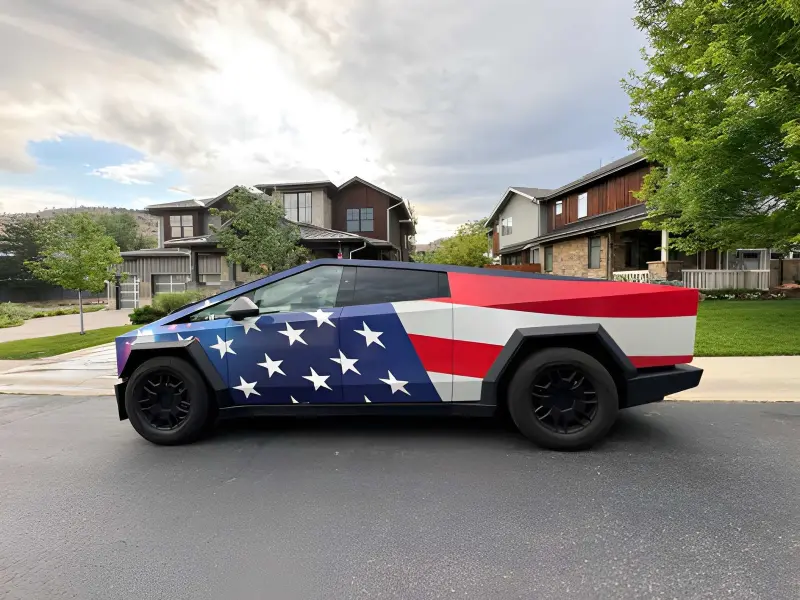
The Tesla Cybertruck AWD starts at $79,990 — and whether that figure is justified depends almost entirely on what you plan to do with it. For a contractor who parks it on a worksite, runs tools off the 240-volt outlet, and hauls material in the 6-foot vault, there is a real argument. For a buyer primarily attracted by the visual statement, the math is harder to defend. The Tesla Cybertruck worth it question does not have a universal answer. It has a conditional one, and the conditions are specific.
This review covers the AWD dual-motor variant — the $79,990 truck that makes up the majority of Cybertruck sales — using EPA figures, NHTSA recall data, third-party long-term test results, owner reports, and direct comparisons to its most credible alternatives. The Cyberbeast at $99,990 and the RWD single-motor at $69,990 are addressed in the comparison section, but the $80,000 question is the AWD question.

Is the Tesla Cybertruck Worth $80K in 2026? — Summary:
The Cybertruck AWD is worth $79,990 if you actively use the bed and power outlets, live within a dense Supercharger corridor, and accept that stainless steel body repairs are expensive and require specialist shops. It is not worth $80K measured against cargo-per-dollar — the Rivian R1T offers comparable capability for $10,000 less with a cleaner recall record. Four NHTSA safety recalls were issued in 2024, including steer-by-wire failure and accelerator pedal entrapment. Real-world towing range under 8,000 lb is approximately 140 miles. Best use case: urban professional or contractor with dense Supercharger access. Worst use case: long-distance towing or rural use where service access is limited.
What $79,990 Buys You: Full Specs Breakdown
The Cybertruck AWD delivers numbers that are genuinely competitive with any truck on sale in 2026, electric or otherwise. However, the specifications list requires some translation — several headline figures come with material caveats that are not in the brochure.
| Specification | Cybertruck AWD | The Caveat |
|---|---|---|
| Price (MSRP) | $79,990 | Federal EV tax credit may apply; check eligibility at fueleconomy.gov |
| EPA Range | 340 miles | Highway real-world closer to 280 miles at 70 mph; see range section |
| 0–60 mph | 4.1 seconds | Cyberbeast: 2.6 seconds — at a $20,000 premium |
| Towing Capacity | 11,000 lb | Usable towing range drops to ~140 miles at this weight |
| Payload Capacity | 2,500 lb | Among the highest in class; no material caveat here |
| Bed Length | 6 feet | Vault design locks and seals; standard 120V and 240V outlets included |
| Frunk Capacity | 2.2 cu ft | Smaller than competitors; F-150 Lightning frunk is 14.1 cu ft |
| Ground Clearance | Up to 17.3 in (air suspension) | Ride quality on rough roads is stiff — air suspension tunes for load, not comfort |
| Turning Radius | ~23.5 ft (rear steer active) | Rear-wheel steering required for manageable urban turning; without it, radius exceeds 42 ft |
| Curb Weight | ~6,843 lb | Requires reinforced parking structures; check your garage floor rating |
| Body Material | 301 stainless steel | Cannot be conventionally painted or repaired; specialist shops required |
| Steering System | Steer-by-wire | Subject to recall 24V059000; no mechanical column as backup |
The 240-volt outlet in the bed is a genuine differentiator. It delivers up to 20 amps continuously — enough to power a circular saw, air compressor, or job-site lighting for hours. No Ford, Rivian, or RAM electric truck includes this as standard at the same price. For buyers who work out of their truck, that outlet has measurable dollar value.
The frunk deserves a flag. At 2.2 cubic feet, it is the smallest frunk of any full-size electric truck on the market. The Ford F-150 Lightning’s frunk is 14.1 cubic feet — large enough to store a full set of tools. Rivian’s frunk is 11.1 cubic feet. Tesla’s priority was clearly structural stiffness over storage geometry, and the tradeoff shows.
Real-World Range: EPA, Highway, Cold Weather, and Towing
The EPA rating of 340 miles for the AWD Cybertruck is a combined cycle figure. In practice, the figure you will see most often is considerably lower — and under towing conditions, it drops to a number that changes how you need to plan any trip over 150 miles.

| Scenario | Estimated Real-World Range | vs EPA (340 mi) |
|---|---|---|
| City mixed driving | ~320–340 miles | MATCHES EPA |
| Highway 65 mph, no load | ~290–310 miles | −9% to −15% |
| Highway 75 mph, no load | ~260–280 miles | −18% to −24% |
| Cold weather (14°F / −10°C) | ~200–230 miles | −32% to −41% |
| Towing 5,000 lb at 65 mph | ~190–220 miles | −35% to −44% |
| Towing 8,000 lb at 65 mph | ~130–155 miles | −54% to −62% |
| Towing 8,000 lb in cold weather | ~100–120 miles | −65% to −71% |
The towing range figure is where most buyer frustration concentrates. At 8,000 pounds — a mid-size travel trailer, a boat on a heavy trailer, or an enclosed car hauler — a 500-mile drive requires three to four Supercharger stops. Each stop at 80% from 20% takes approximately 35 to 45 minutes on a V3 Supercharger under load. That is a functional road trip; it is not a quick one. For buyers who tow occasionally on routes with good Supercharger coverage, this is a workable reality. For buyers who tow regularly across rural corridors, it is a genuine constraint that competitors with diesel powertrains do not share.
For buyers who want to understand how this compares across all major electric vehicles, our guide to the longest-range electric cars in 2026 covers real-world figures across the full market.
The Problems Tesla Hasn’t Fully Fixed
The Cybertruck accumulated four NHTSA safety recalls in a 12-month window between February and May 2024. That is an unusually high recall concentration for a new vehicle platform, and it reflects the pace at which the truck was developed and launched. The recalls are documented, OTA-patchable in most cases, and Tesla’s response times were adequate — but buyers considering pre-2025 production should verify their VIN against the NHTSA recall database before taking delivery.
| Recall | Issue | Vehicles Affected | Fix |
|---|---|---|---|
| 24V059000 (Feb 2024) | Steer-by-wire: loss of power-assisted steering, creating safety risk | ~2,200 units | OTA software update |
| 24V235000 (Apr 2024) | Accelerator pedal trim panel could detach and jam pedal in depressed position | ~3,878 units | Physical repair required |
| 24V275000 (Apr 2024) | Front frunk latch could open while driving at speed | ~3,878 units | Physical repair required |
| Wiper firmware (2024) | Windshield wiper failure; automatic mode not activating in rain | All 2024 production | OTA software update |
Beyond the recalls, there are three persistent owner-reported issues that fall below the NHTSA threshold but affect daily use. First, panel alignment at the stainless steel body seams is inconsistent across production batches — some trucks show visible gaps at the tonneau cover perimeter and body corners; others do not. Second, ride quality on broken or uneven pavement is noticeably stiffer than comparable full-size trucks due to the air suspension tuning prioritising load management over comfort. Third, the single large windshield wiper — spanning the full width of the glass — has a characteristic dead zone in the upper-left corner of the driver’s sightline during heavy rain.
None of these are dealbreakers in isolation. Taken together, they paint a picture of a truck that was developed on an aggressive timeline and carries the immaturity that comes with that pace. The 2025 and 2026 production year trucks have addressed the majority of the physical recall items; if you are buying used, earlier production carries measurably higher risk.
What It Actually Costs to Own
The sticker price is the least surprising cost associated with Cybertruck ownership. The ongoing costs that buyers underestimate are insurance, body repair, and charging on a towing trip.
Insurance: The Cybertruck is among the most expensive vehicles to insure in the full-size truck category. Stainless steel body panels cannot be repaired using conventional methods — they require specialist shops, longer repair times, and higher labour rates. Average annual insurance premiums for the Cybertruck AWD run approximately 30 to 45 percent higher than comparable premiums for a Ford F-150 Lightning or Rivian R1T in most US markets. The exact figure depends on your location, history, and insurer — get quotes before you buy rather than after.
Body repair: A conventional dent in a steel or aluminium truck body costs $300 to $800 to repair at a standard body shop. A dent in the Cybertruck’s 301-stainless exterior requires a specialist — either a Tesla-authorised body shop or a stainless fabricator. Costs for equivalent repairs are typically three to five times higher, and wait times for parts and appointments are longer. Tesla’s service network for bodywork remains thinner than its mechanical service footprint. Our guide to Tesla service center vs independent EV mechanic covers this gap in detail.
Battery replacement: There is no meaningful long-term data on Cybertruck battery degradation at high mileage yet — the truck is too new. However, the battery pack size (approximately 123 kWh on the AWD) means that if out-of-warranty replacement becomes necessary, the cost will be at the higher end of the EV market. Our EV battery replacement cost guide covers current estimates across Tesla models.
Charging on towing trips: Using the Supercharger network while towing adds meaningful trip cost and time. A charge from 20 to 80 percent on a V3 Supercharger costs approximately $28 to $38 at current network rates depending on your state — and towing an 8,000-pound trailer, you may need three of those stops for a 500-mile journey. Plan for both the cost and the 35–45 minutes per stop.
What $80K Buys in Competing Trucks
The Cybertruck’s most direct competitor is not the Ford F-150 Lightning. It is the Rivian R1T — and this is the comparison Tesla would prefer buyers did not make carefully.
The R1T starts at $69,900 for the Dual Standard+ and reaches $85,900 for the Quad-motor Max Range. The $79,990 Cybertruck AWD sits between those two variants in price. In capability, the comparison is genuinely close — and the Rivian wins on several practical measures that matter to actual truck buyers.
| Metric | Cybertruck AWD | Rivian R1T Dual | Ford F-150 Lightning Platinum |
|---|---|---|---|
| Price | $79,990 | $69,900 | ~$73,000 |
| EPA Range | 340 mi | ~290 mi | 320 mi |
| Towing Capacity | 11,000 lb | 11,000 lb | 10,000 lb |
| Payload | 2,500 lb | 1,760 lb | 2,000 lb |
| Frunk Capacity | 2.2 cu ft | 11.1 cu ft | 14.1 cu ft |
| 240V Outlet Standard | YES | ADD-ON | YES (Pro Power Onboard) |
| Body Repair Cost | VERY HIGH (stainless) | MODERATE | STANDARD |
| Charging Network | TESLA SUPERCHARGER | RIVIAN + CCS | CCS + SUPERCHARGER |
| NHTSA Recalls (2024) | 4+ | 2 | 2 |
| Dealer/Service Access | Tesla service centers | Rivian service centers (limited) | Ford dealer network |
The honest conclusion here: the Cybertruck’s most direct competitor is the Rivian R1T, which costs $10,000 less, carries a cleaner recall record, and does not require specialist body shops to repair a parking lot dent. The reason most buyers choose the Cybertruck over the R1T is the visual statement it makes. That is a legitimate reason to spend money — but it should be named for what it is, rather than dressed as a purely rational capability decision.
The F-150 Lightning Platinum deserves a mention for buyers who prioritise conventional truck utility. The 14.1-cubic-foot frunk, the Ford dealer service network, and the lower insurance costs are practical advantages. Its range is 320 miles EPA — 20 miles behind the Cybertruck — and real-world towing performance is similarly constrained. For buyers who will never visit a worksite or haul a trailer, the F-150 Lightning’s conventional form factor is easier to live with in parking structures, car washes, and tight urban environments.
For a broader look at the best electric vehicles for long-distance driving, our best EVs for road trips guide ranks the full current market on real-world charging stop frequency and network coverage.
Who Should Buy the Cybertruck — and Who Should Not

The Cybertruck is a specific truck for a specific buyer. The gap between who it suits well and who it suits poorly is wider than most reviews acknowledge. Tesla’s marketing frames it as a universal upgrade — every truck need met, every truck buyer served. That is not accurate. The following breakdown reflects the real conditions under which the purchase makes sense.
The Cybertruck AWD Makes Sense If…
- You actively use the bed, power outlets, or vault for work or outdoor activities — the 240V outlet and 2,500 lb payload are genuine assets
- Your route network overlaps substantially with Tesla Supercharger coverage — the charging infrastructure advantage is real and measurable
- You are buying 2025 or 2026 production — the recall-affected early production year is behind you
- Urban or suburban use is primary and towing is occasional, not frequent — city range is close to EPA and the truck is well-suited to light duty
- The design is part of the purchase decision — this is a rational reason to buy and does not need to be rationalised further
- You want the highest payload capacity in the electric truck segment — 2,500 lb outclasses every electric competitor
Think Twice If…
- Regular long-distance towing is your primary use case — charging every 130–150 miles under load is a real operational constraint
- You live more than 100 miles from a Tesla Service Center — stainless steel body repair requires specialist access that generic shops cannot provide
- Insurance cost is a meaningful factor — Cybertruck premiums run 30–45% above equivalent trucks and this does not improve with age
- You are comparing dollar-for-dollar utility against a Rivian R1T — the R1T has a better frunk, comparable towing, and costs $10,000 less
- You want a conventional truck that fits a standard parking structure, car wash, or multi-storey garage — the Cybertruck’s dimensions and turning radius make urban manoeuvring genuinely challenging
- You are buying primarily as a daily commuter with no truck-specific needs — a Model Y or equivalent delivers more range per dollar and lower insurance cost
FAQ: Is the Tesla Cybertruck Worth It?
Is the Tesla Cybertruck worth $80,000 in 2026?
For buyers who use the truck’s genuine capabilities — the 2,500-pound payload, the 240-volt bed outlet, and the 11,000-pound tow rating — on a regular basis, the $79,990 AWD is defensible against its competition. For buyers primarily interested in the design or status, the same money buys a Rivian R1T with more frunk space, a cleaner recall record, and $10,000 in change. Whether the Cybertruck is “worth it” is inseparable from what you will actually do with it in the first two years of ownership.
What is the real-world range of the Tesla Cybertruck?
The EPA rating is 340 miles for the AWD dual-motor. In real-world conditions, highway driving at 70 mph returns approximately 280 miles. Cold weather at 14°F reduces that to roughly 200–230 miles. Towing 8,000 pounds at 65 mph reduces range to approximately 130–155 miles — roughly 55 percent of the EPA figure. City driving, where regenerative braking recovers more energy, is the one scenario where real-world range comes close to the EPA number.
How many recalls has the Tesla Cybertruck had?
As of early 2025, four NHTSA safety recalls had been issued for the Cybertruck: steer-by-wire loss of power assist (24V059000), accelerator pedal entrapment due to a loose trim panel, frunk latch failure that could allow the hood to open at speed, and windshield wiper firmware failure. The steer-by-wire and wiper issues were resolved via OTA software update; the pedal and frunk recalls required physical service center visits. Check your VIN against the current NHTSA database before finalising any purchase of a 2024 production Cybertruck.
Is the Tesla Cybertruck good for towing?
The towing capacity — 11,000 pounds for the AWD — is competitive with any electric truck on sale. The towing range is not. Under an 8,000-pound trailer at highway speeds, real-world range drops to approximately 140 miles, requiring frequent Supercharger stops on any trip beyond 150 miles. If your towing routes run through dense Supercharger corridors and you can accept 35–45 minute stops every 130 miles, the Cybertruck tows competently. If you need to cover 400 miles with a heavy trailer in a single session, no current electric truck including the Cybertruck meets that need without planning stops.
How does the Tesla Cybertruck compare to the Rivian R1T?
The Rivian R1T starts $10,000 lower at $69,900, offers a significantly larger frunk (11.1 versus 2.2 cubic feet), carries a cleaner recall history, and uses a conventional aluminium body that any qualified body shop can repair. The Cybertruck AWD beats it on payload (2,500 lb versus 1,760 lb), EPA range (340 versus approximately 290 miles), and access to the Tesla Supercharger network. For buyers who prioritise practical utility, the R1T is the more balanced choice at its price. For buyers who value the Supercharger network advantage and the Cybertruck’s distinctive design, the premium over the R1T is real but defensible.
Is the Tesla Cybertruck expensive to insure?
Yes — materially more expensive than comparable electric trucks. The stainless steel body requires specialist repair, which drives up insurance payouts for even minor accidents and pushes premiums higher. Average annual premiums for the Cybertruck AWD run approximately 30 to 45 percent above what the same driver would pay to insure a Ford F-150 Lightning Platinum or Rivian R1T in most US markets. Get insurance quotes before you finalise the purchase, not after — the cost is significant enough to affect the total ownership calculation meaningfully.
- NHTSA — Cybertruck recall database (24V059000, 24V235000, 24V275000 and related safety campaigns)
- EPA / fueleconomy.gov — official EPA range ratings for Cybertruck AWD, Cyberbeast, and RWD variants
- Edmunds — long-term test data, towing range testing, and owner cost analysis
- Tesla configurator and specification sheets — pricing, payload, towing, and charging specifications
- Owner-reported data aggregated from US Cybertruck forums, Reddit r/cybertruck, and insurance broker rate comparisons — 2024–2026